
Reviewed · LEMOSHO ROUTE CLIMBS
7 Day Kilimanjaro Climbing Via Lemosho Route
The mountain changes with every step. This seven-day climb from Moshi follows Kilimanjaro’s Lemosho Route, a scenic approach that moves from rainforest to volcanic highlands and, finally, the cold arctic zone near Uhuru Peak. I especially like the gradual pace and the extra time at altitude, both useful on a mountain where patience matters more than speed. The spacious camping setup and hot, catered meals also make a hard trek feel more manageable.
The main caution is simple: this is a serious high-altitude climb, not a long sightseeing walk. You need moderate physical fitness, must handle several long days, and should be comfortable sleeping in tents at elevations where cold, wind, and thin air can affect even strong hikers. The listed price is $2,566 per person, which offers considerable support, but you should also plan for visa costs and the customary practical expenses of a major mountain trip.
In This Review
- Five things to know before choosing this climb
- Why Lemosho is a smart seven-day route
- Day 1: From Londorossi Gate to Forest Camp
- Day 2: Crossing the forest edge to Moir Hut
- Day 3: Lava Tower, giant senecios, and Barranco
- Day 4: The Barranco Wall and Karanga Camp
- Day 5: Up to Barafu Camp before the summit night
- Day 6: Stella Point, Uhuru Peak, and the long descent
- Day 7: Forest descent and the return to Moshi
- Camping, food, and the human side of the climb
- Is $2,566 good value?
- Who should choose this climb?
- Should you book the Lemosho climb?
- FAQ
- How long is the Kilimanjaro Lemosho climb?
- Where does the climb start?
- What meals are included?
- How fit do I need to be?
- Is pickup available?
- What is not included in the price?
Five things to know before choosing this climb
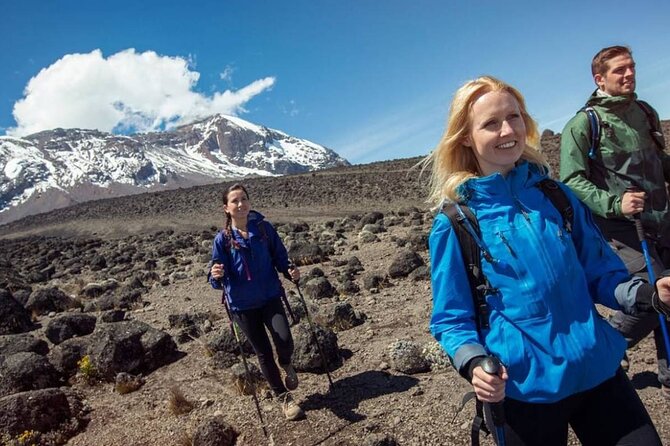
- The Lemosho Route begins in rainforest: You start on Kilimanjaro’s western side, with a quieter-feeling approach through Afromontane forest and a chance to watch for wildlife.
- You cross several ecological zones: The route shifts from lush forest to heather, moorland, alpine desert, and the harsh arctic zone near the summit.
- The schedule allows useful altitude practice: Nights at Moir, Barranco, Karanga, and Barafu camps give your body time to adjust before the summit attempt.
- The crew receives especially strong praise: Guides named William, Rama, Emanuel Hoblen, and Emanuel Mkumbo are singled out for care, sound judgment, and mountain experience.
- Signature camping means more than a basic tent: The trip includes spacious tents, a dining tent, catered meals, and a camp crew that prepares the site and food while you trek.
Why Lemosho is a smart seven-day route
Kilimanjaro is famous because it rises alone above northern Tanzania, reaching 19,341 feet at Uhuru Peak. You do not need technical climbing equipment for this route, but the altitude makes the climb demanding. The key challenge is not one dramatic rock face. It is the steady gain in height, the cold summit night, and the need to keep walking when your body would rather stop.
The Lemosho approach is appealing because the early days are not rushed. You begin at about 7,742 feet and spend several days gaining altitude before the final push. That matters. A quick schedule may look attractive on paper, but your chances of enjoying the summit improve when the route gives you time to adjust.
I also like the change in scenery. On day one, you walk beneath forest cover. By day two, the trees thin out and the Shira Plateau opens around you. Later, giant senecios and lobelias appear in the Barranco area, followed by bare volcanic ground, ice fields, and the stark upper mountain.
The route is listed for a maximum of 100 people, though your own walking group may be smaller. A larger possible capacity makes it sensible to ask the operator about your group size, guide-to-climber ratio, and how the support crew is organized before you pay.
More Kilimanjaro climbs:
- Kilimanjaro climb by Lemosho Route (7-day)
★ 5.0 · 651 reviews - Kilimanjaro climb, Machame Route (7-day)
★ 5.0 · 262 reviews - Kilimanjaro Climbing Lemosho Route 8 Days.
★ 5.0 · 186 reviews
Day 1: From Londorossi Gate to Forest Camp
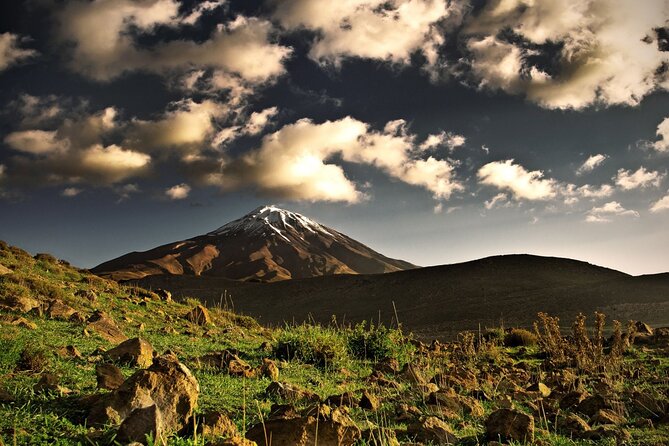
The first day begins with a vehicle journey from Arusha to Londorossi Gate, the entry point for the Lemosho Trail. The drive is part of the effort, so do not treat the 9:00 a.m. start as the moment your physical day ends. You still have a four-mile walk ahead.
The trail begins at roughly 7,742 feet and climbs to about 9,498 feet. You walk for around three to four hours through Afromontane rainforest, one of Kilimanjaro’s most attractive lower zones. The pace is described as leisurely, which is exactly right for a first day. You can settle into the walking rhythm, meet the wider crew, and look for wildlife without burning energy too early.
Lunch is taken along the trail, and Forest Camp is reached in the middle or later part of the afternoon. Breakfast, lunch, and dinner are included. That first night is useful for checking your sleeping arrangements, organizing your bag, and learning how the camp routine works.
Day 2: Crossing the forest edge to Moir Hut
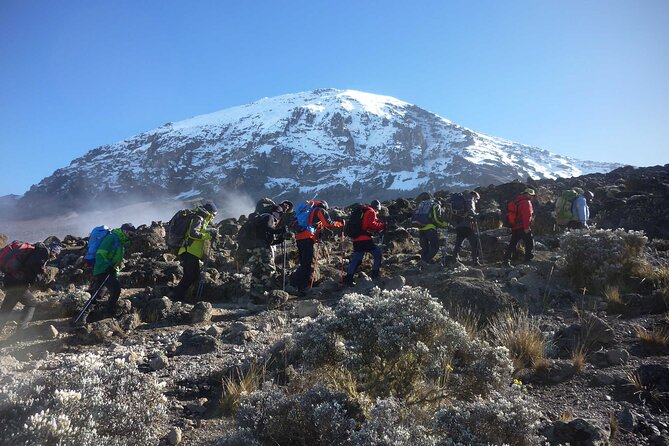
Day two covers about five miles in five to six hours, rising from 9,498 feet to approximately 11,500 feet. The route passes through podocarpus and juniper forest before reaching heather, lichen-covered volcanic rock, and the Shira Plateau.
This is where Kilimanjaro begins to feel less like a forest hike and more like a high mountain trip. The Shira Plateau was once associated with a third volcanic peak that later collapsed. From here, you get a striking view toward Kibo, the main summit cone.
Moir Hut is your overnight camp, though the accommodation remains camping rather than a hut room. The name can make the stop sound more sheltered than it is, so pack with tent sleeping in mind. The day is long enough to feel real, but still moderate compared with what comes later.
The altitude begins to matter here. Walk slowly, drink regularly, and tell your guide if you have a headache, nausea, unusual tiredness, or difficulty sleeping. The crew’s role is not just to lead the way. Guides such as William, Rama, Emanuel Hoblen, and Emanuel Mkumbo are praised for keeping a close eye on comfort and safety, which is particularly valuable as the air thins.
Day 3: Lava Tower, giant senecios, and Barranco
Day three is one of the most useful days on the route. You climb from the Moir area toward roughly 15,223 feet at Lava Tower, then descend to Barranco Camp at about 13,044 feet. The walking distance is listed as 7 kilometers, with four to six hours on the trail.
This climb high and sleep lower pattern helps your body adjust. It can feel odd to work hard uphill only to lose elevation later, but the design gives you valuable time at altitude without forcing you to sleep at the day’s highest point.
Lava Tower is a volcanic rock formation and the usual lunch area. If you feel strong, there is an optional ascent of the roughly 300-foot formation. I would treat this as a bonus, not a test. Your energy is more important than checking off an extra scramble, especially with the descent still ahead.
The route then passes through the Garden of the Senecios, with giant groundsel and giant lobelias. These unusual plants give the upper slopes a strange, almost prehistoric appearance. Barranco Valley is also described as one of the prettiest sections of the route, and it is easy to see why: the valley combines dramatic volcanic walls with unusual high-altitude plant life.
You sleep at Barranco Camp. The included dinner and a proper rest matter here, because the next morning brings one of the trip’s most talked-about obstacles.
More Lemosho Route climbs:
- Kilimanjaro climb, Lemosho Route (8-day)
★ 5.0 · 148 reviews - Kilimanjaro climb, Lemosho Route (6-day)
★ 5.0 · 129 reviews - Kilimanjaro Lemosho Route
★ 5.0 · 71 reviews - Private Kilimanjaro Hike 7 Day Lemosho Route
★ 5.0 · 60 reviews
Day 4: The Barranco Wall and Karanga Camp
The fourth day is short by distance, about three miles and four to five hours, but it is not effortless. You leave Barranco Camp at about 13,044 feet and reach Karanga Camp near 13,123 feet.
The challenge is the Barranco Wall. The description says you may use all four limbs, and that is a fair warning. This is not presented as technical rock climbing, but you should expect hands-on movement, uneven footing, and a steep-feeling section. Your guide will be important here, especially when choosing careful footholds and helping the group move at a steady pace.
After the wall, the trail rises and falls across the Karanga Valley before reaching camp. The limited distance can be deceptive. At this elevation, a short day still demands concentration, and the repeated inclines and declines can tire your legs.
Karanga is selected to give you more time high on the mountain. That is one of the strongest parts of this schedule. Instead of racing straight from Barranco toward the summit camps, you spend another night acclimatizing. The camp also offers views of southern glacial valleys and ice fields, with sunsets described as especially striking.
Day 5: Up to Barafu Camp before the summit night
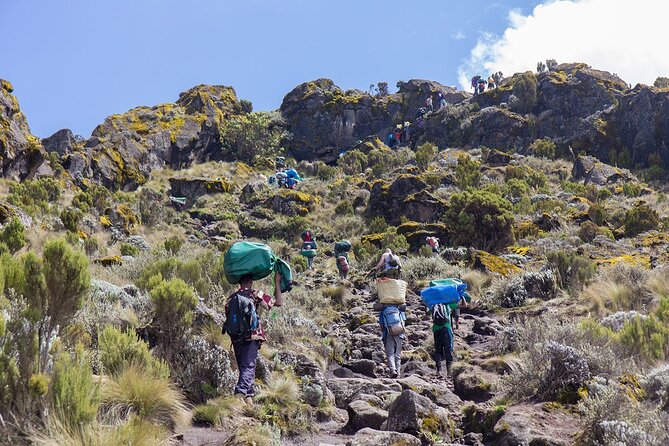
Day five takes you from the Karanga area to Barafu Camp, around 15,288 feet. The walking section to camp is described as a half-day ascent, allowing lunch and an afternoon to rest before the summit attempt.
The setting changes sharply. The forest and unusual plants are gone, replaced by alpine desert, dark volcanic ground, and, at times, strong wind. Barafu is a functional high camp, not a comfortable mountain lodge. Splendid views of Mawenzi Peak may reward you in the evening, but the priority is eating, organizing layers, and sleeping as much as possible.
Dinner is served early. You should have your summit clothing, water, headlamp, snacks, and camera ready before lying down. The final ascent begins just before midnight, so this is not a normal night of sleep.
One point needs clarification when planning: the day-five figures include the summit elevation and descent figures, while the narrative places the summit bid on day six. The sensible reading is that day five is the move to Barafu, followed by the summit attempt after midnight. Ask the operator to confirm the exact daily schedule and how the summit and descent are counted.
Day 6: Stella Point, Uhuru Peak, and the long descent
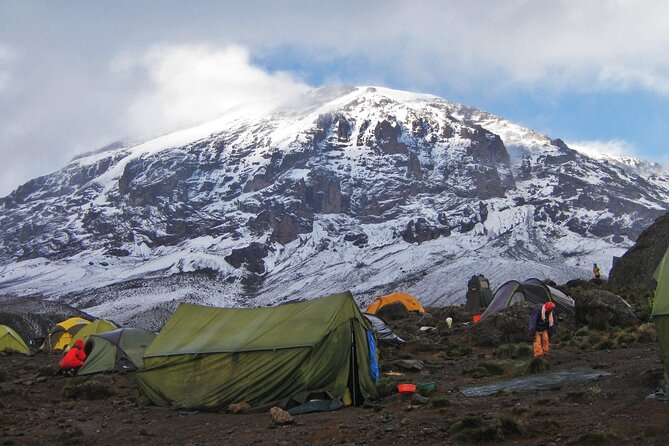
This is the hardest day. You leave Barafu shortly before midnight for the final summit attempt. The upper section is cold, windy, and physically demanding. Progress is likely to be slow, and the practical advice is to focus on the next few steps rather than the whole mountain.
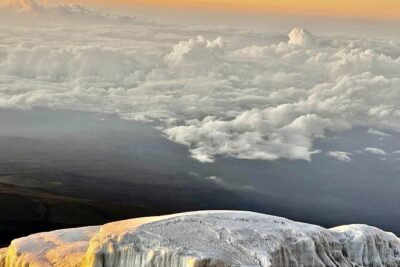
By dawn, the route aims for Stella Point at about 18,652 feet. Reaching the crater rim as the sun rises over Mawenzi Peak is one of the defining moments of the trip. From Stella Point, you continue along the rim toward Uhuru Peak, the highest point on Kilimanjaro, at approximately 19,341 feet.
The final section is shorter than the climb to Stella Point, but do not mistake that for an easy finish. At this altitude, every step takes effort. Take photos at the summit, but keep the celebration brief and listen closely to your guide. Your body still has to descend.
The supplied schedule is truncated in the middle of the day-six description, and its figures combine ascent and descent times. It indicates a summit day lasting roughly seven to eight hours for the ascent and another four to six hours for the descent, with a total descent continuing toward a lower camp. Confirm the exact overnight location and walking hours before departure.
The summit is the emotional high point, but the descent can be rough on tired knees. Use trekking poles if you have them, keep drinking, and do not let the excitement make you rush downhill.
Day 7: Forest descent and the return to Moshi
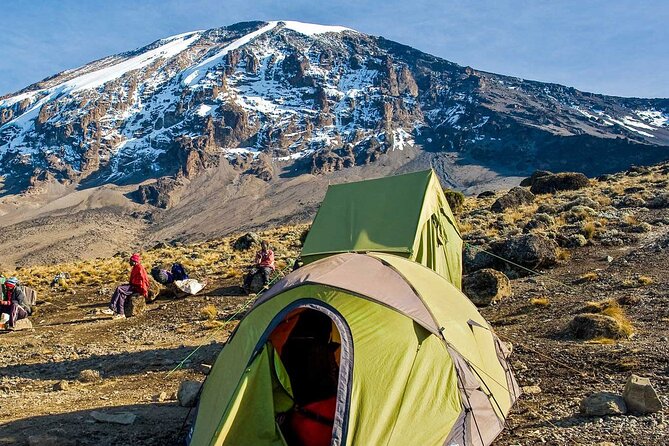
After breakfast, you descend again through montane forest. The listed trekking time is about four to seven hours, and around midday you say goodbye to the mountain crew before pickup and transfer back to your hotel.
This final day is practical rather than scenic in the same dramatic way as the summit. You are tired, dusty, and ready for a shower. The return hotel transfer and celebratory dinner give the trip a proper finish.
The pickup feature is useful because arranging a post-climb transfer while exhausted is one less task to manage. Ask in advance where the transfer ends and whether your hotel in Moshi or Arusha is covered, since the basic information only confirms that pickup is offered.
Camping, food, and the human side of the climb
The camping setup is a major part of the value. You receive spacious tents, a dining tent, and catered meals rather than relying only on trail snacks. Several accounts praise the food, with particular approval for tasty meals and the comfort of eating in a dedicated dining tent.
Breakfast, lunch, and dinner are included each day. The kitchen can cater to vegetarian, vegan, and gluten-free diets, but you should state your needs when booking and confirm them before departure. At altitude, familiar food and regular meals can make a real difference.
The camp crew also earns strong praise. Camps are described as being ready when the walking group arrives, which means you can focus on washing, eating, resting, and preparing for the next day instead of setting up after a long climb.
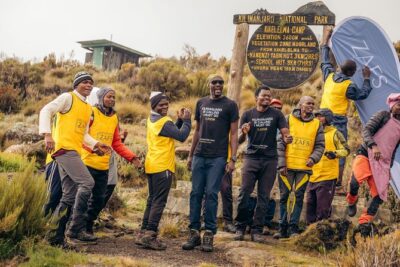
The guide team is another clear strength. William, Rama, Emanuel Hoblen, and Emanuel Mkumbo are all associated with positive experiences, with William and Rama receiving repeated praise for careful pacing and support. One group planned seven days but completed the climb in six under their guides’ direction, showing that the itinerary can change according to conditions and group ability. That should not be treated as a target. A faster finish is not automatically a better finish on Kilimanjaro.
Is $2,566 good value?
At $2,566 per person, this is a substantial purchase, but it includes seven days of guiding, camp support, breakfast, lunch, and dinner. It also covers the less visible work behind a mountain trip: moving camp equipment, preparing meals, and supporting you through several ecological zones and a midnight summit start.
The price makes the most sense if you value a full-service climb rather than trying to arrange each part separately. Spacious tents, a dining setup, experienced local guides, and a gradual route add practical value.
The visa is not included. You should also confirm the exact airport or hotel transfers, group size, gear arrangements, park fees, and tipping expectations before booking. Those details can affect your real budget.
Who should choose this climb?
I would recommend it to someone who wants a scenic Kilimanjaro route and is willing to commit to the physical preparation. The seven-day plan suits you if you prefer a measured pace, want several nights for altitude adjustment, and like the idea of a supported camping trip rather than a bare-bones hike.
It is less suitable if you dislike tents, struggle with long walking days, or want a relaxed holiday with only occasional exercise. The summit morning is cold, windy, dark, and tiring. Moderate fitness is the stated minimum, but you should prepare for sustained uphill and downhill walking.
Free cancellation is available when you cancel at least 24 hours before the local start time. Changes or cancellations inside that window are not accepted for a refund, so keep that deadline in mind.
Should you book the Lemosho climb?
I would book this trip if you want a scenic, carefully paced route with strong food and camp support. The best reasons are the forest-to-arctic scenery, the high-camp acclimatization plan, and the caring guide team associated with names such as William, Rama, and Emanuel.
Before paying, ask for the confirmed day-five and day-six schedule, your likely group size, transfer details, and the full list of extra costs. If those answers suit you and you are ready for a demanding summit night, this is a solid way to reach Uhuru Peak without stripping away the human comfort that makes a mountain trip enjoyable.
FAQ
How long is the Kilimanjaro Lemosho climb?
The experience lasts approximately seven days, including the trek from the rainforest approach to Uhuru Peak and the final descent to the hotel transfer.
Where does the climb start?
The route begins at Londorossi Gate in Kilimanjaro National Park. The group travels from Arusha to the western starting point of the Lemosho Trail.
What meals are included?
Breakfast, lunch, and dinner are included throughout the seven-day experience. Vegetarian, vegan, and gluten-free meals can be catered.
How fit do I need to be?
You should have a moderate level of physical fitness. The route includes several hours of walking on most days, a steep section at the Barranco Wall, and a cold, strenuous summit attempt after midnight.
Is pickup available?
Yes. Pickup is offered, and the final day includes a transfer back to your hotel after the descent. Confirm the exact pickup and hotel details before departure.
What is not included in the price?
A visa is not included. The listed price is $2,566 per person, so you should confirm any other additional costs with Spirit of Kilimanjaro before booking.
Just added in Moshi
- Zanzibar: Stone Town tour and Nakupenda beach with Lunch★ 5.0 · 1 review
- day trip lake manyara★ 5.0 · 2 reviews
- Mt Kilimanjaro 6 days Marangu route hike★ 5.0 · 3 reviews
- machame route★ 5.0 · 16 reviews
- Private Cycle to Kilimanjaro Bike Park Safari★ 5.0 · 6 reviews
- West Kilimanjaro cycling Adventures★ 4.5 · 8 reviews
- Wildlife Extravaganza: Manyara, Tarangire & Ngorongoro in 3 Days★ 5.0 · 3 reviews
- 3 Days Private E-Bike Tour in West Kilimanjaro★ 5.0 · 3 reviews
Lemosho Route Climbs, compared.

8-Day Small-group Lemosho Kilimanjaro Summit Trekking
Read our review →


Climbing Kilimanjaro through 8 days Lemosho Route
Read our review →Browse the lists this tour appears in