
Reviewed · LEMOSHO ROUTE CLIMBS
8 Days Kilimanjaro Climbing tour via the Lemosho Route
Africa’s highest summit takes patience. This 8-day Kilimanjaro climb follows the scenic Lemosho Route from the western side of the mountain, crossing rainforest, high moorland, alpine desert, and the icy summit zone before descending through Mweka. I like the careful altitude plan, especially the high point at Lava Tower followed by a descent to Barranco, and I like the private format, where only your group takes part. The main caution is cost clarity: the advertised $1,090 price does not include park fees, visas, flights, tips, or personal gear, so you should confirm the final total before paying.
This is not a sightseeing day trip with a summit photo added at the end. You will spend seven nights on the mountain, wake early, sleep in tents, and face a long night ascent to Uhuru Peak at 5,895 meters. The operator highlights personal guide support during the summit climb, which is valuable when altitude, cold, darkness, and tired legs begin arguing with your plans.
In This Review
- Key points to know before booking
- What the Lemosho Route feels like
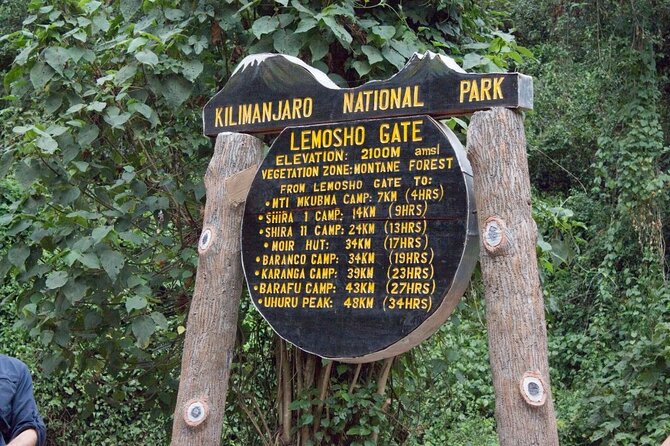
- Day 1: Londorossi Gate to Mti Mkubwa Camp
- Day 2: First views from Shira Plateau
- Day 3: Shira 2 and the Lava Tower acclimatization walk
- Day 4: Lava Tower and the descent to Barranco
- Day 5: Barranco Wall, Karanga, and another practice climb
- Day 6: Barafu Camp and the quiet before summit night
- Day 7: Uhuru Peak and the long descent
- Day 8: Millennium Camp to Mweka Gate
- What the $1,090 price really covers
- Who should choose this climb
- Booking details and cancellation advice
- Should you book this Lemosho climb?
- FAQ
- How long is the Kilimanjaro climbing experience?
- Which route does the climb use?
- What time does the activity start?
- Is hotel pickup available?
- Is this a group tour?
- What meals are included?
- Are Kilimanjaro park fees included?
- Is hiking equipment included?
- Does the climb reach Uhuru Peak?
- What happens if bad weather cancels the experience?
Key points to know before booking
- Lemosho begins in the rainforest: The first walk starts at Londorossi Gate and reaches Mti Mkubwa Camp through wet forest, so a rain jacket is essential.
- The route uses smart altitude practice: You climb to Lava Tower at 4,630 meters, spend time there, then sleep lower at Barranco Camp.
- Summit night is the hardest section: You leave Barafu Camp at night, reach Uhuru Peak, return for a short rest, then continue down to Millennium Camp.
- The private setup gives your group more control: Only your own party participates, and the itinerary says each pair of climbers receives a personal guide during the summit push.
- The price needs checking: Meals, an experienced guide, activity-area transfers, and seven nights of breakfast and dinner are included, but park fees and personal equipment are extra.
- The operator’s strongest praise concerns service: Comments connected with its other Tanzania excursions highlight friendly staff, good organization, hospitality, and helpful local interaction. Those comments do not directly assess this climb, so use them as a modest service signal rather than proof of summit performance.
What the Lemosho Route feels like
Lemosho is appealing because the scenery changes in clear stages. You start among trees and moisture, then reach the open Shira Plateau, pass strange high-altitude plants, cross bare volcanic ground, and finish among rock, ice, and sky. The route gives you time to adjust before summit night, though the higher camps still demand steady pacing.
The first two days are relatively gentle in distance, but the mountain is already working on your body. By Day 3, you are near 3,900 meters. You may feel fine one hour and slow the next. The guides’ job is not to rush you. The supplied plan repeatedly uses gradual climbs, rest breaks, and short acclimatization walks, which is exactly what you want on a high mountain.
This is a private tour, not a fixed public group. That can make the experience more comfortable if you are traveling with friends or family, since your pace and rest needs are easier to discuss. It can also mean the final price depends heavily on how many people are in your party, so ask how the $1,090 rate changes for one person, two people, or a larger group.
More Kilimanjaro climbs:
- Kilimanjaro climb by Lemosho Route (7-day)
★ 5.0 · 651 reviews - Kilimanjaro climb, Machame Route (7-day)
★ 5.0 · 262 reviews - Kilimanjaro Climbing Lemosho Route 8 Days.
★ 5.0 · 186 reviews
Day 1: Londorossi Gate to Mti Mkubwa Camp
Your guide and mountain support team meet you at your hotel in the morning for another briefing. The drive from the Kilimanjaro area to Londorossi Gate takes about three to four hours, followed by permits and registration with Search and Rescue.
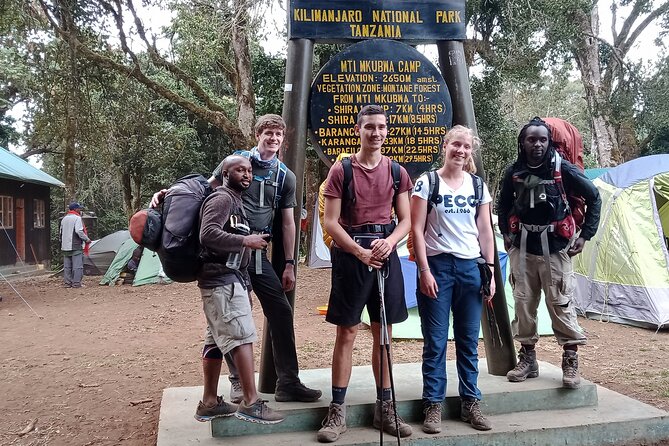
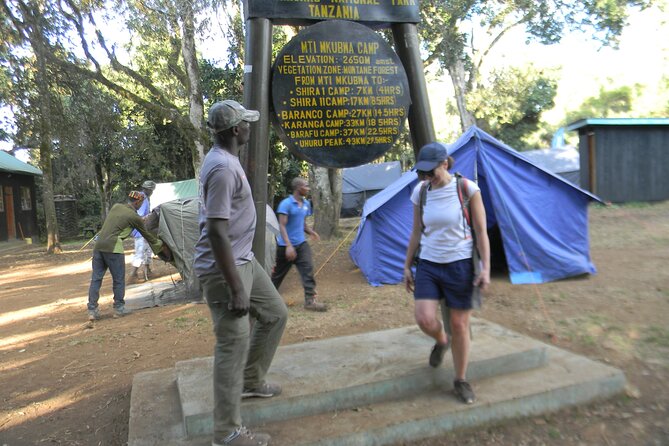
The first walking section takes about two hours and ends at Mti Mkubwa Camp, at 2,780 meters. This is a short opening day, but it is not a throwaway day. The rainforest can be wet, and the trail introduces you to the rhythm of carrying a day pack, walking slowly, and keeping your clothing dry.
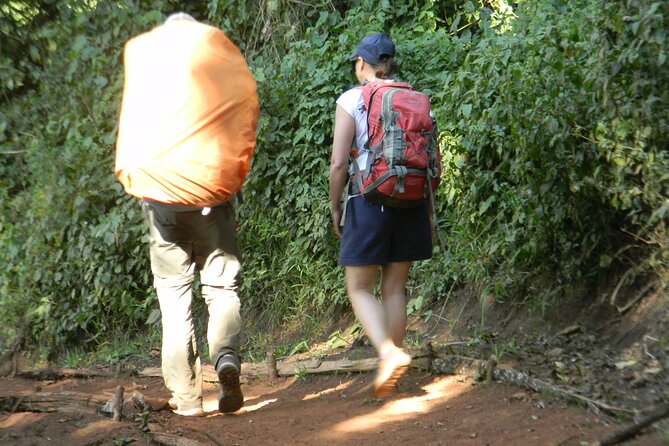
Bring your rain jacket where you can reach it quickly. Do not bury it in a large bag. Rain protection is specifically important on this first day, and wet clothing becomes a real nuisance once temperatures drop at camp.
The practical drawback is the long drive before walking. After an early start and several hours in a vehicle, the first trail may feel more tiring than its two-hour duration suggests.
Day 2: First views from Shira Plateau
You wake early, eat breakfast, and climb gradually toward Shira 1 Camp at 3,505 meters. The walk takes about five to six hours. This is where Kilimanjaro begins to feel open and grand, with views toward the Shira Plateau and Kibo Volcano.
The value of this day is not simply the scenery. You gain height without forcing the pace, giving your body more time to adjust. At camp, lunch is prepared for you, followed by time to rest in your tent or walk around.
I like this balance. A climb can become unpleasant when every hour is treated as a race toward the next camp. Here, the plan gives you food, downtime, and a chance to notice how you are responding to altitude.
At 3,505 meters, headaches, tiredness, or shortness of breath may appear. Tell your guide early. A private group makes that conversation easier, but it does not remove the need to pay attention to your body.
Day 3: Shira 2 and the Lava Tower acclimatization walk
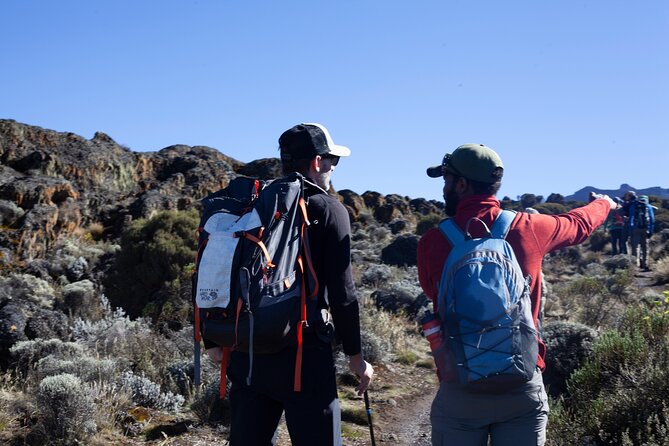
The move from Shira 1 to Shira 2 Camp is a light trek of about four hours. The camp sits at 3,900 meters, and the route offers broad views across Africa, unusual Kilimanjaro plant life, and, if the weather cooperates, a view of Mount Meru.
After lunch and a two-hour rest, you take an acclimatization walk toward Lava Tower. The plan calls for about 300 meters of additional ascent before returning to camp. This is an important training idea: you spend time higher than your sleeping altitude, then come back down to rest.
You may find this day deceptively easy. The walking is not described as difficult, but altitude can make a modest climb feel much harder than it looks on paper. Keep the pace slow and use the rest period properly. A short stroll around camp is fine. Turning the acclimatization walk into a personal race is not.
More Lemosho Route climbs:
- Kilimanjaro climb, Lemosho Route (8-day)
★ 5.0 · 148 reviews - Kilimanjaro climb, Lemosho Route (6-day)
★ 5.0 · 129 reviews - Kilimanjaro Lemosho Route
★ 5.0 · 71 reviews - Private Kilimanjaro Hike 7 Day Lemosho Route
★ 5.0 · 60 reviews
Day 4: Lava Tower and the descent to Barranco
This is one of the most useful days on the route. You leave Shira 2 at 3,900 meters and climb toward Lava Tower at 4,630 meters. The route rises and falls several times, and the high point is above 15,000 feet.
You eat lunch at Lava Tower and stay there for roughly one to two hours before descending to Barranco Camp at 3,960 meters. That high point followed by a lower sleeping camp is designed to help your adjustment. It may also be the first time you feel genuinely uncomfortable from altitude.
The descent ends at Barranco, where the famous Barranco Wall dominates the camp. It looks much steeper and more serious than the trail actually is. You tackle it the next morning, and the route is described as straightforward rather than technical.
This day may be the first major test of your attitude. You climb high, feel the thin air, and then must keep walking down. I would treat any strong headache, nausea, or unusual weakness seriously and report it to the guide rather than trying to prove toughness.
Day 5: Barranco Wall, Karanga, and another practice climb
You start early to climb the Barranco Wall before the trail becomes crowded with other groups. The wall takes about an hour, and the route is hiking rather than technical climbing. There is no need for ropes or mountaineering skill based on the supplied description, but you still need to use your hands at points and move carefully.
At the top, you have time to rest and take photos with Kibo Volcano behind you. The route then continues toward Karanga Camp, with repeated ups and downs. This section can feel harder than the Barranco Wall itself because the effort continues after the dramatic part is over.
Karanga sits at about 3,960 meters. A hot lunch is served, and later you take another acclimatization walk toward Barafu Camp, gaining about 200 meters before returning. This repeated climb and return is tiring, but it gives you a useful look at the terrain ahead.
The listed walking time is about six hours. I would not judge the day by distance alone. The uneven rises and drops, altitude, and early start make it a full mountain day.
Day 6: Barafu Camp and the quiet before summit night
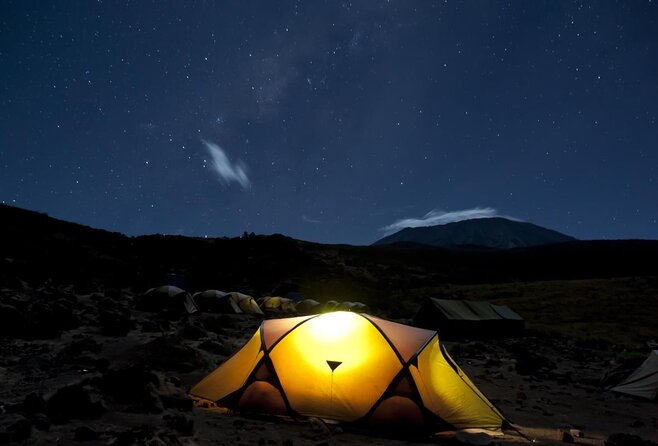
After breakfast, you climb to Barafu Summit Camp at 4,640 meters. This is your launch point for Uhuru Peak. The support team sets up the tents and sleeping bags in advance, allowing you to focus on eating, resting, and preparing for the night.
You also take a short acclimatization walk toward Kosovo Summit Intermediate Camp at about 4,800 meters before returning to Barafu. Dinner is served hot, then you should spend the remaining time sleeping if you can.
The day is listed at about five hours, but its real purpose is preparation. Barafu is high, cold, and not a place for relaxed wandering. Organize your clothing, water, headlamp, snacks, and personal items before trying to sleep.
The plan says that each pair of climbers receives a personal guide for the summit ascent. That is a strong feature on paper because the night climb is the point where individual conditions can differ sharply. Still, ask before departure how guide ratios work for your particular group, especially if you are booking alone.
Day 7: Uhuru Peak and the long descent
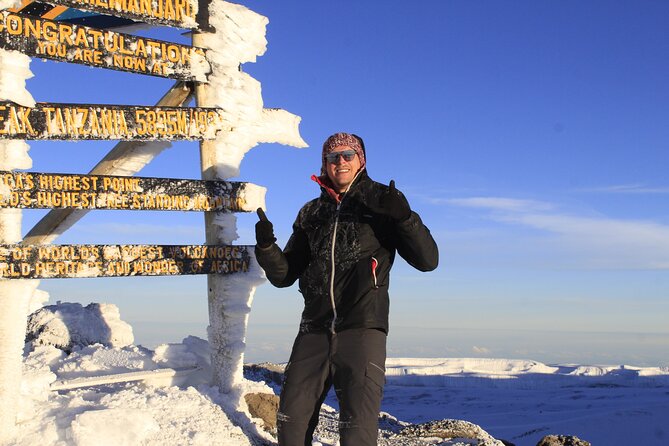
Summit night begins at Barafu, at 4,640 meters. You leave at night for the climb to Uhuru Peak, 5,895 meters. The route is technically manageable according to the supplied description, but the altitude is the real challenge.
Darkness removes much of the scenery, leaving you focused on each step. The slow pace matters. So does the guide’s watch over your physical and mental condition. You may reach the top feeling strong, exhausted, emotional, or some combination of all three.
At Uhuru Peak, you have reached the highest point on Kilimanjaro and the end of the ascent via Lemosho. If conditions and energy allow, the plan offers an optional descent toward the nearest glacier. Treat that as an extra, not a promise. Summit day is already demanding, and your safety comes first.
After the summit, you return to Barafu Camp. There is a two-hour rest before continuing down to Millennium Camp at 3,820 meters. The total day is listed at about eight hours, though the exact length can vary with pace, weather, and how long you spend at the summit.
This is the hardest day by a wide margin. The physical effort is only part of it. You also have to descend after reaching a goal that may have taken months of preparation. Eat, drink, and follow the guide’s instructions even when all you want is a bed.
Day 8: Millennium Camp to Mweka Gate
You wake in tropical rainforest at Millennium Camp, now much lower than the summit zone. The drop in altitude should bring relief, and breakfast gives you a chance to recover before the final walk.
The descent to Mweka Gate at 1,650 meters takes about five hours. At the gate, the group gathers to celebrate the climb, and you can record your thoughts in the guest book. The operator then provides commemorative certificates at its office and transfers you back to your hotel.
This final day is practical rather than scenic in the grand summit sense. Your knees may be tired, and the trail can feel long after the previous day. Still, reaching the gate marks the end of the mountain work, and the certificate is a pleasant physical reminder of what you completed.
What the $1,090 price really covers
At $1,090 per person, the package may look attractive for an eight-day private Kilimanjaro climb. It includes private transport to the activity area, a professional experienced guide, eight lunches, seven dinners, and seven breakfasts.
The major question is the park fee. Mount Kilimanjaro park fees are not included and can be paid directly to the park or through the tour operator. Since this charge can materially affect the final cost, ask for a written breakdown before booking. You should also confirm exactly what transport is included, where pickup occurs, and how group discounts apply.
You pay separately for:
- Flights
- Visa costs
- Guide tips
- Personal hiking equipment
- Personal needs
- Kilimanjaro park fees
The value is strongest if you already have suitable hiking gear and are traveling with enough people to benefit from the private format or group discount. If you need to buy or rent every item and then add park charges, the advertised price is only the starting point.
Meals are included for the mountain portion, but the details are not specified beyond breakfast, lunch, and dinner. Ask about drinkable water, snacks, special diets, and meal arrangements if any of those matter to you.
Who should choose this climb
I would consider this route for someone who wants a longer Kilimanjaro schedule with several acclimatization stages and a private group. The eight-day format gives you more time than a shorter climb, and the Shira, Lava Tower, Barranco, Karanga, and Barafu sequence is designed to build gradually toward summit night.
It suits you if you can handle long walking days, basic tent camping, early starts, and a demanding high-altitude ascent. The description says most people can participate, but that should not be read as a promise that the climb will be easy. The summit is nearly 6,000 meters high, and personal fitness, health, and altitude response still matter.
I would not choose it without preparation if you dislike cold nights, shared camp routines, or repeated climbs and descents. The route is scenic, but it is also serious. You should be comfortable with the possibility that your body may set the final schedule.
Booking details and cancellation advice
Pickup is offered, and the stated start time is 8:30 a.m. The activity ends back at the meeting point after the return transfer to your hotel. Confirmation is provided at booking, and only your group participates.
Free cancellation applies if you cancel at least 24 hours before the local start time. Cancellations inside 24 hours are not refundable, and changes inside that period are not accepted. If poor weather causes the operator to cancel, you are offered another date or a full refund.
The supplied feedback connected with this company is limited and mixed in relevance. Praise focuses on friendly service, hospitality, organization during the COVID-19 period, and warm local interaction on other Tanzania trips such as Materuni Waterfall. I would take that as encouraging for the company’s general service, but I would still ask direct questions about guide ratios, rescue procedures, park fees, gear, and summit-day support.
Should you book this Lemosho climb?
Book it if you want an eight-day private attempt on Kilimanjaro, value gradual acclimatization, and are prepared to confirm the true price after park fees and equipment. The route offers a strong mix of rainforest, open plateau, volcanic high ground, the Barranco Wall, and a full summit night.
Pause before booking if the $1,090 figure is your strict total budget. The excluded charges may be substantial, and the supplied information does not spell out every camping, water, or equipment detail. Get those answers in writing.
For a prepared climber who wants time on the mountain rather than a hurried ascent, this is an appealing plan. The key is to buy the actual service, not just the headline price: clear fees, clear guide support, and a clear safety plan matter more than a cheap first number.
FAQ
How long is the Kilimanjaro climbing experience?
The climb lasts approximately eight days, including seven nights on the mountain and the final descent to Mweka Gate.
Which route does the climb use?
The experience uses the Lemosho Route, beginning at Londorossi Gate on the western side of Kilimanjaro and ending at Mweka Gate.
What time does the activity start?
The stated start time is 8:30 a.m.
Is hotel pickup available?
Yes. Private transfer to the activity area is included, and the team meets you at your hotel in the morning.
Is this a group tour?
No. It is a private activity, so only your own group participates. Group discounts are offered.
What meals are included?
The package includes eight lunches, seven dinners, and seven breakfasts.
Are Kilimanjaro park fees included?
No. Park fees are separate and may be paid directly to the park or through the tour operator.
Is hiking equipment included?
No. Personal hiking gear is not included, so you must arrange your own equipment.
Does the climb reach Uhuru Peak?
Yes. The summit ascent on Day 7 is to Uhuru Peak at 5,895 meters.
What happens if bad weather cancels the experience?
If poor weather causes cancellation, you are offered a different date or a full refund. You can also cancel for a full refund if you do so at least 24 hours before the start time.
Just added in Moshi
- Zanzibar: Stone Town tour and Nakupenda beach with Lunch★ 5.0 · 1 review
- machame route★ 5.0 · 16 reviews
- day trip lake manyara★ 5.0 · 2 reviews
- Mt Kilimanjaro 6 days Marangu route hike★ 5.0 · 3 reviews
- Private Cycle to Kilimanjaro Bike Park Safari★ 5.0 · 6 reviews
- West Kilimanjaro cycling Adventures★ 4.5 · 8 reviews
- Wildlife Extravaganza: Manyara, Tarangire & Ngorongoro in 3 Days★ 5.0 · 3 reviews
- 3 Days Private E-Bike Tour in West Kilimanjaro★ 5.0 · 3 reviews
Lemosho Route Climbs, compared.

8-Day Small-group Lemosho Kilimanjaro Summit Trekking
Read our review →


Climbing Kilimanjaro through 8 days Lemosho Route
Read our review →Browse the lists this tour appears in