
Reviewed · LEMOSHO ROUTE CLIMBS
8-Days Kilimanjaro Climbing via Lemosho Route
Africa begins with one hard step. This 8-day Lemosho climb gives you Kilimanjaro’s scenic western approach, quieter trails, careful altitude gains, and wide views across the Shira Plateau. I especially like the extra acclimatization time and the route’s mix of forest, moorland, volcanic rock, and glacier views. The main consideration is the physical strain: summit night starts around midnight, and the cold, altitude, and long descent demand real preparation.
I also like that the price includes park fees, tented mountain accommodation, meals, safety equipment, and a climbing crew, so the $2,100 cost covers the major expenses in one package. Guides named Muntari, Sole, Frank, and Babusha have provided especially attentive support, including airport pickup and a summit celebration. Still, you should confirm the meeting time, since the listed start time is 9:00 p.m., and remember that crew tips and your visa cost extra.
In This Review
- Key points about the Lemosho climb
- Why Lemosho is a smart route choice
- Day 1: Rainforest trails from 2,389 to 2,785 meters
- Day 2: Leaving the forest for Shira Plateau
- Day 3: A full acclimatization day on Shira
- Day 4: High at Lava Tower, lower at Barranco
- Day 5: Barranco Wall and Karanga Camp
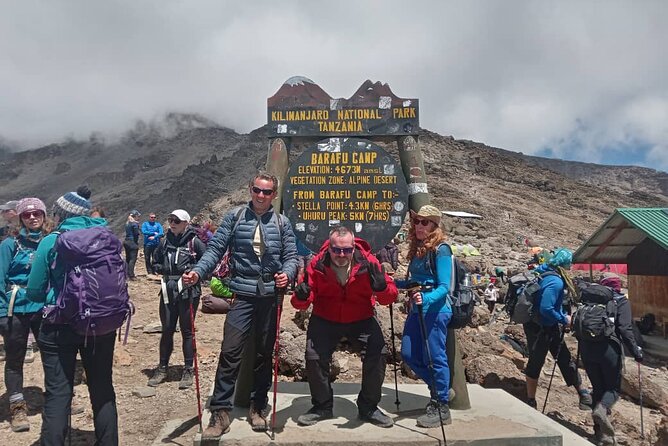
- Day 6: Barafu Camp and preparation for summit night
- Day 7: Midnight ascent to Uhuru Peak
- Day 8: Descent to Mweka Gate and the return to Moshi
- What the $2,100 price really covers
- The crew and the human side of the climb
- Who should book this climb?
- Should you book the 8-day Lemosho route?
- FAQ
- How long does the Kilimanjaro climb last?
- What is included in the $2,100 price?
- Are meals included during the climb?
- What is not included in the tour price?
- How difficult is the climb?
- What is the group size?
- Is pickup available?
Key points about the Lemosho climb
- Lemosho begins in Kilimanjaro’s rainforest, where muddy, slippery trails make gaiters and trekking poles useful from the first day.
- The Shira Plateau provides a full acclimatization day, with gentle walking toward Kibo and optional walks around Lent Hills.
- Lava Tower and Barranco Camp form the route’s altitude lesson, taking you high before you sleep lower.
- Barranco Wall is the most hands-on section, with a steep scramble that shows why a strong support crew matters.
- Summit night starts around midnight, with the reward of sunrise near Stella Point and the final push to Uhuru Peak.
- The $2,100 price includes the main climbing costs, but not your visa or gratuity for the crew.
Why Lemosho is a smart route choice
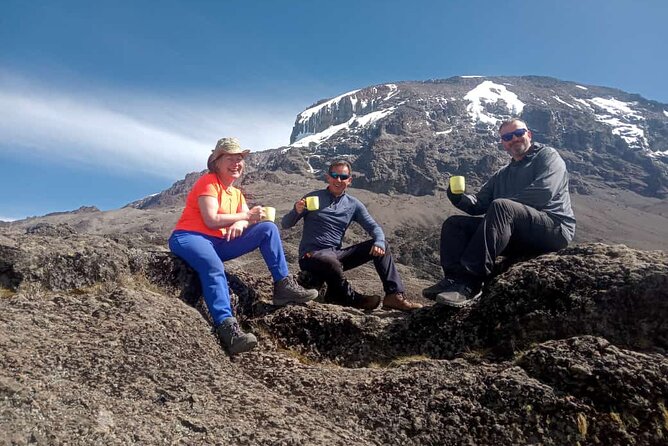
Kilimanjaro has several routes, but Lemosho is a strong pick if you want scenery and time to adjust to altitude. It approaches from the west, begins in the rainforest, crosses the Shira Plateau, then joins the southern circuit before reaching Barafu Camp and the summit route.
That shape matters. You do not simply walk uphill every day and hope for the best. The itinerary includes days with modest altitude gains, a high point followed by a descent, and a full day on the Shira Plateau. Those pauses give your body more time to respond to thinner air.
The route is also described as having lower crowds than some better-known approaches. That does not mean you will have the mountain to yourself, especially in busy periods, but the quieter start is part of Lemosho’s appeal. You get broad mountain views without beginning on a heavily used trail.
The eight-day length is another advantage. A shorter climb may cost less time, but it gives you fewer chances to adjust. Here, the schedule uses seven nights on the mountain and a gradual approach to summit night. That makes the route a better fit for someone who values a higher chance of reaching the top over shaving a day from the schedule.
More Kilimanjaro climbs:
- Kilimanjaro climb by Lemosho Route (7-day)
★ 5.0 · 651 reviews - Kilimanjaro climb, Machame Route (7-day)
★ 5.0 · 262 reviews - Kilimanjaro Climbing Lemosho Route 8 Days.
★ 5.0 · 186 reviews
Day 1: Rainforest trails from 2,389 to 2,785 meters
Your day begins with a roughly 45-minute drive from Moshi through mountain villages to the Kilimanjaro National Park Gate. Park permits must be issued before you set off, so there can be a waiting period while different climbing crews organize their departures.
That pause is part of the real experience. The gate is a working base, not a polished theme-park entrance. You will see porters and guides preparing loads, equipment, and food for the days ahead.
Once hiking begins, the route enters rainforest. The trail climbs from 2,389 meters to 2,785 meters, a modest gain of 396 meters over about four hours. Your guide can point out local plant life, animals, and the changing forest around you.
The practical warning is mud. Lower Kilimanjaro can be wet, and slippery sections may slow you down. Pack gaiters, trekking poles, and shoes with dependable grip. The first day is not the hardest physically, but wet feet can make every later day less pleasant.
Day 2: Leaving the forest for Shira Plateau
Day two covers about five hours and climbs from 2,785 to 3,504 meters. The rainforest gradually gives way to open moorland, and the trail continues upward toward the rim of the Shira Plateau.
This is one of the route’s visual rewards. The trees fall away, the air gets cooler, and the views widen. You begin to see why Lemosho is favored for scenery rather than simply for reaching the summit by the fastest line.
The 719-meter gain is meaningful, so use the day to practice a steady pace. There is no prize for racing ahead. Listen to your guide, drink regularly, and keep your effort controlled. The shift from warm forest to colder high ground can also catch you off guard, so keep a warm layer accessible rather than buried at the bottom of your bag.
Day 3: A full acclimatization day on Shira
Day three is one of the most useful parts of the schedule. You walk across the Shira Plateau from roughly 3,504 to 3,895 meters, usually for about five hours, while moving toward Kibo’s glaciered summit.
The route passes through moorland meadows and reaches Shira 2 Camp near a stream. It then continues toward Moir Hut at the base of Lent Hills. The plateau itself is among the highest plateaus on Earth, so the setting feels unusually open and exposed.
This day is not filler. It lets you spend time at altitude without making a huge vertical jump. Walks around Lent Hills offer additional acclimatization options, though the exact walking plan can depend on how the group is feeling.
The drawback is that altitude may already affect your sleep, appetite, or energy. Do not treat the gentle walking as easy in the ordinary sense. At nearly 3,900 meters, a mild slope can feel demanding.
More Lemosho Route climbs:
- Kilimanjaro climb, Lemosho Route (8-day)
★ 5.0 · 148 reviews - Kilimanjaro climb, Lemosho Route (6-day)
★ 5.0 · 129 reviews - Kilimanjaro Lemosho Route
★ 5.0 · 71 reviews - Private Kilimanjaro Hike 7 Day Lemosho Route
★ 5.0 · 60 reviews
Day 4: High at Lava Tower, lower at Barranco
Day four is a clever altitude day. You begin at about 3,895 meters and reach Lava Tower, also called the Shark’s Tooth, at approximately 4,650 meters. After passing the junction toward Arrow Glacier, you descend to Barranco Camp at around 3,986 meters.
The listed net gain is only 91 meters, but the day is far more important than that number suggests. You climb high during the day and sleep lower at night, giving your body a useful test without keeping you at the highest point.
The five-hour walk crosses an increasingly rocky setting, with Kibo appearing from different angles. The route toward Lava Tower can feel stark and exposed compared with the forest below. At Barranco, the huge wall ahead gives you an early look at tomorrow’s challenge.
Altitude is the key issue here. You might feel fine at the start and less fine near Lava Tower. Tell your guide promptly if you feel unwell. This is not the day to hide symptoms to prove toughness.
Day 5: Barranco Wall and Karanga Camp
After breakfast, the trail climbs the Barranco Wall before continuing toward Karanga Valley. This is about five hours of walking, with only a 48-meter net altitude gain from Barranco Camp to Karanga Camp at 4,034 meters.
Do not let the small altitude number fool you. The Barranco Wall is steep and adventurous, and parts of the route require careful hand and foot placement. It is not described as technical climbing, but it is more active than the steady trail sections.
This is also where the crew’s strength and agility become easy to appreciate. Porters carrying substantial loads move over the wall with impressive confidence. You should still move at your own pace. Keep both hands free when needed, follow your guide’s instructions, and avoid rushing to match the crew.
The route then joins the Mweka Trail and continues to Karanga Camp. For many people, this is one of the most memorable days because it combines a physical challenge with close mountain views and a clear sense that the summit is getting nearer.
Day 6: Barafu Camp and preparation for summit night
The walk to Barafu Camp takes about four hours and climbs from 4,034 to 4,662 meters. By reaching Barafu, you complete the southern circuit, which has shown Kibo from several sides.
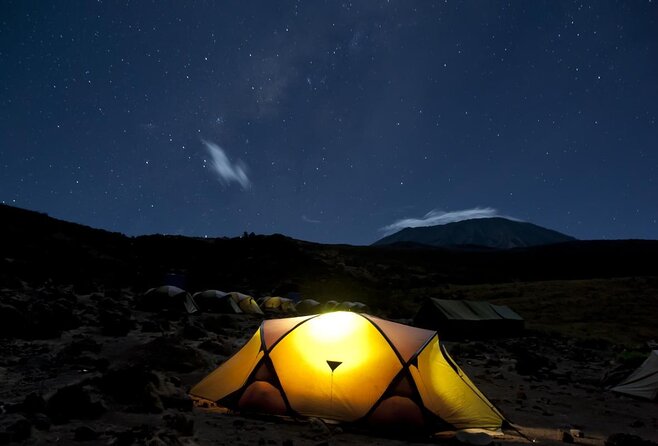
Barafu is the launch point for the summit push. The day is shorter on paper, but the high altitude makes it tiring. The plan calls for an early dinner followed by rest, so you need to use every available hour to eat, organize clothing, fill water, and prepare your summit equipment.
The schedule’s practical rhythm is important: you do not arrive at Barafu and then carry on to the top. You stop, rest, and begin the final effort around midnight. This split creates a strange day, part hiking day and part waiting period. Keep your gear organized and try to sleep, even if the timing feels unnatural.
Day 7: Midnight ascent to Uhuru Peak
Summit day is the toughest part of the climb. You start around midnight and walk in darkness for several hours, taking frequent short breaks as you gain height toward Stella Point at roughly 18,900 feet.
Cold and wind can be severe at this hour. Layering matters, and you should keep warm clothing ready before leaving Barafu. The slow pace is deliberate. Your guide and crew are there to keep the effort controlled while you deal with the altitude and fatigue.
Near Stella Point, sunrise over Mawenzi Peak provides one of the route’s great rewards. From there, you continue to Uhuru Peak, the highest point on Kilimanjaro and the highest point in Africa.
The emotional high point is followed by a demanding physical reality: you must descend. The day includes a return toward Barafu for lunch and then a continued descent to Mweka Hut. The provided schedule gives about seven hours for this part of the journey, though summit day is better understood as a long, strenuous mountain day rather than a neat clock exercise.
You may feel strong when you reach Uhuru Peak, then tired quickly on the way down. Protect your knees, use your poles, and listen to the crew. Reaching the summit is only half of this day’s work.
Day 8: Descent to Mweka Gate and the return to Moshi
After breakfast at the Mweka area, you have a farewell ceremony with the crew before beginning the final descent. The trail drops from about 3,106 meters to 1,633 meters, a loss of 1,473 meters over roughly four hours.
The lower route is warmer, wetter, muddier, and steep in places. Gaiters and trekking poles are useful again, even if you packed them away after leaving the rainforest. Descending can seem easy at first, but tired legs make slippery ground a serious concern.
At Mweka Park Gate, you receive your summit certificate. A vehicle then meets you at Mweka village for the roughly 30-minute drive back to your hotel in Moshi.
That return transfer is a welcome finish. After eight days of tents, thin air, early starts, and changing weather, a warm hotel room feels like a major luxury.
What the $2,100 price really covers
At $2,100 per person, this is not a bare-bones mountain permit. The cost includes tented accommodation on Kilimanjaro, park entry fees, hiking and safety equipment, the climbing crew, seven dinners, eight lunches, and seven breakfasts.
Those inclusions make the price easier to judge. You are paying for the major operating parts of a guided climb, not simply for a guide to walk beside you. Park fees alone are an important part of any Kilimanjaro budget, and food, transport support, tents, and crew labor add up quickly.
The package also offers pickup, and the company has handled airport pickup as part of its service. That can simplify the start of the trip, especially if you are arriving in Tanzania for the climb.
You still need to budget for a visa and a tip for the crew. These are not small details. The crew carries equipment, prepares meals, supports safety, and helps maintain the pace of the expedition. Ask the provider for current tipping guidance before you arrive.
The listed group limit is 15 people. That is large enough for a social group but still manageable on a narrow trail. Your experience may depend on the final group size and how well the guides manage different walking speeds.
The crew and the human side of the climb
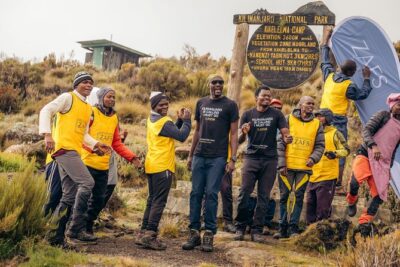
The strongest praise for this experience centers on the level of care from the Almighty Kilimanjaro team. Guides Muntari, Sole, Frank, and Babusha are specifically named for their support, and the service has included care from airport pickup through the summit celebration.
That matters on Kilimanjaro. The mountain is not just a scenic walk. You need a crew that can handle changing weather, altitude concerns, tired legs, meals, tents, and the unusual timing of summit night.
One unusual account describes reaching the summit and returning in five days instead of eight, after the company adjusted to that person’s wishes. That shows flexibility, but I would not treat a five-day finish as the standard or as a target. The eight-day schedule exists for a reason, especially its slower altitude progression.
The company has received two top-rated accounts in the supplied information, with praise focused on care, flexibility, and hard work. That is encouraging, though a small number of ratings cannot tell you everything about day-to-day operations. I would still ask clear questions about equipment, guide-to-climber ratios, emergency procedures, and the exact pickup plan before paying.
Who should book this climb?
I would recommend this route to a reasonably fit person who wants a scenic, guided Kilimanjaro experience and can commit to eight demanding days. You should be comfortable walking for several hours, sleeping in tents, handling cold conditions, and making a midnight summit attempt.
This is not a casual sightseeing excursion. The moderate fitness requirement understates the seriousness of summit night. You do not need to be an elite athlete, but you do need preparation, patience, and the willingness to move slowly.
Lemosho is particularly suitable if you value:
- A longer schedule for altitude adjustment
- Forest, plateau, volcanic, and summit scenery
- A route with a lower-crowd reputation
- A fully supported climb with meals and tented accommodation included
- A group experience capped at 15 people
You may prefer another plan if you have very limited time, dislike camping, or want to avoid a midnight climb. You should also think carefully about the price if you still need to add a visa, crew tip, personal clothing, and other items not listed as included.
Should you book the 8-day Lemosho route?
I would book this climb if your priority is a well-paced route with strong scenery and substantial crew support. The Shira Plateau acclimatization day, Lava Tower ascent followed by a descent, and southern circuit give you a sensible structure for handling Kilimanjaro’s altitude.
The best reason to choose it is the balance between scenery and preparation. The main caution is not the route itself, but the effort required to finish it. Confirm the 9:00 p.m. start time, ask exactly what hiking and safety equipment is supplied, and budget separately for your visa and crew tip.
If you prepare properly and respect the schedule, this offers a serious but well-supported path to Uhuru Peak. The extra days are not wasted time. On Kilimanjaro, they may be the part that gets you to the top.
FAQ
How long does the Kilimanjaro climb last?
The climb lasts approximately eight days, including seven nights on the mountain and the final descent to Mweka Gate.
What is included in the $2,100 price?
The price includes tented accommodation on Mount Kilimanjaro, entry fees, hiking and safety equipment, the climbing crew, seven dinners, eight lunches, and seven breakfasts.
Are meals included during the climb?
Yes. The package includes seven dinners, eight lunches, and seven breakfasts.
What is not included in the tour price?
A visa and a tip for the climbing crew are not included.
How difficult is the climb?
A moderate level of physical fitness is required. The hardest section is the midnight summit push, which involves cold, wind, altitude, several hours of uphill walking, and a long descent afterward.
What is the group size?
The maximum group size is 15 people.
Is pickup available?
Yes. Pickup is offered, and the service information includes a vehicle transfer back to Moshi from Mweka village after the descent.
Just added in Moshi
- Zanzibar: Stone Town tour and Nakupenda beach with Lunch★ 5.0 · 1 review
- day trip lake manyara★ 5.0 · 2 reviews
- Mt Kilimanjaro 6 days Marangu route hike★ 5.0 · 3 reviews
- machame route★ 5.0 · 16 reviews
- Private Cycle to Kilimanjaro Bike Park Safari★ 5.0 · 6 reviews
- West Kilimanjaro cycling Adventures★ 4.5 · 8 reviews
- Wildlife Extravaganza: Manyara, Tarangire & Ngorongoro in 3 Days★ 5.0 · 3 reviews
- 3 Days Private E-Bike Tour in West Kilimanjaro★ 5.0 · 3 reviews
Lemosho Route Climbs, compared.


8-Day Small-group Lemosho Kilimanjaro Summit Trekking
Read our review →



Climbing Kilimanjaro through 8 days Lemosho Route
Read our review →Browse the lists this tour appears in