
Reviewed · LEMOSHO ROUTE CLIMBS
8 Days Mount Kilimanjaro Climbing via Lemosho Route
Kilimanjaro rewards patience more than speed. This 8-day Lemosho climb gives you time to adjust to altitude while crossing rainforest, moorland, high desert, and the icy summit zone. I like the route’s quieter feel and its wide views across the mountain, especially during the Shira Plateau and South Circuit sections. I also like that the price includes tented mountain lodging, meals, safety equipment, transfers, and an English-speaking guide. The main drawback is the summit night: you will gain more than 1,200 meters from Barafu Camp to Uhuru Peak, then descend nearly 2,800 meters the same day.
The strongest praise for Kentau Safaris centers on the crew’s support. One climber who took on the route in 2023 said the team helped make a difficult goal possible, while another described the staff as cooperative and supportive throughout the journey. That matters on Kilimanjaro, where good pacing, steady encouragement, and careful attention to safety can matter as much as scenery.
In This Review
- Key points to know before booking
- Why Lemosho is a smart eight-day choice
- Day 1: Rainforest trails from 2,389 to 2,785 meters
- Day 2: Leaving the forest for the Shira rim
- Day 3: A full acclimatization day on Shira Plateau
- Day 4: Lava Tower, then down to Barranco
- Day 5: The Barranco Wall and Karanga Camp
- Day 6: The South Circuit and Barafu Camp
- Day 7: Uhuru Peak and the long descent
- Day 8: Mweka descent, certificates, and Moshi
- Tents, meals, equipment, and support
- Who should book this climb?
- Should you book the Lemosho route with Kentau Safaris?
- FAQ
- How long is the Mount Kilimanjaro climb?
- Where does the experience begin?
- What time does the experience start?
- Is pickup available?
- What is the maximum group size?
- What accommodation is provided on the mountain?
- Are meals included?
- Is a guide included?
- Is personal climbing gear included?
- Is mountaineering insurance included?
- What should I bring for muddy sections?
- Can I cancel for a full refund?
Key points to know before booking
- Lemosho starts in the rainforest and reaches the Shira Plateau: You get a gradual visual change from wet forest to open moorland and high alpine terrain.
- The route is built for acclimatization: A full day on the Shira Plateau, a climb to Lava Tower followed by a descent, and several moderate altitude gains help your body adjust.
- Summit night begins between midnight and 2 a.m.: The final push is cold, steep, tiring, and mentally demanding.
- The price covers important essentials: Tents, meals, climbing and safety equipment, crew support, guide services, and transfers are included.
- The Barranco Wall is the most adventurous trail section: It requires careful movement, but the itinerary describes it as a memorable display of the crew’s skill and strength.
- Bring gaiters and trekking poles: The rainforest and final descent can be muddy, wet, steep, and slippery.
Why Lemosho is a smart eight-day choice
Kilimanjaro has several climbing routes, but Lemosho earns its reputation through scenery and a steady pace. It approaches the mountain from the west, takes you across the Shira Plateau, then joins the southern circuit before the summit. That design gives you views from several sides rather than sending you straight toward the peak.
The extra days also matter. An eight-day schedule lets you gain altitude in smaller steps, with the third day used for walking across the Shira Plateau and the fourth day reaching a much higher point before sleeping lower at Barranco Camp. This climb high, sleep lower pattern is useful for acclimatization.
At $2,500 per person, the trip is not a cheap mountain outing, but the price includes more than a guide and a tent. You receive seven breakfasts, eight lunches, seven dinners, tented accommodation in modern four-season North Face VE-25 tents, hiking and safety equipment, the climbing crew, an English-speaking guide, and transport from the park exit back to Moshi.
You still need to budget for personal gear, mountaineering insurance, and tips for the crew. Those are not minor extras. Proper clothing, footwear, and insurance are essential for a high-altitude climb, and tipping should be planned as part of the total cost rather than treated as an afterthought.
The group limit is 15 people. That is large enough to create a social atmosphere, but small enough to keep the trip from feeling like a mass procession. The available comments give special credit to Kentau Safaris for strong support and cooperation, which is exactly the quality you want during a long summit attempt.
More Kilimanjaro climbs:
- Kilimanjaro climb by Lemosho Route (7-day)
★ 5.0 · 651 reviews - Kilimanjaro climb, Machame Route (7-day)
★ 5.0 · 262 reviews - Kilimanjaro Climbing Lemosho Route 8 Days.
★ 5.0 · 186 reviews
Day 1: Rainforest trails from 2,389 to 2,785 meters
The first day begins with a drive of about three hours from Moshi to the Kilimanjaro National Park Gate. The route passes through mountainside villages before reaching the park entrance, where permits are issued and climbing crews prepare supplies and equipment.
That wait is part of the Kilimanjaro experience. You see the practical side of the climb before setting off: porters, guides, permits, food, and gear all have to be organized. It is not glamorous, but it gives you a clear sense that this is a serious expedition rather than a casual day hike.
Once on the trail, you walk through rainforest for about five hours. The route rises from 2,389 meters to 2,785 meters, a gain of 396 meters. Your guide can point out local plants, wildlife, and features of the forest as the path winds upward.
The lower trail can be muddy and slippery. Gaiters are strongly recommended, and trekking poles will help with balance. This is a good day to keep your pace controlled. You are not trying to prove anything in the first few hours.
Day 2: Leaving the forest for the Shira rim
Day two covers about six hours, climbing from 2,785 meters to 3,504 meters. The rainforest gradually gives way to open moorland, and the trail continues upward toward the rim of the Shira Plateau.
This change is one of Lemosho’s great pleasures. The enclosed, damp forest disappears, replaced by wider views and cooler air. You can feel the mountain opening around you, but you also notice the altitude more clearly. Temperatures begin to drop, so keep a warm layer handy rather than burying it at the bottom of your pack.
The altitude gain is 719 meters, the largest single increase before the summit push. That makes your guide’s pacing important. Walk slowly, drink regularly, and resist the temptation to rush simply because the trail looks manageable.
Day 3: A full acclimatization day on Shira Plateau
The third day reaches 3,895 meters, with an altitude gain of 391 meters and about six hours of walking. Instead of moving straight toward the summit, you spend the day exploring the Shira Plateau.
The path heads east toward Kibo, Kilimanjaro’s glaciered main peak, crossing open moorland and meadows. The route leads toward Shira 2 Camp beside a stream, then continues to Moir Hut at the base of Lent Hills. Walks on Lent Hills provide extra options and make this a useful acclimatization day.
This section is valuable because the altitude is already serious, yet the walking is described as gentle. You are gaining experience at elevation without the brutal effort of summit night. Shira is also one of the highest plateaus on earth, so the setting itself is a major part of the day.
Do not judge the climb by how you feel here. Some people feel fine at this stage and struggle later. Others notice a headache or poor sleep early on. Tell your guide about symptoms rather than trying to hide them.
More Lemosho Route climbs:
- Kilimanjaro climb, Lemosho Route (8-day)
★ 5.0 · 148 reviews - Kilimanjaro climb, Lemosho Route (6-day)
★ 5.0 · 129 reviews - Kilimanjaro Lemosho Route
★ 5.0 · 71 reviews - Private Kilimanjaro Hike 7 Day Lemosho Route
★ 5.0 · 60 reviews
Day 4: Lava Tower, then down to Barranco
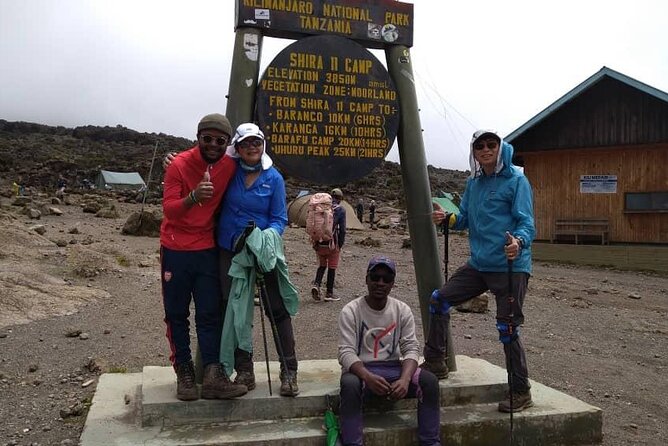
Day four is one of the best-designed parts of the route. You leave the Shira Plateau and climb east along a ridge, passing the junction toward Kibo before turning southeast toward Lava Tower, also called the Shark’s Tooth.
The route reaches about 4,650 meters at Lava Tower, though you sleep much lower at Barranco Camp. You finish the day at approximately 3,986 meters, only 91 meters above the starting elevation. The walking time is about five hours.
That modest net gain hides the real purpose of the day. You climb high, spend time at a greater altitude, and then descend to sleep. This gives your body useful exposure without forcing you to spend the night at the highest point reached.
After Lava Tower, the route passes a junction toward the Arrow Glacier before descending to Barranco. The contrast can be striking: a tough high section followed by a drop into a more sheltered camp area. This day may feel harder than the elevation figures suggest, but it prepares you for the route ahead.
Day 5: The Barranco Wall and Karanga Camp
After breakfast, you tackle the Barranco Wall. The trail climbs steeply over the wall before continuing to the Karanga Valley and the junction with the Mweka Trail.
This is the route’s most adventurous walking section. It is not described as a technical climbing pitch, but you should expect steep, careful movement and plenty of attention to where you place your feet and hands. Watching the crew move over the wall with apparent ease can be impressive. You should still follow your guide’s instructions and take the section at your own pace.
The day covers about six hours. You rise from 3,986 meters to 4,034 meters, a small net gain of 48 meters. Again, the numbers do not tell the whole story. The wall provides a physical challenge, and the route’s ups and downs add to the effort.
Karanga Camp is an important stopping point before the final move to Barafu. You are now in a much harsher high-altitude zone, and the summit attempt is close enough to occupy everyone’s thoughts.
Day 6: The South Circuit and Barafu Camp
The trail climbs from Karanga to Barafu Camp, rising from 4,034 meters to 4,662 meters. The day takes about five hours and gains 628 meters.
Reaching Barafu means you have completed the South Circuit. This route gives you views of the summit from different angles, which adds variety to the approach and helps you understand the mountain’s shape. The camp itself is the staging point for the hardest part of the climb.
Dinner is scheduled early, followed by rest. That sounds simple, but sleeping before a midnight or 2 a.m. start can be difficult. Keep your evening routine calm, organize your summit clothing before resting, and follow the crew’s instructions about timing.
Barafu is high, exposed, and not a place for lingering. The purpose of the day is to reach camp, eat, rest, and conserve energy for the summit.
Day 7: Uhuru Peak and the long descent
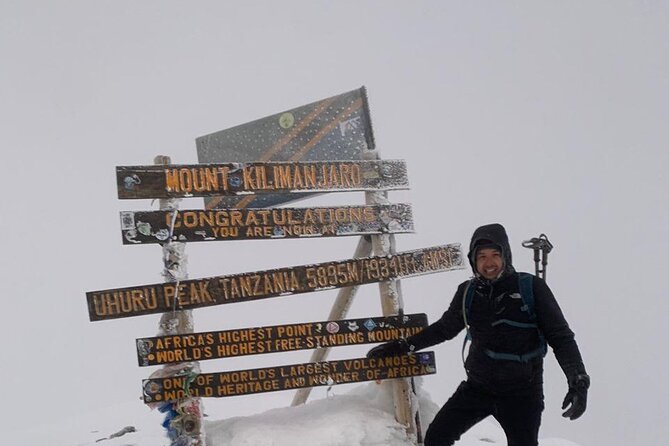
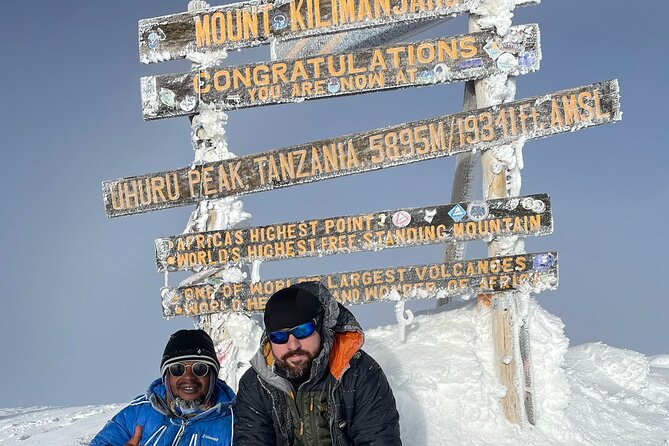
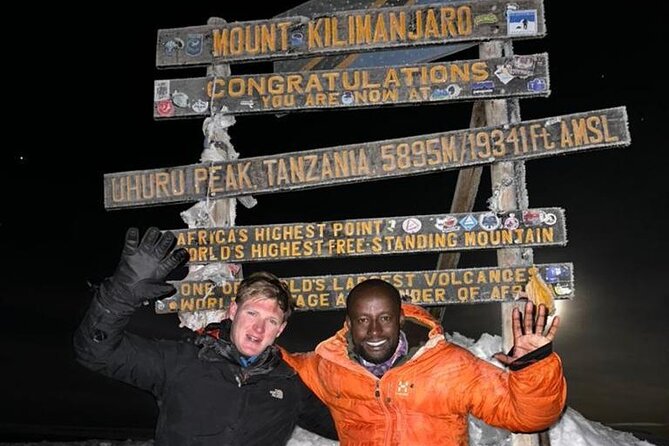
Summit day begins between midnight and 2 a.m. It is the most physically and mentally difficult part of the trip. You leave Barafu at 4,662 meters and climb to Uhuru Peak at 5,895 meters, gaining 1,233 meters.
The trail heads toward the summit between the Rebmann and Ratzel glaciers. It then switches back northwest through heavy scree toward Stella Point on the crater rim. The surface can make each step feel slow, especially in the cold and thin air.
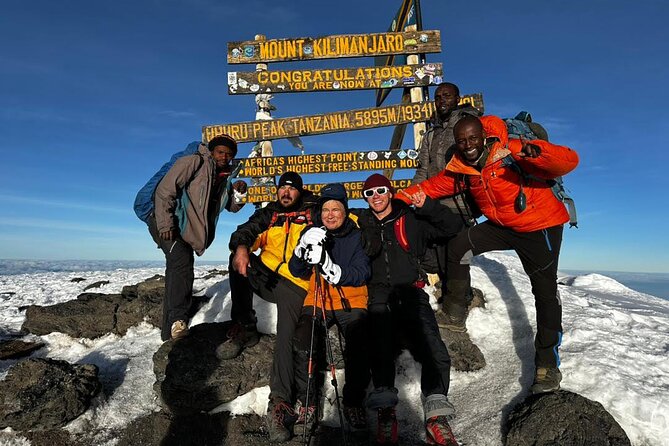
Reaching Stella Point brings a major reward: sunrise over Kilimanjaro. You get a short rest at the crater rim before continuing toward Uhuru Peak, the mountain’s highest point. The final section is still demanding, but the sense of accomplishment is powerful.
The descent is just as important. You lose about 2,789 meters, finishing the day at approximately 3,106 meters. The supplied schedule lists about six hours, but you should treat summit day as a very long and demanding day, not an ordinary hiking stage. Fatigue can make downhill walking awkward, so use trekking poles and listen to your guide.
You then overnight lower on the mountain. Getting down from the summit zone is a relief, but you still need to take care of your knees, feet, and hydration.
Day 8: Mweka descent, certificates, and Moshi
The final day begins with breakfast and a ceremony of appreciation and team bonding with the crew. This is a meaningful part of the trip. The guides and support staff have shared the route with you, and the farewell gives everyone a chance to acknowledge the effort involved.
You descend from about 3,106 meters to the Mweka Park Gate at 1,633 meters. The descent takes around five hours and loses 1,473 meters.
The lower mountain is warmer, wetter, muddier, and steeper. Gaiters and trekking poles are recommended again, for good reason. Downhill trails can be harder on tired legs than expected, and mud can turn a simple final walk into a slippery one.
At Mweka Gate, you receive your summit certificates. From the gate, a vehicle meets you at Mweka village for the drive back to your hotel in Moshi, which takes about 30 minutes.
Tents, meals, equipment, and support
You sleep in modern four-season North Face VE-25 tents. The listing does not give a detailed tent-sharing arrangement, so confirm that point before booking if it matters to you.
Meals include breakfast and dinner on seven days, plus lunch on all eight days. That covers the climb’s planned food service, but you should confirm any dietary requirements with Kentau Safaris before departure.
Hiking and safety equipment is included, which adds real value to the $2,500 cost. The exact items are not specified, so ask for a written equipment list. You still need to bring your personal gear, and the trip does not include mountaineering insurance.
An experienced English-speaking guide leads the climb, supported by a wider climbing crew. The direct praise for Kentau’s support is the most encouraging part of the available feedback. No guide names are provided, so you cannot assess an individual guide in advance.
Who should book this climb?
This route suits you if you have moderate physical fitness, enjoy long days outdoors, and want scenery as well as a summit goal. The eight-day schedule is a better choice than a rushed climb for anyone who values time for altitude adjustment.
It is not ideal if you want a relaxed holiday with short walks. Several days last five or six hours, and summit day involves a steep climb followed by a major descent. You also need to be comfortable with mud, cold, early starts, basic mountain camping, and changing weather.
The maximum group size of 15 works well for people who like some company on the trail. If you want a private climb or a very small group, ask Kentau Safaris about other arrangements before paying.
The listed meeting time is 12:00 a.m., which is midnight. Because the schedule begins with a transfer from Moshi and park permit arrangements, confirm the exact pickup time and location before the climb.
Cancellation is free if you cancel at least 24 hours before the experience start time. Changes or cancellations made within 24 hours are not accepted for a refund.
Should you book the Lemosho route with Kentau Safaris?
I would consider this a strong option if your priority is a scenic route with a sensible acclimatization plan. The Shira Plateau, Lava Tower descent, Barranco Wall, South Circuit, and sunrise summit attempt give the climb plenty of variety.
The price is reasonable for what is included, especially the tents, meals, safety equipment, crew, guide, and transport. Before booking, I would ask for the personal gear list, tent-sharing details, insurance expectations, dietary arrangements, tipping guidance, and the exact midnight meeting plan.
Book this climb if you are prepared for a demanding mountain week and value steady support from the crew. Skip it if you want a short, easy trek or if you are not ready to purchase proper personal gear and mountaineering insurance. For a first Kilimanjaro attempt, the eight-day Lemosho schedule offers a practical balance of scenery, pacing, and summit preparation.
FAQ
How long is the Mount Kilimanjaro climb?
The climb takes approximately eight days.
Where does the experience begin?
The experience is based in Moshi, Tanzania, with a transfer to Kilimanjaro National Park for the climb.
What time does the experience start?
The listed start time is 12:00 a.m., or midnight. Confirm the exact pickup arrangements with Kentau Safaris before the trip.
Is pickup available?
Yes. Pickup is offered, and transport is included from the Mweka village area back to your hotel in Moshi after the climb.
What is the maximum group size?
The maximum group size is 15 people.
What accommodation is provided on the mountain?
You stay in tented accommodation using modern four-season North Face VE-25 tents.
Are meals included?
Yes. The package includes eight lunches, seven breakfasts, and seven dinners.
Is a guide included?
Yes. A professional, experienced English-speaking guide and climbing crew are included.
Is personal climbing gear included?
Hiking and safety equipment are included, but personal gear is not included. Ask Kentau Safaris for the exact equipment list.
Is mountaineering insurance included?
No. Mountaineering insurance is not included and must be arranged separately.
What should I bring for muddy sections?
Gaiters and trekking poles are strongly recommended for the muddy rainforest trail and the wet, steep descent from Mweka.
Can I cancel for a full refund?
Yes, if you cancel at least 24 hours before the experience start time. Cancellations made less than 24 hours before the start time are not refunded.
Just added in Moshi
- Zanzibar: Stone Town tour and Nakupenda beach with Lunch★ 5.0 · 1 review
- Mt Kilimanjaro 6 days Marangu route hike★ 5.0 · 3 reviews
- machame route★ 5.0 · 16 reviews
- day trip lake manyara★ 5.0 · 2 reviews
- Private Cycle to Kilimanjaro Bike Park Safari★ 5.0 · 6 reviews
- West Kilimanjaro cycling Adventures★ 4.5 · 8 reviews
- Wildlife Extravaganza: Manyara, Tarangire & Ngorongoro in 3 Days★ 5.0 · 3 reviews
- 3 Days Private E-Bike Tour in West Kilimanjaro★ 5.0 · 3 reviews
Lemosho Route Climbs, compared.


8-Day Small-group Lemosho Kilimanjaro Summit Trekking
Read our review →



Climbing Kilimanjaro through 8 days Lemosho Route
Read our review →Browse the lists this tour appears in