
Reviewed · LEMOSHO ROUTE CLIMBS
Climb Kilimanjaro 8-Day Lemosho Route with Stunning Scenic Views
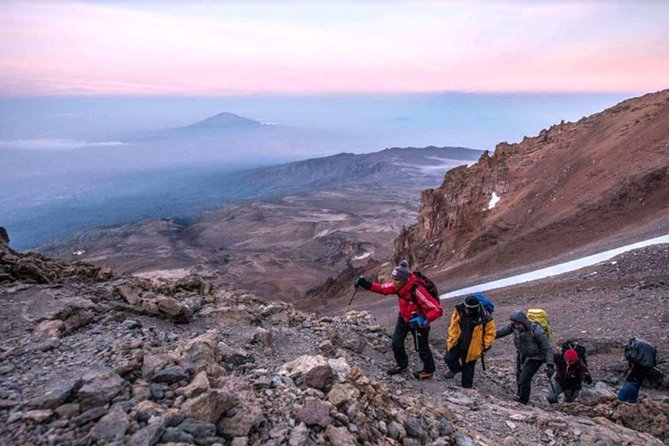
The mountain rewards patience. This 8-day Lemosho climb gives you time to adjust to altitude while moving through rainforest, open high country, volcanic rock, and glacier country near Uhuru Peak. I like the route for two clear reasons: the extra acclimatization day improves your odds, and the scenery changes almost every day. The main drawback is summit night, a 12 to 14-hour push that begins around midnight and demands real stamina.
I also like that this is a private trip, so only your own group takes part. Pinnacle Adventures & Safaris provides guides, assistant guides, porters, a cook, tents, meals, water, and basic emergency supplies. Still, the $3,373.24 price does not cover flights, visas, insurance, personal gear, tips, snacks, or the recommended portable toilet. You need to budget for those extras.
In This Review
- Key Points Before You Book
- Why the Eight-Day Lemosho Route Makes Sense
- Day 1: Londorossi Gate to Mti Mkubwa Camp
- Day 2: Into the Shira Plateau at 3,500 Meters
- Day 3: A Gentler Day Across Shira
- Day 4: Lava Tower and the Descent to Barranco
- Day 5: Barranco Wall to Karanga Camp
- Day 6: Barafu Camp and a Short Pre-Summit Day
- Day 7: Uhuru Peak and the Long Descent
- Day 8: Mweka Gate and the Return to Moshi
- What the $3,373.24 Price Really Covers
- The Human Side of the Expedition
- Who Should Choose This Climb?
- Should You Book the 8-Day Lemosho Climb?
- FAQ
- Where does the Kilimanjaro climb start?
- How long does the experience last?
- Is this a private tour?
- Do I need technical climbing experience?
- What is the highest point reached?
- Are meals included?
- Is camping equipment provided?
- Can I cancel for a full refund?
Key Points Before You Book
- Eight days help your body adjust: The longer schedule spreads out the climb and gives you a shorter pre-summit day.
- Lemosho offers changing scenery: You move from rainforest to the Shira Plateau, then across semi-desert terrain and high volcanic slopes.
- Barranco Wall is the route’s hands-on challenge: No technical climbing is required, but you will use your hands in places and face a steep ascent.
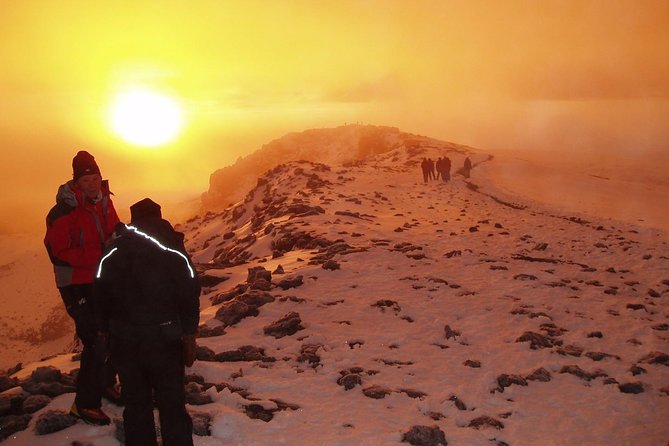
- Summit night is the real test: You start near midnight, reach Uhuru Peak at 5,895 meters if conditions and strength allow, then descend for hours.
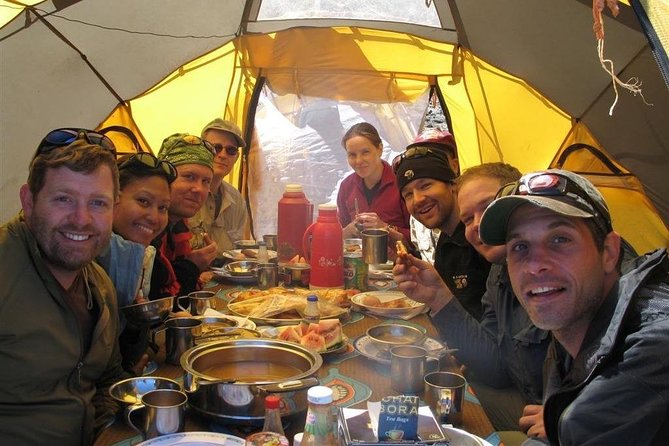
- The support team is a major part of the value: Guides, porters, a cook, tents, meals, hot washing water, and a mattress are included.
- This is a private activity: It suits a family or friend group that wants its own schedule and does not want to join a larger mixed party.
Why the Eight-Day Lemosho Route Makes Sense
Kilimanjaro is not a technical climbing trip, but altitude makes it serious. You do not need ropes or advanced mountaineering skills, yet you do need a moderate fitness level and the ability to walk uphill for many hours.
The Lemosho route is considered one of the easier options because it takes more time. That does not mean easy in the usual holiday sense. You still climb the Barranco Wall, spend nights above 3,500 meters, and face a long summit day.
The extra day matters most before the summit. On the 8-day schedule, you reach Barafu Camp on Day 6, then have time to rest before leaving around midnight. The idea is simple: arrive at base camp by about lunchtime, eat, organize your clothing and water, and sleep or at least lie quietly before the hardest section.
An experienced mountaineer who is already acclimatized might choose a 7-day version. For most people, I would favor the 8-day plan. A mountain does not give prizes for finishing one day sooner.
More Kilimanjaro climbs:
- Kilimanjaro climb by Lemosho Route (7-day)
★ 5.0 · 651 reviews - Kilimanjaro climb, Machame Route (7-day)
★ 5.0 · 262 reviews - Kilimanjaro Climbing Lemosho Route 8 Days.
★ 5.0 · 186 reviews
Day 1: Londorossi Gate to Mti Mkubwa Camp
Your climb begins with breakfast and a transfer from Moshi to Londorossi Gate. Registration takes place there before you enter Kilimanjaro National Park and begin walking through the rainforest.
The first day covers roughly three to four hours, rising from 2,100 meters to 2,780 meters. This is a sensible opening: the walking is not yet extreme, but your legs begin working and you get used to the pace.
Mti Mkubwa means Big Tree Camp. Expect a forest setting, damp air, and a marked change from the roads and towns around Moshi. The first camp also introduces the rhythm of mountain life: walk, arrive, wash with hot water, eat, and settle into a tent.
Pinnacle supplies camping equipment, including tents, camp chairs, tables, and a sleeping mattress. That saves you from carrying bulky camp equipment, though you still need your own clothing, boots, sleeping bag, and personal hiking kit.
Day 2: Into the Shira Plateau at 3,500 Meters
Day 2 takes five to six hours, climbing from Mti Mkubwa to Shira Camp One at 3,500 meters. You continue through the rainforest before reaching more open ground and the Shira Plateau.
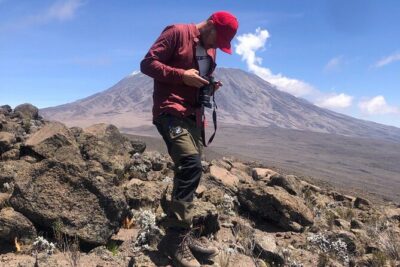
This is the first major scenic change. The thick forest gives way to wider views, and you may get your first clear sight of Kibo, the main volcanic cone of Kilimanjaro. Mount Meru and the surrounding wilderness also begin to open up.
The altitude gain is noticeable. You are moving 720 meters higher than the previous camp, so the correct pace is slow and steady. The route description uses the familiar mountain instruction pole pole, meaning slowly, slowly. Even without technical climbing, rushing here can make later days harder.
Shira Camp One is more exposed than the forest camp. Conditions can change quickly at altitude, so keep warm layers and rain protection easy to reach rather than buried at the bottom of your bag.
Day 3: A Gentler Day Across Shira
Day 3 is a welcome change of pace. You walk four to five hours from Shira Camp One at 3,500 meters to Shira Camp Two at 3,850 meters.
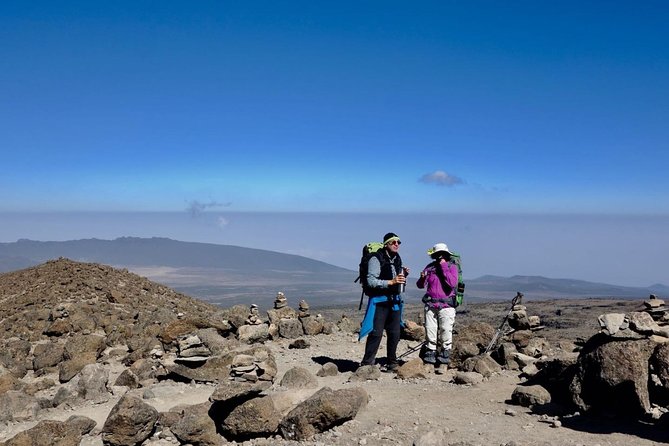
The route crosses the Shira Plateau, with broad views toward Mount Meru and the surrounding high country. This is one of the best days for appreciating the route itself, because the walking is relatively gentle while the scenery feels open and expansive.
The climb gains only 350 meters, but that does not make altitude irrelevant. You sleep at nearly 3,900 meters, and your body continues adjusting. Drink regularly, eat even when your appetite is poor, and tell your guide about headaches, nausea, dizziness, or unusual tiredness.
The guides are there for more than navigation. Pinnacle’s strongest praise has focused on attentive mountain staff, with past clients specifically naming guides including Justin JT and Sam. Staff can help monitor how you are coping, but no guide can remove the effects of altitude. Be honest early.
More Lemosho Route climbs:
- Kilimanjaro climb, Lemosho Route (8-day)
★ 5.0 · 148 reviews - Kilimanjaro climb, Lemosho Route (6-day)
★ 5.0 · 129 reviews - Kilimanjaro Lemosho Route
★ 5.0 · 71 reviews - Private Kilimanjaro Hike 7 Day Lemosho Route
★ 5.0 · 60 reviews
Day 4: Lava Tower and the Descent to Barranco
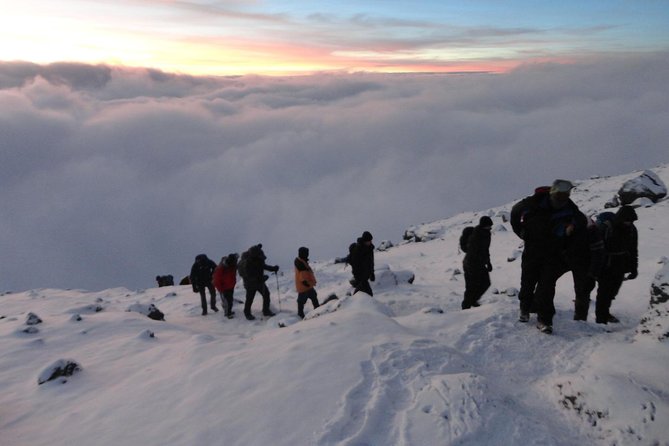
Day 4 is one of the smartest parts of the route. You walk from Shira Camp Two to Barranco Camp, climbing first to Lava Tower at 4,600 meters and then descending to a camp at about 3,900 meters.
The total walking time is six to seven hours. The elevation figures can look confusing because the final camp is only slightly higher than the previous one. The value comes from going high and sleeping lower. That high point gives your body useful exposure to altitude without making you spend the night at 4,600 meters.
The scenery becomes drier and more volcanic here. You leave the softer forest behind and cross semi-desert terrain, with Kibo’s upper slopes becoming a stronger presence.
Barranco Camp sits below the Barranco Wall. It is a dramatic place to spend the night, but it also gives you a clear look at tomorrow’s challenge. From camp, the wall can appear more intimidating than it feels once you are on it. Still, this is not a flat walk. The route turns upward, and you should expect some scrambling and steep steps.
Day 5: Barranco Wall to Karanga Camp
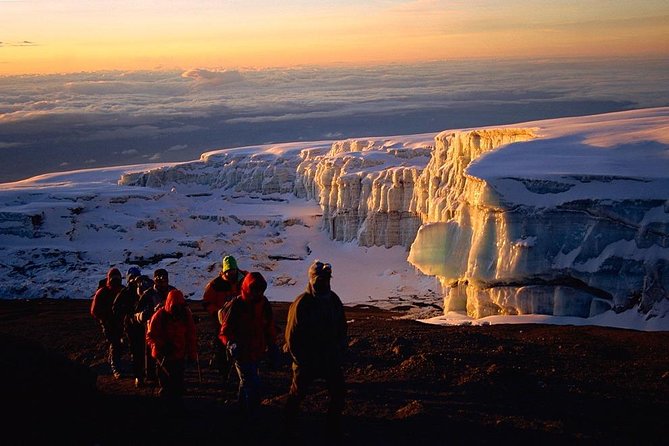
Day 5 begins with the Barranco Wall, one of the most memorable sections of the climb. The route is challenging but does not require technical climbing equipment. You may use your hands for balance and move carefully over uneven volcanic ground.
The walk to Karanga Camp takes about four to five hours. You climb from 3,900 meters to 4,035 meters, so the total height gain is modest. The purpose is continued acclimatization and positioning for the summit push.
This day can feel busy and slow because the wall concentrates people onto a narrower route. Your guide controls the pace, and patience helps. You are not racing anyone. The best approach is to watch your footing, keep your breathing calm, and let faster groups pass when practical.
Karanga is the last camp before Barafu. It is a useful stopping point because you are already high, but you have not yet reached the main summit base camp. Eat well and keep your summit clothing organized. Searching for gloves or headlamps at midnight is not a fine mountain tradition.
Day 6: Barafu Camp and a Short Pre-Summit Day
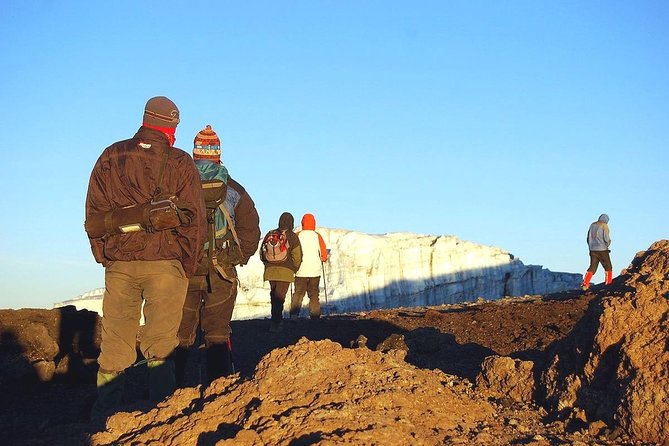
The walk from Karanga to Barafu Camp takes four to five hours. You climb from 4,035 meters to 4,673 meters, reaching the base camp for the summit attempt.
This shorter day is one of the strongest reasons to choose eight days instead of seven. You should reach camp around lunchtime, giving you time to eat, prepare, and rest before the midnight departure.
Barafu means ice in Swahili, and the camp is high, exposed, and practical rather than comfortable. The point is not to linger. After an early meal, try to rest. You may not sleep much because of nerves, altitude, wind, or the unusual schedule, but quiet time still helps.
The included food has received especially warm praise, including comments that meals were better than expected for a mountain camp. Seven breakfasts and seven dinners are included, along with eight lunches. Drinks and snacks not specified in the package are extra, so bring or buy the food you know you can manage during long walking days.
Day 7: Uhuru Peak and the Long Descent
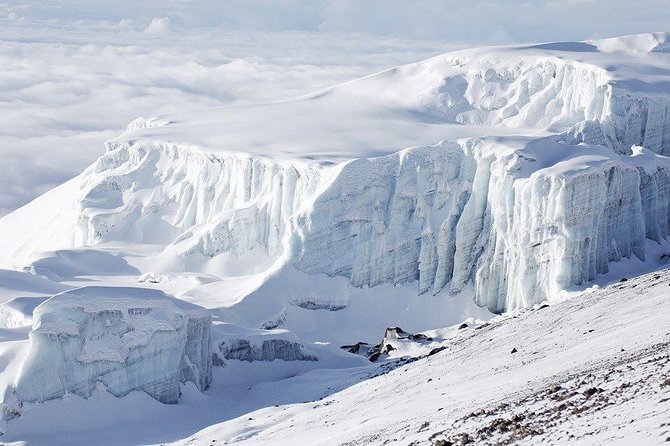
Summit day begins around midnight. From Barafu Camp, you climb toward Uhuru Peak at 5,895 meters. The route is steep, dark, cold, and slow.
The plan is to reach the summit around sunrise. That timing gives you the best chance of seeing the high mountain in morning light, though weather and individual pace can change the schedule. The final ascent is the hardest part of the entire experience, not because it requires technical skill, but because altitude, cold, darkness, and fatigue combine.
If you reach Uhuru Peak, you stand at the highest point of Mount Kilimanjaro. If you reach Stella Point at 5,685 meters but cannot continue, the national park issues a green certificate. Those who reach Uhuru receive a gold certificate.
After the summit, you descend to Mweka Camp at 3,068 meters. The full day takes roughly 12 to 14 hours, and the descent is not an afterthought. Knees and feet take plenty of punishment, so trekking poles can be useful if you normally hike with them.
Emergency oxygen is included for emergencies only. It is not provided as a shortcut or summit aid, and it does not replace responsible altitude decisions. Basic first aid is also included.
Day 8: Mweka Gate and the Return to Moshi
The final descent takes about three hours through the rainforest, from Mweka Camp to Mweka Gate.
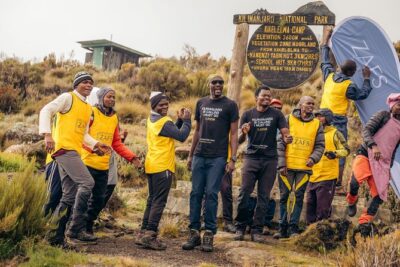
At the gate, you sign your name to receive your certificate. Then you are served a hot lunch before returning to Moshi for a shower and a proper celebration.
This is also the point when you present tips to your guide, assistant guides, cook, and porters. Gratuities are not included in the price, so plan for them in advance and bring enough local cash or another accepted payment method.
The final day is short on paper, but your body may feel every step. Comfortable shoes, clean clothes, and a simple recovery plan in Moshi will be very welcome.
What the $3,373.24 Price Really Covers
At $3,373.24 per person, this is not a budget walk. The price makes more sense when you look at the support built into an eight-day mountain trip.
Included are all fees and taxes, park access costs, guides, assistant guides, porters, a cook, their wages, tents, camp furniture, sleeping mattresses, fresh drinking water, hot water for washing, and the listed meals. You are paying for a staffed expedition, not only for a path through the park.
The private format also matters. Your group is the only group participating in the activity, which can make the experience feel more personal and may help with pacing. Group discounts are offered, so the price may work better for friends or families booking together.
You still need to pay separately for:
- Flights and visas
- Travel and health insurance
- Personal hiking and trekking gear
- Tips
- Personal medicine
- Water-purifying tablets
- Snacks and unspecified drinks
- An optional portable toilet
The portable toilet is highly recommended in the trip information. You should ask about its exact cost before departure. Personal gear can be rented from equipment stores in Moshi, which may help if you do not want to bring bulky items overseas.
Yellow fever vaccination is stated as compulsory. Confirm the current entry and health requirements for your nationality before you travel, since these rules can change.
The Human Side of the Expedition
A Kilimanjaro operator is judged by its mountain staff, and this company receives its strongest praise for organization, encouragement, food, and support from start to finish.
Past clients have singled out guides such as Justin JT and Sam, while Mariam has been praised for leading a caring support team. Office staff including Brian, Frazier, and Lydia have also been commended for answering questions and arranging last-minute plans.
I would still ask for the names of your assigned guide and lead guide before departure. Staff can change, and a good pre-trip conversation tells you a lot about how clearly the company communicates.
The porters and cook are not background details. They carry camp supplies, prepare the meals, organize camp, and help make a long high-altitude trip possible. Budget for tips and treat the team fairly. Their work is central to the experience.
Who Should Choose This Climb?
This route suits you if you want scenic variety, a higher chance of summit success, and a private experience with a dedicated support team.
It is particularly good for:
- First-time high-altitude hikers with moderate fitness
- Friend groups and families
- People who prefer a slower 8-day schedule
- Hikers who want rainforest, plateau, volcanic, and summit scenery
- People who value included meals and camping support
It is not a good fit if you want a casual walking holiday. Summit night is demanding, and no itinerary can guarantee that you will reach Uhuru Peak. You should also think twice if you dislike camping, early starts, cold conditions, or long descents.
The cancellation terms are fairly strict near departure. You receive a full refund if you cancel at least three full days before the start time. Cancellations or changes made less than three full days ahead are not accepted or refunded.
Should You Book the 8-Day Lemosho Climb?
I would choose this trip over a shorter Lemosho schedule if reaching the summit is your main goal. The extra acclimatization time, shorter pre-summit day, private format, and full camp support make the price easier to justify.
Before paying, confirm the personal gear list, portable toilet cost, tipping expectations, insurance requirements, and the names of your guides. If you arrive fit, patient, and ready for a midnight start, this gives you a well-planned route with memorable scenery and a sensible pace.
If you want to save money or avoid a major physical challenge, choose a different Tanzania experience. If Kilimanjaro is the dream, the 8-day Lemosho route is the more forgiving way to make the attempt.
FAQ
Where does the Kilimanjaro climb start?
The activity starts in Moshi Urban, Tanzania, with pickup offered. It ends back at the meeting point after the descent from Mweka Gate.
How long does the experience last?
The climb lasts approximately eight days.
Is this a private tour?
Yes. Only your own group participates in the activity.
Do I need technical climbing experience?
No technical climbing is required. You should have a moderate level of physical fitness, since the route includes the Barranco Wall and a steep summit ascent.
What is the highest point reached?
Uhuru Peak is the highest point, at 5,895 meters. Hikers who reach Stella Point at 5,685 meters receive a green certificate, while those reaching Uhuru Peak receive a gold certificate.
Are meals included?
Yes. The package includes seven breakfasts, seven dinners, and eight lunches. Snacks, drinks, and meals not specifically listed are not included.
Is camping equipment provided?
Yes. Tents, camp chairs, tables, and sleeping mattresses are included. Personal hiking and trekking gear is not included, though you can choose to rent gear in Moshi.
Can I cancel for a full refund?
Yes, if you cancel at least three full days before the experience start time. Cancellations or changes made less than three full days before the start time are not accepted, and the amount paid is not refunded.
Just added in Moshi
- Zanzibar: Stone Town tour and Nakupenda beach with Lunch★ 5.0 · 1 review
- machame route★ 5.0 · 16 reviews
- day trip lake manyara★ 5.0 · 2 reviews
- Mt Kilimanjaro 6 days Marangu route hike★ 5.0 · 3 reviews
- Private Cycle to Kilimanjaro Bike Park Safari★ 5.0 · 6 reviews
- West Kilimanjaro cycling Adventures★ 4.5 · 8 reviews
- Wildlife Extravaganza: Manyara, Tarangire & Ngorongoro in 3 Days★ 5.0 · 3 reviews
- 3 Days Private E-Bike Tour in West Kilimanjaro★ 5.0 · 3 reviews
Lemosho Route Climbs, compared.


8-Day Small-group Lemosho Kilimanjaro Summit Trekking
Read our review →



Climbing Kilimanjaro through 8 days Lemosho Route
Read our review →Browse the lists this tour appears in