
Reviewed · LEMOSHO ROUTE CLIMBS
Climb Kilimanjaro in 8 Days via Lemosho Route
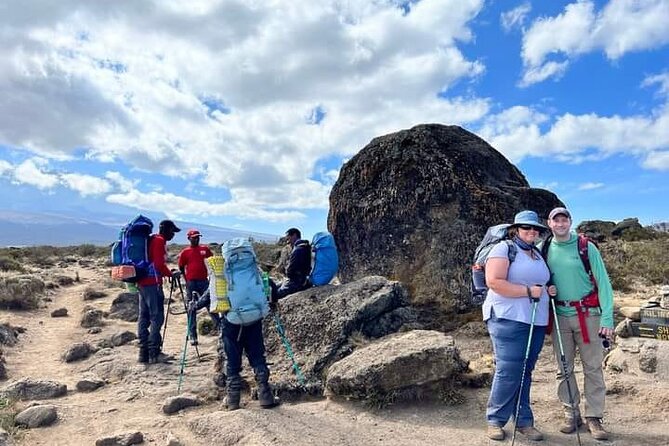
Africa’s highest summit rewards patience. This eight-day Lemosho Route climb gives you time to move slowly through rainforest, heath, alpine desert, and high volcanic terrain before the final push to Uhuru Peak. The route begins near Moshi and finishes with a descent through the forest to Mweka Gate.
I like the gradual ascent, which gives your body more time to adjust to altitude. I also like the mix of scenery, from the quiet western approach and Shira Plateau to the dramatic Barranco Wall and views toward Mawenzi. The main drawback is the summit day: about 13 hours of hiking, followed by a long descent. This is a serious physical challenge, not a scenic walk with a summit photo at the end.
Bush Lion Trekking and Tours keeps the group size to a maximum of 10 people, and the package includes guides, porters, camping equipment, meals, park fees, airport transfers, and safety equipment. The listed price is $2,500 per person, which is a substantial outlay, but much of the costly mountain logistics are built in.
In This Review
- Key Points to Know Before You Book
- From Moshi to Big Tree Camp
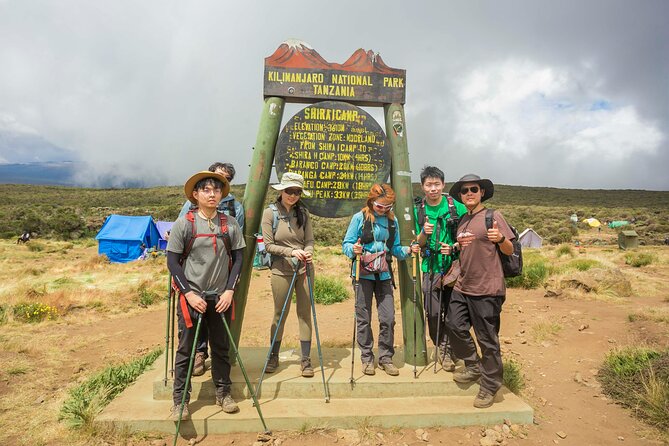
- Rainforest to Shira Camp 1
- Shira Plateau and the First Acclimatization Gains
- Lava Tower, Barranco Wall, and a Seven-Hour Day
- Climbing Barranco Wall to Karanga Camp
- Alpine Desert and Barafu Camp
- The Summit Push to Uhuru Peak
- The Final Descent Through Rainforest
- What the $2,500 Price Really Covers
- Food, Crew Support, and Camp Life
- Who Should Book This Kilimanjaro Climb?
- Should You Book the Eight-Day Lemosho Route?
- FAQ
- Where does the Kilimanjaro climb begin?
- What time does the experience start?
- How long is the climb?
- What is the maximum group size?
- Are park fees and permits included?
- Are meals included?
- Is camping equipment provided?
- Is travel insurance included?
Key Points to Know Before You Book
- The climb begins in Moshi and ends at Mweka Gate: Airport transfers and transport to the trailhead are included, making the first and last day easier to manage.
- Lemosho offers a gradual eight-day schedule: The route allows several acclimatization-focused sections before the summit attempt.
- Day seven is the real test: You start in the early hours, reach Stella Point around sunrise, continue to Uhuru Peak, return to Barafu Camp, then descend to Mweka Camp.
- The package includes full mountain support: Guides, porters, tents, sleeping bags, sleeping mats, meals, drinking water, park fees, permits, first aid equipment, and oxygen tanks are included.
- Food and crew care receive strong praise: The mountain cooks prepare varied, balanced meals, while the support team provides hot drinks and steady encouragement.
- The group is capped at 10 people: That is large enough for shared costs but small enough for the guides to keep an eye on individual progress.
From Moshi to Big Tree Camp
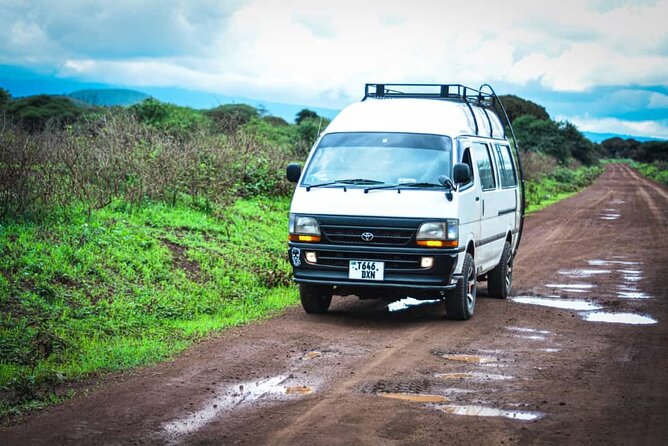
Your climb starts in Moshi at 8:00 am, after breakfast. The drive goes to Londorossi Gate, where you complete park registration, then continues to the Lemosho trailhead.
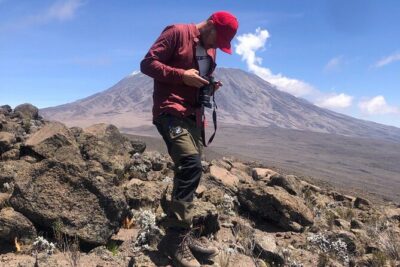
The first walking section takes about four hours. You begin in rainforest, with thick vegetation and a damp, shaded feel underfoot. This is a pleasant way to start because the route does not throw you straight into high, exposed ground. The first overnight camp is Big Tree Camp.
I like this opening because it lets you settle into the routine. You walk, eat, rest, and sleep in a tent rather than racing through a long first day. Still, remember that the first day includes road transfers and registration, so the morning may feel longer than the walking time suggests.
The package provides tents, sleeping bags, sleeping mats, and other camping equipment. You should still confirm exactly what personal gear is supplied and what you must bring yourself. Hiking boots, clothing, backpacks, and other personal items are not included.
More Kilimanjaro climbs:
- Kilimanjaro climb by Lemosho Route (7-day)
★ 5.0 · 651 reviews - Kilimanjaro climb, Machame Route (7-day)
★ 5.0 · 262 reviews - Kilimanjaro Climbing Lemosho Route 8 Days.
★ 5.0 · 186 reviews
Rainforest to Shira Camp 1
Day two continues through the rainforest for about five hours. The trail gradually becomes steeper and moves into the heath zone, where the vegetation changes and the mountain begins to feel more open.
You finish at Shira Camp 1. This shift from forest to heath is one of the pleasures of climbing Kilimanjaro. The route does not show you one unchanging environment. Instead, the plants, air, and views alter as you gain height.
The practical point is to resist the temptation to walk quickly. An eight-day route gives you time, and that time has value. Slow walking helps conserve energy and gives your body a better chance to adjust to increasing altitude. Your guide team is there to set the pace, so it is sensible to follow their rhythm rather than your own low-altitude walking habits.
Shira Plateau and the First Acclimatization Gains
Day three is described as relatively short, with around five hours of hiking. The trail heads toward the Shira Plateau and offers views of Kilimanjaro and the surrounding countryside.
This day matters because it is not simply a transfer from one camp to another. It gives you time to gain height without adding another punishing schedule. You may appreciate the shorter day more than the views, especially if you are still learning how your body responds to altitude.
The Shira Plateau also gives the climb a broad, exposed feel after the rainforest. Weather can change quickly in mountain country, so you need warm layers and rain protection close at hand. The tour requires only a moderate fitness level, but that should not be mistaken for easy. You need to be comfortable walking for several hours on uneven ground and then doing it again the next day.
Lava Tower, Barranco Wall, and a Seven-Hour Day
Day four covers about seven hours and crosses the Shira Plateau toward the junction leading to Lava Tower. The route then descends to Barranco Camp, passing the scenic Barranco Wall.
This is a valuable acclimatization day because you gain height before descending to sleep at a lower camp. That pattern helps explain why Lemosho is popular with people who want a better chance of reaching the summit. The benefit is not comfort alone. It is the chance to spend more time adjusting before the final ascent.
The Barranco Wall can look intimidating from below. The description of the route notes that it is easier than it appears, but you should still expect a hands-on, uneven section rather than a simple trail. Your guides can help with route choice and pace.
Barranco Camp is one of the memorable overnight stops because the terrain feels dramatic and exposed. After a seven-hour day, though, you may be more interested in food and sleep than in taking endless photographs. That is normal. Save energy for the morning.
More Lemosho Route climbs:
- Kilimanjaro climb, Lemosho Route (8-day)
★ 5.0 · 148 reviews - Kilimanjaro climb, Lemosho Route (6-day)
★ 5.0 · 129 reviews - Kilimanjaro Lemosho Route
★ 5.0 · 71 reviews - Private Kilimanjaro Hike 7 Day Lemosho Route
★ 5.0 · 60 reviews
Climbing Barranco Wall to Karanga Camp
Day five begins with the climb up Barranco Wall and continues through valleys and ridges to Karanga Camp. Walking time is about five hours.
This section brings a satisfying sense of progress. You have already crossed the plateau and handled the wall, and now the route takes you toward the southern side of Kibo. The views include the southern glacier, giving you a stronger sense of the mountain’s scale.
I like the balance here. The day is not as long as the Lava Tower section, but it still provides meaningful altitude gain and varied terrain. You will likely feel the cumulative effect of several days on foot, so this is a good point to pay attention to small problems such as hot spots, tired legs, or damp clothing.
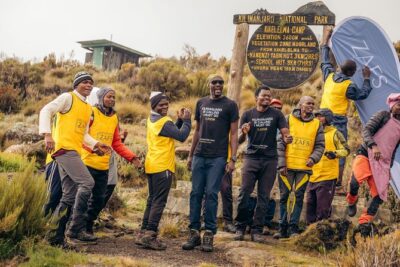
The crew is an important part of the experience at this stage. The strongest praise for this trip focuses on the guides, porters, cooks, and drivers. Specific guides named in the feedback include Jackson, Efatha, Sebastian, Elissafi, Kenny, Innocent, and Martin. You should not assume every guide will be on every departure, but the repeated emphasis on encouragement, friendly service, and safety gives you a useful picture of the support style.
Alpine Desert and Barafu Camp
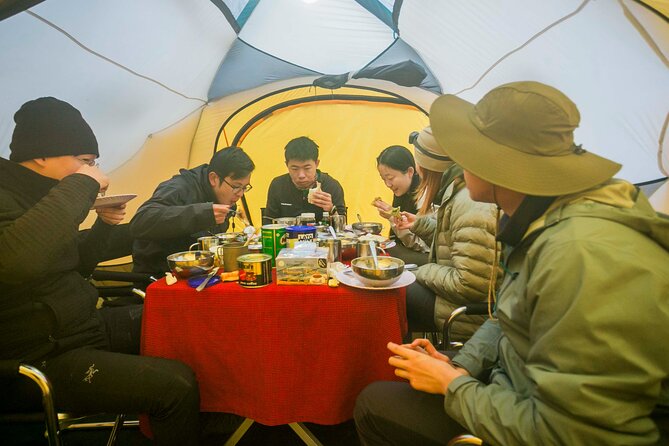
Day six is a shorter four-hour trek toward Barafu Camp through alpine desert terrain. Barafu is the staging point for the summit attempt, with views toward Mawenzi and the summit ridge.
This day can feel deceptively easy because the walking time is short. In practical terms, it is a preparation day. You need to rest, eat, organize your clothing, and prepare for a very early start. The final ascent is not just another day of the climb, and Barafu is where the schedule changes from normal trekking to summit mode.
The inclusion of meals, drinking water, tents, sleeping bags, mats, and safety gear is particularly useful here. You do not have to arrange separate mountain logistics at the point when you most need to conserve attention. Oxygen tanks and first aid kits are also listed among the safety equipment.
You should still buy suitable travel insurance that covers medical treatment and evacuation. Insurance is not included, and the high-altitude nature of the climb makes that an important gap to handle before departure.
The Summit Push to Uhuru Peak
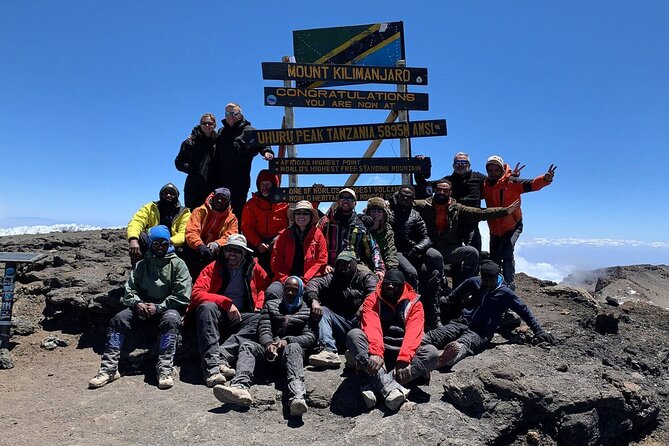
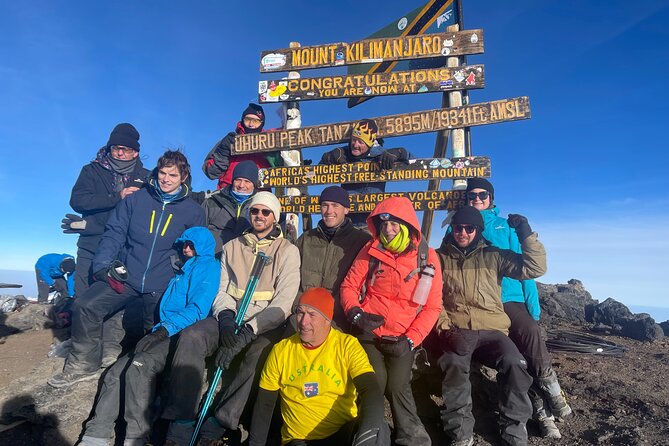
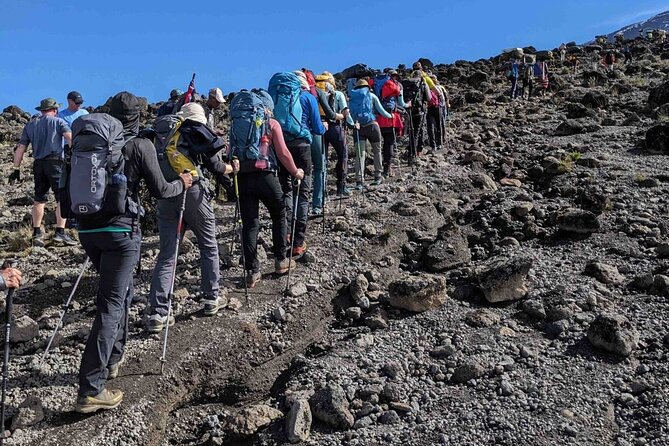
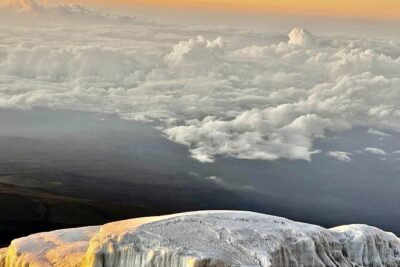
Day seven is the demanding centerpiece. You start in the early hours, climb toward Stella Point, and aim to reach it around sunrise. From there, you continue to Uhuru Peak, the highest point in Africa.
The full schedule takes about 13 hours. After reaching the summit, you descend to Barafu Camp for a short rest, then continue down to Mweka Camp. That combination of ascent and descent is why you need to train for endurance rather than only short bursts of strength.
Stella Point is a major milestone, but it is not the final summit. You still need to continue to Uhuru Peak, so it is wise to treat the route in sections. Focus on the next camp, the next rest, or the next instruction from your guide. The mountain does not care how excited you were at breakfast.
The support team’s role is especially important on this day. The feedback repeatedly praises guides who encourage climbers not to give up, provide reassurance, and help create a safe experience. You can expect the guide team to be central to pacing and decision-making, but no operator can guarantee a summit. Weather, altitude, and your physical condition all matter.
After Uhuru Peak, the descent to Barafu Camp can feel surprisingly tiring. Then comes another stretch to Mweka Camp. This is a long day by any standard, and anyone booking should take the 13-hour estimate seriously.
The Final Descent Through Rainforest
Day eight takes about five hours and leads through rainforest to Mweka Gate. At the gate, you say goodbye to the mountain crew before transfer back to your Moshi hotel.
The final descent is physically easier than summit day, but downhill walking can be tough on knees and thighs. The return to forest also brings a clear change in atmosphere. After days of cold, open, high-altitude terrain, thicker vegetation and a lower elevation can feel like a welcome return to ordinary life.
A summit certificate is included. The transfer back to Moshi is also included, along with airport transfers to and from Kilimanjaro International Airport. That makes the package practical for a trip built around the climb, though any extra hotel nights and meals before or after the trek are your responsibility.
What the $2,500 Price Really Covers
At $2,500 per person, this is not a budget holiday. The value depends on how much support you want and how much mountain administration you prefer to hand over to a local operator.
The price includes:
- Airport transfers
- Transport to and from the trailhead
- Park fees and permits
- Pre-climb briefing and orientation
- Experienced guides and porters
- Tents and camping equipment
- Sleeping bags and sleeping mats
- Drinking water during the trek
- Breakfast, lunch, and dinner throughout the eight days
- First aid equipment and oxygen tanks
- Summit certificate
That is a substantial bundle. Park charges, crew wages, food, camping equipment, transfers, and permits can add up quickly when arranged separately. The value is strongest if you need airport pickup, equipment, meals, and a full support team in one booking.
You still need to budget for international flights, insurance, personal hiking gear, tips, extra accommodation, extra meals, alcoholic drinks, and optional activities. Tips are not included, and you should plan for them rather than treating them as an afterthought. The porters and cooks are central to the experience, and good service deserves proper recognition.
Food, Crew Support, and Camp Life
The mountain crew receives the warmest praise in the supplied feedback. The cook prepares different meals each day, with an emphasis on food that is both balanced and enjoyable. One member of the team is described as bringing hot drinks to the tent, a small service that can matter greatly on a cold morning.
You should expect a supported camping experience, not lodge accommodation. Tents are included, but the information does not specify tent layouts, toilet arrangements, shower facilities, or dining tent details. Ask those questions before booking if camp comfort is important to you.
The guides are described as friendly, professional, and encouraging. Names such as Efatha and Sebastian are connected with strong leadership, while Elissafi and Kenny are praised for their help and good company. Jackson is mentioned as a helpful trip organizer. These details suggest a personal service style, but guide assignments can vary.
The group limit of 10 is sensible. A smaller group can move more easily and gives the guide team a better chance to notice how each person is coping. At the same time, group departures can mean different walking speeds and energy levels. The guide’s pacing will matter.
Who Should Book This Kilimanjaro Climb?
I would recommend this route to you if you want a scenic approach, several days for acclimatization, and a package that handles the major mountain arrangements. It suits someone with moderate fitness who is willing to walk for several hours each day and prepare seriously for summit day.
It is also a good fit if you value strong crew support. The most praised qualities are encouragement, friendly guides, good food, helpful porters, and a sense that the team works hard to keep the climb safe and comfortable.
I would hesitate if you dislike camping, have no interest in a 13-hour summit day, or want a relaxed sightseeing holiday. The route is gradual, but Kilimanjaro remains a high-altitude mountain. A high success rate is promoted, yet your result will depend on weather, acclimatization, fitness, and how your body responds.
Pickup is offered, mobile ticketing is available, and group discounts may help reduce the cost for larger parties. Free cancellation is available up to 24 hours before the start time. If poor weather forces cancellation, you can be offered another date or a full refund.
Should You Book the Eight-Day Lemosho Route?
Yes, if you want a well-supported Kilimanjaro climb with a slower approach and varied scenery. The eight-day schedule gives you a better structure for acclimatization than a rushed ascent, while the included meals, permits, camping equipment, guides, porters, and transfers make the $2,500 price easier to assess.
Book it with clear expectations. You will camp, hike for long hours, carry personal gear, pay for insurance and tips, and face a very demanding summit day. If you accept that bargain, the Lemosho Route offers a strong blend of mountain scenery, local crew support, and a realistic path toward Uhuru Peak.
FAQ
Where does the Kilimanjaro climb begin?
The experience begins in Moshi, Tanzania. Pickup is offered, and the tour includes airport transfers to and from Kilimanjaro International Airport.
What time does the experience start?
The stated start time is 8:00 am.
How long is the climb?
The climb lasts approximately eight days.
What is the maximum group size?
The maximum group size is 10 people.
Are park fees and permits included?
Yes. Park fees and permits are included in the price.
Are meals included?
Yes. Breakfast, lunch, and dinner are included throughout the eight-day climb.
Is camping equipment provided?
Yes. Tents, sleeping bags, sleeping mats, and other camping equipment are included.
Is travel insurance included?
No. International flights, medical and evacuation insurance, trip cancellation insurance, personal hiking gear, tips, extra accommodation, extra meals, alcoholic drinks, and optional activities are not included.
Just added in Moshi
- Zanzibar: Stone Town tour and Nakupenda beach with Lunch★ 5.0 · 1 review
- Mt Kilimanjaro 6 days Marangu route hike★ 5.0 · 3 reviews
- machame route★ 5.0 · 16 reviews
- day trip lake manyara★ 5.0 · 2 reviews
- Private Cycle to Kilimanjaro Bike Park Safari★ 5.0 · 6 reviews
- West Kilimanjaro cycling Adventures★ 4.5 · 8 reviews
- Wildlife Extravaganza: Manyara, Tarangire & Ngorongoro in 3 Days★ 5.0 · 3 reviews
- 3 Days Private E-Bike Tour in West Kilimanjaro★ 5.0 · 3 reviews
Lemosho Route Climbs, compared.

8-Day Small-group Lemosho Kilimanjaro Summit Trekking
Read our review →


Climbing Kilimanjaro through 8 days Lemosho Route
Read our review →Browse the lists this tour appears in