
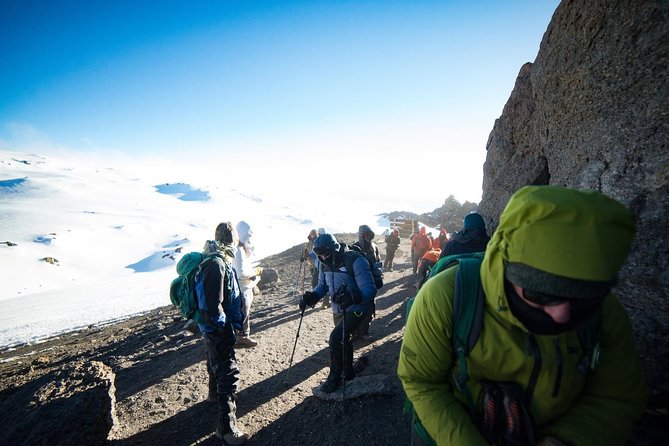
Reviewed · MARANGU ROUTE CLIMBS
Conquer Kilimanjaro: 5-Day Marangu Route Adventure
Kilimanjaro rewards patience, not speed. This five-day Marangu Route climb gives you a direct shot at Africa’s highest peak, with huts instead of tents, meals prepared on the mountain, and transfers arranged from Moshi. I like the private guide service and the fact that porters, cooks, wages, water, and emergency oxygen are included. I also like the classic route through rainforest, moorland, alpine desert, and volcanic rock.
The catch is the schedule. Five days leaves little room for your body to adjust to altitude, and Day 4 is a very long 10 to 14-hour summit push. This is best for an intermediate-plus climber who has limited time, accepts a demanding pace, and understands that reaching 5,895 meters is never guaranteed.
- Hut-based climbing: Sleep at Mandara, Horombo, and Kibo huts rather than carrying a tent.
- A private mountain team: Your group receives the attention of a guide, assistant guides, porters, and a cook.
- A dramatic summit day: Start around midnight, reach Uhuru Peak, then descend to Horombo.
- Clear package pricing: The $1,854 price includes accommodation, food, transfers, permits and taxes.
- A rainforest start: Colobus monkeys may appear on the first morning through the forest.
- A short acclimatization schedule: Five days is efficient, but altitude is the main concern.
In This Review
- What $1,854 Buys You on Kilimanjaro
- Marangu Gate to Mandara Huts: A Gentle Start Through Forest
- Mandara to Horombo: Forest Gives Way to Moorland
- Horombo to Kibo: The Alpine Desert Before the Push
- Uhuru Peak at 5,895 Meters: The Longest Day
- Horombo to Moshi: A Long Descent and Summit Certificate
- Guides, Porters, Food, and Daily Comfort
- Who Should Choose This Five-Day Route?
- Practical Details Before You Pay
- Should You Book the Marangu Route?
- FAQ
- How long is the Kilimanjaro climb?
- What route does this tour use?
- Is airport transportation included?
- Are meals included?
- Is accommodation included?
- Is a guide included?
- Is trekking equipment included?
- What is the cancellation policy?
What $1,854 Buys You on Kilimanjaro
The price is not simply payment for a guide and a trail. It covers the mountain operation around you: all fees and taxes, transport to and from Kilimanjaro International Airport, accommodation, meals, fresh drinking water, hot water for a daily wash, emergency oxygen, a first aid kit, and the wages of the mountain crew.
That is a useful package for anyone who wants fewer bills to sort out in Tanzania. Your guide, assistant guides, porters, and cook are also included, which matters on a climb where carrying your own equipment, organizing meals, and finding your way would quickly drain your energy.
You still need to budget for flights, visas, insurance, personal medicines, snacks, drinks not specified in the package, water-purifying tablets, and your own trekking equipment. You can rent some gear from equipment stores in Tanzania, but the tour does not provide it as part of the stated price.
A portable toilet is optional, but highly recommended. It costs extra, so ask about it before you arrive. This is one of those small additions that can make hut life more comfortable, particularly during a busy climb.
The price looks fair if you need airport transfers and a full mountain crew. It is less compelling if you already have transport, equipment, and a separate support arrangement. The real value comes from convenience and organization, not from luxury.
Marangu Gate to Mandara Huts: A Gentle Start Through Forest
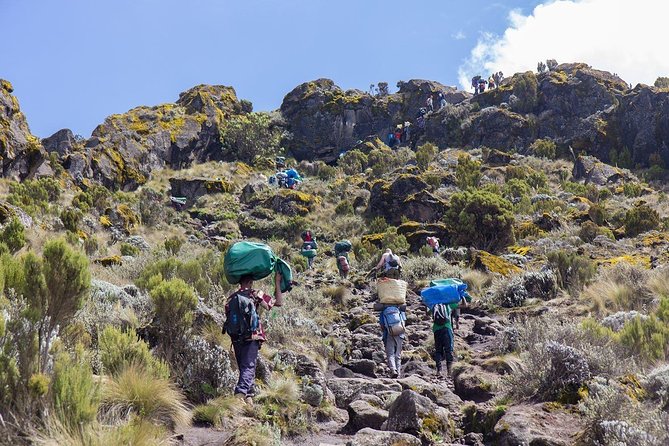
After breakfast, you drive from Moshi to Marangu Gate. At the gate, you register for the climb, then begin on a trail through dense rainforest.
This first section rises from 1,870 meters to 2,720 meters. The distance is 8 kilometers, or about 5 miles, and the stated hiking time is 3 to 4 hours, although the day is described as roughly five hours when the full schedule is considered.
The forest is the most enclosed part of the route. You might spot Colobus monkeys, and the thick vegetation gives the opening day a sense of arrival without demanding the brutal effort of the summit. I like this gradual introduction. You get a first taste of the mountain while still having enough energy to notice the surroundings.
Mandara Huts are your first overnight stop. Hut accommodation is a defining feature of the Marangu Route, and it gives you a more sheltered night than a tent-based trek. Do not mistake that for a hotel stay. You are still high on a mountain, and the simple hut arrangement is part of the experience.
The first day is short enough to leave you feeling capable. That can be deceptive. The harder work comes quickly on Day 2, and the key job here is to eat, drink, rest, and prepare for the increase in altitude.
More Marangu Route climbs:
- Kilimanjaro climb, Marangu route (6-day)
★ 5.0 · 72 reviews - Climbing Kilimanjaro – Marangu Route
★ 5.0 · 65 reviews - Kilimanjaro Climbing 5 days Marangu route
★ 5.0 · 22 reviews
Mandara to Horombo: Forest Gives Way to Moorland
Day 2 climbs from 2,720 meters to 3,720 meters. You cover 12 kilometers, or 7.5 miles, in about 6 to 7 hours.
The route passes through the final section of rainforest before opening into rolling moorland. The change is important. Trees thin out, views widen, and Kibo and Mawenzi peaks become major features of the day.
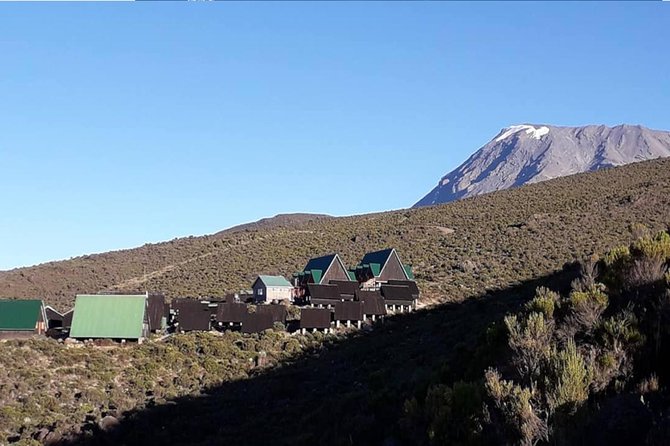
Horombo Huts are a strong overnight location because you can see the two great volcanic peaks from the mountain. Kibo is the summit cone you will approach next. Mawenzi adds a jagged counterpoint, making this one of the most scenic parts of the climb.
This is also the day when altitude may begin to affect you. The schedule moves upward by 1,000 meters, and the itinerary does not include a separate acclimatization day at Horombo. You should keep your pace steady and follow your guide’s instructions. The private format helps here because your guide can give your group direct attention rather than splitting attention across a large mixed party.
The five-day format saves time, but it does so by compressing the adjustment period. If you are sensitive to altitude, this is the part of the trip to take seriously. The mountain is not made easier by the huts or the included meals. Those features improve comfort and organization, but your body still has to cope with the height.
Horombo to Kibo: The Alpine Desert Before the Push
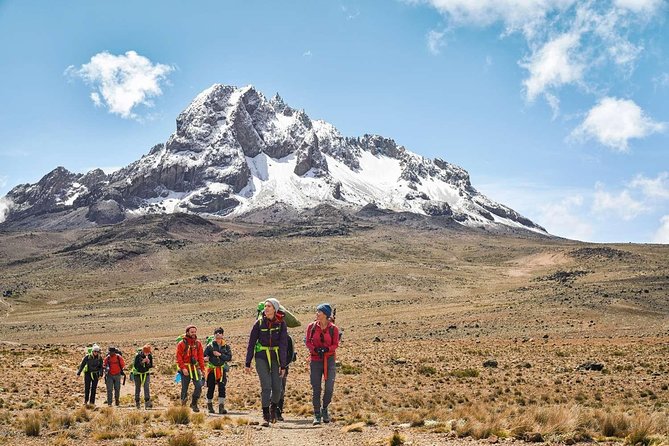
On Day 3, you leave Horombo and climb from 3,720 meters to 4,703 meters. The distance is 10 kilometers, or 6.2 miles, and the stated hiking time is 5 to 6 hours.
The route enters an alpine desert. The vegetation becomes sparse, the trail feels more exposed, and the terrain turns rougher. This is the transition from a long mountain walk to preparation for a serious high-altitude ascent.
Kibo Hut is the final stop before the summit. The day is not the summit day, but it may feel psychologically important because Uhuru Peak is now close in distance and far away in effort. You will need to conserve energy, since the next stage begins around midnight.
The short timetable makes Day 3 especially important. You should not treat it as a sightseeing day or try to race ahead. The best use of your time is simple: eat the provided meals, drink water, organize your summit clothing and equipment, and rest as much as possible.
Emergency oxygen is included, but it is for emergencies only and is not intended as summit assistance. That distinction matters. It is safety equipment, not a way to make a rapid ascent easier or replace proper altitude preparation.
Uhuru Peak at 5,895 Meters: The Longest Day
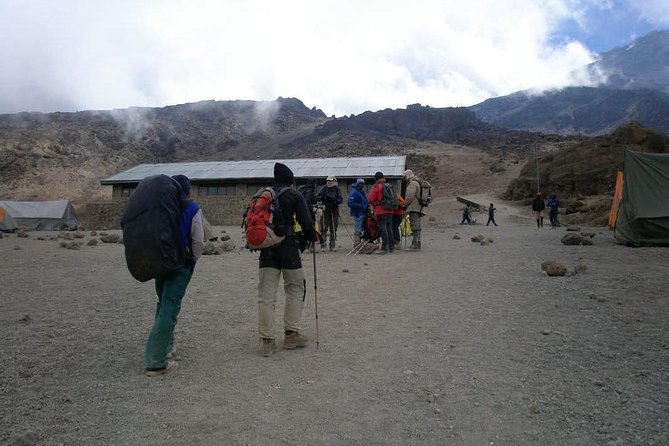
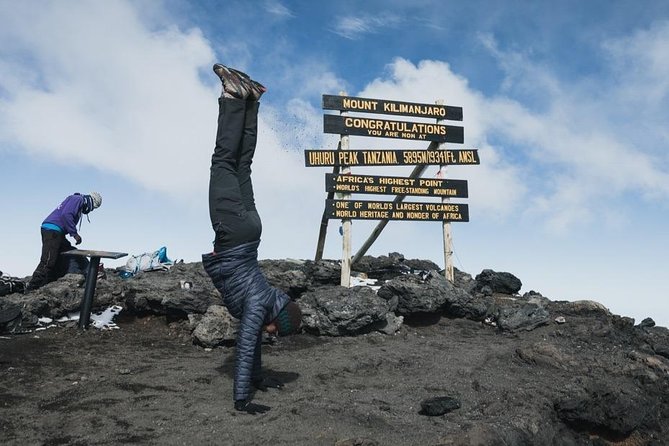
Day 4 is the heart of the climb. You begin around midnight and ascend from Kibo Hut at 4,703 meters to Uhuru Peak at 5,895 meters. You then descend to 3,720 meters at Horombo Hut.
The full distance is 16 kilometers, or 9.9 miles. The day takes approximately 10 to 14 hours, with the schedule listing about 12 hours. That range tells you what you need to know: this is a very demanding day, and the final time depends on your pace, altitude response, rest stops, and descent.
The trail climbs steeply over scree and volcanic rock. The footing can be tiring, and every step comes at high altitude. You first aim for Gilman’s Point at 5,685 meters, then continue toward Uhuru Peak, the highest point on Kilimanjaro.
The sunrise from the Roof of Africa is the reward promised by the midnight start. You may reach the high point as the sky brightens, then pause for the summit moment before beginning the descent. The summit is not the end of the work. You return to Kibo Hut for a short rest, then continue down to Horombo.
That second descent is why I would not call this a casual five-day hike. You have already spent hours climbing, and your legs must still carry you down. The guide team becomes especially valuable here. The company has received strong praise for supportive guides, efficient porters, and motivated mountain staff. Specific names connected with past climbs include Julius, Yassin, Chris, J.T., and Jonas, though your assigned team may be different.
A successful summit depends on more than encouragement. It depends on your health, pace, preparation, and response to altitude. The tour is private, so your group can receive focused attention, but that does not remove the physical risk of the climb.
A few more options to weigh up in Moshi
- Kilimanjaro climb by Lemosho Route (7-day)
★ 5.0 · 651 reviews - Safari Serengeti And Ngorongoro
★ 5.0 · 288 reviews - Kilimanjaro climb, Machame Route (7-day)
★ 5.0 · 262 reviews - Kilimanjaro Climbing Lemosho Route 8 Days.
★ 5.0 · 186 reviews
Horombo to Moshi: A Long Descent and Summit Certificate
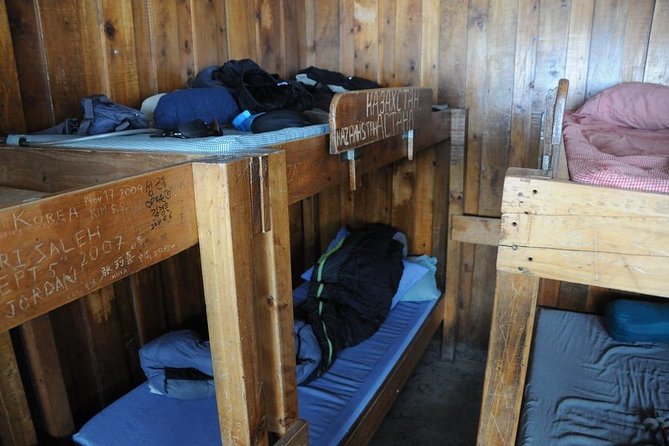
Day 5 takes you from Horombo at 3,720 meters back through the moorland and rainforest to Marangu Gate at 1,870 meters. You pass Mandara Hut on the way down, cover about 20 kilometers, or 12.4 miles, and hike for roughly 6 to 7 hours.
The schedule lists about five hours, so treat the timing as an estimate. Downhill miles can be hard on tired knees, and the distance is substantial after the summit day.
At Marangu Gate, you receive summit certificates before the drive back to Moshi. The return to town gives you a clear change of pace: high mountain huts and cold air give way to a celebratory evening in the city.
The final day is not glamorous, but it is satisfying. You retrace parts of the route and see how quickly the mountain’s zones change as you lose altitude. If you are already tired, the long descent may feel like an endurance test of its own.
Guides, Porters, Food, and Daily Comfort
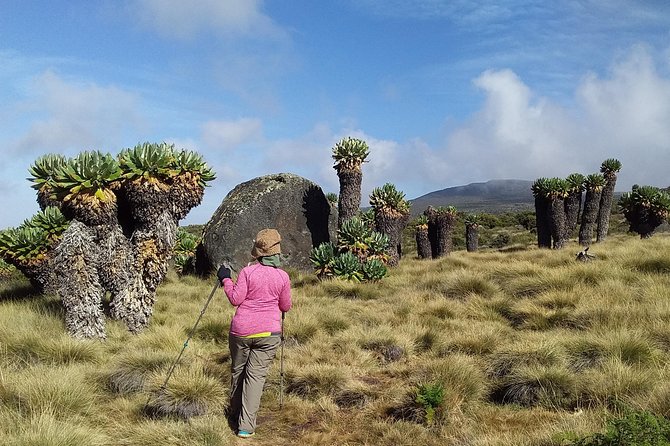
The support team is one of the strongest reasons to consider this package. A qualified mountain guide leads the climb, with assistant guides, porters, and a cook helping your group manage the five days. Their wages are included, so you are not facing an unexpected charge for the basic crew listed in the package.
Past experiences connected with this company repeatedly praise the guides for patience, motivation, reassurance, and good humor. The names Julius, Yassin, Chris, J.T., and Jonas are associated with especially positive accounts. The food also receives unusually strong praise, with meals described as delicious even on the mountain.
The package includes five breakfasts, five lunches, and four dinners. It also includes fresh drinking water and hot water for a wash each day. These are practical comforts, not decorative extras. Eating regularly and washing after a long hike can change how manageable the trip feels.
The emergency kit includes oxygen for emergencies and a basic first aid kit. You should still bring your own personal medicines and water-purifying tablets, since those are excluded.
Tips and personal snacks are not specified in the package. Ask the operator what is expected before departure, and set aside money for any personal purchases or crew gratuities that you plan to make.
Who Should Choose This Five-Day Route?
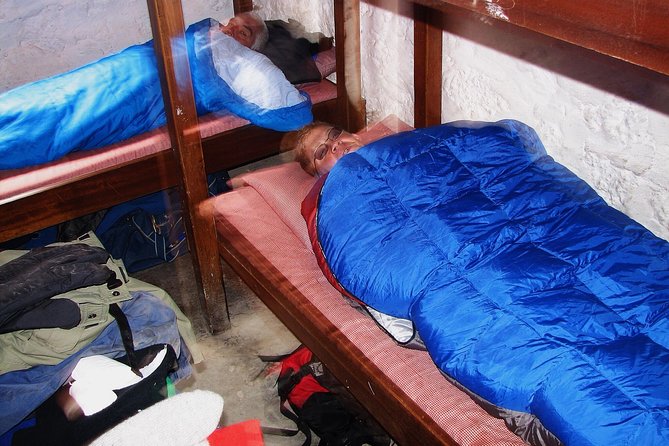
This climb suits you if you have limited time and want the classic Marangu Route with hut accommodation. It also suits an active person who has experience with long uphill walks and understands that the summit day will be far harder than the first two days.
The private arrangement is useful for couples, friends, or families who want to stay together rather than join a larger group. Group discounts are offered, so ask about the rate if several people are booking together.
I would think twice if you have no experience with sustained mountain walking, if you dislike long descents, or if you want the best possible acclimatization schedule. Five days is efficient, but it is not generous. A longer climb may give your body more time to adjust, though the supplied package is specifically built around this shorter format.
Most people can participate according to the activity information, but that should not be read as a promise that every person will reach the summit. Kilimanjaro is a high-altitude climb, and you should arrange suitable health and travel insurance before going.
Practical Details Before You Pay
Pickup is offered, and airport transfers to and from Kilimanjaro International Airport are included. The activity begins and ends in Moshi Urban, Tanzania, with the end point returning to the meeting point.
Booking confirmation is provided at the time of booking. The activity is available Monday through Sunday, with operating hours listed from midnight to 11:30 p.m. The stated operating period runs through June 18, 2026.
A visa and flights are not included. Health and travel insurance are also excluded. A yellow fever vaccination is compulsory if you are traveling to Tanzania and Kenya, according to the supplied travel information, so check the current entry rules that apply to your route before departure.
The cancellation terms are simple: cancel at least 24 hours before the experience starts for a full refund. Cancellations or changes made less than 24 hours before the start time are not accepted for a refund.
Should You Book the Marangu Route?
Book this tour if you want a tightly organized, hut-based Kilimanjaro climb with a private guide and a clearly stated package price. The support team, included meals, hot water, airport transfers, and strong praise for guides and porters make it a practical choice for a short trip.
Do not book it simply because five days sounds easy. The midnight summit start, high-altitude terrain, and 10 to 14-hour summit day are serious. You should arrive prepared for long walking and accept that altitude can change the plan.
At $1,854 per person, the experience offers good value for someone who wants transport, crew, food, huts, and mountain fees handled in one arrangement. The right question is not whether it is cheap. The right question is whether its short schedule matches your fitness, experience, and tolerance for altitude. If it does, the Marangu Route offers a memorable path from rainforest to Uhuru Peak, with practical support at every stage.
FAQ
How long is the Kilimanjaro climb?
The climb lasts approximately five days, beginning and ending in Moshi Urban, Tanzania.
What route does this tour use?
The tour uses the Marangu Route, with overnight stays at Mandara Huts, Horombo Huts, and Kibo Hut.
Is airport transportation included?
Yes. Transfers to and from Kilimanjaro International Airport are included.
Are meals included?
Yes. The package includes five breakfasts, five lunches, and four dinners.
Is accommodation included?
Yes. Accommodation on the mountain is included at the listed huts.
Is a guide included?
Yes. The package includes a qualified mountain guide, assistant guides, porters, and a cook, along with their wages.
Is trekking equipment included?
No. Personal trekking gear is not included, although some equipment may be rented from stores in Tanzania.
What is the cancellation policy?
You can cancel at least 24 hours before the experience start time for a full refund. Cancellations or changes made less than 24 hours before the start time are not accepted for a refund.
Just added in Moshi
- Zanzibar: Stone Town tour and Nakupenda beach with Lunch★ 5.0 · 1 review
- day trip lake manyara★ 5.0 · 2 reviews
- Mt Kilimanjaro 6 days Marangu route hike★ 5.0 · 3 reviews
- machame route★ 5.0 · 16 reviews
- Private Cycle to Kilimanjaro Bike Park Safari★ 5.0 · 6 reviews
- West Kilimanjaro cycling Adventures★ 4.5 · 8 reviews
- Wildlife Extravaganza: Manyara, Tarangire & Ngorongoro in 3 Days★ 5.0 · 3 reviews
- 3 Days Private E-Bike Tour in West Kilimanjaro★ 5.0 · 3 reviews
Marangu Route Climbs, compared.
Private Full Day Hiking Experience to Marangu Route
Read our review →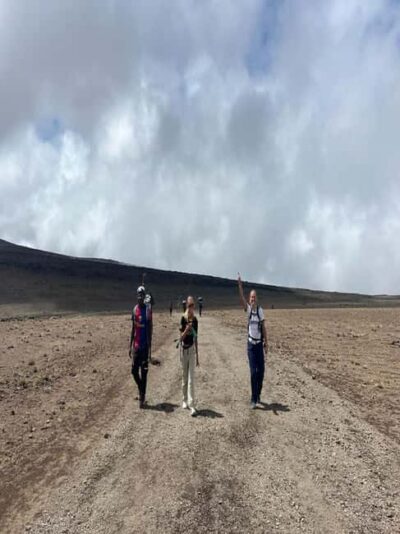
From Arusha/Moshi: Kilimanjaro Hike Marangu Route Day Trip
Read our review →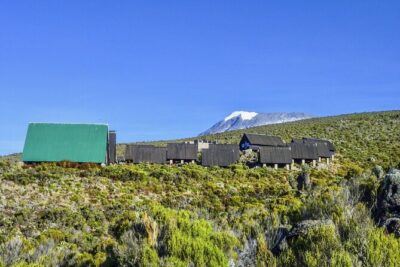
Mount Kilimanjaro Day Hike Through Marangu Route to Mandara Hut
Read our review →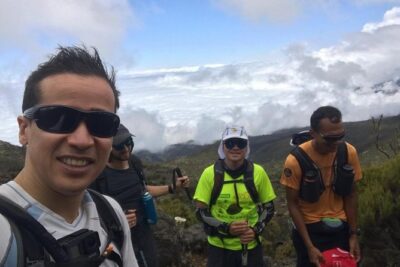
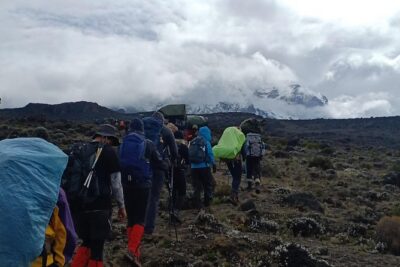
Best Kilimanjaro Adventures 6 Days Marangu Route Experience
Read our review →
Kilimanjaro Private Climbing in 6 Days Marangu Route
Read our review →Browse the lists this tour appears in