
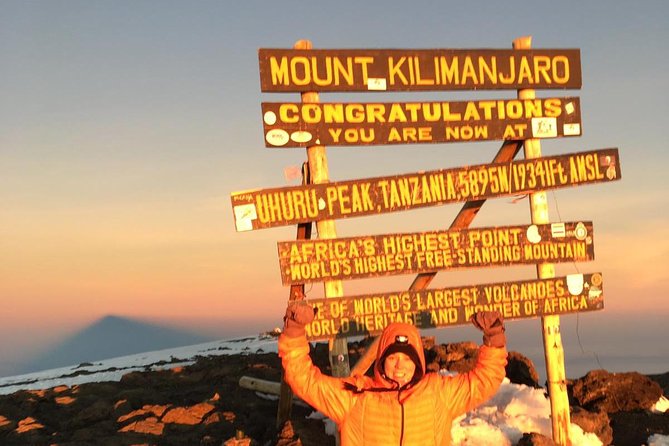
Reviewed · MARANGU ROUTE CLIMBS
Discover Our Latest 6 Days Climbing Kilimanjaro – Marangu Route
Six days can take you above Africa’s roof. This private Marangu climb gives you your own party, hut accommodation, meals, a mountain guide, and transport from Moshi. I like the extra acclimatization day at Horombo Huts, and I like that the route uses huts rather than tents. The main drawback is that the advertised $1,150 price does not include Kilimanjaro park fees, insurance, tips, flights, or hotel stays.
The route is called the easiest path up Kilimanjaro, but that word needs care. You still gain thousands of meters, face a long summit night, and walk for up to 12 hours on the hardest day. The strongest praise here goes to the mountain crew, especially the guide, porters, and chef, whose support helped one climber reach the summit after a very demanding push.
In This Review
- Key points to know before booking
- Why the Marangu Route Works for Some Climbers
- Day One: Marangu Gate to Mandara Hut
- Day Two: Mandara to Horombo at 3,720 Meters
- Day Three: The Mawenzi Acclimatization Walk
- Day Four: Horombo to Kibo Hut Across the Saddle
- Day Five: The Midnight Push to Uhuru Peak
- Day Six: Descending From Horombo to Moshi
- What the $1,150 Price Really Covers
- Food, Guides, Porters, and Group Comfort
- Who Should Choose This Six-Day Climb
- Should You Book the Marangu Route?
- FAQ
- How long is the Kilimanjaro climb?
- Which route does the climb use?
- Where do you sleep during the trek?
- Is an acclimatization day included?
- Are park fees included in the price?
- Is pickup from Moshi included?
Key points to know before booking
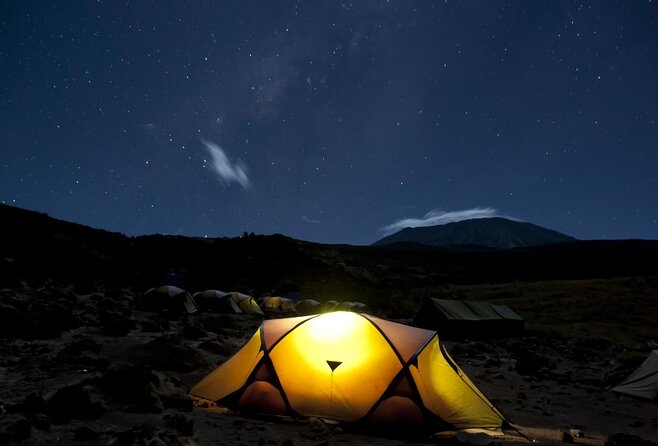
- A private party on the Marangu Route: You hike with your own booking group instead of being placed with an unfamiliar party.
- One useful acclimatization day: The extra day at Horombo includes a walk toward Mawenzi Peak, reaching about 4,600 meters before returning to sleep lower.
- Huts instead of tents: You sleep in dormitory-style huts at Mandara, Horombo, and Kibo, with limited amenities at Kibo Hut.
- A serious summit day: Day five begins shortly after midnight and can last about 12 hours, including Uhuru Peak and the descent.
- Moshi transfers included: Pickup and return transport from your Moshi hotel are part of the package.
- Park fees remain separate: Budget for all Kilimanjaro park charges in addition to the tour price, along with insurance, tips, gear, hotels, and flights.
Why the Marangu Route Works for Some Climbers
The Marangu Route is popular because it follows a clear path through several distinct zones and uses permanent huts. That makes it appealing if you do not want to sleep in a tent each night or carry camping equipment.
You begin in the rainforest, continue through open moorland, cross the dry Saddle between Mawenzi and Kibo, then climb through volcanic scree toward the summit. The scenery changes quickly, which helps keep the walk interesting even when your legs are tired.
I also like the private format. You can move at your group’s pace and discuss rest stops, energy levels, and summit plans with your own guide. That matters more as the air gets thin. A large operator capacity of up to 90 people is listed, so I would confirm the size of your actual party before paying. Private booking should mean your own group, but the number of people assigned to the wider operation is not the same thing as your trekking group size.
The Marangu path is often described as the easiest route, but it is not easy in the ordinary sense. The summit approach is steep, cold, tiring, and high. The day at Horombo is therefore one of the most valuable parts of this plan. It gives your body more time to adjust before you sleep at Kibo and attempt the summit.
More Marangu Route climbs:
- Kilimanjaro climb, Marangu route (6-day)
★ 5.0 · 72 reviews - Climbing Kilimanjaro – Marangu Route
★ 5.0 · 65 reviews - Kilimanjaro Climbing 5 days Marangu route
★ 5.0 · 22 reviews
Day One: Marangu Gate to Mandara Hut
Your climb starts with pickup from your hotel in Moshi and a drive to Marangu Gate. Registration takes place at the park entrance, where your guide and porters prepare for the walk.
The first section passes through rainforest. You might see colorful birds, colobus monkeys, other monkey species, mosses, lichens, flowers, and orchids. On a clear day, you may also look down toward Moshi and the plain below.
The walk to Mandara Hut takes about four to five hours. It is a gentle introduction compared with the days ahead, but it is still a real climb. Keep your daypack light and carry only what you need for the walk. Porters handle the main luggage, but your own small bag must hold your water, rain protection, warm layer, snacks, and personal items.
Mandara provides the first hut night. This is dormitory-style accommodation, not a private room. That arrangement can feel basic, but it removes the need to set up camp after a full day on the path.
Day Two: Mandara to Horombo at 3,720 Meters
After breakfast, you continue through the final section of rainforest before entering open moorland. The change is striking. Huge heather replaces dense forest, and the views open toward Kilimanjaro’s two major summits, snow-capped Kibo and rocky Mawenzi.
This day takes about five to seven hours, with roughly 1,000 meters of ascent. The advice to walk pole pole, meaning slowly, is not decoration. A steady pace helps you conserve energy and gives your body more time to respond to the growing altitude.
Horombo Huts sit at about 3,720 meters. You spend two nights here, which is important. Many people are tempted to rush higher because the summit feels close, but sleeping at Horombo and using the next day for acclimatization gives this six-day schedule a better rhythm than a faster plan.
The scenery here is open and exposed. Bring sun protection, warm clothing, and rain protection even if the morning begins pleasantly. Weather can shift as you climb.
Day Three: The Mawenzi Acclimatization Walk
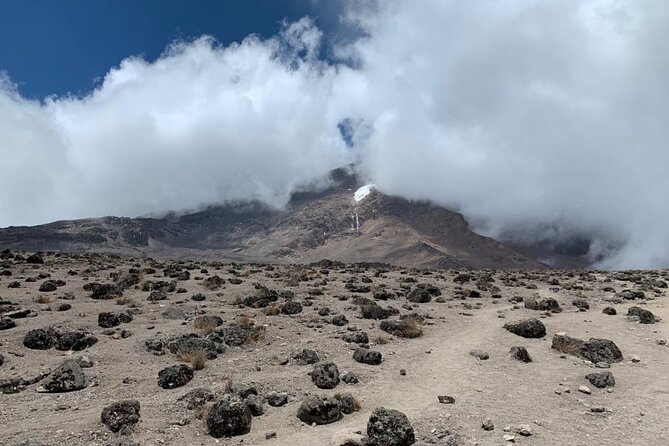
Day three is not a rest day in the usual sense. It is an acclimatization day, with a four to five-hour round trip toward the base of Mawenzi Peak. The walk reaches about 4,600 meters before you return to Horombo for dinner and sleep.
This is a smart use of time. You climb higher during the day, then return to a lower sleeping altitude. The information provided for the experience says this acclimatization day can effectively double the chance of reaching the summit. That is a strong reason not to dismiss the extra day as wasted time.
Mawenzi gives you a dramatic target for the walk. Its rocky summit contrasts with Kibo’s broad upper slopes, and the path takes you across high moorland with sparse vegetation.
Pay attention to how you feel. Headaches, unusual tiredness, nausea, or other altitude symptoms should be discussed with your guide. The guide’s role is not only to lead the path but also to help manage the pace and safety of the climb.
You return to Horombo for another hut night. By now, you have experienced the main accommodation style: shared dormitory rooms and basic mountain facilities. If you need hotel-level comfort, this trip will feel rough. If you see the hut as a practical base for sleeping and eating, it fits the route well.
A few more options to weigh up in Moshi
- Kilimanjaro climb by Lemosho Route (7-day)
★ 5.0 · 651 reviews - Safari Serengeti And Ngorongoro
★ 5.0 · 288 reviews - Kilimanjaro climb, Machame Route (7-day)
★ 5.0 · 262 reviews - Kilimanjaro Climbing Lemosho Route 8 Days.
★ 5.0 · 186 reviews
Day Four: Horombo to Kibo Hut Across the Saddle
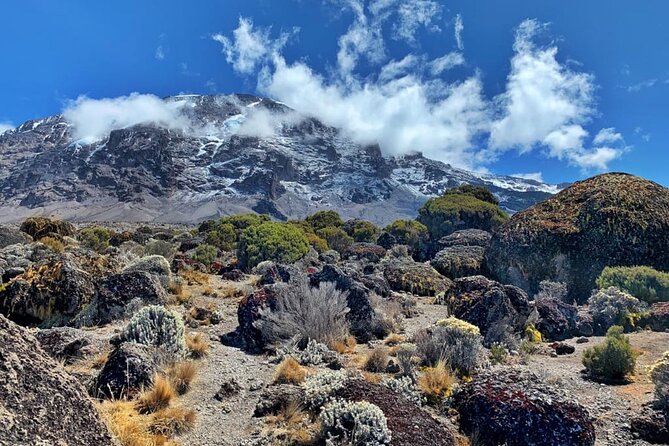
The route changes again as you leave Horombo. The ground becomes stony and dry, with unusual alpine plants and flowers giving way to a broad, almost lunar area.
You pass the Last Water point and cross the Saddle, the open area between Mawenzi and Kibo. The walk to Kibo Hut takes about five to seven hours. Kibo sits at approximately 4,705 meters, so this is a major increase in altitude and a key preparation day for the summit.
Kibo Hut has dormitories and limited amenities. You should arrive ready for a short evening and an early wake-up. The plan calls for repacking before the summit and handing unnecessary items to the porters. That is practical advice. A lighter pack makes a noticeable difference during the steep climb.
Do not expect a relaxed evening here. You will eat, organize your clothing and torch, and try to sleep before the midnight start. The dry terrain and high altitude can make this night feel very different from your first hut stay.
Day Five: The Midnight Push to Uhuru Peak
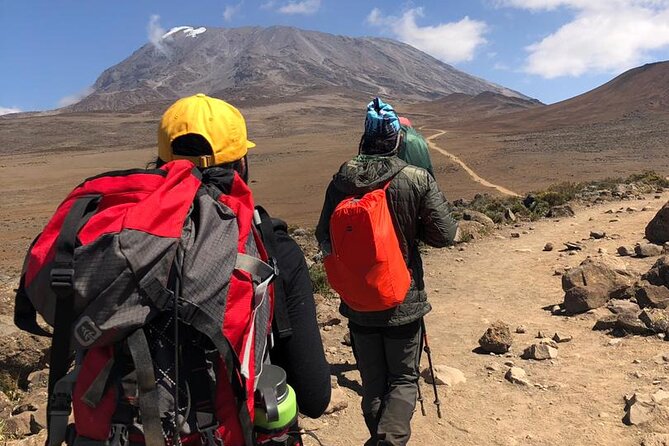
This is the day that defines the trip. Guides wake you shortly after midnight, and you begin climbing by torchlight over a long slope of scree.
The early timing has a practical purpose. The scree is frozen, which can make it easier to cross, and the aim is to reach Gillman’s Point in time for sunrise. After about two hours, you pass Hans Meyer’s Cave. After roughly three hours, you reach Johanne’s Notch and the crater rim area.
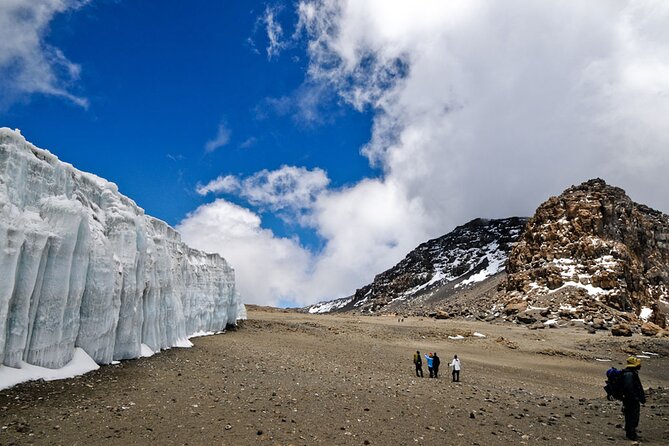
From there, the climb becomes steeper. Gillman’s Point sits at about 5,685 meters, and reaching it is a major achievement. The sunrise over the ice fields and the jagged form of Mawenzi is one of the great rewards of the route.
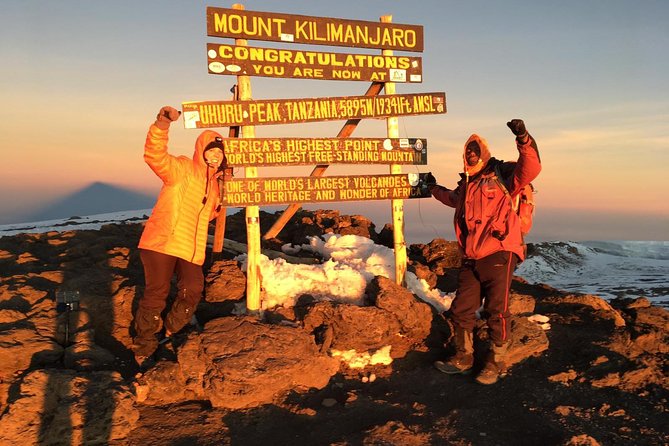
If you still have enough strength, you continue around the crater rim toward Uhuru Peak, Kilimanjaro’s highest point. The supplied schedule describes this as a roughly 12-hour day. That includes the summit effort and the descent, so you should expect a long, exhausting day rather than a quick photo stop.
The guide and porters matter most here. One especially positive account credits the guide’s encouragement, along with the support of the porters and chef, for helping the climber keep going to the summit. That does not make the climb easy, but it shows the value of a supportive crew when motivation and energy begin to fade.
After reaching the summit area, you descend to Horombo Huts. The exact effort can vary by pace and conditions, but the central point is clear: this is the hardest day, and you should save energy throughout the earlier stages.
Day Six: Descending From Horombo to Moshi
The final day takes you down through alpine moorland and back into the rainforest. You pass Mandara Hut, continue to Marangu Gate, and meet the vehicle for the return drive to Moshi.
The stated distance is 20.8 kilometers, or about 12.9 miles, with an approximate walking time of eight hours. Descending is easier on your breathing than climbing, but it can be hard on tired knees and feet. Trekking poles may be useful if you already own or plan to bring them, though personal hiking gear is not included.
Breakfast and lunch are included on this day. After you reach the gate, the package includes a return transfer to the Moshi hotel you booked. A trekking certificate is also included, which gives you a useful keepsake after the climb.
What the $1,150 Price Really Covers
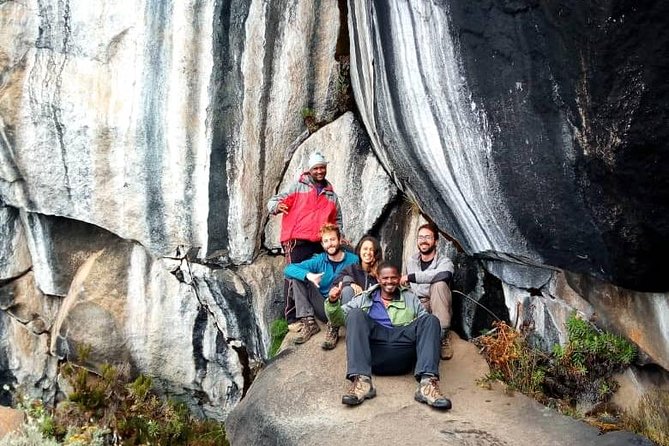
At $1,150 per person, the trip can offer solid value if you want a guided climb with meals, huts, porters, and Moshi transfers arranged in advance.
Included services are:
- Pickup from your Moshi hotel
- Return transport to that hotel
- Briefing before the trek
- A professional Kilimanjaro guide
- Breakfast, lunch, and dinner during the climb
- Camping fees as stated in the package
- Hut accommodation along the route
- A trekking certificate
The important catch is the separate park fees. All Mount Kilimanjaro park charges are excluded and must be paid either directly to the park or through the tour operator. This can change the real cost by a considerable amount, so ask for a full written total before booking.
You also need to pay for travel and medical insurance, tips for the mountain crew, airport transfers, hotels before and after the trek, flights, and personal hiking gear. Since the price does not cover your Moshi accommodation, plan at least one hotel night before the climb and one after it, unless your wider itinerary handles those nights.
The package states that camping fees are included, while the route uses huts. I would ask the provider exactly which accommodation and park charges are covered. Clear answers here are worth more than a low headline price.
Food, Guides, Porters, and Group Comfort
Meals are included throughout the trek, with breakfast, lunch, and dinner provided during the climbing days. On the final day, breakfast and lunch are specifically included.
The strongest praise attached to this experience focuses on the crew. The guide is described as supportive and persistent during the summit push, while the porters and chef also receive credit for helping the climber complete the route. That support is not a minor extra on Kilimanjaro. It shapes the daily pace, meals, safety checks, and morale.
You should still ask how tips are handled and what the recommended amount is. Tips are not included, and they are an important part of planning the final budget.
The experience is intended for a private party, but the operator’s maximum capacity is listed as 90 people. Ask how many climbers will be in your own group, how many guides are assigned, and how porter support is organized. Those details will tell you much more about the personal feel of the climb.
Who Should Choose This Six-Day Climb
I would consider this trip if you want a classic Kilimanjaro route, prefer huts to tents, and value having a private group. The extra Horombo day also makes it more appealing than a rushed schedule.
It suits people who are comfortable with long walking days and basic dormitory accommodation. You need to be ready for five to seven-hour trekking days, a four to five-hour acclimatization walk, a 12-hour summit day, and an eight-hour descent.
It may not suit you if you want private bedrooms, a short summit day, or a package with every cost included. The route is called the easiest, but the altitude and summit effort remain serious.
Confirmation is provided at booking, and the activity is near public transportation. Most people can take part, though the climb clearly requires good physical preparation. The tour also depends on weather. If poor conditions cause cancellation, you are offered another date or a full refund. Otherwise, you can cancel for a full refund up to 24 hours before the start time.
Should You Book the Marangu Route?
Book it if you want a private, hut-based Kilimanjaro climb with an acclimatization day and strong crew support. The route offers changing scenery, a practical schedule, Moshi transfers, and a real chance to prepare before the summit night.
Before you commit, get the complete price including park fees, confirm your group size, and check exactly what the huts, meals, and porter service cover. If you accept the basic accommodation and plan properly for the extra costs, this can be a sensible way to tackle Kilimanjaro.
FAQ
How long is the Kilimanjaro climb?
The experience lasts approximately six days, including the return to Moshi on day six.
Which route does the climb use?
The climb follows the Marangu Route, which is described as the easiest route up Kilimanjaro.
Where do you sleep during the trek?
You stay in dormitory-style mountain huts at Mandara Hut, Horombo Huts, and Kibo Hut. Kibo Hut has limited amenities.
Is an acclimatization day included?
Yes. Day three is spent at Horombo Huts, with a four to five-hour walk toward the base of Mawenzi Peak. The walk reaches about 4,600 meters before returning to Horombo.
Are park fees included in the price?
No. All Mount Kilimanjaro park fees are excluded and can be paid directly to the park or through the tour operator.
Is pickup from Moshi included?
Yes. Pickup from your booked hotel in Moshi to Marangu Gate and return transport from Marangu Gate to that hotel are included.
Just added in Moshi
- Zanzibar: Stone Town tour and Nakupenda beach with Lunch★ 5.0 · 1 review
- day trip lake manyara★ 5.0 · 2 reviews
- Mt Kilimanjaro 6 days Marangu route hike★ 5.0 · 3 reviews
- machame route★ 5.0 · 16 reviews
- Private Cycle to Kilimanjaro Bike Park Safari★ 5.0 · 6 reviews
- West Kilimanjaro cycling Adventures★ 4.5 · 8 reviews
- Wildlife Extravaganza: Manyara, Tarangire & Ngorongoro in 3 Days★ 5.0 · 3 reviews
- 3 Days Private E-Bike Tour in West Kilimanjaro★ 5.0 · 3 reviews
Marangu Route Climbs, compared.

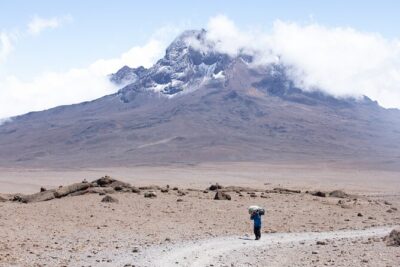

Private Full Day Hiking Experience to Marangu Route
Read our review →
From Arusha/Moshi: Kilimanjaro Hike Marangu Route Day Trip
Read our review →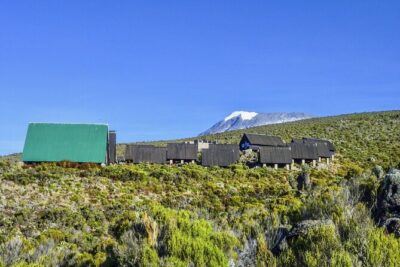
Mount Kilimanjaro Day Hike Through Marangu Route to Mandara Hut
Read our review →
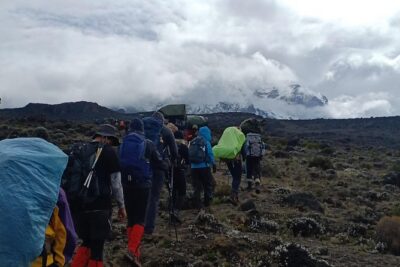
Best Kilimanjaro Adventures 6 Days Marangu Route Experience
Read our review →
Kilimanjaro Private Climbing in 6 Days Marangu Route
Read our review →Browse the lists this tour appears in