
Reviewed · MACHAME ROUTE CLIMBS
Kilimanjaro 7 Days Machame Route Private Tour
Summit night starts long before sunrise. This private Machame Route climb gives you a well-supported way to reach Uhuru Peak, with trained wilderness first responder guides and a full kitchen team handling the hard work behind the scenes. I like the gradual altitude profile, especially the Lava Tower acclimatization stop, and I like that porters carry your mountain equipment while you focus on walking. The main catch is simple: the climb is called seven days, but the full trip takes about nine days once you add the Moshi arrival and recovery days.
The tour earns a 4.9 rating from 15 reviews, with 100 percent recommending it. That praise centers on planning, food, caring guides, and smooth equipment handling. Still, Kilimanjaro is not a casual hike. You need moderate fitness, patience, warm gear, and a willingness to spend 12 to 14 hours on summit day.
In This Review
- Key Points Before You Book
- What the $1,895 Price Covers
- Moshi Arrival and the Pre-Trek Check
- Day 1 on Kilimanjaro: Machame Gate to Machame Camp
- Day 2: Moorland, Shira Views, and Mount Meru
- Day 3: Lava Tower Acclimatization and Barranco Camp
- Day 4: Barranco Wall to Karanga Camp
- Day 5: Barafu Camp and a Quiet Afternoon
- Day 6: Uhuru Peak and the Long Descent
- Day 7: Mweka Gate and the Return to Moshi
- Guides, Porters, and Safety Support
- Who Will Enjoy This Climb Most?
- Booking Details Worth Checking
- Should You Book the Machame Route?
- FAQ
- How long does the full Kilimanjaro tour take?
- Where does the tour begin?
- What time does the tour start?
- Is this a private tour?
- What meals are included?
- Is camping equipment provided?
- What fitness level is required?
Key Points Before You Book
- Seven mountain days, nine days door to door: You arrive in Moshi before the trek, spend seven days on the mountain, then have a final hotel day before departure.
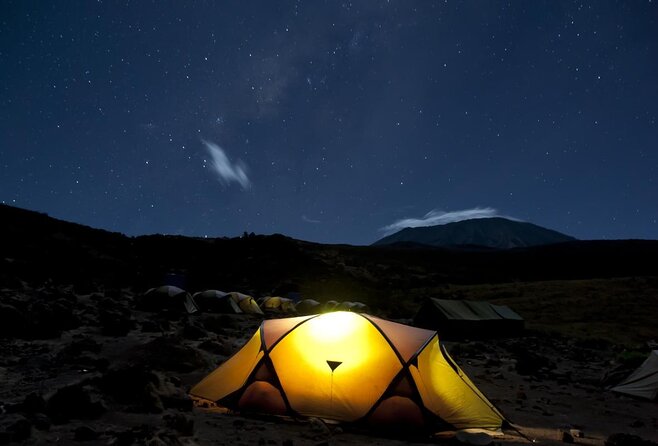
- Machame gives you varied scenery: The route moves from rainforest to moorland, alpine desert, scree, ice, and finally back through forest.
- Lava Tower makes Day 4 useful: You climb to about 4,600 meters before sleeping lower at Barranco Camp, a sensible acclimatization pattern.
- Summit day is the real test: You start around midnight, reach Uhuru Peak at 5,895 meters, then descend to about 3,100 meters in the same day.
- The support package is substantial: Meals, camping equipment, park fees, guides, porters, first aid, pulse oximeters, and portable oxygen are included.
- Budget for your own personal gear and tips: Boots, clothing, sleeping bag, and similar items are not included, and crew tips are separate.
What the $1,895 Price Covers
At $1,895 per person, this is not a bare-bones hike where you carry everything and cook noodles beside your tent. The price includes all fees and taxes, camping equipment, meals, a professional mountain crew, and safety supplies. That makes the cost easier to understand because Kilimanjaro expenses build up quickly once park access, food, tents, porters, and staff are counted.
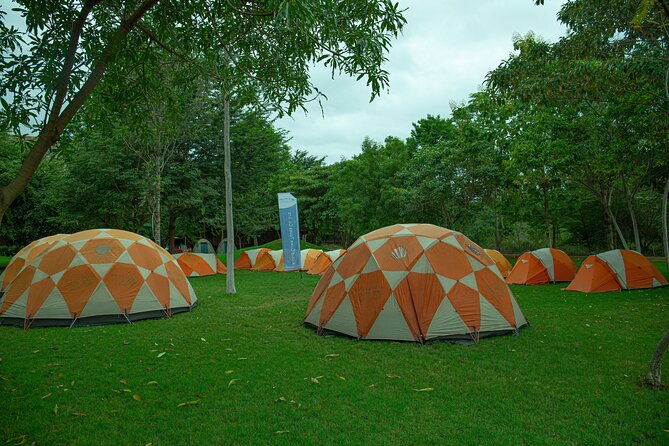
Your camp setup includes a dining tent, tables, chairs, sleeping tents, sleeping pads, crockery, and cutlery. You still need your own personal equipment, including hiking clothes, boots, and a sleeping bag. This distinction matters. The operator provides the camp system, but not every item that goes on your body or inside your sleeping tent.
Food is another strong point. The plan provides eight breakfasts, seven lunches, and six dinners, which matches the mountain portion plus the arrival and departure schedule. A dedicated kitchen team prepares nutritious meals, and positive comments about the food appear again and again in the available feedback. On a high-altitude trek, a hot meal and a proper dining tent are not little luxuries. They help you keep moving.
Porters carry equipment, but you should still expect to carry a daypack with water, rain protection, snacks, and layers. The exact baggage allowance is not provided, so ask the operator how much personal luggage each porter can carry before you arrive.
Tips are not included. The tour also does not include your personal gear. Airport transfers can be arranged if selected, but they are described as optional, so confirm that cost before booking.
More Machame Route climbs:
- Kilimanjaro climb, Machame Route (7-day)
★ 5.0 · 262 reviews - Climbing Kilimanjaro – Machame Route
★ 5.0 · 170 reviews - Climbing Kilimanjaro through 7 days Machame Route
★ 5.0 · 151 reviews
Moshi Arrival and the Pre-Trek Check
Plan to arrive at least one day before the climb begins. The first day is based in Moshi, or possibly Arusha, depending on your accommodation and transfer arrangements. If you select an airport transfer, you can be collected at Kilimanjaro Airport and taken to your hotel.
The pre-trek briefing is one of the most useful parts of this opening day. You meet your guide, review your equipment, and rent missing items from the company store if needed. I would use this time seriously. Do not wait until the mountain to discover that your boots rub, your warm layers are inadequate, or your headlamp is unreliable.
The stated meeting time is 9:00 a.m., but the first day is otherwise flexible. You should ask for the precise pickup time and hotel details when arranging the trip. After a flight, having a hotel night before the climb gives you room for delays and lets you start the hike rested.
Day 1 on Kilimanjaro: Machame Gate to Machame Camp
The first hiking day begins with a vehicle ride from your hotel to Machame Gate. After registration, you enter the montane forest and walk about 13 kilometers, gaining height from roughly 1,200 meters to 3,000 meters. The hike takes about five to seven hours.
This opening section feels like a proper mountain approach. The forest provides shade, and the route introduces you to the steady rhythm you will need for the week. You finish at Machame Camp, where the tents are already set up.
That ready-made camp is valuable after a full day on your feet. You eat dinner, sleep at the campsite, and let the crew manage the camp chores. The first day is not technically difficult in the information provided, but the distance and uphill gain can expose poor pacing. Walk slowly from the beginning. Kilimanjaro rewards restraint more than speed.
Day 2: Moorland, Shira Views, and Mount Meru
From about 3,000 meters, you climb to 3,800 meters over roughly nine kilometers. The walking time is five to six hours, and the forest gives way to moorland, with heather and rocky ridges replacing the dense trees.
The route crosses small valleys and steep ridges on the western side of the mountain. At camp, you may have views toward Mount Meru, the Shira Plateau, and Kibo Peak. Sunset here is one of the day’s big rewards, but the higher camp also gives you your first clear taste of altitude.
This is a good day to notice how your body reacts. Headache, unusual tiredness, or nausea should be reported to your guide rather than hidden. The guides carry pulse oximeters, a first aid kit, and portable oxygen, but those tools support careful judgment. They do not make altitude sickness harmless.
A few more options to weigh up in Moshi
- Kilimanjaro climb by Lemosho Route (7-day)
★ 5.0 · 651 reviews - Safari Serengeti And Ngorongoro
★ 5.0 · 288 reviews - Kilimanjaro Climbing Lemosho Route 8 Days.
★ 5.0 · 186 reviews - Kilimanjaro climb, Lemosho Route (8-day)
★ 5.0 · 148 reviews
Day 3: Lava Tower Acclimatization and Barranco Camp
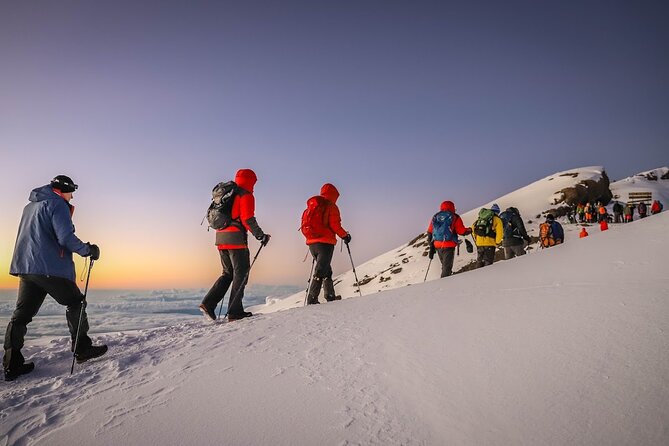
Day 3 is one of the most important days in the schedule. You climb from approximately 3,800 meters to about 3,950 meters, covering around 13 kilometers in seven to eight hours. The route goes toward Lava Tower at roughly 4,600 meters, then descends to Barranco Camp.
This is the classic walk high, sleep lower pattern. You gain useful exposure to a higher altitude during the day, then spend the night at a lower camp. That arrangement can help your body adjust better than a simple march upward each day.
Barranco Camp sits below Barranco Wall, giving the evening a dramatic setting. The price of this scenery is a long day. You should expect the combination of distance, altitude, and descent to leave you tired. The route is not a gentle stroll, but it is well placed in the schedule.
Day 4: Barranco Wall to Karanga Camp
The morning begins with a descent into the Great Barranco, followed by a steep climb up Barranco Wall. The wall is not described as technical climbing, but it is a long rocky section that can feel tiring when you are already several days into the trek.
You then pass beneath the Heim and Kersten glaciers before heading toward Karanga Valley. The day covers about 5.5 kilometers and takes four to five hours, with camp at approximately 3,963 meters. Strong walkers may take an optional acclimatization hike to around 4,200 meters in the afternoon, then return to camp.
The short distance can look easy on paper. Do not be fooled. The Barranco Wall requires careful foot placement and steady movement, and the steep climb from the valley adds more work. The benefit is that you reach camp relatively early, giving you time to rest and prepare for the high camps.
Day 5: Barafu Camp and a Quiet Afternoon
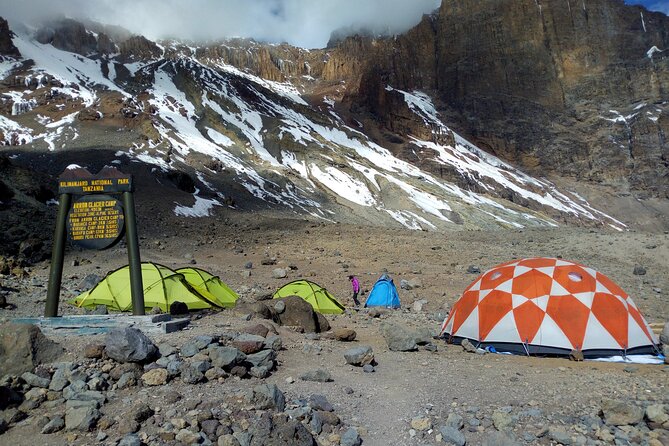
From Karanga, you climb to Barafu Camp at approximately 4,643 meters. The distance is only about three kilometers, and the walk takes three to four hours, but the steep, barren slopes make this a demanding short day.
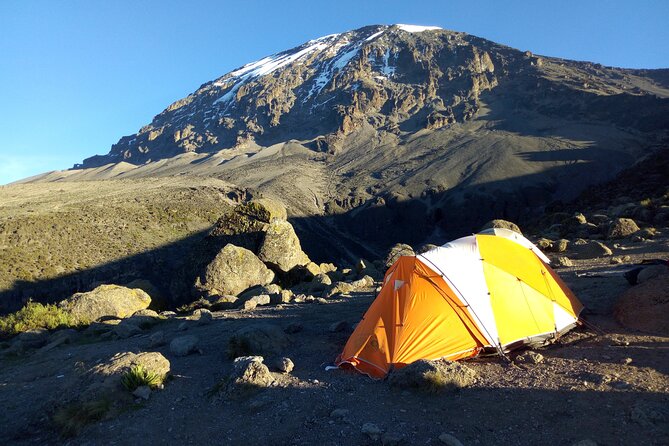
There is little vegetation now. You cross scree slopes toward a high camp surrounded by a stark, open setting. The summit is about 1,342 meters higher, and you are expected to begin the final climb that night.
The afternoon at Barafu is for eating, resting, and preparing. Lay out your thermal clothing, headlamp, camera, trekking poles, and water before you sleep. The trip notes specifically advise checking your headlamp and camera, a small detail that makes sense when the summit push begins in darkness.
Do not expect a full night’s sleep. Your goal is to rest as much as possible and conserve energy for the longest day.
Day 6: Uhuru Peak and the Long Descent
Summit day begins around midnight with a light breakfast. You climb by headlamp through steep switchbacks over scree, and snow may be present. The goal is to reach Stella Point on the crater rim, at about 5,861 meters, around 4:00 or 5:00 a.m.
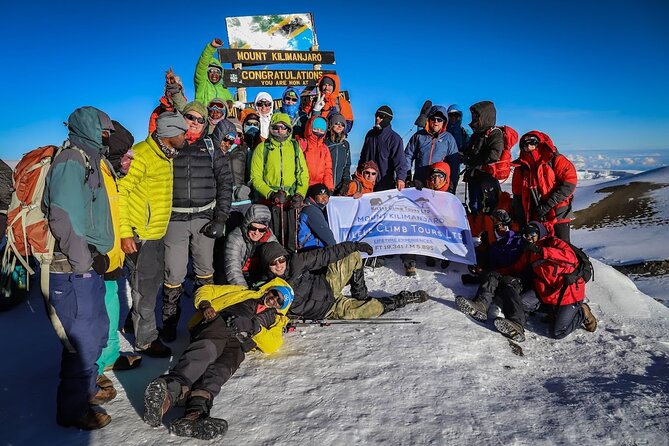
From Stella Point, you continue along the crater rim for roughly an hour toward Uhuru Peak, the true summit at 5,895 meters. The route offers views of the crater and glaciers, and reaching the top near sunrise can provide the clearest light of the entire climb.
The summit section is physically hard because you are high, cold, tired, and moving slowly. The day covers about 15 kilometers and can take 12 to 14 hours. After the summit, you descend to about 3,100 meters, usually via the same high route before continuing toward the lower camp.
This is the point where the private format matters most. Your group has its own guide team rather than sharing a fixed public group, so the pace and decisions can be handled around your condition. It does not remove the risk or effort. It simply gives the guide more direct attention to your group.
Day 7: Mweka Gate and the Return to Moshi
The final mountain day takes you from about 3,100 meters down to 1,700 meters through montane forest. The distance is around nine kilometers, and the descent takes three to four hours.
Downhill walking can be harder on knees and toes than expected, especially after summit day. Trekking poles are useful here, and you should not rush simply because the finish is close.
At Mweka Park Gate, you sign out and board the vehicle back to your hotel. The company presents certificates and provides time for a well-earned celebration. This final transfer is a welcome change after a week of walking, though you may find the contrast between mountain camp and hotel life surprisingly sudden.
Guides, Porters, and Safety Support
The crew includes certified Wilderness First Responder guides and professional mountain staff. Fair wages are described as following Kilimanjaro National Park Authority standards, which is an important point for anyone who wants to understand how the trip is staffed.
The strongest praise focuses on organization, guides, porters, cooks, and equipment handling. One unusual achievement in the feedback involved four veterans with prosthetics reaching the summit, a reminder that the crew has worked with people facing very different physical challenges. It does not mean the route is easy, but it does suggest that clear communication and careful support are central to the operation.
A private tour means only your group participates. That can be useful if you are traveling with family, friends, or a small team with a shared goal. The group size is not specified, so ask how many guides and porters will be assigned to your party.
Who Will Enjoy This Climb Most?
I would recommend this route to someone who wants a classic Kilimanjaro ascent with varied scenery, organized camps, cooked meals, and a strong support crew. It suits people who can handle long uphill days, basic camping, early starts, and a demanding summit night.
It is less suitable if you want a relaxed walking holiday or a short high-altitude outing. The tour description calls for moderate physical fitness, but that should not be read as no training required. The 12 to 14 hour summit day is the clearest warning.
The route also suits people who value structure. Each day has a defined camp, distance, altitude, and walking time. You know when the hard days arrive, and the Lava Tower stop gives the itinerary a useful acclimatization feature.
Booking Details Worth Checking
Confirmation is provided at booking, and the tour offers mobile tickets. Public transportation is nearby, though your mountain transfers are part of the arranged operation rather than a request to navigate public transport with hiking gear.
Free cancellation applies if you cancel at least 24 hours before the experience start time. Cancellations inside that window are not refunded, and late changes are not accepted. The cutoff uses local time.
Before paying, confirm the exact hotel, airport transfer price, personal baggage rules, rental gear costs, and tipping guidance. These details can affect your final budget more than the headline price suggests.
Should You Book the Machame Route?
I would book this tour if you want a private, carefully supported Kilimanjaro climb and you appreciate having meals, tents, porters, safety equipment, and experienced guides arranged in advance. The strong feedback about food, organization, crew care, and logistics gives the $1,895 price credible value.
I would not book it without preparation. Bring proper boots, warm layers, a sleeping bag, and a reliable headlamp, and train for sustained uphill walking plus a very long descent. If you accept that Kilimanjaro is a serious physical challenge, this Machame itinerary offers a sensible route, useful altitude practice, and a memorable chance to stand at Africa’s highest point.
FAQ
How long does the full Kilimanjaro tour take?
The mountain climb lasts seven days, but the complete program takes about nine days. The first day is for arrival, hotel transfer, briefing, and equipment checks. The final day is for rest, checkout, and an airport transfer or onward travel.
Where does the tour begin?
The tour begins in Moshi, with possible accommodation arrangements in Moshi or Arusha. Optional airport pickup is available from Kilimanjaro Airport.
What time does the tour start?
The stated meeting time is 9:00 a.m. Confirm your exact pickup details with the operator after booking.
Is this a private tour?
Yes. Only your group participates in the activity. The total group size is not specified.
What meals are included?
The package includes eight breakfasts, seven lunches, and six dinners. A kitchen team prepares nutritious meals during the mountain portion of the trip.
Is camping equipment provided?
Yes. The package includes sleeping tents, dining tents, tables, chairs, sleeping pads, crockery, and cutlery. Personal items such as hiking clothes, boots, and a sleeping bag are not included.
What fitness level is required?
A moderate level of physical fitness is required. The summit day lasts about 12 to 14 hours, so you should be ready for long walking days, steep sections, high altitude, and a demanding descent.
Just added in Moshi
- Zanzibar: Stone Town tour and Nakupenda beach with Lunch★ 5.0 · 1 review
- day trip lake manyara★ 5.0 · 2 reviews
- Mt Kilimanjaro 6 days Marangu route hike★ 5.0 · 3 reviews
- machame route★ 5.0 · 16 reviews
- Private Cycle to Kilimanjaro Bike Park Safari★ 5.0 · 6 reviews
- West Kilimanjaro cycling Adventures★ 4.5 · 8 reviews
- Wildlife Extravaganza: Manyara, Tarangire & Ngorongoro in 3 Days★ 5.0 · 3 reviews
- 3 Days Private E-Bike Tour in West Kilimanjaro★ 5.0 · 3 reviews
Machame Route Climbs, compared.



Climbing Kilimanjaro through 7 days Machame Route
Read our review →
7-Day Machame Kilimanjaro Summit Tour from Arusha
Read our review →
7 Days Kilimanjaro via Machame route affordable price
Read our review →
#1. Best Kilimanjaro Day hike Tour-Machame Route-ISMANI
Read our review →
The Best of Machame Route in 6 Days: Your World’s Summit Guide
Read our review →Browse the lists this tour appears in