
Reviewed · MARANGU ROUTE CLIMBS
Kilimanjaro Climb – 6 Days Marangu Route
The mountain saves its hardest test for midnight. This six-day Kilimanjaro climb follows the Marangu Route, the only route up and down the same trail, with permanent huts instead of tents. I like the hut accommodation and the built-in acclimatization day at Horombo. I also like that airport transfers, park fees, meals, guides, porters, oxygen, and first-aid equipment are included.
The tradeoff is clear: six days gives you less time to adjust than longer Kilimanjaro routes. The summit push from Kibo Hut is steep, and the shared trail can feel busier because everyone ascends and descends by the same path. Strong fitness and a serious attitude toward altitude are essential.
In This Review
- The six details that shape this climb
- Why choose the Marangu Route?
- Arrival in Moshi and the gear check
- Day 1: Marangu Gate to Mandara Hut
- Day 2: Mandara Hut to Horombo Hut
- Day 3: A full acclimatization day at Horombo
- Day 4: Horombo Hut to Kibo Hut
- Day 5: The steep climb to Uhuru Peak
- Day 6: Horombo Hut to Marangu Gate
- What the $2,200 price really covers
- The people behind the climb
- Fitness, safety, and the real difficulty
- Who should book this route?
- Should you book this six-day Kilimanjaro climb?
- FAQ
- Where does the Kilimanjaro climb begin?
- How long is the Marangu Route experience?
- How much does the climb cost?
- Where do you sleep on the mountain?
- Is there an acclimatization day?
- How high is Kibo Hut?
- How long is the summit day?
- Is airport transportation included?
- Are meals included?
- Is travel insurance included?
The six details that shape this climb
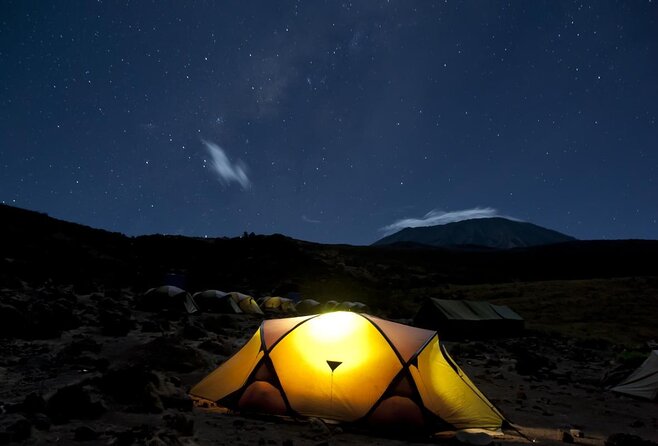
- Permanent huts at Mandara, Horombo, and Kibo mean you sleep indoors rather than carry a tent.
- One full acclimatization day at Horombo gives your body time to adjust before the high camp.
- The summit push begins at 4,700 meters, with a steep climb toward Gilman’s Point and Uhuru Peak.
- Three hot meals each day on the mountain are included, along with a cook and porter team.
- Airport pickup and return transport are covered, starting at Kilimanjaro International Airport.
- The $2,200 price includes major climbing costs, but not hotel meals, insurance, personal items, or staff tips.
Why choose the Marangu Route?
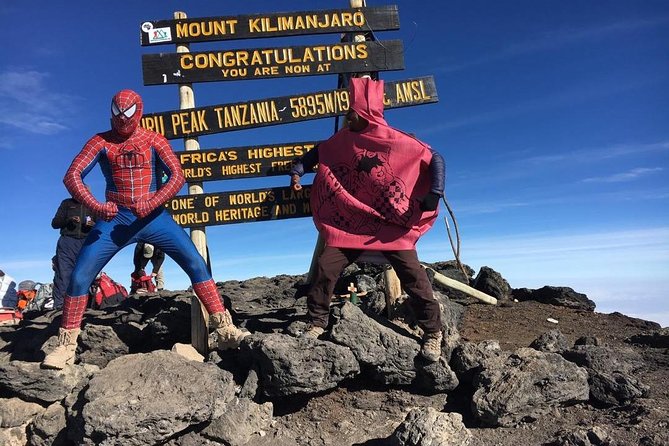
Marangu is often called the Coca Cola Route because it is the most direct and familiar path on Kilimanjaro. Its main appeal is practical: you can reach the summit in six days, and you sleep in permanent huts at each overnight stop.
That shorter schedule matters if you have limited time in Tanzania. You avoid the work of camping, and the huts offer a simpler routine after long walking days. You arrive, eat, rest, and prepare for the next stage.
The same features also create the route’s weaknesses. You gain altitude fairly quickly, and the trail offers less time for acclimatization than longer itineraries. The route also serves as both the ascent and descent path, so you may meet more people along the way than on routes with separate trails.
I would choose Marangu if hut sleeping, a shorter schedule, and a direct route matter most to you. I would think carefully before choosing it if your main goal is to give yourself the best possible altitude adjustment. Six days is workable, but it leaves less room for your body to catch up.
More Kilimanjaro climbs:
- Kilimanjaro climb by Lemosho Route (7-day)
★ 5.0 · 651 reviews - Kilimanjaro climb, Machame Route (7-day)
★ 5.0 · 262 reviews - Kilimanjaro Climbing Lemosho Route 8 Days.
★ 5.0 · 186 reviews
Arrival in Moshi and the gear check
The trip begins with pickup at Kilimanjaro International Airport. You are transferred to your hotel in Moshi or Arusha for the night, depending on the arrangement for your departure.
Before the climb, your head guide holds a short briefing about Kilimanjaro and the Marangu Route. This is also when the team checks your gear and arranges rental equipment if you need anything.
That pre-climb meeting is more useful than it may sound. A gear check gives you a chance to identify missing or unsuitable equipment before you are several hours up the mountain. Use it to ask direct questions about clothing, footwear, personal items, and anything you may need to hire.
The airport transfer is included, which simplifies the first day. You do not need to arrange a separate ride after a long international flight. Hotel lunches, dinners, and drinks before and after the climb are not included, so budget for those separately.
Day 1: Marangu Gate to Mandara Hut
The first mountain day begins at Marangu Gate and enters the rainforest. The walk covers about 7 kilometers, takes roughly four to five hours, and gains 950 meters in altitude. You spend the night at Mandara Hut, at 2,750 meters.
This is a strong opening day. The forest provides a gentler setting than the exposed high slopes that come later, but the altitude gain is still substantial. Do not treat the first day as a casual stroll simply because the path is lower and greener.
Your guide and porter team handle the mountain support, while your job is to set a steady pace. The best approach is slow and controlled from the beginning. You want enough energy left for the next morning, not a personal speed record on day one.
Mandara Hut is your first test of the hut system. You will not be setting up a tent, and the overnight stop lets you settle into the daily rhythm of walking, eating, resting, and preparing your pack.
Day 2: Mandara Hut to Horombo Hut
Day two moves from the rainforest toward moorland. The distance is about 11 kilometers, with five to six hours of walking and an altitude gain of 1,030 meters. Horombo Hut sits at 3,780 meters.
This is a longer day and a noticeable step upward. The change in vegetation helps you feel that the mountain is opening up, but your breathing and energy may also remind you that altitude is now part of the trip.
Horombo is important because it serves as both an overnight stop and your acclimatization base. You spend two nights in this area, which is one of the best features of the itinerary.
Pay attention to how you feel here. Altitude symptoms should not be brushed aside just because the schedule continues. Your guide team is there to monitor the climb, and the included pulse oximeter, portable oxygen, and emergency first-aid kit provide useful safety support. Those items do not prevent altitude illness, but they are sensible equipment for a high-altitude trip.
More Marangu Route climbs:
- Kilimanjaro climb, Marangu route (6-day)
★ 5.0 · 72 reviews - Climbing Kilimanjaro – Marangu Route
★ 5.0 · 65 reviews - Kilimanjaro Climbing 5 days Marangu route
★ 5.0 · 22 reviews - Best Kilimanjaro Adventures 6 Days Marangu Route Experience
★ 5.0 · 18 reviews
Day 3: A full acclimatization day at Horombo
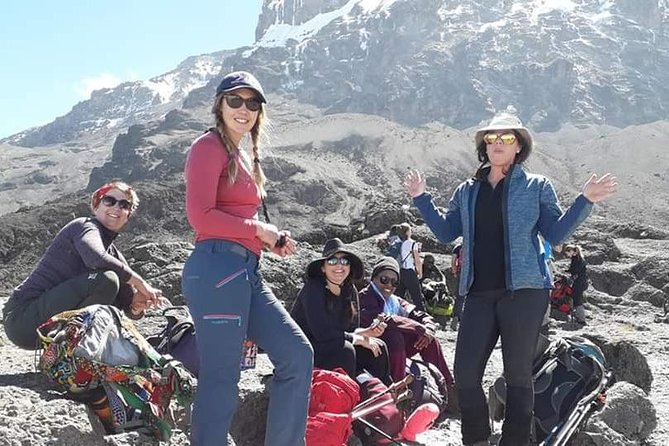
Day three is not a rest day in the lazy holiday sense. You stay at Horombo Hut and take short, guided hikes in the surrounding area to help your body adjust.
I consider this day one of the most valuable parts of the six-day plan. Without it, the jump from Horombo to Kibo would be even more demanding. The schedule gives you a pause before the route reaches its highest camps.
You are also given time to rest. Use it well. Eat, drink, check your clothing and pack, and keep your energy for the summit stages. The goal is not to cover a great distance. The goal is to arrive at Kibo Hut ready for the hardest night of the climb.
The day also gives you time with the mountain team. Several people praised the guides for being caring and attentive, and the staff support is a major part of the price. Octavian is singled out for arranging the trip around the group’s needs, while guides Alex, Rafael, and Manme are praised for professional care. Those names are useful to know if you want to ask who may lead your climb, since guide assignments can vary.
Day 4: Horombo Hut to Kibo Hut
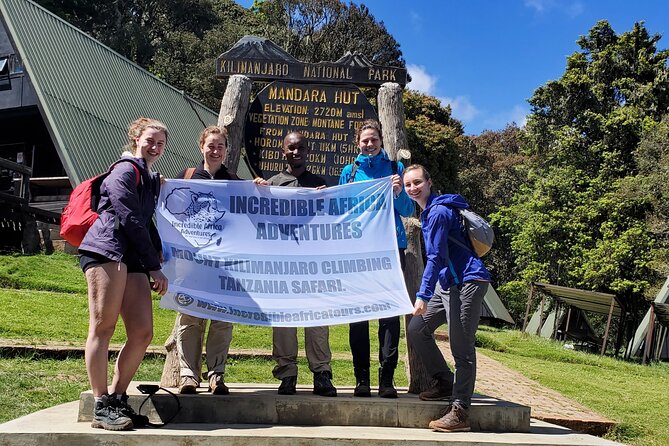
The route now crosses the high desert toward Kibo Hut. You walk about 12 kilometers in five to six hours and gain another 920 meters, arriving at 4,700 meters.
This is where the climb becomes less forgiving. The air is thinner, the terrain is more exposed, and your body has less spare energy. The day is not the summit push, but it is the setup for it, so pacing matters even more.
Kibo Hut is the final overnight point before the summit. You have little time here for anything except eating, resting, and preparing for the night ascent. The schedule moves quickly, and you should expect an unusual sleep pattern before the final climb.
The permanent hut is a practical advantage. You are not dealing with tent setup at 4,700 meters. Still, the hut does not make the altitude easy. Sleeping indoors helps with shelter and routine, but it cannot replace proper acclimatization or fitness.
Day 5: The steep climb to Uhuru Peak
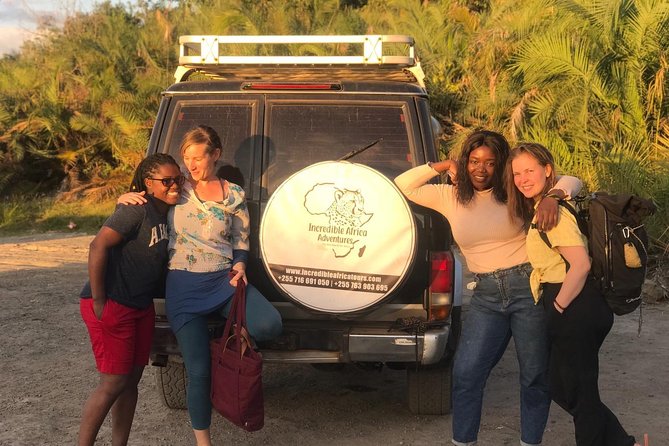
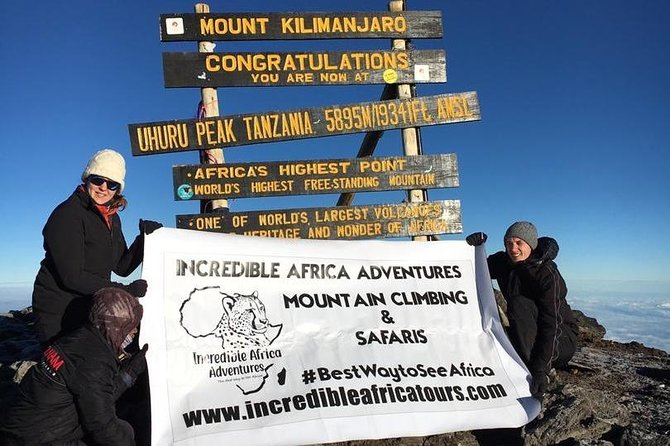
Summit day begins from Kibo Hut. The ascent covers about 7 kilometers, takes six to eight hours, and gains roughly 1,145 meters. The route passes Gilman’s Point before continuing to Uhuru Peak, the top of Kilimanjaro.
This is the hardest section by far. The climb is steep, and the combination of darkness, cold, thin air, and fatigue can make each step feel deliberate. You need patience here. A slow pace is not a sign of failure. It is the correct way to manage a long high-altitude ascent.
Reaching Gilman’s Point is a major stage on the route, but the final stretch to Uhuru Peak still demands effort. At the summit, you spend a short time on the Roof of Africa before beginning the descent.
The descent continues for five to six hours over about 12 kilometers, with an altitude loss of 2,175 meters. You finish at Horombo Hut. That makes for an extremely long day, and the schedule deserves honest attention before you book.
The included support is especially valuable here. You have professional guides, a cook, porters, portable oxygen, an oximeter, and an emergency first-aid kit. The staff cannot do the climb for you, but they can help keep the group organized and respond to problems.
The food team also receives strong praise. King, the chef, and his kitchen team are credited with keeping the group well fed throughout the climb. Three hot meals daily are included, which is a meaningful benefit when you are burning energy for hours at a time.
Day 6: Horombo Hut to Marangu Gate
The final mountain day covers about 18 kilometers and takes five to seven hours. You descend 1,878 meters from Horombo Hut to Marangu Gate.
The route is downhill, but do not mistake that for easy. After the summit night, your legs may be tired, and a long descent can be hard on your knees. Keep your pace controlled and use the day to enjoy the return through lower elevations.
At Marangu Gate, you receive your Kilimanjaro summit certificate. Afterward, transport takes you back to your hotel in Moshi or Arusha.
This final transfer closes a demanding six-day schedule. Plan to keep your evening simple. The listed price does not include hotel lunches, dinners, or drinks, so you will need to cover those costs yourself after leaving the mountain.
What the $2,200 price really covers
At $2,200 per person, this is not a bargain-priced walk, but the price includes many of the expensive parts of a Kilimanjaro climb. You receive private transport to and from Kilimanjaro International Airport, accommodation, park fees, taxes, three hot meals per mountain day, professional guides, a cook, porters, oxygen, an oximeter, and emergency first-aid equipment.
That bundled cost makes the trip easier to plan. You are not separately arranging park entry, mountain transport, food logistics, and a support crew. The private format also means only your group participates, rather than joining a mixed public group.
You still need to budget for travel insurance, personal items, toiletries, hotel meals and drinks, and tips for the guides, porters, and cook. Tips are not a minor detail on a guided climb, so include them in your planning from the start.
The main value comes from the support structure. Climbing Kilimanjaro is not simply a matter of paying for a trail and walking uphill. Food, permits, transport, safety gear, and a trained team all matter. At the same time, no package can remove the physical demands or guarantee that you will reach Uhuru Peak.
The people behind the climb
The strongest praise for this company centers on the human side of the trip. Octavian is described as responsive and good at adjusting the adventure to the group’s needs. Guides Alex, Rafael, and Manme are praised for anticipating needs and offering steady care.
That kind of support matters during a climb where your condition can change from one hour to the next. A cheerful guide can make a hard morning more manageable, but attentive pacing and practical judgment matter even more.
Nelson is also praised for leading a four-day Mount Meru trip with care and good team spirit, while Peter receives praise for guiding a six-day safari. Those comments suggest a wider staff team, although they do not confirm who will lead your particular Kilimanjaro departure.
Ask for the names of your assigned guide and support staff before departure if that matters to you. The information provided does not promise a specific guide for every booking.
Fitness, safety, and the real difficulty
You should book only if you have a strong level of physical fitness. The itinerary includes several long walking days, steady altitude gains, a summit night from 4,700 meters, and a long descent immediately afterward.
The route’s lower summit success rate is linked to its shorter schedule and steeper incline. That does not mean success is unlikely for every fit climber, but it does mean you should take the schedule seriously.
The included oxygen tanks, oximeter, and first-aid kit are reassuring additions. They are emergency tools, not a substitute for preparation. Your best advantages are a measured pace, careful attention to how you feel, and honest communication with your guide.
Who should book this route?
I would recommend this climb to you if you have limited time, prefer huts to tents, want a private group, and are comfortable with a demanding schedule. It also suits someone who wants a clear package with airport transport, meals, permits, and mountain staff arranged in advance.
I would hesitate if you want a slower altitude schedule or dislike long summit nights. A longer route may suit you better, but that option is not part of this particular package.
The Marangu Route is also a reasonable choice if you value straightforward logistics over a more remote trail experience. The shared up-and-down path means more traffic, but it also keeps the route simple to follow.
Should you book this six-day Kilimanjaro climb?
Book it if the permanent huts, six-day schedule, private format, and broad package of included services match your priorities. The staff support, hot meals, acclimatization day, and airport transfers add real value to the $2,200 price.
Do not book it simply because it is one of the shorter options. The summit push is steep, the altitude adjustment window is limited, and day five is a serious physical test. If you are fit, well prepared, and short on time, this can be a practical route to Uhuru Peak. If you want the gentlest possible climb, choose a longer schedule instead.
FAQ
Where does the Kilimanjaro climb begin?
The meeting point is Kilimanjaro International Airport in Tanzania. Pickup is included, and you are transferred to a hotel in Moshi or Arusha before the climb.
How long is the Marangu Route experience?
The climb lasts approximately six days.
How much does the climb cost?
The listed price is $2,200 per person.
Where do you sleep on the mountain?
You sleep in permanent huts at Mandara Hut, Horombo Hut, and Kibo Hut.
Is there an acclimatization day?
Yes. Day three is a full day at Horombo Hut, with rest and short guided hikes to aid acclimatization.
How high is Kibo Hut?
Kibo Hut is located at approximately 4,700 meters.
How long is the summit day?
The ascent from Kibo Hut to the summit takes about six to eight hours. The descent to Horombo Hut takes another five to six hours.
Is airport transportation included?
Yes. Private transport to and from Kilimanjaro International Airport is included.
Are meals included?
Three hot meals daily while you are on the mountain are included. Hotel lunches, dinners, and drinks before and after the climb are not included.
Is travel insurance included?
No. Travel insurance is not included and must be arranged separately.
Just added in Moshi
- Zanzibar: Stone Town tour and Nakupenda beach with Lunch★ 5.0 · 1 review
- day trip lake manyara★ 5.0 · 2 reviews
- Mt Kilimanjaro 6 days Marangu route hike★ 5.0 · 3 reviews
- machame route★ 5.0 · 16 reviews
- West Kilimanjaro cycling Adventures★ 4.5 · 8 reviews
- Wildlife Extravaganza: Manyara, Tarangire & Ngorongoro in 3 Days★ 5.0 · 3 reviews
- Private Cycle to Kilimanjaro Bike Park Safari★ 5.0 · 6 reviews
- 3 Days Private E-Bike Tour in West Kilimanjaro★ 5.0 · 3 reviews
Marangu Route Climbs, compared.


Private Full Day Hiking Experience to Marangu Route
Read our review →
From Arusha/Moshi: Kilimanjaro Hike Marangu Route Day Trip
Read our review →
Mount Kilimanjaro Day Hike Through Marangu Route to Mandara Hut
Read our review →
Best Kilimanjaro Adventures 6 Days Marangu Route Experience
Read our review →
Kilimanjaro Private Climbing in 6 Days Marangu Route
Read our review →Browse the lists this tour appears in