
Reviewed · LEMOSHO ROUTE CLIMBS
Kilimanjaro Climb- 8 Days Lemosho Route
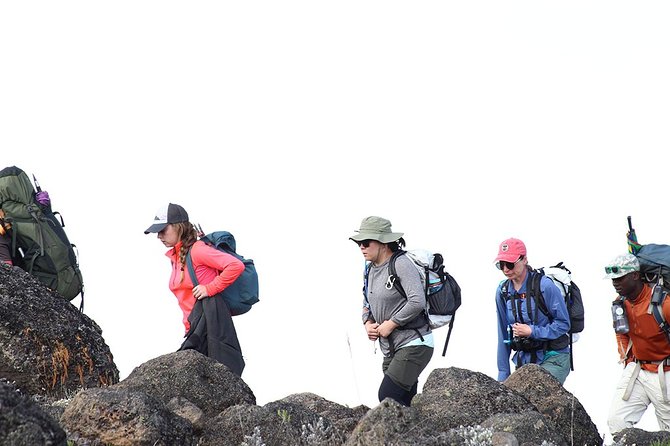
Kilimanjaro rewards patience. This eight-day, seven-night climb follows the scenic Lemosho Route from Moshi through heath, alpine meadows, and the arctic zone near Uhuru Peak before descending through rainforest. I like the slower schedule and the changing climate zones, both of which give you more time to adjust to altitude and enjoy the mountain.
I also like that the $2,600 price includes two nights of bed-and-breakfast accommodation in Moshi, mountain meals, tents, transfers, an English-speaking guide, emergency oxygen, and an oximeter. The main drawback is the amount of personal gear you must supply, including a sleeping bag, boots, and suitable cold-weather clothing. This is not a casual walk with a daypack.
The company has earned a five-star rating from nine published ratings, with especially strong praise for fast booking support, careful organization, guides, porters, and airport transfers. If Kelvin handles your planning, expect quick replies and useful preparation advice. Pickup is offered, but you should confirm the exact pickup point and arrival arrangements before you fly.
In This Review
- Key points to know before booking
- Starting in Moshi with two nights included
- Why eight days matters on Lemosho
- The heath zone: your first mountain stage
- Alpine meadows and the changing climate zones
- The high camp and the push toward Uhuru Peak
- Descending through rainforest
- What the $2,600 price really covers
- The service style and booking support
- Safety, fitness, and equipment
- Cancellation and practical booking notes
- Should you book the Lemosho climb?
- FAQ
- How long is the Kilimanjaro Lemosho climb?
- Where does the climb begin?
- Are Moshi hotel nights included?
- Are meals included during the mountain climb?
- Is a guide provided?
- What safety equipment is included?
- Is trekking equipment provided?
- Can I cancel for a full refund?
Key points to know before booking
- Eight days gives you a sensible altitude schedule: The longer route leaves more time for gradual ascent than a short Kilimanjaro program.
- Lemosho offers the broadest scenery: You move from heath and alpine meadows toward the arctic summit zone, then descend through rainforest.
- Two Moshi nights are included: This gives you a place to sleep before or after the climb, with bed and breakfast provided.
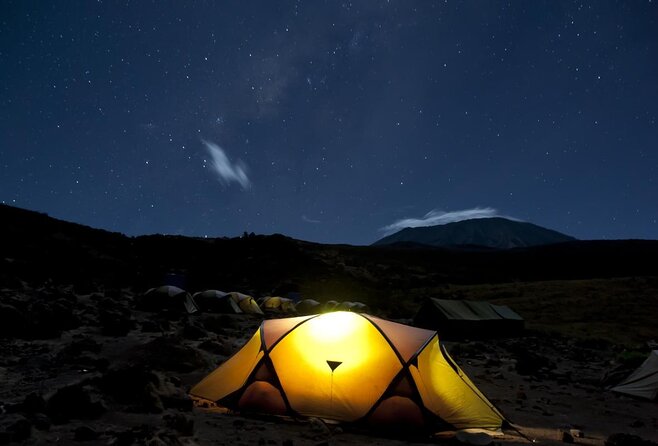
- Safety equipment is part of the package: The crew carries an emergency first-aid kit, oxygen cylinder, and oximeter.
- The price includes full board on the mountain: Fresh, healthy meals and drinking water are provided, but snacks and personal drinks are not.
- The group can reach 20 people: That keeps the price within reach, though a larger group may feel less personal than a small private climb.
Starting in Moshi with two nights included
Moshi is the practical base for this climb. The package includes two nights of bed-and-breakfast accommodation there, which is useful after a long flight and before you spend several nights camping on the mountain.
The stated start time is 8:00 am. Pickup is offered, and airport transfer arrangements have received warm praise, including a smooth arrival transfer handled by a driver named Joseph. Still, confirm whether your included pickup is from the airport, your Moshi hotel, or another meeting point.
The Moshi nights add real value to the price. You do not need to arrange every part of the trip separately, and you have a place to settle in before the mountain portion begins. The information does not specify the hotel name, room style, or exact location, so ask those questions if accommodation standards matter to you.
The included stay is bed and breakfast only. Once you leave Moshi, full-board meals are provided on the mountain. Flights, visas, insurance, medication, alcohol, soft drinks, and personal spending remain your responsibility.
More Kilimanjaro climbs:
- Kilimanjaro climb by Lemosho Route (7-day)
★ 5.0 · 651 reviews - Kilimanjaro climb, Machame Route (7-day)
★ 5.0 · 262 reviews - Kilimanjaro Climbing Lemosho Route 8 Days.
★ 5.0 · 186 reviews
Why eight days matters on Lemosho
Kilimanjaro is not a technical climbing trip in the mountaineering sense, but it is a serious high-altitude trek. Your success depends less on speed than on allowing your body time to adjust.
The eight-day format is the key feature here. A longer schedule usually means a more measured climb, with less pressure to race upward. That is valuable because the mountain changes quickly as you gain height. The route begins in the heath zone, crosses alpine meadows, and reaches the cold arctic zone near Uhuru Peak.
I would choose this duration over a shorter option if reaching the summit is your main goal. The additional days also let you notice the mountain’s changing plant life and weather instead of treating the route as one long uphill push.
The program still requires moderate physical fitness. You should be comfortable walking for several hours on uneven ground and coping with cold, tiredness, and basic camping conditions. The package does not promise an easy ascent, and no itinerary can guarantee a summit.
The heath zone: your first mountain stage
The Lemosho climb begins in the heath zone, where the setting feels different from the rainforest used on the descent. This opening section is valuable because it lets you ease into the route before the highest and coldest stages.
Your guide leads the group, while the support crew carries and organizes the mountain camp equipment. The price includes mountain tents and sleeping mattresses, so you are not expected to bring your own tent or sleep directly on the ground.
The exact first-day distance, elevation gain, and camp name are not provided. That matters because those details affect how hard each day feels. Ask Sote Tours & Travel for the full day-by-day schedule, including walking hours, overnight elevations, and the point at which your bags are handled by the crew.
At this stage, keep your pace deliberately slow. You want to preserve energy for the days ahead. Drink the provided water regularly, eat even if your appetite drops, and tell your guide early if you feel unwell.
Alpine meadows and the changing climate zones
As the route continues, heath gives way to alpine meadows. This is where the Lemosho Route earns its reputation for scenery. You are not simply climbing one type of terrain for a week. The vegetation, air, temperature, and views change as you move upward.
The full-board meal plan helps here. The operator promises large portions of fresh, nutritious food, which is exactly what a long mountain day demands. Drinking water is included as well. Energy food and beverages are not included, so bring any preferred snacks yourself.
The menu is not described in the available information, and that is worth checking if you have allergies, dietary restrictions, or strong food preferences. Do not assume that every special diet can be handled without advance notice.
You should also ask how many porters and support staff will accompany your group. The company says crew salaries follow fair and sustainable pay approved by KINAPA, a useful point for anyone who wants their money to support responsible mountain work. The information does not give the exact crew structure, so a direct question before booking is sensible.
More Lemosho Route climbs:
- Kilimanjaro climb, Lemosho Route (8-day)
★ 5.0 · 148 reviews - Kilimanjaro climb, Lemosho Route (6-day)
★ 5.0 · 129 reviews - Kilimanjaro Lemosho Route
★ 5.0 · 71 reviews - Private Kilimanjaro Hike 7 Day Lemosho Route
★ 5.0 · 60 reviews
The high camp and the push toward Uhuru Peak
The route eventually enters the arctic zone near Uhuru Peak. This is the most demanding part of the climb. The air is thin, the temperatures are low, and the summit attempt tests your stamina more than your walking technique.
The available information does not provide a precise summit-day start time or the name of the overnight camp. Do not treat that missing detail as minor. Summit timing affects clothing, food, sleep, headlamp needs, and how you prepare mentally. Ask for the exact summit schedule before you commit.
Your mountain guide is English-speaking and is responsible for leading the climb. The operator also supplies an oximeter and an emergency oxygen cylinder. These are useful safety tools, but they do not remove the risk of altitude illness. Oxygen is an emergency measure, not a substitute for careful pacing, monitoring, or turning around when necessary.
A first-aid kit is included, while personal medication is not. You should carry your own prescribed medicines and discuss medical and travel insurance with a qualified provider before departure. Insurance is required for this activity.
The summit itself is the emotional high point of the program, but it should not be treated as an all-or-nothing contest. A good guide will help you make a sound decision if your health or conditions deteriorate.
Descending through rainforest
The return route passes through rainforest, giving you a striking change from the high, cold summit zone. Descending is often physically easier than going up, but it can be hard on knees and tired legs.
This final section also helps explain why Lemosho feels more varied than a simple out-and-back route. You experience a sequence of mountain environments rather than seeing the same trail in both directions.
The information does not list the exact descent camps, walking hours, or final gate schedule. Those details should be included in the company’s final briefing. The package does include Kilimanjaro gate transfers, which removes one practical worry at the beginning and end of the mountain section.
Once you return to Moshi, the included accommodation can provide a useful buffer before your flight or the next part of your Tanzania trip. If you are combining the climb with safari, the company has also arranged safari programs for some clients, though safari costs and details are not part of this price.
What the $2,600 price really covers
At $2,600 per person, this is not a budget walk, but the package includes many costs that are easy to underestimate. You receive two Moshi nights, full-board mountain meals, drinking water, tents, sleeping mattresses, guide service, gate transfers, park fees and taxes, and emergency equipment.
The fair-salary commitment for the crew is another part of the value. A cheaper quote may leave you wondering what has been cut, especially when porters, food, park fees, and safety support are involved.
You still need to budget for flights, visa fees, insurance, medication, tips, souvenirs, snacks, drinks, and personal equipment. A sleeping bag alone can be a major expense if you do not already own one. Boots, warm layers, gloves, and other trekking clothing also add up.
The package does not include a Gamow bag. It also does not include a personal sleeping bag. Ask exactly what the mattress is like and what tent equipment is supplied, so you can avoid bringing duplicate gear or arriving without something essential.
The service style and booking support
The strongest service praise centers on communication and organization. Kelvin is specifically praised for replying quickly, explaining how to prepare, and staying flexible during the planning stage. That is useful for a climb with many moving parts.
The booking process is described as smooth, with detailed answers to questions before departure. Staff members, guides, porters, and airport drivers also receive strong approval. Good communication matters here because small misunderstandings about pickup, gear, food, and accommodation can become large problems once you reach Tanzania.
Ask for written confirmation of:
- Your Moshi hotel and included nights
- Airport or hotel pickup details
- The complete daily route and overnight camps
- The personal equipment checklist
- Dietary arrangements
- Group size and guide-to-climber ratio
- Insurance requirements
- Tip guidance for the crew
The maximum group size is 20 people. That is not enormous, but it is large enough to affect the pace and the feel of the climb. Ask if smaller private groups are available and if that changes the price.
Safety, fitness, and equipment
You need moderate physical fitness for this climb. That means regular walking and uphill conditioning before arrival, not simply buying new boots and hoping for the best.
The company provides an emergency first-aid kit, emergency oxygen, an oximeter, tents, a mattress, food, and water. Those inclusions are reassuring, but you remain responsible for your own boots, sleeping bag, clothing, medication, and personal insurance.
Your kit should match both warm lower elevations and the freezing summit zone. The information confirms that the route crosses several climate zones, so packing only for warm African weather would be a serious mistake.
Use the guide’s instructions on pace and altitude symptoms. Tell the guide about headaches, nausea, dizziness, unusual fatigue, or breathing problems. The presence of an oximeter is helpful, but how you feel also matters.
The experience is best for someone who wants a scenic, supported trek and is willing to camp for a week. It is not a good fit if you dislike basic accommodation, need a highly predictable hotel-based itinerary, or have not prepared for sustained physical effort.
Cancellation and practical booking notes
You can cancel for a full refund if you do so at least 24 hours before the 8:00 am start time. Cancellations or changes made within 24 hours are not accepted for a refund.
The climb depends on suitable weather and a minimum number of participants. If Sote Tours & Travel cancels for either reason, you are offered another date or experience, or a full refund. Confirm the local cut-off time and the company’s process for weather decisions before departure.
Confirmation is provided at booking. The activity is near public transportation, but pickup is offered, so you should clarify the exact meeting arrangement rather than relying on a general map pin.
Should you book the Lemosho climb?
I would choose this tour if you want a scenic Kilimanjaro route, a longer eight-day schedule, and a package that covers the expensive essentials. The combination of full-board meals, Moshi accommodation, gate transfers, tents, guide service, and safety equipment makes the $2,600 price easier to justify.
I would pause before booking if you need a complete equipment rental package, a very small group, or a fully published day-by-day itinerary with exact camps and walking times. Those details are not supplied here, so ask for them in writing.
For a first Kilimanjaro climb, the Lemosho Route offers a strong balance of scenery and gradual progression. Bring the right gear, arrange insurance, prepare your body, and treat the summit as a goal rather than a guarantee. With those expectations, this is a well-supported way to approach Africa’s highest mountain.
FAQ
How long is the Kilimanjaro Lemosho climb?
The program lasts approximately eight days and includes seven nights on the route.
Where does the climb begin?
The experience is based in Moshi, Tanzania. Pickup is offered, and the stated start time is 8:00 am.
Are Moshi hotel nights included?
Yes. The price includes two nights of bed-and-breakfast accommodation in Moshi.
Are meals included during the mountain climb?
Yes. Full-board meals and drinking water are included on the mountain. Energy food, alcohol, soft drinks, and other personal beverages are not included.
Is a guide provided?
Yes. The package includes the service of an English-speaking mountain guide.
What safety equipment is included?
An emergency first-aid kit, emergency oxygen cylinder, and oximeter are included. A Gamow bag and personal medication are not included.
Is trekking equipment provided?
Mountain tents and a sleeping mattress are included. You must provide personal equipment such as a sleeping bag, hiking boots, and trekking clothes.
Can I cancel for a full refund?
Yes, if you cancel at least 24 hours before the experience start time. Cancellations or changes made less than 24 hours before the start are not refunded.
Just added in Moshi
- Zanzibar: Stone Town tour and Nakupenda beach with Lunch★ 5.0 · 1 review
- machame route★ 5.0 · 16 reviews
- day trip lake manyara★ 5.0 · 2 reviews
- Mt Kilimanjaro 6 days Marangu route hike★ 5.0 · 3 reviews
- Private Cycle to Kilimanjaro Bike Park Safari★ 5.0 · 6 reviews
- West Kilimanjaro cycling Adventures★ 4.5 · 8 reviews
- Wildlife Extravaganza: Manyara, Tarangire & Ngorongoro in 3 Days★ 5.0 · 3 reviews
- 3 Days Private E-Bike Tour in West Kilimanjaro★ 5.0 · 3 reviews
Lemosho Route Climbs, compared.


8-Day Small-group Lemosho Kilimanjaro Summit Trekking
Read our review →



Climbing Kilimanjaro through 8 days Lemosho Route
Read our review →Browse the lists this tour appears in