
Reviewed · LEMOSHO ROUTE CLIMBS
Kilimanjaro Climb Lemosho Route 8 days
The mountain saves its best views for patient walkers. This 8-day Lemosho climb gives you a gradual approach across the Shira Plateau, quieter early trails, and broad views of Kibo from several sides. I especially like the highly scenic route and the extra acclimatization built into the schedule. The main point to weigh is the demanding summit night, which begins around midnight and combines cold, darkness, steep ground, and thin air.
I also like that the $2,450 price includes private transport, tents, mattresses, meals, filtered water, hot water for washing, and wages for the mountain crew. The private format means only your group participates. Still, flights, visas, insurance, drinks, laundry, and personal trekking equipment cost extra, so your final budget will be higher.
In This Review
- Key points about the 8-day Lemosho climb
- Why Lemosho is such a strong Kilimanjaro choice
- Day 1: Londorossi Gate to Mti Mkubwa
- Day 2: Mti Mkubwa to Shira 1 Camp
- Day 3: Shira 1 to Moir Hut
- Day 4: Moir Hut to Lava Tower and Barranco
- Day 5: Barranco Wall to Karanga Camp
- Day 6: Karanga to Barafu Camp
- Day 7: Barafu to Uhuru Peak and Mweka Camp
- Day 8: Mweka Camp to Moshi
- What the $2,450 price really covers
- The crew and private format
- Who should book this climb
- Should you book the Lemosho route?
- FAQ
- Where does the Kilimanjaro climb start?
- How long is the climb?
- Is this a private tour?
- What meals are included?
- Is camping equipment provided?
- Is transportation included?
- What is the cancellation policy?
Key points about the 8-day Lemosho climb
- The route crosses the Shira Plateau: You reach one of the highest plateaus on earth before joining Kilimanjaro’s southern circuit.
- The schedule supports acclimatization: The high point of Lava Tower is followed by a descent to Barranco Camp, giving you useful time at altitude.
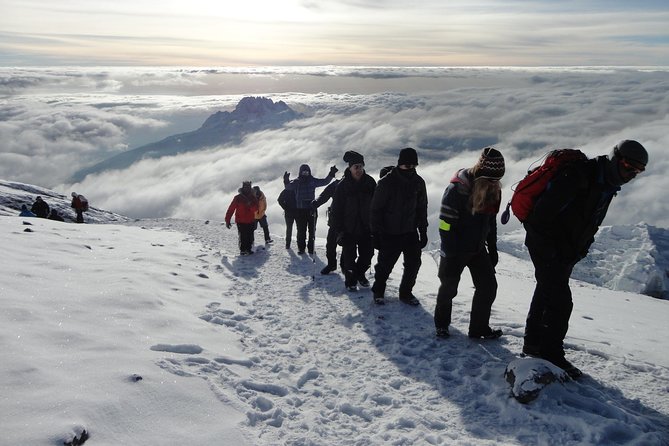
- The summit day is very long: Day seven includes the climb to Uhuru Peak and the descent to Mweka Camp, about 12 hours in total.
- The price covers core mountain services: Crew wages, camping equipment, meals, filtered water, private transport, and hot washing water are included.
- You finish at Mweka Gate: After collecting your certificate, a vehicle takes you from Mweka Village back to your hotel in Moshi.
- The trip is private: Only your own group takes part, which may make pacing and daily decisions easier.
Why Lemosho is such a strong Kilimanjaro choice
Kilimanjaro has several climbing routes, but Lemosho offers a particularly appealing mix of scenery, space, and time at altitude. It begins on the western side of the mountain, farther from the early Machame trail, then crosses the Shira Plateau before joining the southern circuit.
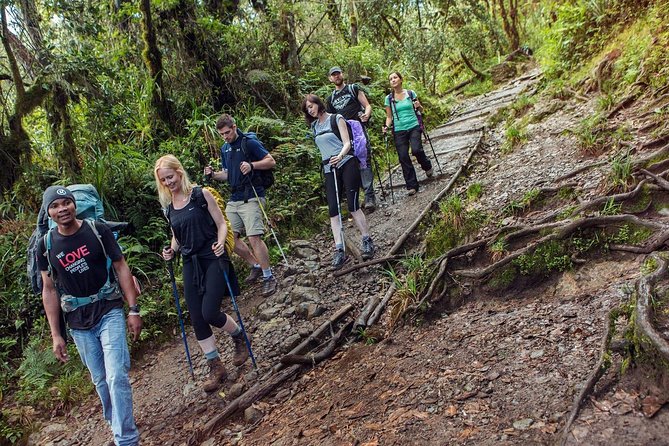
That route design matters. You do not rush straight toward the summit. Instead, you move through several distinct habitats: rain forest, heath, moorland, alpine desert, and finally the Arctic summit zone. The setting changes often enough to keep the walk interesting, even on days when the altitude makes every step feel serious.
The eight-day schedule is another reason I rate this option highly. A longer climb gives you more time to adjust to the thin air. Lemosho does not remove the risk of altitude sickness, but its gradual profile gives you a better setup than a rushed itinerary.
The early western approach also offers a quieter feel than some of the better-known routes. It would be wrong to promise an empty mountain, since Kilimanjaro is a major trekking destination, but the opening section avoids the busiest early part of Machame.
More Kilimanjaro climbs:
- Kilimanjaro climb by Lemosho Route (7-day)
★ 5.0 · 651 reviews - Kilimanjaro climb, Machame Route (7-day)
★ 5.0 · 262 reviews - Kilimanjaro Climbing Lemosho Route 8 Days.
★ 5.0 · 186 reviews
Day 1: Londorossi Gate to Mti Mkubwa
The day begins in Moshi with transport to Londorossi Gate. The drive takes about four hours, and you complete entry formalities before continuing to the Lemosho trailhead.
From there, the walk covers about 6 kilometers, or 4 miles, in three to four hours. You rise from 7,742 feet to 9,498 feet and spend the day in rain forest.
This is a gentle start by Kilimanjaro standards. The trail winds through relatively undisturbed forest toward Mti Mkubwa Camp. You get your first feel for the pace, the walking surface, and the daily camp routine without facing a huge mileage or altitude jump.
The long morning transfer is worth noting. A four-hour drive plus registration and hiking makes this a full first day, even if the walk itself is short. Keep your daypack organized before leaving Moshi, since you will want quick access to water, rain protection, and a warm layer.
Day 2: Mti Mkubwa to Shira 1 Camp
The second day moves out of the rain forest and into heath country. Tall grasses, heather, volcanic rock, and lichen replace the dense trees as you climb toward Shira Ridge.
The distance is about 8 kilometers, or 5 miles, with five to six hours of walking. You rise from 9,498 feet to 11,500 feet.
The route climbs through rolling hills and crosses several streams before reaching the ridge. Then it drops gently to Shira 1 Camp. This change in elevation after reaching the ridge gives the day a varied rhythm rather than one constant uphill push.
At camp, you get your first view of Kibo across the plateau. That sight is one of Lemosho’s great rewards. The summit can still look far away, but seeing the upper mountain early gives the whole climb a clear purpose.
Day 3: Shira 1 to Moir Hut
Day three is a full day on the Shira Plateau, one of the highest plateaus on earth. The route covers about 11 kilometers, or 7 miles, and takes five to seven hours.
You walk east through moorland meadows toward Shira 2 Camp, then take a less-used route toward Moir Hut at the base of Lent Hills. The day reaches 13,800 feet, so altitude becomes a more obvious part of the challenge.
This is a valuable acclimatization day because the schedule allows you to gain height without immediately sleeping at the highest point reached. Walks on Lent Hills are available, giving the day some flexibility.
Moir Hut is less frequently used than the main camps, which can give this section a more remote feel. The tradeoff is that the higher altitude may affect your appetite, sleep, or energy. Keep your pace slow and tell the guide early if you develop a headache, nausea, dizziness, or unusual fatigue.
More Lemosho Route climbs:
- Kilimanjaro climb, Lemosho Route (8-day)
★ 5.0 · 148 reviews - Kilimanjaro climb, Lemosho Route (6-day)
★ 5.0 · 129 reviews - Kilimanjaro Lemosho Route
★ 5.0 · 71 reviews - Private Kilimanjaro Hike 7 Day Lemosho Route
★ 5.0 · 60 reviews
Day 4: Moir Hut to Lava Tower and Barranco
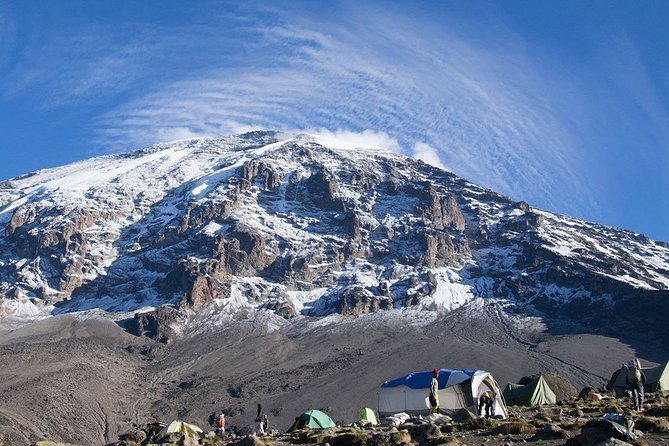
This is one of the most useful days on the entire route. You climb from 13,800 feet to Lava Tower at 15,190 feet, then descend to Barranco Camp at 13,044 feet.
The first section covers 7 kilometers, or 4 miles, and takes four to five hours. Lava Tower is a 300-foot volcanic rock formation in the alpine desert. After reaching it, you descend another 3 kilometers, or 2 miles, over two to three hours.
In simple terms, you climb high and sleep lower. That pattern helps your body adjust to altitude, even though it can feel strange to work hard uphill only to lose height later.
The descent leads through the Senecio Forest, a striking area of giant plants in a stark volcanic setting. The day is not especially long on paper, but the altitude makes it tiring. I would rather have this high-and-low schedule than a shorter itinerary that skips important acclimatization time.
Day 5: Barranco Wall to Karanga Camp
The Barranco Wall is the day’s main feature. You first descend into a ravine, then climb the steep, nearly 900-foot wall.
The climb is non-technical, so it does not require ropes or specialist climbing skills according to the supplied route details. Still, it is steep and can feel exposed in places. You should expect to use your hands for balance and move carefully behind the guide.
From the top, the trail crosses a series of hills and valleys before dropping into Karanga Valley. One final steep climb brings you to Karanga Camp at 13,106 feet.
This is a shorter day of about 5 kilometers, or 3 miles, taking four to five hours. That shorter distance is welcome after Lava Tower and Barranco. It gives you time to recover while keeping you active at altitude.
The camp sits only slightly higher than Barranco, which helps you avoid a large overnight gain. Do not mistake the short mileage for an easy day, though. The wall and repeated ups and downs can test your legs.
Day 6: Karanga to Barafu Camp
The walk from Karanga to Barafu is only about 4 kilometers, or 2 miles, but it takes four to five hours. You climb from 13,106 feet to 15,331 feet through rocky alpine desert.
You first reach the junction with the Mweka Trail, then continue upward to Barafu Hut. At this point, you have completed the southern circuit, which has shown you the summit from several angles.
Barafu is the staging camp for the summit attempt. Mawenzi and Kibo are visible from here, and the sense of purpose becomes hard to ignore. You rest, eat an early dinner, and prepare for the night ahead.
This is where practical planning matters. Your summit clothing, headlamp if included in your personal kit, water, snacks, and gloves should be ready before dinner. The itinerary starts the summit push around midnight, so you will have very little time to sort equipment once you lie down.
Day 7: Barafu to Uhuru Peak and Mweka Camp
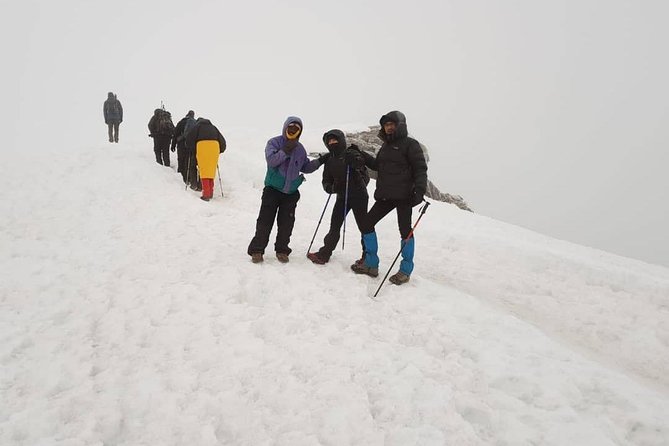
Summit day is the hardest part of the climb. You start around midnight from 15,331 feet and climb to Uhuru Peak at 19,341 feet.
The ascent takes about seven to eight hours and covers roughly 5 kilometers, or 3 miles. In the darkness, the cold and wind can be severe. The steady pattern is slow walking, short breaks, and continued effort.
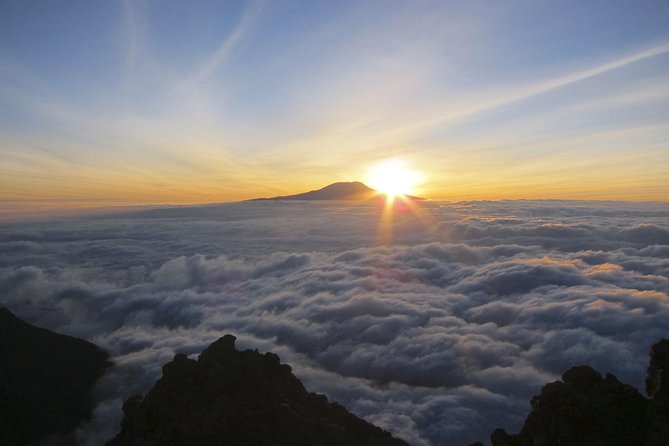
Near Stella Point, at about 18,900 feet, you may see sunrise over Mawenzi. The view from this high on the mountain is one of the defining moments of the route, but you should not underestimate the effort required to reach it.
After Uhuru Peak, you descend 12 kilometers, or 7 miles, to Mweka Camp at 10,065 feet. That descent takes another four to six hours, making the full day about 12 hours.
The schedule is demanding because the summit day combines the highest altitude with the longest total effort. If you reach a point where you feel seriously unwell, tell the guide immediately. The goal is not only the certificate. It is a safe ascent and return.
Day 8: Mweka Camp to Moshi
The final walk descends from Mweka Camp to Mweka Gate. The distance is about 10 kilometers, or 6 miles, and usually takes three to four hours.
You drop from 10,065 feet to 5,380 feet through rain forest. Lower down, the trail can be wet and muddy, so shoes with good grip and trekking poles can be useful. Trekking poles are not included in the stated package, so bring or rent any equipment you need before the climb.
At Mweka Gate, you collect your summit certificates. You then continue for about an hour to Mweka Village, where a vehicle meets you and drives you back to your hotel in Moshi.
This final transfer is a welcome touch after the long descent. It also means the day does not end at the park gate. Plan to keep dry clothes and a little patience close at hand, since mud and tired legs can slow the last stretch.
What the $2,450 price really covers
At $2,450 per person, this is not a budget walk, but the price includes many costs that can otherwise appear as extras. It covers all fees and taxes, private transportation, mountain sleeping tents, mattresses, filtered water throughout the trek, hot water for washing, and the wages of guides, cooks, and porters.
Food is also included: seven breakfasts, eight lunches, and seven dinners. The eight lunches match the eight-day schedule, while the seven breakfasts and dinners reflect the nights and travel pattern. Alcoholic and non-alcoholic drinks are not included.
I consider fair crew wages an important part of the value. A Kilimanjaro climb depends on a large support team, and the stated inclusion gives you a clearer idea of where part of your money goes.
You still need to budget for flights, visas, insurance, personal expenses, laundry, drinks, and trekking gear not listed in the package. Insurance deserves particular attention because it is not included and should be arranged before you travel.
The crew and private format
The climb is a private activity, so only your group participates. That can be a real advantage if you want your walking pace and daily discussions to stay within your own party.
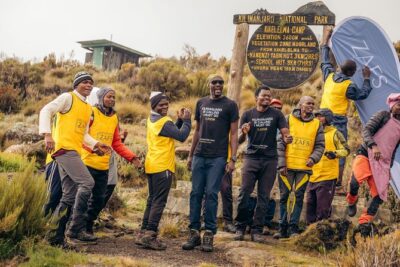
The company is Kilimanjaro Safari Experience. Shungu arranged a team described as experienced, warm, and highly attentive, with the group feeling more like family than a basic customer transaction. That praise points to the human side of the trip, which matters greatly when you are tired, cold, and far above sea level.
The same operator also handled a separate Machame climb for a husband and wife, who described the ascent as an especially memorable life experience. That does not prove every Lemosho departure will be identical, but it does suggest the company has experience with multi-day Kilimanjaro operations.
Ask who will lead your departure, how many porters and support staff are assigned, and how altitude concerns are handled before you pay. The supplied details confirm fair wages, but they do not specify crew ratios, medical equipment, or guide certifications.
Who should book this climb
I would choose this route if you want scenery and a slower approach more than the shortest possible path to the summit. The Shira Plateau, Lent Hills, Lava Tower, Senecio Forest, Barranco Wall, and southern circuit provide a varied week rather than a simple uphill march.
It suits someone with moderate physical fitness who can manage several hours of walking on consecutive days. You do not need technical climbing ability for the Barranco Wall, but you do need stamina, patience, and the ability to cope with a midnight start.
It may not suit you if you dislike camping, cold conditions, long descents, or uncertain comfort. The package includes tents and mattresses, but it does not describe private sleeping arrangements, dining facilities, toilets, or shower facilities. Hot water for washing is included, but that is not the same as a full shower.
Pickup is offered, and the start and finish point is in Moshi Urban. Confirmation is received at booking, and free cancellation is available if you cancel at least 24 hours before the local start time. Inside that 24-hour window, the payment is not refunded and changes are not accepted.
Should you book the Lemosho route?
Book this climb if you want one of Kilimanjaro’s most scenic approaches, value a full eight-day schedule, and prefer a private trip with core camping costs included. The route gives you time on the Shira Plateau, a sound high-and-low acclimatization day at Lava Tower, and a memorable passage over Barranco Wall.
I would pause if your fitness is only casual, your insurance is not arranged, or your budget cannot absorb gear, drinks, visas, and flights on top of the $2,450 fee. Before booking, ask the operator for the full equipment list and details of the guide team.
For a fit walker who wants a strong chance of reaching Uhuru Peak without taking the fastest route, Lemosho is a sensible choice. Just remember that the scenic opening comes with a serious finish: the summit night is cold, long, and physically demanding.
FAQ
Where does the Kilimanjaro climb start?
The activity starts in Moshi Urban, Tanzania. Pickup is offered, and the first mountain transfer goes to Londorossi Gate before continuing to the Lemosho trailhead.
How long is the climb?
The climb lasts approximately eight days. The longest day is day seven, which includes the ascent from Barafu Camp to Uhuru Peak and the descent to Mweka Camp.
Is this a private tour?
Yes. Only your group participates in the activity.
What meals are included?
The package includes seven breakfasts, eight lunches, and seven dinners. Alcoholic and non-alcoholic drinks are not included.
Is camping equipment provided?
Mountain sleeping tents and mattresses are included. Personal trekking equipment is not included unless specifically listed in the package.
Is transportation included?
Private transportation is included. On the final day, a vehicle meets the group at Mweka Village and drives back to the hotel in Moshi.
What is the cancellation policy?
You can receive a full refund if you cancel at least 24 hours before the experience start time. Cancellations and changes made less than 24 hours before the start time are not accepted, and the amount paid is not refunded.
Just added in Moshi
- Zanzibar: Stone Town tour and Nakupenda beach with Lunch★ 5.0 · 1 review
- day trip lake manyara★ 5.0 · 2 reviews
- Mt Kilimanjaro 6 days Marangu route hike★ 5.0 · 3 reviews
- machame route★ 5.0 · 16 reviews
- Private Cycle to Kilimanjaro Bike Park Safari★ 5.0 · 6 reviews
- West Kilimanjaro cycling Adventures★ 4.5 · 8 reviews
- Wildlife Extravaganza: Manyara, Tarangire & Ngorongoro in 3 Days★ 5.0 · 3 reviews
- 3 Days Private E-Bike Tour in West Kilimanjaro★ 5.0 · 3 reviews
Lemosho Route Climbs, compared.


8-Day Small-group Lemosho Kilimanjaro Summit Trekking
Read our review →



Climbing Kilimanjaro through 8 days Lemosho Route
Read our review →Browse the lists this tour appears in