
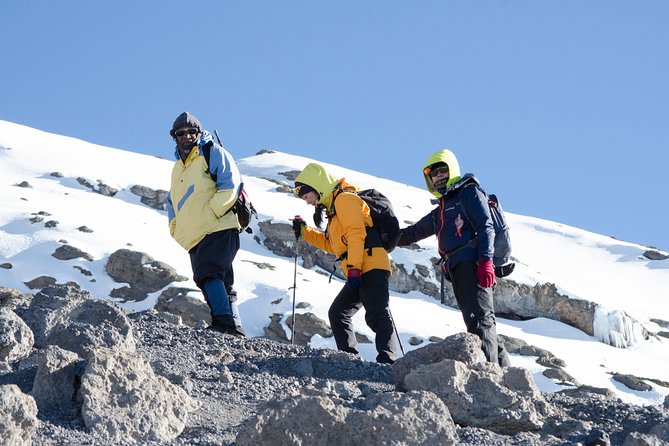
Reviewed · MACHAME ROUTE CLIMBS
Kilimanjaro Machame Route 7 Days
The mountain changes every day. This 7-day Kilimanjaro climb takes you from Moshi through rainforest, volcanic highlands, and the cold summit zone, with six walking days and two hotel nights arranged around the trek. The Machame Route is a good fit if you want a serious physical challenge without rushing the altitude gain.
I like the extra acclimatization day and the strong practical support: emergency oxygen, a Gamow Bag, pulse oximeters, radios, rescue fees, purified water, and a portable toilet are all included. I also like the warm, organized approach associated with Kilimanjaro Brothers, including airport transfers, hotel arrangements, gear checks, and guides such as George, Mo, and Kelvin. The main consideration is that seven days on the mountain is still demanding, and some timing and accommodation details need confirming before you pay.
In This Review
- Key points about this Kilimanjaro climb
- What the $2,669.88 price covers
- Day 1: Machame Gate to Machame Camp
- Day 2: Machame Camp to Shira Camp 2
- Day 3: Shira Camp 2, Lava Tower, and Barranco Camp
- Day 4: Barranco Camp to Karanga Valley
- Day 5: Karanga Valley to Barafu Camp
- Day 6: Uhuru Peak and the descent to Mweka Camp
- Day 7: Mweka Camp to Mweka Gate
- Guides, porters, and camp service
- Food, water, and safety on the mountain
- Who should book this Machame itinerary?
- Should you book the 7-day Machame Route?
- FAQ
- Where does the Kilimanjaro Machame Route climb begin?
- How long does the climb last?
- How far do you walk in total?
- Is this a private tour?
- What accommodation is included?
- Are meals included?
- Is drinking water provided?
- What is not included in the price?
Key points about this Kilimanjaro climb
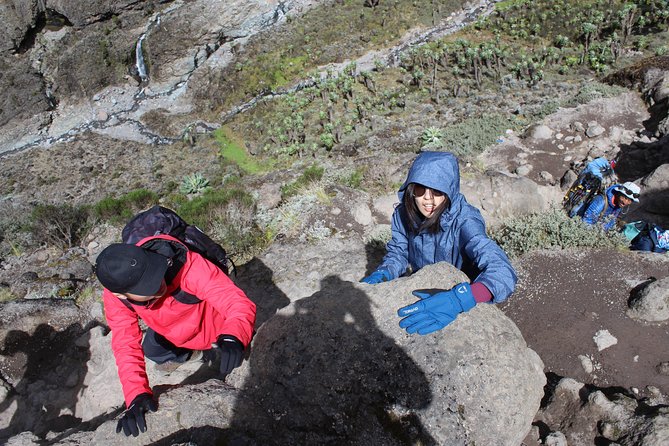
- Machame Route with six walking days: You cross several climate zones rather than simply walking uphill through the same scenery.
- Lava Tower acclimatization day: Day 3 takes you up to 4,630 meters before dropping to Barranco Camp, an important high-altitude walking pattern.
- Safety equipment included: Oxygen, a Gamow Bag, radios, pulse oximeters, rescue fees, and a personal toilet are part of the package.
- Comfort before and after the trek: Airport transfers and hotel stays in Moshi reduce the amount of planning around the climb.
- Private group format: Only your group participates, which can make pacing and support more personal.
- A food-focused camp setup: Fresh meals, purified water, warm washing water, dining furniture, lights, mats, and waterproof tents are provided.
What the $2,669.88 price covers
At $2,669.88 per person, this is not a budget walk. But Kilimanjaro prices are shaped by far more than the hiking itself. Park fees, government taxes, rescue charges, tents, porters, guides, food, transfers, and hotel stays all add up quickly.
Here, the price includes arrival and departure transfers, transportation in the destination, two nights of hotel accommodation, mountain accommodation, all meals on the climb, entrance fees, and a porter to carry your day pack during the summit attempt. You also receive camping equipment, dining furniture, solar lights, warm water for washing, purified drinking water, and toilet facilities.
That matters because a cheaper-looking climb may leave important costs outside the headline price. This package also includes safety gear that you hope never to need but will be glad to have available. The use of radios and pulse oximeters suggests a structured operation rather than a casual walk with a guide.
There are still extra costs. Tips are not included, and you must pay for your Tanzania visa, personal spending, laundry, telephone use, drinks, and optional trips such as a safari. I would budget for tips before departure and ask exactly how the company handles tipping among guides, porters, and camp staff.
One point deserves clarification. The inclusions list refers to two nights of classic standard hotel accommodation and two nights of comfort hotel accommodation, while the tour summary describes two hotel nights, one before and one after the trek. Ask the company to confirm the exact number and standard of hotel nights in writing.
More Machame Route climbs:
- Kilimanjaro climb, Machame Route (7-day)
★ 5.0 · 262 reviews - Climbing Kilimanjaro – Machame Route
★ 5.0 · 170 reviews - Climbing Kilimanjaro through 7 days Machame Route
★ 5.0 · 151 reviews
Day 1: Machame Gate to Machame Camp
The climb begins with a drive from Moshi to Machame Gate at about 1,640 meters, or 5,380 feet. Park entry formalities take place here, then you begin walking toward Machame Camp at approximately 2,850 meters, or 9,350 feet.
The first day covers about 11 kilometers and takes roughly five to six hours. You walk through the rainforest zone, where the setting feels more like a proper mountain expedition than a simple trail outing. The change from town to thick forest happens quickly, and this first day gives you time to settle into the slow, steady rhythm needed on Kilimanjaro.
Your main task is not speed. It is pacing. You are gaining more than 1,200 meters on the first day, so I would treat the walking hours as a guide rather than a target. Keep your day pack light, drink regularly, and let the guide set a calm pace.
The company provides tents, sleeping mats, lighting, meals, and warm water for washing. That last item may sound small before the climb, but a warm wash at altitude can do wonders for morale.
Day 2: Machame Camp to Shira Camp 2
Day 2 is shorter in distance but still important for acclimatization. You walk about 5 kilometers from Machame Camp to Shira Camp 2, reaching approximately 3,810 meters, or 12,500 feet.
The stated walking time is five to six hours. That tells you this is not a flat stroll. The trail rises steadily into the low alpine zone, and the shorter distance allows you to spend more time gaining height without forcing a long march.
I like this sort of day because it gives your body a chance to adjust while you are still moving forward. You may feel fine at the start and notice the altitude later in the afternoon. Eat even if your appetite drops, and use the meal plan to keep your energy up.
Food is one of the better-supported parts of this trip. The menu is described as fresh, healthy, nutritious, and served in generous portions, with vegetables included. Camp meals can become repetitive on a long climb, so plentiful food is not a luxury here. It is fuel.
Day 3: Shira Camp 2, Lava Tower, and Barranco Camp
Day 3 is the key acclimatization day. From Shira Camp 2, you climb to Lava Tower at 4,630 meters, or 15,190 feet, before descending to Barranco Camp at 3,976 meters, or 13,044 feet.
The total distance is about 10 kilometers, with eight to nine hours of walking. You move from the low alpine zone into the high alpine zone, then sleep at a lower elevation than the highest point reached that day. That high-up walking followed by a lower sleeping altitude is one of the most useful features of this itinerary.
It is also likely to be your first genuinely tiring day. The climb to Lava Tower can feel slow, and the descent does not erase the effort already spent. This is a day when patient guiding matters. The company’s guides are described as keeping a controlled pace, monitoring vital signs, and offering steady encouragement when the route becomes difficult.
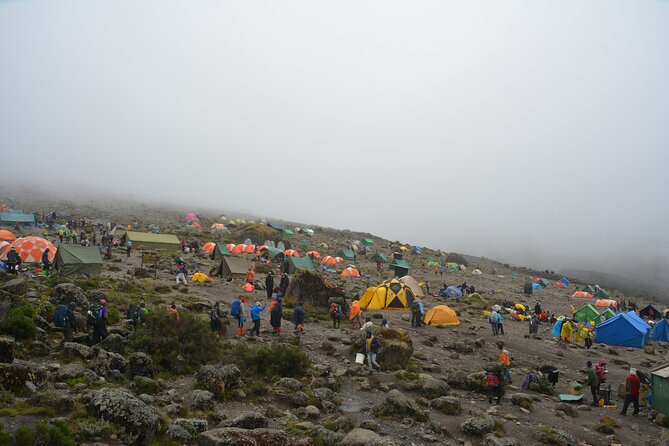
Barranco Camp brings another change in the surroundings. The air is thinner, the plants are fewer, and the mountain feels more exposed. You are not yet at the summit, but the size of the task becomes clearer here.
A few more options to weigh up in Moshi
- Kilimanjaro climb by Lemosho Route (7-day)
★ 5.0 · 651 reviews - Safari Serengeti And Ngorongoro
★ 5.0 · 288 reviews - Kilimanjaro Climbing Lemosho Route 8 Days.
★ 5.0 · 186 reviews - Kilimanjaro climb, Lemosho Route (8-day)
★ 5.0 · 148 reviews
Day 4: Barranco Camp to Karanga Valley
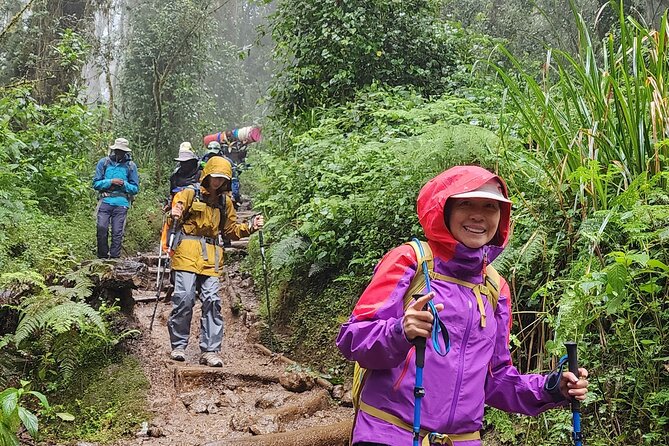
Day 4 covers only about 4 kilometers and takes four to five hours. You climb from Barranco Camp to Karanga Valley Camp at around 3,995 meters, or 13,106 feet.
The short distance is useful after the long Lava Tower day. It lets you keep moving without stacking another exhausting hike onto the schedule. You remain in the high alpine zone, so the reduced mileage does not mean the day feels easy. Altitude can make modest climbs feel surprisingly slow.
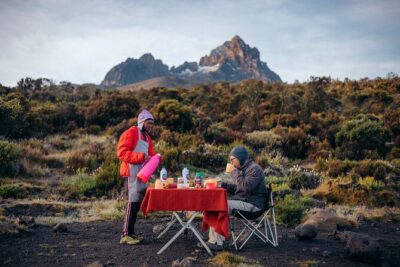
This is a good time to focus on camp habits. Keep your sleeping area orderly, protect clothing from damp, and make sure your water is close by. The included dining tent, chairs with backs and armrests, tables, and solar lights should make camp more comfortable than a bare-bones mountain setup.
The company also supplies a portable personal toilet and toilet tents. That may not be the most glamorous feature, but it adds privacy and makes several days in camp more manageable.
Day 5: Karanga Valley to Barafu Camp
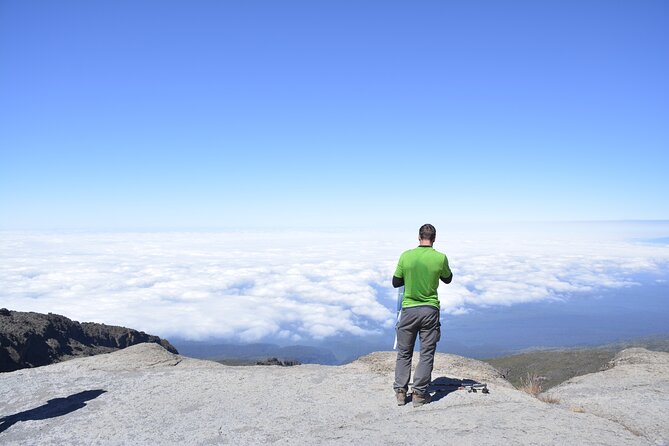
On Day 5, you walk approximately 4 kilometers to Barafu Camp, reaching 4,673 meters, or 15,331 feet. The stated walking time is about four hours.
Barafu is the launch point for the summit attempt, so the mood changes. You will have covered relatively little distance, but you are now preparing for the hardest section of the climb. Rest becomes the main job. Eat, drink, check your clothing, and follow the guide’s instructions about the summit schedule.
The inclusion of a porter to carry your day pack during the summit attempt is valuable here. At this altitude, even a small load can feel heavy. You should still expect to carry personal essentials, but reducing the weight on your shoulders can make the final ascent more manageable.
The safety provisions are especially relevant at Barafu. Emergency oxygen, a Gamow Bag, pulse oximeters, and mountain radios are carried as part of the operation. They do not remove the risks of altitude, but they give the guiding team tools to monitor and respond to problems.
Day 6: Uhuru Peak and the descent to Mweka Camp
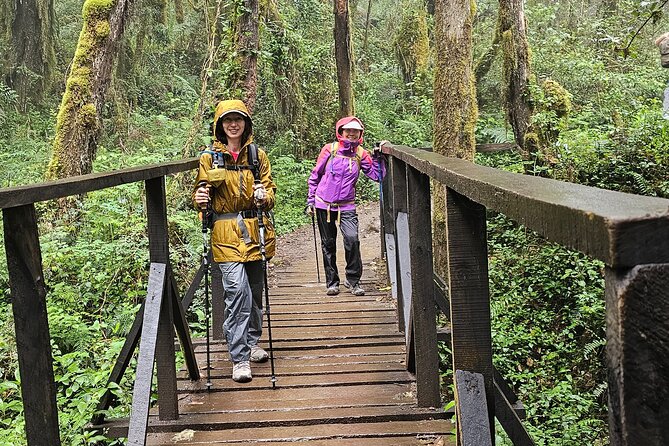
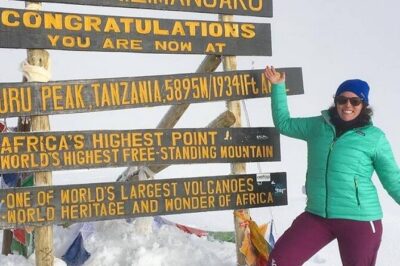
Summit day takes you to Uhuru Peak at 5,895 meters, or 19,341 feet, followed by a descent to Mweka Camp. The listed walking time is four to six hours, with a distance of about 12 kilometers.
This is the most demanding part of the program, even though the published walking time is shorter than Day 3. You should ask the company to explain the exact summit-day schedule, including when you leave Barafu, how long the descent takes, and how the stated hours are calculated. The itinerary also lists Mweka Camp at 10,000 feet, so confirm the planned overnight elevation and route details before departure.
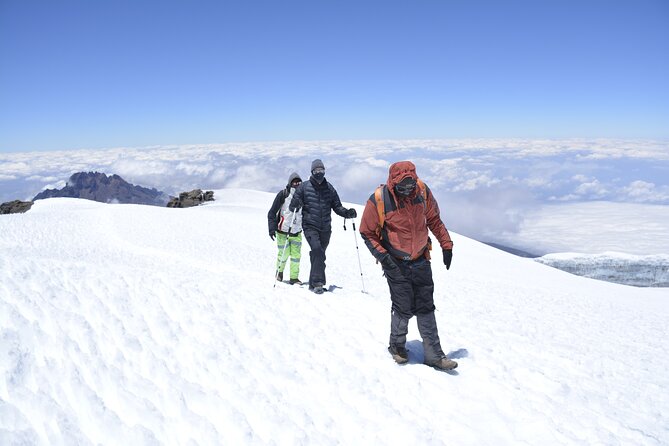
The summit zone is cold, exposed, and very different from the forest below. The climb passes through the glacial zone and the earlier zones, giving you one final look at Kilimanjaro’s changing terrain. The reward is not just reaching the highest point. It is seeing how much the mountain has changed since the first day under the trees.
The guiding team’s role is central here. Accounts connected with this company repeatedly emphasize calm pacing, encouragement, organization, and safety checks. One account describes feeling ill midway through the climb and receiving support from the team. That is worth noting: a good summit service is not only about getting strong climbers upward. It is also about handling a bad day with care and judgment.
Day 7: Mweka Camp to Mweka Gate
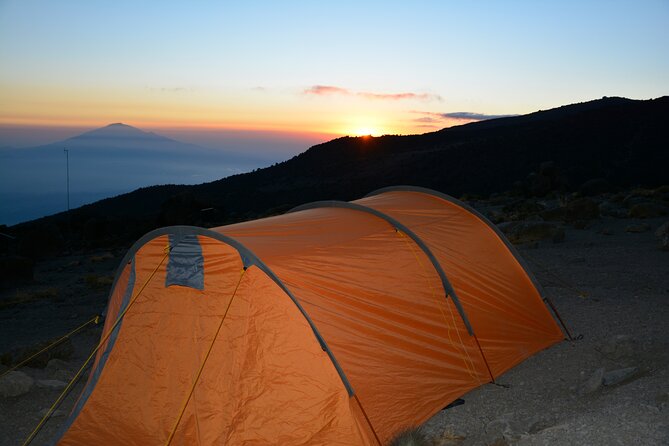
The final descent leads through the rainforest zone to Mweka Gate. The schedule gives three to four hours and about 10 kilometers from Mweka Camp to the gate, though another line lists a shorter distance and a four-hour duration.
That inconsistency is easy to overlook when you are excited about the summit, but I would ask for the confirmed distance and elevation details. The gate is listed at approximately 1,640 meters, or 5,340 feet, which is the same general elevation given for Machame Gate, not 4,600 meters. The practical route is still clear: descend to Mweka Gate, then transfer back to your hotel.
At the hotel, you receive your certificate and take part in a summit party ceremony. After several nights in a tent, a bed, shower, and ordinary indoor meal can feel like a grand reward.
Guides, porters, and camp service
Kilimanjaro Brothers presents itself as a local Tanzanian operator, and the personal service is a major part of its appeal. George Mtaki is identified as a senior guide and director, while Mo and Kelvin are also named in connection with airport arrival and trip support.
The strongest praise centers on organization and human support. Airport pickup is handled without unnecessary waiting, tents are reportedly ready and dry on arrival at camp, meals are plentiful, and guides help with equipment checks before departure. The team is also described as punctual, professional, positive, and attentive to safety.
The company specifically promises fair and ethical treatment of porters. That is important, but I would still ask how many porters are assigned to your group, what weight limits are followed, and how tipping is organized. Responsible porter treatment should be part of your decision, not an afterthought.
The private format means only your own group participates. That can be a real advantage if your party wants a particular pace or needs close attention. It can also mean less social variety than joining a larger group. Group discounts are available, so ask for the price difference if you are booking with friends or colleagues.
Food, water, and safety on the mountain
The food plan is unusually detailed. Breakfast, lunch, and dinner are included throughout the climb, along with clean purified drinking water. Fresh and nutritious meals are important because the walking days are long and the altitude can reduce your appetite.
Warm water for washing is provided daily. Waterproof tents, sleeping mats, high-powered solar LED lights, dining tables, chairs with backs and armrests, and toilet tents are also supplied. These details will not change the height of the mountain, but they can change how well you recover each night.
Safety support includes emergency oxygen tanks, a Gamow Bag, VHF handheld radios, pulse oximeters, and rescue fees. You should still approach this as a serious high-altitude climb. The equipment is backup, not a guarantee that every medical problem can be solved on the mountain.
The stated requirement is moderate physical fitness. I would read that conservatively. You need to be comfortable walking for several hours on consecutive days, carrying some personal gear, and continuing when the trail becomes tiring. No technical climbing skills are listed, but the summit effort remains physically demanding.
Who should book this Machame itinerary?
I would choose this trip if you want:
- A seven-day route with an extra day for altitude adjustment
- A private climb for your own group
- Hotel transfers and accommodation arranged around the trek
- A full meal plan and substantial camp equipment
- Strong communication before arrival
- A local company with named guides and a clear focus on porter welfare
It is less suitable if you want a quick, low-cost mountain outing or a flexible independent trek. The cost is high, and seven days still gives you limited room for a slow response to altitude problems. If you have serious medical concerns, you should get professional advice before booking.
Before confirming, ask for the final hotel list, the exact summit-day timetable, the confirmed Day 7 distance, the group size, and a written explanation of the classic and comfort accommodation wording. Those questions are sensible, not fussy. At this price, details should be clear.
Should you book the 7-day Machame Route?
I would book this climb if your priority is organized support, safety equipment, generous meals, and a private experience rather than the lowest price. The Lava Tower day and shorter walking stages around Karanga give the itinerary a sensible rhythm, while the airport pickup and hotel arrangements take care of much of the surrounding logistics.
I would not book until the accommodation count and route timing are clarified. Once those points are settled, the package offers solid value for a demanding Kilimanjaro climb, especially for a group that wants personal attention and a well-supported summit attempt.
The best reason to choose it is the combination of practical care and human encouragement. The best reason to think twice is simple: Kilimanjaro remains a serious altitude challenge, no matter how comfortable the tents or hotels may be.
FAQ
Where does the Kilimanjaro Machame Route climb begin?
The experience is based in Moshi, Tanzania. You are driven to Machame Gate, located at about 1,640 meters, or 5,380 feet, to begin the trek.
How long does the climb last?
The experience lasts approximately seven days. It includes six full walking days and hotel accommodation arranged before and after the mountain trek.
How far do you walk in total?
The itinerary gives a total distance of about 62 kilometers, or 37 miles. Individual daily distances range from approximately 4 to 12 kilometers.
Is this a private tour?
Yes. Only your own group participates in this private tour or activity.
What accommodation is included?
Hotel accommodation is included before and after the trek, along with mountain camping. The inclusions refer to classic standard and comfort hotel accommodation, so you should confirm the exact number of nights and hotel category before booking.
Are meals included?
Yes. Breakfast, lunch, and dinner are included during the experience. Meals on the mountain are described as fresh, healthy, nutritious, and served in generous portions.
Is drinking water provided?
Yes. Clean, purified drinking water is included. Warm water for washing is also provided each day.
What is not included in the price?
Tips, a Tanzania visa on arrival, personal expenses such as laundry, telephone use, and beverages, and optional tours are not included. A safari after the climb is given as an example of an optional tour.
Just added in Moshi
- Zanzibar: Stone Town tour and Nakupenda beach with Lunch★ 5.0 · 1 review
- day trip lake manyara★ 5.0 · 2 reviews
- Mt Kilimanjaro 6 days Marangu route hike★ 5.0 · 3 reviews
- machame route★ 5.0 · 16 reviews
- Private Cycle to Kilimanjaro Bike Park Safari★ 5.0 · 6 reviews
- West Kilimanjaro cycling Adventures★ 4.5 · 8 reviews
- Wildlife Extravaganza: Manyara, Tarangire & Ngorongoro in 3 Days★ 5.0 · 3 reviews
- 3 Days Private E-Bike Tour in West Kilimanjaro★ 5.0 · 3 reviews
Machame Route Climbs, compared.

Climbing Kilimanjaro through 7 days Machame Route
Read our review →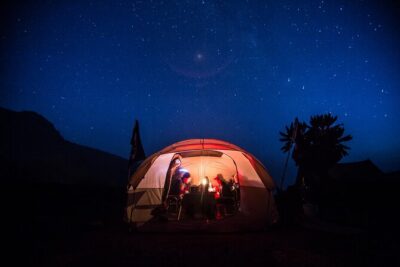
7-Day Machame Kilimanjaro Summit Tour from Arusha
Read our review →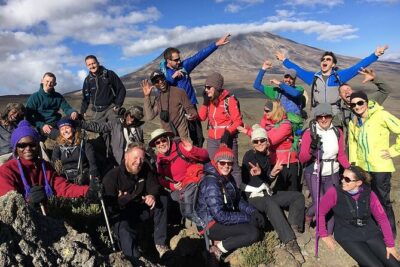
7 Days Kilimanjaro via Machame route affordable price
Read our review →
#1. Best Kilimanjaro Day hike Tour-Machame Route-ISMANI
Read our review →
The Best of Machame Route in 6 Days: Your World’s Summit Guide
Read our review →Browse the lists this tour appears in