
Reviewed · MARANGU ROUTE CLIMBS
Kilimanjaro Marangu Route 6 Days
Kilimanjaro rewards patience, not speed. This six-day climb gives you a sensible extra acclimatization day, strong mountain safety support, and a clear route from Marangu Gate to Uhuru Peak. I especially like the return transfer to your Moshi or Arusha hotel and the inclusion of park fees, guides, porters, meals, water, and emergency equipment.
The main drawback is the route description. Some opening details refer to Machame, Lava Tower, Barranco Wall, Barafu, and camping, while the day-by-day plan clearly follows the Marangu Route, using Mandara, Horombo, and Kibo Huts. Confirm the exact route, sleeping arrangements, and summit schedule with Jaribu Africa Adventures before paying.
In This Review
- Key Points to Know Before You Book
- What the $2,200 Price Covers
- A Crucial Route Check: Marangu or Machame?
- Day 1: Marangu Gate to Mandara Hut
- Day 2: Mandara Hut to Horombo Hut
- Day 3: The Mawenzi Acclimatization Walk
- Day 4: Horombo Hut to Kibo Hut
- Day 5: Kibo Hut to Uhuru Peak and Horombo Hut
- Day 6: Horombo Hut to Marangu Gate
- Food, Water, and Camp Comforts
- Guides, Porters, and Safety
- Who Should Choose This Six-Day Climb?
- Booking, Cancellation, and Practical Details
- Should You Book the Jaribu Africa Adventures Marangu Route?
- FAQ
- How long is the Kilimanjaro Marangu Route tour?
- What is the price per person?
- Where does the climb start?
- How high is Uhuru Peak?
- Is an acclimatization day included?
- Are meals included?
- Are airport and hotel transfers included?
- Is this a private tour?
- What happens if bad weather cancels the climb?
Key Points to Know Before You Book
- Six days with a built-in acclimatization day: Day 3 is a short walk toward Mawenzi Base Camp, followed by a return to Horombo Hut.
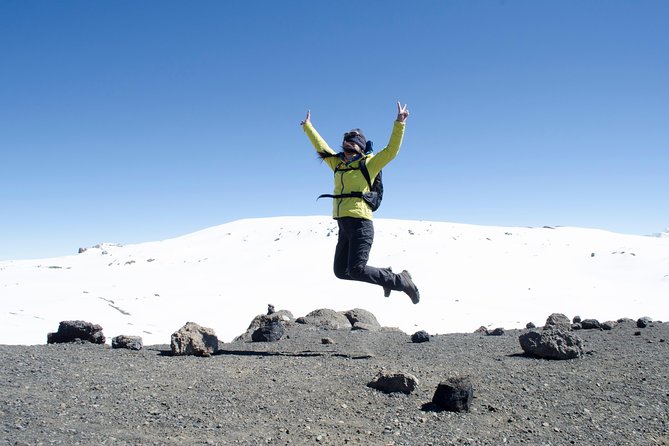
- The route reaches 5,895 meters: Summit night begins around midnight and can take 11 to 15 hours.
- Marangu Gate is the true starting point: You walk through rain forest first, then heath, moorland, alpine desert, and the summit zone.
- Safety support is unusually detailed: The package includes oxygen, a Gamow bag, a pulse oximeter, vital sign checks, radio contact, and wilderness first responder support.
- Meals and mountain services are covered: You receive breakfast, lunch, dinner, purified water, hot washing water, and hot towels.
- Confirm the route wording: The published description mixes Marangu and Machame features, so ask for a corrected itinerary before departure.
What the $2,200 Price Covers
At $2,200 per person, this is not a bare-bones mountain walk. The price includes Kilimanjaro National Park entrance fees, hut or camping fees, rescue fees, government taxes, and 18 percent VAT on park entrance fees. Those costs alone can make a major difference when you compare this climb with cheaper packages.
You also receive airport transfers, transport between your Moshi or Arusha hotel and the park gate, guide and porter salaries, cook salaries, purified water, and all meals on the mountain. Two nights of bed-and-breakfast accommodation at either Ameg Lodge or Salinero Hotels are included.
The safety package is another important part of the value. It includes a two-way radio, mobile phone, expedition medical kit, emergency oxygen, a Gamow bag, a pulse oximeter, and vital sign monitoring. Medical evacuation with AMREF Flying Doctors is included, although extra medical or evacuation fees can apply in some situations.
There are limits. You still pay for international flights, visas, personal trekking gear, laundry, room service, communication charges, immunizations, staff gratuities, excess baggage, and personal expenses. If illness forces you to leave the planned route, meals and additional transport may also cost extra.
I would treat the price as a reasonable full-service package, especially for someone who wants transport, food, porters, and mountain safety equipment arranged in advance. Before comparing it with another operator, check that both prices include the same park fees, accommodation, evacuation arrangements, and staff wages.
More Marangu Route climbs:
- Kilimanjaro climb, Marangu route (6-day)
★ 5.0 · 72 reviews - Climbing Kilimanjaro – Marangu Route
★ 5.0 · 65 reviews - Kilimanjaro Climbing 5 days Marangu route
★ 5.0 · 22 reviews
A Crucial Route Check: Marangu or Machame?
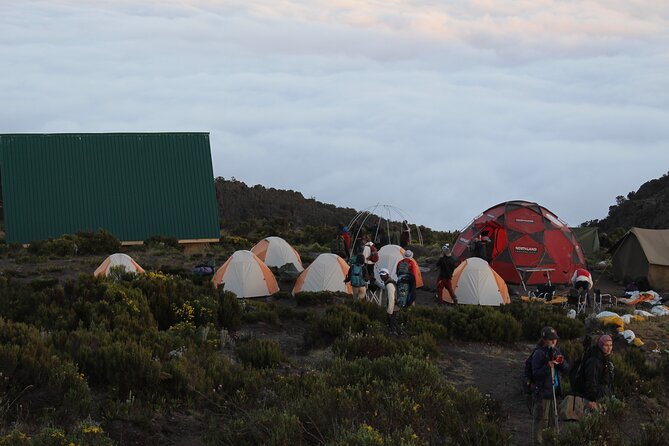
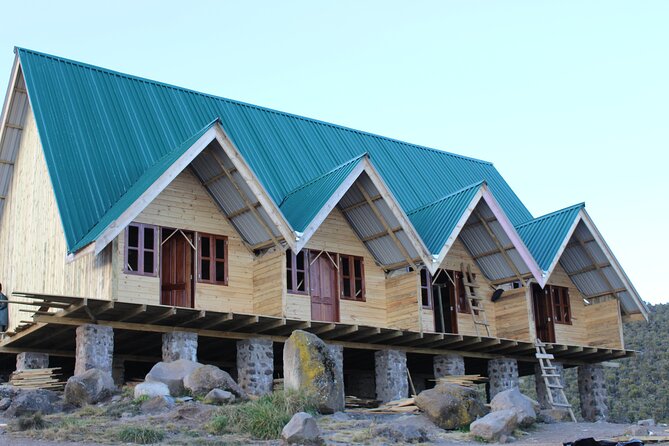
The day-by-day schedule is a Marangu climb. It starts at Marangu Gate, uses Mandara Hut, Horombo Hut, and Kibo Hut, and returns through the same gate. Marangu is often called the hut route because its main overnight points are huts rather than the tent camps usually associated with Machame.
But the broader description refers to Machame forest, the Shira Plateau, Lava Tower, the Great Barranco Wall, Barafu Camp, and Kossovo Camp. Those are features of a different route plan. The included equipment also lists three-person expedition tents, with two clients per tent, which adds to the confusion.
This is not a small wording issue. The trail, sleeping arrangements, daily distances, scenery, and physical demands differ between Marangu and Machame. I would ask Jaribu Africa Adventures to confirm these points in writing:
- Is the six-day trip entirely on the Marangu Route?
- Are nights spent in huts, tents, or a mix of both?
- Does the published schedule include the Mawenzi acclimatization walk?
- Is the summit reached from Kibo Hut?
- Are Lava Tower, Barranco Wall, and Shira Plateau part of this trip?
The itinerary below follows the detailed six-day Marangu schedule because it is the clearest version provided.
Day 1: Marangu Gate to Mandara Hut
Your climb begins with a drive through Kilimanjaro’s semi-tropical foothills to Marangu Gate. This is where park entry formalities take place and where the trail enters Mount Kilimanjaro National Park.
The first day covers about 7 kilometers and takes roughly four to five hours. You begin at about 1,830 meters and finish near 2,740 meters at Mandara Hut. The setting is montane rain forest, with thick vegetation and a damp, shaded feel.
This is a welcoming first day, but do not dismiss it as easy. The trail climbs steadily, and the combination of walking, humidity, and a higher sleeping altitude can be tiring. Keep your pace slow from the start. You are not trying to prove anything on Day 1.
The package includes a guide, porters, cooks, meals, and purified water. In the morning and evening, you receive a bowl of hot washing water. A hot steamy towel at camp is a small comfort that matters after a wet or dusty walk.
Day 2: Mandara Hut to Horombo Hut
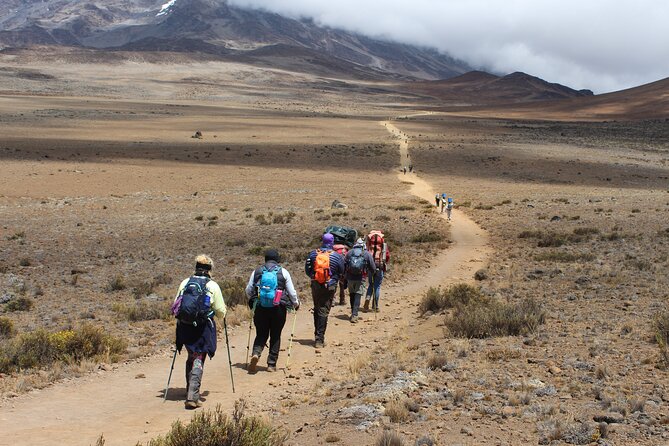
Day 2 takes you from the final stretch of rain forest into alpine meadows, heath, and open moorland. Giant heather gives way to shorter vegetation and a more exposed setting.
You cover about 11 kilometers, gaining approximately 1,000 meters. The starting elevation is listed at 2,700 meters, with Horombo Hut at about 3,700 meters. Hiking time is roughly five to six hours, although the schedule also notes that the walk can take six to seven hours.
That range is useful. Mountain timing is not a stopwatch exercise, and your pace may depend on weather, group speed, and how your body handles the altitude. Walk slowly, drink regularly, and tell your guide if you develop a headache, nausea, dizziness, or unusual fatigue.
Horombo is an important point in the climb because your body now has to adjust to thinner air. The views open up here, and the vegetation becomes more unusual, with large heather plants and hardy high-altitude growth. You should still save your energy. The summit is not close yet.
A few more options to weigh up in Moshi
- Kilimanjaro climb by Lemosho Route (7-day)
★ 5.0 · 651 reviews - Safari Serengeti And Ngorongoro
★ 5.0 · 288 reviews - Kilimanjaro climb, Machame Route (7-day)
★ 5.0 · 262 reviews - Kilimanjaro Climbing Lemosho Route 8 Days.
★ 5.0 · 186 reviews
Day 3: The Mawenzi Acclimatization Walk
Day 3 is the clever part of this itinerary. Instead of gaining a large amount of height and moving on, you take a short walk toward Mawenzi Base Camp and return to Horombo Hut.
The stated walking time is about four hours. The purpose is acclimatization, not distance. You spend time at higher altitude, then sleep again at Horombo. This follows the useful principle of trek high and sleep low, which can help your body adjust more gradually.
This day also gives you a chance to understand how the mountain weather and altitude affect you. It is not a rest day in the hotel sense, but it should feel less demanding than the long ascent days.
I like this addition because a six-day Kilimanjaro climb leaves little room for error. The extra night at Horombo makes the schedule less rushed than a plan that simply pushes upward every day. It cannot remove the risk of altitude sickness, but it gives you more time to notice how you are responding.
Day 4: Horombo Hut to Kibo Hut
The vegetation now thins out. Giant groundsels and lobelias appear among increasingly rocky ground, then the route crosses the stark volcanic saddle between Mawenzi and Kibo.
You walk approximately 10 kilometers over six to seven hours. The day starts at about 3,700 meters and ends near Kibo Hut at 4,695 meters. The setting is described as semi-desert, and the trail becomes rougher and more barren.
The saddle is one of the memorable parts of this route. It has a broad, open feel, with Mawenzi Peak nearby and Kibo rising ahead. There is little shelter, so your clothing and sun protection matter. The air is thin, and even a moderate slope can feel demanding.
At Kibo Hut, the best plan is simple: eat, organize your summit clothing, and sleep as early as possible. The summit attempt starts around midnight. Pack the items you need before lying down, since you may have only a short period of rest.
Day 5: Kibo Hut to Uhuru Peak and Horombo Hut
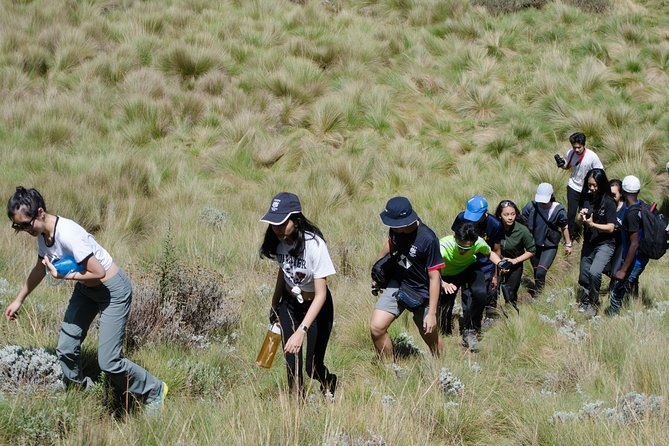
Summit day is the physical test. You wake soon after midnight and begin climbing a zigzag trail over loose scree. The first section reaches Hans Meyer’s Cave after about two hours, then the gradient becomes steeper.
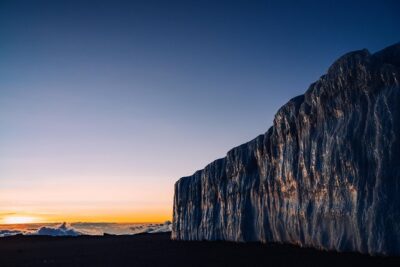
The climb to Gilman’s Point takes about another three hours. If your timing is right, you may see sunrise reflecting across the ice fields and Mawenzi’s rugged peaks. The route then follows the crater rim for approximately two more hours toward Uhuru Peak, the highest point on Kilimanjaro at 5,895 meters.
The stated total for the day is 11 to 15 hours and about 18.5 kilometers. You begin at around 4,695 meters, reach Uhuru Peak, then descend to Horombo Hut at about 3,700 meters. That is a very long day, and the descent is not an afterthought. Tired legs still have to manage loose ground and uneven trail.
The guide support is especially valuable here. The package includes emergency oxygen, a Gamow bag, vital sign monitoring, a pulse oximeter, radio communication, and wilderness first responder support. These tools do not guarantee a summit, but they show that altitude safety has been taken seriously.
You should also know that turning around is a sensible decision if your body is not coping. Reaching the summit is not worth risking a serious medical problem. A good guide will watch your condition, and the itinerary includes medical evacuation with AMREF Flying Doctors, subject to the stated limits and possible extra costs.
The package includes wine and champagne for the summit. That may appeal to some climbers, though at this altitude many people will care more about warm layers, water, and a steady pace.
Day 6: Horombo Hut to Marangu Gate
After breakfast, you make the final descent through alpine meadows and past Mandara Hut before reentering the rain forest. The day covers about 18 kilometers and takes six to seven hours.
You finish at Marangu Gate, at approximately 1,830 meters. A driver and vehicle then transfer you back to your hotel. That included transfer is practical after a long descent, especially if your accommodation is in Moshi or Arusha.
The final day may seem straightforward, but downhill walking can be tough on knees and feet. Keep your boots properly laced, use trekking poles if you bring them, and do not rush simply because the finish is near.
Food, Water, and Camp Comforts
Food is a meaningful part of a long mountain climb, and this package promises large portions of fresh, healthy, nutritious meals. Breakfast, lunch, and dinner are included for all six days on the mountain.
The cooking team is covered in the price, as are cooks’ wages and porter wages. Purified water is provided while you are on the mountain. Hot washing water is offered in the morning and evening, and a hot towel is provided at camp.
These details may sound modest before departure. After several hours of walking, they become central to how comfortable you feel. I would still ask what snacks are supplied, since the included meal description does not spell out personal trail snacks or specialty dietary arrangements.
You need to bring your own trekking equipment. The package does not include personal gear, so confirm the required list before you arrive. The supplied information does not specify equipment rental, so do not assume boots, warm clothing, sleeping gear, or poles are available.
Guides, Porters, and Safety
The human support is one of the strongest reasons to consider this climb. Guide, cook, and porter salaries are included, along with a stated commitment to fair and ethical treatment of porters.
Joseph is identified as attentive and detail-focused in organizing trips. Goodluck is named as a first-class guide who handled the mountain experience from start to finish. Those names give you useful points of contact when you ask about guide assignments and group arrangements.
The tour is private, meaning only your group participates. That can make communication easier and may allow the walking pace to fit your group better. Group discounts are also offered, which may help if you are booking for a family or larger party.
The published information says most people can participate, but this is still a serious high-altitude climb. You should discuss medical concerns with a qualified professional before booking. Immunizations are not included, and the operator does not cover all medical costs or every type of extra evacuation expense.
Who Should Choose This Six-Day Climb?
This route suits you if you want a structured Kilimanjaro program with transport, meals, porters, hut accommodation as described in the daily plan, and strong safety equipment included.
It is also a good fit if you prefer a private trip rather than joining an unknown group. Families and larger parties may benefit from group discounts, and the extra acclimatization day is useful for anyone who would rather move steadily than race upward.
The six-day length still makes this a demanding itinerary. The summit day can last up to 15 hours, and the total elevation gain is substantial. If you want a slower schedule, you should ask whether a longer version is available instead of assuming six days will feel relaxed.
The route is less suitable if you want a casual mountain holiday, dislike early starts, or do not have suitable personal trekking equipment. It is also not ideal for anyone expecting the Machame features listed in the general description. Confirm that point first.
Booking, Cancellation, and Practical Details
Confirmation is received at the time of booking, and pickup is offered. The experience is near public transportation, although the included airport and hotel transfers reduce the need to arrange local transport yourself.
You can cancel up to 24 hours before the start time for a full refund. Changes or cancellations made less than 24 hours before the local start time are not accepted for a refund. The climb requires suitable weather, and a cancellation caused by poor weather offers either a different date or a full refund.
Before booking, I would get written answers about the route mismatch, hut versus tent accommodation, personal gear, dietary needs, gratuities, and what counts as an extra medical or evacuation charge. Those questions are more important than shaving a little money off the price.
Should You Book the Jaribu Africa Adventures Marangu Route?
I would consider booking this climb if the operator confirms that the actual trip follows the detailed Marangu itinerary. The extra Horombo acclimatization day, extensive safety equipment, included meals and transfers, and private format make the $2,200 price easier to justify.
I would not book until the Machame wording is corrected. A clear six-day Marangu plan should mention Marangu Gate, Mandara Hut, Horombo Hut, Kibo Hut, Mawenzi, and the return through the same gate. If Jaribu Africa Adventures confirms those details and explains the tent references, this looks like a practical full-service choice for a serious first Kilimanjaro attempt.
FAQ
How long is the Kilimanjaro Marangu Route tour?
The tour lasts approximately six days, with hiking times ranging from about four hours on the shorter days to 11 to 15 hours on summit day.
What is the price per person?
The stated price is $2,200 per person.
Where does the climb start?
The detailed itinerary starts at Marangu Gate, where you enter Kilimanjaro National Park.
How high is Uhuru Peak?
Uhuru Peak is listed at 5,895 meters, or about 19,340 feet.
Is an acclimatization day included?
Yes. On Day 3, you take a short walk toward Mawenzi Base Camp and return to Horombo Hut.
Are meals included?
Yes. Breakfast, lunch, and dinner are included for all six days. Purified water is also provided on the mountain.
Are airport and hotel transfers included?
Yes. Airport transfers and return transport between a Moshi or Arusha hotel and the park gate are included.
Is this a private tour?
Yes. Only your group participates in the activity.
What happens if bad weather cancels the climb?
You are offered a different date or a full refund if the experience is canceled because of poor weather.
Just added in Moshi
- Zanzibar: Stone Town tour and Nakupenda beach with Lunch★ 5.0 · 1 review
- Mt Kilimanjaro 6 days Marangu route hike★ 5.0 · 3 reviews
- machame route★ 5.0 · 16 reviews
- day trip lake manyara★ 5.0 · 2 reviews
- Private Cycle to Kilimanjaro Bike Park Safari★ 5.0 · 6 reviews
- West Kilimanjaro cycling Adventures★ 4.5 · 8 reviews
- Wildlife Extravaganza: Manyara, Tarangire & Ngorongoro in 3 Days★ 5.0 · 3 reviews
- 3 Days Private E-Bike Tour in West Kilimanjaro★ 5.0 · 3 reviews
Marangu Route Climbs, compared.
Private Full Day Hiking Experience to Marangu Route
Read our review →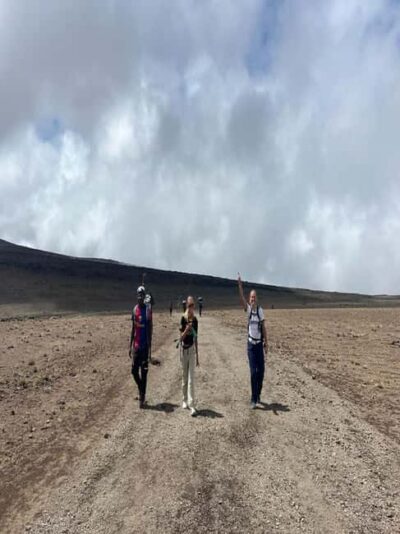
From Arusha/Moshi: Kilimanjaro Hike Marangu Route Day Trip
Read our review →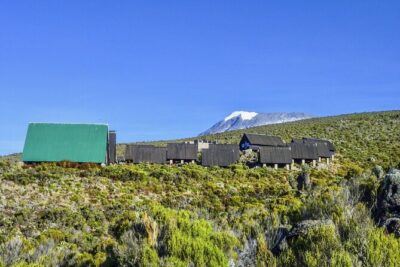
Mount Kilimanjaro Day Hike Through Marangu Route to Mandara Hut
Read our review →
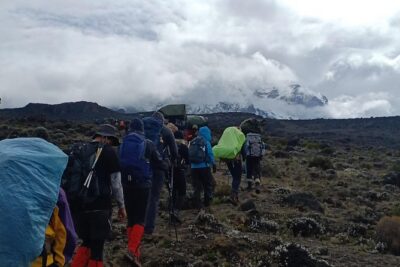
Best Kilimanjaro Adventures 6 Days Marangu Route Experience
Read our review →
Kilimanjaro Private Climbing in 6 Days Marangu Route
Read our review →Browse the lists this tour appears in