
Reviewed · LEMOSHO ROUTE CLIMBS
Lemosho Route 8 Days 7 Nights/Kilimanjaro Climb
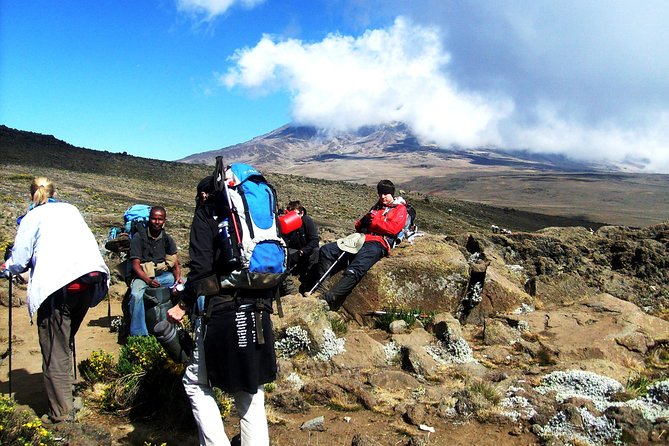
Kilimanjaro rewards patience, not haste. This eight-day Lemosho climb gives you a gradual route through rainforest, moorland, high desert, and the summit zone, with time built in for acclimatization. I especially like the full day on the Shira Plateau and the split between Barranco and Barafu, which gives you a shorter day before the brutal midnight summit start.
I also like the small-group setup, listed at a maximum of two people, and the fact that park fees, camping equipment, meals, water, rescue fees, guides, cooks, porters, and mountain transport are included. The main drawback is the summit day: you may be moving for about 13 hours, beginning between midnight and 2 a.m. You need solid fitness, patience, and a good tolerance for cold, darkness, and tired legs.
In This Review
- Key points to know before booking
- Why the eight-day Lemosho schedule makes sense
- From Moshi to the rainforest on day one
- Shira Plateau and the first high camps
- Lava Tower to Barranco: the best acclimatization lesson
- Climbing the Barranco Wall to Karanga
- Barafu Camp and the last quiet afternoon
- Summit night, Stella Point, and Uhuru Peak
- Mweka descent and the return to Moshi
- What the $2,600 price really covers
- Who should choose this climb?
- Should you book the Lemosho eight-day climb?
- FAQ
- How long is the Lemosho Route climb?
- What time does the experience start?
- How many people can join the climb?
- What meals are included?
- Are airport transfers included?
- What is the cancellation policy?
Key points to know before booking
- Eight days improves your acclimatization: The route spends a full day on the Shira Plateau and includes the useful climb-high, sleep-lower pattern near Lava Tower and Barranco.
- The day before the summit is deliberately short: You hike from Karanga to Barafu in about five hours, then rest before beginning the summit attempt around midnight.
- Lemosho offers changing scenery: You begin in wet rainforest, move through moorland and high volcanic ground, and finish among scree, glaciers, and crater-rim views.
- The crew is a major part of the experience: Guides named in past trips include Zacariah, Epa, Eric, and Nicholas, with Amos handling arrangements for several climbers.
- The $2,600 price covers the mountain basics: Park fees, rescue fees, tents, food, water, wages, transport, and certificates are included, but flights, visas, insurance, and personal gear are not.
- The descent is harder on the knees than it sounds: Mweka’s trail can be wet, steep, and muddy, so gaiters and trekking poles are useful at both the start and finish.
Why the eight-day Lemosho schedule makes sense
Kilimanjaro is not a technical mountain climb in the usual sense, but altitude makes it demanding. You can be fit and still struggle if you gain height too quickly. That is why I prefer this eight-day version to a rushed schedule.
The most useful feature is the way the route breaks up the approach to Barafu Camp. After Barranco Camp, you spend a night at Karanga, then continue to Barafu the following day. That second day is only about five hours, giving you time to eat an early dinner, organize your clothing, and rest before the summit push.
That rest matters. Summit morning begins around midnight or shortly afterward, so you are already working against a lost night of sleep. A short day before the attempt gives you a better chance of starting with some energy left.
The route also includes a full day around the Shira Plateau. You walk at high altitude without gaining a huge amount of height, which gives your body time to adjust. The schedule is still demanding, but it is sensibly paced for a mountain that punishes rushing.
More Kilimanjaro climbs:
- Kilimanjaro climb by Lemosho Route (7-day)
★ 5.0 · 651 reviews - Kilimanjaro climb, Machame Route (7-day)
★ 5.0 · 262 reviews - Kilimanjaro Climbing Lemosho Route 8 Days.
★ 5.0 · 186 reviews
From Moshi to the rainforest on day one
Your day starts around 9 a.m. in Moshi. The drive to Kilimanjaro National Park Gate takes about 45 minutes and passes through mountainside villages before you reach the park operations area.
There is usually some waiting while permits are issued and the climbing crew prepares. Treat this as part of the day, not a delay that ruins the experience. It is your first look at the practical side of Kilimanjaro, with guides, porters, supplies, and equipment being organized for the route ahead.
Once on the trail, you enter the rainforest. The walk takes about four hours, beginning around 7,800 feet and finishing near 9,500 feet. Expect a steady ascent rather than a sightseeing stroll.
The lower trail can be muddy and slippery. I would pack gaiters and trekking poles from the start, not at the bottom of your bag. The forest is attractive, but wet conditions can make the first day more tiring than the distance suggests.
Your guide points out local plants, wildlife, and features of the forest as you walk. This is a good place to settle into the slow pace that will carry you through the week. On Kilimanjaro, pole pole, meaning slowly, is practical advice rather than a slogan.
Shira Plateau and the first high camps
On day two, you leave the forest behind and continue upward toward the Shira Plateau. The six-hour walk climbs from about 9,500 feet to 11,500 feet, and the change is clear. Trees give way to open moorland, wider views, and cooler temperatures.
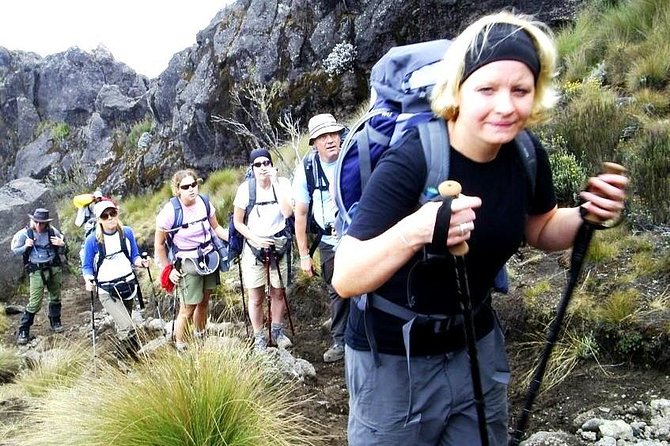
This is often the point when you realize that the mountain is no longer a forest hike. The air feels thinner, nights get colder, and the path keeps rising. You should not try to race ahead here. Keep an even pace and tell your guide if you develop a headache, nausea, unusual fatigue, or other altitude symptoms.
Day three is especially valuable. You spend about seven hours exploring the Shira Plateau, walking east toward Kibo, Kilimanjaro’s highest peak. The route passes across high meadows and continues toward Shira 2 Camp before reaching Moir Hut near the Lent Hills.
Moir Hut is described as a little-used site, and the Lent Hills offer several possible walks. That makes this a useful acclimatization day rather than a simple transfer between camps. You gain experience walking at roughly 13,800 feet while remaining active, and you get changing views toward Kibo.
The Shira Plateau is one of the highest plateaus on Earth. That fact is not just a talking point. At this height, even a gentle walk can feel serious, so you should judge the day by how your body responds, not by how easy the trail looks.
Lava Tower to Barranco: the best acclimatization lesson
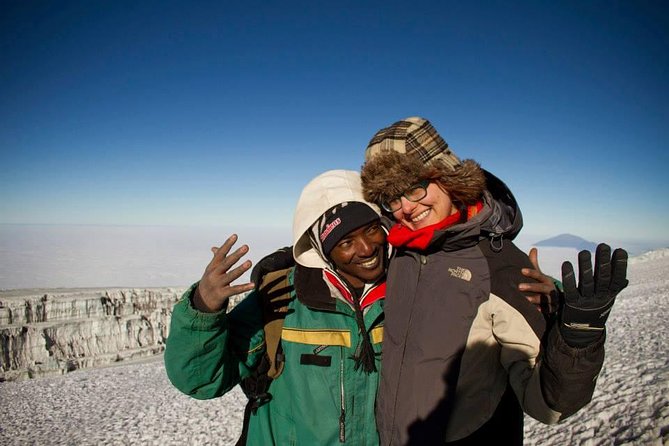
Day four is one of the smartest parts of the route. You begin around 13,800 feet and finish near 13,000 feet, so your sleeping elevation is almost the same. The value comes from climbing much higher during the day.
From Shira, the trail heads east along a ridge, passing a junction toward Kibo before continuing toward Lava Tower, also called the Shark’s Tooth. Lava Tower reaches about 15,250 feet. After this high point, you descend to Barranco Camp.
This is the classic climb-high, sleep-lower pattern. You spend time at a greater height, then return to a lower camp for the night. It does not guarantee an easy summit, but it gives your body a useful chance to adjust.
The walk takes about five hours. The trail and weather can still be tough, and you may feel the altitude at Lava Tower. That is precisely why the day has value. The route asks you to work at height, then rewards you with a descent to Barranco.
Barranco Camp sits at about 13,000 feet beneath dramatic volcanic terrain. It is also the starting point for one of the route’s most memorable sections.
More Lemosho Route climbs:
- Kilimanjaro climb, Lemosho Route (8-day)
★ 5.0 · 148 reviews - Kilimanjaro climb, Lemosho Route (6-day)
★ 5.0 · 129 reviews - Kilimanjaro Lemosho Route
★ 5.0 · 71 reviews - Private Kilimanjaro Hike 7 Day Lemosho Route
★ 5.0 · 60 reviews
Climbing the Barranco Wall to Karanga
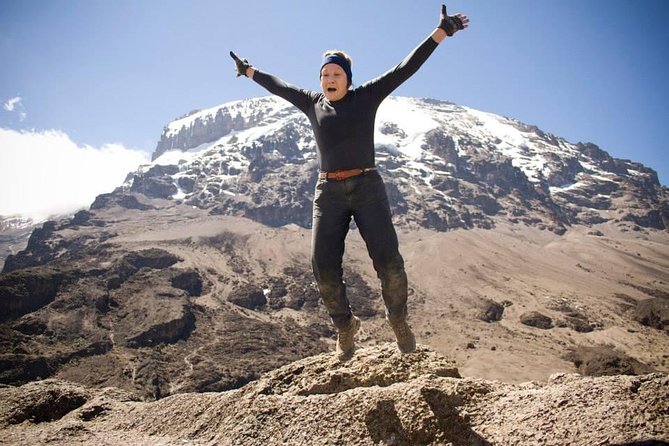
After breakfast on day five, you tackle the Barranco Wall. The route rises over a steep ridge before continuing toward Karanga Valley and the junction with the Mweka Trail.
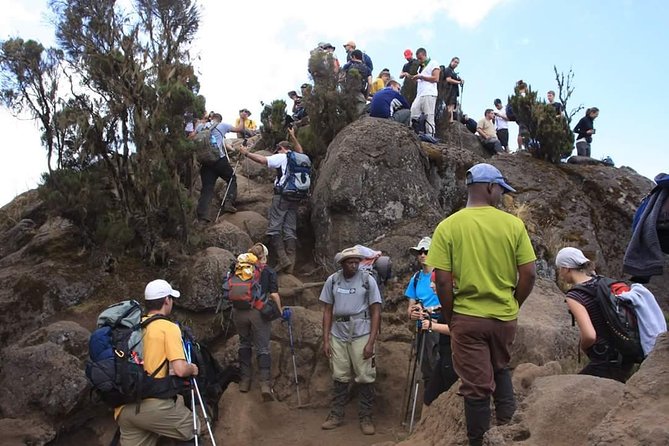
The word wall can sound alarming, but the itinerary presents this as an adventurous hiking section rather than a technical climbing pitch. You should still expect steep ground and use your hands for balance where needed. Take your time and follow your guide’s instructions.
The day is short, about four hours, and finishes near 13,250 feet at Karanga Camp. That short distance is welcome after the previous day’s high crossing. It also helps break up the route to Barafu, which is one of the main reasons I rate this eight-day schedule.
The crew’s work becomes very visible here. Past climbers have singled out guides including Zacariah, Epa, Eric, and Nicholas for patience, encouragement, and careful support. Amos has also handled arrangements and helped organize climbing teams. Names matter because a long mountain trip depends on people, not just an attractive route map.
Barafu Camp and the last quiet afternoon
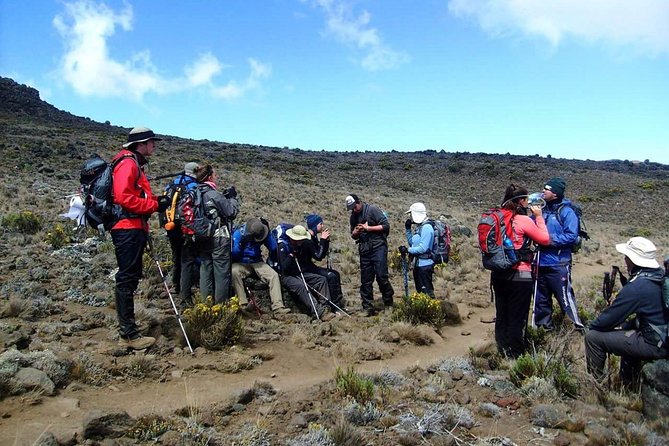
Day six takes you from Karanga to Barafu Camp, climbing from about 13,250 feet to 15,350 feet. The walk lasts around five hours and completes the route’s South Circuit, giving you views of the summit from different angles.
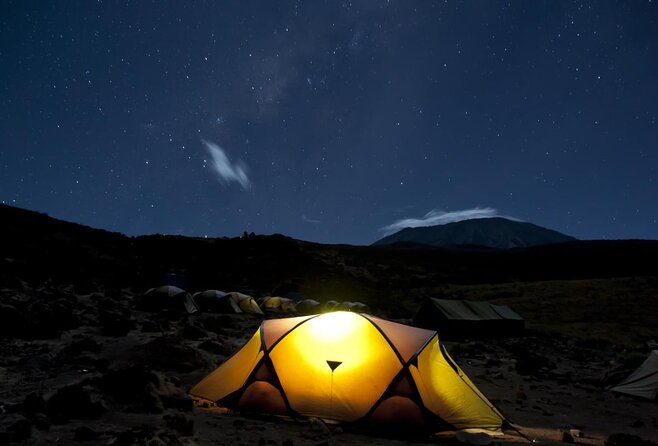
Barafu is the launch point for the summit attempt. Once you arrive, the best use of your time is simple: eat, drink, sort your layers, and rest. Dinner is early, and you should expect to spend much of the afternoon trying to sleep or at least lie quietly.
The high camp is not a place for last-minute sightseeing. Cold, altitude, and anticipation can make it hard to rest. Keep your essential clothing and headlamp ready, and listen to the guide’s instructions about the start time.
The exact timing is set between midnight and 2 a.m. That range means you should be prepared for a very early departure rather than planning around a fixed minute.
Summit night, Stella Point, and Uhuru Peak
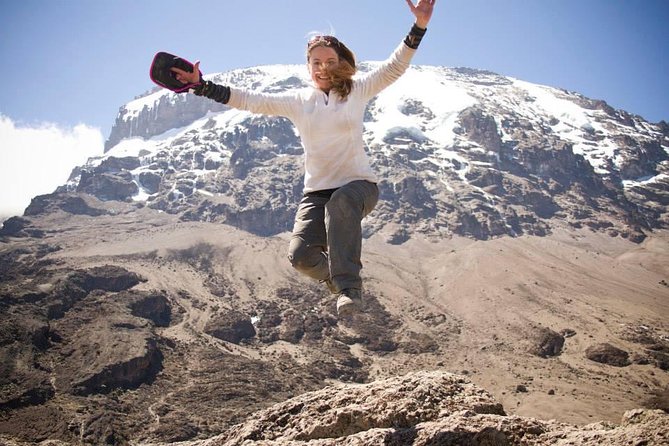
Day seven is the test. You leave Barafu in darkness and begin the slow ascent through heavy scree between the Rebmann and Ratzel glaciers. The route uses switchbacks and heads toward Stella Point on the crater rim.
This section is mentally hard because the progress feels slow and the night is long. Keep your pace controlled. You may be tempted to push early, but conserving energy is more useful than gaining a few minutes near the bottom.
At Stella Point, you can pause and take in the sunrise. Faster climbers may reach the rim in time to see the sun rise there, while others may watch it during the approach. Either way, this is a major moment after hours of cold and darkness.
From Stella Point, the route continues along the crater rim toward Uhuru Peak at 19,340 feet. The summit elevation is listed as 5,895 meters. You should expect the final section to remain physically demanding, even after reaching the rim.
After celebrating at the summit, you descend to Barafu for a short rest and then continue down to about 10,150 feet. The entire day takes around 13 hours. It is a very long day, and you should not underestimate the descent. Reaching the top is only part of the work.
Mweka descent and the return to Moshi
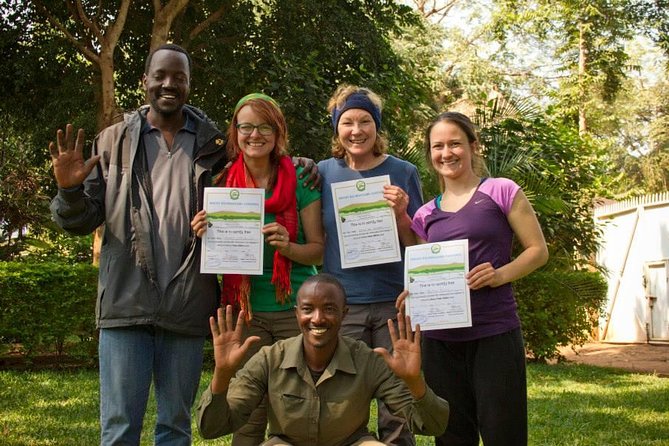
The final morning begins after breakfast at roughly 10,150 feet. Before leaving, you take part in a ceremony of appreciation and team bonding with the crew. The certificates are collected at Mweka Park Gate after the descent.
The route to Mweka Gate takes about four hours. Although you are losing altitude, the trail can be steep, wet, and muddy. Warmer conditions at the lower elevations can make the ground slick, so keep your gaiters and trekking poles handy.
At Mweka village, a vehicle meets you for the roughly 30-minute drive back to your Moshi hotel. A hot shower, proper meal, and sleep will feel well earned.
The final day is also a useful reminder about the crew’s role. Guides, cooks, and porters have helped carry the practical burden of the mountain. The listed price includes their salaries and transport, but tipping is recommended as a separate group contribution.
Suggested daily amounts are $15 to $20 per guide, $10 to $15 for the cook, and $8 to $10 per porter. Because porter numbers can vary, ask your operator how the tip is normally shared before you start.
What the $2,600 price really covers
At $2,600 per person, this is not a low-cost day trip, but Kilimanjaro cannot be compared with an ordinary hiking excursion. The price includes park fees, rescue fees, camping equipment, water, mountain transport, crew park fees, and salaries for the guide, cook, and porters.
It also includes breakfast for seven mornings, eight lunches, eight dinners, airport transfers in both directions, and summit certificates. Those inclusions remove many of the costs that can surprise you on a mountain trip.
You still need to budget for international flights, visas, travel insurance, and personal equipment. Warm layers, suitable boots, a sleeping bag, head protection, gloves, gaiters, and trekking poles are not listed as part of the package, so confirm your equipment needs before departure.
I see the value mainly in the eight-day pacing and the broad list of included services. A cheaper trip may look attractive at first, but the route length, crew wages, park charges, camping supplies, food, and transport all affect the true cost.
Who should choose this climb?
I would choose this route if you want the Lemosho approach and prefer a slower schedule with more time for altitude adjustment. It suits someone with moderate physical fitness who can commit to long walking days and one very long summit day.
It is also a good fit if you value a small group. The listed maximum is two people, although arrangements can vary by departure. Past climbing parties included solo climbers joining small groups, so ask for the exact group setup for your dates.
This is not the right choice if you want a relaxed mountain holiday, dislike camping, or cannot handle an overnight summit start. The route is scenic, but the summit attempt is cold, tiring, and demanding.
Confirmation is provided when you book, and pickup is available. Free cancellation applies when you cancel at least 24 hours before the local start time. After that point, changes and refunds are not accepted, so check your plans carefully.
Should you book the Lemosho eight-day climb?
I would book this experience if your priority is a sensible Kilimanjaro schedule rather than the shortest possible route. The full Shira acclimatization day, the Lava Tower descent, and the short Karanga to Barafu stage all help prepare you for the summit.
The strongest reason to choose it is the human support. Guides such as Zacariah, Epa, Eric, and Nicholas have been praised for patience, encouragement, and steady care, while Amos has helped manage the arrangements. Still, ask who will lead your specific departure, what equipment is supplied, and how the crew tip is handled.
Book it if you can train for long uphill and downhill days, insure yourself properly, and accept that success depends on pacing as much as fitness. If you want the best chance to enjoy the route instead of merely surviving it, the eight-day Lemosho plan is a sensible choice.
FAQ
How long is the Lemosho Route climb?
The climb lasts approximately eight days and seven nights, beginning and ending in the Moshi area.
What time does the experience start?
The listed start time is 9 a.m. Pickup is offered.
How many people can join the climb?
The activity has a maximum of two people.
What meals are included?
The package includes eight lunches, seven breakfasts, and eight dinners.
Are airport transfers included?
Yes. Complimentary airport transfers are included in both directions.
What is the cancellation policy?
You can receive a full refund if you cancel at least 24 hours before the local start time. Cancellations or changes made less than 24 hours before the start are not accepted.
Just added in Moshi
- Zanzibar: Stone Town tour and Nakupenda beach with Lunch★ 5.0 · 1 review
- day trip lake manyara★ 5.0 · 2 reviews
- Mt Kilimanjaro 6 days Marangu route hike★ 5.0 · 3 reviews
- machame route★ 5.0 · 16 reviews
- Private Cycle to Kilimanjaro Bike Park Safari★ 5.0 · 6 reviews
- West Kilimanjaro cycling Adventures★ 4.5 · 8 reviews
- Wildlife Extravaganza: Manyara, Tarangire & Ngorongoro in 3 Days★ 5.0 · 3 reviews
- 3 Days Private E-Bike Tour in West Kilimanjaro★ 5.0 · 3 reviews
Lemosho Route Climbs, compared.


8-Day Small-group Lemosho Kilimanjaro Summit Trekking
Read our review →



Climbing Kilimanjaro through 8 days Lemosho Route
Read our review →Browse the lists this tour appears in