
Reviewed · LEMOSHO ROUTE CLIMBS
Lemosho Route 8 Days Kilimanjaro Climbing Tour
Africa’s highest point demands patience, not bravado. The 8-day Lemosho route gives you time to adjust to altitude, and I like its changing scenery, from rainforest to alpine desert, as well as the strong support of guides, porters, and a cook. I also like that the $2,600 price includes park fees, transfers, camping gear, meals, and airport pickup. The main consideration is simple: this is a serious physical challenge, and the summit day has a demanding overnight start.
Lemosho is a good choice if you want a longer approach to Kilimanjaro rather than the shortest possible climb. The route crosses the Shira Plateau, passes the Barranco Wall, and finishes at Uhuru Peak, at 5,895 meters. The company’s support team receives especially warm praise, with guides including Victor and Edwin singled out for their care and professionalism.
In This Review
- Key points to know before you book
- Why the 8-day Lemosho route works well
- Day 1: Lemosho Gate to Mti Mkubwa Camp
- Day 2: Shira Ridge and the open Shira Plateau
- Day 3: Lent Hills and Shira II Camp
- Day 4: Alpine desert, Lava Tower views, and Barranco Camp
- Day 5: The Barranco Wall and Karanga Camp
- Day 6: Karanga to Barafu Camp
- Day 7: Stella Point, Uhuru Peak, and Mweka Camp
- Day 8: Mweka descent and your certificate
- What the $2,600 price includes
- Food, tents, and the support team
- Preparation, fitness, and useful questions
- Should you book Macpace Tours and Safaris?
- FAQ
- Where does the Kilimanjaro climb begin?
- How long is the tour?
- What is the price per person?
- Is airport pickup included?
- Are transfers to and from the mountain included?
- Are guides, porters, and a cook provided?
- Are tents and mattresses included?
- Are meals included?
- Is drinking water provided?
- Is a Tanzania visa included?
Key points to know before you book
- Eight days helps with altitude adjustment: The route gives you several gradual walking days before the summit attempt.
- The scenery changes dramatically: You move from rainforest to heath, moorland, alpine desert, and finally the rocky summit zone.
- The Barranco Wall is the route’s most exciting obstacle: It involves a steep scramble, but no technical climbing is described.
- The package includes major mountain costs: Park, camping, rescue, conservation, food, tents, porters, and guides are covered.
- Summit night is the hardest section: You begin around midnight, reach Stella Point and Uhuru Peak, then descend to Mweka Camp.
- The price offers solid convenience: Airport transfers, hotel stays, mountain transport, and a certificate are all included, while equipment rental is extra.
Why the 8-day Lemosho route works well
Kilimanjaro is not a technical mountain climb in the usual sense. You do not need ropes or advanced mountaineering skills for this itinerary, but you do need stamina, patience, and the ability to walk for several hours at altitude.
The Lemosho route is valued because it does not rush you straight toward the summit. Your first days are relatively measured, allowing your body more time to adapt before the trail reaches the high camps. That does not remove the risk of altitude sickness, but it gives the schedule a sensible rhythm.
I like the route’s variety. The first day feels green and sheltered, while later days become open, dry, and stark. The change is not just scenic. It helps you feel the mountain’s different ecological zones as you gain height.
This is a private activity, so only your own group participates. That can make a real difference on a demanding trip. You can discuss pace, rest stops, food, and concerns with your own guide instead of trying to fit into a large mixed group.
More Kilimanjaro climbs:
- Kilimanjaro climb by Lemosho Route (7-day)
★ 5.0 · 651 reviews - Kilimanjaro climb, Machame Route (7-day)
★ 5.0 · 262 reviews - Kilimanjaro Climbing Lemosho Route 8 Days.
★ 5.0 · 186 reviews
Day 1: Lemosho Gate to Mti Mkubwa Camp
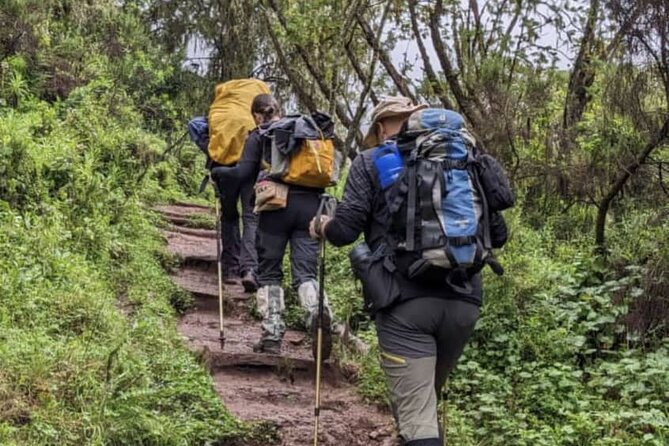
The trek begins at Lemosho Gate, where your guides and porters help organize the climb. You then walk through the rainforest to Mti Mkubwa Camp, with about four hours of trekking listed for the day.
This is a gentle introduction compared with what follows. The rainforest provides shade, moisture, and a close-up look at the lower slopes of Kilimanjaro. You will also begin learning the daily routine: walking at a steady pace, arriving at camp, eating, resting, and preparing your gear for the next morning.
The value of this first day is not distance. It is the chance to begin slowly. You should resist the temptation to walk fast simply because you feel fresh. Saving energy early is one of the smartest things you can do.
Your package includes a mountain tent, mattress, mess tent, table, chairs, drinking water, and meals. Tents are listed on a twin-sharing basis, so confirm the sleeping arrangement when booking if you are traveling alone.
Day 2: Shira Ridge and the open Shira Plateau
Day two leads toward Shira I Camp, with about six hours of walking. The route leaves the rainforest behind and enters heath and moorland, where the vegetation becomes shorter and the views open up.
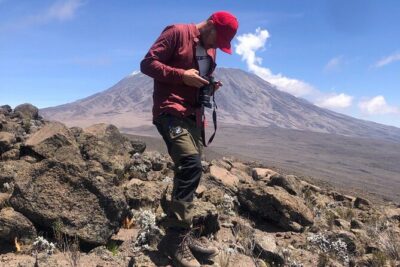
Crossing the Shira Ridge is one of the memorable early sections. You get broad views across the plateau and a stronger sense that you are climbing a huge volcanic mountain, not simply hiking through a forest.
This day may feel more exposed than day one. Sun, wind, and changing weather become more important, so keep a waterproof layer and warm clothing easy to reach. Do not bury your rain jacket at the bottom of your bag. That advice sounds basic until you are standing in changing mountain weather with your pack open.
You sleep at Shira I Camp. The camp location gives you a useful first night at higher altitude, but the schedule still keeps the walking moderate enough to support gradual adjustment.
Day 3: Lent Hills and Shira II Camp
On day three, you continue through the moorland toward the Lent Hills and Shira II Camp. The listed hiking time is about five hours, although the description allows roughly five to seven hours depending on conditions and pace.
The terrain becomes more rugged and bare. From higher sections, you can look back across the Shira Plateau, which gives this day much of its appeal. The views are wider, but the trail also feels less protected than the lower forest route.
This is a good day to watch how your body responds. Headache, unusual tiredness, nausea, or poor coordination should be taken seriously. Your guide’s role is not only to lead the way, but also to monitor your condition and adjust the pace when needed.
The extra day on the Shira side is one reason I see value in choosing eight days rather than trying to compress the climb. You are still making progress, but you are not forced into a rapid march toward the summit.
More Lemosho Route climbs:
- Kilimanjaro climb, Lemosho Route (8-day)
★ 5.0 · 148 reviews - Kilimanjaro climb, Lemosho Route (6-day)
★ 5.0 · 129 reviews - Kilimanjaro Lemosho Route
★ 5.0 · 71 reviews - Private Kilimanjaro Hike 7 Day Lemosho Route
★ 5.0 · 60 reviews
Day 4: Alpine desert, Lava Tower views, and Barranco Camp
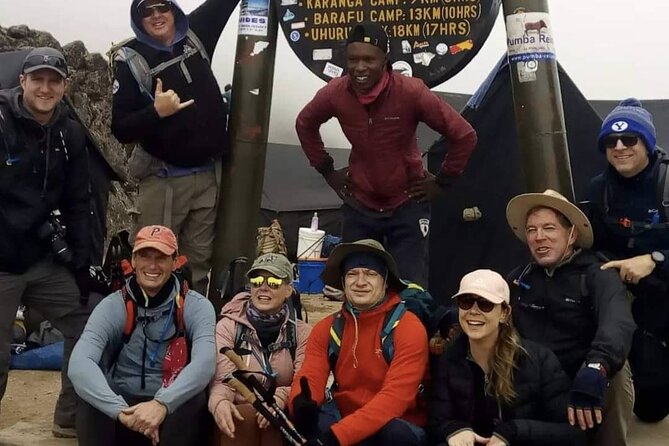
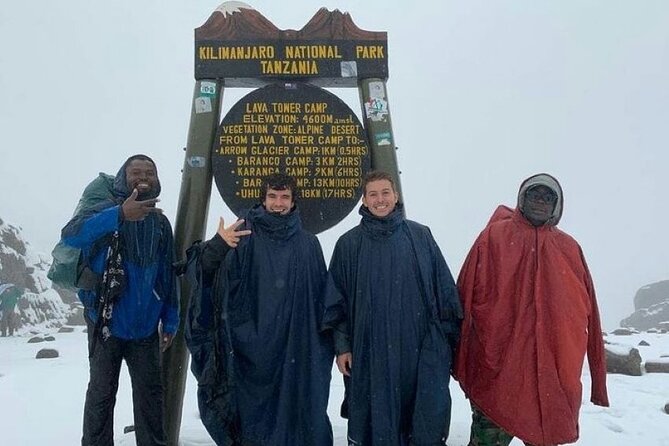
Day four is one of the longest walking days, listed at about seven hours, with the description allowing seven to nine. You pass through alpine desert, where vegetation is scarce and the rock formations become the main attraction.
You will see views toward the Western Breach and Lava Tower. This is high, dry, dramatic country, and the change from the earlier forest is striking. It can also be tiring because the trail feels rougher and the air thinner.
You finish at Barranco Camp, where you rest before the Barranco Wall the next morning. The camp’s position makes it an important turning point. By now, you have spent several days above the lower mountain zones, and the physical challenge becomes much more obvious.
The schedule is sensible in placing this day before the wall climb, but it is also a day when you should conserve energy. Eat even if your appetite is reduced, drink the purified water provided, and keep your evening routine simple.
Day 5: The Barranco Wall and Karanga Camp
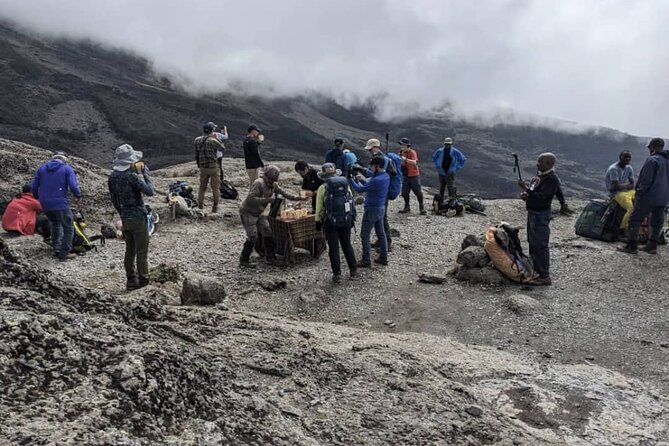
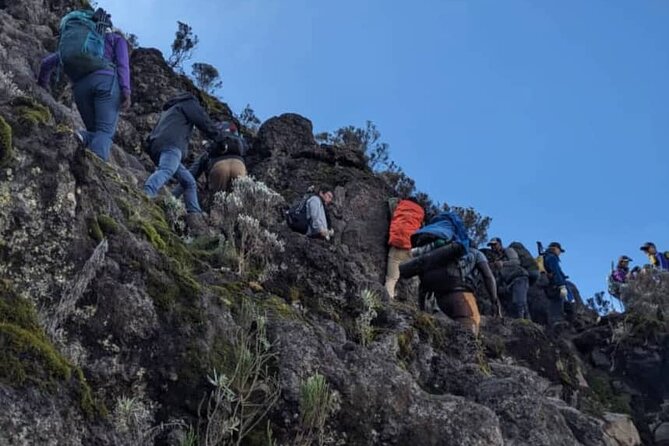
The Barranco Wall is the most exciting part of the route for many climbers. It is a steep scramble rather than a standard walking trail, and the reward is a fine view after the climb.
The description gives roughly four to six hours for the day, although the supplied timing says four minutes. That is clearly inconsistent with the stated trek, so you should ask Macpace Tours and Safaris to confirm the expected walking time before departure.
The wall can look intimidating from camp, but a careful pace and good instructions matter more than speed. Use your hands when needed, keep three points of contact where practical, and follow the guide’s route. This is not the place to prove anything.
After the wall, the trail crosses valleys and ridges before reaching Karanga Camp, above a scenic valley. It is a shorter day than day four, giving you a useful chance to recover while continuing upward.
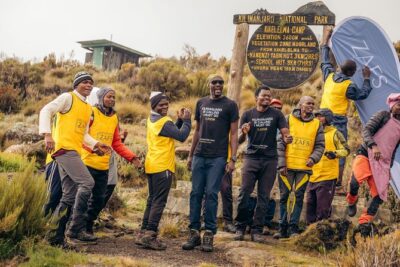
Several accounts praise the guides and porters for being kind, helpful, and attentive. That matters most here. A calm guide can make an awkward section feel manageable.
Day 6: Karanga to Barafu Camp
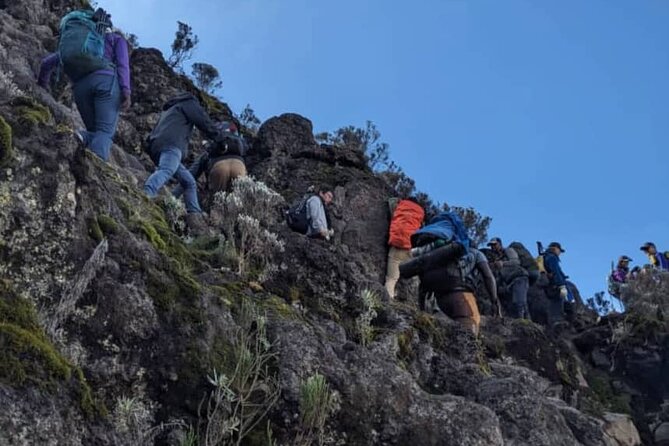
Day six takes about three to five hours, with three hours listed as the expected duration. You climb through alpine desert to Barafu Camp, the base for the summit attempt.
This is a relatively short walking day, but do not treat it as easy. Barafu is high, and the combination of altitude, cold, and anticipation can leave you feeling drained. Once you arrive, the main task is to rest and organize your summit clothing and equipment.
The summit push begins in the middle of the night, so use the afternoon wisely. Eat the included dinner, drink water, check your headlamp if you have one, and keep gloves, warm layers, and personal items close at hand.
The trip includes an emergency oxygen cylinder. That is reassuring, but it is not a substitute for sensible altitude procedures or travel insurance. Your insurance should cover trekking at Kilimanjaro’s altitude and emergency evacuation.
Day 7: Stella Point, Uhuru Peak, and Mweka Camp
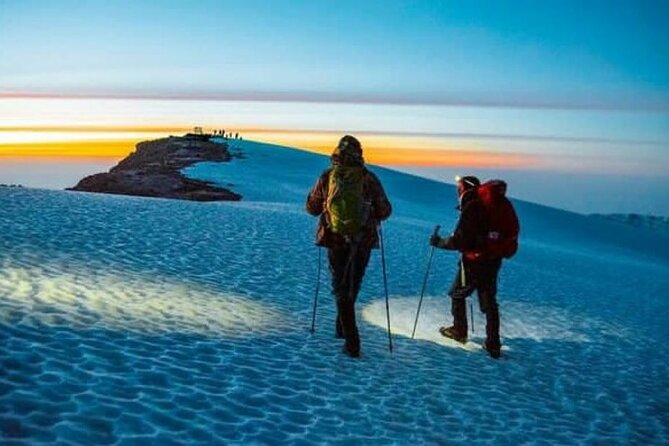
Day seven is the demanding centerpiece. You start around midnight, climb toward Stella Point, continue to Uhuru Peak, and then descend to Mweka Camp.
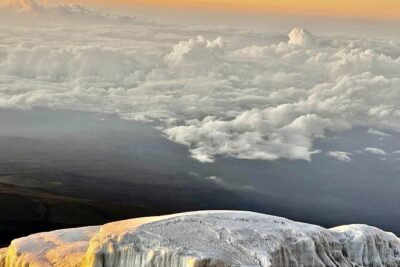
Uhuru Peak is 5,895 meters above sea level, the highest point in Africa. Reaching it is a major achievement, but the timing makes this day difficult. You walk through the coldest hours, usually with little sleep, and then face a long descent after the summit.
The supplied itinerary lists four hours for this day, but the description covers the overnight summit attempt and descent to Mweka Camp. Treat four hours as a likely data error and ask for a precise summit-day schedule. The actual length can vary with pace, conditions, and time spent at the summit.
Your guide’s judgment is especially important here. You may not feel strong enough to continue, or you may notice symptoms that require turning around. A successful climb is not only reaching Uhuru Peak. It is also making safe decisions.
The emotional reward is clear. Several accounts describe standing on the roof of Africa as unforgettable, while others praise the team’s support during the summit attempt. Keep your expectations realistic, though. The summit is cold, tiring, and physically uncomfortable, not a simple photo stop.
Day 8: Mweka descent and your certificate
The final day takes you down through the rainforest to Mweka Gate, with about four hours listed. The vegetation changes again as you lose altitude, and the return to greener surroundings can feel surprisingly welcome.
At Mweka Gate, you receive a Kilimanjaro summit certificate and say goodbye to the mountain team. The certificate is a small object, but after eight days of walking, sleeping in camps, and coping with altitude, it carries real meaning.
The tour then returns you to your Moshi hotel. Transfers to and from the mountain are included, as are airport pickup and drop-off. That makes the final day easier, especially if you are tired and carrying muddy or damp gear.
What the $2,600 price includes
At $2,600 per person, this is not a budget walk, but the package covers many costs that can add up quickly on Kilimanjaro.
Included items are:
- Airport pickup and drop-off
- Transfers to the mountain and back to your Moshi hotel
- Professional guides, porters, and cook
- Guide and porter salaries
- Four-season waterproof mountain tents
- Twin-sharing tent accommodation
- Sleeping mattress
- Mess tent with tables and chairs
- Purified drinking water
- Conservation, camping or hut, and rescue fees
- Government VAT of 18 percent
- Hotel accommodation
- Eight lunches, seven breakfasts, and seven dinners
- Emergency oxygen cylinder
- Summit certificate
The biggest value comes from the combination of staff, park charges, food, tents, and transport. You are not paying only for a guide and a trail permit. You are paying for a support system that carries equipment, prepares meals, manages camp, and handles the practical work around the climb.
You still need to budget for a Tanzania visa, flights, personal insurance, tips, laundry, telephone use, drinks, and personal gear. Sleeping bags, hiking boots, clothing, and other equipment can be rented, but rental prices are not provided.
Tips and gratuities are not included. Ask the company for current guidance before the trek so you can plan responsibly and avoid making decisions at the last minute.
Food, tents, and the support team
The mountain crew includes guides, porters, and a cook. This is a major part of the experience, not a minor detail. On a long climb, hot meals, a dry tent, clean water, and a well-run camp can shape your energy and mood.
The package includes breakfast, lunch, and dinner for the mountain days, along with purified drinking water. Alcohol, beer, and bottled drinks are excluded, so do not expect those to be supplied.
The cooking team receives repeated praise in the available feedback, and the guides are often described as caring and well organized. Victor and Edwin are named specifically in connection with attentive guiding. Joseph is also praised in connection with a wider Tanzania trip, though that does not confirm he will lead this climb.
Ask for the names of your assigned guide and chef before departure. It is also reasonable to confirm how many people will be in your private group, since the trip is private but no maximum group size is supplied.
Preparation, fitness, and useful questions
The listed fitness requirement is moderate, but that phrase needs a practical interpretation. You should be comfortable walking for several hours on uneven ground and handling a much longer, colder summit day.
Training should focus on steady uphill and downhill walking. Add regular walks with a loaded backpack, and practice using the boots and clothing you plan to take. New boots on Kilimanjaro are a poor experiment.
Pack for wet forest conditions and cold high-altitude conditions. Waterproof clothing, warm layers, gloves, suitable boots, and a sleeping bag are not included, although some equipment is available for rent.
Before paying, ask these questions:
- What is the exact summit-day walking time?
- Why is day five shown as four minutes?
- What equipment is available for rent, and at what price?
- What sleeping bag rating is recommended?
- How many people will be in the private group?
- What tipping guidance does the company provide?
- What happens if you must descend early for health reasons?
The cancellation terms are straightforward: cancel at least 24 hours before the start time for a full refund. Cancellations or changes within 24 hours are not accepted for a refund, and all times use local Tanzanian time.
Should you book Macpace Tours and Safaris?
I would consider this tour if you want a private, fully supported Kilimanjaro climb with a longer route and a clear package price. The strongest reasons are the eight-day schedule, the variety of terrain, the included park and rescue fees, and the repeated praise for the guides, porters, and cooks.
I would not book it without clarifying the timing errors for day five and day seven. Those details do not necessarily damage the trip, but an overnight summit attempt deserves a precise schedule. You should also confirm rental gear, group size, hotel details, and tipping expectations.
This climb suits a fit first-time high-altitude trekker who wants support and does not mind camping. It is less suitable if you want a relaxed holiday, dislike cold nights, or expect every day to have a short and predictable walking time.
For the right person, the 8-day Lemosho route offers a thoughtful way to approach Kilimanjaro. You get time to adjust, a superb range of scenery, and a hard-earned arrival at Uhuru Peak. Just remember that the mountain rewards a slow pace and careful preparation far more than youthful confidence.
FAQ
Where does the Kilimanjaro climb begin?
The trek begins at Lemosho Gate on Mount Kilimanjaro.
How long is the tour?
The tour lasts approximately eight days.
What is the price per person?
The listed price is $2,600 per person.
Is airport pickup included?
Yes. Airport pickup and drop-off are included.
Are transfers to and from the mountain included?
Yes. Transfers to the mountain and back to your Moshi hotel are included.
Are guides, porters, and a cook provided?
Yes. The package includes professional guides, porters, a cook, and their salaries.
Are tents and mattresses included?
Yes. Waterproof four-season tents and sleeping mattresses are included. Tents are provided on a twin-sharing basis.
Are meals included?
Yes. The package includes eight lunches, seven breakfasts, and seven dinners.
Is drinking water provided?
Yes. Clean, purified drinking water is included.
Is a Tanzania visa included?
No. Tanzania visa costs are not included. International and domestic flights, personal equipment, insurance, tips, personal expenses, and alcoholic or bottled beverages are also excluded.
Just added in Moshi
- Zanzibar: Stone Town tour and Nakupenda beach with Lunch★ 5.0 · 1 review
- day trip lake manyara★ 5.0 · 2 reviews
- Mt Kilimanjaro 6 days Marangu route hike★ 5.0 · 3 reviews
- machame route★ 5.0 · 16 reviews
- Private Cycle to Kilimanjaro Bike Park Safari★ 5.0 · 6 reviews
- West Kilimanjaro cycling Adventures★ 4.5 · 8 reviews
- Wildlife Extravaganza: Manyara, Tarangire & Ngorongoro in 3 Days★ 5.0 · 3 reviews
- 3 Days Private E-Bike Tour in West Kilimanjaro★ 5.0 · 3 reviews
Lemosho Route Climbs, compared.

8-Day Small-group Lemosho Kilimanjaro Summit Trekking
Read our review →


Climbing Kilimanjaro through 8 days Lemosho Route
Read our review →Browse the lists this tour appears in