
Reviewed · LEMOSHO ROUTE CLIMBS
Mount Kilimanjaro climbing,7 days Lemosho Route.
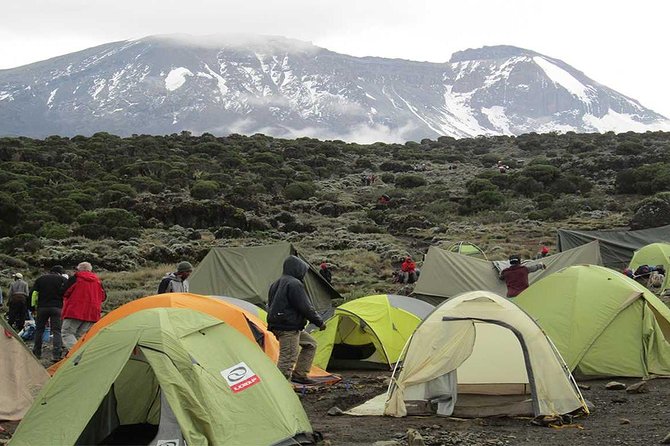
The mountain changes with every day. This 7-day Lemosho climb takes you from forest and heather to open moorland, high alpine country, and the Arctic zone near Uhuru Peak. You then descend through rainforest, giving the route a fine mix of scenery rather than one long march uphill.
I like the route’s gradual rise and its strong acclimatization plan. I also like the practical support: private transport, mountain guides, porters, a cook, three hot meals daily, treated water, oxygen, and two nights in Moshi. The main drawback is the summit schedule. Starting around midnight and walking for up to 12 hours on summit day is demanding, even for a fit climber.
A November 2019 climb with Kikafu Tour & Travel received especially warm praise for the outfitter’s care during a long-planned Kilimanjaro trip. The available rating record is very small, so I would treat that positive account as encouraging rather than final proof. Still, the package itself covers many of the costly basics that make a mountain trek workable.
In This Review
- Key points to know before booking
- Why Lemosho is one of Kilimanjaro’s better choices
- Day 1: Lemosho Glades and the first forest climb
- Day 2: Big Tree Camp to Shira 2 Hut
- Day 3: Shira 2 to Barranco beneath the cliffs
- Day 4: Barranco to Karanga for acclimatization
- Day 5: Karanga to Barafu Camp
- Day 6: The midnight summit push to Uhuru Peak
- Day 7: Millennium Camp and the rainforest descent
- What the $2,430.77 price really covers
- Food, water, tents, and support on the mountain
- Who should choose this private Kilimanjaro climb
- Booking, cancellation, and small practical points
- Should you book the 7-day Lemosho Route?
- FAQ
- How long is the Kilimanjaro Lemosho climb?
- How far do you trek on the Lemosho Route?
- What time does the experience start?
- Is the climb private or shared?
- What meals are included?
- Is accommodation included?
- What is not included in the price?
Key points to know before booking
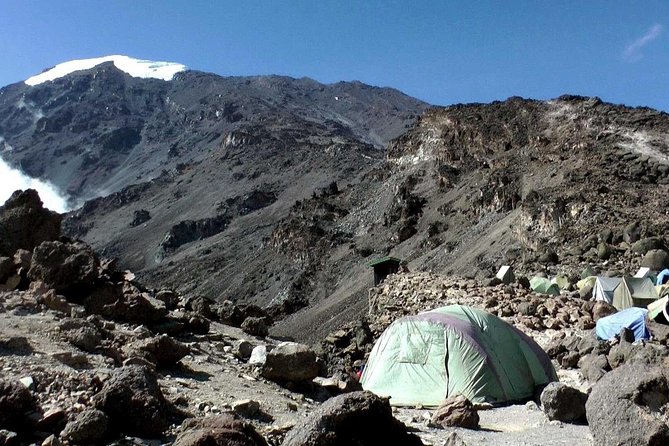
- The route crosses five major climate zones: You begin in lush forest, pass through heather and moorland, cross alpine terrain, and reach the cold Arctic zone near Uhuru Peak.
- The 7-day plan covers about 46 kilometers: That is roughly 28.5 miles, though the steepness and altitude make the distance feel harder than the number suggests.
- The summit push begins at midnight: You climb from Barafu Camp to Stella Point, then continue around the crater rim toward Uhuru Peak at 5,895 meters.
- Acclimatization is built into the middle of the route: The move from Barranco to Karanga gives you an important adjustment day before the higher camps.
- The package includes a full mountain support team: Guides, porters, a cook, three meals daily, treated water, oxygen, an emergency first aid kit, and mountain sleeping equipment are included.
- The tour is private: Only your group participates, and pickup from your lodge is offered, with a stated start time of 6:00 am.
Why Lemosho is one of Kilimanjaro’s better choices
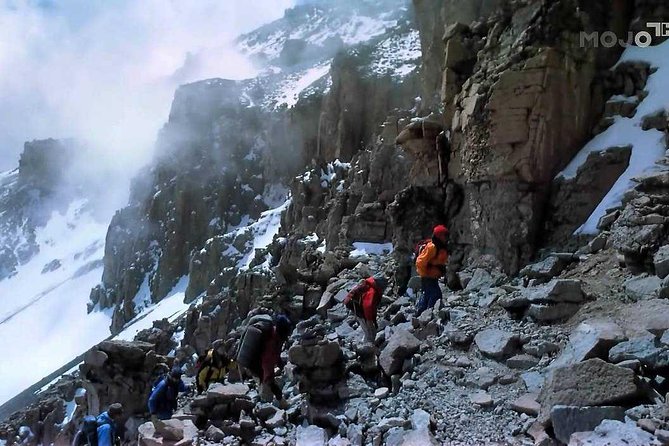
Lemosho is often chosen for its scenic variety and slower approach. You do not rush straight toward the summit. Instead, the route climbs through several distinct zones, which gives your body more time to adjust to thinner air.
The first section runs through forest and lower slopes before opening onto the Shira Plateau. From there, the route becomes more exposed and spacious. Heather, moorland, cliffs, glaciers, and high volcanic terrain replace the trees.
The route is designed for six to eight days, and this version uses seven. That is a useful middle ground. Six days can feel compressed, while eight days gives more time for acclimatization but costs more in time and usually in price. The stated success figures are 85%, 90%, and 95% for the 7-day and 8-day options, though the supplied information does not clearly match each percentage to a specific itinerary. Treat these as reported planning figures, not a personal guarantee.
The total distance is listed as 46 kilometers. That sounds manageable on paper, but altitude matters more than mileage. A short climb at 5,000 meters can demand more from you than a much longer walk at sea level.
More Kilimanjaro climbs:
- Kilimanjaro climb by Lemosho Route (7-day)
★ 5.0 · 651 reviews - Kilimanjaro climb, Machame Route (7-day)
★ 5.0 · 262 reviews - Kilimanjaro Climbing Lemosho Route 8 Days.
★ 5.0 · 186 reviews
Day 1: Lemosho Glades and the first forest climb
Your day begins with pickup from your lodge at about 6:00 am. Private transport takes you from Moshi toward Londorossi village and the Lemosho gate area. The stated starting elevation is about 2,100 meters.
The trail begins in the forest zone, then winds upward toward the northern slopes of Kilimanjaro and the Shira Plateau. This is a good opening day because you are not thrown straight into barren high-altitude ground. The forest gives the first hours a cooler, greener feel, while the gradual climb lets you settle into the walking rhythm.
The practical benefit of starting early is clear: you have more daylight for the approach and a proper start before the mountain gets busy with the day’s work. Your guide and support team handle the mountain arrangements, while you concentrate on steady walking and keeping your pace controlled.
The description names Lemosho Glades as the day’s stop, but accommodation details are not broken down by individual camp. The package says you will use wooden cabins and four-season mountain tents, so ask Kikafu how those are assigned on your exact departure.
Day 2: Big Tree Camp to Shira 2 Hut
The second day moves through open moorland toward Shira 2 Hut. This is where the scenery begins to change sharply. You leave much of the forest behind and walk through a more open zone, with broad views and fewer trees to shelter you.
Big Tree Camp is the listed stop, while the day’s trek continues toward Shira 2. The wording suggests a full walking day between these camp areas, not a brief transfer. You should expect the route to feel more exposed than day one, with the weather having a greater effect on comfort.
This is also a day when your personal pace matters. You want to walk steadily, not race during the easier early sections and pay for it later. The guides are there to manage the mountain route, but you should still tell them promptly if you develop a headache, nausea, unusual fatigue, or breathing trouble.
The open moorlands are one of Lemosho’s rewards. You get a stronger sense of Kilimanjaro as a huge volcanic mountain rather than simply a forest hike with a summit attached.
Day 3: Shira 2 to Barranco beneath the cliffs
Day three is a long trek from Shira Camp Two to Barranco. The camp sits in a sheltered area below the Breach Wall, with the dome of Uhuru and the edge of the Heim Glacier dominating the head of the valley.
This is one of the most memorable sections of the route because the mountain becomes more dramatic. You see cliffs, glaciers, and high volcanic forms that make the coming summit feel real. The route also gives you a useful altitude pattern: you climb high during the day and then settle at the Barranco camp.
The distance itself is not the only challenge. You are now sleeping and walking at greater altitude, and the day can test your legs before the summit push has even started. Keep your water close, eat the meals provided even when your appetite is poor, and use the breaks to check how your body is responding.
Three hot meals daily are included while you are on the mountain. That is a meaningful part of the price. A cook, porters, and guides allow you to focus on walking instead of carrying all your food, water, and camping equipment yourself.
More Lemosho Route climbs:
- Kilimanjaro climb, Lemosho Route (8-day)
★ 5.0 · 148 reviews - Kilimanjaro climb, Lemosho Route (6-day)
★ 5.0 · 129 reviews - Kilimanjaro Lemosho Route
★ 5.0 · 71 reviews - Private Kilimanjaro Hike 7 Day Lemosho Route
★ 5.0 · 60 reviews
Day 4: Barranco to Karanga for acclimatization
The fourth day is described as an acclimatization day, continuing from Barranco to Karanga Valley. It is not a rest day in the usual sense. You still trek, but the schedule is meant to help your body adjust before you climb higher.
Barranco is known here for its sheltered position below the cliffs, while Karanga takes you closer to the high camps. The move is strategically useful because you gain height without going straight from the lower route to Barafu.
This day can feel deceptively manageable. You may be excited by the approaching summit and tempted to push harder, but that is the wrong instinct. A slow, even pace gives you a better chance of arriving at Karanga with energy left for the next two days.
The route’s gradual design is one of the strongest reasons to choose Lemosho. The package describes it as offering smooth acclimatization and high success rates, but no itinerary can remove the effects of altitude. Your own fitness, health, pace, and response to elevation still matter.
Day 5: Karanga to Barafu Camp
On day five, you climb from Karanga to Barafu Camp. The mountain is now stark and high. Huge glaciers and cliffs mark this section, and Barafu becomes the final major staging point before the summit.
The description identifies Barafu as the last water point. That detail matters. You should make sure you understand how much drinking water you will have after leaving it, since the summit attempt and descent are long and physically demanding.
Barafu is not the place to spend the evening sightseeing. You need to prepare clothing, personal items, and anything you will need during the midnight start. The supplied information does not list a personal packing guide, so confirm what Kikafu expects you to bring and what the porters carry.
The package includes double-layered sleeping mats, four-season tents, and mountain accommodation equipment. That reduces the amount of technical camping gear you must arrange yourself, though personal clothing, toiletries, and other individual items remain your responsibility.
Day 6: The midnight summit push to Uhuru Peak
Summit day begins around midnight. From Barafu, you climb the final steep scree section toward Stella Point. The surface is loose and demanding, and the darkness, cold, altitude, and early hour combine to make this the toughest part of the trek.
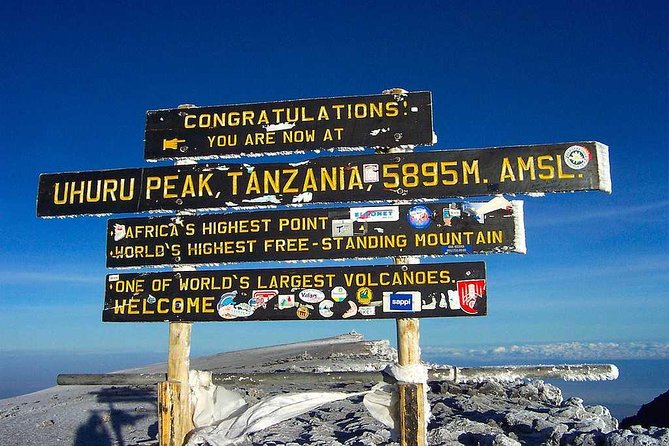
At Stella Point, the route follows the ridge and continues around the crater toward Uhuru Peak. The summit elevation is 5,895 meters. You will need to walk steadily and conserve energy. The aim is not speed. It is to keep moving safely while listening to your guide and your body.
The mountain views at this height are the reward, but the summit is not a guarantee. If you feel severely unwell, turning back can be the sensible choice. A good operator should place your safety ahead of a photograph at the highest point.
The included portable oxygen tanks and ox-meter provide useful safety support. An emergency first aid kit is also included. These items are reassuring, but they are not a substitute for honest communication with the guide. Tell the team how you feel before a small problem becomes a serious one.
The information places the following camp at Millennium Camp and describes the final descent on day seven. In practice, confirm the exact sleeping arrangements for the night after your summit attempt, since the listed sequence combines a very long summit day with the next descent details.
Day 7: Millennium Camp and the rainforest descent
The final day continues down through the forests to the gate, where your vehicle waits to take you back to Moshi. The day is listed as lasting 12 hours, so do not think of this as a light walk after the summit.
The return through rainforest provides a strong contrast with the high Arctic zone above. Trees, moisture, and warmer air replace the exposed rock, scree, and glacier country. Your knees may notice the descent more than your lungs do, especially after the summit effort.
Private transportation back to Moshi is included. The package also includes two nights of accommodation in Moshi, which gives you a place to recover around the mountain portion of the trip. The supplied meal details list seven breakfasts, seven lunches, and six dinners, so check which Moshi meals are covered on your exact dates.
What the $2,430.77 price really covers
At $2,430.77 per person, this is not a budget day hike. You are paying for a seven-day expedition with transport, staff, food, camping equipment, water treatment, safety supplies, and two Moshi nights.
The strongest value comes from the number of core services bundled together:
- Private transport and lodge pickup
- Two nights of accommodation in Moshi
- Wooden cabin and four-season tent accommodation on the mountain
- Double-layered sleeping mats
- Guides, porters, and a cook
- Three hot meals each day on the mountain
- Treated and filtered drinking water
- Portable oxygen tanks and an ox-meter
- Emergency first aid equipment
You still need to budget for tips for the guides, porters, and cook. Travel insurance, flights, toiletries, and personal items are not included. A portable flush toilet tent can be added for $70 for the full trek, which may be worth considering if campsite toilet arrangements are a major concern for you.
Group discounts are offered, but the available information does not state the discount amount. Ask for the exact rate before paying. Since the activity is private, you can also confirm the maximum group size and how the price changes as more people join.
Food, water, tents, and support on the mountain
The food plan is one of the practical strengths of this climb. Three hot meals per day are included while you are on the mountain, and a dedicated cook is part of the support team. That is far more useful than simply being handed dry rations after a long day.
Treated and filtered water is supplied throughout the trek. You should still carry your own bottle or hydration system, since the tour description does not specify the container type or capacity.
The sleeping setup includes four-season mountain tents and double-layered sleeping mats. Wooden cabins are also listed as part of the mountain accommodation. Because the itinerary names camps but does not specify which nights use cabins and which use tents, ask for a night-by-night accommodation plan.
The safety equipment is a positive feature. Portable oxygen, an ox-meter, and an emergency first aid kit are included. The presence of equipment is helpful, but the quality of the experience will also depend on how clearly the guide explains health checks and what happens if someone cannot continue.
Who should choose this private Kilimanjaro climb
I would consider this route a good match for you if you want:
- A scenic approach through several climate zones
- A slower seven-day schedule rather than a rushed climb
- Private participation for your own group
- Hot meals and a staffed camp system
- Lodge pickup and private return transport
- A route with a dedicated acclimatization section
- Support from guides, porters, and a cook
You should think carefully before booking if the midnight summit start, steep scree, high altitude, and 12-hour final day sound beyond your current ability. The information says most people can participate, but it does not remove the need for good preparation or travel insurance.
The trip is also less suitable if you want a simple, comfortable holiday with no hard physical demands. Kilimanjaro is the main event here, and the summit day will dominate your schedule.
Booking, cancellation, and small practical points
Confirmation is received at the time of booking. Pickup is offered, and the stated start time is 6:00 am. Since only your group participates, you should give Kikafu the correct lodge details and confirm the pickup time in advance.
Free cancellation applies if you cancel at least 24 hours before the experience start time. Cancellations or changes made within 24 hours are not refunded or accepted. Cut-off times use local Tanzanian time.
The climb depends on suitable weather and a minimum number of participants. If Kikafu cancels for poor weather or because the minimum is not met, you are offered another date or experience, or a full refund.
Should you book the 7-day Lemosho Route?
I would book this climb if you want Kilimanjaro scenery, a private group, and a package that covers the major mountain costs. The gradual Lemosho route, three hot meals daily, Moshi accommodation, mountain staff, water, and safety equipment make the price easier to justify.
I would not book without first confirming the exact camp arrangement, group size, meal schedule, and summit-day descent plan. The available praise for Kikafu is encouraging, especially from Timoney’s November 2019 climb, but the rating record is too small to settle every question.
For a strong walker who accepts the midnight summit start and prepares properly, this is an appealing seven-day route. It gives you changing scenery, a sensible acclimatization pattern, and a well-supported attempt at Uhuru Peak without pretending that altitude is easy.
FAQ
How long is the Kilimanjaro Lemosho climb?
The experience lasts approximately seven days.
How far do you trek on the Lemosho Route?
The total distance is listed as about 46 kilometers, or 28.5 miles.
What time does the experience start?
The stated start time is 6:00 am, with pickup from your lodge offered.
Is the climb private or shared?
It is a private tour and only your group participates.
What meals are included?
The package lists seven breakfasts, seven lunches, and six dinners. It also states that three hot meals are provided daily while you are on the mountain.
Is accommodation included?
Yes. Two nights of accommodation in Moshi are included, along with wooden cabins and four-season mountain tents on the mountain. Double-layered sleeping mats are also provided.
What is not included in the price?
Tips for guides, porters, and the cook, travel insurance, flights, toiletries, and personal items are not included. A portable flush toilet tent costs an additional $70 for the full trek.
Just added in Moshi
- Zanzibar: Stone Town tour and Nakupenda beach with Lunch★ 5.0 · 1 review
- day trip lake manyara★ 5.0 · 2 reviews
- Mt Kilimanjaro 6 days Marangu route hike★ 5.0 · 3 reviews
- machame route★ 5.0 · 16 reviews
- Private Cycle to Kilimanjaro Bike Park Safari★ 5.0 · 6 reviews
- West Kilimanjaro cycling Adventures★ 4.5 · 8 reviews
- Wildlife Extravaganza: Manyara, Tarangire & Ngorongoro in 3 Days★ 5.0 · 3 reviews
- 3 Days Private E-Bike Tour in West Kilimanjaro★ 5.0 · 3 reviews
Lemosho Route Climbs, compared.

8-Day Small-group Lemosho Kilimanjaro Summit Trekking
Read our review →


Climbing Kilimanjaro through 8 days Lemosho Route
Read our review →Browse the lists this tour appears in