
Reviewed · MARANGU ROUTE CLIMBS
Mt Kilimanjaro Climb – 6 days Marangu
Africa’s highest summit takes patience and grit. This six-day Kilimanjaro climb from Moshi follows the Marangu Route, the mountain’s best-known path for hikers who want a guided ascent with dormitory-style hut accommodation rather than nights in tents. The route moves through rainforest, moorland, alpine desert, and icy high-altitude terrain before the final push to Uhuru Peak.
I like the extra acclimatization day at Horombo Hut, since altitude is the main reason strong hikers fail on Kilimanjaro. I also like the private format, which gives your group a guide’s full attention and lets you move at the slow, steady pace needed on the mountain.
The main consideration is that six days is still a demanding schedule. Marangu is often described as the easiest route, but the summit day includes a long night climb, severe cold, and a major descent. You should also confirm the accommodation details before booking, since the trip describes dormitory huts while the inclusions also mention camping equipment.
In This Review
- Key points to know before booking
- What the $2,185.90 price covers
- Day 1: Marangu Gate to Mandara Hut through rainforest
- Day 2: Moorland, giant plants, and Horombo Hut
- Day 3: The Horombo acclimatization day
- Day 4: Across the saddle to Kibo Hut
- Day 5: The midnight climb to Uhuru Peak
- Day 6: Returning through the forest to Marangu Gate
- The guide and support team
- What kind of hiker should book this?
- Practical details before you go
- Should you book the six-day Marangu climb?
- FAQ
- How long is the Kilimanjaro climb?
- Where does the climb begin?
- What time does the experience start?
- Is this a private tour?
- Is accommodation included?
- Are meals included?
- Is mountain equipment included?
- Are tips and travel insurance included?
Key points to know before booking
- A 5,895-meter summit attempt: You climb to Uhuru Peak, the highest point in Africa, after starting the final ascent around midnight.
- One useful acclimatization day: Day 3 at Horombo includes a recommended walk toward Mawenzi Saddle and Zebra Rocks.
- The most direct Marangu schedule: You ascend and descend by the same general route, finishing at Marangu Gate.
- Private guiding: Only your own group participates, which can make a real difference when you need to slow down or discuss altitude symptoms.
- Full-board mountain support: Park fees, meals, drinking water, transport to the gate, guide services, oxygen, and an oximeter are included.
- Ethical team policy: The operator says salaries follow KPAP guidelines, an important point when porters carry food, equipment, and supplies uphill.
What the $2,185.90 price covers
At $2,185.90 per person, this is not a budget walk in the ordinary sense. Kilimanjaro requires park entry, rescue and forest fees, food, staff, transport, and a large support crew. Those fixed costs make a guided trip far more practical than trying to organize each part separately.
The package includes five nights of accommodation, three meals a day, drinking water, transport to and from the park gate, a professional guide, government taxes, park fees, oxygen, and an oximeter. Lunch is also listed as included for four days. You do not need to calculate park charges or arrange a separate ride to Marangu Gate.
The value is strongest if you need an organized, private climb from Moshi. The guide and support team handle the route, meals, camp or hut arrangements, and mountain safety while you focus on walking. The private setup can also be useful if one member of your group is slower than the others.
You still need to budget for tips for the guide, cook, and porters. Personal climbing clothing and equipment are not included, and neither are travel insurance, airport transfers, or accommodation before and after the climb. Pre- and post-climb lodging and airport transfers can be arranged on request.
One detail deserves clarification before you pay: the itinerary describes Mandara, Horombo, and Kibo Huts, while the inclusions list camping facilities such as a tent, mattresses, and mess tent. Marangu is widely associated with hut accommodation, but the supplied details do not fully explain how these two descriptions fit together. Ask Nyange Adventures exactly where you sleep each night and what equipment you are expected to bring.
More Kilimanjaro climbs:
- Kilimanjaro climb by Lemosho Route (7-day)
★ 5.0 · 651 reviews - Kilimanjaro climb, Machame Route (7-day)
★ 5.0 · 262 reviews - Kilimanjaro Climbing Lemosho Route 8 Days.
★ 5.0 · 186 reviews
Day 1: Marangu Gate to Mandara Hut through rainforest
The climb begins with pickup from your hotel or hostel in Moshi and a drive of about 45 minutes to Marangu Gate. The listed meeting time is 8:30 a.m., with Kilimanjaro Airport also shown as a starting point, so confirm the exact pickup location during booking.
At the gate, registration takes time. This is normal for a national park climb, and it is the point where your guide and support crew prepare for the route ahead. The walking begins in the montane forest, with a steady climb of about 870 meters.
Expect four to five hours on foot. The trail is described as well maintained, and the first habitat is thick rainforest mixed with coffee-growing areas. Black-and-white colobus monkeys and colorful birds may appear along the way. Your guide can also explain local plants and animals, which gives this first day more character than a simple uphill march.
Mandara Hut is the first overnight stop. The day is moderate by Kilimanjaro standards, but you should not race it. The best habit begins here: drink regularly, keep your pace easy, and save your strength for the upper mountain.
Day 2: Moorland, giant plants, and Horombo Hut
Day 2 brings a longer walk and a noticeable change in scenery. You gain about 1,020 meters over six to eight hours, passing out of the forest and into moorland.
This section has open alpine meadows, giant heather, giant lobelia, and giant groundsel. Some of these plants grow to around 16 feet, giving the route a strange, oversized feel. You are no longer walking under a forest canopy, so sun, wind, and changing weather become more important.
The path is steeper than the first day, though the pace should remain slow. Horombo Hut is reached after roughly six hours of walking, depending on conditions and the pace of your group. The accommodation is dormitory-style, with hot water available for washing and an evening meal before bed.
Horombo is one of the most important stops on the whole climb. It sits high enough for altitude symptoms to appear, but you still have time to adjust before summit night. Headaches, tiredness, and shortness of breath can happen here. Tell your guide how you feel instead of trying to hide symptoms.
Day 3: The Horombo acclimatization day
This extra day is the strongest feature of the six-day plan. Rather than climbing higher immediately, you spend another night at Horombo Hut and take a shorter walk nearby.
The recommended outing goes toward Mawenzi Saddle, passing Zebra Rocks. It takes about four to five hours round trip and gives you a chance to gain some height before returning to sleep at Horombo. That pattern, walking higher and sleeping lower than your highest point of the day, is useful for adjusting to altitude.
The instruction to go pole, pole, meaning slowly, matters here. Day 3 may feel easy compared with the summit attempt, but it is not a wasted day. It gives your body time to respond before Kibo Hut and the final ascent.
Drink enough water and go to bed early. You will need both rest and patience on Day 5. A private guide can monitor your condition closely, but you still need to report headaches, nausea, dizziness, or unusual fatigue honestly.
More Marangu Route climbs:
- Kilimanjaro climb, Marangu route (6-day)
★ 5.0 · 72 reviews - Climbing Kilimanjaro – Marangu Route
★ 5.0 · 65 reviews - Kilimanjaro Climbing 5 days Marangu route
★ 5.0 · 22 reviews - Best Kilimanjaro Adventures 6 Days Marangu Route Experience
★ 5.0 · 18 reviews
Day 4: Across the saddle to Kibo Hut
Day 4 is a long approach to the summit. You gain about 980 meters over six to eight hours, moving through heathland and into alpine desert.
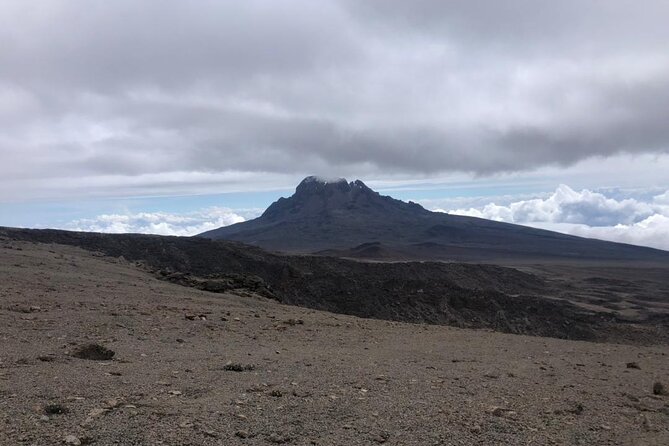
The route crosses the broad saddle between Mawenzi and Kibo. The vegetation thins out, and the setting becomes dry, bare, and almost lunar. You get increasingly clear views of Kilimanjaro’s summit, but the scenery comes with a warning: the air is thinner, the facilities are limited, and altitude symptoms may begin to increase.
Kibo Hut is a drystone-walled structure with dormitories. You arrive, eat, and rest for the evening rather than spending time sightseeing. The aim is to sleep or at least lie down before the midnight start.
This is where sensible packing pays off. Keep your summit clothing, gloves, headlamp, water, and personal essentials ready before you go to bed. The supplied information does not list individual gear, so you must arrange your own mountain clothing and equipment.
Day 5: The midnight climb to Uhuru Peak
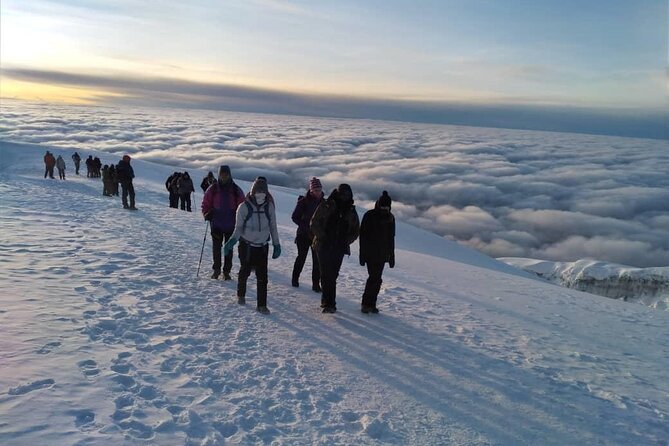
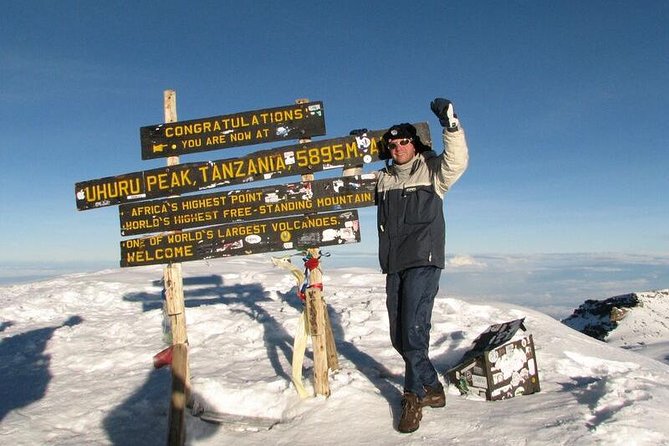
Summit day is the test. You leave just before midnight and climb through the darkness toward Stella Point at 5,685 meters. The ascent takes around six to seven hours to Uhuru Peak, depending on conditions and your pace.
The route heads northwest across heavy stone scree, using switchbacks between the Ratzel and Rebmann glaciers. This is the hardest part of the climb. The slope, cold, darkness, altitude, and fatigue all arrive at once. The right strategy is simple: short steps, slow breathing, regular drinks, and close attention to your guide.
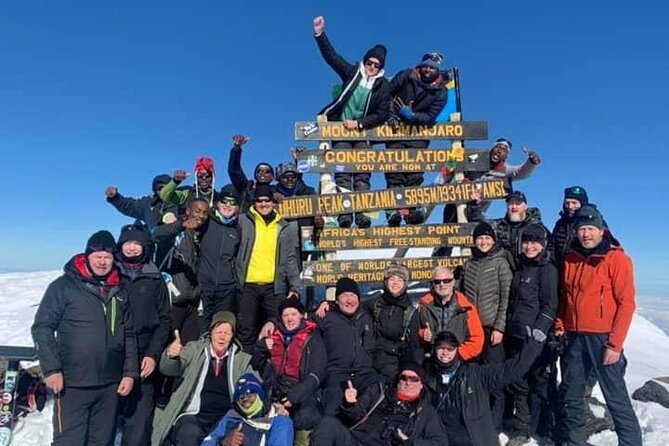
At Stella Point, you reach the crater rim. If you have enough strength and your guide considers it safe, you continue along the rim to Uhuru Peak. The summit is the highest point on Kilimanjaro and the emotional high point of the trip, but do not treat Stella Point as a guaranteed pass to the top. Your guide may need to turn you around if your condition worsens.
After the summit, you descend to Horombo Hut. The listed descent is about 2,785 meters, making this an exceptionally long day. The total hiking time is given as around 13 hours, though the exact duration depends on rest stops, weather, and the time you reach the summit.
The return to Horombo is not an easy victory lap. Loose stone can punish tired knees, and the altitude drop may leave you drained. Eat, drink, and rest as soon as you arrive.
Day 6: Returning through the forest to Marangu Gate
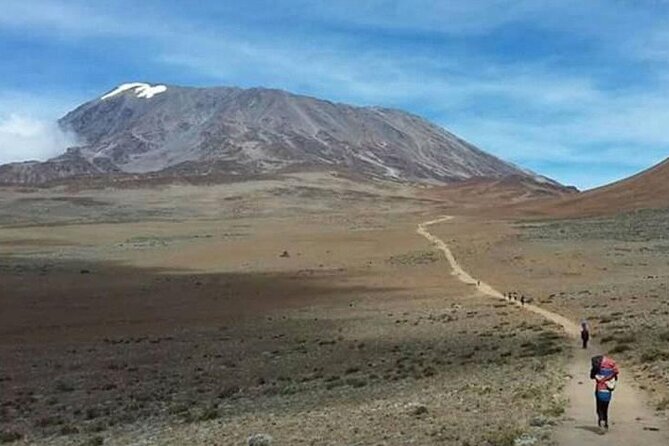
The final day is a five-to-seven-hour descent with about 1,890 meters of elevation loss. You return through the forest to Marangu Gate, where successful hikers who reached Stella Point and Uhuru Peak receive certificates.
The forest feels different on the way down. After the exposed upper mountain, trees and warmer air are welcome, though the long descent can still be hard on your legs. At the gate, transport takes you back to your hotel in Moshi for a shower, dinner, and the traditional Kilimanjaro beer celebration.
That return to normal life is part of the pleasure. The trip moves quickly from cold, thin air to a comfortable hotel room in the same day.
The guide and support team
The quality of a Kilimanjaro trip depends heavily on the people around you. The strongest praise for Nyange Adventures focuses on guides who were patient, careful, friendly, and clear about the mountain, wildlife, nature, and route.
Guides named in the supplied feedback include Musa, Freddy, Benny, Eric, Nicolas, Francis, Steven, and Erick. That does not mean you can assume one of them will lead your climb, so ask which guide is assigned to your departure. Francis and Steven were especially praised for helpful service, while Musa was associated with a successful six-day Marangu climb.
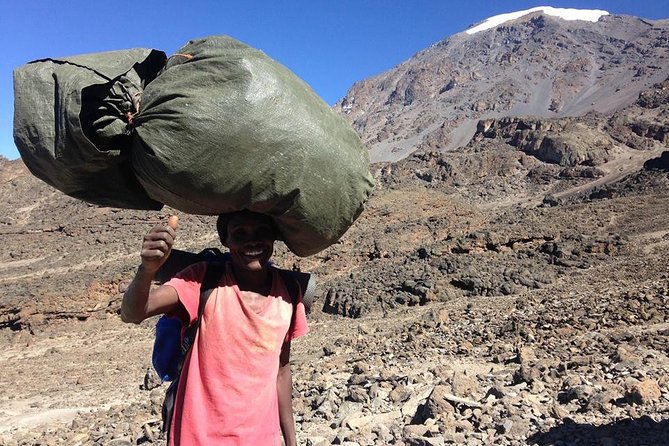
The company also emphasizes fair salaries under KPAP guidelines. That matters because porters do much of the practical work behind a climb. You should still plan a proper tip for the team, since tips are not included in the price.
The service record appears strong, with a 4.9 rating from 12 ratings and 100 percent recommendation shown in the supplied information. One useful note is that minor delays can happen. A mountain operation in East Africa does not run like a train timetable, so leave room in your wider Tanzania plans.
What kind of hiker should book this?
This climb suits you if you want a famous mountain challenge with a private guide, structured meals, organized transport, and an extra acclimatization day. You need moderate physical fitness, but fitness alone does not guarantee a summit. Altitude affects people in unpredictable ways.
The Marangu Route is often called the cheapest and easiest route. That description needs care. It is cheaper partly because the same route is used for ascent and descent, and it is easier in terms of trail design and hut accommodation. It is not easy on summit night.
You may prefer this option if you do not want to carry camping equipment or sleep in a tent. However, confirm the hut and camping details because the package wording includes both. The six-day length also means the schedule is compact. If you want a slower mountain plan, ask about longer options before committing.
Practical details before you go
Pickup is offered from your hotel or hostel in Moshi, and transport to and from the gate is included. The booking information also lists Kilimanjaro Airport as the start point, so confirm whether airport pickup is part of your package or requires an extra arrangement.
Confirmation is provided at booking. The activity is private, and only your group participates. Group discounts are available, and the ticket is mobile.
Travel insurance is not included. You should arrange coverage that specifically addresses mountain trekking and emergency evacuation, since ordinary holiday insurance may not cover a Kilimanjaro climb. Personal climbing gear is also your responsibility.
Cancellation is flexible up to 24 hours before the local start time for a full refund. Changes or cancellations made inside that 24-hour window are not accepted for a refund.
Should you book the six-day Marangu climb?
I would choose this trip if you want a direct, well-supported Kilimanjaro ascent and value the extra day at Horombo. The private guiding, full-board arrangements, included park costs, and ethical pay policy give the price a solid basis.
I would pause if you are looking for a relaxed hike or have little experience with long mountain days. The summit attempt is cold, dark, steep, and very tiring, even on the route marketed as the easiest.
Before booking, ask three questions: Which accommodation will I use each night? Which guide will lead my group? What exact equipment do I need to provide? If the answers are clear and you have proper insurance, this is a sensible way to take on Kilimanjaro with strong day-by-day support.
FAQ
How long is the Kilimanjaro climb?
The climb lasts approximately six days, including the ascent, one acclimatization day at Horombo Hut, the summit attempt, and the descent to Marangu Gate.
Where does the climb begin?
The route begins at Marangu Gate in Kilimanjaro National Park. The drive from a hotel or hostel in Moshi takes about 45 minutes.
What time does the experience start?
The listed start time is 8:30 a.m. The meeting information also lists Kilimanjaro Airport, so confirm your exact pickup point with Nyange Adventures.
Is this a private tour?
Yes. Only your own group participates, and a private guide leads the climb.
Is accommodation included?
Yes. Five nights of accommodation are included. The daily plan refers to Mandara Hut, Horombo Hut, and Kibo Hut, while the inclusions also list camping equipment, so confirm the exact sleeping arrangements before departure.
Are meals included?
Yes. The package includes breakfast, lunch, and dinner each day, along with drinking water. Lunch is specifically listed for four days.
Is mountain equipment included?
No. Personal mountain climbing gear and equipment are not included. You must arrange your own required clothing and equipment.
Are tips and travel insurance included?
No. Tips for the guide, cook, and porters are not included, and travel insurance is also your responsibility.
Just added in Moshi
- Zanzibar: Stone Town tour and Nakupenda beach with Lunch★ 5.0 · 1 review
- day trip lake manyara★ 5.0 · 2 reviews
- Mt Kilimanjaro 6 days Marangu route hike★ 5.0 · 3 reviews
- machame route★ 5.0 · 16 reviews
- Private Cycle to Kilimanjaro Bike Park Safari★ 5.0 · 6 reviews
- West Kilimanjaro cycling Adventures★ 4.5 · 8 reviews
- Wildlife Extravaganza: Manyara, Tarangire & Ngorongoro in 3 Days★ 5.0 · 3 reviews
- 3 Days Private E-Bike Tour in West Kilimanjaro★ 5.0 · 3 reviews
Marangu Route Climbs, compared.


Private Full Day Hiking Experience to Marangu Route
Read our review →
From Arusha/Moshi: Kilimanjaro Hike Marangu Route Day Trip
Read our review →
Mount Kilimanjaro Day Hike Through Marangu Route to Mandara Hut
Read our review →
Best Kilimanjaro Adventures 6 Days Marangu Route Experience
Read our review →
Kilimanjaro Private Climbing in 6 Days Marangu Route
Read our review →Browse the lists this tour appears in