
Reviewed · LEMOSHO ROUTE CLIMBS
Mt. Kilimanjaro Climb – 8 Day Lemosho Route
Kilimanjaro rewards patience. This eight-day Lemosho climb gives you time to adjust to altitude while crossing forest, moorland, volcanic rock, and the high Shira Plateau. I like the extra acclimatization day and the route’s quieter western approach, where you get broad views toward Mount Meru and Moshi before joining the southern circuit.
I also like the strong support setup: certified guides, porters, cooks, a private toilet tent, airport transfers, and hotel nights before and after the climb. The main consideration is simple but serious: this is a physically demanding high-altitude trek, not a casual walking holiday. The midnight summit push can be especially tough, even for fit people.
The price is $3,099 per person, with group discounts available. That is a substantial sum, but it covers many costly essentials and a full support crew. The maximum group size of 12 should also help keep the pace personal without making the expedition private.
In This Review
- Key points to know before you book
- Why the Lemosho Route makes sense
- Day 1: Forest trails from Londorossi Gate
- Day 2: From rainforest to Shira 1 Camp
- Day 3: Shira Plateau and Moir Hut
- Day 4: Lava Tower and the Senecio Forest
- Day 5: Over the Barranco Wall to Karanga
- Day 6: Barafu Camp and the final preparation
- Day 7: The midnight climb to Uhuru Peak
- Day 8: Down to Mweka Gate and back to Moshi
- What the $3,099 price really covers
- The people who make camp work
- Who should choose this climb
- Should you book the 8-day Lemosho climb?
- FAQ
- How long is the Kilimanjaro Lemosho climb?
- What time does the climb start?
- How many people can join the group?
- Is airport pickup included?
- Are hotel nights included?
- What meals are included?
- Is camping equipment provided?
- Is a sleeping bag included?
- Can I cancel for a full refund?
Key points to know before you book
- Three days of gradual altitude adjustment: Days 2 through 4 give you time to climb high, sleep lower, and prepare for summit conditions.
- A scenic western start: Lemosho begins in quiet forest before crossing Shira Plateau and joining the southern circuit.
- An experienced guiding team: Certified guides have at least three years of training and experience, while lead guide Ezekiel is praised for more than 20 years in the industry.
- A serious but non-technical climb: The Barranco Wall is steep and narrow, but it does not require technical climbing equipment or rope work.
- A full midnight summit attempt: You walk through darkness for several hours, reach Stella Point near sunrise, and continue to Uhuru Peak.
- Good practical support: Tents, sleeping mats, meals, airport transfers, hotel nights, porters, cooks, and a private toilet tent are included.
Why the Lemosho Route makes sense
Kilimanjaro has several routes, and Lemosho is a good choice if you value scenery and a slower altitude schedule. It begins on the western side of the mountain, away from the busier lower sections used by some other routes. You start in thick forest, then move through heather and moorland before reaching the open Shira Plateau.
The route also gives you an extra day for acclimatization. That matters more than shaving a day off the itinerary. At altitude, your body needs time to adjust, and a gradual plan can make the difference between continuing toward the summit and turning back with a headache or worse symptoms.
The stated summit success rate is around 95 percent. Treat that as a useful indication of the route’s design, not a promise. Weather, health, fitness, pacing, and your individual reaction to altitude still matter.
The group limit is 12 people. That is small enough for a guide to keep track of the group, but large enough to create a social experience. Some groups have included seven climbers and a substantial support team, including assistant guides, a chef, a waiter, and porters. The exact staffing may vary with group size.
More Kilimanjaro climbs:
- Kilimanjaro climb by Lemosho Route (7-day)
★ 5.0 · 651 reviews - Kilimanjaro climb, Machame Route (7-day)
★ 5.0 · 262 reviews - Kilimanjaro Climbing Lemosho Route 8 Days.
★ 5.0 · 186 reviews
Day 1: Forest trails from Londorossi Gate
The first morning begins with departure from Moshi at about 9:00 am. The drive to Londorossi Gate takes roughly four hours, where you complete entry formalities before continuing to the Lemosho trailhead.
From there, the walking begins in undisturbed forest. The route winds through tall trees toward the first camp, and blue monkeys may be swinging through the branches above you. This is a gentle visual introduction to Kilimanjaro, but do not mistake the first day for a free pass. The day is listed at about 16 hours, which likely includes transportation, registration, walking, camp arrangements, and rest periods rather than 16 hours on foot.
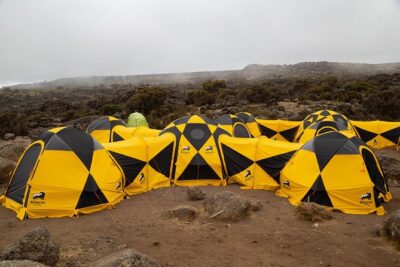
Your first night is in a three-person mountaineering tent. A sleeping mat and private toilet tent are included, which makes camp life more manageable. You should bring or rent your own sleeping bag, since that is not included.
Day 2: From rainforest to Shira 1 Camp
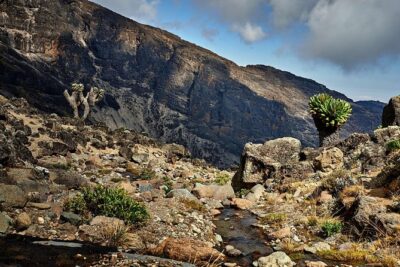
The forest gives way to a much more open setting of tall grass, heather, volcanic rock, and lichen. You climb through rolling ground, cross streams, and reach Shira Ridge before making a gentle descent to Shira 1 Camp.
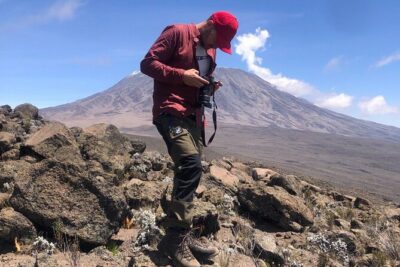
This is one of the route’s rewarding transitions. In a single day, you move from enclosed woodland into wide high-country views. Across the plateau, you get your first look at Kibo, the main summit cone of Kilimanjaro.
The first sight of Kibo can be motivating, though it also gives you a better sense of the scale ahead. You are still early in the climb, so conserve energy. The value of a guided trek here is not speed. A good guide sets a steady pace and helps you avoid burning through your reserves too soon.
Day 3: Shira Plateau and Moir Hut
Day 3 is devoted to the Shira Plateau, one of the highest plateaus on Earth. The walk toward Shira 2 Camp crosses moorland meadows and is generally gentler than the steep sections still ahead.
The route then leaves the main trail for Moir Hut, a less-used camping area at the base of the Lent Hills. Walks on the Lent Hills provide a useful acclimatization session. You gain altitude during the day, then return to a lower sleeping elevation, following the familiar mountain rule of climbing high and sleeping low.
I consider this one of the most valuable days in the program. It may feel frustrating to spend a full day without making a dramatic push toward the summit, but that slower rhythm is precisely the point. You are preparing your body for the thin air above Barafu Camp and on the summit ridge.
More Lemosho Route climbs:
- Kilimanjaro climb, Lemosho Route (8-day)
★ 5.0 · 148 reviews - Kilimanjaro climb, Lemosho Route (6-day)
★ 5.0 · 129 reviews - Kilimanjaro Lemosho Route
★ 5.0 · 71 reviews - Private Kilimanjaro Hike 7 Day Lemosho Route
★ 5.0 · 60 reviews
Day 4: Lava Tower and the Senecio Forest
The trail climbs along a ridge and turns southeast toward Lava Tower, a volcanic rock formation rising about 300 feet. You then descend to Barranco Camp through the unusual Senecio Forest, reaching an altitude of about 13,000 feet.
The clever part of this day is that you climb high and finish at roughly the same elevation where you began. Time spent near Lava Tower gives your body an important altitude test, while the descent helps you sleep lower that night.
You might feel a headache, shortness of breath, or unusual tiredness here. Tell your guide promptly rather than trying to hide symptoms. The expedition’s certified guides are there to manage pacing and safety, and the strongest praise for the team centers on careful judgment, timing, and attention to individual needs.
Day 5: Over the Barranco Wall to Karanga
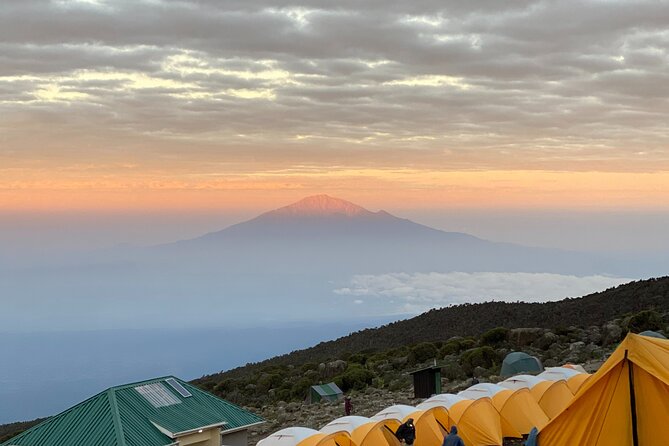
Day 5 begins by descending into a ravine at the foot of the Great Barranco Wall. The wall rises nearly 900 feet, but the climb is non-technical. You do not need mountaineering climbing skills, although the section is steep and can feel intimidating.
A narrow section, about three feet wide, gives the wall its nickname, the Kissing Wall. Climbers often press close to the rock as they pass. The practical lesson is to follow instructions, take your time, and keep your hands free where possible.
Beyond the wall, the route crosses a series of hills and valleys before dropping into Karanga Valley. One final steep climb brings you to Karanga Camp. This is a shorter day, which is welcome after the previous altitude gain and gives you time to prepare mentally for the summit sequence.
Day 6: Barafu Camp and the final preparation
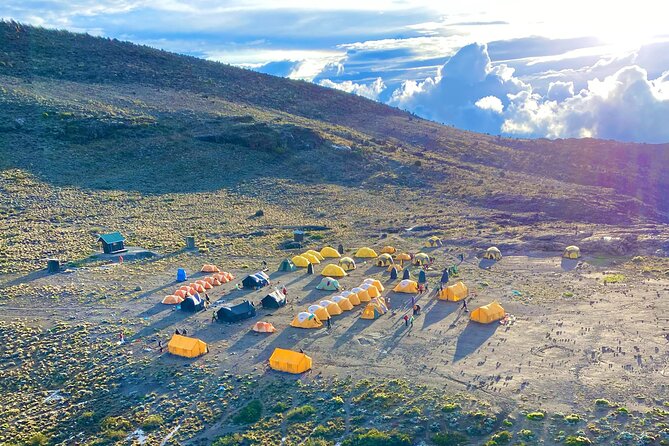
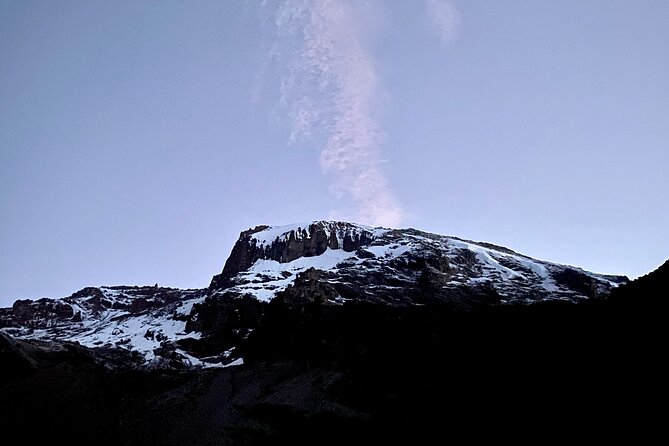
From Karanga, you reach the junction with the Mweka Trail and continue up rocky ground to Barafu Hut. At this point, you have completed the southern circuit, seeing Kibo and Mawenzi from several angles.
Barafu is your launch point for the summit. You rest there, eat an early dinner, and try to sleep before the midnight start. The two volcanic peaks, Mawenzi and Kibo, are visible from camp, a striking reminder that the hardest part is close.
This schedule is not luxurious. You will be resting at high altitude, then trying to sleep during the early evening before getting up around midnight. Keep your expectations practical. The camp’s purpose is preparation, not comfort.
Day 7: The midnight climb to Uhuru Peak
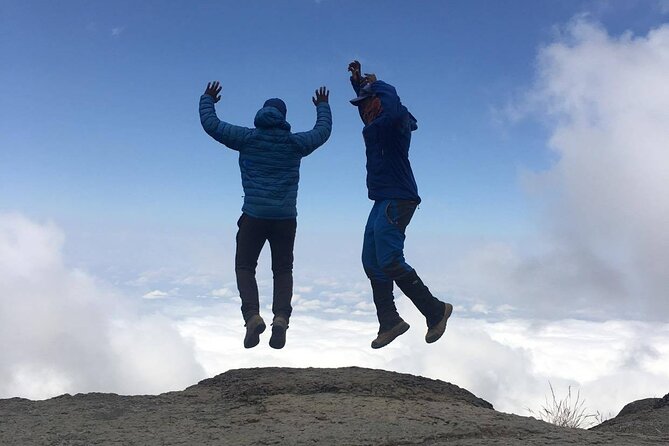
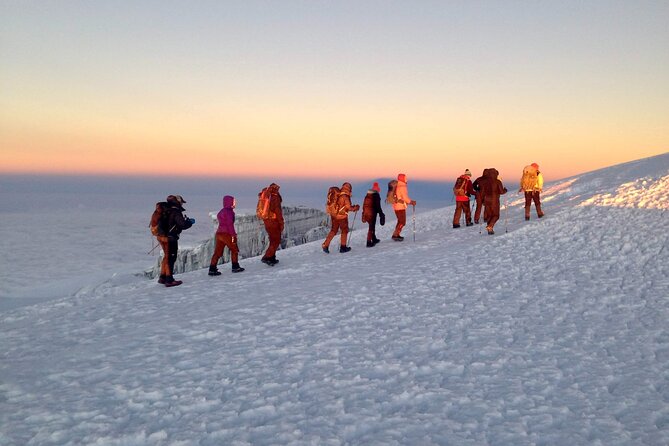
The summit attempt begins around midnight. You walk in darkness for several hours, stopping often for short breaks. The pace is deliberately controlled, and that slow rhythm is a major part of getting through the hardest section.
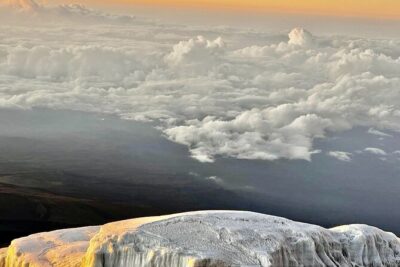
Near Stella Point, at about 18,900 feet, the sunrise over Mawenzi Peak can be extraordinary. From there, you continue to Uhuru Peak, the highest point on Kilimanjaro and in Africa.
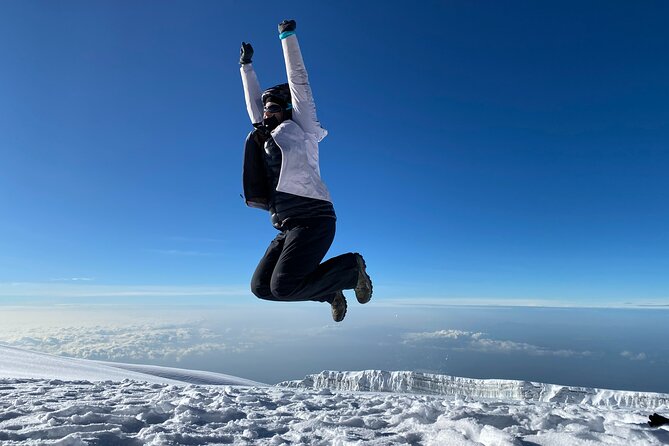
At the summit, you have time for photographs and a brief moment to take in the achievement. Do not linger too long. At this altitude, cold, exhaustion, and low oxygen make the descent just as important as the climb.
After Uhuru Peak, you begin descending. Your legs may feel shaky, and the loose volcanic ground can make the downhill journey tiring. The day combines the summit climb, time at the top, and a long descent, so it is the most demanding part of the entire eight days.
Day 8: Down to Mweka Gate and back to Moshi
The final day continues downhill to Mweka Gate. Lower sections can be wet and muddy, so shoes with good grip and clothing that can handle dirt are useful.
At the gate, a driver takes you onward to Mweka Village, where another vehicle brings you back to your hotel in Moshi. You can relax with refreshments, perhaps a Kilimanjaro beer, while waiting for summit certificates.
Two hotel nights are included, one before and one after the climb. That is a practical benefit. You have a place to organize gear before departure and somewhere to recover, shower, and sleep properly after the mountain.
What the $3,099 price really covers
At $3,099, this is not a budget trek. Still, the price includes more than the trail permit. You receive airport pickup and drop-off, hotel lodging before and after the climb, all fees and taxes, a three-person tent, sleeping mat, private toilet tent, certified guides, porters, cooks, and six breakfasts, six lunches, and six dinners.
That package removes several expenses that can otherwise appear later. You still need to budget for airfare, visa costs, travel insurance, tips for the support team, sleeping bag, rental gear, drinks, snacks, and hotel lunches and dinners.
I would pay close attention to the tipping expectation before departure. Tips are not included, but the porters, cooks, assistant guides, and lead guides are central to the experience. You should also confirm exactly what rental gear is available and what it costs, especially for cold-weather clothing and sleeping equipment.
The value is strongest if you want a fully supported climb rather than arranging each part yourself. It is less attractive if you already have local contacts, your own equipment, and experience organizing high-altitude expeditions.
The people who make camp work
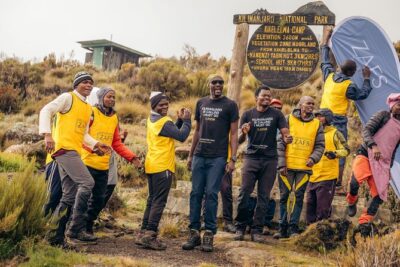
The guiding team is a major reason to consider this company. Ezekiel receives particular praise for his long industry experience, clear explanations, pacing, timing, and focus on safety. Guides named in the feedback include Ezekiel and Michael, with other groups describing assistant guides and a large porter team.
Food and camp support also receive strong praise. The setup can include a chef, waiter, lead camp porter, and numerous porters, depending on group size. That support lets you focus on walking, eating, resting, and managing your own body at altitude.
The company is also described as small, woman-owned, environmentally minded, and active in community support. Those values may matter to you, but I would still ask direct questions about porter welfare, waste practices, group staffing, and the company’s current policies before booking.
Who should choose this climb
This route suits you if you have strong physical fitness, can handle multiple long walking days, and want a scenic path with extra acclimatization time. It is also a good fit if you prefer a smaller group and want guides to manage the practical work around permits, camps, meals, and transport.
It may not suit you if you dislike cold nights, basic camping, muddy trails, steep uphill walking, or a midnight start. A high summit success rate does not remove the demands of altitude. You should have personal travel insurance and be honest about your health and fitness before departure.
The group size of up to 12 offers a useful middle ground. You get companionship and shared costs without joining a huge procession. If you want a private climb, ask about that option and any added cost.
Should you book the 8-day Lemosho climb?
I would choose this route if your priority is a scenic, carefully paced Kilimanjaro climb with strong logistical support. The extra acclimatization day, quieter opening section, experienced guides, and included hotel nights make the package easier to justify at $3,099.
Book it if you are prepared for real exertion and basic mountain living. Before paying, confirm the exact start date, airport arrangements, rental gear, tipping guidance, meal coverage, and insurance requirements. If those details fit your budget and fitness level, the 8-day Lemosho Route offers a sensible path to Uhuru Peak without rushing the mountain.
FAQ
How long is the Kilimanjaro Lemosho climb?
The experience lasts approximately eight days, beginning and ending in the Moshi area.
What time does the climb start?
The stated start time is 9:00 am. The summit attempt begins around midnight on Day 7.
How many people can join the group?
The maximum group size is 12 people.
Is airport pickup included?
Yes. Airport pickup and drop-off are included.
Are hotel nights included?
Yes. Hotel lodging is included for the night before and the night after the climb.
What meals are included?
The package includes six breakfasts, six lunches, and six dinners.
Is camping equipment provided?
A three-person mountaineering tent, sleeping mat, and private toilet tent are included.
Is a sleeping bag included?
No. Sleeping bags and other personal gear are not included. Rental gear may be available, but the supplied information does not specify the rental cost or exact items.
Can I cancel for a full refund?
Yes, if you cancel at least 24 hours before the experience start time. Cancellations made less than 24 hours before the start time are not refunded, and changes within that period are not accepted.
Just added in Moshi
- 8 days Lemosho route Climbing Mt. Kilimanjaro★ 5.0 · 13 reviews
- 9 Days 8 Nights Walking Safari★ 5.0 · 11 reviews
- 8 Days Private Safari in Serengeti Tour★ 5.0 · 6 reviews
- 8 Days Guided Private Trekking in Mount Kilimanjaro★ 5.0 · 4 reviews
- 8 Days Lemosho Route★ 5.0 · 7 reviews
- 8 Days Lemosho Route Climbing★ 5.0 · 5 reviews
- 7 Days Kilimanjaro Climbing | Hiking Tour via the Lemosho Route★ 5.0 · 9 reviews
- 8 Days Kilimanjaro Climbing Lemosho Route★ 5.0 · 6 reviews
Lemosho Route Climbs, compared.
8-Day Small-group Lemosho Kilimanjaro Summit Trekking
Read our review →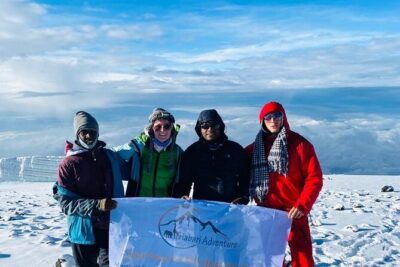
Climbing Kilimanjaro through 8 days Lemosho Route
Read our review →Browse the lists this tour appears in