
Reviewed · MACHAME ROUTE CLIMBS
Mt.kilimanjaro-machame Route
The mountain rewards patience and preparation. This six-day Machame Route trek from Moshi offers a demanding but carefully paced climb through rainforest, high-altitude camps, and the volcanic slopes leading to Uhuru Peak. I especially like the private group format, which allows the guides to adjust the pace, and the strong focus on personal guide support during the summit climb. The main concern is the schedule: reaching the summit after a night departure from Barafu Camp makes this a serious physical challenge, not a casual walking holiday.
The route also gives you more than a quick dash uphill. You pass through several distinct zones, spend time at Lava Tower to help your body adjust, and descend through a different route after reaching the top. The six-day schedule is efficient, but anyone sensitive to altitude or unused to long trekking days should consider the strain carefully.
In This Review
- Key points to know before booking
- What the six-day Machame Route is really like
- Day 1: Machame Gate to Machame Camp
- Day 2: Shira Camp and the first acclimatization hike
- Day 3: Lava Tower, 4,630 meters, then Barranco Camp
- Day 4: Barranco Wall, Karanga, and Barafu
- Day 5: The night climb to Uhuru Peak
- Day 6: Millennium Camp to Mweka Gate
- Guide support is the strongest reason to consider this trek
- Is $1,743.59 good value?
- Who should book this climb?
- Booking, cancellation, and weather notes
- FAQ
- Where does the Mt. Kilimanjaro Machame Route trek begin?
- How long does the trek take?
- What is the highest point reached?
- Which camp is used before the summit attempt?
- Is the tour private?
- Is hotel pickup available?
- What happens on the first day?
- Why does the route go to Lava Tower before Barranco Camp?
- Is a guide provided during the summit climb?
- What is the cancellation policy?
- Should you book it?
Key points to know before booking
- The summit attempt begins at night from 4,640 meters, with Uhuru Peak at 5,895 meters.
- The route includes a Lava Tower acclimatization stop, where you spend one to two hours above 4,600 meters before descending to Barranco Camp.
- A personal guide accompanies each pair of climbers during the summit push, monitoring physical and mental condition.
- You cross from rainforest to open high country, with changing weather, colder camps, and wide views of the Shira Plateau.
- The trip ends at Mweka Gate, followed by certificates and a transfer back to your hotel.
- The price is $1,743.59 per person, with pickup offered and a private group arrangement.
What the six-day Machame Route is really like
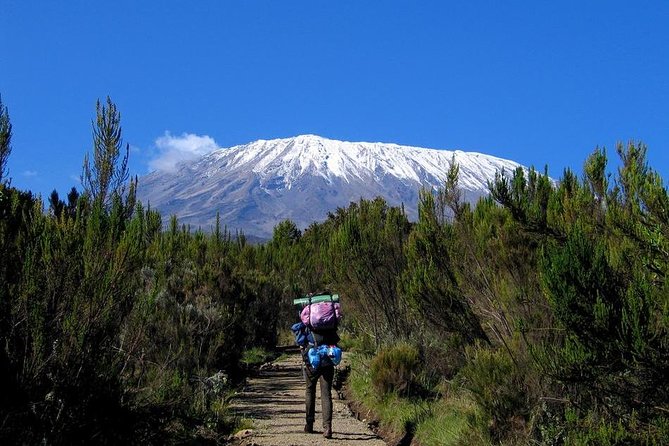
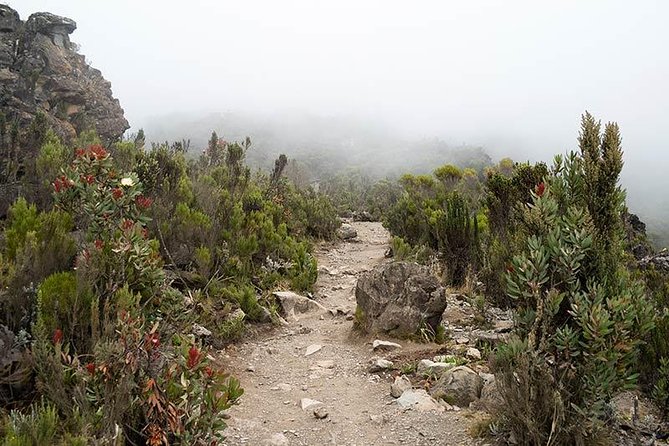
The Machame Route is often called the scenic route because it gives you changing views and a more varied approach to Kilimanjaro. Here, the path begins at Machame Gate and climbs through rainforest before reaching the Shira Plateau and the higher volcanic slopes.
The itinerary is built around altitude adjustment rather than simply covering ground. You climb high, spend time there, then descend to sleep at a lower camp. That pattern is especially clear on Day 3, when you reach Lava Tower at 4,630 meters before descending to Barranco Camp at 3,960 meters.
You should expect long days. Each scheduled day is listed at about 12 hours, though the actual walking time can vary with the group’s pace, rest stops, and weather. The trek is private, so you are not tied to a large public group, but the mountain itself can still be busy, especially around the Barranco Wall.
More Machame Route climbs:
- Kilimanjaro climb, Machame Route (7-day)
★ 5.0 · 262 reviews - Climbing Kilimanjaro – Machame Route
★ 5.0 · 170 reviews - Climbing Kilimanjaro through 7 days Machame Route
★ 5.0 · 151 reviews
Day 1: Machame Gate to Machame Camp
The day begins with hotel pickup in Moshi at 7:00 am. A guide and mountain support crew meet you for a short briefing before you drive to Machame Gate, at about 1,800 meters.
At the gate, the team handles climbing permits and registration with the search and rescue service. These formalities are part of the start of the climb, so do not expect to begin walking the moment you arrive. Once everything is completed, the route enters the rainforest.
The first day climbs to Machame Camp, at roughly 3,010 meters. The forest is one of the most appealing parts of the opening stage, but it is also the wettest section. Tropical showers are highly likely, so a raincoat should be in your daypack rather than buried in your main luggage.
I would also pack spare socks and a change of clothes where you can reach them quickly. The combination of rain, humidity, and a long first day can leave you uncomfortable if your clothing gets soaked early.
The climb itself is a strong introduction to the week. You gain substantial height on the first day, and the 12-hour schedule listed for the day should be treated as a reminder to conserve energy. Do not race ahead. A slow, steady pace matters from the first hour.
Day 2: Shira Camp and the first acclimatization hike
After breakfast, you climb from Machame Camp to Shira Camp, at approximately 3,845 meters. This day takes you out of the rainforest and onto the Shira Plateau, where the views open up for the first time.
The walking is described as physically manageable, but altitude may begin to affect you. You might notice a headache, unusual tiredness, or shortness of breath. The practical lesson is simple: walk slowly, drink as directed by your mountain team, and tell your guide when something feels wrong.
After reaching Shira Camp, you have lunch and time to rest. The day then includes an acclimatization hike toward Lava Tower, gaining another 300 meters before returning to Shira for a hot dinner.
This extra walk is valuable because it lets you reach a higher point without sleeping there. It also gives your guides a chance to see how you respond to altitude. The return to Shira Camp means you finish the day lower than your highest point, which is generally more useful for adjustment than simply climbing and sleeping higher.
The open plateau can feel very different from the forest below. Weather may change quickly, and the route is no longer protected by thick trees. Keep your warm layer, sun protection, and rain gear close by.
Day 3: Lava Tower, 4,630 meters, then Barranco Camp
Day 3 is one of the most important days on the route. You leave Shira Camp at 3,845 meters and climb toward Lava Tower, reaching about 4,630 meters.
The trail includes repeated ascents and descents. It may feel harder than the distance suggests because the air is thinner and the route reaches a high point before dropping again. Lunch is taken at Lava Tower, and the plan is to spend at least one to two hours there for altitude adjustment.
This is not a sightseeing stop to rush through. The purpose is to expose your body to a higher elevation and then sleep lower at Barranco Camp. You may feel discomfort at Lava Tower, and that should be taken seriously. The guides need to know how you are feeling.
After lunch, you descend to Barranco Camp at about 3,960 meters. The reward is the dramatic sight of Barranco Wall, a steep rock face that looks more intimidating than it is.
The next morning, you climb it. The route is described as straightforward hiking rather than technical climbing. That distinction matters. You will use your hands in places and need to watch your footing, but you do not need advanced mountaineering skills based on the information provided.
A few more options to weigh up in Moshi
- Kilimanjaro climb by Lemosho Route (7-day)
★ 5.0 · 651 reviews - Safari Serengeti And Ngorongoro
★ 5.0 · 288 reviews - Kilimanjaro Climbing Lemosho Route 8 Days.
★ 5.0 · 186 reviews - Kilimanjaro climb, Lemosho Route (8-day)
★ 5.0 · 148 reviews
Day 4: Barranco Wall, Karanga, and Barafu
Day 4 starts early. Leaving Barranco Camp sooner helps you avoid some of the crowds that gather at the wall. The climb up Barranco Wall takes about an hour, and once at the top you have time to rest and take photographs with Kibo volcano in view.
The route then becomes a series of climbs and drops toward Karanga Camp. This part can be tiring because the trail does not simply rise in a straight line. You gain height, lose some of it, and climb again.
The guides are expected to set a pace suited to the group. That is one of the most important benefits of a private trek. A good pace is not the fastest pace. It is the speed that allows you to continue eating, drinking, and walking without using up all your strength before summit night.
At Karanga Camp, you receive a warm lunch. After a rest of a couple of hours, you continue upward to Barafu Camp, at about 4,640 meters.
Barafu is the launch point for the summit attempt. After a hot dinner, the sensible plan is to rest and sleep as much as possible. That may be difficult because of the altitude and the unusual schedule, but conserving energy is more important than trying to make the evening feel normal.
Day 5: The night climb to Uhuru Peak
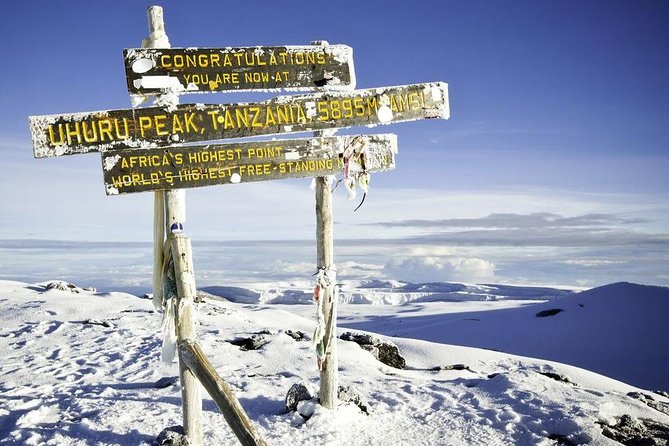
The summit attempt begins at night from Barafu Camp. You climb toward Uhuru Peak, the highest point on Kilimanjaro, at 5,895 meters.
Technically, the route is described as relatively simple. The real challenge is altitude, darkness, cold, fatigue, and the length of the effort. You should expect the hardest part to be mental as well as physical.
The arrangement of one personal guide for each pair of climbers during the ascent is a major strength. Your guide can watch your condition closely, help set a steady rhythm, and respond if you begin to struggle. The guide team is the heart of this experience, and the company’s strongest customer comments repeatedly praise the care, organization, and encouragement provided by its staff.
Several guide names connected with the company are Fred, Nancy, Qamrish, and Ayoub. Qamrish and Ayoub are specifically credited with helping a climber reach the summit, while Fred and Nancy are praised for handling both a Kilimanjaro climb and a safari. If a particular guide matters to you, ask the provider about availability before booking.
After Uhuru Peak, you may descend to the nearest glacier if you wish. This option should be considered in light of your energy and the conditions on the day. Reaching the summit is already a major effort, and there is no need to add an extra stop if your guide advises against it.
You then return to Barafu Camp for about two hours of rest before continuing to Millennium Camp, at approximately 3,820 meters. The descent is welcome because the lower elevation usually feels easier, but this is still a very long day. The listed duration is about 12 hours, and summit day should be treated as the most demanding part of the trip.
Day 6: Millennium Camp to Mweka Gate
Millennium Camp is in the rainforest, giving you a sharp change from the dry, cold upper slopes. You wake with the relief of being lower on the mountain and the satisfaction of having reached the summit.
After a warm breakfast, you descend to Mweka Gate, at about 1,650 meters. The route brings you back through the forest before the trip ends at the park exit.
The group gathers after the descent to congratulate one another. You can also share comments in the guestbook, receive commemorative certificates at the company office, and take a transfer back to your hotel.
This final day is not just paperwork and transport. After a night summit and long descent, your legs may be tired, and the return transfer gives the week a clear finish. Keep some clean clothing ready for the hotel, since the rainforest can still be wet even after the summit weather has passed.
Guide support is the strongest reason to consider this trek
The provider puts its guides at the center of the experience, and the details support that claim. The crew meets you at your hotel, briefs you before departure, sets the walking rhythm, leads acclimatization hikes, and provides one guide for every pair during the summit ascent.
The customer comments connected with this company also praise the team’s organization, friendliness, food, and ability to adjust plans. One party combined the mountain trek with a four-day safari and received help when plans changed at the last minute. Another praised the chef and the way food preferences were handled.
You should still ask clear questions before paying. Confirm what the $1,743.59 price includes, ask about the guide-to-climber ratio on ordinary days, and find out what equipment or personal supplies you must bring. The published details confirm guides, support crew, meals at several stages, park entry procedures, certificates, and hotel transfers, but they do not provide a full packing or inclusions list.
Is $1,743.59 good value?
At $1,743.59 per person, this is not a budget day tour. It covers a six-day private mountain experience with hotel pickup, a support crew, multiple camps, guide service, meals described throughout the route, a summit attempt, certificates, and a return transfer.
The price becomes more convincing if you value personal attention. The summit arrangement, with one guide assigned to each pair of climbers, is particularly important. You are paying not only for a route through the park, but also for planning, pacing, altitude monitoring, camp coordination, and help during the hardest hours.
Still, price comparisons should be made carefully. Ask what is included before comparing this trek with another six-day climb. Park fees, gear rental, tips, airport transfers, and accommodation before or after the trek are not itemized in the supplied details, so you should not assume they are included.
Who should book this climb?
I would recommend this trip to someone who wants a private Kilimanjaro attempt, can manage long hiking days, and values close guide support. It is also a good fit if you want a route with major scenery changes, from rainforest to Shira Plateau to high volcanic terrain.
You should think twice if you want a relaxed holiday or dislike early starts. The six-day schedule is compact, the summit begins at night, and altitude can affect you even when the walking itself is not technically difficult.
A moderate level of physical fitness is required. The information does not promise a gentle pace or short days, so prepare for repeated climbs, descents, cold high camps, wet forest conditions, and a very long summit day.
The experience is a private activity for your own group. That gives you more control than a large shared departure, though the mountain route can still have other climbing parties, especially near popular sections such as Barranco Wall.
Booking, cancellation, and weather notes
Pickup is offered, and the meeting time is 7:00 am. Confirmation is received at booking, and the meeting area is near public transportation.
You can cancel up to 24 hours before the local start time for a full refund. Cancellations or changes made less than 24 hours before departure are not accepted for a refund. The climb also requires suitable weather. If poor weather forces cancellation, you are offered another date or a full refund.
FAQ
Where does the Mt. Kilimanjaro Machame Route trek begin?
The experience begins with pickup from your hotel in Moshi at 7:00 am. You then travel by vehicle to Machame Gate in Kilimanjaro National Park.
How long does the trek take?
The trek lasts approximately six days. Each scheduled day is listed at about 12 hours, although actual walking time can vary.
What is the highest point reached?
The summit is Uhuru Peak, which is 5,895 meters above sea level.
Which camp is used before the summit attempt?
The summit attempt begins from Barafu Camp, located at approximately 4,640 meters.
Is the tour private?
Yes. This is a private activity, and only your own group participates.
Is hotel pickup available?
Yes. Pickup is offered, and the guide and mountain support crew meet you at your hotel in the morning.
What happens on the first day?
You complete registration and permit formalities at Machame Gate, then trek through rainforest to Machame Camp at about 3,010 meters.
Why does the route go to Lava Tower before Barranco Camp?
The route reaches Lava Tower at about 4,630 meters and spends one to two hours there for acclimatization before descending to Barranco Camp at approximately 3,960 meters.
Is a guide provided during the summit climb?
Yes. Each pair of climbers receives a personal guide for the summit ascent to monitor physical and mental condition.
What is the cancellation policy?
You can cancel at least 24 hours before the local start time for a full refund. If poor weather cancels the experience, you are offered another date or a full refund.
Should you book it?
Book this Machame Route trek if you want a serious six-day Kilimanjaro climb with private-group attention and strong guide involvement. The carefully placed Lava Tower stop, the personal summit guide, and the different descent route add real value.
Before booking, confirm every price inclusion and make an honest assessment of your fitness. If you are prepared for long days, wet rainforest, high camps, and a night climb, the plan offers a clear and well-supported path to Uhuru Peak.
Just added in Moshi
- Zanzibar: Stone Town tour and Nakupenda beach with Lunch★ 5.0 · 1 review
- day trip lake manyara★ 5.0 · 2 reviews
- Mt Kilimanjaro 6 days Marangu route hike★ 5.0 · 3 reviews
- machame route★ 5.0 · 16 reviews
- Private Cycle to Kilimanjaro Bike Park Safari★ 5.0 · 6 reviews
- West Kilimanjaro cycling Adventures★ 4.5 · 8 reviews
- Wildlife Extravaganza: Manyara, Tarangire & Ngorongoro in 3 Days★ 5.0 · 3 reviews
- 3 Days Private E-Bike Tour in West Kilimanjaro★ 5.0 · 3 reviews
Machame Route Climbs, compared.

Climbing Kilimanjaro through 7 days Machame Route
Read our review →
7-Day Machame Kilimanjaro Summit Tour from Arusha
Read our review →
7 Days Kilimanjaro via Machame route affordable price
Read our review →
#1. Best Kilimanjaro Day hike Tour-Machame Route-ISMANI
Read our review →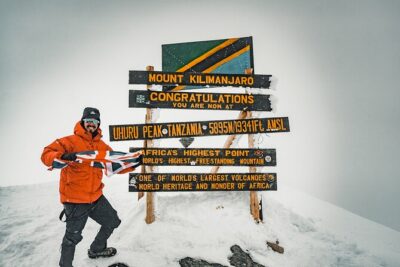
The Best of Machame Route in 6 Days: Your World’s Summit Guide
Read our review →Browse the lists this tour appears in