
Reviewed · MARANGU ROUTE CLIMBS
Mt.kilimanjaro-marangu Route
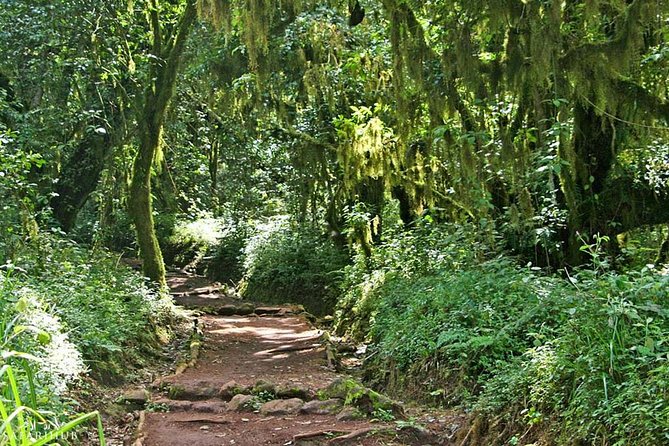
The mountain begins in the trees. This five-day private climb from Moshi follows Kilimanjaro’s Marangu Route from Marangu Gate to Uhuru Peak, with a support crew, hotel pickup, mountain camps, and a carefully timed summit attempt. I like the experienced guide support, especially the plan for one guide to accompany each pair of climbers during the summit push. I also like the built-in acclimatization hike on Day 2, a small but important feature for coping with the altitude.
The main drawback is the tight schedule. You reach Kibo Hut at 4,700 meters on Day 3, then leave during the night for Uhuru Peak at 5,895 meters before descending a long way the same day. That is a serious physical test, even if the walking itself is described as moderate.
The price is $1,743.59 per person, and the tour is private, so only your group participates. The strongest practical impression comes from the guide service. Angel from Kili Guides handled questions promptly and helped organize a smooth trip for one past customer, which is exactly the kind of communication you want before taking on a high-altitude climb.
In This Review
- Key points about this Kilimanjaro climb
- What the Marangu Route means for you
- Day 1: Marangu Gate to Mandara Hut at 2,700 meters
- Day 2: Mandara Hut to Horombo Hut at 3,720 meters
- Day 3: The high camp at Kibo Hut, 4,700 meters
- Day 4: Uhuru Peak at 5,895 meters
- Day 5: Horombo Hut to Marangu Gate
- Guide support is the real value
- Is $1,743.59 a fair price?
- Who should choose this five-day climb?
- What to pack and clarify before departure
- Should you book the Marangu Route?
- FAQ
- How long is the Mt. Kilimanjaro Marangu Route experience?
- Where does the climb begin?
- Does the tour include hotel pickup?
- Is this a private tour?
- What is the highest point reached?
- Is an acclimatization hike included?
- What fitness level is required?
- Can I cancel for a full refund?
Key points about this Kilimanjaro climb
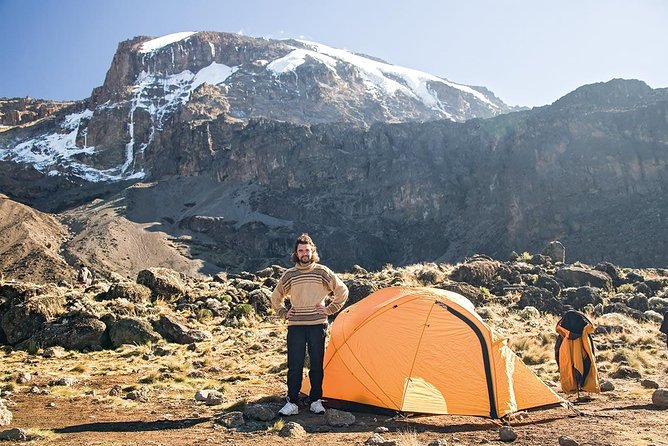
- Five days from Marangu Gate to Uhuru Peak: You climb through the rainforest, high moorland, and volcanic terrain before reaching Kilimanjaro’s highest point.
- Built-in acclimatization on Day 2: You hike 200 meters higher toward Kibo Hut, then return to Horombo Hut to sleep at a lower altitude.
- One guide for each pair during the summit attempt: This gives the most demanding section a more personal level of monitoring.
- Private departure with hotel pickup: Your group does not share the climb with other booked parties, and pickup is offered from your hotel.
- Night summit start from 4,700 meters: The final climb begins from Kibo Hut and leads to Uhuru Peak at 5,895 meters.
- The price includes more than a simple walk: Mountain staff, permits, registration, meals, camps, transport, and summit support are part of the overall arrangement, though you should confirm the exact inclusions before booking.
What the Marangu Route means for you
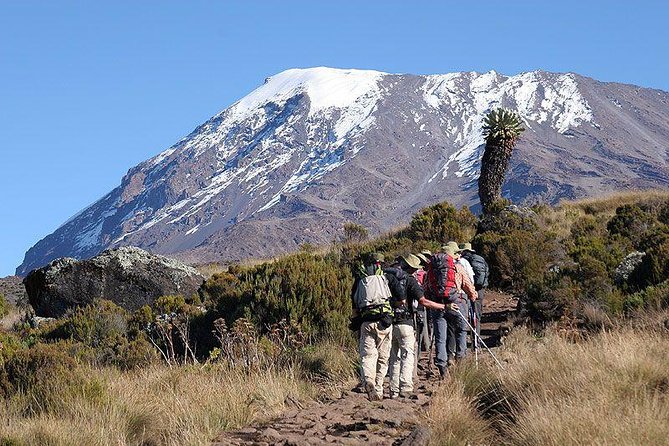
The Marangu Route is a direct way up Kilimanjaro from the eastern side of the mountain. This trip begins at Marangu Gate, 1,860 meters above sea level, and finishes at Uhuru Peak, the summit at 5,895 meters.
You gain almost 4,000 meters in elevation over a short period. That number matters more than the word moderate in the daily descriptions. The trail may not require technical climbing, but your body still has to deal with thinner air, cold, tired legs, and a very early summit start.
I like the route’s simple rhythm. You climb during the day, eat at camp, rest, and rise early for the next stage. The Day 2 acclimatization walk is especially useful because it lets you climb higher without sleeping at that higher altitude. You gain 200 meters toward Kibo Hut and then return to Horombo Hut for the night.
This is a private tour, which gives your group more control over pace and communication. It does not remove the physical challenge, but it can make it easier to tell your guide when you need to slow down or stop.
More Marangu Route climbs:
- Kilimanjaro climb, Marangu route (6-day)
★ 5.0 · 72 reviews - Climbing Kilimanjaro – Marangu Route
★ 5.0 · 65 reviews - Kilimanjaro Climbing 5 days Marangu route
★ 5.0 · 22 reviews
Day 1: Marangu Gate to Mandara Hut at 2,700 meters
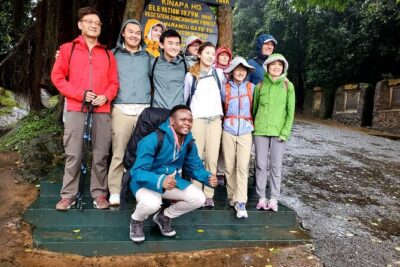
Your guide and mountain support crew meet you at your hotel in the morning. After a short briefing, you drive to Marangu Gate, the eastern entrance to Kilimanjaro National Park.
There are several practical steps before walking begins. The group obtains climbing permits, completes registration, and registers with the search and rescue service. This can feel like paperwork when you are eager to start, but it is a necessary part of entering the park and beginning a properly organized climb.
The first walking section leads through rainforest to Mandara Hut at 2,700 meters. This is a good opening day because the forest gives you shade and a gradual introduction to the mountain. It also brings one of the route’s predictable nuisances: rain.
Tropical showers are highly probable in the rainforest. Pack your raincoat where you can reach it quickly, not buried at the bottom of your bag. Spare clothing matters too, since damp socks or wet layers can make the rest of the day unpleasant.
The mountain support crew handles camp needs and prepares lunch after you arrive. The wording describes both huts and tents, so I would ask the operator exactly what sleeping arrangements are planned for your departure. That small clarification is worth making before you pay.
Day 1 is listed as approximately 12 hours, although that figure appears to describe the full day including transport, registration, trekking, and camp routines rather than 12 hours of walking. Still, you should expect a full day on your feet.
Day 2: Mandara Hut to Horombo Hut at 3,720 meters
After breakfast, you leave Mandara Hut for Horombo Hut. The route gains a substantial amount of altitude, rising from 2,700 meters to 3,720 meters.
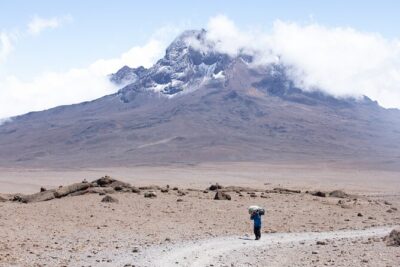
The major reward arrives at camp: views of both Kibo and Mawenzi, two of Kilimanjaro’s volcanic peaks. Kibo is the broad volcanic summit that holds Uhuru Peak, while Mawenzi gives the mountain a more dramatic two-peak profile. Seeing both from Horombo makes this more than a simple overnight stop.
Several hours after lunch, you take an acclimatization hike toward Kibo Hut. The climb adds 200 meters, then you return to Horombo Hut for dinner and sleep.
This up-and-down pattern is one of the best parts of the schedule. You make your body work at a higher altitude, but you do not spend the night there yet. I would take this hike seriously, even if you feel good. It is not a sightseeing stroll. Keep a steady pace, drink water, and save your energy for the days ahead.
The elevation gain makes Day 2 harder than the first day. Your legs may still feel fresh, but altitude can affect people in different ways. The private format should make it easier to tell the guide how you are feeling without worrying about holding up a large group.
Day 3: The high camp at Kibo Hut, 4,700 meters
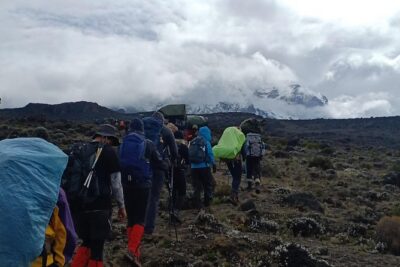
Day 3 takes you from Horombo Hut to Kibo Hut at 4,700 meters. The walking is described as not very difficult from a technical point of view, but your pace becomes crucial.
The instruction to walk slowly is not decorative advice. You need to preserve strength for the summit night. A fast start can feel harmless at lower altitude, then become a problem when the air gets thinner and the route becomes steeper.
After reaching Kibo Hut, lunch is served. You are then encouraged to sleep as much as possible, avoid strenuous activity, and drink plenty of water.
This is a quiet, disciplined afternoon. Do not treat it as spare time for extra walking or unnecessary activity. Your main job is to eat, rest, organize your summit clothing, and prepare for a night departure.
Kibo Hut is the highest camp on the route before the summit. At 4,700 meters, many people will notice the altitude even while resting. The schedule gives you limited time there, which is efficient, but it also leaves little room for a slow adjustment. That is the central weakness of this five-day version compared with a longer climb.
You should ask your guide before the trip how the sleeping area, meals, and personal gear will be arranged at Kibo Hut. The supplied information confirms lunch and rest time, but it does not give more detail about accommodation at this camp.
A few more options to weigh up in Moshi
- Kilimanjaro climb by Lemosho Route (7-day)
★ 5.0 · 651 reviews - Safari Serengeti And Ngorongoro
★ 5.0 · 288 reviews - Kilimanjaro climb, Machame Route (7-day)
★ 5.0 · 262 reviews - Kilimanjaro Climbing Lemosho Route 8 Days.
★ 5.0 · 186 reviews
Day 4: Uhuru Peak at 5,895 meters
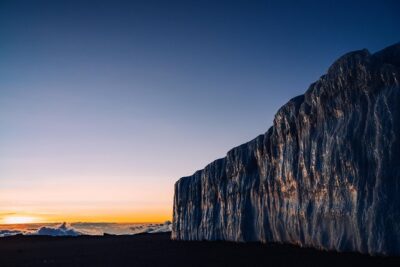
The summit attempt begins at night from Kibo Hut. You climb toward Uhuru Peak, the highest point on Kilimanjaro, at 5,895 meters.
The physical description calls the climb moderate, but altitude is the serious issue. At this height, a route can be manageable in theory and still feel extremely hard in practice. Cold, darkness, tiredness, and thin air all arrive together.
The guide arrangement is reassuring. Each pair of climbers is accompanied by its own guide during the summit climb. The guide monitors your stamina and mental resolve, giving the group close support during the most important part of the trip.
I particularly like this detail because the summit attempt is not the place for vague supervision. You want someone watching your pace and condition, not simply leading from far ahead. A private tour can also make this section feel more personal and less like a march.
After reaching Uhuru Peak, you may descend to the nearest glacier if you wish. This is optional, and the information does not give a time estimate, so ask your guide whether conditions and energy levels make it sensible on your day.
The descent first returns to Kibo Camp. After a two-hour rest, you continue down to Horombo Hut at 3,720 meters. This is a very long day. Reaching the summit is only part of the work, and the descent can be tiring on already exhausted legs.
Do not plan anything important for the evening. The best use of your time is food, hydration, rest, and following the guide’s instructions.
Day 5: Horombo Hut to Marangu Gate
After a warm breakfast, you descend to Marangu Gate at 1,860 meters. The lower altitude should feel welcome after the summit and high camps.
At the gate, the group gathers to congratulate one another. You can also write in the guestbook, receive commemorative certificates at the operator’s office, and transfer back to your hotel.
This final day gives the trip a proper finish rather than ending abruptly on the trail. The certificate is a small keepsake, but after five demanding days, it will probably feel well earned.
The descent also gives you time to think about the mountain in reverse. You have moved from rainforest to high volcanic ground and back again in less than a week. The drive to the hotel completes the loop and removes the need to arrange your own return from the park.
Guide support is the real value
The tour description puts its strongest emphasis on guides, and the available customer feedback supports that focus. Angel from Kili Guides was praised for prompt replies to many questions and for putting together a well-organized trip at a good value.
That kind of help matters before you arrive. A Kilimanjaro climb raises practical questions about pace, clothing, fitness, airport or hotel arrangements, camp routines, and summit timing. Fast, clear answers reduce stress before you even reach Moshi.
The guide role becomes even more important on Day 4. A guide is assigned to each pair during the summit attempt, with attention to stamina and mental condition. This is not a guarantee that you will reach the top, but it is a meaningful level of support for a route where altitude is the main threat to success.
The tour has only one published rating, so I would not treat the perfect score as a large statistical verdict. Still, the specific praise for communication and organization is useful. Those are the qualities I would value most when comparing operators.
Is $1,743.59 a fair price?
At $1,743.59 per person, this is not a budget day trip. It is a five-day private mountain expedition with transport, park entry arrangements, guides, support staff, meals, camps, and a summit attempt.
The price makes more sense when you consider what you are buying beyond trail access. The operator handles the vehicle transfer from your hotel, permits, park registration, support crew, meals, summit guidance, the return transfer, and the final certificates.
The listing does not provide a full itemized inclusion list, so you should confirm what is covered before booking. Ask about accommodation before and after the climb, equipment, tips, any park or rescue charges, and exactly how the hut and tent arrangements work.
For me, the private format and close guide support are the strongest reasons to consider the cost. If you want the lowest possible price and are happy to join a large group, a private five-day trip may not be your cheapest option. If you value direct communication and a small group, the price is easier to justify.
Who should choose this five-day climb?
This trip suits you if you have moderate physical fitness, can manage long walking days, and understand that high altitude is the central challenge. You do not need a technical climbing background based on the information provided, but you do need to take the summit schedule seriously.
It is a good fit for friends or a small private group who want the flexibility of traveling together. The customer feedback came from two friends completing the Marangu Route as their first climb, which suggests the experience can suit first-time Kilimanjaro climbers when the organization and support are strong.
It is less suitable if you want a relaxed mountain holiday. The five-day schedule moves quickly, and Day 4 combines the summit attempt with a major descent. If you prefer more time for acclimatization, ask whether a longer version of the route is available before booking.
What to pack and clarify before departure
Rain protection is essential for the rainforest section. Bring a raincoat and spare clothes, since tropical showers are highly probable on Day 1.
You should also prepare for a night summit departure, high altitude at Kibo Hut, and a long descent after Uhuru Peak. The supplied information specifically advises warm layers, rest, and plenty of water in the high camp, so make those priorities rather than afterthoughts.
Before you confirm the booking, ask the operator:
- What sleeping arrangements are provided at each camp?
- What equipment is included?
- What is covered in the $1,743.59 price?
- Where exactly is hotel pickup offered?
- How does the operator handle a change caused by poor weather?
Confirmation is provided when you book, and mobile tickets are offered. The tour is near public transportation, although pickup is also available. Free cancellation applies when you cancel at least 24 hours before the local start time. A cancellation within 24 hours is not refunded, and poor weather may lead to a new date or a full refund.
Should you book the Marangu Route?
I would consider booking this trip if you want a private five-day climb with strong guide involvement and a clear summit plan. The best features are the Day 2 acclimatization hike, the one-guide-per-pair arrangement during the summit attempt, hotel pickup, and the support crew that handles camp needs.
I would pause if you are uncertain about the fast schedule or want a more gradual altitude plan. The jump to Kibo Hut, the night climb to 5,895 meters, and the same-day descent to Horombo make this a demanding itinerary.
For a first Kilimanjaro climb, prompt communication from Angel and the organized support described here are meaningful advantages. Just confirm the inclusions and sleeping arrangements, prepare seriously for rain and altitude, and choose this route because you are ready for a hard mountain week, not because the daily walking sounds moderate.
FAQ
How long is the Mt. Kilimanjaro Marangu Route experience?
The experience lasts approximately five days.
Where does the climb begin?
The climb begins at Marangu Gate, the eastern entrance to Kilimanjaro National Park, at 1,860 meters.
Does the tour include hotel pickup?
Yes. A guide and mountain support crew are scheduled to meet you at your hotel in the morning.
Is this a private tour?
Yes. Only your group participates in the activity.
What is the highest point reached?
The summit is Uhuru Peak at 5,895 meters.
Is an acclimatization hike included?
Yes. On Day 2, you hike 200 meters higher toward Kibo Hut before returning to Horombo Hut.
What fitness level is required?
The tour is intended for people with a moderate level of physical fitness.
Can I cancel for a full refund?
You can cancel for a full refund if you do so at least 24 hours before the experience start time. Cancellations made less than 24 hours in advance are not refunded.
Just added in Moshi
- Zanzibar: Stone Town tour and Nakupenda beach with Lunch★ 5.0 · 1 review
- day trip lake manyara★ 5.0 · 2 reviews
- Mt Kilimanjaro 6 days Marangu route hike★ 5.0 · 3 reviews
- machame route★ 5.0 · 16 reviews
- Private Cycle to Kilimanjaro Bike Park Safari★ 5.0 · 6 reviews
- West Kilimanjaro cycling Adventures★ 4.5 · 8 reviews
- Wildlife Extravaganza: Manyara, Tarangire & Ngorongoro in 3 Days★ 5.0 · 3 reviews
- 3 Days Private E-Bike Tour in West Kilimanjaro★ 5.0 · 3 reviews
Marangu Route Climbs, compared.
Private Full Day Hiking Experience to Marangu Route
Read our review →
From Arusha/Moshi: Kilimanjaro Hike Marangu Route Day Trip
Read our review →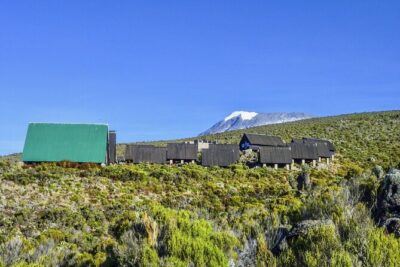
Mount Kilimanjaro Day Hike Through Marangu Route to Mandara Hut
Read our review →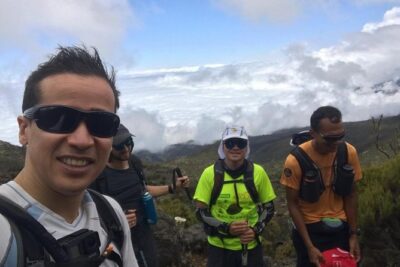
Best Kilimanjaro Adventures 6 Days Marangu Route Experience
Read our review →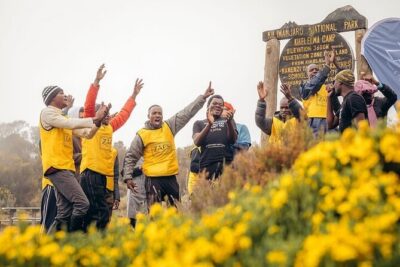
Kilimanjaro Private Climbing in 6 Days Marangu Route
Read our review →Browse the lists this tour appears in