
Reviewed · KILIMANJARO CLIMBS
Mt Kilimanjaro Trek, 6 Days – Umbwe Route
Few mountain routes are this direct. The six-day Umbwe Route is Kilimanjaro’s steepest and least-used approach, taking you from the forest to the summit with little time to adjust to altitude. I like the quiet trails and the strong support package, which includes airport transfers, hotel nights, a guide team, porters, a cook, camping gear, meals, and emergency oxygen. The trade-off is serious: this route is physically demanding, gains height quickly, and gives you less time to acclimatize than longer routes.
I also like the careful finish, with the summit descent using Mweka and a vehicle waiting at Mweka Village. Wence, the owner, has tailored arrangements to individual preferences, and the crew has earned praise for good care, strong organization, and memorable meals. Still, do not book this because it is cheap or easy. At $2,260 per person, it is a major purchase, and the six-day schedule suits fit, experienced high-altitude hikers far better than first-time trekkers.
In This Review
- Four things to know before choosing Umbwe
- Why Umbwe is the toughest six-day choice
- Day one: rainforest from Umbwe Gate to 2,850 meters
- Day two: leaving the forest for Barranco Camp
- Day three: the Barranco Wall and Karanga Valley
- Day four: Barafu Camp and preparation for the summit
- Day five: Stella Point, Uhuru Peak, and a huge descent
- Day six: Mweka Trail and the return to Moshi
- What the $2,260 price really covers
- How the support team shapes the experience
- Who should book this route
- Should you book the six-day Umbwe trek?
- FAQ
- How long is the Mt Kilimanjaro Umbwe Route trek?
- How much does the six-day Umbwe trek cost?
- Where does the trek begin?
- Is pickup included?
- What accommodation is included?
- Are meals included?
- Is camping equipment provided?
- What is not included?
- How fit do I need to be?
Four things to know before choosing Umbwe
- Umbwe climbs steeply from the first day: You gain from 1,660 meters to 2,850 meters on day one, then reach 4,000 meters on day two.
- The trail is quiet for a reason: Umbwe is the least-used route on Kilimanjaro, making it a good choice if solitude matters more than an easy acclimatization schedule.
- The summit day is extremely long: Day five includes a midnight to 2 a.m. start, a 5-kilometer ascent, the summit, and a 13-kilometer descent.
- The route uses two different descent areas: You climb through Umbwe and descend through Mweka, ending at 1,680 meters.
- The package includes more than the mountain climb: Airport transfers, two hotel nights, meals, a full mountain crew, tents, mattresses, and emergency equipment are included.
- Seven days is the wiser option if available: Six days is the minimum stated for Umbwe, while seven days is recommended because altitude adjustment is the central challenge.
Why Umbwe is the toughest six-day choice
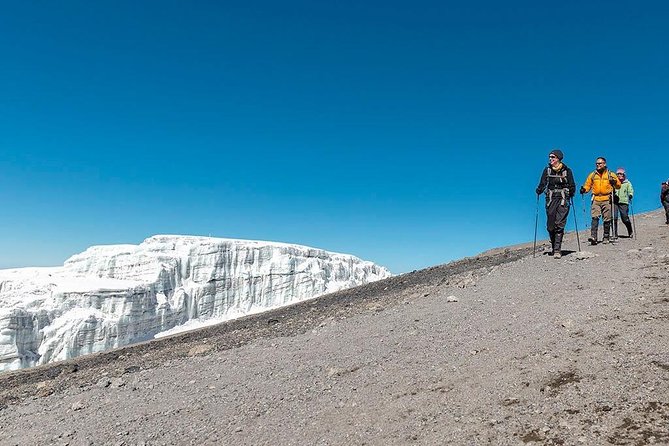
Kilimanjaro has several routes, and Umbwe is not the gentle introduction. It follows a steep, mostly direct line upward. You do not get much time on lower ground before sleeping at higher elevations, so your body must cope with altitude while you are still handling hard climbs.
That profile explains the route’s low success rate. The difficulty is not only the steepness under your boots. It is the speed of the ascent, the short schedule, and the pressure of summit day after several demanding days.
The reward is privacy. Umbwe is the least crowded route on the mountain, and that can change the feel of the walk. You get a more secluded outing rather than a busy trail procession. The scenery is still impressive, but it is less varied than on Machame, Lemosho, or Shira because the route up and the return route are relatively close.
I would choose Umbwe only if you are confident on long, steep slopes and have previous experience at altitude. A strong general fitness level is required, but fitness alone does not guarantee that your body will adjust well to high elevation.
More Kilimanjaro climbs:
- Kilimanjaro climb by Lemosho Route (7-day)
★ 5.0 · 651 reviews - Kilimanjaro climb, Machame Route (7-day)
★ 5.0 · 262 reviews - Kilimanjaro Climbing Lemosho Route 8 Days.
★ 5.0 · 186 reviews
Day one: rainforest from Umbwe Gate to 2,850 meters
The morning begins with a roughly one-hour drive from Moshi to Umbwe Gate. The walking distance is 11 kilometers, or about 7 miles, with five to six hours on foot. You start at 1,660 meters and finish at 2,850 meters.
The first section runs through rainforest. This is a pleasant opening in terms of setting, but do not mistake the trees for an easy warm-up. Umbwe starts climbing right away, and the steady slope sets the pattern for the rest of the route.
A packed lunch is provided on the trail. The practical detail matters here because you spend most of the day moving upward, not stopping at a restaurant or lodge. Pace yourself from the start. The goal is not to reach camp first. It is to arrive with enough energy for the days ahead.
Your support crew includes a qualified mountain guide, assistant guides, porters, and a cook. Their work is a central part of the package. Porters handle the camping equipment and supplies, while the cook prepares the included meals. The tour also provides fresh drinking water and warm water for washing each day.
Day two: leaving the forest for Barranco Camp
Day two covers only 6 kilometers, or 4 miles, but the short distance does not make it easy. You climb from 2,850 meters to 4,000 meters in roughly four to five hours.
After breakfast, the forest gives way to open moorland. The change in surroundings helps you see the scale of the climb, but it also means less cover and a more exposed-feeling route. The destination is Barranco Camp, one of the key overnight points before the summit push.
This is the day that best illustrates Umbwe’s drawback. You gain about 1,150 meters in one day and reach 4,000 meters early in the trip. That is a demanding ascent profile for anyone, including fit hikers.
At camp, you eat and rest in the supplied camping setup. Tents, camp chairs, tables, and sleeping mattresses are included. The package lists breakfast, lunch, and dinner for the mountain portion, with five breakfasts, six lunches, and five dinners provided across the trip.
Day three: the Barranco Wall and Karanga Valley
Day three is shorter again, at 5 kilometers, or 3 miles, and takes about three to four hours. The elevation change looks modest, from 4,000 meters to 4,050 meters, but the route is not flat or effortless.
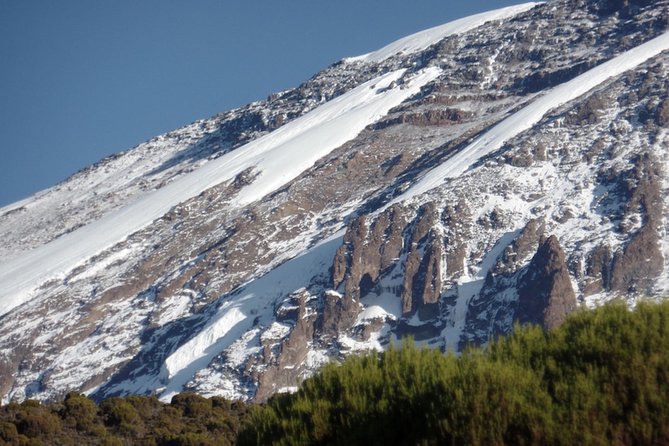
You leave Barranco Camp and climb the steep Barranco Wall. This is one of the route’s defining sections. The experience is more about negotiating a steep ridge than simply walking along a gradual path. After the wall, you continue toward Karanga Valley and reach the junction with the Mweka Trail.
That junction is important because it connects the route to the trail used for the descent. You are now on the South Circuit, which provides views of the summit from several angles. The mountain begins to feel less like a single wall ahead of you and more like a high-altitude environment that changes as you move around it.
The short walking time can give you a useful recovery period, but do not assume the day is a rest day. The Barranco Wall still requires focus, and altitude remains a constant concern.
More treks in Moshi:
- Private Kilimanjaro Hike 7 Day Lemosho Route
★ 5.0 · 60 reviews - Best Kilimanjaro hiking day trip tour with Kilinge Adventures
★ 4.5 · 54 reviews - #1. Best Kilimanjaro Day hike Tour-Machame Route-ISMANI
★ 4.2 · 47 reviews - Best Kilimanjaro Adventure 7 days Machame route Trekking
★ 5.0 · 42 reviews
Day four: Barafu Camp and preparation for the summit
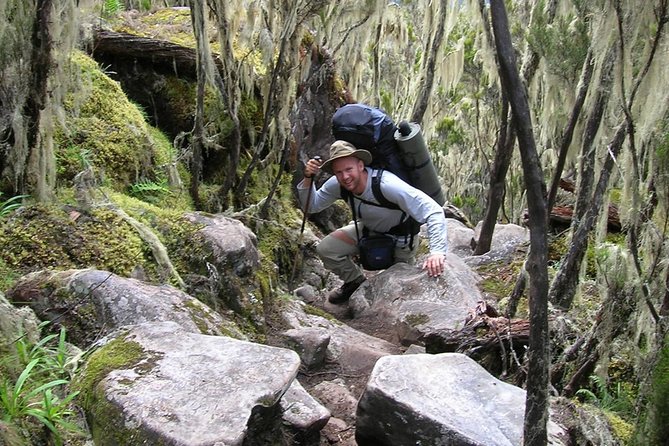
The fourth day takes you from 4,050 meters to Barafu Camp at 4,700 meters. The distance is 4 kilometers, or 2 miles, with about three to four hours of hiking.
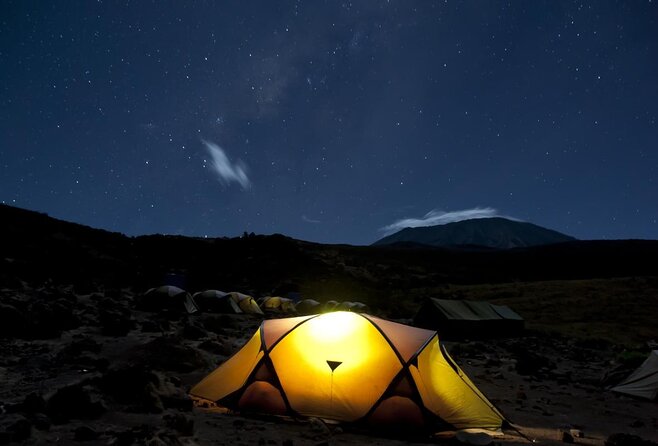
Barafu is the final camp before the summit attempt. You arrive, make camp, eat dinner, rest, and prepare for the hardest part of the climb. Because the summit start comes around midnight to 2 a.m., this afternoon and evening are not ordinary camp time. You need to organize your clothes, water, snacks, and personal gear before trying to sleep.
The route’s South Circuit views continue to offer different perspectives of the summit. That is one of the stronger scenic features of this six-day plan. The approach is direct, but you are not looking at the same angle every day.
The altitude at Barafu also makes this a serious night. At 4,700 meters, you may find that rest is difficult. The mountain crew is there to support the climb, but emergency oxygen and the first-aid kit are intended for emergencies only. They are not a substitute for acclimatization or a way to push through unsafe conditions.
Day five: Stella Point, Uhuru Peak, and a huge descent
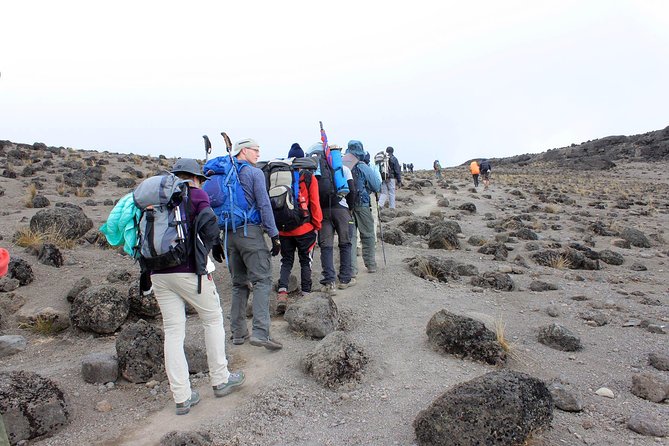
Day five is the physical and mental center of the whole experience. You start between midnight and 2 a.m., climb from 4,700 meters to the 5,895-meter summit, then descend to 3,090 meters. The stated walking time is about 14 hours.
The upward distance is 5 kilometers, or 3 miles. The descent adds another 13 kilometers, or 8 miles. That makes this an exceptionally long day, especially after four days of steep walking and nights at altitude.
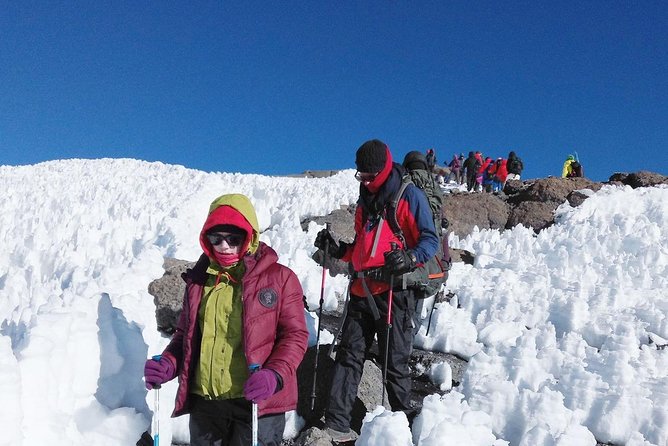
The climb heads northwest between the Rebmann and Ratzel glaciers, then moves through heavy scree toward Stella Point on the crater rim. Scree can make each step feel loose and inefficient. You may take two steps forward and feel as though one slides back. This is where patience matters more than speed.
At Stella Point, you get a short rest and, if timing and weather cooperate, a sunrise over the mountain. Faster hikers may see sunrise from the summit itself. From Stella Point, the final hour to Uhuru Peak can include snow.
The summit is 5,895 meters, the highest point on Kilimanjaro. Reaching it is a major achievement, but the day is only partly finished. After time at the top, you descend to 3,090 meters. That lower sleeping elevation is helpful, yet your legs still have a long way to go.
I would pay close attention to the start time and the full day length when deciding if Umbwe suits you. The summit itself is not the only challenge. You must also descend 13 kilometers after reaching the top.
Day six: Mweka Trail and the return to Moshi
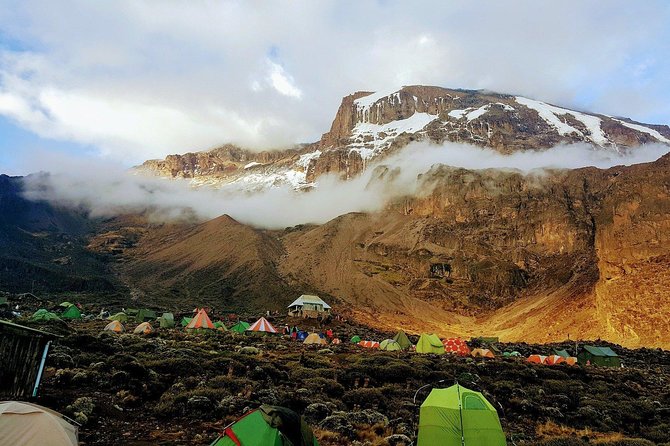
The final day takes you from 3,090 meters down to the Mweka Park Gate at 1,680 meters. The walk covers 10 kilometers, or 6 miles, and takes roughly three to four hours.
At the gate, you receive your summit certificates. This gives the finish a clear sense of occasion before you leave the mountain. From the gate, you continue for about another hour to Mweka Village, where a vehicle meets you for the approximately 30-minute drive back to your Moshi hotel.
The lower trail can be wet and muddy. Gaiters and trekking poles are useful here, even if you did not need them higher up. The clothing advice is simple: shorts and a T-shirt may be enough at the lower elevation, but keep rain gear and warmer clothing handy because conditions can change during the transition.
The Mweka finish is practical. Instead of retracing the steep Umbwe approach, you descend on a separate route and end near vehicle access. That makes the final transfer far easier on tired legs.
What the $2,260 price really covers
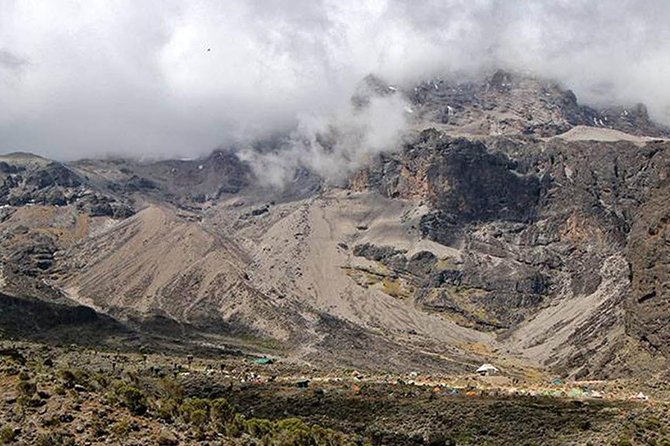
At $2,260 per person, this is not a low-cost mountain walk. It is also not just a permit and a guide. The price includes all fees and taxes, airport transfers from Kilimanjaro Airport to Moshi and back, and a hotel night before and after the climb.
Those hotel nights include dinner and breakfast. That is useful because it removes two major pieces of planning from the days around the trek. You also receive camping equipment, tents, camp furniture, sleeping mattresses, fresh drinking water, warm washing water, and all listed mountain meals.
The crew package is especially important. A qualified guide, assistant guides, porters, and a cook are included, with salaries set according to Kilimanjaro National Park guidelines. Good staffing affects safety, pacing, food, camp work, and the general strain of the trip.
The operator also provides emergency oxygen and a basic first-aid kit. Both are for emergencies only. You still need personal medicine, snacks, water-purifying tablets, and appropriate clothing and equipment.
The price does not include flights, visas, health insurance, travel insurance, personal gear, or personal items. A portable toilet is optional but highly recommended. Some trekking gear can be rented from the operator’s equipment store in Tanzania, but you should confirm availability before relying on rental equipment.
Based on the package, I see fair value if you need airport transfers, hotels, meals, crew, and camping equipment arranged together. The price is harder to justify if you already have your own logistics and gear. The included services are substantial, but the route’s difficulty means you should not think of a higher price as buying a better chance at the summit.
How the support team shapes the experience
The strongest praise centers on organization and care. The owner, Wence, has adjusted arrangements to suit personal preferences, and the crew has been described as supportive from airport pickup through the post-climb hotel stay.
Food is another bright spot. The cook received specific praise for special evening meals, which matters after long days when dinner becomes one of the few comforts you can count on. The support team also handles the practical work of tents, water, camp furniture, and meals.
Airport pickup and drop-off are free within the package. That is a useful benefit after an international flight and after a 14-hour summit day. You do not have to arrange your own transfer from Kilimanjaro Airport to Moshi or worry about finding transport from Mweka Village.
The tour is private, so only your group participates. That can make pacing and communication more personal than on a large shared departure. It does not remove the physical demands, but it may make the organization feel more focused on your group.
Who should book this route
I would recommend Umbwe to a fit hiker who wants a secluded route and understands the risks of rapid altitude gain. It is also better suited to someone with previous high-altitude experience and confidence on consistently steep slopes.
I would not choose it as a casual first mountain trek. The six-day schedule is the minimum, not the comfortable option. If you can arrange seven days, that is the better direction because the extra time gives your body more opportunity to adjust.
You should also be comfortable with camping, long days, early starts, and basic mountain conditions. The package provides tents, mattresses, chairs, tables, meals, water, and washing water, but this remains a mountain expedition rather than a lodge-based holiday.
Bring personal hiking and trekking gear, snacks, medicine, and water-purifying tablets. Pack gaiters and trekking poles for the muddy lower descent, and keep both warm clothing and rain gear accessible on the final day.
Should you book the six-day Umbwe trek?
Book it if your main goals are a quiet trail, a very steep challenge, organized support, and a direct route to Kilimanjaro’s summit. The airport transfers, hotel nights, meals, crew, camping equipment, and private format add real value to the $2,260 price.
Choose another route, or ask about seven days, if altitude is new to you or if you want more time to adjust. Umbwe rewards preparation and determination, but it offers little room for a slow learning curve. For the right climber, the route’s solitude and demanding character are the point. For everyone else, the shorter schedule may turn a great mountain goal into an unnecessarily hard gamble.
Cancellation is free with at least 24 hours’ notice before the local start time. Changes or cancellations made within 24 hours are not accepted or refunded.
FAQ
How long is the Mt Kilimanjaro Umbwe Route trek?
The trek lasts approximately six days. Six days is the minimum stated for this route, while seven days is recommended.
How much does the six-day Umbwe trek cost?
The price is $2,260 per person.
Where does the trek begin?
The trek begins at Umbwe Gate in Umbwe, Tanzania, after a drive of about one hour from Moshi.
Is pickup included?
Yes. The package includes return transfers between Kilimanjaro Airport and Moshi. A vehicle also takes you from Mweka Village back to your Moshi hotel after the descent.
What accommodation is included?
One hotel night before the climb and one hotel night after the climb are included. Camping accommodation is provided during the mountain portion.
Are meals included?
Yes. The package includes five breakfasts, six lunches, and five dinners, along with dinner and breakfast at the included hotel nights.
Is camping equipment provided?
Yes. Tents, camp chairs, tables, and sleeping mattresses are included. Fresh drinking water and warm water for washing are also provided daily.
What is not included?
Flights, visas, health and travel insurance, personal items, personal hiking gear, snacks, personal medicine, water-purifying tablets, and meals or drinks not specified are not included. A portable toilet is optional but highly recommended.
How fit do I need to be?
You should have a strong physical fitness level and confidence on steep slopes. The route is considered the most difficult on Kilimanjaro because it climbs quickly and provides limited time to adjust to altitude.
Just added in Moshi
- Zanzibar: Stone Town tour and Nakupenda beach with Lunch★ 5.0 · 1 review
- day trip lake manyara★ 5.0 · 2 reviews
- Mt Kilimanjaro 6 days Marangu route hike★ 5.0 · 3 reviews
- machame route★ 5.0 · 16 reviews
- Private Cycle to Kilimanjaro Bike Park Safari★ 5.0 · 6 reviews
- West Kilimanjaro cycling Adventures★ 4.5 · 8 reviews
- Wildlife Extravaganza: Manyara, Tarangire & Ngorongoro in 3 Days★ 5.0 · 3 reviews
- 3 Days Private E-Bike Tour in West Kilimanjaro★ 5.0 · 3 reviews
Kilimanjaro Climbs, compared.






Chagga Villages in Mount Kilimanjaro Cycling Day Trip
Read our review →
Browse the lists this tour appears in