
Reviewed · MARANGU ROUTE CLIMBS
Our Top 5-Day Kilimanjaro Marangu Route: 2025 and 2026 Updates
Five days can reach Africa’s roof. This Marangu trek appeals to first-time climbers because you sleep in huts instead of tents and follow a clear route through forest, moorland, and high volcanic terrain. I like the hut accommodation and the included guide, meals, hotel pickup, and summit certificate. The main concern is the tight schedule: five days gives you less time to adjust to altitude than longer Kilimanjaro routes.
The people supporting the climb are another strong point. Specific guides and crew members praised in past trips include Victor, Thomas, Noah, Gabriel, Samson, Jackson, Martin, Budah, and Godfrey Ngaiza. Still, the $1,080 price does not include Kilimanjaro park fees, insurance, equipment, flights, or hotels, so your final cost will be higher than the headline figure.
In This Review
- Key points to know before choosing Marangu
- Why the five-day Marangu Route suits first-time climbers
- Day 1: Marangu Gate to Mandara Hut through the forest
- Day 2: Mandara to Horombo and the first altitude test
- Day 3: Horombo to Kibo across semi-desert ground
- Day 4: Uhuru Peak and the long return to Horombo
- Day 5: Horombo back to Marangu Gate
- What the $1,080 price really covers
- Guides, crew support, and group size
- Who should book this climb?
- Should you book the five-day Marangu Route?
- FAQ
- Where does the five-day Kilimanjaro trek start?
- What time does the activity start?
- Where do you sleep during the trek?
- Is camping included?
- Are meals included?
- Are Kilimanjaro park fees included?
- Is airport pickup included?
- Are hotels in Moshi included?
- What fitness level is required?
- What happens if bad weather cancels the trek?
Key points to know before choosing Marangu
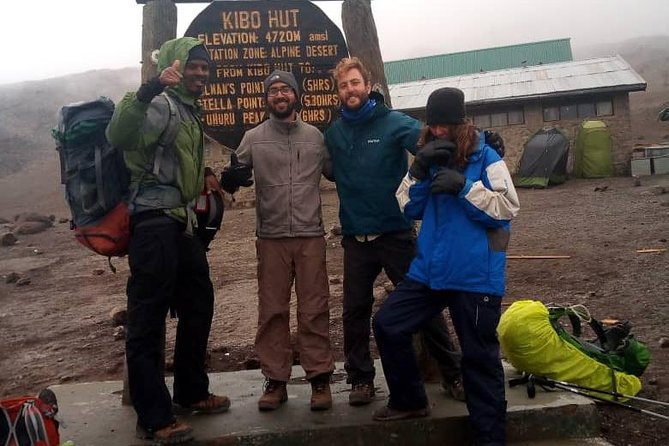
- Huts replace camping tents: You sleep in dormitory-style huts at Mandara, Horombo, and Kibo, a useful comfort for first-time climbers.
- The summit reaches 5,895 meters: Uhuru Peak is the highest point on Kilimanjaro and the hardest part of the trip.
- The five-day plan moves quickly: You go from 1,830 meters at the gate to 4,695 meters at Kibo before the summit attempt.
- Meals and a professional guide are included: Breakfast, lunch, and dinner are provided during the trek.
- Park fees are extra: Confirm the full price before booking, since all Kilimanjaro park charges are excluded.
- A large group is possible: The maximum listed group size is 100 people, so ask how many climbers will be in your departure.
Why the five-day Marangu Route suits first-time climbers
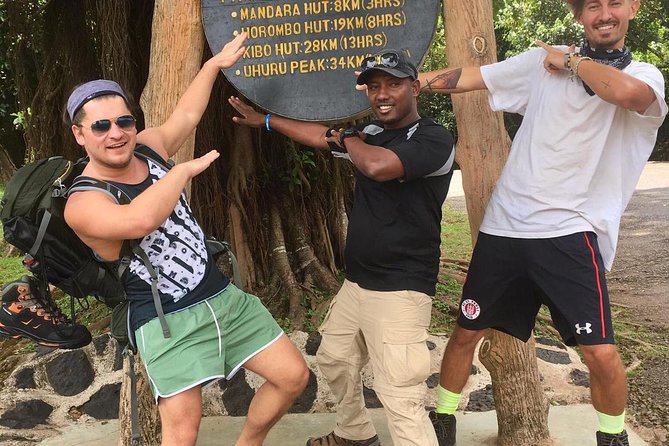
Marangu is often called the easiest Kilimanjaro route in terms of walking terrain, but that does not make it easy. You still climb to 5,895 meters, and the altitude is the real test. The five-day version is appealing because it keeps the logistics simple and uses fixed huts throughout the trek.
I especially like the hut setup for anyone who dislikes sleeping in a tent at high altitude. It also means you carry less camping equipment, although you still need personal hiking clothing and gear. The huts provide a basic place to sleep, not a hotel, and the available information describes dormitory-style accommodation rather than private rooms.
The route follows the same path up and down. That makes navigation straightforward, but it also means you do not see a new side of the mountain on your descent. The trade-off is comfort and simplicity rather than variety.
Your day begins at 7:00 a.m. Pickup is offered from the Moshi hotel you booked, and the trip ends back at the meeting point after your return to town. Confirmation is provided when you book, and a mobile ticket is available.
More Marangu Route climbs:
- Kilimanjaro climb, Marangu route (6-day)
★ 5.0 · 72 reviews - Climbing Kilimanjaro – Marangu Route
★ 5.0 · 65 reviews - Kilimanjaro Climbing 5 days Marangu route
★ 5.0 · 22 reviews
Day 1: Marangu Gate to Mandara Hut through the forest
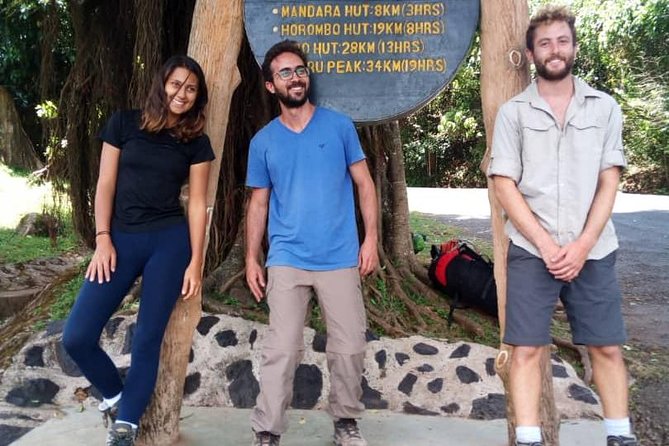
The trek begins at Marangu Gate, at about 1,830 meters. Here you register and meet your guide before walking roughly 7 kilometers toward Mandara Hut.
The first day takes about four to five hours. The trail rises through rainforest, with dense plant life, bird sounds, and the possibility of spotting wildlife. This is the most gentle-looking section of the trip, but you should still walk slowly and save energy.
The itinerary also identifies Marangu Falls as a stop. The supplied timing lists admission as not included, so ask your operator exactly how this stop fits into the day and whether any separate charge applies. The route itself leads onward to Mandara Hut at about 2,740 meters.
Mandara is your first night on the mountain. After dinner, you can rest and prepare for the next day. The short distance makes this a manageable opening, though the gain in elevation is already enough to remind you that Kilimanjaro is not a casual hill walk.
I would use this first day to test your clothing, water system, and pacing. If your boots rub or your pack feels awkward, fix the problem here. Small discomforts become serious after several more days.
Day 2: Mandara to Horombo and the first altitude test
Day two covers about 11 kilometers and takes six to eight hours. You leave the rainforest behind and enter open moorland as you climb from 2,740 meters to Horombo Hut at approximately 3,690 meters.
This change in scenery is one of the route’s rewards. The trees thin out, the views open, and Kilimanjaro begins to feel like a high mountain rather than a forest trek. You may also see the surrounding terrain more clearly as the path rises.
Horombo is an important stop because it is your first night at a height where altitude symptoms can appear. The itinerary allows time to rest and adjust before the next stage. On a five-day schedule, that rest matters, but it is limited. You do not get a separate acclimatization day.
The walk is not technically described as difficult, but the length and altitude make it more demanding than day one. Keep your pace steady and tell your guide if you feel unwell. Do not treat a headache, nausea, unusual tiredness, or breathing trouble as something to hide. Your guide needs accurate information to help you make safe choices.
The five-day plan is best for people who already have a reasonable fitness base and can handle long uphill walks. You do not need to be an elite athlete, but you should be comfortable walking for several hours at a time.
Day 3: Horombo to Kibo across semi-desert ground
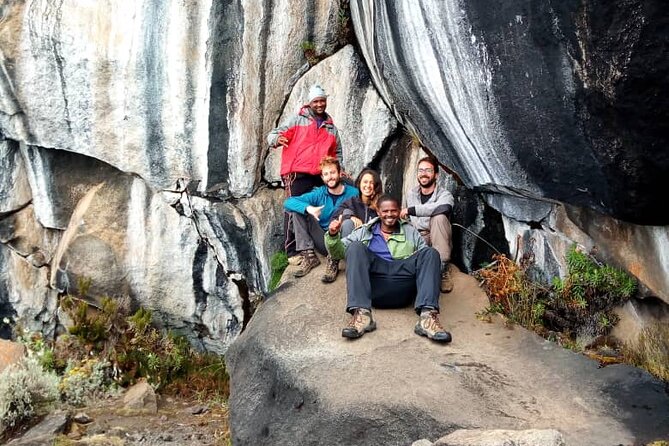
The third day covers about 10 kilometers and takes six to eight hours. You climb from Horombo at 3,690 meters to Kibo Hut at 4,695 meters.
The forest and moorland are now far below. Vegetation becomes sparse, and the trail crosses rocky, semi-desert terrain. The scenery is stark and spare, with fewer plants and a stronger sense of exposure.
Kibo is the last hut before the summit attempt. This is a short night in practical terms because you leave in the early hours for Uhuru Peak. You will eat, rest, organize your warm layers, and prepare your personal gear before trying to sleep.
This is where the short itinerary shows its weakness. You have gained nearly 3,000 meters from the gate in only three days. The schedule is efficient, but it gives your body little extra time to adjust. If you are choosing between five and six days, the longer option may be worth considering for a gentler pace, though the supplied experience specifically covers five days.
The included meals are useful here. You do not need to arrange breakfast, lunch, and dinner on the mountain, and regular food helps you keep going. Ask ahead about the exact meal arrangements and any dietary needs, since the provided details only confirm that all three daily meals are included.
A few more options to weigh up in Moshi
- Kilimanjaro climb by Lemosho Route (7-day)
★ 5.0 · 651 reviews - Safari Serengeti And Ngorongoro
★ 5.0 · 288 reviews - Kilimanjaro climb, Machame Route (7-day)
★ 5.0 · 262 reviews - Kilimanjaro Climbing Lemosho Route 8 Days.
★ 5.0 · 186 reviews
Day 4: Uhuru Peak and the long return to Horombo
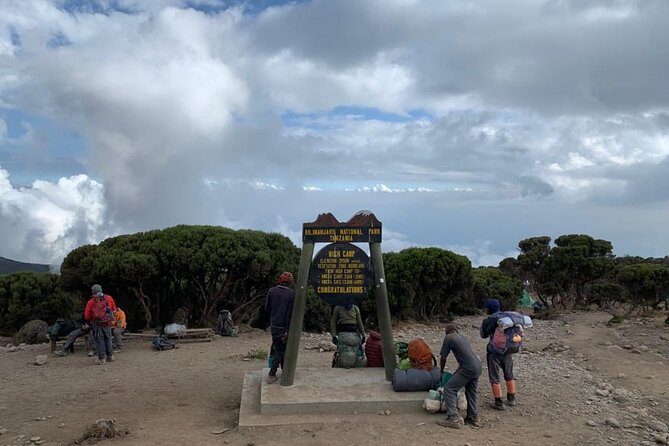
Summit day starts in the early hours from Kibo Hut. You walk roughly 4 kilometers to Uhuru Peak, at 5,895 meters, with the ascent taking about five to seven hours.
This is the toughest part of the trek. The ground is high, the air is thin, and the pace is slow. The reward is reaching the highest point on Kilimanjaro around dawn, when the views can stretch across the mountain and surrounding country.
The itinerary calls for a descent of about 14 kilometers back to Horombo Hut, taking another five to six hours. That makes this a very long day, with roughly ten to twelve hours of walking depending on conditions and pace. The listed stop is Horombo, and the total time shown for the day is six hours, so the timing figures are not perfectly consistent. Treat the summit day as a full-day effort, not a short excursion.
The descent can feel easier than the climb, but tired legs and loose ground create their own problems. You should keep your attention on each step, drink regularly, and follow your guide’s instructions. The crew support receives some of the warmest praise connected with this experience. Gabriel, in particular, was credited with giving crucial help to a climber reaching the summit, while Martin was singled out for professional guidance.
That kind of support is valuable, but it should not be read as a promise that a guide can carry everyone to the top. Summit success depends on your health, preparation, pacing, and response to altitude. A good guide can encourage you and help assess the situation, but safety comes first.
Day 5: Horombo back to Marangu Gate
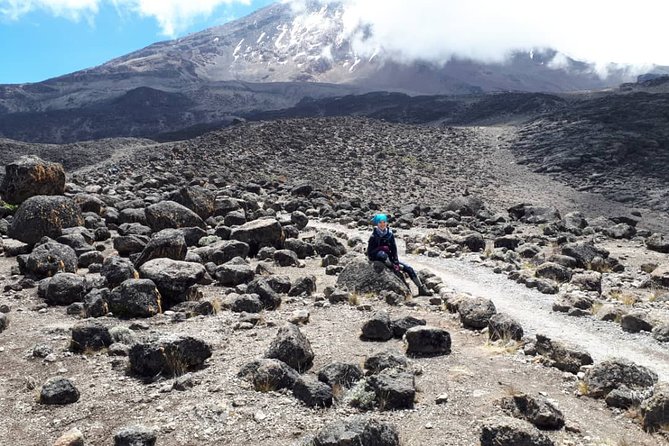
The final day covers about 18 kilometers and takes six to seven hours. You descend from 3,690 meters to Marangu Gate at 1,830 meters, passing back through the moorland and rainforest.
The return through the forest offers a calmer finish after the pressure of summit day. You may have another chance to see wildlife and enjoy the greenery, but your legs will be tired. The distance is long, so do not assume the last day is merely a stroll downhill.
At the gate, the trek ends and you receive your trekking certificate. You are then transferred back to Moshi, where you can rest and celebrate. The included hotel pickup applies to the start, while the itinerary also states that you return to Moshi at the end.
The experience ends at the meeting point. If you have a flight, safari, or other fixed appointment after the trek, leave plenty of time. The itinerary gives walking estimates, not a guaranteed arrival hour.
What the $1,080 price really covers
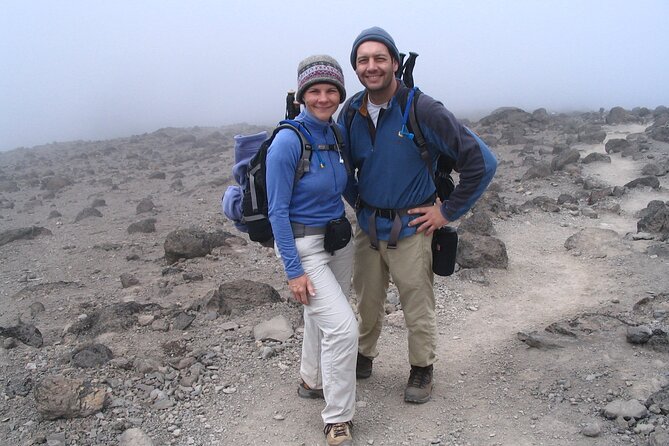
At $1,080 per person, this package offers useful inclusions for a five-day climb. You receive:
- Pickup from your Moshi hotel to Marangu Gate
- A pre-trek briefing
- A professional Kilimanjaro hiking guide
- Breakfast, lunch, and dinner during the trek
- A trekking certificate
- Mountain accommodation fees listed as camping fees
The last point deserves clarification. The route describes hut accommodation at Mandara, Horombo, and Kibo, while the inclusions use the phrase camping fees. Ask the operator to confirm exactly which hut and accommodation charges are covered.
The price does not include all Kilimanjaro park fees. It also excludes airport transfers, hotels before and after the trek, domestic and international flights, travel or medical insurance, personal hiking gear, and crew tips.
That makes $1,080 a starting price, not your complete trip budget. The park fees may be a major addition, and you should also budget for accommodation in Moshi, insurance, equipment rental or purchase, transport to Tanzania, and tips. Request a written breakdown before paying so you know what is included.
The package can still offer good value if you want a guided climb with meals and huts arranged for you. Its value is less clear if you already have your own mountain support or need a slower acclimatization schedule.
Guides, crew support, and group size
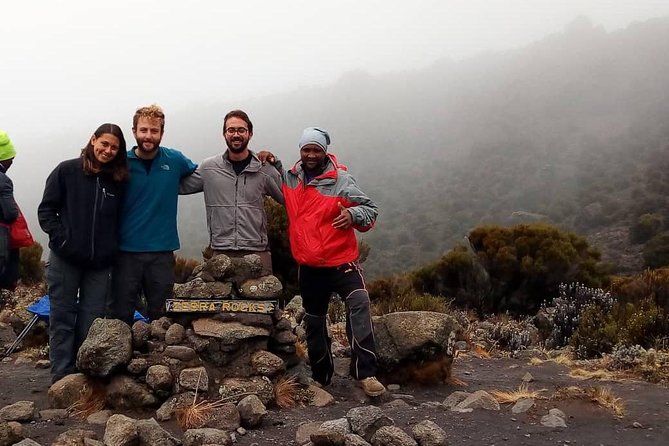
The strongest personal praise connected with this climb focuses on the crew. Names that appear in the trip feedback include Victor, Thomas, Noah, Gabriel, Samson, Jackson and his serving team, Martin, Budah, and Godfrey Ngaiza.
Godfrey Ngaiza is also identified as the managing director and was praised for communication before, during, and after a climb. That is useful for anyone arranging a major trip from overseas, since clear planning can make the difference between confidence and confusion.
The maximum group size is 100 people. That is a large permitted number, even though your actual departure may be smaller. Ask how many people are booked for your date, how many guides will be assigned, and how the group will be divided on summit day.
A group of 24 friends previously received several named guides and servers, which suggests that larger parties may have a broad support team. Still, do not assume your group will receive the same staffing pattern. Get the details in writing.
Who should book this climb?
I would consider this route for a fit beginner who values huts, organized meals, a direct route, and strong human support. It may also suit someone who wants to combine Kilimanjaro with a safari or other Tanzania plans and prefers a five-day schedule.
It is less suitable if you want a slow altitude program, private accommodation, or a small-group wilderness feel. The fixed route can be busy, and the five-day ascent gives you little spare time if your body struggles with the height.
You should have moderate physical fitness. Prepare for repeated days of six to eight hours of walking, a summit day beginning in darkness, and an 18-kilometer descent on the final day. Personal hiking gear is not included, so you need to arrange that yourself.
The experience requires good weather. If poor weather causes cancellation, you are offered another date or a full refund. You can cancel for a full refund if you do so at least 24 hours before the 7:00 a.m. start, while cancellations or changes made less than 24 hours ahead are not refunded or accepted.
Should you book the five-day Marangu Route?
Book it if hut accommodation, a clear itinerary, included meals, and a guided climb matter more to you than a slower pace. The package has an attractive structure for first-time climbers, and the repeated praise for guides such as Gabriel, Martin, Budah, and Godfrey points to a strong emphasis on personal support.
Before booking, confirm the park-fee total, hut charges, group size, meal arrangements, and the exact return plan to Moshi. If you are fit, prepared for altitude, and comfortable with a demanding summit day, this can be a practical way to reach Uhuru Peak.
If you are unsure about altitude or want more time to adjust, ask about a longer Kilimanjaro itinerary before committing to five days. The huts make Marangu more comfortable, but they do not make the mountain less high.
FAQ
Where does the five-day Kilimanjaro trek start?
It starts at Marangu Gate after registration and a meeting with the guide. Pickup is offered from a hotel booked in Moshi town.
What time does the activity start?
The stated start time is 7:00 a.m.
Where do you sleep during the trek?
The route provides hut accommodation at Mandara Hut, Horombo Hut, and Kibo Hut. The sleeping arrangements are described as dormitory-style huts.
Is camping included?
Camping fees are listed among the inclusions, but the itinerary describes hut accommodation. Confirm with Africa Natural Tours exactly which accommodation charges are covered.
Are meals included?
Yes. Breakfast, lunch, and dinner are included during the trekking portion.
Are Kilimanjaro park fees included?
No. All Mount Kilimanjaro park fees are excluded and can be paid directly to the park or through the tour operator.
Is airport pickup included?
No. Airport pickup and drop-off are not included.
Are hotels in Moshi included?
No. The hotel before and after the trek is not included.
What fitness level is required?
You should have a moderate level of physical fitness. The itinerary includes several walking days of six to eight hours, a summit attempt, and an 18-kilometer final descent.
What happens if bad weather cancels the trek?
If poor weather causes cancellation, you are offered a different date or a full refund.
Just added in Moshi
- Zanzibar: Stone Town tour and Nakupenda beach with Lunch★ 5.0 · 1 review
- day trip lake manyara★ 5.0 · 2 reviews
- Mt Kilimanjaro 6 days Marangu route hike★ 5.0 · 3 reviews
- machame route★ 5.0 · 16 reviews
- Private Cycle to Kilimanjaro Bike Park Safari★ 5.0 · 6 reviews
- West Kilimanjaro cycling Adventures★ 4.5 · 8 reviews
- Wildlife Extravaganza: Manyara, Tarangire & Ngorongoro in 3 Days★ 5.0 · 3 reviews
- 3 Days Private E-Bike Tour in West Kilimanjaro★ 5.0 · 3 reviews
Marangu Route Climbs, compared.

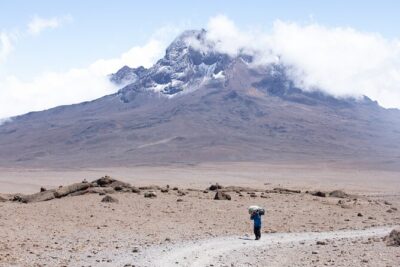

Private Full Day Hiking Experience to Marangu Route
Read our review →
From Arusha/Moshi: Kilimanjaro Hike Marangu Route Day Trip
Read our review →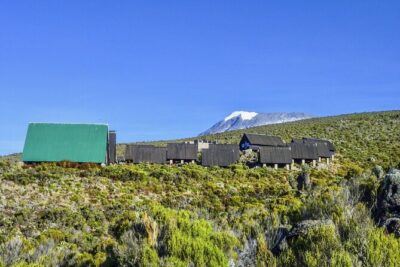
Mount Kilimanjaro Day Hike Through Marangu Route to Mandara Hut
Read our review →
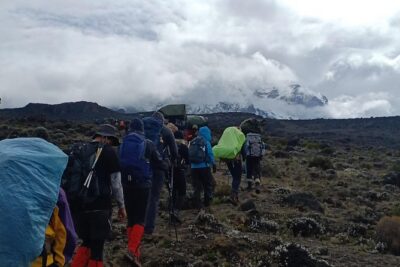
Best Kilimanjaro Adventures 6 Days Marangu Route Experience
Read our review →
Kilimanjaro Private Climbing in 6 Days Marangu Route
Read our review →Browse the lists this tour appears in