
Reviewed · LEMOSHO ROUTE CLIMBS
Private 7 Days Kilimanjaro Climbing via Lemosho Route
Africa gets taller by the hour. This seven-day private Kilimanjaro climb follows the Lemosho Route from the forested western side of the mountain to Uhuru Peak, then descends through Mweka. I like the route’s changing scenery, from montane forest to moorland, semi-desert, alpine desert, and finally rainforest. I also like the careful acclimatization day near Lava Tower, where you climb high and sleep lower. The main caution is simple: this is a serious high-altitude trek, not a casual hike.
I also like the small-group setup, with a maximum of five people, and the strong support system of guides, cooks, and porters. Guides named in the trip feedback include Sebastian, Paschal, Evans, Kessy, and Valency. The price of $2,800 per person covers park fees, meals, equipment support, transport at the start and finish, and the mountain crew, but tips, flights, visas, and laundry cost extra.
In This Review
- Key points to know before booking
- What the seven days really ask of you
- Day 1: Lemosho Gate and Mti Mkubwa Camp
- Day 2: A long climb across Shira Ridge
- Day 3: Lava Tower, the Shark’s Tooth, and Barranco
- Day 4: The Barranco Wall and Karanga Valley
- Day 5: Barafu Camp and preparation for the summit
- Day 6: Stella Point and Uhuru Peak
- Day 7: Descending through forest to Mweka Gate
- Guides, porters, and the human side of the climb
- Is $2,800 per person good value?
- Who should book this Kilimanjaro climb?
- Practical details before you commit
- Should you book it?
- FAQ
- How long is the Kilimanjaro climbing experience?
- How many people can join the private climb?
- What meals are included?
- Is transport included?
- What is not included in the price?
- What fitness level is required?
Key points to know before booking
- The Lemosho start gives you a gradual first day, beginning in montane forest before the trail rises toward Shira Plateau.
- Day 3 is the route’s key acclimatization day, climbing to Lava Tower at about 4,650 meters before descending to Barranco Camp.
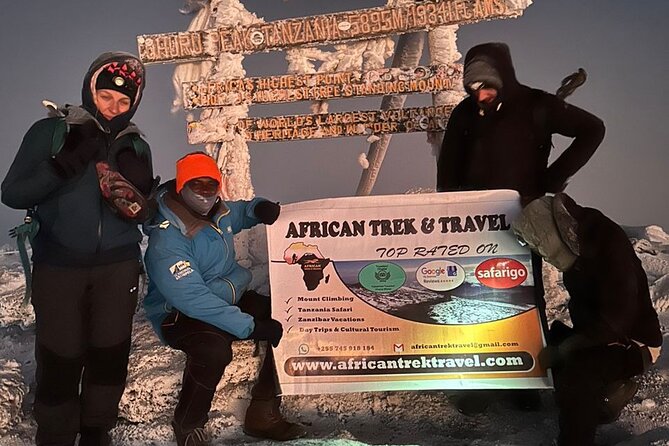
- Summit night begins around midnight to 2 a.m., with a steep, demanding ascent through scree to Stella Point and Uhuru Peak.
- A maximum of five participants keeps the group manageable, while the guide, cook, and porter team handles much of the practical work.
- The $2,800 price includes six breakfasts, six lunches, six dinners, taxes, park fees, and transport, but not tipping, flights, visas, or laundry.
- The trip ends at Mweka Gate, where you receive summit certificates before a vehicle takes you back to your Moshi hotel.
What the seven days really ask of you
Kilimanjaro is not a technical mountaineering trip in the usual sense. You do not need to climb with ropes or possess advanced rock skills based on the details provided here. You do need steady fitness, patience, and the ability to walk uphill for several hours while your body adjusts to thin air.
The daily distances vary widely. Day 1 covers only 6 kilometers, while Day 2 stretches to 16 kilometers and takes up to eight hours. Day 6 is the hardest by far, beginning in darkness and requiring a long ascent to the summit before a major descent.
The route reaches about 5,895 meters at Uhuru Peak. The supplied details do not give a summit success guarantee, and no responsible operator can promise one. Your guide’s judgment, your pace, hydration, rest, and response to altitude all matter.
The private format is useful here. A group of five allows the guide to keep a closer eye on pace and comfort than a large departure group might. That does not remove the physical challenge, but it can make communication easier when someone needs a slower morning or extra support.
More Kilimanjaro climbs:
- Kilimanjaro climb by Lemosho Route (7-day)
★ 5.0 · 651 reviews - Kilimanjaro climb, Machame Route (7-day)
★ 5.0 · 262 reviews - Kilimanjaro Climbing Lemosho Route 8 Days.
★ 5.0 · 186 reviews
Day 1: Lemosho Gate and Mti Mkubwa Camp
After breakfast and a briefing, you drive to Lemosho Park Gate. The route then uses a forest track that requires a four-wheel-drive vehicle to reach Lemosho Glades. From there, you walk through montane forest to Mti Mkubwa, also called Big Tree Camp.
The day starts at about 1,830 meters and ends around 2,650 meters. The walk covers 6 kilometers and takes roughly two to three hours, making it a sensible introduction to the climb.
I like this opening because it is not needlessly aggressive. You get time to settle into the walking rhythm, check your gear, and begin gaining height without starting with an exhausting push. The forest setting also gives the first day a clear sense of transition from ordinary Tanzania to the mountain world.
Your meals include lunch and dinner. Since the first night is at camp, you should expect a basic outdoor routine rather than hotel comfort. The supplied information confirms cooker and porter support, but it does not describe tent arrangements or shower facilities, so ask the operator exactly what camping equipment is provided before you leave Moshi.
Day 2: A long climb across Shira Ridge
After breakfast, the trail steepens and enters the giant heather moorland zone. You cross several streams, pass over Shira Ridge, go by Shira 1 Camp, and continue to Shira 2 Camp on open moorland meadows beside a stream.
This is the longest regular walking day: 16 kilometers, seven to eight hours, and a rise from 2,650 meters to about 3,850 meters. The change from forest to moorland is significant. The trees thin out, the air feels cooler, and the route begins to look and feel like a high mountain crossing.
You receive breakfast, lunch, and dinner. The practical challenge is not only the distance but also the altitude gain. Walk slowly, keep your water close, and avoid treating the early part of the day like a race. The group has a better chance of staying together if everyone accepts a steady pace from the start.
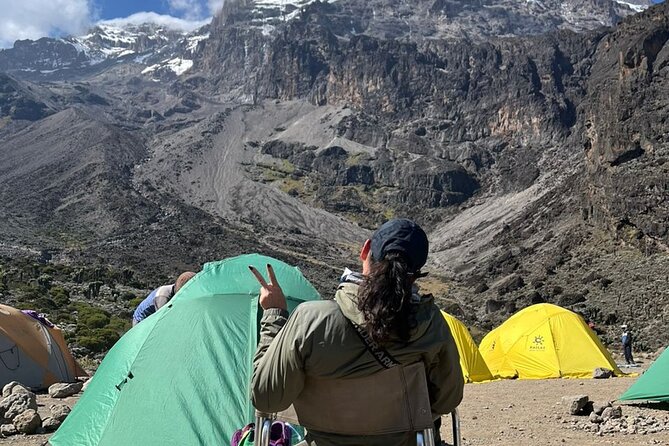
Shira 2 is an important night because you are now sleeping well above the first camp. The surrounding moorland offers broad views, but the exposure also means you should be ready for colder conditions than on Day 1.
Day 3: Lava Tower, the Shark’s Tooth, and Barranco
Day 3 is the clever part of the route. From the Shira Plateau, you climb east along a ridge, pass the junction toward Kibo, and then turn southeast toward Lava Tower, known here as the Shark’s Tooth. The tower rises to about 4,650 meters.
After Lava Tower, the route reaches a second junction toward Arrow Glacier before descending to Barranco Camp. You begin around 3,850 meters and finish near 4,000 meters, covering 8 kilometers in five to six hours.
The important point is that you climb higher during the day than where you sleep. This high point, followed by a lower camp, gives your body a useful chance to adjust. It is one of the reasons the seven-day plan can be more sensible than trying to compress the mountain into fewer days.
The habitat changes again to semi-desert. The vegetation becomes sparse, and the mountain feels more severe. This is also where altitude symptoms may become more noticeable. Tell your guide if you develop a headache, nausea, unusual tiredness, dizziness, or trouble breathing. An oxygen bottle is included, but oxygen is not a substitute for proper medical decisions or a descent when needed.
More Lemosho Route climbs:
- Kilimanjaro climb, Lemosho Route (8-day)
★ 5.0 · 148 reviews - Kilimanjaro climb, Lemosho Route (6-day)
★ 5.0 · 129 reviews - Kilimanjaro Lemosho Route
★ 5.0 · 71 reviews - Private Kilimanjaro Hike 7 Day Lemosho Route
★ 5.0 · 60 reviews
Day 4: The Barranco Wall and Karanga Valley
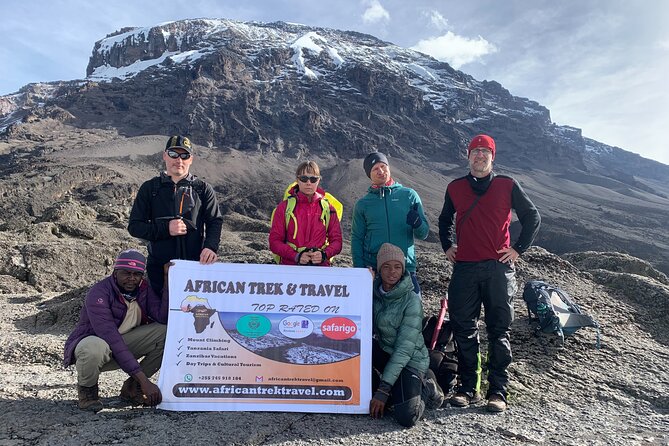
After breakfast, you leave Barranco and climb the steep ridge up the Barranco Wall. The route continues to Karanga Valley, where it joins the junction connected to the Mweka Trail.
This is a short day by distance, only 5 kilometers, and takes about three to four hours. You rise from roughly 4,000 meters to 4,050 meters, so the altitude change is modest. The habitat is alpine desert.
The Barranco Wall is likely to be the most physically hands-on section before summit day. The description does not identify it as a technical climb, but you should expect a steep route that requires care and a measured pace. Walking poles can help with balance, especially if you are tired from the previous days.
I like the way this day protects your energy. You reach camp relatively early, leaving time to eat, rest, and prepare for Barafu and the summit push. Do not mistake the short distance for an easy day. At this elevation, even a few hours of climbing can feel demanding.
Day 5: Barafu Camp and preparation for the summit
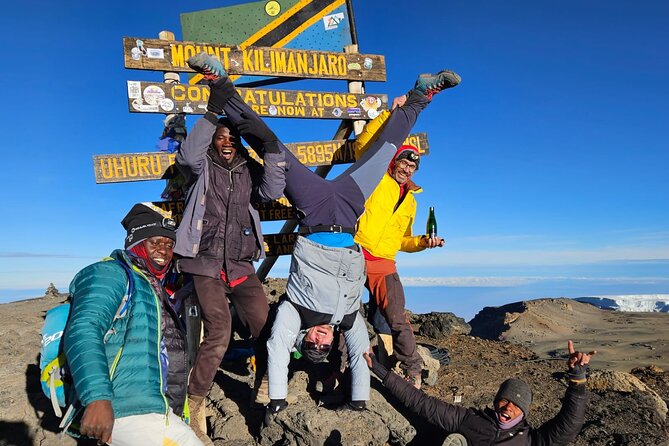
The route continues upward to Barafu Camp, rising from about 4,050 meters to 4,700 meters. The distance is just 4 kilometers, with three to four hours of climbing through alpine desert.
You have now completed the South Circuit, which gives views of the summit from several angles. Barafu is the staging point for the final climb. You eat dinner, rest, and prepare for the summit attempt.
This is a day when organization matters. Keep your warm summit clothes, headlamp, water, gloves, and other night gear ready before you lie down. The supplied program does not list a detailed packing service or gear rental arrangement, so confirm what you must bring and what the company supplies.
The early dinner and short walking day may sound comfortable, but sleep can be difficult at 4,700 meters. Try to rest even if you do not sleep deeply. Summit day begins around midnight to 2 a.m., so your body gets little time to recover before the hardest effort.
Day 6: Stella Point and Uhuru Peak
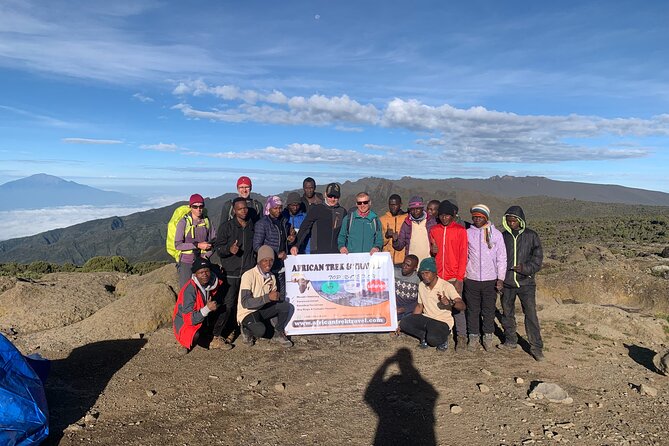
Summit day begins in darkness. You ascend between the Rebmann and Ratzel glaciers, heading northwest through heavy scree toward Stella Point on the crater rim. The supplied timing gives about seven hours for this section of the experience, though the exact time will depend on pace and conditions.
This is the most demanding part of the climb, both physically and mentally. The route is steep, the ground is loose, and the coldest hours arrive before sunrise. A slow pace is not a sign of failure. It is the normal way to handle a high-altitude ascent.
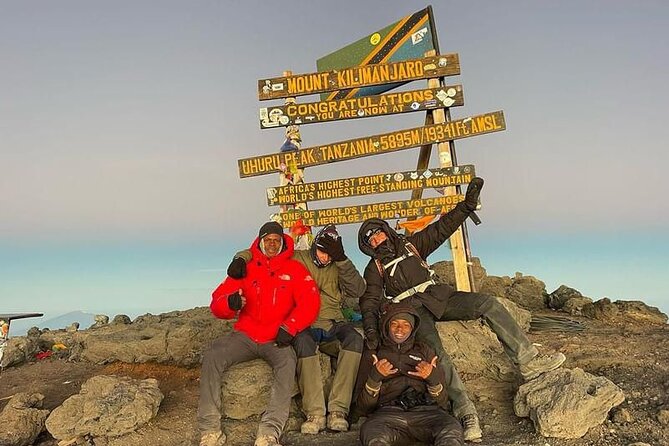
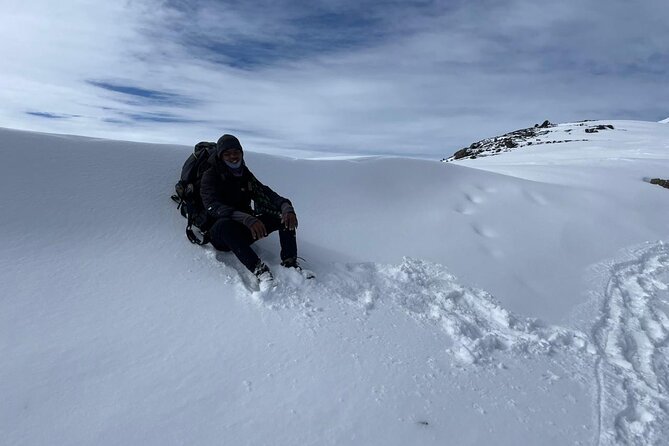
At Stella Point, you pause briefly and may see sunrise from the crater rim. Faster walkers might reach Uhuru Peak in time for sunrise, but you should not feel pressured to match them. From Stella Point, the final ascent to Uhuru Peak takes about another hour, and snow may appear along the route.
Uhuru Peak is the highest point on Mount Kilimanjaro and the highest point in Africa. You then begin the descent. The information supplied does not give the full Day 6 descent distance or final camp location, so ask how the operator divides the day after the summit. It is an important practical question, since the downward walk can be surprisingly hard on tired legs.
The oxygen bottle included in the package may provide additional support in an emergency, but it does not make summit day safe for everyone. Guides must be willing to turn people around if altitude illness becomes dangerous. That decision should be treated as sound mountain judgment, not as a failed holiday.
Day 7: Descending through forest to Mweka Gate
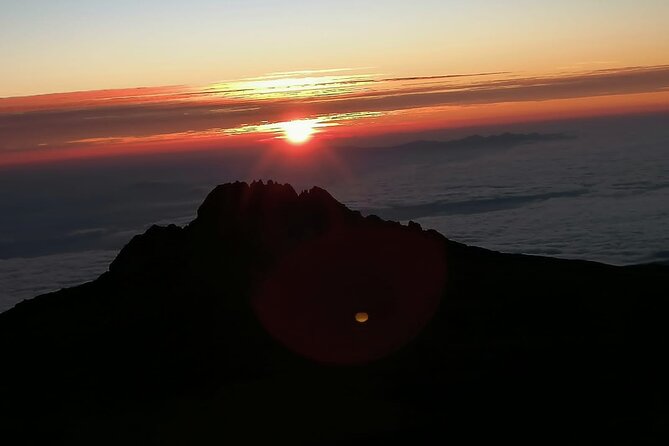
After breakfast, you descend to Mweka Park Gate. The route drops from about 3,090 meters to 1,680 meters, covers 10 kilometers, and takes three to four hours.
The habitat returns to forest, and the air becomes easier as you lose height. The trail may be wet and muddy at lower elevations. Gaiters and trekking poles are specifically recommended, and you will probably be comfortable in shorts and a T-shirt, though rain gear and warmer clothing should remain within reach.
At Mweka Gate, you receive summit certificates. An African Trek & Travel vehicle then takes you back to your Moshi hotel, a drive of about 60 minutes.
This final transfer is more useful than it sounds. After seven days on foot, you will appreciate not having to arrange a separate ride from the park. The trip ends back at the stated meeting point in Moshi.
Guides, porters, and the human side of the climb
The strongest praise connected with this experience focuses on the staff. Sebastian is repeatedly identified as a careful lead guide who helped with preparation, gear checks, hotel arrangements, and summit support. Paschal, Evans, Kessy, and Valency are also named as guides associated with successful climbs.
The important lesson for you is to value communication before departure. Sebastian is described as answering questions quickly and explaining details clearly. That kind of preparation matters on Kilimanjaro, where the right clothing, footwear, and pacing can shape the whole week.
The team includes a live guide in English, Spanish, French, German, Italian, and Simplified Chinese. A cook and porters are included as well. One account describes a large porter team supporting seven hikers, which shows how much behind-the-scenes work can go into carrying camp equipment, food, and supplies.
Remember that tipping is not included. Ask for the company’s current tipping guidance before you climb, then budget for it separately. Porters do the heavy work that allows you to walk with a manageable day pack, and their treatment and pay are worth discussing with the operator.
Is $2,800 per person good value?
At $2,800 per person, this is not a cheap walk, but the price covers substantial costs. Park fees and taxes are included, along with six breakfasts, six lunches, and six dinners. You also receive cooker and porter support, a guide, an oxygen bottle, and transport from the mountain finish back to Moshi.
The private group limit of five adds value if you want closer attention and a more controlled pace. It may also suit friends or couples who do not want to join a large mixed group.
Still, calculate the full cost. Flights, visas, laundry, and tips are excluded. You may also have pre-climb hotel nights or personal gear expenses, although the supplied details do not specify hotel arrangements or equipment rental. Ask for a written list of every included service before paying.
The price looks most reasonable for someone who values a local support team, multilingual guiding, and a seven-day route with a built-in acclimatization day. It is less appealing if you want a very basic, low-cost trek or if you are comparing only the number of walking days.
Who should book this Kilimanjaro climb?
This experience suits you if you have moderate physical fitness and are comfortable with long days on foot. You should also be ready for early starts, basic camp living, steep ground, cold conditions, and uncertainty caused by altitude.
It is a good match for a first major high-altitude climb if you prefer a supported program. The guide and porter structure means you do not have to manage every camp task yourself, while the small group makes it easier to communicate.
It is not a good choice if you want a relaxed sightseeing holiday, dislike walking for seven to eight hours, or expect a guaranteed summit. The summit attempt is optional in practical terms because your guide may decide that continuing is unsafe.
The experience also allows service animals and is near public transportation, but the physical demands remain the central issue. Those conveniences do not change the steep trails or high altitude.
Practical details before you commit
Pickup is offered, and the activity operates daily from 12:00 a.m. to 11:30 p.m. The meeting point is listed at M84R+V94, Shantytown 7582, Tanzania. Confirmation is provided at booking.
Free cancellation is available if you cancel at least 24 hours before the local start time. Cancellations or changes made inside that window are not accepted for a refund.
Before booking, I would ask these questions:
- What camping equipment is supplied?
- Where do you sleep after the summit on Day 6?
- What is the current tipping recommendation?
- Are hotel nights in Moshi included?
- What personal gear must you bring?
- How does the company handle altitude illness and an early descent?
These are not fussy questions. They help you compare the real cost and understand how the seven days will work.
Should you book it?
I would recommend this climb to a fit, prepared walker who wants the scenic Lemosho approach, a small private group, and strong guide support. The seven-day schedule gives you a useful acclimatization pattern, especially on the Lava Tower to Barranco day, and the route passes through several distinct mountain zones.
Book it if you are willing to train, pack properly, budget for tips and visas, and accept that reaching Uhuru Peak depends on your health and the guide’s safety decisions. If you want the best chance of enjoying Kilimanjaro rather than simply rushing at it, this is a well-structured option at a fair but significant price.
FAQ
How long is the Kilimanjaro climbing experience?
The climb lasts approximately seven days, beginning near Lemosho Park Gate and ending at Mweka Gate before transport back to Moshi.
How many people can join the private climb?
The activity has a maximum of five participants.
What meals are included?
Six breakfasts, six lunches, and six dinners are included during the mountain trip.
Is transport included?
Pickup is offered, and a vehicle takes you from Mweka Gate back to your hotel in Moshi. The drive is described as taking about 60 minutes.
What is not included in the price?
Tipping, visas, flights, and laundry are not included.
What fitness level is required?
The activity states that participants should have a moderate physical fitness level. You should also be ready for long walking days, steep sections, high altitude, and a summit start between midnight and 2 a.m.
Just added in Moshi
- Zanzibar: Stone Town tour and Nakupenda beach with Lunch★ 5.0 · 1 review
- day trip lake manyara★ 5.0 · 2 reviews
- Mt Kilimanjaro 6 days Marangu route hike★ 5.0 · 3 reviews
- machame route★ 5.0 · 16 reviews
- Private Cycle to Kilimanjaro Bike Park Safari★ 5.0 · 6 reviews
- West Kilimanjaro cycling Adventures★ 4.5 · 8 reviews
- Wildlife Extravaganza: Manyara, Tarangire & Ngorongoro in 3 Days★ 5.0 · 3 reviews
- 3 Days Private E-Bike Tour in West Kilimanjaro★ 5.0 · 3 reviews
Lemosho Route Climbs, compared.


8-Day Small-group Lemosho Kilimanjaro Summit Trekking
Read our review →



Climbing Kilimanjaro through 8 days Lemosho Route
Read our review →Browse the lists this tour appears in