
Reviewed · WILDEBEEST MIGRATION SAFARIS
Serengeti Wildebeest Migration.
The migration is nature at full volume. This Bujo Tours safari combines Tarangire, several days in the Serengeti, and Ngorongoro Crater, with a private 4×4, meals, mineral water, and pickup from Moshi or Arusha. I especially like the long northern Serengeti stay, where the Mara River crossings may occur, and the private vehicle with a pop-up roof, refrigerator, and charging points. The main caution is timing: river crossings are never guaranteed, and the advertised seven-day duration conflicts with the seven-day itinerary described as an eight-day package.
You will spend long hours on rough park roads, but that is part of the safari bargain. Guide Fredy receives especially warm praise for taking care of practical details, and a personal chef is included in the budget-camping version described by one guest. At $4,185 per person, this is a serious purchase, yet the private vehicle, seven lunches, six breakfasts, six dinners, water, and emergency evacuation cover add real value.
In This Review
- Key points to know before booking
- What this Serengeti safari is really offering
- Day 1: Tarangire’s elephants and giant baobabs
- Day 2: Entering the endless Serengeti plains
- Day 3: Driving north toward Kogatende and the Mara River
- Day 4: Waiting for the Mara River crossing
- Day 5: Returning through Lobo to Seronera
- Day 6: From Serengeti to the Ngorongoro Crater rim
- Day 7: Early descent into Ngorongoro Crater
- Vehicle, meals, and comfort on the road
- Is $4,185 per person good value?
- Who will enjoy this trip most?
- Should you book this Serengeti migration safari?
- FAQ
- Where does the safari begin?
- How long is the safari?
- Is this a private tour?
- When is the best time to see a Mara River crossing?
- Is a river crossing guaranteed?
- What parks are included?
- What meals are included?
- Is drinking water provided?
- What kind of vehicle is used?
- Are flights and visas included?
Key points to know before booking
- The northern Serengeti is the focus: Days three and four are planned around Kogatende and the Mara River, the area linked with possible crossings from roughly mid-June through September.
- The route includes three major parks: Tarangire begins the trip, the Serengeti gets most of the safari time, and Ngorongoro provides the final wildlife spectacle.
- A private 4×4 changes the feel: Only your group participates, and the vehicle has a refrigerator, portable charging stations, and a pop-up roof.
- Migration timing is seasonal, not scheduled: July and August offer a strong chance of river-crossing activity, but no operator can promise a crossing on a given day.
- The trip is physically demanding: Long drives, picnic lunches, early starts, and repeated game drives require patience and comfort with an active schedule.
- The package details need checking: The description calls it an eight-day safari, while the itinerary lists seven days and the headline duration says approximately seven days.
What this Serengeti safari is really offering
This is not a quick park visit with one morning game drive. You move through northern Tanzania on a route designed to spend meaningful time in the Serengeti, especially the northern section where the wildebeest migration may pass.
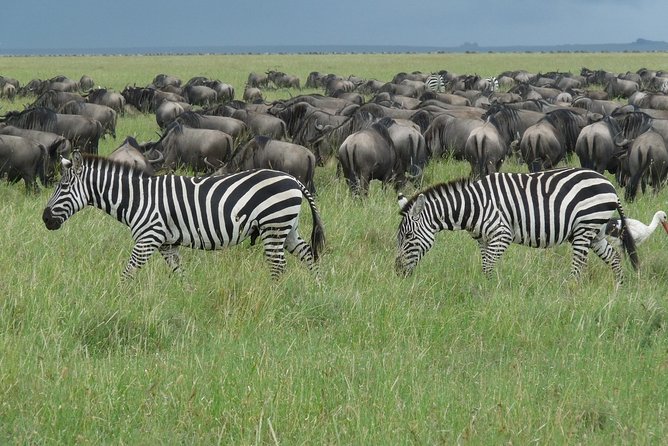
The Great Wildebeest Migration involves more than two million wildebeest, zebra, and gazelles moving through the Serengeti and Masai Mara ecosystem in search of grass, water, and calving areas. The animals do not follow a neat calendar. Their position depends on rain and available food, so the trip’s biggest promise is opportunity rather than certainty.
That distinction matters. A river crossing can last only a short time, or the herds may gather on one bank and refuse to move. You could see a dramatic rush through the water, crocodiles waiting below, and animals struggling in the current. You could also spend hours watching herds graze or wait in silence. Both are genuine migration experiences, but only one makes the famous photograph.
The route gives you a better chance than a rushed itinerary because it places two full days in the northern Serengeti. The tradeoff is time on the road. You will drive from central Serengeti toward Kogatende, then later return south toward Seronera. This is rewarding for wildlife watchers, but tiring if you dislike long stretches in a safari vehicle.
More Serengeti and Ngorongoro safaris:
- Safari Serengeti And Ngorongoro
★ 5.0 · 288 reviews - 5 Days Camping Tarangire, Serengeti & Ngorongoro crater & Visiting Maasai
★ 5.0 · 58 reviews - 4 Days Group Joining Camping Safari to Tarangire Serengeti Ngorongoro Crater
★ 5.0 · 50 reviews
Day 1: Tarangire’s elephants and giant baobabs
Pickup begins at about 8 a.m. from your hotel in Moshi or Arusha. From Arusha, the drive to Tarangire National Park is about 150 kilometers and takes roughly three hours.
Tarangire is a strong opening act. Its nine vegetation zones create a setting that feels different from the open Serengeti grasslands later in the trip. The huge baobab trees are the visual signature. Their thick trunks and strange branches make even a giraffe look modest.
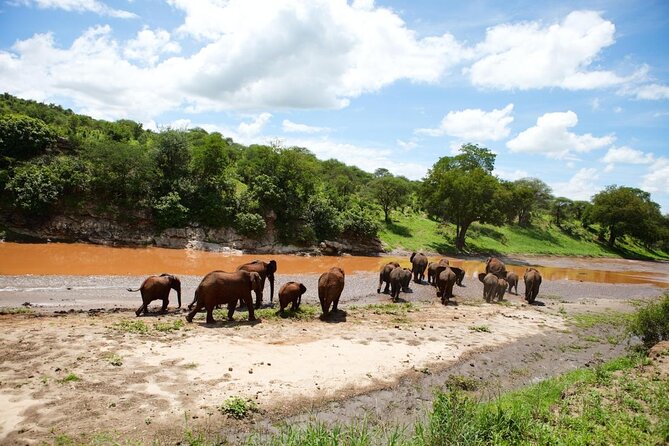
The park is especially noted for its large elephant population. With time in the vehicle, you may watch elephant families feed, move together, or interact near the Tarangire River. The park covers about 3,000 square kilometers, so the day is not simply a short stop before dinner.
A picnic lunch breaks up the game drive, which keeps the day moving but offers less comfort than a lodge meal. The schedule runs for about seven hours, followed by dinner and overnight accommodation.
I like Tarangire here because it gives you elephants and baobabs before the migration becomes the main subject. The drawback is that the opening drive from Moshi can make the first day feel long, especially after an international flight. Plan to arrive rested rather than treating pickup day as a gentle transfer.
Day 2: Entering the endless Serengeti plains
After breakfast, you head toward Serengeti National Park. The park covers about 14,763 square kilometers, and the scale becomes clear as the grasslands stretch toward the horizon.
The journey itself is part of the appeal. You are not being dropped beside one famous viewpoint. You are crossing a huge wildlife area, with the chance of seeing animals along the way. The itinerary gives about four hours to the first Serengeti section, followed by another four hours around Seronera.
Seronera is central Serengeti’s main wildlife area. The Seronera River supplies water, which helps draw animals throughout the year. This is where you should watch for lion prides, leopards, and the wider mix of species that makes central Serengeti dependable outside the migration season.
The granite kopjes are another highlight. These large boulders rise from the grass and provide shelter for plants and animals. They also make useful places to scan for lions, although sightings are never promised.
This day delivers the first big sense of Serengeti scale. It also begins a pattern you should understand before paying: breakfast, hours in the 4×4, picnic lunch, more game viewing, then dinner and sleep. It is exciting, but not restful in the ordinary holiday sense.
Day 3: Driving north toward Kogatende and the Mara River
The day starts around 8 a.m. with a drive from central Serengeti toward the northern Kogatende region. The route takes about eight hours and includes a picnic lunch.
The scenery changes as you go north. Open grassland gives way to hillier, more broken ground. You may see resident zebra, topi, gazelle, buffalo, leopard, and lion along the way. The value of this route is that you are not relying only on the migrating herds. Northern Serengeti has its own year-round wildlife.
Depending on arrival time, you may spend a few hours beside the Mara River. That wording is important. You are not promised a crossing on this afternoon, and the drive itself may use much of the day. Still, reaching the river before the main crossing-focused day gives you a chance to understand the setting and watch animal movement.
Kogatende is the logistical heart of the migration section. The northern Serengeti is where the herds may be found from around mid-June through September, with July and August often associated with major Mara River activity. Rain can shift the timing, so ask Bujo Tours for the expected herd location before you travel.
More migration safaris:
- Great Migration Safari In Tanzania
★ 5.0 · 71 reviews - 6 Days Tanzania Budget Camping Safari with Migration
★ 5.0 · 31 reviews - 8 Days Great Wildebeest Migration – Mara River Crossing
★ 5.0 · 28 reviews - Tanzania Safari – The Great Migration in the North of the Serengeti and Lake Natron
★ 5.0 · 25 reviews
Day 4: Waiting for the Mara River crossing
This is the trip’s headline day. You begin around 8 a.m. and spend the day in the northern Serengeti, watching for migrating wildebeest and other wildlife.
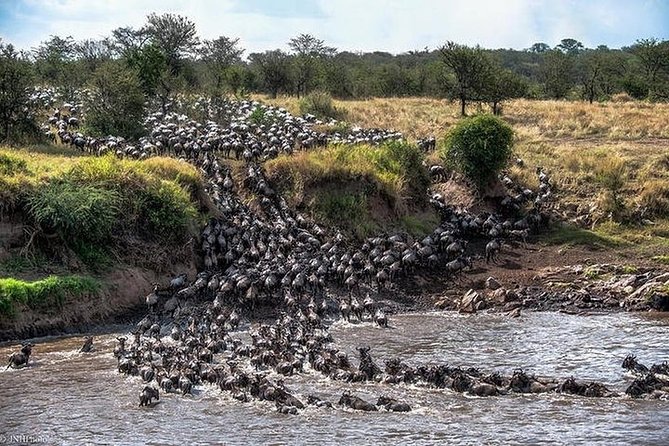
A Mara River crossing can be chaotic. Wildebeest gather at the bank, hesitate, then suddenly surge into deep, rain-fed water. Some animals may drown, while crocodiles wait for opportunities. It is a raw display of survival, not a staged wildlife show.
You should also be prepared for a quieter day. The herds may be elsewhere, the water level may not suit a crossing, or the animals may pause for hours. A good guide uses the day well by tracking other wildlife instead of treating the trip as a single all-or-nothing sighting.
The northern Serengeti also offers strong big-cat viewing. Lions, leopards, and cheetahs may be found near permanent water sources, especially in dry conditions. Picnic lunch is taken during the game drive, and the day includes another four hours at each of two listed Serengeti stops.
If the migration is your main reason for booking, this is the most valuable part of the route. If you need certainty, it is also the part most likely to frustrate you. No safari package can control rain, herd movement, or animal behavior.
Day 5: Returning through Lobo to Seronera
After breakfast, you head south toward central Serengeti. The trip back takes about four hours, passing through the Mara River area, hill country, Lobo woodlands, and then the open terrain around Seronera.
This return route prevents the safari from becoming a simple out-and-back transfer. You see different sections of the park and have further chances to spot wildlife on the road. Lobo’s hills and woodlands contrast with the central plains, while Seronera brings you back to its reliable water source and resident animals.
The day again includes a picnic lunch and roughly four hours at each listed Serengeti stop. Look for lion prides around Seronera, along with possible leopard and cheetah sightings. The central area can be productive even if the migration did not cooperate in the north.
This is a useful buffer day. If the previous day produced a river crossing, you can enjoy the memory without rushing away. If it did not, the return drive gives you another chance to find excellent wildlife. The downside is repetition: after several days in a 4×4, the same routine may begin to feel tiring.
Day 6: From Serengeti to the Ngorongoro Crater rim
The morning begins later, around 9 a.m. You take a short Serengeti game drive, eat a picnic lunch, and then travel about 75 kilometers to the Ngorongoro Crater rim. The drive is listed at roughly two and a half hours, with possible wildlife sightings along the way.
Ngorongoro is a geological wonder as well as a wildlife area. The crater is described as the world’s largest inactive, intact, unfilled volcanic caldera, with a floor of about 260 square kilometers and a depth of more than 2,000 feet.
Sleeping at the crater rim positions you well for the early descent the next morning. The day is shorter than the northern Serengeti drive, but it still includes a half-day game drive and a transfer. You will want a quiet evening and an early night.
The switch from Serengeti plains to crater country gives the trip a strong change of pace. You are no longer following herds across a huge open park. You are preparing to explore a contained wildlife area where many species gather.
Day 7: Early descent into Ngorongoro Crater
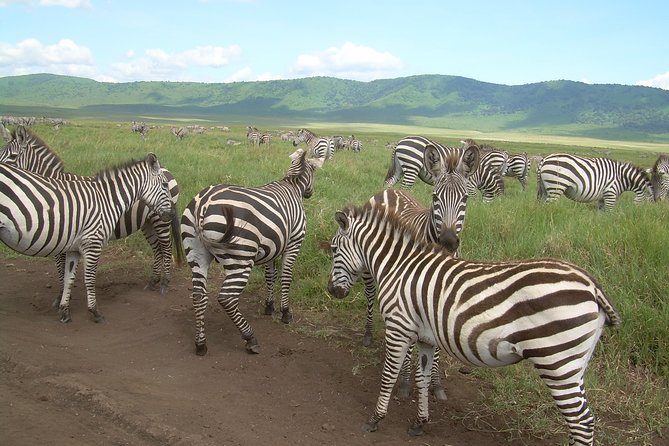
The final safari day starts at about 6:30 a.m. After a quick breakfast, you descend to the crater floor for a five-hour game drive.
The crater covers a huge area, but its enclosed form can make wildlife viewing feel concentrated. The itinerary lists African elephant, buffalo, black rhino, hippos, hyenas, cheetahs, and lions among the animals you may see. That is a powerful final morning, though sightings remain dependent on conditions and luck.
Lunch is taken at the hippo pool before you begin the steep climb back to the crater rim. The five-hour drive is followed by the ascent, so this is another full day rather than a quick farewell visit.
Ending at Ngorongoro makes sense. Tarangire opens with elephants and baobabs, the Serengeti provides the migration focus, and the crater closes the journey with a concentrated wildlife drive. Just note that the supplied schedule stops after the crater day. Confirm where you return afterward and how the package handles the final transfer.
Vehicle, meals, and comfort on the road
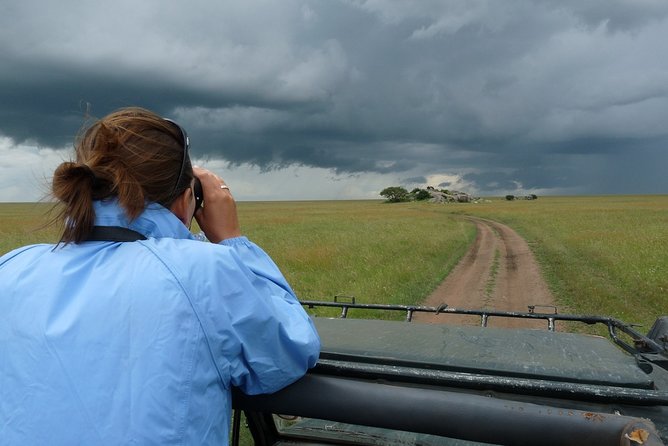
The private Jeep is one of the strongest practical features. Your group has its own 4×4 with a pop-up roof, refrigerator, and portable charging stations. A private vehicle gives you more control than a shared safari, though the exact amount of flexibility depends on the guide and park rules.
The refrigerator matters on long game drives. So do charging points, since you will likely use your camera and phone often. The pop-up roof gives you a better view while keeping you inside the vehicle.
The package includes six breakfasts, seven lunches, and six dinners, plus mineral water each day. Picnic lunches are built into the route, which saves time but means you should expect simple road meals rather than restaurant service in the middle of a park.
Accommodation is presented as lodge-based, with a choice of accommodation mentioned in the schedule. A budget-camping option is also described, including a personal chef. Confirm the exact accommodation level before booking, because this will greatly affect how the $4,185 price feels.
Is $4,185 per person good value?
The price is high, but this is a long private safari rather than a short park outing. You are paying for a private 4×4, a guide, park activities, meals, mineral water, and time across Tarangire, Serengeti, and Ngorongoro.
Flying Doctors insurance through AMREF is included for emergency evacuation during the safari. That is a useful safety provision, but it is not a replacement for full personal travel insurance.
The price excludes international flights, alcohol, soft drinks, tips for the guide, souvenirs, personal expenses, travel insurance, and visa fees. Visa fees are listed as $100 for American citizens and $50 for non-American citizens.
Value depends on your priorities. I would consider it stronger value for a small private group focused on migration timing than for someone who wants a low-cost introduction to Tanzania. Before paying, confirm the number of people in your private group, the accommodation type, the exact number of nights, and the final drop-off plan.
Who will enjoy this trip most?
You are a good match if you want several days in the Serengeti, care more about wildlife than resort comfort, and accept that migration sightings are governed by nature. Photographers, first-time safari visitors, and families or friends who want a vehicle reserved for their own group may find the format appealing.
The safari may not suit you if you dislike early starts, long drives, picnic lunches, or uncertain results. The schedule is active, and the northern route can feel rushed at times because it combines major distances with game viewing.
The strongest praise centers on service and organization. Guide Fredy is credited with making the trip feel stress-free, and the budget-camping version includes a personal chef. Those details matter because good food, steady planning, and a capable guide make several long days much easier.
Free cancellation is available up to 24 hours before the start time. Cancellations inside that window are not refunded, and changes are not accepted within 24 hours.
Should you book this Serengeti migration safari?
Book it if the northern Serengeti and a possible Mara River crossing are your main goals, and if you want a private vehicle with meals and emergency evacuation cover included. The route gives you more than a single migration day, along with Tarangire elephants and a memorable Ngorongoro finale.
I would not book without first clarifying the duration and accommodation. The package is priced and described as an eight-day safari in some places, yet the schedule lists seven days and the headline says approximately seven days. Once that point is clear, the trip looks like a strong choice for a serious wildlife holiday, provided you can handle long road days and the honest uncertainty of following wild animals.
FAQ
Where does the safari begin?
Pickup is offered from your hotel in Moshi or Arusha, with the stated start time of 8:00 a.m.
How long is the safari?
The headline duration is approximately seven days. The detailed schedule lists seven numbered days, while the package is also described as an eight-day safari. Confirm the exact duration before booking.
Is this a private tour?
Yes. Only your group participates in the private tour or activity.
When is the best time to see a Mara River crossing?
The information identifies July and August as the period with the biggest chance of seeing crossings as wildebeest move from Tanzania toward Kenya. It also notes that crossings may occur from mid-June through September.
Is a river crossing guaranteed?
No. The migration follows water and grass conditions, so a crossing cannot be guaranteed on a particular day.
What parks are included?
The route includes Tarangire National Park, Serengeti National Park, and the Ngorongoro Conservation Area.
What meals are included?
The package includes six breakfasts, seven lunches, and six dinners.
Is drinking water provided?
Yes. Mineral water is included on all days.
What kind of vehicle is used?
The safari uses a private 4×4 Jeep equipped with a refrigerator, portable charging stations, and a pop-up roof.
Are flights and visas included?
International flights and visa fees are not included. The listed visa fees are $100 for American citizens and $50 for non-American citizens.
Just added in Moshi
- Zanzibar: Stone Town tour and Nakupenda beach with Lunch★ 5.0 · 1 review
- day trip lake manyara★ 5.0 · 2 reviews
- Mt Kilimanjaro 6 days Marangu route hike★ 5.0 · 3 reviews
- machame route★ 5.0 · 16 reviews
- Private Cycle to Kilimanjaro Bike Park Safari★ 5.0 · 6 reviews
- West Kilimanjaro cycling Adventures★ 4.5 · 8 reviews
- Wildlife Extravaganza: Manyara, Tarangire & Ngorongoro in 3 Days★ 5.0 · 3 reviews
- 3 Days Private E-Bike Tour in West Kilimanjaro★ 5.0 · 3 reviews
Wildebeest Migration Safaris, compared.
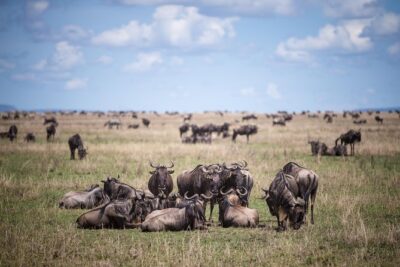
8 Days Great Wildebeest Calving Migration Safari from Arusha
Read our review →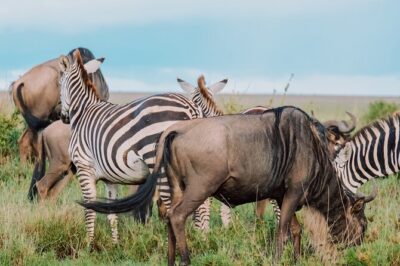
10-Day Serengeti Wildebeest Migration Safari from Arusha
Read our review →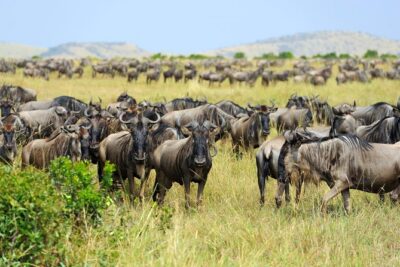
8 Day Spectacular Migration Serengeti mid -Range Tanzania Safari
Read our review →
9-Day Serengeti Migration Footsteps Tanzania Safari
Read our review →

Private 6-Day Great Migration Ndutu Serengeti Safari Tour
Read our review →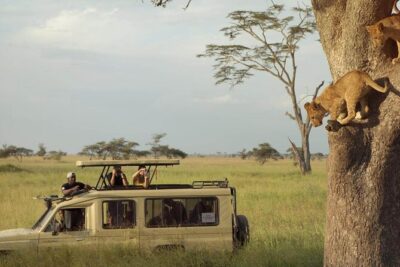
4 Day Great Migration Safari Serengeti & Ngorongoro Crater
Read our review →Browse the lists this tour appears in