
Reviewed · KILIMANJARO CLIMBS
6 Days Climb Private Tour in Mount Kilimanjaro
Kilimanjaro rewards patience. This six-day private climb follows the scenic Machame Route, moving from coffee farms and rainforest to glaciers, high desert, and the 5,895-meter Uhuru Peak. I like the strong safety setup, including regular health checks, rescue oxygen, first-aid training, and evacuation plans. I also like that the price includes guides, porters, camping gear, meals, water, rescue fees, and two Moshi hotel nights.
The main drawback is the pace. The summit day can run 12 to 15 hours after a midnight wake-up, and six days gives you less time to adjust to altitude than longer routes. The itinerary also has a few details worth confirming, including whether the final night is at Millennium Camp and the exact number of included meals.
In This Review
- Key points to know before you book
- What this six-day Kilimanjaro climb is really like
- Day 1: Machame Gate to Machame Camp
- Day 2: Moorland and the Shira Plateau
- Day 3: Lava Tower and Barranco Camp
- Day 4: Climbing Barranco Wall to Barafu Camp
- Day 5: Stella Point, Uhuru Peak, and the long descent
- Day 6: Millennium Camp to Mweka Gate
- Safety, guides, and the human side of the climb
- Camping gear, food, water, and comfort
- Is $1,980 good value?
- Who should choose this six-day route?
- Should you book the Nafika Tours climb?
- FAQ
- Where does the climb begin?
- Which Kilimanjaro route does this tour use?
- How high is Uhuru Peak?
- Is this a private tour?
- What equipment is included?
- Are meals and water included?
- Is a visa included in the price?
- Can I cancel for a full refund?
Key points to know before you book
- Machame Route scenery: You pass through five ecological zones, from Chagga farming country and rainforest to moorland, alpine desert, and the summit zone.
- Private group format: Only your own group takes part, giving you more control over walking speed, rest stops, and daily questions.
- Safety-first operation: Guides are trained in first aid and mountain rescue, with health checks, rescue oxygen, a first-aid kit, and evacuation plans.
- A serious summit day: Expect a midnight start, roughly four to five hours to Stella Point, another hour to Uhuru Peak, and a long descent.
- Camping support included: Tents, sleeping pads, sleeping bags, tables, chairs, treated water, meals, guides, porters, and rescue fees are covered.
- Strong customer approval: The operator has a five-star rating from 27 reviews, with praise focused on guides, porters, food, communication, and organization.
What this six-day Kilimanjaro climb is really like
At $1,980 per person, this is not a casual mountain walk. It is a demanding high-altitude expedition with a private support team, nightly camping, long walking days, and one very early summit attempt.
I see the Machame Route as a good choice if you want changing scenery and a more adventurous feel than a hut-based route. The trail is not described as technical climbing, but it does require steady uphill walking, confidence on uneven ground, and enough fitness to keep moving for many hours.
You should also understand the role of the crew. Guides lead the walking and monitor your condition. Porters carry much of the group equipment. A cook and camp staff are also part of the operation, judging from the included meals and the strong praise for food and camp service. This support lets you concentrate on walking, drinking water, eating, and resting.
The tour is private, so you are not placed with an unrelated large group. That matters on a mountain. A private group can usually discuss a slower pace or extra rest more easily, though the published schedule remains demanding.
More Kilimanjaro climbs:
- Kilimanjaro climb by Lemosho Route (7-day)
★ 5.0 · 651 reviews - Kilimanjaro climb, Machame Route (7-day)
★ 5.0 · 262 reviews - Kilimanjaro Climbing Lemosho Route 8 Days.
★ 5.0 · 186 reviews
Day 1: Machame Gate to Machame Camp
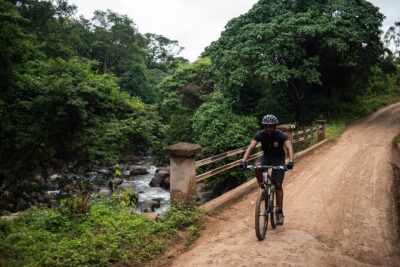
Your pickup is planned for about 8:00 a.m. after breakfast at your hotel in Moshi. The drive goes toward Machame Gate, passing coffee and banana plantations cultivated by the Chagga people.
That farming belt gives you a useful introduction to the mountain before the trail begins. Kilimanjaro is not just a summit in the distance. It supports communities, farms, guides, porters, and a long chain of local work.
At Machame Gate, the tour team handles the pre-hike formalities. Once those are complete, you begin walking through the montane forest toward Machame Camp at about 2,835 meters.
The listed walking time is about seven hours over 11 kilometers. That is a long first day, but the forest offers shade and a gradual introduction to the climb. Keep an eye out for blue monkeys high in the trees.
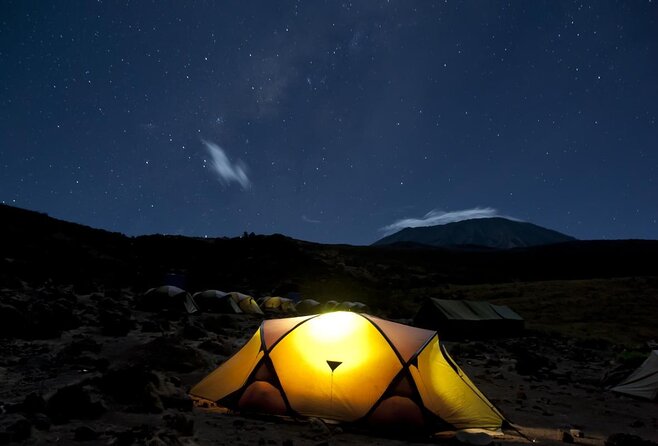
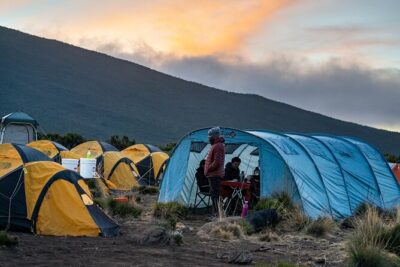
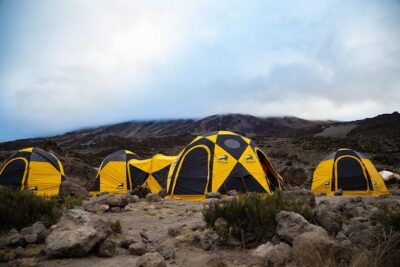
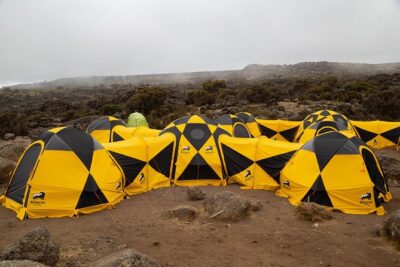
The first night also teaches you what camping on Kilimanjaro means. You sleep in a Mountain Hardware tent with a foam sleeping pad and sleeping bag. The operator says the tents are waterproof, warm, and roomy, which is useful after a wet forest walk.
Day 2: Moorland and the Shira Plateau
Day two covers about six kilometers in roughly five hours, ending at Shira Camp at 3,750 meters. You start around 8:00 a.m. after an early breakfast.
The trail climbs for about an hour toward the upper edge of the forest. Then the trees thin out and the moorland begins. The change is striking: less shade, more open ground, and a clearer sense that you are gaining height.
Lunch is described as a short meal of snacks, so do not expect a long midday break. After eating, you continue along a rocky ridge toward the Shira Plateau.
This is one of the first days when altitude may become noticeable. The walking distance is not huge, but the elevation gain is important. Follow the guide’s pace, drink the treated water provided, and do not hide a headache, nausea, dizziness, or unusual tiredness.
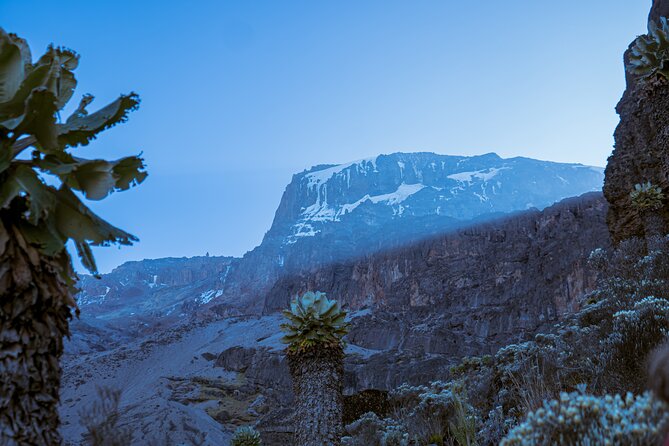
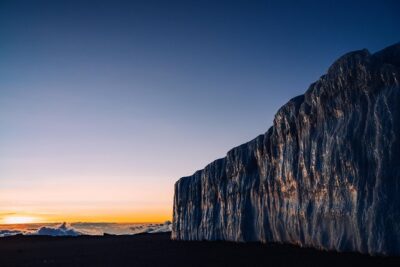
The reward is the view toward the Western Breach and its glacier. Shira Camp at 3,750 meters is high enough to make the next days meaningful for acclimatization. It is also a more exposed setting than the forest, so warm layers and weather protection matter.
Day 3: Lava Tower and Barranco Camp
Day three is one of the smartest parts of the route. You climb to Lava Tower at about 4,600 meters, then descend to Barranco Camp at roughly 3,900 meters for the night.
The principle is simple: gain height during the day, then sleep lower. That helps your body begin adjusting to altitude, although no itinerary can guarantee that you will avoid altitude sickness.
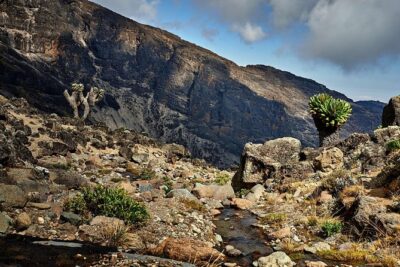
The day covers about 10 kilometers and takes around six hours. The trail enters the alpine desert, with less plant cover and a harsher feel. At Lava Tower, you reach a height greater than where you sleep that night.
The descent to Barranco takes about three hours. Along the way, you get photo opportunities toward the Western Breach and Barranco Wall. Barranco Camp sits in a valley below the wall, making it one of the more memorable camps on the route.
The sunset can be a highlight, but do not let the view distract you from recovery. By this point, your body has already completed several days of walking at altitude. Eat dinner, organize your clothing, and sleep as much as the conditions allow.
A few more options to weigh up in Moshi
- Safari Serengeti And Ngorongoro
★ 5.0 · 288 reviews - Climbing Kilimanjaro – Machame Route
★ 5.0 · 170 reviews - Climbing Kilimanjaro through 7 days Machame Route
★ 5.0 · 151 reviews - Kilimanjaro climb, Lemosho Route (8-day)
★ 5.0 · 148 reviews
Day 4: Climbing Barranco Wall to Barafu Camp
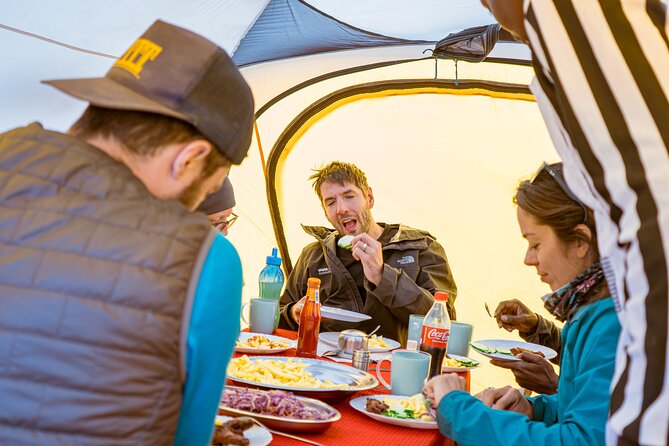
Day four is about eight kilometers and roughly eight hours, taking you from Barranco Camp at 3,900 meters to Barafu Camp at 4,640 meters.
The morning begins with the Barranco Wall. It looks intimidating, but the route description says it is not technical climbing. You still need to use your hands at times, watch your footing, and follow the guide carefully. The challenge is less about specialized equipment and more about sustained effort at altitude.
The giant groundsels around Barranco add a distinctly Kilimanjaro touch. These unusual plants make the route feel different from a standard high mountain trail.
After the wall, you continue toward Karanga Camp. Lunch is planned there, and the crew collects water for the next day because Karanga is the last water stop before the summit attempt.
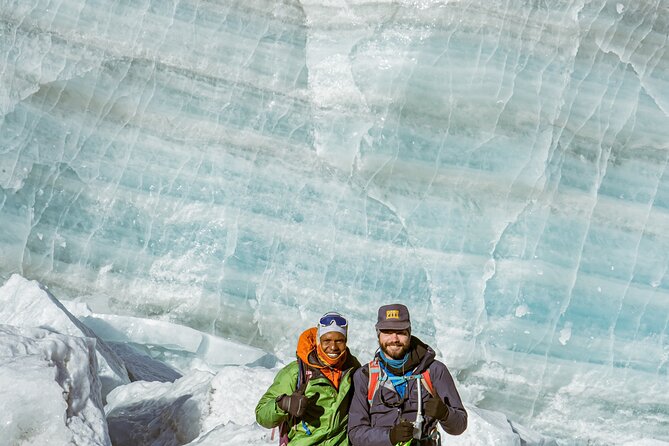
The final stretch to Barafu Camp crosses alpine desert and reaches the mountain’s base camp at 4,640 meters. Barafu means ice in Swahili, an appropriate name for a high, exposed camp before the summit.
This is a short night, even if you arrive with enough time to eat. You need to prepare clothing, headlamp, water, snacks, and any personal items before trying to rest. The midnight wake-up comes quickly.
Day 5: Stella Point, Uhuru Peak, and the long descent
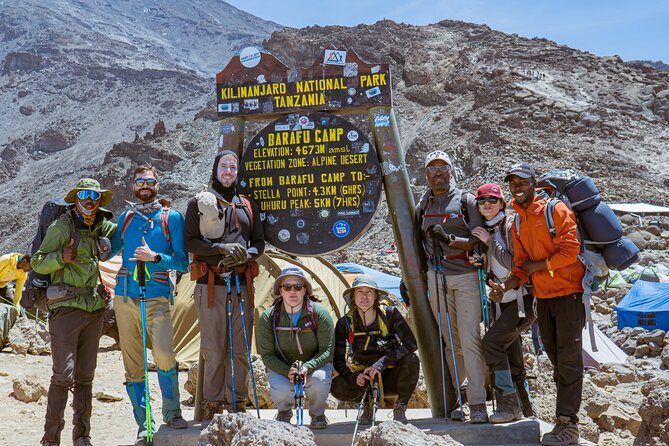
Summit day is the physical center of the trip. You are woken around midnight and given light tea and breakfast before beginning the climb.
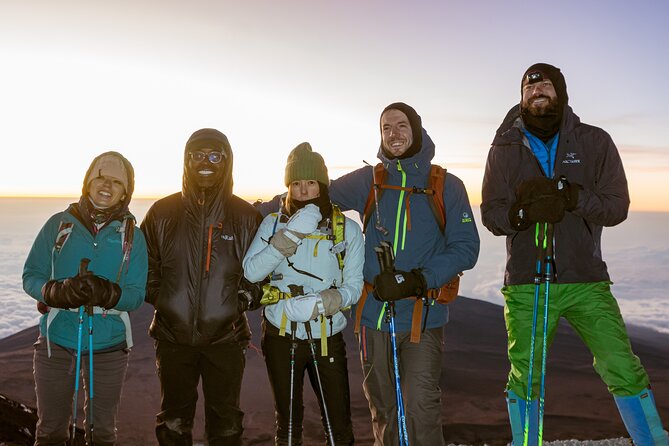
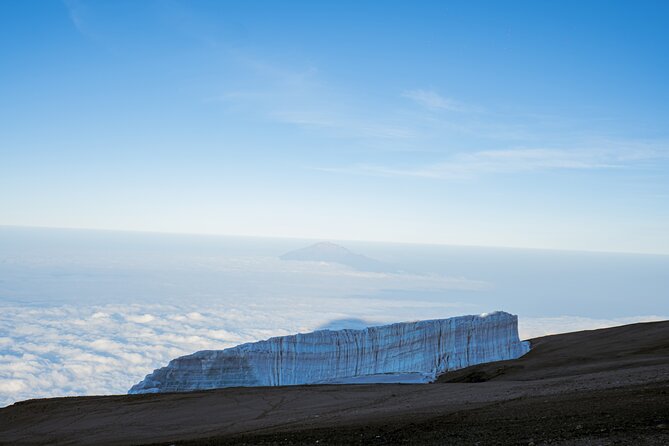
The first ascent takes about four to five hours, covering steep ground toward Stella Point on the crater rim at approximately 5,756 meters. The timing is designed to put you near the rim around sunrise, when the light can make the high mountain views especially striking.
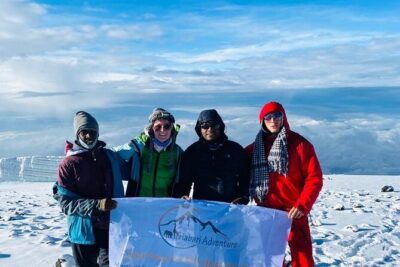
From Stella Point, the route continues for about one hour to Uhuru Peak at 5,895 meters. This is the highest point in Africa, and reaching it is the goal of the climb.
You will have time for photographs and a brief celebration, but summit time is not the moment for a long break. Cold, wind, fatigue, and altitude all matter. Listen to your guide and begin the descent when instructed.
The supplied schedule gives a total of 12 to 15 hours for the day, with about 15 kilometers of walking. Another part of the schedule lists approximately 10 hours, so I would ask Nafika Tours to confirm the expected timing before you pay. Either way, this is an exceptionally long day.
The descent continues from the summit area toward the overnight camp, identified in the plan as Millennium Camp at about 3,950 meters. Because the day-five description is cut off before the full descent details, confirm the exact route and camp arrangement with the operator.
This is the day when fitness, mental patience, and altitude response all matter more than speed. You do not need to race. A slow, steady pace is the sensible approach.
Day 6: Millennium Camp to Mweka Gate
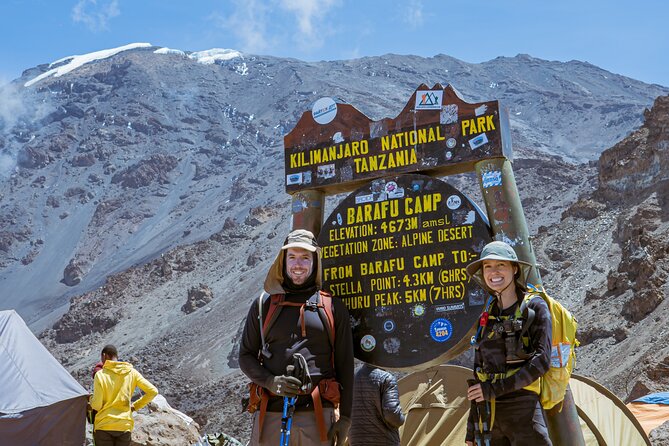
The final day descends about 14 kilometers in roughly five hours, from Millennium Camp at 3,950 meters to Mweka Gate at about 1,630 meters.
The habitat changes again, moving from moorland into tropical rainforest. After the cold, dry upper mountain, the return of thicker vegetation and warmer air can feel like a small victory.
At Mweka Gate, you collect your summit certificates. Then you can enjoy a cold drink before saying goodbye to the guides and crew.
A private car takes you back to your Moshi hotel. The return transfer and the promised hot shower are not minor comforts. After the summit day and final descent, they are exactly what you will want.
Safety, guides, and the human side of the climb
The strongest part of this package is the attention given to safety. The guides have first-aid and mountain-rescue training, and the company describes regular health checks for climbers.
Rescue oxygen is included on every climb. The operator also says it has evacuation plans for emergencies and includes rescue fees in the price. These details do not remove the risks of altitude, but they show that the team has planned for problems rather than treating them as an afterthought.
The human support also receives unusually strong praise. Specific guides named in the feedback include Karrimor, Mr. Dixon, Godchance, Meshaki, and Elias, who handled pre-trip communication for some customers. Since guide assignments can change, ask who will lead your group.
Food and camp service are another repeated strength. The package includes breakfast, lunch, and dinner during the climb, and the price also covers a cook or camp food service as part of the wider operation. Several people praised the meals, porters, guides, and the feeling of being well cared for.
You should still ask about porter welfare and tipping expectations. Fair wages are included, but tipping customs are separate from wages in many trekking operations. The supplied information does not specify a tipping amount, so request the company’s current guidance.
Camping gear, food, water, and comfort
You camp every night on the mountain. Nafika Tours provides tents, sleeping pads, sleeping bags, tables, and chairs.
The Mountain Hardware tents are described as waterproof, warm, and roomy. That is useful, but camping at altitude is never hotel comfort. You should expect cold nights, limited personal space, and the need to keep your sleeping system dry and organized.
Treated water is supplied throughout the trek. That saves you from arranging all water yourself, but you should still carry a personal bottle or hydration system suitable for each walking day.
The inclusion of tables and chairs gives the camp routine some structure. You can eat properly, sort gear, and rest without sitting on the ground. After a tiring day, those small comforts matter.
The package lists seven breakfasts, seven lunches, and seven dinners, even though the climb is described as six days. It may include meals connected with the Moshi hotel nights or another transfer day, but the wording is not clear. Confirm the meal count and which meals are served at the hotel.
Is $1,980 good value?
The $1,980 price includes private transportation, camping equipment, sleeping bags, treated water, guides, porters, rescue fees, emergency oxygen, a first-aid kit, and two hotel nights in Moshi.
That is a substantial amount, but the inclusions cover the costly and labor-heavy parts of a Kilimanjaro trip. You are paying for a local team, transport, food, mountain logistics, camp equipment, and support at altitude. The private format also gives you a more personal arrangement than a standard shared departure.
The price does not include the visa, listed as $50 per person. You should also budget for any personal gear, drinks outside the included meals, tips, insurance, and costs not specifically named in the package.
Value depends on how much support you want. If you prefer to arrange your own equipment and join a larger group, you may find cheaper options. If you want a private climb with rescue fees and equipment already arranged, this price is easier to justify.
Who should choose this six-day route?
This climb suits you if you have a moderate level of physical fitness and are ready for long uphill walks on consecutive days. You do not need to be a technical climber, since the Barranco Wall is described as nontechnical, but you do need stamina and a sensible attitude toward altitude.
I would choose it for someone who wants:
- A private group rather than a shared departure
- Major changes in scenery each day
- Full camping support
- A local operator in Moshi
- A serious but relatively compact Kilimanjaro schedule
- A team with clear safety procedures
I would hesitate if you want a relaxed holiday, dislike camping, or have no time to prepare physically. Six days is achievable for some people, but it leaves less time for acclimatization than longer routes. The summit day alone can last most of a day and night.
Before booking, ask for the exact day-five descent plan, the confirmed camp names, the final meal schedule, and the names of your lead guides. Those questions are especially useful because the published timing contains small inconsistencies.
Should you book the Nafika Tours climb?
I would recommend this tour if you want a private Machame Route climb with a strong support package and you accept the physical demands. The best reasons to choose it are the safety equipment, included rescue fees, experienced local crew, camping gear, private transport, and repeated praise for guides, porters, food, and communication.
I would not book it without checking the summit-day schedule first. The difference between a listed 10-hour day and a 12 to 15-hour day is important, even if the longer estimate is the more realistic one.
For a fit, prepared person who wants Kilimanjaro scenery and a local team handling the practical work, $1,980 is a reasonable package price. Go in ready to walk slowly, drink often, report symptoms early, and treat the mountain with respect. That is the best way to give this six-day climb a fair chance.
FAQ
Where does the climb begin?
The climb begins at Machame Gate after pickup from your Moshi hotel at about 8:00 a.m. on the first day.
Which Kilimanjaro route does this tour use?
The itinerary follows the Machame Route, beginning at Machame Gate and ending at Mweka Gate.
How high is Uhuru Peak?
Uhuru Peak is listed at 5,895 meters.
Is this a private tour?
Yes. Only your own group participates in the activity.
What equipment is included?
The package includes tents, sleeping pads, sleeping bags, tables, chairs, camping equipment, emergency oxygen, and a first-aid kit.
Are meals and water included?
Yes. Breakfast, lunch, dinner, and treated water are included, though the meal list shows seven meals of each type for a six-day schedule. Confirm the exact meal plan before booking.
Is a visa included in the price?
No. The listed visa cost is $50 per person.
Can I cancel for a full refund?
You can receive a full refund if you cancel at least 24 hours before the experience start time. Changes or cancellations made less than 24 hours before the start time are not accepted for a refund.
Just added in Moshi
- THE BEST 2 DAYS ON TREK – MARANGU ROUTE TOUR ADVENTURES★ 5.0 · 1 review
- Mount Kilimanjaro National Park Day Trip★ 5.0 · 7 reviews
- Mount Kilimanjaro Climbing in Tanzania Full-Day Trip★ 5.0 · 1 review
- Mount Kilimanjaro Day Hike – All-Inclusive, No Hidden Fees★ 4.0 · 7 reviews
- Mount Kilimanjaro Trekking Tour – Climb with Local Guides★ 5.0 · 1 review
- Mount Kilimanjaro: 7 Days Hike Lemosho Route★ 5.0 · 1 review
- Moshi:Chemka Hot Springs, Materuni Waterfalls & Coffee Tour★ 5.0 · 1 review
- Moshi Town: Walking Tour: Theme Urban lifestyle★ 3.1 · 4 reviews
Kilimanjaro Climbs, compared.
Chagga Villages in Mount Kilimanjaro Cycling Day Trip
Read our review →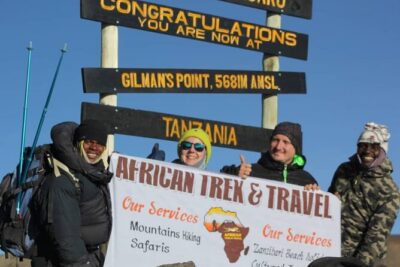
Browse the lists this tour appears in