
Reviewed · WILDEBEEST MIGRATION SAFARIS
6Days Migration Safari
Watch the herds move across Tanzania. This six-day safari links the Ngorongoro Crater with several Serengeti zones, giving you a strong chance to see both famous resident wildlife and the annual wildebeest migration. I especially like the small maximum group of six and the route’s mix of crater wildlife, Lobo sightings, Grumeti River animals, and northern Serengeti plains. The main consideration is timing: migration positions shift, and the itinerary covers long safari days rather than a relaxed lodge holiday.
I also like that full-board accommodation, taxes, fees, and transfers are included in the $3,700 price. Guides such as Laurent and Raymond have earned praise for clear explanations, safe driving, and adjusting the daily schedule to suit the group. Still, the trip description is not fully precise about the first day’s location and uses a midnight start time, so you should confirm the exact pickup, lodges, flight details, and daily driving plan before paying.
In This Review
- Key details that shape the safari
- Why this six-day route works
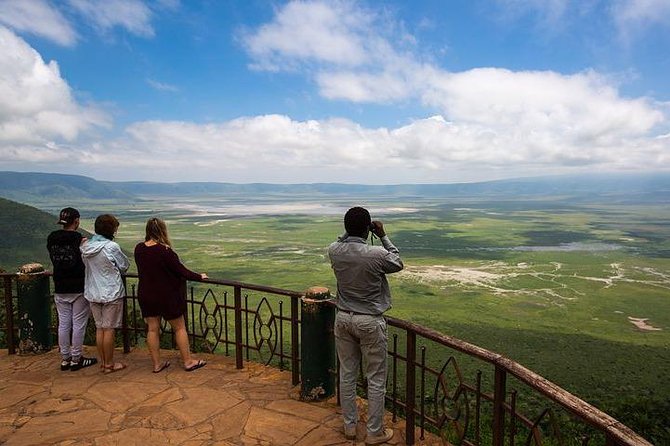
- Day 1: Ngorongoro Crater and the 600-meter descent
- Day 2: Lobo and the northern migration corridor
- Day 3: Lobo and the Grumeti River
- Day 4: Wagakuria in northern Serengeti
- Day 5: Western Serengeti and river wildlife
- Day 6: Kogatende airstrip and the return to Arusha
- What the $3,700 price covers
- Guides, safety, and the human side of the trip
- Practical questions to settle before booking
- Who will enjoy this safari most
- Should you book the six-day migration safari?
- FAQ
- Where does the safari start?
- Where does the safari end?
- How long does the safari last?
- What is the maximum group size?
- Is pickup offered?
- What accommodation arrangement is included?
- Is the Tanzania visa included?
- When does the wildebeest migration usually pass through Lobo?
- When can the migration usually be found in Wagakuria?
Key details that shape the safari
- Ngorongoro Crater descent: You drop more than 600 meters for an afternoon game drive in one of Tanzania’s most concentrated wildlife areas.
- Lobo in July, August, and late October to November: This zone can catch wildebeest moving north or returning south, while resident animals remain year-round.
- Wagakuria from August to October: Northern Serengeti is the main migration focus during this part of the season.
- Grumeti River wildlife: Hippos, large crocodiles, and dense groups of wildebeest can make the western section especially rewarding.
- Six-person limit: A small vehicle group gives you a better chance of sharing decisions about game-drive timing.
- Airport transfers and mobile ticket: Pickup is offered, with the trip beginning and ending at Kilimanjaro International Airport.
Why this six-day route works
This is a migration safari with a useful spread of habitats, not a single-location chase. You begin with the Ngorongoro Crater, then move through central and northern Serengeti areas before finishing near Kogatende airstrip.
That route matters because the wildebeest do not follow a fixed timetable. Their movement depends on rain, grazing, and water. A safari that includes Lobo, Wagakuria, and the Grumeti area gives you several possible wildlife zones instead of betting the whole trip on one patch of grass.
The route is also designed around long game-drive days. Most days are listed at about eight hours, which is a good amount of time for wildlife watching but a lot of time in a safari vehicle. You should expect a busy schedule, dusty roads, changing scenery, and plenty of patience between major sightings.
The group limit of six is a real advantage. It does not guarantee a private vehicle, but it keeps the group small enough for the guide to hear everyone’s preferences. If one person wants to wait near a waterhole and another wants to move on, a smaller group makes that conversation easier.
More migration safaris:
- Great Migration Safari In Tanzania
★ 5.0 · 71 reviews - 6 Days Tanzania Budget Camping Safari with Migration
★ 5.0 · 31 reviews - 8 Days Great Wildebeest Migration – Mara River Crossing
★ 5.0 · 28 reviews
Day 1: Ngorongoro Crater and the 600-meter descent
The first day is described under Arusha, but the activity itself is a descent of more than 600 meters into the Ngorongoro Crater for an afternoon safari. Confirm this wording with Ungitours, since the crater is the actual wildlife setting described for the day.
The crater is a strong opening to the trip because its enclosed floor can offer a high concentration of animals in a relatively compact area. You are not simply driving through open grassland. The steep crater walls create a dramatic setting, and the afternoon timing gives you a first proper game drive after arrival and transfers.
The stated duration is eight hours, which likely includes the day’s movement and safari time rather than eight uninterrupted hours on the crater floor. Your guide will determine the practical rhythm, but you should be ready for a full day.
One particularly useful detail comes from the experience of honeymoon guests, who saw a black rhino in Ngorongoro. That sighting is never guaranteed, but it shows why the crater can be a valuable part of a migration-focused trip even when the herds are elsewhere. Resident wildlife gives you something to look for beyond the seasonal movement.
Day 2: Lobo and the northern migration corridor
The second day heads toward the Lobo area of Serengeti National Park. The wildebeest normally pass through here around July and August as they move north, then again in late October and November as they travel toward the southern Serengeti.
This is one of the route’s most sensible choices. Migration safaris can become too narrowly focused on crossing scenes, but Lobo has resident game throughout the year. That means the day still has purpose if the herds are early, late, or simply elsewhere.
The phrase normally pass through is important. You should not book this trip expecting a guaranteed mass crossing on a specific day. Migration is a natural event, not a parade with a timetable. The value here is the chance to search a recognized corridor while also looking for animals that stay in the area year-round.
Plan for another eight-hour safari day. The long hours improve your odds of finding something special, but they can also be tiring. Comfortable clothing, patience, and a willingness to spend time watching rather than constantly moving will serve you well.
Day 3: Lobo and the Grumeti River
Day three continues around Lobo and the Grumeti River. This gives the guide more time to work the area instead of treating it as a quick stop on the way to somewhere else.
That extra time is useful because wildlife sightings are uneven. You might find activity near water, open grazing areas, or river habitat, but no guide can promise where animals will be at a particular hour. Staying in the zone for another full day gives you a second chance at the places you missed on day two.
The Grumeti River adds a different focus to the safari. The area is known in this itinerary for hippos and large crocodiles, while the wider zone supports resident game year-round. You may also see wildebeest gathering near waterholes in the morning, sometimes in strikingly dense groups.
The description compares those herds to ants around a nest. The image is apt: the spectacle is not only a river crossing. Large numbers of animals crowding a waterhole can be just as memorable, especially when viewed quietly from the vehicle.
A few more options to weigh up in Moshi
- Kilimanjaro climb by Lemosho Route (7-day)
★ 5.0 · 651 reviews - Safari Serengeti And Ngorongoro
★ 5.0 · 288 reviews - Kilimanjaro climb, Machame Route (7-day)
★ 5.0 · 262 reviews - Kilimanjaro Climbing Lemosho Route 8 Days.
★ 5.0 · 186 reviews
Day 4: Wagakuria in northern Serengeti
The fourth day shifts attention to Wagakuria in the northern Serengeti. The migration can normally be found here from August through October, making this part of the route especially relevant for late summer and early autumn departures.
Northern Serengeti is included for a clear reason: it is one of the key areas to search for the herds during that season. You should ask Ungitours how the route changes outside those months, because the best migration zone may not match this exact pattern in another period.
The daily plan again allows about eight hours. That gives you time to search broad areas, stop when something interesting appears, and adjust the day according to animal movement. Guide flexibility is important here, and Laurent and Raymond are both praised for explaining what you are seeing and adapting the timing to the group’s wishes.
A small group helps on a day like this. You are more likely to have a practical discussion about whether to stay with an animal sighting, move toward a water source, or continue looking for the herds.
Day 5: Western Serengeti and river wildlife
The fifth day focuses on western Serengeti, with the Grumeti River again playing a major role. Large hippo groups and huge crocodiles are among the stated highlights, and the river gives this day a different character from the open migration search in Wagakuria.
The wildebeest can gather around waterholes in the middle of the morning. That timing is worth noting. Many people imagine safari action at sunrise and sunset, but waterholes can become highly active later in the morning, when animals need to drink and congregate in large numbers.
This day also shows why a migration safari should not be judged only by whether you see a river crossing. The Grumeti region can reward you with resident game, hippos, crocodiles, and massed wildebeest without requiring a dramatic crossing scene.
At eight hours, it remains a full day. You may enjoy the slow pace if you like watching animal behavior, but it could feel repetitive if you want frequent changes of scenery. The itinerary is best for someone who accepts that wildlife viewing includes quiet stretches.
Day 6: Kogatende airstrip and the return to Arusha
After breakfast at the lodge, you depart for Kogatende airstrip. A game drive takes place en route, so the final day is not only a transfer.
This is a smart use of departure time. The drive to the airstrip becomes one last chance to see wildlife, and the route through northern Serengeti may produce a final sighting before your flight to Arusha. The listed duration is about six hours, shorter than the other safari days but still substantial.
The information says you fly from Kogatende to Arusha, while the meeting details name Kilimanjaro International Airport as both the start and end point. Confirm whether a further transfer from Arusha to Kilimanjaro Airport is included and how much time you should allow.
That question matters if you have a same-day international flight. The package includes transfers in both directions, but the exact handoff between the airstrip, Arusha, and Kilimanjaro Airport should be written clearly in your booking confirmation.
What the $3,700 price covers
At $3,700 per person, this is a major purchase. The value depends on how much you use the included safari time and whether the accommodation and internal transport match your expectations.
The price includes:
- All fees and taxes
- Full-board accommodation during the safari
- Transfers in both directions
- The planned safari program
- The return movement from Kogatende toward Arusha
Full board is important in a remote safari setting. You are not constantly searching for restaurants or paying for each meal as the vehicle moves between parks. It also makes the package easier to budget, although you should confirm whether drinks, gratuities, and any other personal costs are separate because they are not specified.
The internal movement toward Kogatende and the flight to Arusha are also meaningful parts of the value. A route that ends with a game drive to an airstrip can save you from retracing every road by vehicle, though the exact flight inclusion should be confirmed because the package summary does not spell out the airfare separately.
The Tanzania visa is not included. The stated cost is $50 for United States and Canadian passport holders, and $100 for other listed passport categories in the booking information. Check your own nationality and current visa rules before departure, since the supplied amounts should not be treated as universal.
Guides, safety, and the human side of the trip
The strongest personal praise is directed at the guides and the trip coordinator, Faiza. Laurent is described as caring, friendly, professional, and able to adjust safari times to suit the group. Raymond is praised for answering questions clearly and explaining what the group was seeing.
Those details matter more than polished promises. On safari, your guide controls much of the experience: how long you wait, how carefully you approach wildlife, and how much meaning you take from each sighting. A guide who explains behavior well can turn a distant animal into a memorable encounter.
Faiza is also praised for careful planning, professional email communication, and providing a local number for contact during the trip. That direct support can be reassuring when you are arranging an expensive journey from overseas.
The trip allows most people to participate and has a maximum of six people. No special restriction is stated, but the long days and repeated vehicle travel mean you should be realistic about your comfort with a full schedule.
Practical questions to settle before booking
The midnight start time is the first item I would clarify. It may refer to the system’s default start time rather than the actual pickup hour, but you should not leave that uncertain.
Ask for the following in writing:
- Your exact pickup time and location at Kilimanjaro International Airport
- The lodge names for each night
- Whether the Kogatende to Arusha flight is included in the $3,700 price
- How the final transfer reaches Kilimanjaro Airport
- The planned route if migration conditions differ from the expected seasonal pattern
- What drinks, tips, and personal expenses are excluded
- The passport and visa requirements that apply to you
The cancellation terms are relatively flexible before departure. You can cancel at least 24 hours before the local start time for a full refund. Cancellations or changes made within 24 hours are not accepted for a refund.
Who will enjoy this safari most
I would recommend this trip to you if migration is your main goal but you also want reliable resident wildlife and several Serengeti zones. The route gives you Ngorongoro, Lobo, Wagakuria, and the Grumeti area instead of relying on one setting.
It also suits you if you value a small group and a guide who will explain what you see. Couples may find the service appealing, especially for a honeymoon, since the planning support and personal attention have been praised.
You may want a different format if you prefer short drives, fixed luxury details, or a slower lodge stay. Six days with several eight-hour days is active. The trip description also leaves some accommodation and flight details open, so people who need a tightly specified package should ask more questions first.
Should you book the six-day migration safari?
I would book this safari if you accept the uncertainty of migration and want a broad route with strong wildlife potential. The combination of Ngorongoro Crater, Lobo’s year-round game, Wagakuria’s seasonal migration, and Grumeti River wildlife gives the itinerary real variety.
The $3,700 cost can be fair when full board, taxes, transfers, guiding, and the internal return journey are included. Before committing, confirm the lodges, air transfer, first-day location, and final airport connection. If those details match your expectations, Ungitours appears well suited to you if you want attentive coordination, a small group, and long days devoted to finding Tanzania’s animals.
FAQ
Where does the safari start?
The stated starting point is Kilimanjaro International Airport, on Kilimanjaro Airport Road in Tanzania.
Where does the safari end?
The stated ending point is also Kilimanjaro International Airport.
How long does the safari last?
The experience lasts approximately six days.
What is the maximum group size?
The maximum is six travelers.
Is pickup offered?
Yes. Pickup is offered, and transfers in both directions are included.
What accommodation arrangement is included?
Full-board accommodation during the safari is included.
Is the Tanzania visa included?
No. The Tanzania visa is not included. The supplied information lists a $50 visa cost for United States and Canadian passport holders and $100 for other specified passport holders.
When does the wildebeest migration usually pass through Lobo?
The migration normally passes through Lobo around July and August, then again in late October and November on its way toward the southern Serengeti.
When can the migration usually be found in Wagakuria?
The migration can normally be found around Wagakuria from August through October.
Just added in Moshi
- Zanzibar: Stone Town tour and Nakupenda beach with Lunch★ 5.0 · 1 review
- machame route★ 5.0 · 16 reviews
- day trip lake manyara★ 5.0 · 2 reviews
- Mt Kilimanjaro 6 days Marangu route hike★ 5.0 · 3 reviews
- Private Cycle to Kilimanjaro Bike Park Safari★ 5.0 · 6 reviews
- West Kilimanjaro cycling Adventures★ 4.5 · 8 reviews
- Wildlife Extravaganza: Manyara, Tarangire & Ngorongoro in 3 Days★ 5.0 · 3 reviews
- 3 Days Private E-Bike Tour in West Kilimanjaro★ 5.0 · 3 reviews
Wildebeest Migration Safaris, compared.
8 Days Great Wildebeest Calving Migration Safari from Arusha
Read our review →
10-Day Serengeti Wildebeest Migration Safari from Arusha
Read our review →
8 Day Spectacular Migration Serengeti mid -Range Tanzania Safari
Read our review →
9-Day Serengeti Migration Footsteps Tanzania Safari
Read our review →
Private 6-Day Great Migration Ndutu Serengeti Safari Tour
Read our review →
4 Day Great Migration Safari Serengeti & Ngorongoro Crater
Read our review →Browse the lists this tour appears in