
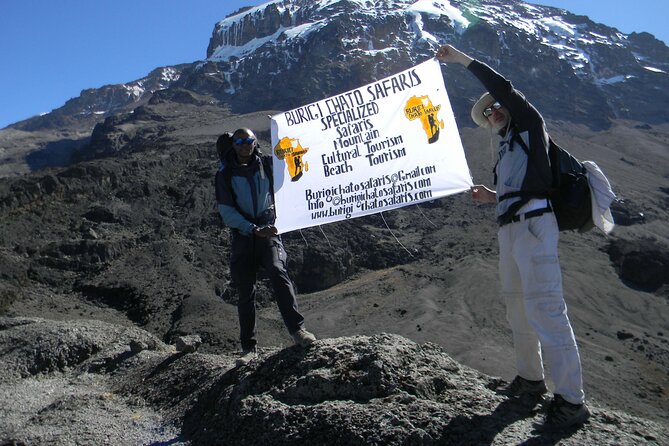
Reviewed · LEMOSHO ROUTE CLIMBS
7 Days Kilimanjaro Climbing | Hiking Tour via the Lemosho Route
Africa’s highest peak demands patience and grit. This seven-day Lemosho Route climb gives you a guided path to Uhuru Peak, with park transfers from Moshi, camping equipment, meals, and a support crew included in the basic price. You move from thick forest to open moorland, volcanic rock, and the cold high camps before making the summit attempt.
I like the gradual route design, especially the Lava Tower acclimatization walk before descending to Barranco Camp. I also like the practical package: tents, meals, guide services, and transfers from Moshi are covered, so you can focus on walking rather than organizing camp logistics. The main consideration is the schedule. Seven days is a serious undertaking, with a long summit night and a demanding descent, and altitude sickness can prevent even fit hikers from reaching the top.
In This Review
- Key details before you commit
- What the $965 package really gives you
- Day 1: Londorosi to Big Tree Camp
- Day 2: Shira Camp and the first open views
- Day 3: Lava Tower at 4,640 meters, then Barranco
- Day 4: The Barranco Wall and Karanga Valley
- Day 5: Karanga to Barafu Camp at 4,664 meters
- Day 6: The long night to Uhuru Peak
- Day 7: Mweka Gate, certificates, and Moshi
- Food, tents, guides, and group support
- What the route does better than a rushed climb
- Who should book this climb?
- Should you book the 7-day Lemosho Route?
- FAQ
- Where does the Kilimanjaro climb start?
- What time does the tour start?
- How long is the experience?
- Is the Lemosho Route guided?
- Are meals included?
- Are tents provided?
- Is airport pickup included?
- What costs are not included?
- Can I cancel for a full refund?
Key details before you commit
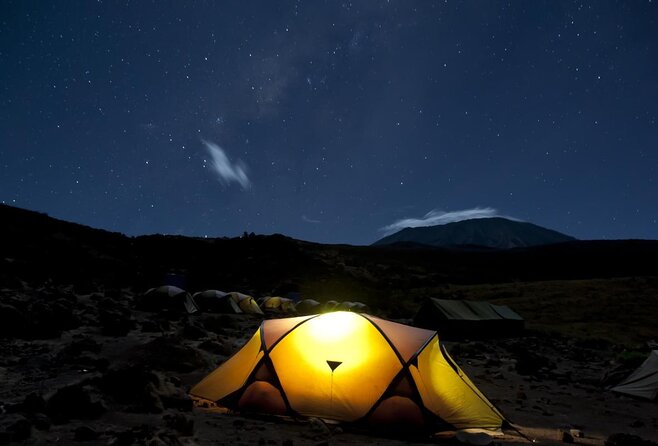
- Lemosho begins in lush forest, where you may spot black-and-white colobus monkeys before reaching Big Tree Camp.
- Day 3 uses a useful altitude strategy, climbing to Lava Tower at 4,640 meters before dropping to Barranco Camp.
- The summit morning is cold and lengthy, taking roughly six to seven hours from Barafu Camp to Uhuru Peak.
- Camping supplies and meals are included, helping keep your personal pack lighter.
- The package costs $965 per person, but tipping, insurance, visas, flights, airport pickup, and one pre-tour hotel night are extra.
- The published maximum is 500 people, so ask about your actual group size before booking.
What the $965 package really gives you
At $965 per person, this climb offers solid value if you want the main mountain services bundled together. Park fees and taxes, a guide, six breakfasts, six dinners, and seven lunches are listed as included, along with transfers from Moshi and camping tents.
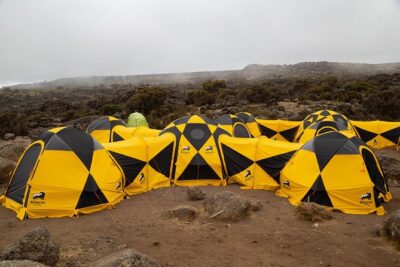
That matters on Kilimanjaro. You are not simply paying for a walking route. You are paying for access arrangements, camp support, food, guiding, and transport between trailheads. The included tent is especially useful if you do not want to buy or carry your own shelter.
Still, read the inclusions carefully. Tipping the guide is not included, and you also pay separately for visas, medical and travel insurance, local and international flights, airport pickup, and one night of hotel accommodation before the climb. The description says camping gear will be provided, but it specifically identifies tents. Ask what other equipment is supplied, especially sleeping bags and sleeping mats.
There is also a small wording issue worth clearing up before payment. The summary says all meals are included, while the meal list shows six breakfasts, six dinners, and seven lunches. That may simply reflect the seven-day schedule, but confirm exactly what you receive on each day.
More Kilimanjaro climbs:
- Kilimanjaro climb by Lemosho Route (7-day)
★ 5.0 · 651 reviews - Kilimanjaro climb, Machame Route (7-day)
★ 5.0 · 262 reviews - Kilimanjaro Climbing Lemosho Route 8 Days.
★ 5.0 · 186 reviews
Day 1: Londorosi to Big Tree Camp
Pickup is scheduled around 8:30 a.m. from the Burigi Chato Safaris office on Mkwawa Street in Moshi. The itinerary describes the vehicle arriving around 10:00 to 10:30 a.m., so confirm the exact pickup time with the operator before departure.
The drive heads toward Londorosi Gate, with stops for fresh food and a chance to visit a supermarket if you need extra supplies. This is useful, since it gives you one last chance to buy personal snacks or other small items before the trail begins.
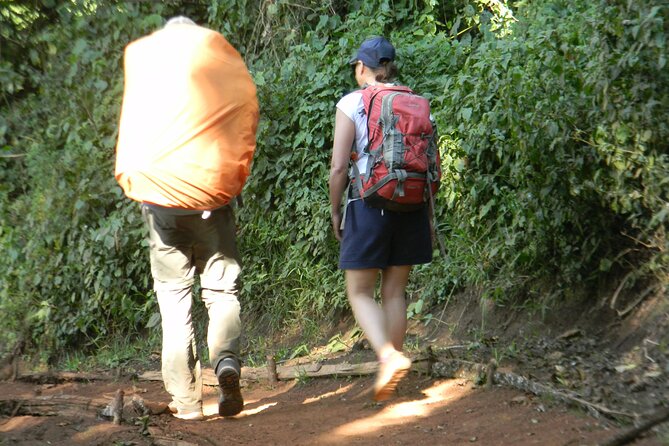
At Londorosi, the group completes park registration and has lunch. A further drive takes you to Lemosho Gate, the true walking start. The first hours pass through thick forest, with black-and-white colobus monkeys sometimes visible among the trees.
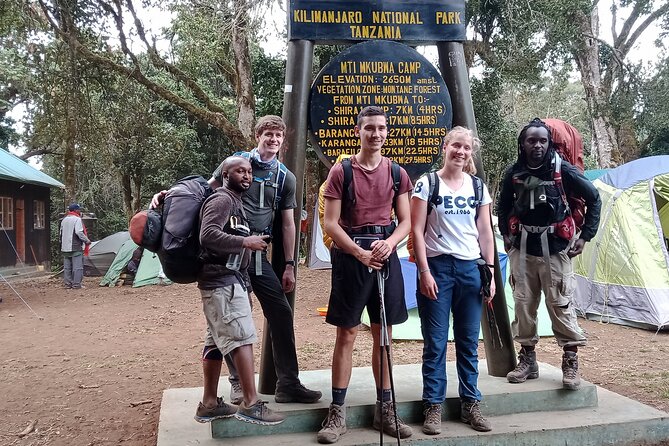
The day ends at Big Tree, also called Mti Mkubwa Camp. The walk is listed at about four hours, making this the gentlest start of the week. You have dinner at camp and spend the night in a tent.
The forest section is one of the route’s pleasures. It feels far removed from the open summit slopes that come later, and the gradual start lets you settle into the group’s walking rhythm. The less pleasant part is the administrative delay at the gates, though that is normal for a national park climb and not wasted time.
Day 2: Shira Camp and the first open views
Day 2 covers about eight kilometers and takes roughly six hours. You continue through forest before moving into savannah and rougher ground, crossing several streams on the way toward Shira Camp 1.
From there, the route continues to Shira Camp 2. The Shira area is open and spacious, with views toward Kibo, the volcanic summit cone that you will later approach. After the enclosed forest of Day 1, this change feels dramatic.
The terrain also becomes less forgiving. You lose the shade of the trees and begin walking across more exposed ground. Take the guide’s pace seriously here. A slow, steady rhythm is more useful than trying to prove your fitness early in the climb.
The itinerary describes lunch at Shira Camp 1 before continuing to Camp 2. Since the meal list includes lunches, food should be part of the daily plan, but confirm the timing if you have dietary needs or need frequent snacks.
Day 3: Lava Tower at 4,640 meters, then Barranco
Day 3 is one of the most important days for altitude management. You cross moorland and giant heather before reaching the Shira Plateau, described as one of the longest flat high areas in the world.
The key move is the climb to Lava Tower at 4,640 meters. You eat lunch there, then descend to Barranco Camp at about 3,960 meters. This high-up-then-down pattern gives you time at greater altitude without sleeping as high as Lava Tower.
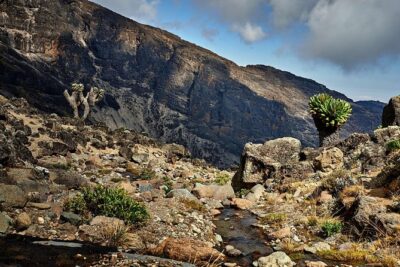
You may see giant Senecio kilimanjari plants along the descent, a striking feature of Kilimanjaro’s upper slopes. Barranco Camp also brings broad views across the surrounding plains when the weather is clear.
The walk is listed at about five hours, but altitude can make a moderate distance feel much longer. Drink as directed by your guide, walk slowly, and speak up if you feel unwell. One person on this operator’s trips experienced altitude sickness and did not summit, while the guide, porters, and cook continued to provide support. That is a useful reminder: reaching Uhuru Peak is never guaranteed, even with good organization.
More Lemosho Route climbs:
- Kilimanjaro climb, Lemosho Route (8-day)
★ 5.0 · 148 reviews - Kilimanjaro climb, Lemosho Route (6-day)
★ 5.0 · 129 reviews - Kilimanjaro Lemosho Route
★ 5.0 · 71 reviews - Private Kilimanjaro Hike 7 Day Lemosho Route
★ 5.0 · 60 reviews
Day 4: The Barranco Wall and Karanga Valley
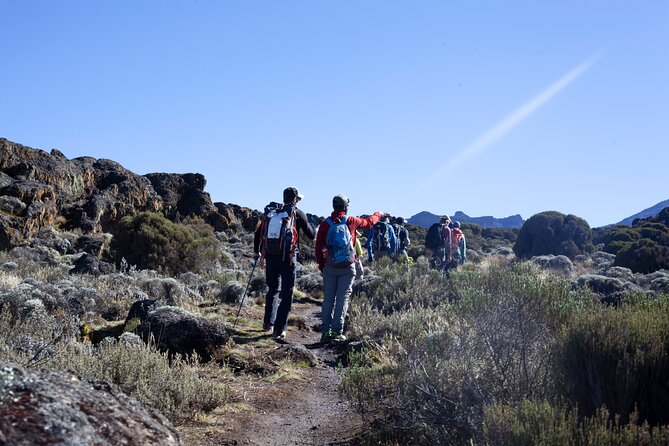
After breakfast, you tackle the Barranco Wall. The route description calls it technical but not extremely difficult. That distinction matters. You should expect hands-on movement and a long, tiring section, but not technical mountaineering with ropes based on the information provided.
Your guide’s help is most valuable here. Follow instructions, take your time, and avoid treating the wall as a race. The route then drops into the Karanga Valley at about 3,963 meters, where you rest, eat, and spend the night.
This is a short day on paper, about five hours, but it is not an easy stroll. The Barranco Wall tests balance, confidence, and patience. I like this section because it gives the climb a sense of adventure without requiring the technical equipment associated with a true rock climb.
The overnight at Karanga also breaks up the approach to Barafu. That helps keep the daily distances manageable, although the high altitude still makes every task slower.
Day 5: Karanga to Barafu Camp at 4,664 meters
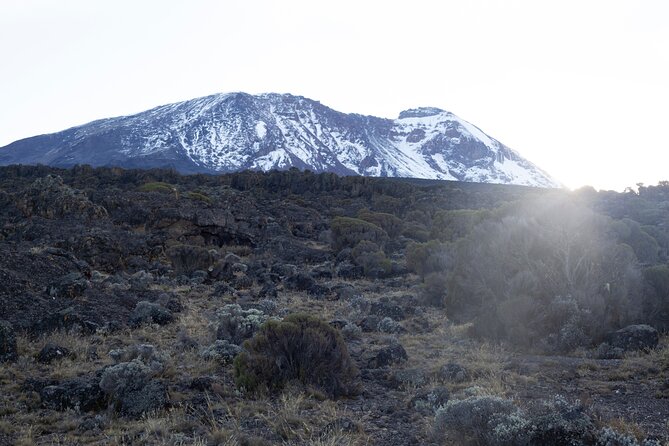
The route follows a ravine and then climbs west toward Barafu Camp. The distance is only about three kilometers, but the walk is described as short and difficult, with a steady route marked by cairns.
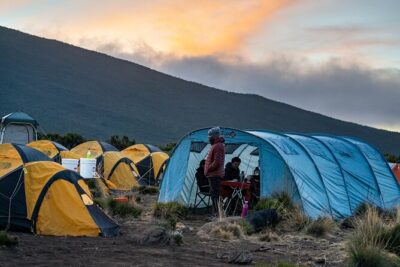
Barafu sits at about 4,664 meters. Vegetation is sparse here, and the site can be very cold. The only wildlife specifically noted around camp is the white-necked raven. Water is not available for washing at this elevation, and there are no streams above this point, so prepare for a basic camp experience.
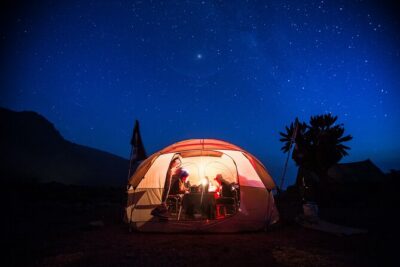
You eat an early dinner and rest before the summit attempt. The start is usually around 11:00 p.m. to midnight. This split schedule is practical, but it can feel strange. You finish dinner, crawl into a tent, and try to sleep before getting up again while it is still dark.
Pack your summit layers where you can reach them easily. The itinerary warns that June temperatures at the summit can fall to minus 20 degrees Celsius. That figure is a serious cold-weather warning, not a minor footnote. Bring enough warm clothing and ask the operator exactly what clothing and sleeping equipment are included.
Day 6: The long night to Uhuru Peak
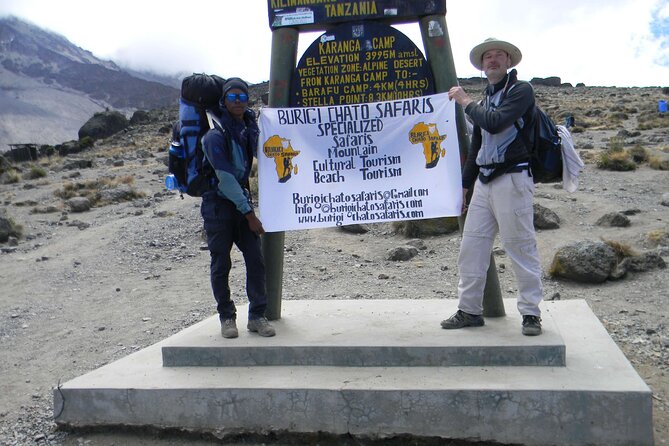
The summit day begins with coffee and biscuits or cookies before you leave Barafu. You put on your upper layers and start the slow climb toward Uhuru Peak.
The walk from Barafu to the summit takes about six to seven hours. You should expect darkness, cold, thin air, and a pace controlled by the guide. Follow the instruction to walk slowly. On Kilimanjaro, conserving energy matters more than covering ground quickly.
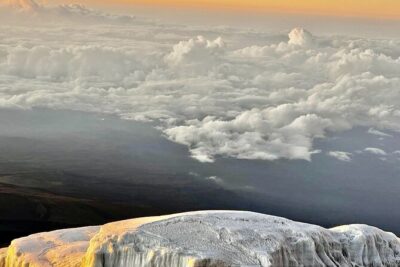
If weather allows, sunrise and the views from Uhuru Peak can be the emotional high point of the trip. You have time for a short stay at the summit before beginning the descent. The provided itinerary gives about eight hours for this section, though the summit day may feel longer because of the early start and return to camp.
Altitude is the central challenge. The published trip includes guide support, but no company can remove the risk of altitude sickness. If you become ill, descending is the sensible choice. One hiker on a similar outing did not summit because of altitude sickness, while two companions reached the top, with one later needing help down. That is exactly why you should judge success by making safe decisions, not only by collecting a summit certificate.
The descent after the summit is physically tough. Your legs are tired, and loose volcanic ground can make downhill walking awkward. Keep water, snacks, and an extra layer accessible rather than buried in your pack.
Day 7: Mweka Gate, certificates, and Moshi
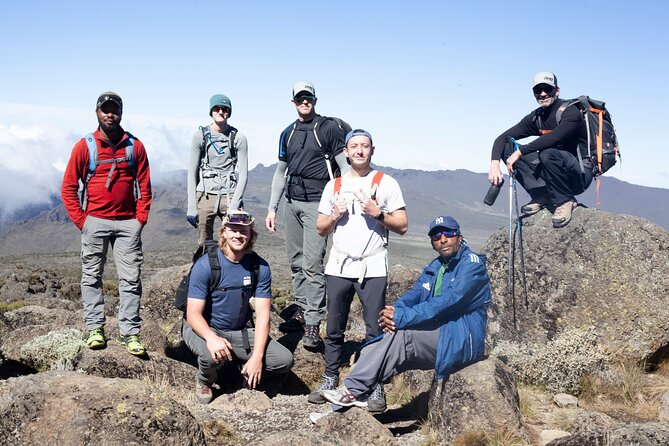
After breakfast, you descend to Mweka Gate. The final walking day is listed at about five hours. At the gate, you sign out and receive certificates before the driver takes you back to the Moshi meeting point.
This return is more than a transfer. It marks the shift from high mountain routine back to ordinary town life. The operator notes that you can arrange a quick beer celebration with the group after reaching the local area, or return to your hotel and prepare for a flight, Zanzibar visit, or safari.
The schedule is useful if you are combining Kilimanjaro with other Tanzania plans. Do not assume, however, that airport transport or hotel accommodation is included. Airport pickup is specifically excluded, and the one-night hotel stay before the tour is also your responsibility.
Food, tents, guides, and group support
The food package is a strong part of the offer. Breakfast and dinner are listed for six days, with lunch listed for all seven days. Since the summary says all meals are included, ask for a day-by-day meal plan and explain any dietary restrictions before you arrive.
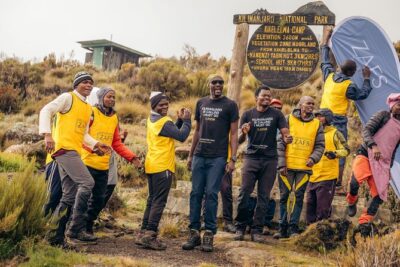
The support team has earned strong praise for its friendly service, gear, tents, cooks, guides, and porters. The most consistent positive detail is attitude: the mountain crew is described as smiling, attentive, professional, and committed to keeping people comfortable.
That does not mean you should skip practical questions. Ask how many people will be in your actual walking group, how many porters support the group, what the tents include, and how altitude symptoms are handled. The stated maximum of 500 people is unusually high for a single activity, although it does not tell you the size of your specific party.
The meeting point is the operator’s office in Shanty Town, Moshi. Pickup is offered, but airport pickup is not included. The booking confirmation is issued at the time of reservation, and the activity is described as suitable for most people. That should not be read as a guarantee of easy participation. You need to be ready for high-altitude hiking, cold nights, and a demanding summit attempt.
What the route does better than a rushed climb
Lemosho gives you a varied approach. You begin under forest canopy, pass through heather and moorland, cross the Shira Plateau, visit Lava Tower, and then move through the Barranco and Karanga areas before reaching the high Barafu camp.
The route also uses an important acclimatization pattern on Day 3. Sleeping lower than your highest daytime point is a sensible feature, and the extra days are more helpful than a very short itinerary would be.
The trade-off is that seven days remains a compact schedule for Kilimanjaro. You have several five-hour days, but the summit push is long and the final descent comes after very little rest. If you want a slower pace, ask if a longer version of the Lemosho route is available before booking.
Who should book this climb?
I would look closely at this trip if you want a guided Kilimanjaro attempt with meals, tents, park charges, and Moshi transfers bundled into one price. It suits hikers who can handle long days, basic camping, cold conditions, and the possibility that altitude may change the plan.
It is less suitable if you need a private group, hotel comfort every night, airport transfers, or a guaranteed summit. The public information does not promise any of those things.
The company has a perfect five-star score from nine submitted ratings, with particular praise for the director Geoffrey, the guides, cooks, porters, organization, and equipment. Since the supplied details do not identify every guide by name, ask for your lead guide’s name and experience before departure.
Should you book the 7-day Lemosho Route?
Book it if the $965 price fits your wider Tanzania budget, you understand the extra costs, and you want a practical seven-day route with a real acclimatization day. The forest, Shira Plateau, Lava Tower, Barranco Wall, and summit sunrise offer plenty of variety.
Before paying, confirm the pickup time, actual group size, full gear list, meal schedule, tipping expectations, and altitude safety plan. If you prefer more time to adjust to the height, ask about adding a day. Kilimanjaro rewards patience, and the summit is only one part of a successful climb.
FAQ
Where does the Kilimanjaro climb start?
The listed meeting point is Burigi Chato Safaris on Mkwawa Street in Shanty Town, Moshi, Tanzania. Pickup is offered, and the activity ends back at the meeting point.
What time does the tour start?
The meeting point lists an 8:30 a.m. start. The Day 1 schedule says the driver arrives around 10:00 to 10:30 a.m., so confirm the precise pickup time with the operator.
How long is the experience?
The climb lasts approximately seven days.
Is the Lemosho Route guided?
Yes. A guide is included and leads the group toward Uhuru Peak.
Are meals included?
Yes. The included meal list gives six breakfasts, six dinners, and seven lunches. The general tour description says all meals are included, so confirm the exact daily schedule if needed.
Are tents provided?
Yes. Camping tents are provided. The information specifically mentions tents, so ask the operator which other camping items are included.
Is airport pickup included?
No. Airport pickup costs are not included in the tour price.
What costs are not included?
Tipping the guide, visas, medical and travel insurance, local and international flights, airport pickup, and one night of hotel accommodation before the tour are excluded.
Can I cancel for a full refund?
Yes, if you cancel at least 24 hours before the experience start time. Cancellations made less than 24 hours before the start are not refunded. If poor weather causes the activity to be canceled, you are offered another date or a full refund.
More Treks in Moshi
- Best Kilimanjaro hiking day trip tour with Kilinge Adventures
★ 4.5 · 54 reviews - #1. Best Kilimanjaro Day hike Tour-Machame Route-ISMANI
★ 4.2 · 47 reviews - Best Kilimanjaro Adventure 7 days Machame route Trekking
★ 5.0 · 42 reviews - Kilimanjaro 7 Day Private Trekking Experience
★ 5.0 · 40 reviews
Just added in Moshi
- 8 days Lemosho route Climbing Mt. Kilimanjaro★ 5.0 · 13 reviews
- 9 Days 8 Nights Walking Safari★ 5.0 · 11 reviews
- 8 Days Private Safari in Serengeti Tour★ 5.0 · 6 reviews
- 8 Days Lemosho Route★ 5.0 · 7 reviews
- 8 Days Lemosho Route Climbing★ 5.0 · 5 reviews
- 8 Days Guided Private Trekking in Mount Kilimanjaro★ 5.0 · 4 reviews
- 8 Days Kilimanjaro Climbing Lemosho Route★ 5.0 · 6 reviews
- 8 Days Climbing Of Mount Kilimanjaro Machame Route In Tanzania★ 5.0 · 1 review
Lemosho Route Climbs, compared.
8-Day Small-group Lemosho Kilimanjaro Summit Trekking
Read our review →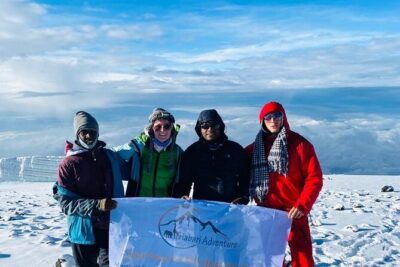
Climbing Kilimanjaro through 8 days Lemosho Route
Read our review →Browse the lists this tour appears in