
Reviewed · MACHAME ROUTE CLIMBS
7-Days Tour Mount Kilimanjaro Trekking via Machame Route
The mountain saves its best test for last. This seven-day Kilimanjaro trek from Moshi follows the popular Machame Route, known for rainforest trails, high moorland, Lava Tower, Barranco Wall, and the final push to Uhuru Peak at 5,895 meters. You camp in movable tents every night on the mountain, with a guide, porters, cooks, private transport, and meals included.
I like the route’s climb-high, sleep-low plan, especially the visit to Lava Tower before descending toward Barranco. I also like the changing scenery, from wet forest to open moorland and stark volcanic slopes. The main concern is the published schedule: Days 5 and 6 repeat the summit description, while the overnight at Barafu Camp is not clearly placed. Confirm the exact camp sequence before paying.
Goldfish Tours charges $2,400 per person for the private trip. That is a serious price, but it covers the core services needed for a supported Kilimanjaro climb. You should still budget for crew tips, personal items, laundry, flights, and anything not specifically listed.
In This Review
- Key points to know before choosing the Machame Route
- Why the Machame Route works so well
- Day 1: Machame Gate and the wet rainforest
- Day 2: Leaving the forest for Shira Plateau
- Day 3: Lava Tower and the climb-high, sleep-low plan
- Day 4: Barranco Wall and Karanga Camp
- Days 5 and 6: Clarify the summit schedule before booking
- Day 7: A gentle descent to Mweka Gate
- Camping, meals, crew, and what the $2,400 covers
- Fitness, timing, and the right type of hiker
- Booking details worth checking
- What the two direct accounts add
- Should you book this Kilimanjaro trek?
- FAQ
- Where does the Kilimanjaro trek begin?
- What time does the tour start?
- Is this a private tour?
- Where do you sleep during the mountain trek?
- Is food included?
- Are porters and cooks included?
- What is not included in the price?
Key points to know before choosing the Machame Route
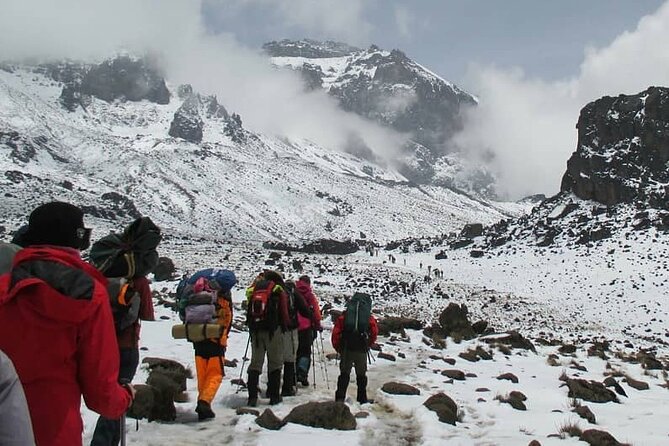
- Machame Gate begins the climb through dense rainforest, with a steady uphill walk that can be wet, muddy, and overgrown in places.
- Lava Tower reaches about 4,600 meters, then the route descends, giving your body a useful acclimatization pattern.
- Camping is the only mountain accommodation, using movable tents rather than huts or hotels.
- Summit night is a major physical test, beginning around midnight and involving four to five hours of steep scree walking before Stella Point.
- The tour is private, so only your group takes part, with pickup offered and a stated 6:00 am start.
- The price includes cooks, porters, private transport, and seven breakfasts, seven lunches, and seven dinners, but not tips or flights.
Why the Machame Route works so well
Machame is often called the Whiskey Route, a nickname that hints at its tougher, more rugged character compared with easier trekking routes. You do not simply walk uphill for a week. The route climbs, drops, crosses valleys, and changes direction, which helps your body adjust to altitude.
The most useful part is the climb to Lava Tower on Day 3. You reach roughly 4,600 meters, then sleep at a much lower camp. That climb-high, sleep-low pattern gives you time at altitude without forcing you to spend the night at the highest point reached that day.
I like this design because it turns the route into more than a scenic walk. You get an acclimatization benefit built into the schedule. Still, no route can remove altitude risk. A high success rate is not a guarantee, and you need to take the guide’s instructions seriously if you feel unwell.
The route is also visually varied. You start under thick rainforest, cross grassland and moorland, pass volcanic rock and glaciers, then finish with a long descent through forest. That variety keeps the trek interesting, though the terrain becomes much less forgiving after the first couple of days.
More Kilimanjaro climbs:
- Kilimanjaro climb by Lemosho Route (7-day)
★ 5.0 · 651 reviews - Kilimanjaro climb, Machame Route (7-day)
★ 5.0 · 262 reviews - Kilimanjaro Climbing Lemosho Route 8 Days.
★ 5.0 · 186 reviews
Day 1: Machame Gate and the wet rainforest
Your first morning starts at 6:00 am, with a drive from Moshi to Machame Gate that normally takes about an hour. At the gate, your guide, porters, and cook assemble the equipment while park formalities are completed.
This opening section is a good introduction to Kilimanjaro. The trail climbs steadily through dense rainforest, with tall growth and a damp forest floor. The walk takes about four hours, so it is not an extreme first day, but the mud can make it slower than the distance suggests.
The route can be less well trodden here. You might find sections overgrown, and wet conditions can make footing awkward. Wear shoes with solid grip and keep rain protection easy to reach. A dry first day is a small luxury, but you should not count on it.
The real value of Day 1 is its gradual start. You are not thrown straight into an exposed alpine zone. You have time to meet the mountain crew, settle into the walking rhythm, and learn how the camp routine works.
Day 2: Leaving the forest for Shira Plateau
Day 2 continues uphill through the forest before making a steeper climb toward the Shira Plateau. The scenery changes quickly as you enter the low alpine zone, where moorland and grassland replace the thick trees.
The walk takes about four to six hours and covers 5.4 kilometers. That distance looks modest, but altitude and uphill terrain matter more than mileage. You should keep your pace slow from the start. There is no prize for reaching camp early if you arrive tired and short of breath.
Shira Camp 2 offers your first broad views of Kibo, Kilimanjaro’s main summit cone, to the northwest. Mount Meru appears to the east. These views give you a useful sense of scale. The mountain is no longer just a wall of forest around you. It begins to feel like a high volcanic massif.
I like this day because it marks the first major change in character. The forest section feels enclosed and earthy. The Shira Plateau feels open and spacious, with more sky and fewer places to hide from wind or sun.
Day 3: Lava Tower and the climb-high, sleep-low plan
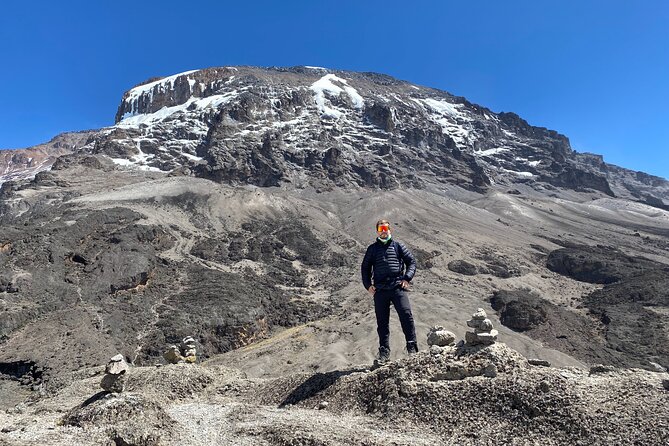
Day 3 crosses high moorland on the southwest side of Kilimanjaro. You pass below Lava Tower and near the final section of the Western Breach before reaching camp.
The walking time is listed at about five hours, but the altitude makes this day more demanding than the clock suggests. The route reaches approximately 4,600 meters. You finish at nearly the same elevation at which you began from Shira Camp, yet the day is crucial because you spend time walking high before sleeping lower.
This is one of the strongest parts of the route. The schedule exposes you to altitude in a controlled way instead of sending you straight from lower camp to the summit attempt. You should expect the pace to be deliberately slow. Headaches, nausea, unusual tiredness, or breathing trouble should not be brushed aside.
The scenery is more severe here. Trees have disappeared, and volcanic ground replaces the forest. The route feels exposed and remote. That can be thrilling, but it also means you need to protect yourself from changing weather and keep essential layers close.
More Machame Route climbs:
- Climbing Kilimanjaro – Machame Route
★ 5.0 · 170 reviews - Climbing Kilimanjaro through 7 days Machame Route
★ 5.0 · 151 reviews - 7 Days Kilimanjaro via Machame route affordable price
★ 5.0 · 110 reviews - #1. Best Kilimanjaro Day hike Tour-Machame Route-ISMANI
★ 4.2 · 47 reviews
Day 4: Barranco Wall and Karanga Camp
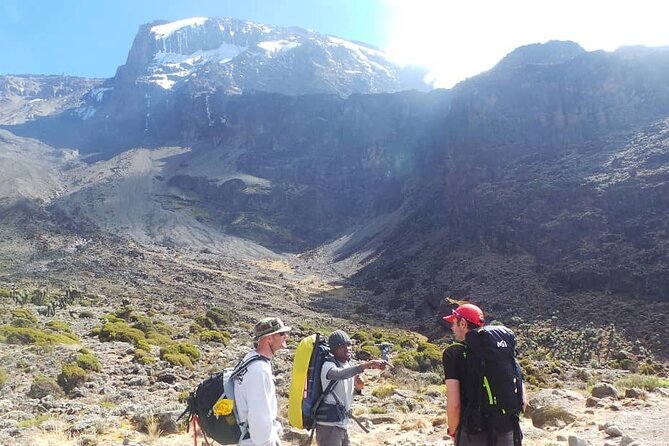
Day 4 begins with a descent into the Great Barranco, a large ravine beneath Kibo’s southern slopes. The trail then rises sharply up the Barranco Wall.
The wall is not a technical rock climb, but it is steep, long, and tiring. You will use your hands in places as you work over rock. The challenge is less about special climbing skill and more about patience, balance, and steady effort.
Once above the wall, the route passes beneath the Heim and Kersten glaciers before continuing toward the Karanga Valley. A steep climb from the valley leads to Karanga Camp at 3,963 meters.
For hikers, this is a memorable day because the route feels dramatic without requiring technical mountaineering. You get close views of steep rock and ice, then trade them for broad views across the slopes. It is also a day when tired legs become noticeable. The distance may not sound huge, but the repeated descents and climbs use energy.
If you are feeling strong, the schedule allows for an afternoon acclimatization walk to about 4,200 meters, followed by a return to camp. That optional walk adds useful altitude exposure, but you should not treat it as an obligation. Rest is valuable if your body is struggling.
Days 5 and 6: Clarify the summit schedule before booking
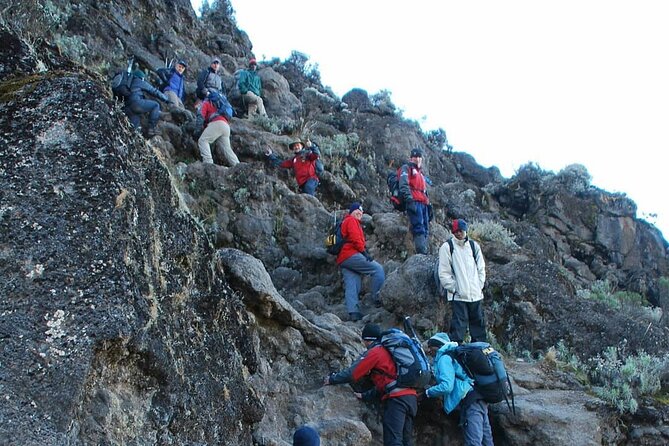
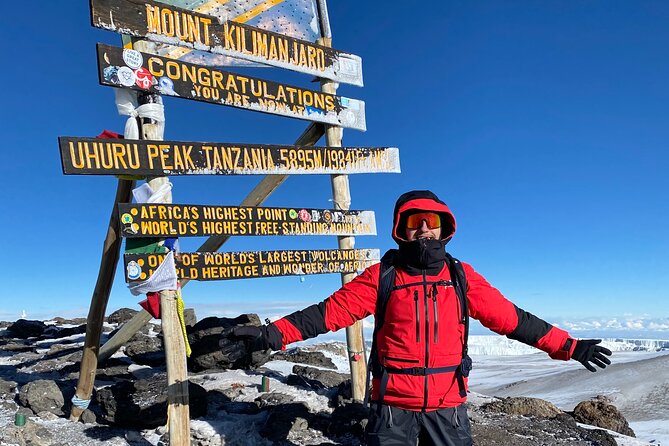
The supplied program repeats the same summit description for both Day 5 and Day 6. It says summit night begins around midnight, with four to five hours of steep scree walking to the glaciers and Stella Point at 5,739 meters. From there, another hour leads to Uhuru Peak at 5,895 meters.
The description also says you descend to Stella Point, return to Barafu Camp for breakfast, and then continue to Mweka Camp for a long rest. That is an exceptionally long effort, and the Day 6 timing is listed as 15 hours.
There is a practical gap here. Day 4 ends at Karanga Camp, while the summit description refers to Barafu Camp. The program does not clearly explain when you reach Barafu or where you sleep immediately before the midnight start. Because of that, ask Goldfish Tours to provide the final day-by-day camp plan in writing.
That clarification is important, not a minor paperwork issue. Your sleep before summit night, the position of Barafu Camp, and the timing of the descent all affect how hard the final push will feel.
The summit attempt itself is the toughest part of the trek. You start around midnight, walk steeply over scree, and gain a great deal of height in a short distance. The early start is designed to place you at Stella Point around sunrise, when the light reaches the crater rim.
At Stella Point, you may see ice cliffs inside the crater, along with views toward jagged Mawenzi Peak. The final hour to Uhuru Peak remains demanding, even after you reach the rim. Reaching the highest point in Africa is the goal, but do not underestimate the return journey.
The descent over loose scree can be hard on knees and ankles. The schedule then takes you back to Barafu Camp for breakfast before continuing to Mweka Camp. After the effort of the summit, the long drop to a lower camp may feel endless. That is why a clear plan and a strong crew matter.
Day 7: A gentle descent to Mweka Gate
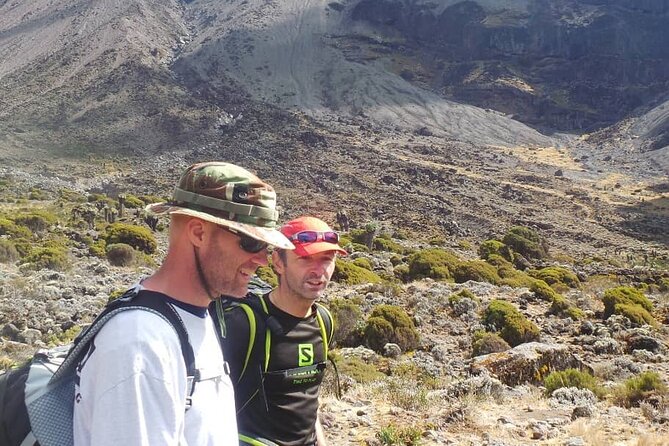
The final day is a three-hour descent through rainforest to Mweka Gate. Compared with summit day, it should feel gentle, though your legs may not agree at first.
At the gate, park formalities are completed and certificates are issued. You then return by vehicle to your arranged hotel in Moshi. The program includes an overnight at the hotel, giving you a chance to shower, rest, and celebrate with a cold drink.
This final day has a satisfying change of mood. The summit is behind you, the forest returns, and the formal certificate marks the end of the climb. Keep some patience for the descent. Going downhill after a summit attempt can be just as uncomfortable as going up.
Camping, meals, crew, and what the $2,400 covers
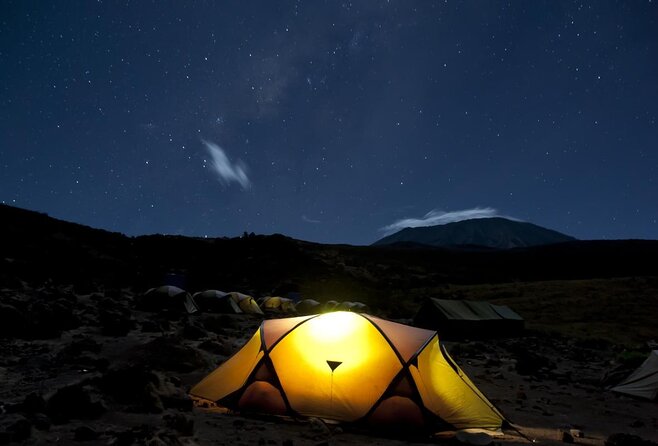
You camp every night on the mountain in movable tents. There are no mountain hotels or huts in this package. If you prefer a bed, walls, and more predictable comfort, this route will feel basic. If you accept camping as part of the challenge, the arrangement keeps you close to the mountain and allows the route to move from camp to camp.
Cooks and porters are included, along with private transport. Breakfast, lunch, and dinner are each listed seven times. That is a strong part of the package because food support is not an optional extra on a demanding climb.
The crew is central to the experience. Porters move equipment, the cook handles meals, and the guide leads the group through the route and the changing altitude. Tips are not included, so you need to plan for them separately.
At $2,400 per person, the price is best judged by what it removes from your planning burden. You are not arranging separate transport to the gate, mountain meals, porters, or camp movement. Private participation also means your group is not combined with strangers.
The value depends on what you want. A private, fully supported climb with transport and meals can justify the price for someone who wants a single operator handling the main pieces. It is less attractive if you are comparing only the number of walking hours or if you expect hotel-style accommodation on the mountain.
Fitness, timing, and the right type of hiker
The experience is rated for people with a moderate physical fitness level. That should be read carefully. Moderate fitness may be enough for the regular walking days, but the steep Barranco Wall, high-altitude sections, and summit night create a sharp jump in difficulty.
You should be comfortable walking uphill for several hours and then doing it again the next day. You also need to accept an early midnight start, loose scree, camping, and a possible 15-hour summit day.
The tour suits you best if you want a private climb, prefer a route with varied scenery, and value built-in acclimatization days. It is also a good match if you want cooks, porters, and transport arranged in one package.
It may not suit you if you want short days, lodge accommodation, a relaxed summit schedule, or a fully precise itinerary already laid out without any need for clarification. The duplicated summit days make a pre-trip conversation especially important.
Booking details worth checking
Pickup is offered, and the stated start time is 6:00 am. The tour is private, so only your own group participates. Confirmation is provided at booking, and service animals are allowed.
The package does not include flights, tips, personal items, laundry, or services not specifically named. Read that list as a reminder to ask about any equipment or hotel arrangements you expect to need.
Cancellation is free up to 24 hours before the start time for a full refund. Changes or cancellations made less than 24 hours before the start are not accepted for a refund. The experience depends on good weather, and a weather cancellation results in a different date or a full refund.
What the two direct accounts add
The available feedback is strongly positive. One person described the seven-day Machame climb with Goldfish Tours as unforgettable and praised what the company arranged. Another highlighted support from the first contact through the descent, after completing the route with two friends.
Those comments point to the company’s organization and crew support as the most praised parts. There are only two ratings, so I would not treat them as a full statistical picture. Still, the repeated praise for arrangements from beginning to end is useful if you want an operator that handles the practical work around a private climb.
No guide names are provided, so you cannot request a particular guide from the available information. Ask who will lead your group, how the crew handles altitude concerns, and how the summit schedule will be organized.
Should you book this Kilimanjaro trek?
I would consider booking the Goldfish Tours Machame Route if you want a private, camping-based Kilimanjaro climb with meals, porters, cooks, and transport included. The route gives you some of the mountain’s best scenery and uses a sensible climb-high, sleep-low pattern.
Before booking, get the corrected itinerary in writing. Ask specifically where you sleep before summit night, when you reach Barafu Camp, whether the summit effort is planned for Day 5 or Day 6, and how the 15-hour timing fits with the camp schedule.
If Goldfish Tours answers those questions clearly, this looks like a strong choice for a fit hiker who values route variety and practical support. If the schedule remains unclear, pause before paying. On Kilimanjaro, a tidy itinerary is part of good preparation, not a minor detail.
FAQ
Where does the Kilimanjaro trek begin?
The trek begins at Machame Gate, normally about one hour by vehicle from Moshi.
What time does the tour start?
The stated start time is 6:00 am.
Is this a private tour?
Yes. Only your group participates in the activity.
Where do you sleep during the mountain trek?
Accommodation on the mountain is camping only, using movable tents.
Is food included?
Yes. The package lists seven breakfasts, seven lunches, and seven dinners.
Are porters and cooks included?
Yes. Cooks and porters are included in the tour price.
What is not included in the price?
Tips for the mountain crew, personal items, laundry services, flights, and any service not specifically mentioned are excluded.
More Treks in Moshi
- Private Kilimanjaro Hike 7 Day Lemosho Route
★ 5.0 · 60 reviews - Best Kilimanjaro hiking day trip tour with Kilinge Adventures
★ 4.5 · 54 reviews - Best Kilimanjaro Adventure 7 days Machame route Trekking
★ 5.0 · 42 reviews - Kilimanjaro 7 Day Private Trekking Experience
★ 5.0 · 40 reviews
Just added in Moshi
- Zanzibar: Stone Town tour and Nakupenda beach with Lunch★ 5.0 · 1 review
- day trip lake manyara★ 5.0 · 2 reviews
- Mt Kilimanjaro 6 days Marangu route hike★ 5.0 · 3 reviews
- machame route★ 5.0 · 16 reviews
- Private Cycle to Kilimanjaro Bike Park Safari★ 5.0 · 6 reviews
- West Kilimanjaro cycling Adventures★ 4.5 · 8 reviews
- Wildlife Extravaganza: Manyara, Tarangire & Ngorongoro in 3 Days★ 5.0 · 3 reviews
- 3 Days Private E-Bike Tour in West Kilimanjaro★ 5.0 · 3 reviews
Machame Route Climbs, compared.



Climbing Kilimanjaro through 7 days Machame Route
Read our review →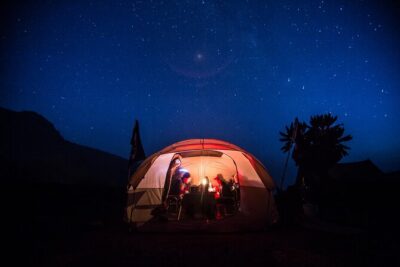
7-Day Machame Kilimanjaro Summit Tour from Arusha
Read our review →
7 Days Kilimanjaro via Machame route affordable price
Read our review →
#1. Best Kilimanjaro Day hike Tour-Machame Route-ISMANI
Read our review →
The Best of Machame Route in 6 Days: Your World’s Summit Guide
Read our review →Browse the lists this tour appears in