
Reviewed · WILDEBEEST MIGRATION SAFARIS
8-Day Grumeti Migration Safari-Luxury Tour May-July
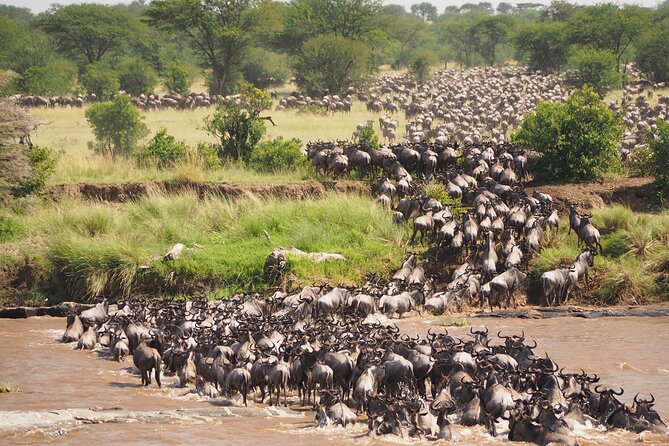
The river crossing is nature at full volume. This eight-day private safari links Tarangire, Manyara, Serengeti, and Ngorongoro, with extra attention on the western Serengeti and the Grumeti River during the May to July migration season. I like the plan for two clear reasons: it gives you time in both the central Seronera area and the western corridor, and it combines long game drives with hot picnic lunches prepared beside the vehicle. The main caution is simple: no safari can promise a wildebeest crossing, and the route includes some very long driving days.
The $6,276 per-person price is serious money, but it covers park fees, a private guide and vehicle, airport transfers, and 21 included meals. I also like the strong focus on guide service. Calvin Kileo, Bariki, William, Morris, and Ombeni are all praised for careful driving, sharp animal spotting, patience, and thoughtful care. You should still ask for the exact lodge and tented-camp names before paying, since luxury can mean different things in northern Tanzania.
In This Review
- Key points at a glance
- Why the Grumeti migration deserves a special trip
- Day 1: Kilimanjaro Airport and an easy start in Arusha
- Day 2: Tarangire’s elephants and a hot bush lunch
- Day 3: Lake Manyara, birds, elephants, and possible tree-climbing lions
- Day 4: Entering Serengeti in search of big cats
- Day 5: The western Serengeti and the Grumeti River
- Day 6: Seronera, the central Serengeti’s dependable wildlife
- Day 7: Returning toward Ngorongoro
- Day 8: Ngorongoro Crater and the return to Arusha
- What the $6,276 price really buys
- Who will enjoy this safari most
- Practical details before you commit
- Should you book the Grumeti Migration Safari?
- FAQ
- Where does the safari begin?
- How long is the tour?
- What months are best for this itinerary?
- Is the Grumeti River crossing guaranteed?
- Is this a private tour?
- Which parks and areas are included?
- What meals are included?
- What is not included in the price?
Key points at a glance
- The Grumeti crossing is the main prize: May through July is chosen to improve your odds of finding migrating wildebeest in the western Serengeti.
- Two Serengeti zones are included: You spend time in the western Grumeti area and central Seronera, giving you more than one chance at excellent wildlife.
- Tarangire adds elephants and quiet game viewing: This park brings a calmer opening to the safari, with strong birdlife and a famous elephant population.
- Lake Manyara is a birding stop with character: More than 400 bird species have been recorded, and the park is also known for elephants and tree-climbing lions.
- Ngorongoro Crater closes the trip with concentrated wildlife: The crater’s enclosed setting can produce a very rewarding final game drive.
- Private guiding is a major strength: You travel with only your own group, and guide quality matters greatly on long safari days.
Why the Grumeti migration deserves a special trip
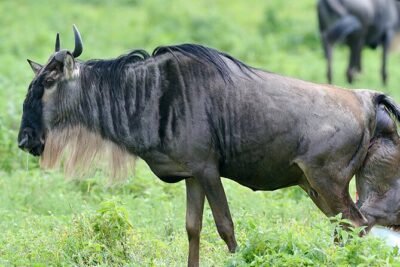
The Great Migration is often sold as one single event, but it is really a moving annual cycle. In May to July, large herds generally move through the western Serengeti corridor, where the Grumeti River can become a major obstacle.
A river crossing is never scheduled like a train. Wildebeest may gather for hours, turn back, or cross at a different point. Crocodiles, steep banks, dust, noise, and sheer confusion make the scene powerful, but the timing is controlled by the animals, not the itinerary.
That uncertainty is why this safari’s routing makes sense. You are not confined to one small part of Serengeti National Park. The plan includes the western corridor for the Grumeti area, then the Seronera region in central Serengeti, where resident lions, leopards, cheetahs, elephants, and other plains animals provide excellent wildlife opportunities even if the herds have moved on.
I would book this trip for the chance to see the migration, not as a guarantee of a crossing. If the river remains quiet, you still have several days in parks with strong resident wildlife.
More migration safaris:
- Great Migration Safari In Tanzania
★ 5.0 · 71 reviews - 6 Days Tanzania Budget Camping Safari with Migration
★ 5.0 · 31 reviews - 8 Days Great Wildebeest Migration – Mara River Crossing
★ 5.0 · 28 reviews
Day 1: Kilimanjaro Airport and an easy start in Arusha
The safari begins with pickup at Kilimanjaro Airport, followed by a transfer to Arusha for dinner and an overnight stay. The listed transfer takes about four hours, so this is not a quick airport-to-hotel hop.
Arusha sits near Mount Meru and serves as the main gateway to Tanzania’s northern safari circuit. It is also used by visitors heading toward Mount Kilimanjaro, which rises to 5,895 meters. For you, its main value is practical: you can meet the guide, settle in, and receive a short safari briefing before the longer park days begin.
Because the arrival transfer is lengthy, check your flight arrival time carefully. An early arrival gives you more breathing room. A late arrival could make Day 1 feel like transport rather than sightseeing, which is fine if you treat it as a travel day.
Day 2: Tarangire’s elephants and a hot bush lunch
After breakfast and the briefing, you drive to Tarangire National Park for a full game drive. The day is listed at about eight hours, with lunch prepared beside the vehicle.
The meal setup is more than a small packed sandwich. The guide prepares a hot lunch with soup, bread rolls, a main dish, fruit salad, wine, tea, and coffee. That is a pleasant touch after a dusty morning on rough park roads, and it helps explain part of the trip’s luxury positioning.
Tarangire is often quieter than the most famous parks on the northern circuit. Its best-known attractions are elephants, birdlife, and an unhurried safari mood. It is also associated with seasonal elephant movement, so the park adds a different wildlife pattern before you reach Serengeti.
I like beginning here because the day should feel less crowded and less frantic than a migration search. The limitation is that Tarangire is not the central reason to buy this package. If your only goal is a Grumeti crossing, this opening day uses time away from western Serengeti. If you want a fuller northern Tanzania safari, it adds useful variety.
Day 3: Lake Manyara, birds, elephants, and possible tree-climbing lions
Day 3 takes you to Lake Manyara National Park for another full game drive. The park is compact compared with Serengeti, but it packs several habitats into a relatively small area.
Lake Manyara is especially strong for birdwatching. More than 400 species have been recorded, and even a first visit can produce a long list of sightings in a single day. You may also find elephants in the acacia woodland and, if conditions cooperate, the park’s famous tree-climbing lions.
The lunch routine repeats here, with a hot meal served under the vehicle’s shade. Having a proper meal in the park is comfortable, though two full days in a row with long drives and outdoor lunches can be tiring. Bring a hat, sunscreen, and a light layer for changing temperatures.
This day is another tradeoff. It broadens the safari beyond the migration, but it also reduces the amount of time available in the western Serengeti. I would see Manyara as worthwhile for birdlife and variety, not as a substitute for the Grumeti experience.
A few more options to weigh up in Moshi
- Kilimanjaro climb by Lemosho Route (7-day)
★ 5.0 · 651 reviews - Safari Serengeti And Ngorongoro
★ 5.0 · 288 reviews - Kilimanjaro climb, Machame Route (7-day)
★ 5.0 · 262 reviews - Kilimanjaro Climbing Lemosho Route 8 Days.
★ 5.0 · 186 reviews
Day 4: Entering Serengeti in search of big cats
After breakfast, you continue toward Serengeti National Park and spend the day looking for big cats and other members of the Big Five. The plan includes a picnic lunch and an evening transfer toward the Ngorongoro area for overnight accommodation.
Serengeti is much more than a migration stage. Its resident wildlife is one of the main reasons to visit, and the park is known for a large lion population supported by abundant prey. You may also encounter elephants, buffalo, leopards, cheetahs, giraffes, hyenas, and many smaller species, depending on the route and conditions.
This is one of the itinerary’s less clear sections. The day description says you spend time in Serengeti and then travel late in the afternoon toward Ngorongoro, while the following days return to Serengeti’s western and central areas. Before booking, ask the operator to explain the overnight location and driving route in detail.
That question matters. Serengeti is enormous, and a late transfer can mean less time watching animals. The trip is designed around the western corridor, so you want to know how much of Day 4 is actual game viewing and how much is repositioning.
Day 5: The western Serengeti and the Grumeti River
This is the safari’s main migration day. You head into the western Serengeti and Grumeti area, looking for wildebeest movement, possible river crossings, big cats, and the rest of the park’s wildlife.
The Grumeti River is famous because migrating animals must negotiate water and steep banks as they continue north. A crossing may be dramatic, but it may also involve a long wait with no action. That is not wasted time if you are prepared for safari reality, but it can test your patience.
Your guide’s skill becomes especially important here. A good guide watches animal behavior, communicates with other guides, and knows when to wait and when to move. The strongest feedback about this company centers on that human element. William is praised for finding animals and explaining how to distinguish different species. Bariki is praised for his animal knowledge, storytelling, and ability to locate hidden wildlife. Those skills are valuable when the river itself refuses to perform.
You should expect a full day in the vehicle. Air conditioning is available, and the guide prepares another hot lunch with drinks and coffee or tea. Carry water and keep your camera ready, but do not forget binoculars. The most memorable sight may be a single animal far from the vehicle rather than a huge herd at the river.
Day 6: Seronera, the central Serengeti’s dependable wildlife
The itinerary then shifts to Seronera in central Serengeti. This is a smart counterpoint to the migration search because Seronera is well known for resident animals, especially big cats.
The central area gives you another chance to find lions, leopards, cheetahs, elephants, buffalo, and other wildlife. Even if the wildebeest have moved beyond the Grumeti River, the park remains worthwhile. That is an important strength of the trip: you are not paying for a single all-or-nothing sighting.
A full day in Seronera can also make the safari feel less rushed. You are still covering large distances, but the focus shifts from chasing a seasonal event to reading the area in front of you. Your guide can spend more time with an animal encounter instead of treating every sighting as a quick stop on the way to the river.
The quality of the guide and vehicle matters here. Ombeni is praised for careful driving and for checking whether people were hot, cold, or sitting uncomfortably. That sort of attention becomes useful after several days of rough roads and long hours in a safari vehicle.
Day 7: Returning toward Ngorongoro
Day 7 includes another Serengeti game drive before the journey toward the Ngorongoro Conservation Area. The day again includes a hot picnic lunch and an evening arrival at camp or lodge.
This is a travel-heavy day, so keep your expectations realistic. You may still see animals along the way, but the main purpose is to position you for the crater visit on Day 8. The route also gives you one more opportunity to search for big cats and other large mammals before leaving Serengeti.
The Ngorongoro Conservation Area is not simply a stop between parks. It protects a remarkable volcanic setting and supports a dense mix of wildlife. The change from broad Serengeti plains to the crater region gives the trip a strong sense of progression.
Ask in advance where you will sleep on this night. The supplied plan uses general terms such as lodge or camp rather than naming the property. Since the tour is sold as luxury, the exact accommodation affects the value more than the word luxury does.
Day 8: Ngorongoro Crater and the return to Arusha
You leave early after breakfast for a game drive inside Ngorongoro Crater. The crater is about 20 kilometers across, around 600 meters deep, and roughly 300 square kilometers in area. It is the world’s largest un-flooded, unbroken caldera.
The crater’s enclosed geography can make wildlife viewing feel concentrated. You may visit Lake Magadi and look for the animals that use the crater floor. After lunch, you drive back to Arusha and continue to the airport for drop-off.
The final day is tightly timed. The listed crater activity is only about four minutes in the schedule, which appears to be a timing error rather than a realistic description of the game drive. Confirm your departure flight time and the exact airport transfer plan before booking. A late international flight may be more comfortable than an early one, but the operator should confirm what can be handled safely.
What the $6,276 price really buys
At $6,276 per person, this is not a budget safari. The price includes non-resident park fees, a professional driver-guide, round-trip airport transfer, eight breakfasts, seven lunches, and seven dinners.
It also covers a private tour, so your group is the only group in the vehicle. That gives you more control over stops and makes the long driving days easier to manage. You are not waiting for strangers to finish breakfast or agree on how long to watch a lion.
The price does not include international flights, extra accommodation before or after the safari, tips, souvenirs, travel insurance, visa fees, or other personal costs. The suggested tip is $15 per person per day, which adds $120 per person for eight days.
For the price to feel fair, I would want three things confirmed in writing:
- The names and locations of every lodge and tented camp
- The vehicle arrangements and whether the same guide stays with you throughout
- The exact routing between western Serengeti, Seronera, and Ngorongoro
The food service and guide attention add real value. William is praised for safe driving and strong animal identification, while Ombeni is praised for comfort checks and care. Still, the accommodation details are too general to judge the luxury level fully.
Who will enjoy this safari most
This trip suits you if the migration is your priority but you also want a broad northern Tanzania safari. It works well for couples, families, honeymooners, and private groups that value their own vehicle and guide.
It is also a good fit if you care about comfort during long days. Air conditioning, airport transfers, lodge or tented-camp stays, and hot meals in the park make the experience easier than a basic camping circuit.
You may want another plan if you dislike long drives, need a slower pace, or want a guaranteed river crossing. The itinerary covers a lot of ground, and several days are listed at about eight hours. You should also think twice if your idea of luxury requires named five-star properties, since the accommodation information provided is not specific enough.
The best guide match may matter more than the lodge. If you can request someone, Calvin Kileo is praised for careful work, kindness, water availability, and sharp spotting. Bariki is a strong choice for stories and animal explanations. William is praised for finding wildlife, identifying species, and handling roads well. Ombeni is noted for patience and attention to passenger comfort.
Practical details before you commit
Pickup is offered, and the stated meeting point is Kilimanjaro Airport in Tanzania. Confirmation is provided at booking, and the activity is described as suitable for most people.
Free cancellation is available if you cancel at least 24 hours before the start time. A later cancellation is not refunded, and changes made inside that 24-hour window are not accepted. The cut-off follows local time. Poor weather can lead to a new date or a full refund.
Pack for both comfort and dust. A hat, sunscreen, water bottle, light layers, and binoculars will help on the long game drives. Keep your camera ready for sudden wildlife sightings, but remember that a crossing may require waiting and patience rather than constant movement.
Should you book the Grumeti Migration Safari?
I would book this tour if you want a private, high-comfort safari built around a real chance of seeing the western Serengeti migration, while still covering Tarangire, Lake Manyara, Seronera, and Ngorongoro.
I would not book it without first clarifying the Day 4 routing, the overnight locations, the exact luxury properties, and your guide assignment. Those details shape the trip more than the polished package title.
The strongest reasons to choose it are the private format, the two Serengeti regions, the included park fees and meals, and the repeated praise for guides who spot animals, drive carefully, and look after passengers. The main risk is paying a premium for a river crossing that nature may postpone. If you accept that uncertainty and confirm the logistics, this is a well-targeted safari with plenty of wildlife value beyond the migration itself.
FAQ
Where does the safari begin?
The stated meeting point is Kilimanjaro Airport in Tanzania. Pickup is offered, followed by transfer to Arusha.
How long is the tour?
The experience lasts approximately eight days.
What months are best for this itinerary?
The safari is designed for May through July, when wildebeest are generally found in the western Serengeti and Grumeti corridor.
Is the Grumeti River crossing guaranteed?
No. The itinerary is designed to improve your chance of seeing a crossing, but animal movement and river crossings cannot be guaranteed.
Is this a private tour?
Yes. Only your own group participates in the activity.
Which parks and areas are included?
The route includes Tarangire National Park, Lake Manyara National Park, Serengeti National Park, the western Grumeti area, central Seronera, the Ngorongoro Conservation Area, and Ngorongoro Crater.
What meals are included?
The package includes eight breakfasts, seven lunches, and seven dinners. Lunches are described as hot meals prepared beside the safari vehicle, with soup, bread rolls, a main dish, fruit salad, wine, tea, and coffee.
What is not included in the price?
International flights, extra accommodation before or after the safari, tips, souvenirs, travel insurance, visa fees, and personal items are not included. The suggested tipping guideline is $15 per person per day.
Just added in Moshi
- Zanzibar: Stone Town tour and Nakupenda beach with Lunch★ 5.0 · 1 review
- day trip lake manyara★ 5.0 · 2 reviews
- Mt Kilimanjaro 6 days Marangu route hike★ 5.0 · 3 reviews
- machame route★ 5.0 · 16 reviews
- Private Cycle to Kilimanjaro Bike Park Safari★ 5.0 · 6 reviews
- West Kilimanjaro cycling Adventures★ 4.5 · 8 reviews
- Wildlife Extravaganza: Manyara, Tarangire & Ngorongoro in 3 Days★ 5.0 · 3 reviews
- 3 Days Private E-Bike Tour in West Kilimanjaro★ 5.0 · 3 reviews
Wildebeest Migration Safaris, compared.
8 Days Great Wildebeest Calving Migration Safari from Arusha
Read our review →
10-Day Serengeti Wildebeest Migration Safari from Arusha
Read our review →
8 Day Spectacular Migration Serengeti mid -Range Tanzania Safari
Read our review →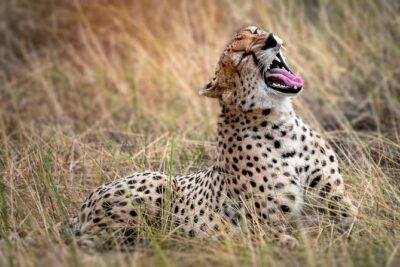
9-Day Serengeti Migration Footsteps Tanzania Safari
Read our review →
Private 6-Day Great Migration Ndutu Serengeti Safari Tour
Read our review →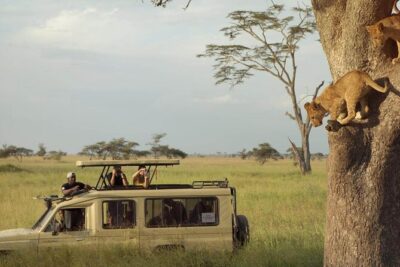
4 Day Great Migration Safari Serengeti & Ngorongoro Crater
Read our review →Browse the lists this tour appears in