
Reviewed · LEMOSHO ROUTE CLIMBS
8 Day Kilimanjaro Trek via Lemosho Route
Kilimanjaro rewards patience. This eight-day mountain route takes you from Moshi through rainforest, high moorland, alpine desert, and the summit zone, with a slow climbing rhythm that gives your body time to adjust. I especially like the quieter start at Lemosho Gate and the built-in high-altitude acclimatization day at Lava Tower. The main consideration is the summit day: 14 to 16 hours on foot is a serious physical test.
Soraka Tours handles the heavy logistics, from airport transfers and park fees to tents, meals, and daily health checks. I also like the strong safety setup, including Wilderness First Responder guides, emergency oxygen, a medical kit, and two oximeter checks each day. The price is high, but it covers most major mountain costs. You still need to budget for airfare, insurance, personal gear, and tips.
In This Review
- Key points to know before you book
- Why the Lemosho Route makes sense
- Arrival in Moshi and the pre-climb briefing
- Day 2: rainforest from Lemosho Gate to Mti Mkubwa
- Day 3: leaving the trees for Shira 1
- Day 4: across the Shira Plateau to Shira 2
- Day 5: Lava Tower and the descent to Barranco
- Day 6: the Barranco Wall and Karanga Camp
- Day 7: the final camp at Barafu
- Day 8: Uhuru Peak and the long descent
- Day 9: Mweka Gate and a return to Moshi
- Day 10: airport transfer
- Meals, tents, and the meaning of comfort
- Safety and the people supporting you
- What the $3,450 price covers
- Who should choose this climb?
- Should you book the Lemosho trek?
- FAQ
- How long does the Kilimanjaro experience last?
- Where does the trek begin?
- Is airport transportation included?
- Are meals included on the mountain?
- What type of accommodation is provided?
- Do I need to bring my own sleeping bag and hiking boots?
- Can I cancel for a full refund?
Key points to know before you book
- The eight hiking days become roughly ten calendar days once arrival, hotel nights, descent, and airport transfer are included.
- Lemosho gives you a gradual climb through several climate zones, with less hurried early stages than many shorter routes.
- Lava Tower is the key acclimatization test, taking you to 15,091 feet before you sleep lower at Barranco.
- Summit day is long and demanding, beginning before dawn at Barafu Camp and ending at Mweka Camp.
- Soraka supplies a full mountain operation, including a chef, dining tent, sleeping mats, four-season tents, transport, and park charges.
- The experience is private, so only your own group takes part, with support from an experienced climbing crew.
Why the Lemosho Route makes sense
The Lemosho Route is a good choice if you want Kilimanjaro to feel like a journey rather than a quick uphill march. You begin at 7,824 feet and climb through the rainforest before reaching the open high-altitude zones. That change in scenery is one of the route’s best features.
The route also gives you time. You spend two days crossing the Shira Plateau before the major acclimatization push at Lava Tower. That slower pattern matters because altitude is the real challenge on Kilimanjaro. You can be fit and still struggle if you ascend too quickly.
You should not confuse gradual acclimatization with an easy holiday. The trail reaches 19,340 feet at Uhuru Peak, where the air is thin and the summit morning is extremely long. The schedule is carefully arranged, but your legs and lungs still have to do the work.
More Kilimanjaro climbs:
- Kilimanjaro climb by Lemosho Route (7-day)
★ 5.0 · 651 reviews - Kilimanjaro climb, Machame Route (7-day)
★ 5.0 · 262 reviews - Kilimanjaro Climbing Lemosho Route 8 Days.
★ 5.0 · 186 reviews
Arrival in Moshi and the pre-climb briefing
Your trip begins with pickup at Kilimanjaro International Airport, followed by ground transport to Moshi. Two hotel nights are included, at Kili Wonders Hotel or a similar property, with breakfast provided.
The first night gives you a useful buffer after an international flight. You can rest, sort your gear, and recover before the mountain begins. A briefing takes place before the trek, which is the right time to confirm your equipment, meals, health concerns, and expectations for the summit attempt.
Hotel lunch and dinner are not included. That is a small but important budget detail. Airfare, visa costs, travel insurance, mountaineering insurance, and personal climbing equipment also remain your responsibility.
Day 2: rainforest from Lemosho Gate to Mti Mkubwa
The first hiking day starts at Lemosho Gate, at 7,824 feet. You walk for about three to four hours through lush rainforest before reaching Mti Mkubwa Camp at 9,251 feet.
This is a sensible opening stage. The distance is manageable, and the forest gives you a gentle introduction to walking with a day pack at altitude. Porters carry your main equipment, while you carry only what you need during the day.
The rainforest is also a reminder that Kilimanjaro is not just a barren summit. The mountain contains several distinct climate zones, and the first day gives you the thickest vegetation of the entire route. Keep your pace slow from the start. A relaxed rhythm now is more useful than proving anything to the group.
Day 3: leaving the trees for Shira 1
On the trek from Mti Mkubwa to Shira 1 Camp, the route rises to 11,499 feet. The walk takes about five to six hours as the forest gives way to more open high-altitude country.
This is when Kilimanjaro begins to feel much bigger. Vegetation becomes sparser, views open up, and the air starts to feel different. The increase in altitude is significant, so the guide’s pace and your own breathing habits matter.
Soraka’s twice-daily health checks are particularly useful here. The team uses an oximeter and asks specific questions about your condition. An oxygen reading is not a complete medical diagnosis, but regular monitoring gives the guides a clearer picture of how you are coping.
More Lemosho Route climbs:
- Kilimanjaro climb, Lemosho Route (8-day)
★ 5.0 · 148 reviews - Kilimanjaro climb, Lemosho Route (6-day)
★ 5.0 · 129 reviews - Kilimanjaro Lemosho Route
★ 5.0 · 71 reviews - Private Kilimanjaro Hike 7 Day Lemosho Route
★ 5.0 · 60 reviews
Day 4: across the Shira Plateau to Shira 2
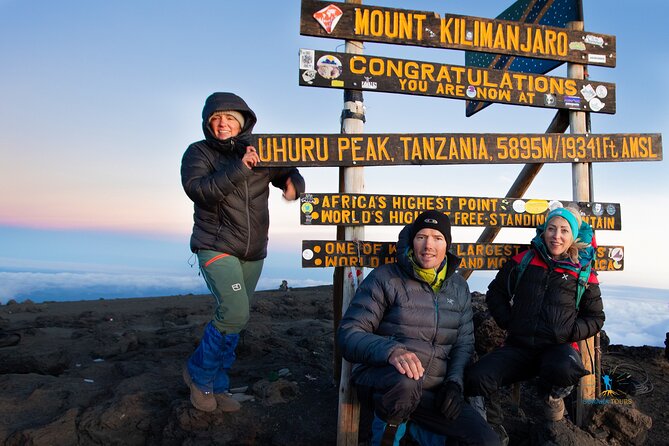
Day four covers the Shira Plateau, moving from Shira 1 Camp at 11,499 feet to Shira 2 Camp at 12,598 feet. The walk takes around four to five hours.
This is a shorter day by hiking time, but it is not a throwaway day. You are now sleeping well above 12,000 feet, and the body needs time to respond. The plateau also lets you experience another clear change in climate and plant life.
I like this part of the schedule because it breaks the ascent into reasonable stages. You are not racing from the forest to the summit. You are gaining height in steps, with camp nights that help your guides watch for altitude problems.
Day 5: Lava Tower and the descent to Barranco
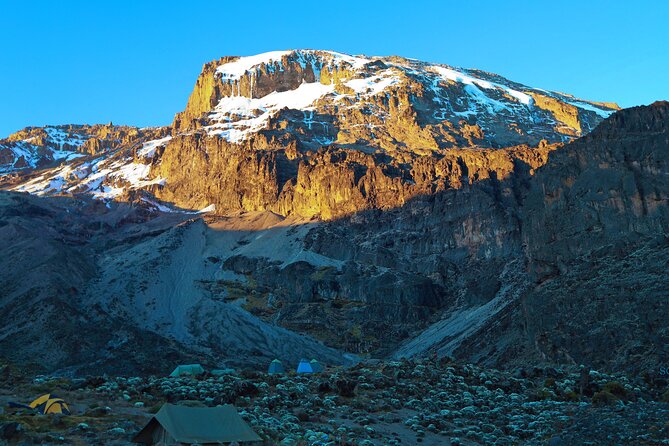
Day five is the route’s main acclimatization day. You leave Shira 2, climb to Lava Tower at 15,091 feet, then descend to Barranco Camp at 12,959 feet. The total hiking time is about six to seven hours.
The principle is simple: climb high, then sleep lower. Reaching Lava Tower gives your body a taste of much higher altitude without forcing you to spend the night there. The later descent to Barranco is tiring, but it is an important part of the route design.
This is also a day when you need to pay attention to symptoms. Headache, nausea, unusual fatigue, or trouble walking should be reported clearly to the guides. Soraka provides emergency oxygen and a medical kit, but these are safeguards, not substitutes for honest communication or a decision to descend if necessary.
Day 6: the Barranco Wall and Karanga Camp
The route from Barranco Camp to Karanga Camp reaches 13,106 feet and takes about four to five hours. The highlight is the famous Barranco Wall.
The wall adds a more hands-on feel to the trek. It is not simply a steady trail through open ground, and your guide will be important in helping the group move carefully. The day is shorter than the Lava Tower stage, which gives you time to recover after the previous climb.
Karanga is a practical staging camp before Barafu. By this point, the route has taken you through the forest and plateau, across high volcanic terrain, and into the severe upper zones. The gradual progression is one of the clearest reasons to choose Lemosho.
Day 7: the final camp at Barafu
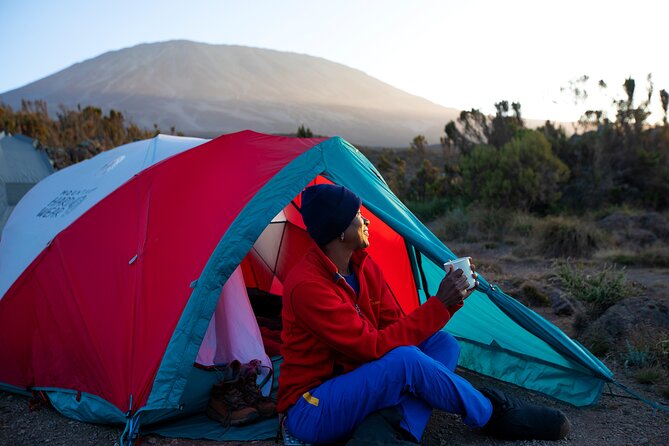
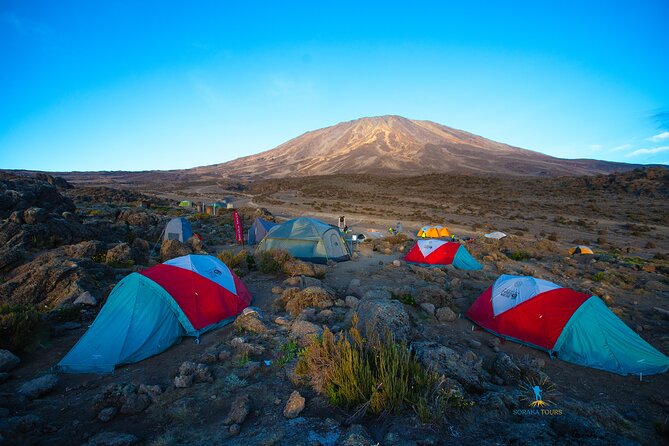
The hike from Karanga to Barafu Camp takes four to five hours. Barafu sits at 15,223 feet and is the final camp before the summit attempt.
This is not a day for casual sightseeing. You are preparing for an early start and a long summit push. You will need to organize your clothing, headlamp, water, snacks, and other personal items before resting. Your porters carry your main equipment, but your day pack still needs to be comfortable and sensibly packed.
The high camp can feel stark and exposed. The reward is that the summit route is now close. Your guide team, which includes certified Wilderness First Responders with more than ten years of climbing experience each, has the job of assessing your condition and helping you make sound decisions.
Day 8: Uhuru Peak and the long descent
Summit day begins in the early morning from Barafu Camp. You climb to Uhuru Peak at 19,340 feet, then descend all the way to Mweka Camp. The full day lasts approximately 14 to 16 hours.
This is the hardest part of the trip by a wide margin. The ascent happens when you are tired, the air is thin, and every step feels expensive. After reaching the summit, you still have a long descent ahead of you. That return to Mweka is essential, but it is not gentle.
The summit goal is Uhuru Peak, the highest point on Kilimanjaro. The views can be extraordinary, especially around sunrise, but weather and physical condition control how long you can safely remain there. The best advice is to focus on steady movement, follow your guide’s instructions, and save energy for the descent.
Several people praised the team’s support during difficult moments, including one climber who completed the climb after twisting an ankle. That does not mean an injury is manageable for everyone, but it does point to the value of having attentive guides and a crew that stays involved from the first briefing to the final descent.
Day 9: Mweka Gate and a return to Moshi
The final mountain stage takes you from Mweka Camp to Mweka Gate. From there, ground transportation returns you to the hotel for another overnight stay.
After the physical strain of summit day, this transfer and hotel night are welcome. You can shower, sleep in a bed, and recover before your airport departure. Breakfast is included at the hotel, while lunch and dinner are not.
The schedule does not add a spare mountain day for bad weather or a failed summit attempt. That is worth discussing with Soraka before booking, especially if you want extra flexibility. The supplied schedule is fixed at eight hiking days, plus the arrival and departure arrangements.
Day 10: airport transfer
The final day includes airport drop-off. The airport service is one of the practical strengths of this package because the company handles transport at both ends of the trip.
Your exact departure timing will shape how much free time you have in Moshi. The core package is focused on the Kilimanjaro climb, not on extra sightseeing, safari activities, or a longer Tanzania itinerary.
Meals, tents, and the meaning of comfort
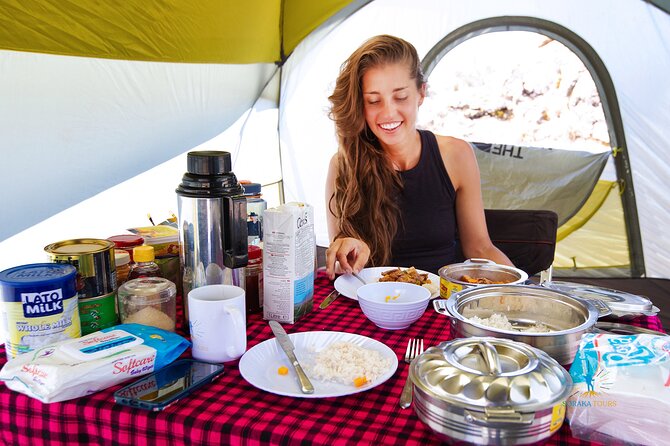
Soraka provides three freshly prepared meals each day on the mountain. A dedicated chef cooks for the group, and vegetarian, gluten-free, halal, and kosher meal plans can be accommodated.
That matters more than it may sound. Eating enough at altitude can be difficult, and reliable meals save you from carrying a large food supply. You should still tell the company about dietary needs before arrival and confirm how they handle allergies.
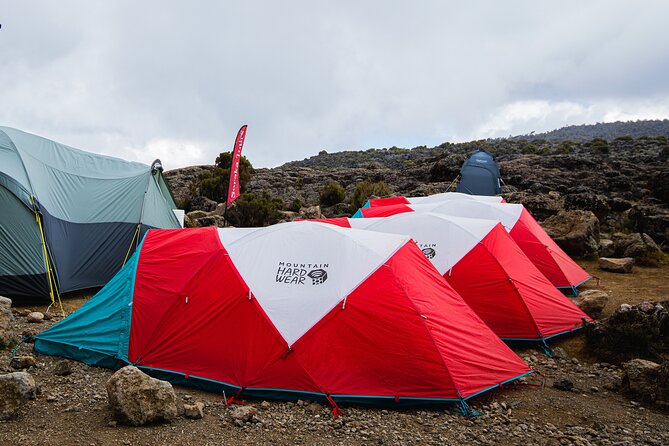
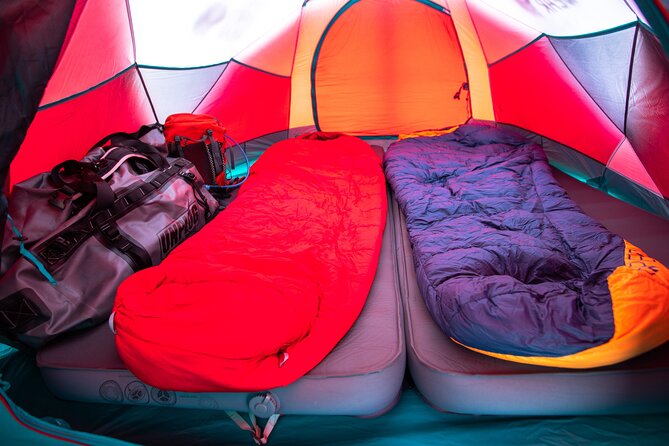
The mountain setup includes a dining tent, tables, chairs, cutlery, warm sleeping mats, and four-season Mountain Hardware tents shared by two people. Single tent accommodation is available for an additional charge.
This is camping, not a lodge. The dining tent and prepared meals can make camp life feel much more organized, but you still sleep in a tent and spend the night at high altitude. One especially attractive detail from the company’s service is its attention to small comforts, including hot water bottles and substantial meals, as described in the trip feedback.
Safety and the people supporting you
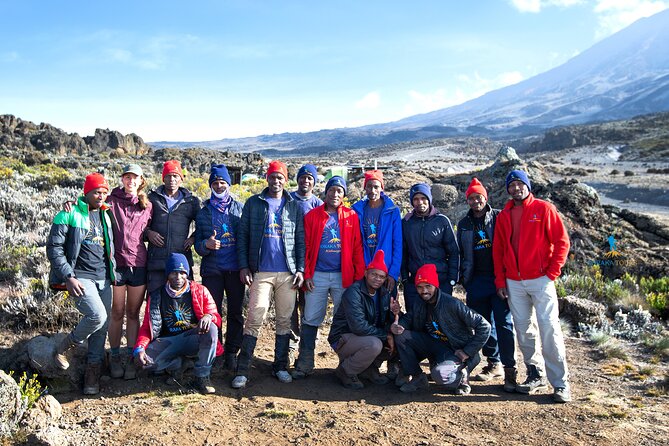
The strongest part of this package is its human support. The guides are certified Wilderness First Responders, and each is described as having more than a decade of climbing experience. The crew also includes porters who carry your main equipment, leaving you with a day pack.
Soraka includes emergency oxygen and a medical kit, along with two daily health checks using an oximeter and direct health questions. Those measures show a serious approach to altitude management, though no company can remove the risks of climbing above 19,000 feet.
Specific staff members praised in the trip feedback include guides Baraka and Baltazar. Sophia, a co-founder, is also described as providing detailed support before departure, while Baraka is one of Soraka’s Tanzanian co-founders and has been leading climbs for many years.
The company also says its mountain crew receives fair wages according to KINAPA standards. You should still plan to tip the mountain staff, since tips are not included in the price and are an established part of the climbing budget.
What the $3,450 price covers
At $3,450 per person, this is not a bargain climb. The value comes from how much is bundled into the cost.
Included are national park fees, rescue and camping fees, airport pickup and drop-off, ground transport, two hotel nights with breakfast, mountain tents, sleeping mats, the dining setup, three meals a day, porters, guides, emergency equipment, and health monitoring.
If you priced those elements separately, the package would compare more favorably than the headline price suggests. The park and rescue charges alone are significant, and reliable food, transport, and staff support are hard to arrange independently.
You still need to add airfare, a visa, travel and mountaineering insurance, hotel meals, tips, sleeping bag, hiking boots, and other personal climbing equipment. The final cost can therefore be noticeably higher than $3,450.
Who should choose this climb?
I would recommend this route to a fit hiker who values a slower ascent, organized support, and a private group. You do not need technical mountaineering skills based on the information provided, but you do need strong physical fitness and the ability to walk for long hours at altitude.
The route suits people who want a full progression through Kilimanjaro’s climate zones rather than the shortest possible climb. It also suits climbers who care about food, medical checks, crew support, and a well-equipped camp operation.
I would be cautious if you dislike camping, have limited fitness, or are looking for a relaxed holiday with plenty of downtime. Summit day alone is demanding enough to make this a serious expedition. Anyone with medical concerns should seek professional advice before booking and discuss those concerns with the operator.
Should you book the Lemosho trek?
Book it if you want a carefully supported Kilimanjaro climb with a gradual route, strong guide credentials, prepared mountain meals, and airport-to-hotel logistics. The Lemosho schedule gives you a sensible acclimatization pattern, and the private format lets Soraka focus on your own group.
The price is justified for climbers who would rather pay for an experienced crew and a well-organized operation than assemble the details themselves. Before paying, confirm personal equipment requirements, the single-tent surcharge, tipping expectations, dietary arrangements, and what happens if you need to descend early.
For a fit person ready for a long summit day, this is a strong choice. Just remember that the company can carry your gear and watch your health, but it cannot make 19,340 feet feel like a walk in the park.
FAQ
How long does the Kilimanjaro experience last?
The trek includes eight hiking days, but the complete trip takes approximately ten days. The schedule includes arrival in Moshi, two hotel nights, the mountain trek, a hotel night after descending, and airport drop-off.
Where does the trek begin?
The mountain hike begins at Lemosho Gate in Kilimanjaro National Park, at an elevation of 7,824 feet. The overall trip begins with pickup at Kilimanjaro International Airport.
Is airport transportation included?
Yes. Kilimanjaro International Airport pickup and drop-off are included, along with all ground transportation during the scheduled trip.
Are meals included on the mountain?
Yes. Three freshly prepared meals are included each day during the mountain trek. Vegetarian, gluten-free, halal, and kosher meal plans can be accommodated.
What type of accommodation is provided?
Two hotel nights at Kili Wonders Hotel in Moshi or a similar hotel are included, with breakfast. On the mountain, you stay in four-season Mountain Hardware tents shared by two people, with single accommodation available for an additional charge.
Do I need to bring my own sleeping bag and hiking boots?
Yes. Personal climbing equipment, including a sleeping bag and hiking boots, is not included. You are responsible for bringing or arranging your own personal gear.
Can I cancel for a full refund?
You can receive a full refund if you cancel at least 24 hours before the experience start time. Cancellations or changes made less than 24 hours before the start time are not accepted for a refund, based on local time.
More Treks in Moshi
- Best Kilimanjaro hiking day trip tour with Kilinge Adventures
★ 4.5 · 54 reviews - #1. Best Kilimanjaro Day hike Tour-Machame Route-ISMANI
★ 4.2 · 47 reviews - Best Kilimanjaro Adventure 7 days Machame route Trekking
★ 5.0 · 42 reviews - Kilimanjaro 7 Day Private Trekking Experience
★ 5.0 · 40 reviews
Just added in Moshi
- Zanzibar: Stone Town tour and Nakupenda beach with Lunch★ 5.0 · 1 review
- machame route★ 5.0 · 16 reviews
- day trip lake manyara★ 5.0 · 2 reviews
- Mt Kilimanjaro 6 days Marangu route hike★ 5.0 · 3 reviews
- Private Cycle to Kilimanjaro Bike Park Safari★ 5.0 · 6 reviews
- West Kilimanjaro cycling Adventures★ 4.5 · 8 reviews
- Wildlife Extravaganza: Manyara, Tarangire & Ngorongoro in 3 Days★ 5.0 · 3 reviews
- 3 Days Private E-Bike Tour in West Kilimanjaro★ 5.0 · 3 reviews
Lemosho Route Climbs, compared.


8-Day Small-group Lemosho Kilimanjaro Summit Trekking
Read our review →



Climbing Kilimanjaro through 8 days Lemosho Route
Read our review →Browse the lists this tour appears in