
Reviewed · KILIMANJARO CLIMBS
Kilimanjaro climb, Kilimanjaro Crater route (10-day)
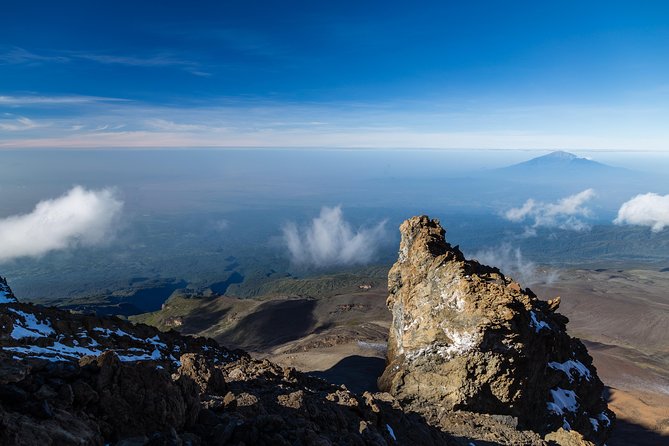
The long way up can be the smart way. This 10-day Kilimanjaro climb follows the quiet Northern Circuit, giving you more time to adjust to altitude and broad views across the mountain’s northern slopes. I like the gradual acclimatization plan and the small-group, private format, along with the strong safety setup: trained guides, regular medical checks, oxygen, and oximeters. The big consideration is the price, $6,466 per person, plus tips, insurance, visa costs, and personal gear.
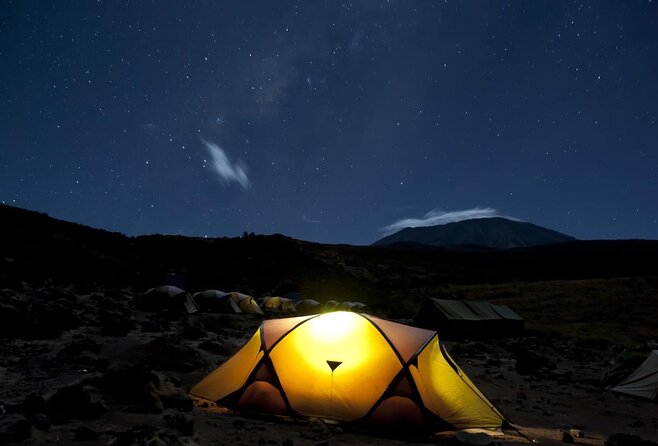
I also like the chance to sleep at Kilimanjaro’s crater, beneath clear stars and near glaciers that are shrinking each year. But the supplied day-by-day schedule does not clearly show a crater overnight. It describes School Hut, the summit, Barafu, and Millennium Camp instead, so I would confirm the exact crater-camping arrangements before booking.
In This Review
- Key points to know before you book
- Why this 10-day route is different
- Arrival in Moshi and the first briefing
- Day 2: Londorossi Gate and the Shira Plateau
- Days 3 and 4: Shira 2, Lava Tower, and Moir Hut
- Days 5 and 6: The quiet northern slopes
- Day 7: School Hut and the wait for summit night
- Day 8: Uhuru Peak, 5,895 meters, then a long descent
- Crater camping: the most unusual part, and the part to verify
- Day 9: Forest, certificates, and a proper bed
- Food, tents, equipment, and medical support
- Is $6,466 a fair price?
- Who should choose this climb?
- Final verdict: book it after confirming the crater plan
- FAQ
- How long does the Kilimanjaro climb take?
- Where does the climb begin?
- Is airport transportation included?
- Are meals provided on the mountain?
- Is camping inside Kilimanjaro’s crater included?
- What is not included in the price?
Key points to know before you book
- The Northern Circuit takes the scenic long route: You spend several days circling Kilimanjaro’s northern slopes, close to the Kenya border, with views toward Tsavo and Amboseli.
- Altitude preparation is built into the plan: The route moves from Shira 1 at about 3,500 meters to higher camps through a series of controlled gains and acclimatization walks.
- Crater camping adds real risk: Sleeping at great height is memorable, but it requires a realistic look at your fitness and high-altitude experience.
- Summit night begins around midnight: You reach Uhuru Peak at 5,895 meters, then descend through Barafu to Millennium Camp.
- Medical support is unusually detailed: Guides check you at least twice daily, carry medical kits, and provide oximeters and unlimited oxygen tanks.
- The price covers most mountain costs: Park fees, transport, lodging, meals, tents, camp equipment, guides, porters, and cooks are included, but not insurance, tips, or personal equipment.
Why this 10-day route is different
Most people focus on reaching Uhuru Peak, Africa’s highest point. This route gives equal attention to how you get there. The Northern Circuit is Kilimanjaro’s longest and newest major route, and it sees far fewer people than the better-known approaches.
That quiet is part of the appeal. You are not simply walking uphill in a procession. You spend time on the Shira Plateau, cross the northern side of the mountain, and look toward Kenya before joining the traditional Rongai route near Third Cave Camp.
The schedule also gives your body more time at altitude. You begin with modest gains, then spend time high and descend slightly before climbing again. That pattern is useful because altitude, rather than technical climbing, is the main challenge on Kilimanjaro.
Still, do not mistake a gradual route for an easy one. You spend several days above 3,500 meters, with long walking days and a demanding summit push. The crater option makes the trip more unusual, but it also puts you at an even greater height overnight.
More Kilimanjaro climbs:
- Kilimanjaro climb by Lemosho Route (7-day)
★ 5.0 · 651 reviews - Kilimanjaro climb, Machame Route (7-day)
★ 5.0 · 262 reviews - Kilimanjaro Climbing Lemosho Route 8 Days.
★ 5.0 · 186 reviews
Arrival in Moshi and the first briefing
Your trip begins with pickup at Kilimanjaro International Airport. An Altezza Travel representative meets you and takes you to the hotel, where two nights are included during the full program, with two people sharing a room unless you pay for single accommodation.
The first hotel night is practical rather than decorative. You can expect hot water, internet access, a swimming pool, and staff to help you settle in. Check-in begins at 2:00 PM, so an early arrival may mean waiting before your room is ready.
That evening, a manager gives you a briefing and checks that you are ready to climb. The mountain guide and support crew meet you again the next morning for another briefing. I like this two-step approach. It gives you time to ask about clothing, altitude symptoms, equipment, food, and the daily rhythm before you reach the trailhead.
The meeting time is listed as 9:00 AM. Your airport transfers and ground transport are included, which removes one common headache in Tanzania. Visa fees and the cost of reaching Tanzania are not included.
Day 2: Londorossi Gate and the Shira Plateau
The drive to Kilimanjaro National Park’s western entrance takes roughly three to four hours. At Londorossi Gate, at about 2,200 meters, your team handles permits and registration with the search and rescue service.
From there, off-road vehicles take you higher, to about 3,500 meters. That shortcut means you begin the walking portion already above the altitude of many mountain towns, so you should take the first day seriously even though the trail itself is not especially strenuous.
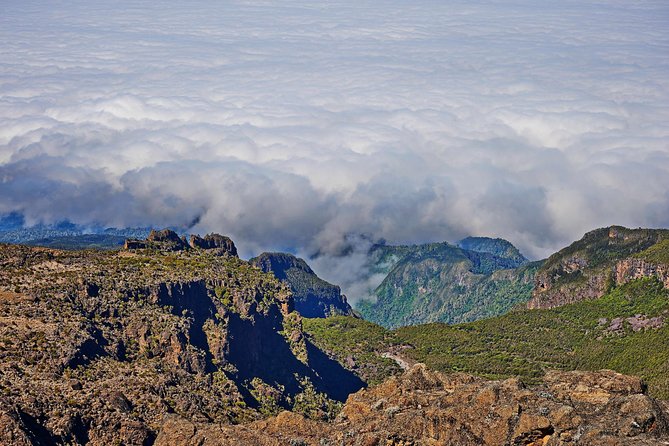
The walk to Shira 1 includes only a small altitude gain. The first reward is your view of the Shira Plateau, a wide high-altitude area with an open, remote feel. You sleep in a North Face VE-25 tent, with two climbers per tent unless you arrange a solo setup.
The short walking day is useful for more than saving energy. It lets you test your boots, layers, daypack, water routine, and appetite before the harder sections begin.
Days 3 and 4: Shira 2, Lava Tower, and Moir Hut
Day 3 moves from Shira 1 to Shira 2, with a gain of about 300 meters. The walking is moderate, leaving time to appreciate Kilimanjaro’s plant life and, when weather allows, views of Mount Meru.
After lunch and a two-hour rest, you take an acclimatization walk toward Lava Tower. You gain another 300 meters, then return or continue according to the camp plan. This is a classic high-altitude strategy: walk higher, then sleep lower than your highest point of the day.
Day 4 is tougher. You leave Shira Camp at about 3,900 meters and climb toward Lava Tower at 4,630 meters. The path rises and falls, and the changing height can make you feel uncomfortable. Lunch at Lava Tower gives your body one or two hours at the higher altitude before the route continues.
After Lava Tower, the path climbs slightly and drops toward Moir Hut Camp. The guide may skip Lava Tower and use a porter trail if someone in the group is not adapting well. In that case, the highest point is about 4,400 meters rather than 4,630.
This flexibility is important. A good mountain plan is not a contest against the printed schedule. If you have a headache, nausea, unusual tiredness, or poor coordination, tell your guide early.
A few more options to weigh up in Moshi
- Safari Serengeti And Ngorongoro
★ 5.0 · 288 reviews - Climbing Kilimanjaro – Machame Route
★ 5.0 · 170 reviews - Climbing Kilimanjaro through 7 days Machame Route
★ 5.0 · 151 reviews - Kilimanjaro climb, Lemosho Route (8-day)
★ 5.0 · 148 reviews
Days 5 and 6: The quiet northern slopes
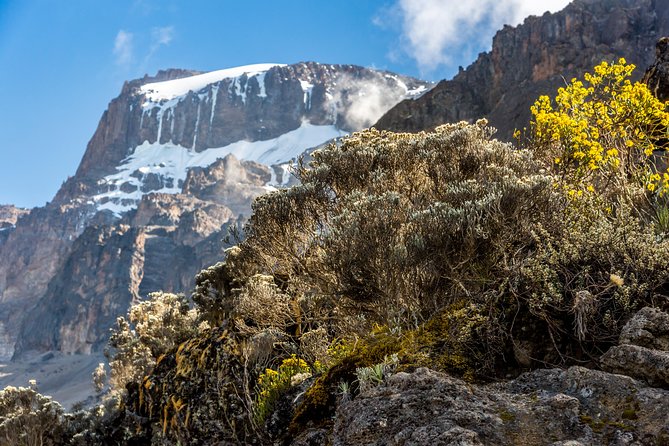
Day 5 is long but not especially steep. After a short, sharp climb out of Moir Valley, you begin circling Kilimanjaro’s northern side. The trail rises and falls without major sustained climbs, which makes for a steady but tiring day.
The route passes near the Kenya border. You get views toward the Tsavo and Amboseli valleys, a welcome change from looking only at the upper mountain. I like this section because it gives you a sense of Kilimanjaro as a large volcanic massif, not just a summit walkway.
On Day 6, you finish crossing the northern slope and spend the night at Third Cave Camp. Here, the route meets the traditional Rongai route. The walking is shorter than the previous day, and the schedule assumes that you have become used to roughly 4,000 meters.
That assumption needs a little caution. Acclimatization varies from person to person. You may feel strong at 4,000 meters, or you may still need to slow down and rest. The guide’s medical checks, performed at least twice a day, are one of the more reassuring parts of the program.
Day 7: School Hut and the wait for summit night
Day 7 takes you to School Hut Summit Camp at 4,750 meters. The walking itself is described as manageable, but the point is to arrive with enough strength for the summit attempt later that night.
Once you reach camp, the best use of your time is rest. Drink fluids, avoid unnecessary activity, and keep your clothing and headlamp ready. The schedule calls for the summit climb to begin around midnight.
This is where the route becomes mentally demanding. You have already spent a week walking at high altitude, yet the hardest effort is still ahead. A calm pace matters more than speed. The right goal is to keep moving steadily while allowing the guide to monitor your condition.
Day 8: Uhuru Peak, 5,895 meters, then a long descent
The summit attempt begins at about 4,750 meters and climbs to Uhuru Peak at 5,895 meters. The route is not technically difficult, but the altitude makes every step harder. One guide is assigned for every two climbers during the summit push, with responsibility for watching health and pace.
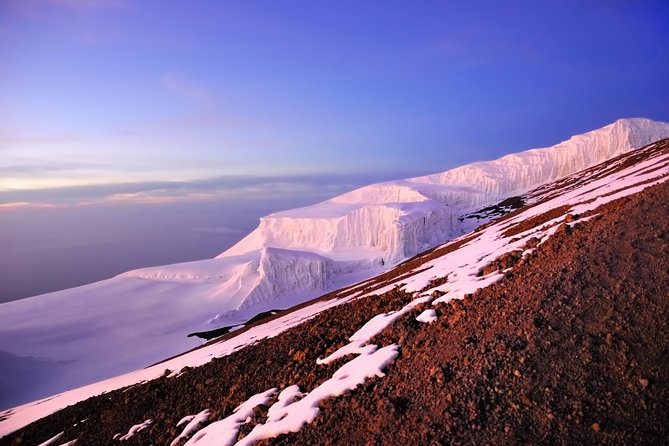
After reaching the summit, you may have the option to walk on the nearest glacier. That decision depends on your condition, timing, and guide’s judgment. Do not treat it as a required extra. At this height, a successful summit is already enough.
The descent is where the day becomes especially demanding. You go down to Barafu Camp for a two-hour lunch and rest, then continue to Millennium Camp at about 3,820 meters.
The schedule lists five hours for this portion, but the full summit day involves a midnight start and a descent after reaching the peak. You should expect fatigue, loose footing, and tired legs. The warning about accidents during descent is practical, not dramatic. Many problems happen when people relax too soon, misstep, or rush downhill.
Crater camping: the most unusual part, and the part to verify
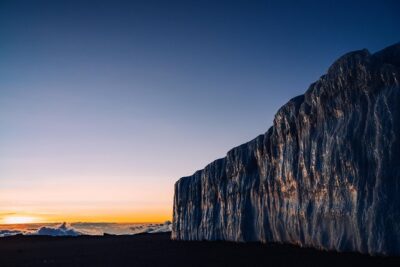
The promise of sleeping inside Kilimanjaro’s crater is the feature that sets this program apart. At that height, you sleep beneath the stars with views of glaciers that are shrinking through wind erosion. It is an extraordinary setting, but it is also an overnight stay at extreme altitude.
The program itself says crater camping requires a serious assessment of your condition and high-altitude experience. I would take that warning literally. You should ask how long you will remain in the crater, where the tent will be placed, what the evacuation plan is, and how the crater night fits with the School Hut and summit schedule.
There is an important planning mismatch to clear up. The stated daily schedule does not explicitly include a crater camp. It sends you from School Hut to Uhuru Peak, then to Barafu and Millennium Camp. That may reflect a shortened public description, but you should not assume the crater night is included exactly as you imagine it. Get the route and camp names in writing before making a final payment.
Day 9: Forest, certificates, and a proper bed
Millennium Camp sits in tropical forest at about 3,820 meters. After the exposed upper mountain, the lower altitude should feel welcome. A hot breakfast comes before the final descent to Mweka Gate at 1,650 meters.
Mweka is more than a finish line. It is where you say goodbye to the mountain crew and receive accomplishment certificates after transfer to the company offices. The final drive takes you back to the hotel for a well-earned shower and sleep.
The support crew is a major part of the climb. Porters, cooks, camp staff, and guides handle the camp work while you focus on walking. Tips are not included, so budget for them separately and ask the company for current guidance on fair distribution.
Food, tents, equipment, and medical support
Three meals a day are included on the mountain, with nine breakfasts, seven lunches, and eight dinners listed for the program. Vegetarian, gluten-free, halal, and other meal plans are available.
Tea, coffee, juices, soda, and other drinks are also provided on Kilimanjaro. That matters more than it may sound. Eating and drinking enough is part of managing long days at height, and having food prepared at camp means you do not need to carry a full cooking kit.
The mountain setup includes a mess tent, sleeping pads, tables, chairs, crockery, and cutlery. North Face VE-25 tents accommodate two climbers. Single tent and hotel arrangements are available for an additional charge.
Personal equipment is not included. You need your own hiking clothes, boots, and sleeping bag, though gear is available for hire. Insurance covering trekking up to 6,000 meters and helicopter evacuation is strongly recommended and should be arranged before departure.
The safety package is one of the strongest reasons to consider this operator. Guides are certified Wilderness First Responders and have at least seven years of professional experience. Medical checks take place at least twice daily, while oximeters, medical kits, and unlimited oxygen tanks are available.
Oxygen is not a guarantee that someone can safely continue. It is a medical support tool. Your guide’s decisions and your honesty about symptoms matter just as much.
Is $6,466 a fair price?
At $6,466 per person, this is a costly climb. But the figure covers far more than a guide and a park permit. You receive airport pickup and drop-off, all ground transport, two hotel nights, mountain tents, meals, drinks, park fees, camp equipment, guides, porters, cooks, and medical support.
The private format also matters. Only your group participates, and group discounts may be available. A private climb can give you more control over pace and planning, though the guide still needs authority to change the route for safety.
You still need to add the cost of getting to Tanzania, visa fees, insurance, tips, personal gear, hotel meals, and any single-room or single-tent supplement. The final cost may therefore be notably higher than the advertised price.
I see the value most clearly for someone who wants the longest route, extra acclimatization days, a quiet trail, and a well-supported camp system. If your only goal is to reach the summit as cheaply as possible, this is not the right package.
Who should choose this climb?
I would choose this route if you want time, scenery, and a less crowded approach. It suits someone with moderate fitness who can handle long walking days, repeated altitude gains, cold nights, and a midnight summit attempt.
You do not need technical climbing skill for the described summit route, but you do need patience and stamina. The route includes days of five to eight hours, plus schedules showing 12 and 14-hour activity periods around the summit section.
I would think twice if you have little tolerance for altitude, dislike basic tent camping, or want a short, simple holiday. The crater option is especially unsuitable for anyone who treats high-altitude symptoms casually.
Previous parties included couples, groups of five, adults climbing with adult children, and a family that later returned with a teenager. That shows the program can work for different group types, but fitness, medical readiness, and the ability to follow the guide’s instructions matter more than age alone.
Final verdict: book it after confirming the crater plan
I like this Kilimanjaro climb for its patient route, quiet northern scenery, thorough mountain support, and strong attention to medical monitoring. The long approach gives you a better chance to adjust than a rushed climb, while the crater promise adds a rare and memorable goal.
I would book it only after confirming one point: does your exact departure include an overnight camp inside the crater, and how does that fit with the published School Hut to Uhuru Peak schedule?
If the answer is clear and your insurance, gear, and fitness are ready, this is a serious, well-supported choice for a private Kilimanjaro attempt. If the crater is essential to you and the answer remains vague, wait before paying. Free cancellation is available up to 24 hours before the start time, but changes or cancellations inside that window are not accepted.
FAQ
How long does the Kilimanjaro climb take?
The program lasts approximately 10 days, including arrival, hotel stays, the mountain climb, descent, and departure transfer.
Where does the climb begin?
After a three to four-hour drive from Moshi, the group reaches Londorossi Gate on the western side of Kilimanjaro National Park. Off-road vehicles then continue to a drop-off point at about 3,500 meters.
Is airport transportation included?
Yes. Pickup and drop-off at Kilimanjaro International Airport are included, along with all ground transportation during the program.
Are meals provided on the mountain?
Yes. Three meals a day are provided, along with drinks such as tea, coffee, juices, and soda. Vegetarian, gluten-free, halal, and other meal plans are available.
Is camping inside Kilimanjaro’s crater included?
The program describes crater camping as part of the extended 10-day trek, but the daily schedule provided does not clearly name a crater camp. Confirm the exact camping plan with Altezza Travel before booking.
What is not included in the price?
Tips for the mountain crew, travel to Tanzania, visa fees, trekking and evacuation insurance, personal hiking equipment, hotel lunches and dinners, and single accommodation charges are not included.
Just added in Moshi
- Zanzibar: Stone Town tour and Nakupenda beach with Lunch★ 5.0 · 1 review
- day trip lake manyara★ 5.0 · 2 reviews
- Mt Kilimanjaro 6 days Marangu route hike★ 5.0 · 3 reviews
- machame route★ 5.0 · 16 reviews
- West Kilimanjaro cycling Adventures★ 4.5 · 8 reviews
- Wildlife Extravaganza: Manyara, Tarangire & Ngorongoro in 3 Days★ 5.0 · 3 reviews
- Private Cycle to Kilimanjaro Bike Park Safari★ 5.0 · 6 reviews
- 3 Days Private E-Bike Tour in West Kilimanjaro★ 5.0 · 3 reviews
Kilimanjaro Climbs, compared.





Chagga Villages in Mount Kilimanjaro Cycling Day Trip
Read our review →
Browse the lists this tour appears in