
Reviewed · KILIMANJARO CLIMBS
Kilimanjaro Climbing Umbwe Route
The quiet route has a price. The six-day Umbwe climb gives you a tougher, less crowded way up Kilimanjaro, with local guides and striking views from rainforest to alpine desert. I like the route’s sense of solitude and the careful staging of the summit push, especially the long rest before midnight. The main drawback is clear: Umbwe is steep and demanding, and six days gives you less acclimatization time than longer routes.
You start near Moshi and finish with a certificate at Mweka Gate. Along the way, you pass giant forest trees, the Barranco Wall, Karanga Valley, Barafu Camp, Stella Point, and Uhuru Peak at 5,895 meters. The $2,750 price is substantial, but it covers six days of meals, park access, transfers described in the plan, guides, and a small group of no more than eight people.
- Umbwe’s quiet opening: The route begins through banana plantations and rainforest, then follows a steep ridge between the Lonzo and Umbwe Rivers.
- Barranco Wall on day three: It looks imposing from below, but the route description notes that the climb is easier than its appearance suggests.
- A serious summit day: You leave around midnight, reach Stella Point near sunrise, continue to Uhuru Peak, then descend to Mweka Camp. The day lasts about 15 hours.
- Small-group format: The maximum group size is eight, useful on a narrow and demanding route.
- Local Tanzanian leadership: Guides are from Kilimanjaro and other parts of Tanzania, with training in safety and first aid.
- Free cancellation deadline: You can cancel up to 24 hours before the start for a full refund, subject to the stated weather and timing rules.
In This Review
- Why Choose the Umbwe Route?
- Day One: From Moshi to Umbwe Gate
- Day Two: The Forest Thins Near Barranco
- Day Three: Climbing the Barranco Wall
- Day Four: Resting at Barafu Camp
- Day Five: Stella Point, Uhuru Peak, and Mweka Camp
- Day Six: Mweka Gate and the Return to Moshi
- What the $2,750 Price Buys You
- Guide Support and the Human Side of the Climb
- Who Should Book This Climb?
- Cancellation and Weather Details
- Should You Book the Six-Day Umbwe Route?
- FAQ
- Where does the Kilimanjaro Umbwe Route experience begin?
- How long does the climb take?
- How high is Uhuru Peak?
- How large can the group be?
- Are meals included?
- Are flights and visas included?
- Can I cancel for a full refund?
Why Choose the Umbwe Route?
Umbwe is a good match for you if the idea of a quieter, more direct mountain route appeals more than an easy introduction to Kilimanjaro. The opening days rise quickly through forest and along ridges, so this is not the gentlest way to reach the mountain’s upper slopes.
The route begins at the Umbwe Gate, at about 1,800 meters. From there, you move through several clear ecological zones. The forest gives way to rockier ground, then to the harsh alpine desert around Barafu Camp. Finally, the summit push takes you across high volcanic terrain to the crater rim and Uhuru Peak.
That variety is one of the best parts of the climb. In only six days, you see a dramatic change in vegetation, temperature, and scenery. You should also understand the tradeoff: the short schedule leaves less time for your body to adjust to altitude.
The operator describes its guides as local specialists with training in first aid and safety, plus knowledge of flora, fauna, geography, history, archaeology, anthropology, and astronomy. That is useful because a good guide on Kilimanjaro does more than point uphill. You will want someone who can explain what you are seeing and respond properly if the altitude begins to affect you.
Day One: From Moshi to Umbwe Gate
The day begins after breakfast at your Moshi hotel, followed by a drive to Umbwe Gate. The meeting information also lists Kilimanjaro Airport and a 4:00 am start time, so you should confirm the exact pickup point and departure time before setting out.
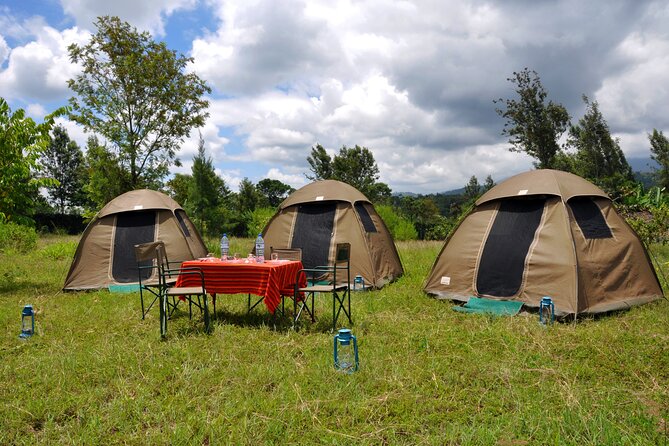
The approach includes banana plantations, then park registration at the gate. Once the formalities are complete, the path enters natural rainforest. The trail winds upward on a forestry track before narrowing and steepening along the ridge between the Lonzo and Umbwe Rivers.
The first day takes about six hours. Huge trees and thick undergrowth surround the route, giving the opening a secluded feel. Your first camp sits among the trees, which makes this a scenic start but not an easy one.
I like the way this day gets you away from roads and buildings quickly. You are not spending the first night at a bland roadside stop. You are already in the forest, with the mountain route under your boots.
The catch is the steep grade. The first day may look modest on a schedule, but six hours on an uphill trail can be tiring, especially if you have just arrived in Tanzania. Your fitness matters from the first morning.
More Kilimanjaro climbs:
- Kilimanjaro climb by Lemosho Route (7-day)
★ 5.0 · 651 reviews - Kilimanjaro climb, Machame Route (7-day)
★ 5.0 · 262 reviews - Kilimanjaro Climbing Lemosho Route 8 Days.
★ 5.0 · 186 reviews
Day Two: The Forest Thins Near Barranco
After leaving camp, the forest begins to thin. Rockier ground appears, the undergrowth becomes sparse, and the trees turn smaller and more weathered, with moss covering their branches.
The route continues along a striking ridge. As you gain altitude, you may catch views of Kilimanjaro rising ahead against the sky. These first glimpses are valuable because the mountain begins to feel like a real destination rather than a distant outline.
The walk lasts about five hours. Near the Barranco Valley, the trail becomes flatter, and camp sits below the Breach and the great Barranco Wall. If the weather cooperates, the wall and surrounding peaks make a memorable setting for sunset while dinner is prepared.
This is one of the more rewarding days for scenery. You get a change from enclosed forest to open views without yet facing the full hardship of summit day.
You should still pace yourself. The route continues gaining height, and the six-day schedule does not offer much spare time for a slow acclimatization program. Walk steadily, follow your guide’s instructions, and treat any altitude symptoms seriously.
Day Three: Climbing the Barranco Wall
Day three covers about four hours, making it the shortest walking day before the summit attempt. That shorter schedule is not wasted time. It gives you a chance to rest and adjust before the hardest part of the climb.
After breakfast, you climb toward the Barranco Wall. From below, it can look like a formidable barrier. The route description makes an important point: the wall is easier to climb than it looks. At the top, you get broad views of Kilimanjaro, with the Kibo glaciers overhead.
You then descend into the Karanga Valley and continue to camp. Mawenzi’s jagged peaks can be seen to the east. Lunch is taken at camp, and the afternoon is left open for rest or exploration.
I like this pause in the schedule. A mountain program that keeps you walking hard every hour is poor planning. Here, the half-day gives your legs a break and lets you prepare mentally for the summit bid.
Do not confuse a shorter walking day with an easy day. The Barranco Wall still requires effort, and the change in altitude can be felt. The value comes from having an afternoon to recover afterward.
Day Four: Resting at Barafu Camp
The next half-day takes you to Barafu Camp in about four hours. Lunch is served there, leaving time to rest before the summit attempt.
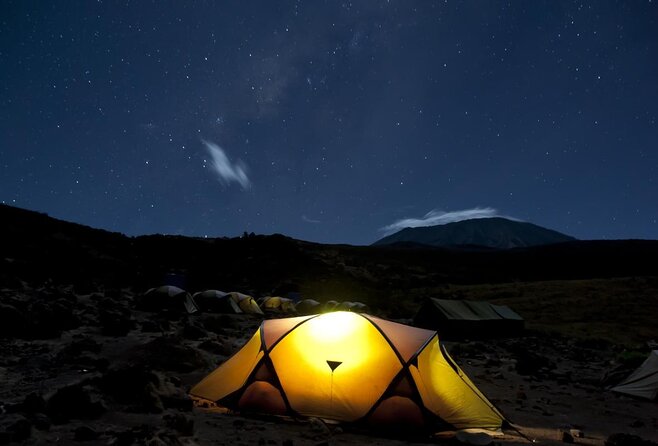
The setting becomes stark. You are in alpine desert, and strong winds can sweep across camp. In the evening, you get views of Mawenzi Peak, a sharp contrast to the thick forest from the first day.
Dinner is taken relatively early, followed by rest before the midnight start. This timing is practical. You need to use every available hour to eat, sleep, and prepare your clothing and equipment.
Barafu is not described as a comfortable place, and it should not be treated as one. The point is its position before the summit, not entertainment or shelter from the elements. The high camp may feel exposed, and the cold and wind can make rest difficult.
Still, I consider the long afternoon at Barafu one of the better details in the plan. A summit attempt beginning around midnight is physically demanding. Extra time at camp gives you a chance to conserve energy.
A few more options to weigh up in Moshi
- Safari Serengeti And Ngorongoro
★ 5.0 · 288 reviews - Climbing Kilimanjaro – Machame Route
★ 5.0 · 170 reviews - Climbing Kilimanjaro through 7 days Machame Route
★ 5.0 · 151 reviews - Kilimanjaro climb, Lemosho Route (8-day)
★ 5.0 · 148 reviews
Day Five: Stella Point, Uhuru Peak, and Mweka Camp
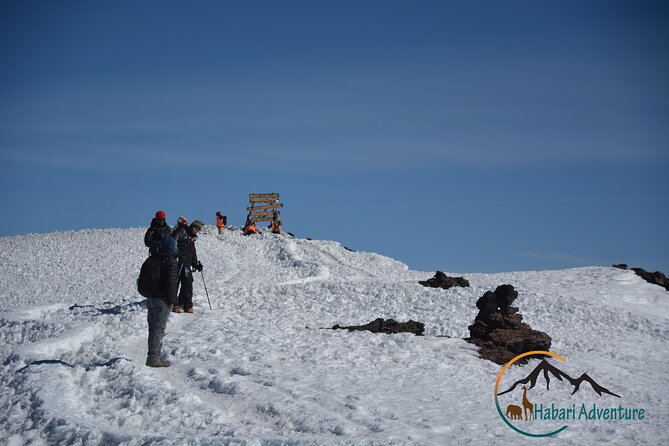
This is the defining day. You wake around midnight for light tea and cookies, then begin climbing scree. The ascent takes about four to five hours to reach Stella Point at 5,756 meters.
The goal is to arrive near sunrise. Reaching the crater rim as daylight appears gives the summit section a powerful sense of timing, and the high views should be at their clearest if the weather is kind.
At Stella Point, you have tea, then continue toward Uhuru Peak. At 5,895 meters, Uhuru is the highest point on Kilimanjaro. You stop for photographs, then begin the long descent to Barafu Camp for rest and lunch.
The day is listed at about 15 hours. That number deserves your full attention. You are not simply walking to the summit and returning to a nearby bed. You descend to Barafu, recover briefly, and continue down to Mweka Camp for dinner and overnight rest.
This is where fitness, pacing, and guide support matter most. The upward climb is tiring, but descending after reaching the summit can be just as punishing. If you choose this route, you should be ready for a very long day with little room for delay.
The reward is the summit itself and the changing views along the way. You move from dark scree under a midnight sky to sunrise at the crater rim, then back through lower terrain toward camp. It is a demanding sequence, but also the most memorable part of the program.
Day Six: Mweka Gate and the Return to Moshi
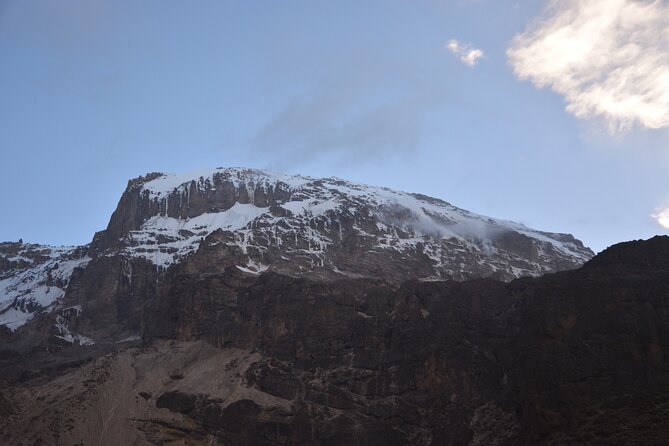
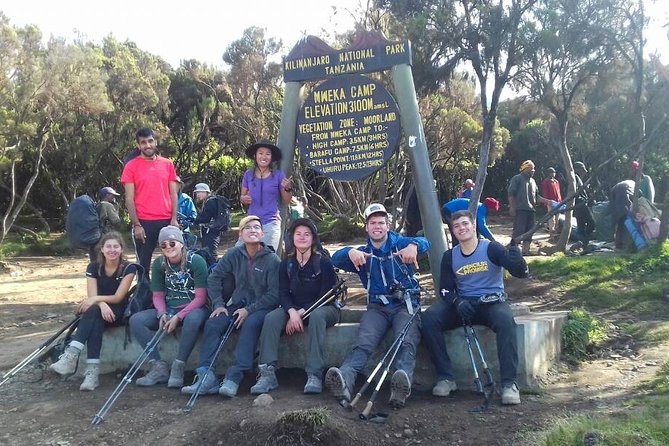
The final walk takes about three hours through Mweka’s montane forest to Mweka Gate. At the gate, you complete park formalities and receive certificates.
A car is scheduled to take you back to your Moshi hotel for a hot shower and a proper celebration. After the long summit day, that simple return can feel like a major luxury.
The shorter final walk is welcome. You still need to manage tired knees and legs, but you are heading downhill and toward the end of the route.
What the $2,750 Price Buys You
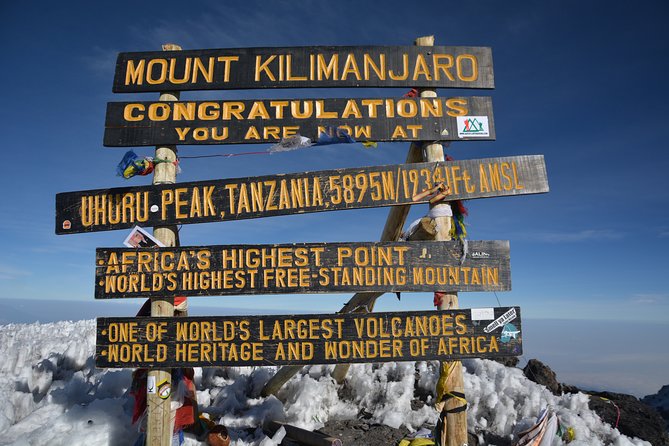
At $2,750 per person, this is not a budget climb. The value depends on what you want from the experience and how much support you expect on a major mountain.
The package includes breakfast for six days, lunch for six days, and dinner for five days. It also includes admission tickets for the mountain portions of the trip, with pickup offered. The information says mobile tickets are available, which is convenient for keeping booking details on your phone.
The group limit of eight is another useful part of the price. A small group can make communication easier on narrow sections, and it may allow the guide team to monitor each person more closely. The exact guide-to-climber ratio is not stated, so I would ask about that before paying.
The strongest value comes from the local leadership. Habari Adventure says its guides come from Kilimanjaro and elsewhere in Tanzania, and that every guide is trained in safety and first aid. The company also presents the climb as a chance to learn about the area’s natural and cultural subjects, not just a physical test.
Flights and visas are not included. You need to budget for both separately, along with any personal gear or other costs not listed in the package.
One practical point deserves clarification: the meals are listed as six breakfasts and six lunches, but only five dinners. That may match the final return day, or it may simply reflect the way the package is recorded. Ask what is provided on each date.
Guide Support and the Human Side of the Climb
The strongest praise connected with this experience focuses on the company’s care, flexibility, and communication. Stanley, the company director, handled advice before arrival and arranged a special price for one climber traveling alone. That suggests the planning process can be personal rather than purely transactional.
Catherine, Nadya, and the Habari Adventure team also responded warmly to feedback and emphasized repeat visits for more climbing and safari experiences. The French-language feedback described an attentive and professional team from arrival through the summit and return.
You should not treat kind communication as a substitute for mountain ability, but it matters. A climb has many moving parts, from park registration to meals, camps, weather, and the final transfer. Clear answers before you arrive can prevent small problems from becoming large ones.
The company also offers safari arrangements, based on the feedback connected with one booking. If you are already planning time in Tanzania, it may be worth asking about combining the climb with a safari, though that additional trip is not part of this six-day package.
Who Should Book This Climb?
I would recommend this route to a fit climber who wants a more secluded approach and is comfortable with steep trails, basic mountain camps, and a very long summit day.
It may suit you if:
- You have strong physical fitness.
- You want the Umbwe route rather than a more gradual approach.
- You value a small group.
- You want local guides and first-aid-trained staff.
- You can handle a 15-hour summit day.
- You are happy to rest at high camps instead of expecting comfort.
I would think twice if you are new to strenuous mountain walking or if you want the longest possible acclimatization schedule. The operator specifically says strong physical fitness is required, and the route rises quickly.
You should also confirm the exact start location, since the details refer both to pickup from a Moshi hotel and a 4:00 am start at Kilimanjaro Airport. Ask about the guide-to-climber ratio, the dinner count, and any equipment or transport details that are not listed.
Cancellation and Weather Details
You can cancel up to 24 hours before the experience starts for a full refund. Changes or cancellations made less than 24 hours before the local start time are not accepted for a refund.
The climb requires suitable weather. If poor weather causes cancellation, you are offered another date or a full refund. That policy is useful for a mountain activity, where conditions can change the plan.
Should You Book the Six-Day Umbwe Route?
Book it if you want a tough, scenic Kilimanjaro route with a quiet opening, local leadership, and a compact group. The Barranco Wall, Mawenzi views, sunrise near Stella Point, and Uhuru Peak give the six days plenty of memorable moments.
Skip it if you need a gentler altitude schedule or dislike long summit days. At $2,750, you are paying for a serious supported climb, not a casual walk. Before booking, get clear answers about pickup, meals, guide ratios, and required equipment. If those details suit you and your fitness is strong, Umbwe offers a direct and rewarding way to approach the Roof of Africa.
FAQ
Where does the Kilimanjaro Umbwe Route experience begin?
The climb begins with pickup after breakfast from your hotel in Moshi, followed by a drive to Umbwe Gate. The meeting details also list Kilimanjaro Airport and a 4:00 am start, so confirm the exact meeting point with Habari Adventure.
How long does the climb take?
The experience lasts approximately six days. Walking times range from three to six hours on most days, while the summit day lasts about 15 hours.
How high is Uhuru Peak?
Uhuru Peak is 5,895 meters above sea level. Stella Point on the crater rim is listed at 5,756 meters.
How large can the group be?
The maximum group size is eight people.
Are meals included?
Yes. The package lists six breakfasts, six lunches, and five dinners. Ask the operator to confirm which meals are served on each day.
Are flights and visas included?
No. Flights and visas are not included in the $2,750 price.
Can I cancel for a full refund?
Yes. You can cancel at least 24 hours before the experience start time for a full refund. If poor weather causes the activity to be canceled, you will be offered another date or a full refund.
Just added in Moshi
- Zanzibar: Stone Town tour and Nakupenda beach with Lunch★ 5.0 · 1 review
- day trip lake manyara★ 5.0 · 2 reviews
- Mt Kilimanjaro 6 days Marangu route hike★ 5.0 · 3 reviews
- machame route★ 5.0 · 16 reviews
- Private Cycle to Kilimanjaro Bike Park Safari★ 5.0 · 6 reviews
- West Kilimanjaro cycling Adventures★ 4.5 · 8 reviews
- Wildlife Extravaganza: Manyara, Tarangire & Ngorongoro in 3 Days★ 5.0 · 3 reviews
- 3 Days Private E-Bike Tour in West Kilimanjaro★ 5.0 · 3 reviews
Kilimanjaro Climbs, compared.





Chagga Villages in Mount Kilimanjaro Cycling Day Trip
Read our review →
Browse the lists this tour appears in