
Reviewed · MARANGU ROUTE CLIMBS
Kilimanjaro Trek 6 Days Marangu Route
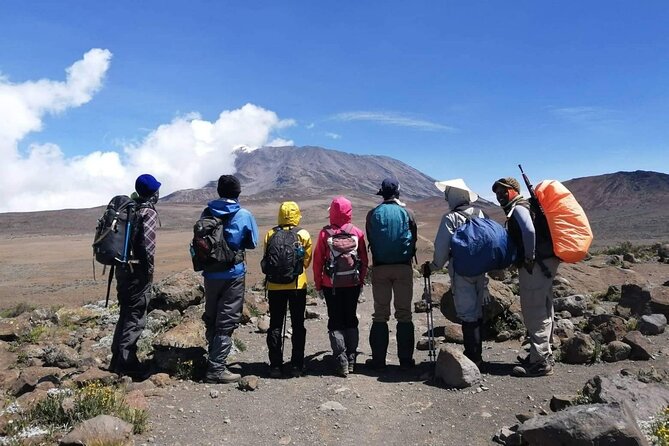
The mountain rewards patience. This Kilimanjaro climb uses the Marangu Route, the only standard route on Mount Kilimanjaro with hut accommodation instead of camping, making it a practical choice if you want a hard climb with fewer nights under canvas. I like the shared mountain huts and the fact that meals, porters, guides, park fees, rescue fees, transfers, and hotel nights are bundled into the price. I also like the private format, since your group climbs with its own guides and support crew.
The main caution is the schedule. The advertised experience is called a six-day trek, but the detailed plan describes five hiking days, with an extra acclimatization day available as an option. You should confirm the exact number of mountain nights, the added cost, and where the extra day fits before paying.
In This Review
- Key Points Before You Book
- Why the Marangu Route Works for Some Climbers
- The Price and What It Really Covers
- Day 1: Marangu Gate to Mandara Hut
- Day 2: Mandara Hut, Maundi Crater, and Horombo
- Day 3: Horombo to Kibo Across the Saddle
- Day 4: The Midnight Push to Uhuru Peak
- Day 5: Returning Through Moorland and Rain Forest
- Guides, Porters, and the Human Side of the Climb
- What to Pack and What to Confirm
- What the Past Feedback Tells You
- Who Should Choose This Kilimanjaro Climb?
- Should You Book It?
- FAQ
- How long is the Kilimanjaro Marangu Route experience?
- Where does the trek begin?
- Is hotel accommodation included?
- Do I sleep in tents?
- Are meals included during the climb?
- Is drinking water included?
- Are park fees included?
- Is climbing equipment included?
- Are tips included in the price?
- What fitness level is required?
- Is this a private tour?
- Can I cancel for a full refund?
Key Points Before You Book
- Hut accommodation: Sleep in shared huts on the Marangu Route, with no tent required.
- Private climbing group: Only your own party takes part, supported by guides, assistant guides, a cook, and porters.
- Summit night: Expect a midnight start, a steep climb to Gillman’s Point, and a final push toward Uhuru Peak.
- Good package value: Park fees, hut fees, rescue fees, meals on the mountain, transfers, and hotel nights are included.
- Optional acclimatization day: The extra day may improve your summit prospects, so confirm how it changes the five-day plan.
- Plan for extra costs: Tips, personal gear, sleeping bags, drinks in Moshi, insurance, visas, and flights are not included.
Why the Marangu Route Works for Some Climbers
The Marangu Route is often called the hut route, and that simple fact shapes the whole experience. Instead of carrying or sleeping in a tent, you stay in shared huts at Mandara, Horombo, and Kibo. This does not make the climb easy, but it can make the nights less complicated.
The huts offer a basic roof and a bed space. You still need warm clothing and a sleeping bag, since comfort at altitude is not guaranteed by four walls. Sleeping bags are available to rent for $40, and other equipment can be rented in Moshi.
Another small convenience is the ability to buy mineral water, soft drinks, chocolates, and beer at the camps. These supplies cost extra, but they can be welcome after a long uphill walk. You should still carry enough water for each section, especially on the high route toward Kibo.
The private format suits you if you want direct support rather than a large mixed group. The crew includes expert guides, assistant guides, a cook, and porters. The company also says crew wages follow standards set by the Kilimanjaro Park Authority and relevant local associations. Tips are still expected as a separate expense, so include them in your budget.
More Kilimanjaro climbs:
- Kilimanjaro climb by Lemosho Route (7-day)
★ 5.0 · 651 reviews - Kilimanjaro climb, Machame Route (7-day)
★ 5.0 · 262 reviews - Kilimanjaro Climbing Lemosho Route 8 Days.
★ 5.0 · 186 reviews
The Price and What It Really Covers
The listed price is $1,846.16 per person. That is not a small amount, but a Kilimanjaro package includes far more than a guide walking beside you. The price covers one hotel night before the climb and one after it, with breakfast included. It also includes park entry, forest, hut, and rescue fees, plus 18 percent VAT on tour fees and services.
You receive three meals a day during the mountain portion, prepared by the expedition cook. Transfers to and from the mountain gates are included, as is bottled water on the first hiking day and boiled, filtered water on the mountain afterward. An oxygen tank is carried for emergencies.
The value improves if you need a full-service package. Hiring a guide, arranging park permits, paying hut charges, organizing porters, handling mountain transfers, and finding a cook would be difficult to manage separately. The package also removes much of the paperwork from your hands.
The final cost will be higher than the listed price. You must budget for tips to guides, assistant guides, porters, and the cook. Personal gear, rental items, laundry, drinks and meals at the Moshi hotel, travel documents, insurance, and flights are also excluded.
The equipment rental prices provided are useful for planning:
- Sleeping bag: $40
- Duffle bag: $35
- Hiking boots: $40
- Walking sticks: $10
Ask for a full equipment list before you arrive. A missing rain jacket or poorly chosen boots can matter far more than a small saving.
Day 1: Marangu Gate to Mandara Hut
The first morning begins with a briefing at about 8:30 am. From Moshi, the drive to Marangu Gate takes around 45 minutes, and the planned departure is close to 9:00 am. At the gate, you complete the registration process before starting the climb.
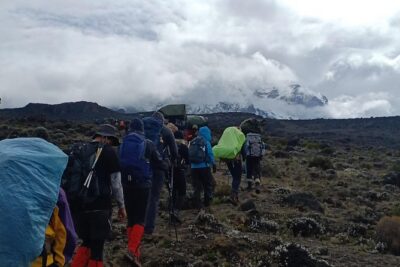
The first walk covers about 12 kilometers and takes roughly five hours. You gain around 720 meters in elevation, moving through montane forest toward Mandara Hut. This is a steady opening day, but it is still a real hike, not a gentle stroll.
The forest gives you shade and a softer introduction to the mountain. You should carry a small daypack with a camera, spare clothing, skin protection, a rain jacket, and other items you may need during the day. Porters handle the main equipment, but you should keep your essentials with you.
The package includes lunch, though the daily details describe picnic food on some sections. Clarify how meals are served and what you need to carry during the day. At the end of the walk, the hut offers a simpler night than a hotel, but it also means you can unpack without pitching a tent.
Day 2: Mandara Hut, Maundi Crater, and Horombo
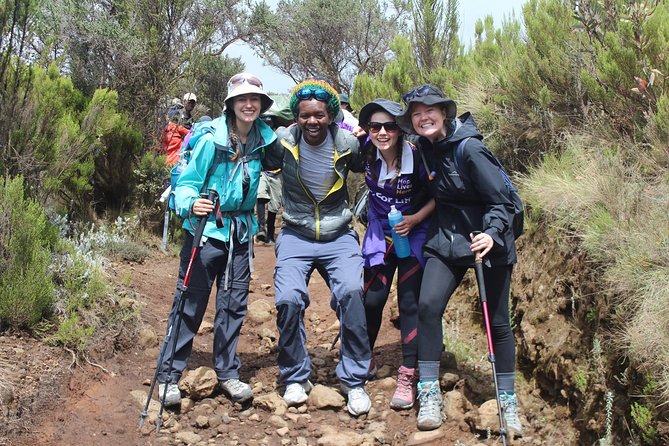
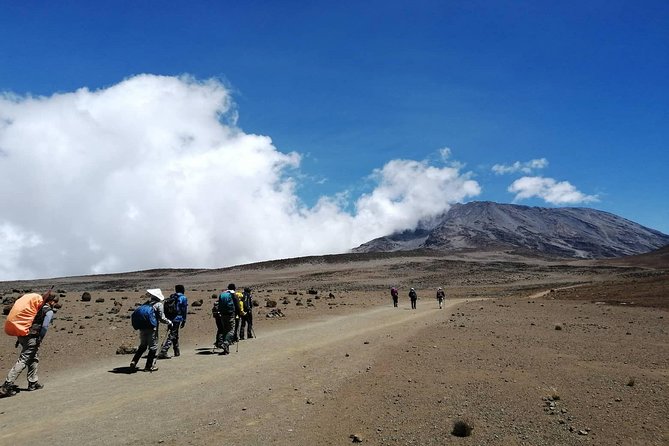
Day two is about 15 kilometers and around six hours of walking. You gain about 1,020 meters as the forest gives way to moorland. The changing vegetation is one of the pleasures of this route, since the mountain feels different as you climb higher.
A particularly worthwhile option is the short detour to the rim of Maundi Crater. From there, you may see Kibo Crater, and clear conditions can reveal Kibo’s glaciers. This is a fine place for photographs, but do not let the camera turn a steady climb into a rushed one.
The route passes through moorland toward Horombo Hut. You will notice the altitude more than on the first day, and your pace should slow naturally. Drink often, eat even if your appetite has faded, and tell your guide if you feel unwell.
Horombo is an important stopping point on the Marangu Route. On the five-day plan, you continue higher the next day. On the optional six-day version, this area may provide the extra acclimatization time that your body needs. The exact arrangement is not set out clearly, so confirm it before departure.
More Marangu Route climbs:
- Kilimanjaro climb, Marangu route (6-day)
★ 5.0 · 72 reviews - Climbing Kilimanjaro – Marangu Route
★ 5.0 · 65 reviews - Kilimanjaro Climbing 5 days Marangu route
★ 5.0 · 22 reviews - Best Kilimanjaro Adventures 6 Days Marangu Route Experience
★ 5.0 · 18 reviews
Day 3: Horombo to Kibo Across the Saddle
The third day covers about 15 kilometers and lasts roughly six hours. You gain around 980 meters, crossing alpine desert toward Kibo Hut. This is where the climb begins to feel serious.
Two trails lead toward the Saddle between Mawenzi and Kibo. The lower route is described as the easier choice and passes the last watering point. You need to stock up there, since the next water supply is back at Horombo during the descent.
The Saddle can feel exposed and barren. There is little shelter and not much visual variety, so steady pacing matters. The advice here is simple but important: walk slowly, drink enough, and do not try to match another person’s pace.
You need to preserve energy for the night ahead. At Kibo, the rest period is short before the summit attempt. Eat the provided dinner, organize warm layers and headlamp equipment, and make sure your daypack is ready before you lie down.
Day 4: The Midnight Push to Uhuru Peak
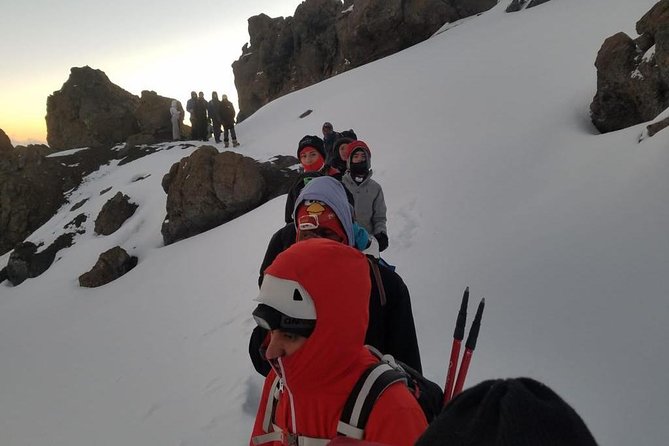
Day four is the hardest part of the trip. You are woken just before midnight and begin walking in the cold and darkness. The total distance is listed as about 27 kilometers, with around 1,195 meters of ascent followed by approximately 2,175 meters of descent.
The path rises over rocky ground toward Hans Meyer Cave at about 5,150 meters. You may stop briefly there before continuing to Gillman’s Point at 5,680 meters. This section is steep, stony, and demanding. Your best strategy is a slow rhythm, small steps, warm layers, and close attention to your guide.
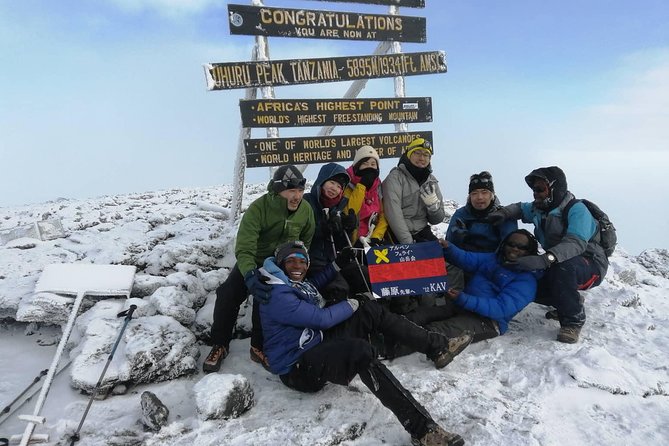
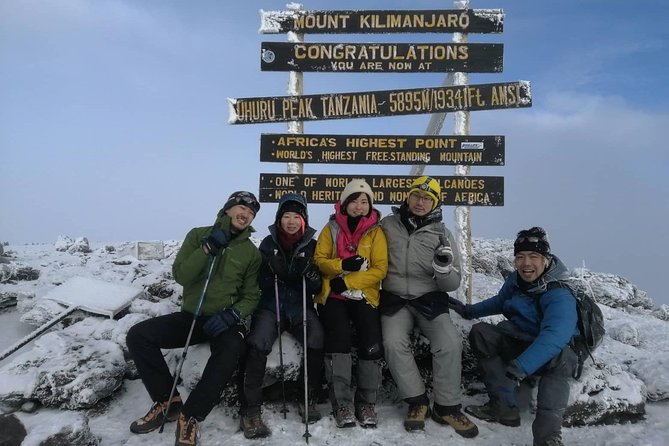
Gillman’s Point is on the crater rim. From there, the route toward Uhuru Peak can involve snow for about two hours. The summit attempt is not simply a final scenic walk. At this altitude, every step takes effort, and the time spent above the highest point should be limited to what your guide considers sensible.
The planned summit is Uhuru Peak, at about 5,895 meters. The schedule then turns downhill, making this a long day even after you reach the top. You descend to Horombo Hut for the night, though the detailed timing should be confirmed because the day description compresses a great deal of walking into one demanding stretch.
The safety arrangements are reassuring but not a substitute for good judgment. An oxygen tank is carried for emergencies, and the crew includes guides and assistant guides. You should still tell the staff promptly about headaches, nausea, dizziness, breathing problems, or unusual fatigue.
Day 5: Returning Through Moorland and Rain Forest
The final day starts after breakfast with a descent to Marangu Gate. The walk is listed at around 27 kilometers and six hours, with a loss of approximately 1,740 meters. You pass through moorland and rain forest before reaching the gate.
Downhill walking can feel easy at first, but tired knees and feet often make the last miles uncomfortable. Trekking poles, available to rent for $10, may be useful. Keep your pace controlled instead of racing toward the finish.
At the gate, you sign the register and receive a certificate. Gillman’s Point earns a green certificate, while reaching Uhuru Peak earns a gold certificate. A road transfer then returns you to your Moshi hotel, where the included post-climb night gives you time for a shower, a proper bed, and a well-earned drink.
Guides, Porters, and the Human Side of the Climb
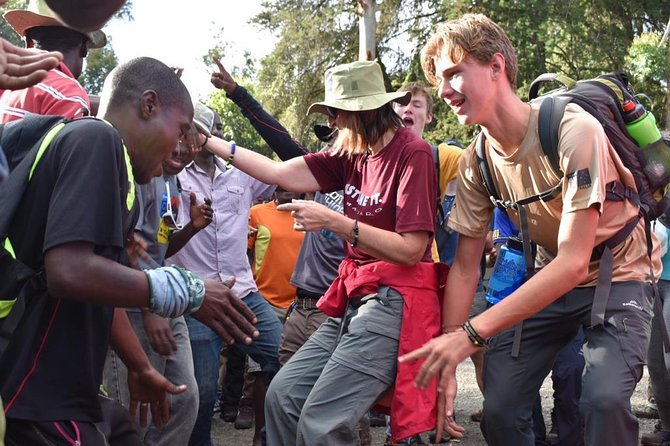
The strongest praise attached to this experience concerns the crew’s care and reliability. One account specifically names guides Robert and Donovan, who helped motivate and support a climber and her daughter. That detail matters because summit day is as much about patient encouragement as route finding.
The support team includes porters and a cook, not just a lead guide. Porters carry equipment and supplies, while the cook prepares three meals each day on the mountain. You should pack a small personal daypack, but the crew handles the heavier load.
The company describes the service as attentive without being pushy. That is the right balance on a climb. You want clear instructions, steady monitoring, and help when needed, but you also want room to walk quietly and manage your own experience.
Tips are not included. Ask the operator for current tipping guidance, then carry enough Tanzanian shillings or another accepted payment method for the whole crew. Fair wages are important, and tipping should be treated as a separate responsibility rather than hidden inside the headline price.
What to Pack and What to Confirm
The mountain package covers food and water arrangements, but your personal gear remains your responsibility. You can rent missing items in Moshi, including a sleeping bag, duffle bag, boots, and walking sticks.
Before you leave home, confirm these details:
- The exact six-day schedule and the location of the extra acclimatization day
- Sleeping arrangements and the number of people sharing each hut
- The recommended clothing and equipment list
- How much water you should carry on each day
- The tipping process for guides, porters, and the cook
- The plan for a failed summit attempt or an early descent
The tour requires a moderate level of physical fitness. That phrase should not be read as permission to arrive unprepared. You will walk for up to ten hours on summit day, cover long distances, climb steep rocky sections, and descend more than 2,000 meters.
The confirmation is issued at booking, and pickup is offered. The meeting time is 8:30 am. Public transportation is nearby, but the included mountain transfers are more relevant to the climb itself.
What the Past Feedback Tells You
The available feedback is notably positive about organization, equipment, and personal care. One comment stresses that the company has its own trucks, bags, and dedicated staff, and that it is operated by a Tanzanian team rather than simply passing bookings to a distant intermediary.
That local connection can be useful. It means you are dealing with a company based close to the mountain and working with its own support structure. Still, you should ask direct questions about equipment condition, crew size, and the exact itinerary. Good service begins with clear expectations.
Another account describes the care as genuine but not intrusive. That is particularly valuable on a private climb, where the relationship with your guides shapes the entire experience. The named guides Robert and Donovan also received specific praise for motivation and support.
The sample is small, so I would not treat the perfect overall score as a guarantee. Use the positive signs as encouragement, then verify the practical points that matter most to you.
Who Should Choose This Kilimanjaro Climb?
I would consider this trip a good fit if you want a private climb, prefer hut accommodation, and value having meals, permits, transfers, and a full support crew arranged in advance. It also suits you if sleeping in a tent is a deal breaker.
The route may appeal to first-time high-altitude climbers because the logistics are handled for you. That does not remove the physical challenge. The five-day schedule is tight, and the optional acclimatization day deserves serious consideration.
You may want a different plan if you strongly prefer quieter trails, longer altitude adjustment, or a detailed multi-day schedule with no ambiguity. You should also compare the Marangu Route with routes that use camping and longer acclimatization profiles.
Should You Book It?
Book this Kilimanjaro climb if the hut system, private support, and included services match your priorities. At $1,846.16, the package offers solid value because it includes park and hut fees, meals, porters, guides, mountain transfers, rescue fees, oxygen for emergencies, and two hotel nights.
Before booking, get written confirmation of the six-day option, the acclimatization day, sleeping arrangements, gear rentals, and tipping expectations. If those details are clear and you are ready for a long summit day, Kilitwende Adventures offers a practical, locally supported way to approach Kilimanjaro.
FAQ
How long is the Kilimanjaro Marangu Route experience?
The detailed schedule covers five hiking days. The experience is promoted as a six-day trek because an additional acclimatization day can be added. Confirm the final schedule before booking.
Where does the trek begin?
The trek begins at Marangu Gate, reached by road transfer from Moshi. The drive takes about 45 minutes, and the planned start is around 9:00 am after a morning briefing.
Is hotel accommodation included?
Yes. One hotel night before the trek and one night after the trek are included, with breakfast provided.
Do I sleep in tents?
No. The Marangu Route uses shared mountain huts at the camps. You still need a sleeping bag or must arrange a rental.
Are meals included during the climb?
Yes. Three meals a day are included during the climb. The package lists four breakfasts, four dinners, and five lunches.
Is drinking water included?
Bottled water is included on the first day. On the mountain, water is boiled and filtered. Mineral water and other drinks available at camps may cost extra.
Are park fees included?
Yes. Park entry fees, Marangu hut fees, forest fees, rescue fees, and 18 percent VAT on tour fees and services are included.
Is climbing equipment included?
Personal gear is not included. Missing equipment can be rented in Moshi, including sleeping bags, duffle bags, hiking boots, and walking sticks.
Are tips included in the price?
No. Tips for guides, assistant guides, porters, and the cook are not included and should be budgeted separately.
What fitness level is required?
The experience states that you should have a moderate level of physical fitness. Summit day includes a midnight start, steep rocky terrain, up to ten hours of walking, and a long descent.
Is this a private tour?
Yes. Only your own group takes part in the activity, supported by guides, assistant guides, a cook, and porters.
Can I cancel for a full refund?
Yes, if you cancel at least 24 hours before the experience start time. Cancellations or changes made less than 24 hours in advance are not accepted for a refund.
More Treks in Moshi
- Private Kilimanjaro Hike 7 Day Lemosho Route
★ 5.0 · 60 reviews - Best Kilimanjaro hiking day trip tour with Kilinge Adventures
★ 4.5 · 54 reviews - #1. Best Kilimanjaro Day hike Tour-Machame Route-ISMANI
★ 4.2 · 47 reviews - Best Kilimanjaro Adventure 7 days Machame route Trekking
★ 5.0 · 42 reviews
Just added in Moshi
- Zanzibar: Stone Town tour and Nakupenda beach with Lunch★ 5.0 · 1 review
- machame route★ 5.0 · 16 reviews
- day trip lake manyara★ 5.0 · 2 reviews
- Mt Kilimanjaro 6 days Marangu route hike★ 5.0 · 3 reviews
- Private Cycle to Kilimanjaro Bike Park Safari★ 5.0 · 6 reviews
- West Kilimanjaro cycling Adventures★ 4.5 · 8 reviews
- Wildlife Extravaganza: Manyara, Tarangire & Ngorongoro in 3 Days★ 5.0 · 3 reviews
- 3 Days Private E-Bike Tour in West Kilimanjaro★ 5.0 · 3 reviews
Marangu Route Climbs, compared.


Private Full Day Hiking Experience to Marangu Route
Read our review →
From Arusha/Moshi: Kilimanjaro Hike Marangu Route Day Trip
Read our review →
Mount Kilimanjaro Day Hike Through Marangu Route to Mandara Hut
Read our review →
Best Kilimanjaro Adventures 6 Days Marangu Route Experience
Read our review →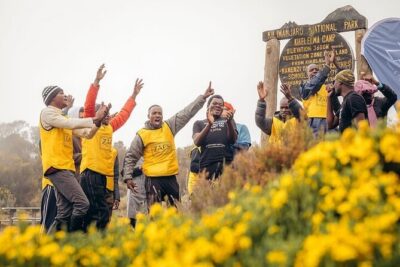
Kilimanjaro Private Climbing in 6 Days Marangu Route
Read our review →Browse the lists this tour appears in