
Reviewed · MACHAME ROUTE CLIMBS
Kilimanjaro Trek 7 Days – Machame Route
The mountain changes by the hour. This seven-day Machame Route trek gives you rainforest, open moorland, volcanic rock, high alpine desert, and the cold Arctic summit zone in one demanding trip. I like the route for two clear reasons: the scenery keeps changing, and the climb includes a useful high-altitude acclimatization day at Lava Tower before descending to Barranco Camp. I also like that transport, meals, camping gear, park fees, airport transfers, and hotel nights are included.
The main thing to consider is the summit night. You begin around midnight in darkness, cold, wind, and thin air, then descend a long way the same day. Seven days is a reasonable schedule for Machame, but it is still a serious physical test, not a casual holiday walk.
In This Review
- Key points to know before booking
- Why Machame is Kilimanjaro’s popular scenic route
- Day 1: Moshi to Machame Gate and Machame Camp
- Day 2: Heath, moorland, and Shira Cave Camp
- Day 3: Lava Tower and the Barranco descent
- Day 4: Climbing the Barranco Wall
- Day 5: Karanga to Barafu Camp
- Day 6: Uhuru Peak, then the long descent
- Day 7: Mweka Gate and the return to Moshi
- What the $2,890 price really covers
- Who will enjoy this route most
- Service, food, and crew support
- Booking details and cancellation terms
- Final verdict: should you book the seven-day Machame trek?
- FAQ
- How long does the Machame Route trek take?
- What is the highest point reached?
- How far is the full trek?
- Is airport pickup included?
- Are hotel nights included?
- Are meals included during the climb?
- Is camping equipment provided?
- Does the tour include an emergency oxygen tank?
- Can I cancel for a full refund?
Key points to know before booking
- Lava Tower improves the climb: You reach about 4,603 meters, then sleep lower at Barranco Camp, a useful pattern for acclimatization.
- Five habitat zones in seven days: The route moves from rainforest to heath, alpine desert, and finally the Arctic summit zone.
- The summit day is long: Expect roughly 5 kilometers up to Uhuru Peak, followed by about 12 kilometers down to Mweka Camp.
- The price covers much of the mountain operation: Park, camping, forest, rescue fees, crew wages, meals, tents, transfers, and hotel nights are included.
- A private trip gives your group its own arrangement: Only your group participates, with a professional guide, cooks, and porters.
- Equipment costs extra: Sleeping bags, duffle bags, boots, walking sticks, and personal gear are not included.
Why Machame is Kilimanjaro’s popular scenic route
Machame is often called the Whiskey route, a nickname meant to contrast it with the easier-sounding Marangu, sometimes called the Coca-Cola route. The important point for you is not the slogan. It is the route character. Machame has steeper sections, more varied scenery, and a more outdoors-focused camping style.
You do not simply walk uphill for a week through the same kind of countryside. The first day begins in thick forest. By the second day, the trees give way to heath and open moorland. Later, you cross bare volcanic ground, pass unusual giant senecio plants, and reach the stark upper slopes near Barafu Camp.
The route is popular because it can be completed in seven days and follows a useful acclimatization pattern. Still, popularity means the trail can feel busy at times. Since this is a private activity, your own group will not be mixed into a larger booking, but that does not mean you will have the mountain to yourself.
More Kilimanjaro climbs:
- Kilimanjaro climb by Lemosho Route (7-day)
★ 5.0 · 651 reviews - Kilimanjaro climb, Machame Route (7-day)
★ 5.0 · 262 reviews - Kilimanjaro Climbing Lemosho Route 8 Days.
★ 5.0 · 186 reviews
Day 1: Moshi to Machame Gate and Machame Camp
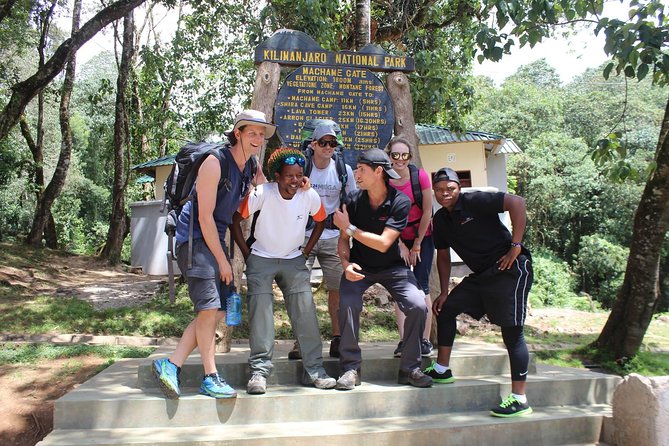
After breakfast, the drive from your hotel in Moshi to Machame Gate takes about one hour. You pass through Machame village, which sits on the lower slopes of Kilimanjaro, before reaching the park entrance and completing registration.
The first walk covers about 11 kilometers and takes roughly five to seven hours. The habitat is rainforest, with a winding trail that climbs along a ridge through dense vegetation. This is a full first day, especially if you are carrying more than a day pack or are not used to steady uphill walking.
Machame Camp sits at about 2,833 meters, or 9,350 feet. The overnight camp gives you your first real taste of mountain camping. The package includes a sleeping tent, dining tent, mattress, tables, chairs, and lanterns, along with meals prepared by the mountain cook team.
The forest is a strong opening to the trip, but it can also be damp. Keep rain protection handy rather than buried in your luggage. The climb starts gently enough in spirit, but five to seven hours on a rising trail is no warm-up stroll.
Day 2: Heath, moorland, and Shira Cave Camp
Day two is shorter, at about 5 kilometers and four to six hours. You leave the rainforest behind and follow a steeper, rocky ridge toward the Shira Plateau.
This is one of the first days when the route feels properly open. Heather and moorland replace the thick trees, and the air begins to feel cooler and less sheltered. The trail crosses a large river gorge before reaching Shira Cave Camp.
The camp sits in a broad, exposed high-altitude setting. That openness is part of the appeal, but it can also make weather feel more noticeable. Your guide will set the pace, and the best approach is to walk slowly from the beginning. On Kilimanjaro, saving energy matters more than proving that you can walk fast.
The route distance looks modest on paper. Do not judge the day by kilometers alone. The altitude, uneven ground, and previous day’s effort all count.
Day 3: Lava Tower and the Barranco descent
Day three is the key acclimatization day. The route first climbs toward Lava Tower, a volcanic rock formation at about 4,603 meters, or 15,190 feet. The approach covers around 7 kilometers and takes four to five hours.
After lunch at the high point, you descend about 3 kilometers over two to three hours to Barranco Camp at roughly 3,953 meters, or 13,044 feet. You finish and sleep much lower than Lava Tower, even though the day has taken you to a greater height.
This high then low pattern is one of the route’s best features. You spend time at altitude without staying at the highest point reached that day. That can help your body adjust, though it does not remove the risk of altitude sickness. Tell your guide promptly if you feel unwell.
The descent passes through the Senecio Forest, an unusual area filled with large, distinctive plants that look almost prehistoric. After the more open Shira Plateau, this strange vegetation gives the day a memorable change of mood.
The published timing for this day is about five hours, though the separate sections add up to a longer walking day for some groups. Ask for a clear daily schedule before departure, especially if you prefer precise planning.
More Machame Route climbs:
- Climbing Kilimanjaro – Machame Route
★ 5.0 · 170 reviews - Climbing Kilimanjaro through 7 days Machame Route
★ 5.0 · 151 reviews - 7 Days Kilimanjaro via Machame route affordable price
★ 5.0 · 110 reviews - #1. Best Kilimanjaro Day hike Tour-Machame Route-ISMANI
★ 4.2 · 47 reviews
Day 4: Climbing the Barranco Wall
The fourth day begins with a descent to the base of the Great Barranco Wall. From there, you climb a steep section of nearly 900 feet. The route is described as non-technical, so you do not need mountaineering skills or ropes for the standard ascent, but you do need steady footing and comfort with exposed, rocky ground.
The wall is one of the route’s most talked-about sections because it feels like a real mountain obstacle without being a technical rock climb. Your pace will slow here. Follow the guide’s instructions, use your hands when useful, and keep your day pack close to your body.
Above the wall, the trail crosses hills and valleys before dropping sharply into Karanga Valley. Karanga River is the last water point noted on the route, so this is an important practical moment for the support team.
You then climb to Karanga Camp, arriving in time for lunch. A shorter afternoon acclimatization walk is planned, which is valuable because the day itself is not especially long by distance, about 5 kilometers and four to five hours. The short walk also gives your guide a chance to see how you are responding before the final approach to Barafu.
Day 5: Karanga to Barafu Camp
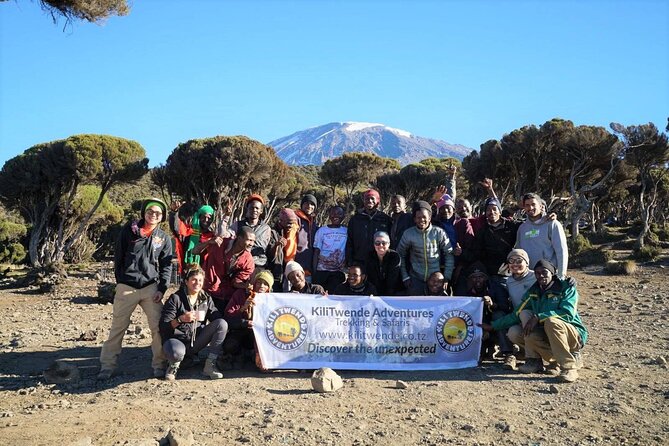
Day five covers about 4 kilometers and takes four to five hours. You pass the junction connecting with the Mweka Trail, then continue through rocky ground toward Barafu Hut.
Barafu means a turning point in the trip. You have completed the Southern Circuit, and the route has offered views of the summit from several directions. The camp is high, stark, and functional rather than cozy. You arrive, rest, eat an early dinner, and prepare for the midnight summit push.
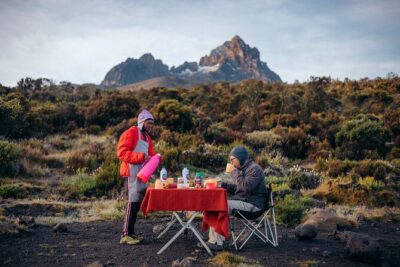
On clear days, you may see Mawenzi and Kibo, the two major peaks of Kilimanjaro. Those views help explain why the route is considered scenic, but weather can limit what you see. Do not count on a perfect panorama.
This is also the day to organize every item you need for the summit. Your headlamp, warm layers, water, snacks, gloves, and camera should be easy to reach. You do not want to sort through a full duffle bag at midnight.
Day 6: Uhuru Peak, then the long descent
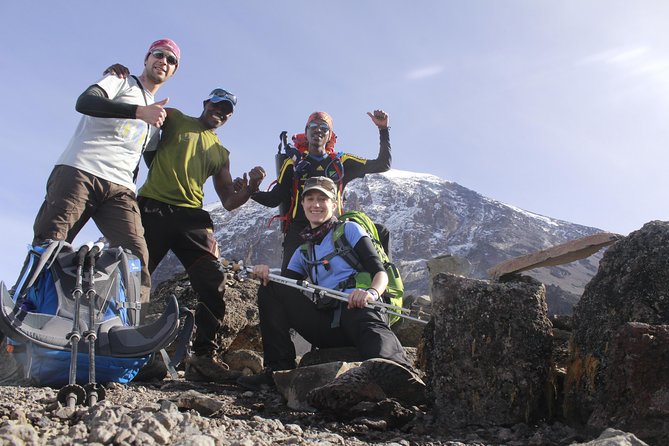
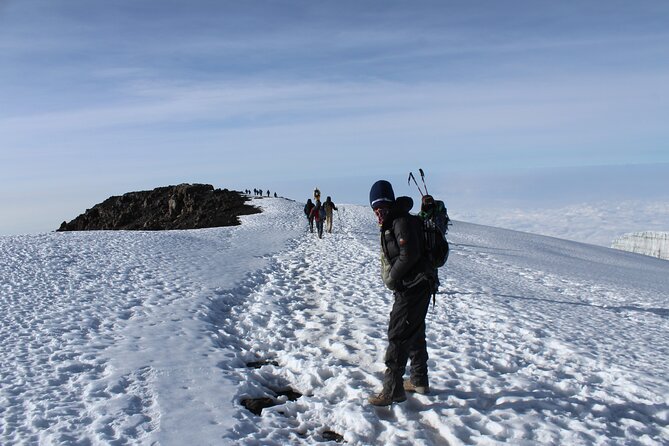
Summit day is the hardest part of the trek. The climb to Uhuru Peak covers about 5 kilometers and takes seven to eight hours. You start around midnight, ascending in darkness for several hours with short breaks.
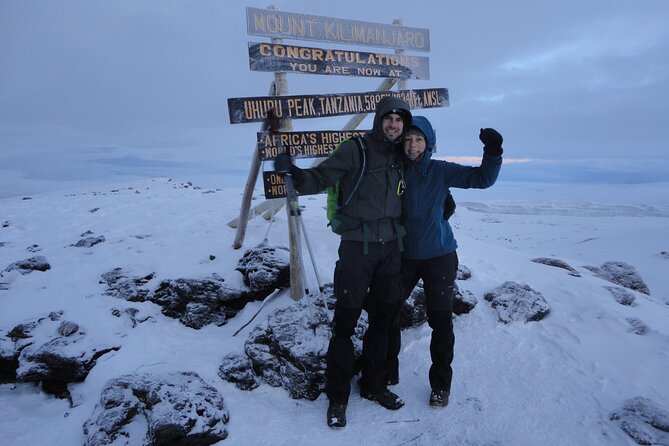
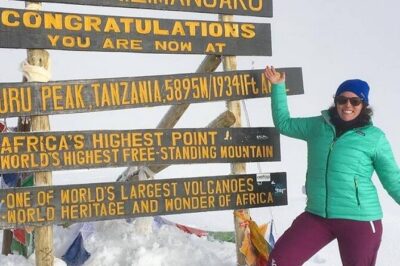
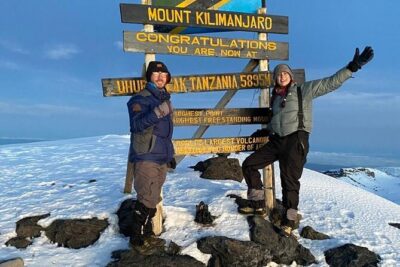
The conditions are cold and windy, and the thin air makes every step feel deliberate. The trail reaches Stella Point at about 18,900 feet around sunrise, then continues to Uhuru Peak at 5,895 meters, or 19,341 feet, the highest point in Africa.
You normally spend only a short time at the summit for photographs before beginning the descent. That is sensible. The summit is a goal, not a place for a long picnic, and you still have a major downhill journey ahead.
The descent continues to Barafu, then on to Mweka Camp. The total descent distance is about 12 kilometers and takes four to six hours after the summit section. In practice, this makes day six an exceptionally long physical day, even if the figures are divided into two sections.
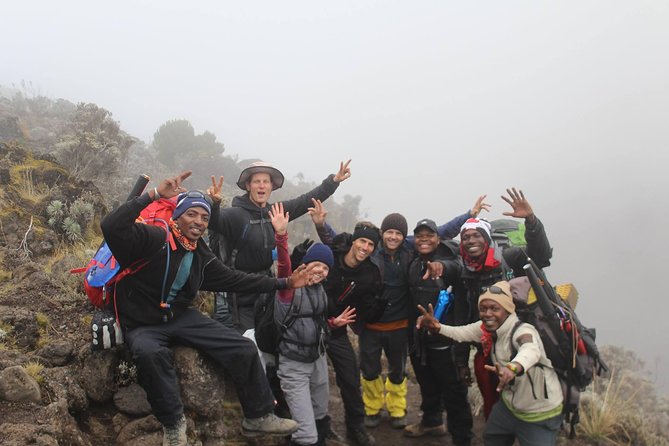
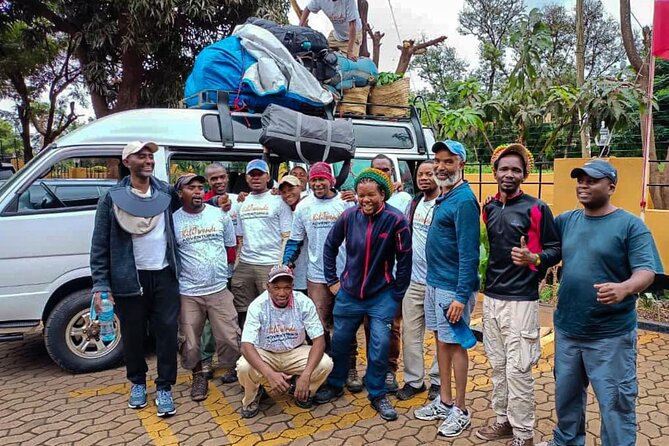
The most useful support here is calm pacing and close attention from the guides. Feedback about Kilitwende Adventures repeatedly highlights patient support, professional organization, and a caring crew. One account describes a solo climber receiving help with dietary restrictions and plentiful meals. Another praises Bobby and his team for helping the group reach the summit. Names associated with the wider team include Bobby, Robert, Jerry, Joseph, and Sadhi, though you should confirm your assigned guide before arrival.
An oxygen tank is included for emergencies. That is reassuring, but it is not a substitute for proper acclimatization or honest communication about symptoms.
Day 7: Mweka Gate and the return to Moshi
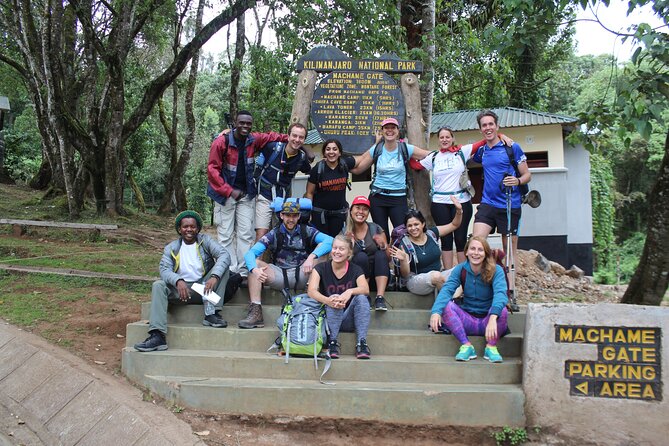
The final day is a 10-kilometer descent through rainforest, taking about three to four hours. You reach Mweka Gate, sign out with the national park authority, collect summit certificates, and meet the waiting vehicle for the transfer back to your Moshi hotel.
After the summit day, the descent may feel harder than expected. Your legs have already worked through a long climb and a high-altitude descent, so trekking poles can be useful. Walking sticks are not included, but they can be rented for an additional charge.
The return to Moshi is more than a simple transfer. It marks the end of a week in which your routine has been reduced to walking, eating, sleeping, and checking the weather. The included post-trek hotel night gives you time to wash, rest, and repack before an onward journey.
What the $2,890 price really covers
The listed price is $2,890 per person. That is not a budget walking tour, but a Kilimanjaro climb has substantial fixed costs beyond the guide standing beside you. The fee includes park entry, camping and forest fees, rescue fees, 18 percent VAT on tour fees and services, crew wages approved by the relevant park and mountain associations, mountain transfers, and airport transfers from Kilimanjaro International Airport.
You also receive one hotel night before and one after the trek on a bed-and-breakfast basis. On the mountain, the package includes three meals a day, sleeping and dining tents, mattresses, furniture, lanterns, a portable flush toilet with toilet tent, and an emergency oxygen tank.
That collection of inclusions makes the price easier to understand. You are paying for a staffed mountain operation, not just a permit and a guide. The strongest practical value comes from having the transport, food, camping equipment, and hotel nights arranged together.
Budget carefully for the extras. International and domestic flights, visas, insurance, camera costs, laundry, hotel lunches and dinners, hotel drinks, and personal equipment are excluded. Sleeping bag rental is listed at $40, a duffle bag at $35, hiking boots at $40, and walking sticks at $10. Tips for guides, porters, cooks, and waiters are also extra and should be planned before you arrive.
The listing uses both lunch, dinner, and breakfast counts in the inclusions, so confirm the exact meal schedule with the operator before booking. That is a small point, but clear details matter on a seven-day climb.
Who will enjoy this route most
This trek suits you if you want Kilimanjaro’s changing scenery and prefer camping to a simple hut-based route. It is also a good match if you value a private arrangement, airport pickup, hotel nights, and a full support team.
You need a moderate level of physical fitness. That phrase should be taken seriously. The route includes long uphill days, rocky ground, a steep wall, high-altitude camps, and a summit night followed by a long descent.
You do not need to be an elite climber. A 57-year-old participant who described herself as not a strong climber credited the guides and porters with making the trip manageable. That does not mean the mountain is easy. It means patient pacing and good support can help a determined person handle the route.
This may not suit you if you want a relaxed holiday, dislike camping, or prefer a slower acclimatization schedule. Seven days is popular and workable, but adding days can give your body more time to adjust. This specific package is built around seven days, so ask the company about alternatives if altitude is your main concern.
Service, food, and crew support
The strongest praise directed at Kilitwende Adventures concerns organization and personal care. The company has been credited with helping arrange transport, accommodation, equipment rental, and even onward travel. That kind of assistance is useful if your Kilimanjaro trek is part of a longer Tanzania trip.
Food also receives repeated positive attention. The team has accommodated dietary restrictions, and meals are described as generous. On a mountain, food is not a minor comfort. Appetite can change with altitude, so having regular breakfast, lunch, and dinner helps you keep moving.
The crew structure includes professional mountain guides, cooks, and porters. Fair wages are included in the advertised price, but tips are not. Ask for the operator’s current tipping guidance so you can budget fairly and avoid guessing at the end.
The 13 published ratings show a five-star average and 100 percent recommendation figure, although the individual rating display is marked N/A. I would treat the overall response as encouraging, while still asking direct questions about your guide, equipment, group arrangements, and emergency procedures.
Booking details and cancellation terms
Pickup is offered, and the stated start time is 8:30 a.m. Confirmation is provided at booking, and the activity is private for your group. Round-trip airport transfers from Kilimanjaro International Airport are included.
You can cancel at least 24 hours before the experience start time for a full refund. Changes or cancellations inside that 24-hour window are not accepted for a refund, and cut-off times use local time.
The climb requires suitable weather. If poor weather causes cancellation, you receive either a different date or a full refund. Since weather is a real factor on Kilimanjaro, confirm how the operator handles schedule changes before you travel.
Final verdict: should you book the seven-day Machame trek?
I would choose this trip if your priorities are scenery, a private group, full mountain support, and a clear seven-day plan. The Lava Tower acclimatization day, Barranco Wall, varied habitats, and summit approach give Machame more character than a straightforward uphill route.
I would pause if you are underestimating the summit night or the costs of personal gear and tips. Ask for the exact equipment list, the current guide-to-climber ratio, and the plan for altitude symptoms before paying.
For a fit, prepared hiker who wants Africa’s highest summit without arranging every permit, meal, transfer, and camp detail alone, this is a strong package. Just remember what you are buying: not an easy walk, but a carefully supported mountain challenge.
FAQ
How long does the Machame Route trek take?
The trek lasts approximately seven days, including the approach to Machame Camp, the summit attempt, the descent to Mweka Gate, and transfers back to Moshi.
What is the highest point reached?
The trek reaches Uhuru Peak at 5,895 meters, or 19,341 feet.
How far is the full trek?
The itinerary gives daily distances totaling approximately 55 kilometers, or 34 miles, though exact walking distance can vary with trail conditions and the group’s route.
Is airport pickup included?
Yes. Round-trip airport transfers to and from Kilimanjaro International Airport are included.
Are hotel nights included?
Yes. One hotel night before the trek and one night after the trek are included on a bed-and-breakfast basis.
Are meals included during the climb?
Yes. Breakfast, lunch, and dinner are provided during the mountain portion of the trip.
Is camping equipment provided?
Yes. A sleeping tent, dining tent, mattress, tables, chairs, and lanterns are included. Personal equipment such as sleeping bags, boots, duffle bags, and walking sticks costs extra.
Does the tour include an emergency oxygen tank?
Yes. An oxygen tank is included for emergency use.
Can I cancel for a full refund?
Yes, if you cancel at least 24 hours before the experience start time. Poor-weather cancellations offer either a different date or a full refund.
More Treks in Moshi
- Private Kilimanjaro Hike 7 Day Lemosho Route
★ 5.0 · 60 reviews - Best Kilimanjaro hiking day trip tour with Kilinge Adventures
★ 4.5 · 54 reviews - Best Kilimanjaro Adventure 7 days Machame route Trekking
★ 5.0 · 42 reviews - Kilimanjaro 7 Day Private Trekking Experience
★ 5.0 · 40 reviews
Just added in Moshi
- Zanzibar: Stone Town tour and Nakupenda beach with Lunch★ 5.0 · 1 review
- day trip lake manyara★ 5.0 · 2 reviews
- Mt Kilimanjaro 6 days Marangu route hike★ 5.0 · 3 reviews
- machame route★ 5.0 · 16 reviews
- West Kilimanjaro cycling Adventures★ 4.5 · 8 reviews
- Wildlife Extravaganza: Manyara, Tarangire & Ngorongoro in 3 Days★ 5.0 · 3 reviews
- Private Cycle to Kilimanjaro Bike Park Safari★ 5.0 · 6 reviews
- 3 Days Private E-Bike Tour in West Kilimanjaro★ 5.0 · 3 reviews
Machame Route Climbs, compared.

Climbing Kilimanjaro through 7 days Machame Route
Read our review →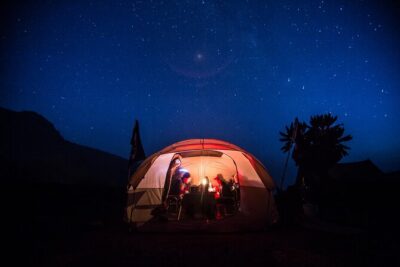
7-Day Machame Kilimanjaro Summit Tour from Arusha
Read our review →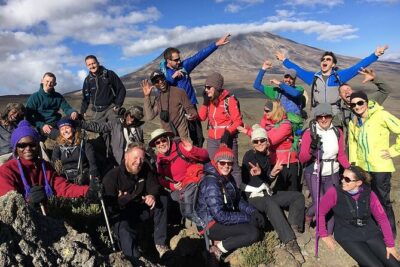
7 Days Kilimanjaro via Machame route affordable price
Read our review →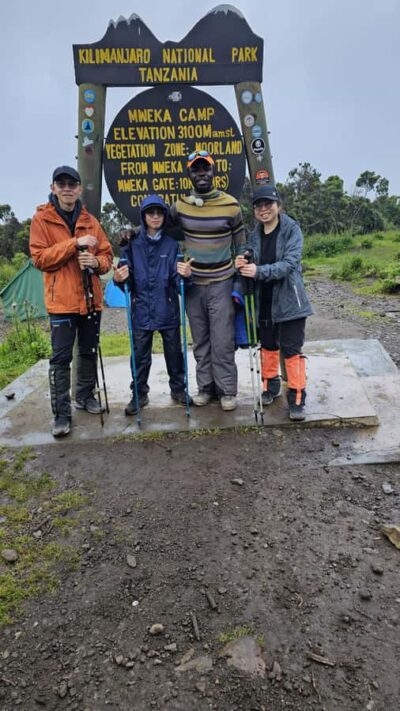
#1. Best Kilimanjaro Day hike Tour-Machame Route-ISMANI
Read our review →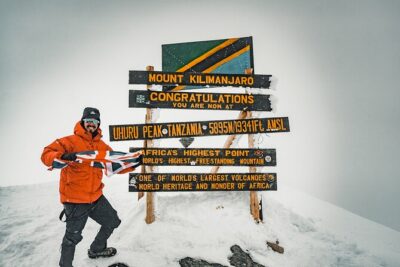
The Best of Machame Route in 6 Days: Your World’s Summit Guide
Read our review →Browse the lists this tour appears in