
Reviewed · LEMOSHO ROUTE CLIMBS
Mount Kilimanjaro Trek 8 days Lemosho Route
The long way up rewards patient climbers. This Kilimanjaro trek begins on the quiet western side of the mountain, crosses the Shira Plateau, and joins the southern circuit before the final push to Uhuru Peak. I especially like the gradual acclimatization plan, including a high walk to Lava Tower before sleeping lower at Barranco Camp. I also like the full-circle route, which gives you new views on the way down instead of sending you back over the same trail.
The main drawback is the effort required. This is not a gentle sightseeing walk, and summit day lasts about 14 hours, with a midnight start, cold wind, thin air, and a long descent afterward. The price of $3,088 per person is substantial, but it covers park charges, camping equipment, meals, guides, cooks, porters, transfers, airport service, and hotel nights. You still need to budget for gear rentals, tips, drinks, visas, insurance, and flights.
In This Review
- Key details before you book
- Why the Lemosho Route is worth the extra days
- Arrival in Moshi and the pre-trek check
- Day 1: Londorossi Gate to Big Tree Camp
- Day 2: Big Tree Camp to Shira 1
- Day 3: Shira Plateau and Moir Hut
- Day 4: Lava Tower to Barranco Camp
- Day 5: The Barranco Wall and Karanga Camp
- Day 6: Karanga Camp to Barafu Camp
- Day 7: Uhuru Peak and Mweka Camp
- Day 8: Mweka Camp to Moshi
- What the $3,088 price covers
- Food, tents, toilets, and daily comfort
- Guides, porters, and the private format
- Fitness, altitude, and who should choose it
- Booking, cancellation, and practical timing
- Should you book the KiliTwende Lemosho trek?
- FAQ
- How long is the Mount Kilimanjaro Lemosho trek?
- Where does the trek begin?
- Is airport pickup included?
- Are hotel nights included?
- What equipment is provided?
- Can I rent a sleeping bag?
- Is food included on the mountain?
- Does the tour include tips and flights?
Key details before you book
- Lemosho starts at 2,360 meters: The route begins at Londorossi Gate and moves through rainforest before reaching the high Shira Plateau.
- Seven nights on the mountain: You sleep in tents at Big Tree, Shira 1, Moir Hut, Barranco, Karanga, Barafu, and Mweka camps.
- Lava Tower helps with acclimatization: You climb to about 4,785 meters, then descend to Barranco Camp at roughly 4,182 meters.
- Summit day is the toughest test: You leave around midnight, reach Stella Point near sunrise, continue to Uhuru Peak, then descend to Mweka Camp.
- A private trip: Only your own group participates, with a professional mountain crew, cook, guides, and porters.
- Airport and hotel support is included: Pickup and drop-off at Kilimanjaro International Airport are provided, along with one hotel night before and after the trek.
Why the Lemosho Route is worth the extra days
Kilimanjaro has several routes, but Lemosho gives you time. That matters because altitude is the chief difficulty for many climbers, not simply the distance. This plan allows several days for your body to adjust before you reach Barafu Camp and the summit zone.
The route also approaches the mountain from the west, where the first days feel quieter and more open. You begin in dense rainforest, then move through heath, moorland, alpine desert, and finally the stark Arctic zone near the summit. I like this steady change in scenery. It makes the climb feel like a real journey rather than a long staircase to the top.
Another smart feature is the Southern Circuit. After Shira, you cross toward Lava Tower, Barranco, Karanga, and Barafu. You see Kibo from different angles, then descend by the Mweka Trail. You do not simply retrace your steps.
The route summary describes possible wildlife sightings in the forest, but no particular animal sightings are guaranteed. Keep your expectations sensible. The main reward is the changing plant life and mountain terrain.
More Kilimanjaro climbs:
- Kilimanjaro climb by Lemosho Route (7-day)
★ 5.0 · 651 reviews - Kilimanjaro climb, Machame Route (7-day)
★ 5.0 · 262 reviews - Kilimanjaro Climbing Lemosho Route 8 Days.
★ 5.0 · 186 reviews
Arrival in Moshi and the pre-trek check
Your trip begins with airport pickup at Kilimanjaro International Airport. A driver waits outside customs with a name tag, then takes you to Parkview Inn Lodge in Moshi. The transfer and welcome take about 45 minutes once you are met.
Depending on your flight arrival, you meet the guide at the lodge for a briefing and equipment check. This is an important appointment, not a formality. Any missing essential gear can be rented in Moshi, including sleeping bags, duffle bags, hiking boots, and walking sticks.
I would use this time to check every item before leaving town. Personal gear is not included, and listed rental prices include $40 for a sleeping bag, $35 for a duffle bag, $40 for hiking boots, and $10 for walking sticks. Prices can change, so confirm the current amount when booking.
The tour begins at the KiliTwende Adventures office on the fourth floor of the Kilimanjaro Complex, NSSF Building, on Aga Khan Road. The listed start time is 8:30 am, although airport pickup and the lodge schedule are part of the arrival plan.
Day 1: Londorossi Gate to Big Tree Camp
After breakfast in Moshi, you drive about three hours to Londorossi Gate. Park registration takes place before you begin walking, and lunch is provided after you meet the mountain crew.
The first hike covers about 6 kilometers and takes three to four hours. You walk through rainforest to Mti Mkubwa, also called Big Tree Camp. This is a manageable opening day, but the drive makes it longer than the walking time suggests.
The forest is dense and humid, with the trail shaded by tall trees. Underfoot, the path can feel damp or uneven. Your first night gives you a gentle introduction to sleeping in a tent, eating at the camp, and settling into the daily rhythm.
Day 2: Big Tree Camp to Shira 1
The second mountain day covers about 8 kilometers and takes five to six hours. You leave the rainforest and enter heath country, where tall grasses, volcanic rock, and lichen-covered plants replace the thick forest.
The trail climbs through rolling ground and crosses several streams before reaching Shira Ridge. From there, you continue down toward Shira 1 Camp. This day gains altitude more noticeably than the first, so slow walking is useful. The goal is not speed. It is to keep a steady pace and arrive with enough energy to eat, drink, and rest.
Shira Ridge gives you the first major sense of the mountain opening up. The route becomes broader and more exposed, with fewer trees and more sky. Conditions can change quickly at this height, so keep your warm layer and rain protection easy to reach.
More Lemosho Route climbs:
- Kilimanjaro climb, Lemosho Route (8-day)
★ 5.0 · 148 reviews - Kilimanjaro climb, Lemosho Route (6-day)
★ 5.0 · 129 reviews - Kilimanjaro Lemosho Route
★ 5.0 · 71 reviews - Private Kilimanjaro Hike 7 Day Lemosho Route
★ 5.0 · 60 reviews
Day 3: Shira Plateau and Moir Hut
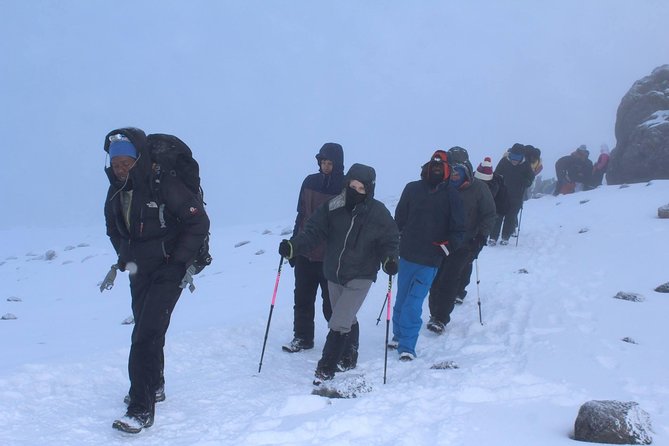
Day three is a full exploration day on the Shira Plateau, one of the highest plateaus in the world. You walk east across moorland meadow toward Shira 2 Camp, then leave the main trail for Moir Hut.
The day covers about 11 kilometers and takes five to seven hours. You have lunch at the camp, then dinner and overnight there. The route gives you time at altitude without pushing directly toward the summit zone.
This is one of my favorite parts of the plan because the plateau creates a pause in the climb. You are high, but the day is not yet the punishing summit effort. The drawback is that the open terrain can feel exposed in poor weather, and the longer distance may test your legs before the southern circuit begins.
Day 4: Lava Tower to Barranco Camp
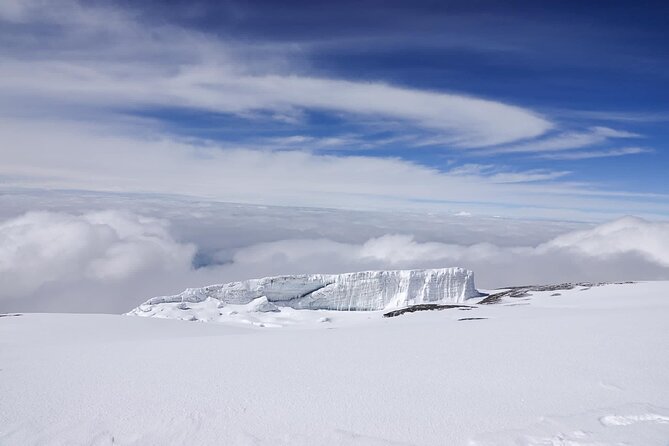
This is the route’s key acclimatization day. You climb toward Lava Tower, a volcanic rock formation reaching about 4,785 meters, or 15,190 feet. The walking section to the tower is listed at about 7 kilometers and four to five hours.
After lunch, you descend roughly 3 kilometers over two to three hours to Barranco Camp at about 4,182 meters. The day takes around eight hours in total. You climb high, then sleep lower. That pattern gives you useful time at altitude without keeping you overnight at the highest point reached that day.
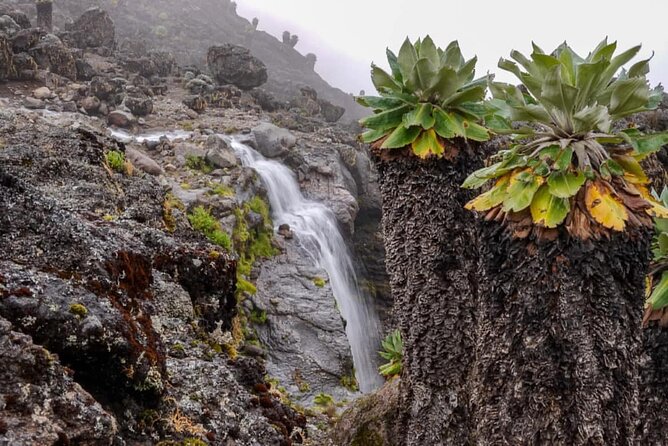
The descent passes through the unusual Senecio Forest, where giant plants give the alpine desert a strange, almost prehistoric look. This is a demanding day because the total time is long, but it is also one of the most carefully designed parts of the route.
Day 5: The Barranco Wall and Karanga Camp
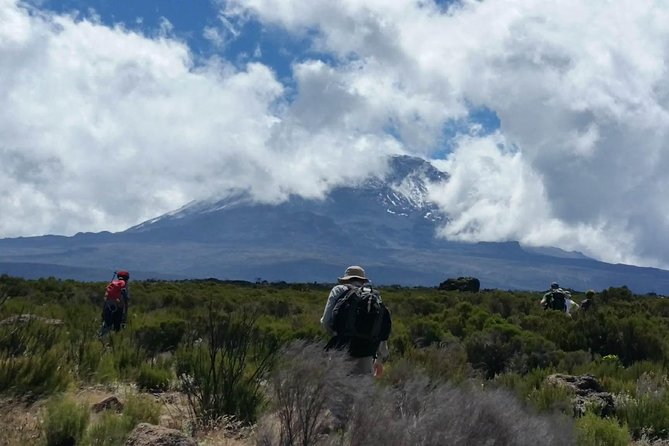
You start by dropping into the base of the Great Barranco Wall. Then you climb the steep, non-technical rock face, which rises nearly 900 feet.
Non-technical means you do not need ropes or climbing skills, but it does not mean easy. You use hands and feet in places, and the narrow trail can feel steep. Guides help set the pace, and you should expect this section to take concentration rather than speed.
From the top, the path crosses hills and valleys before dropping into Karanga Valley. The Karanga River is the last water point named on the route. You then climb again to Karanga Camp, arriving in time for lunch.
The walking distance is about 5 kilometers, with four to five hours on the trail. That number looks short, but the wall and repeated rises make the day feel substantial. A short afternoon acclimatization walk follows, then dinner and sleep.
Day 6: Karanga Camp to Barafu Camp
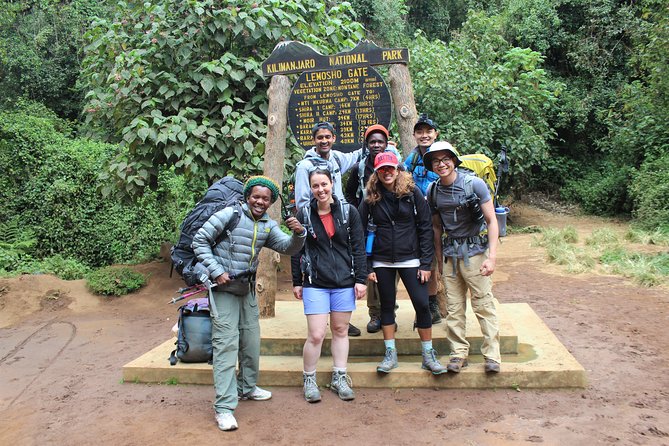
The trail climbs through rocky ground for about 4 kilometers to Barafu Camp. Walking time is listed at four to five hours.
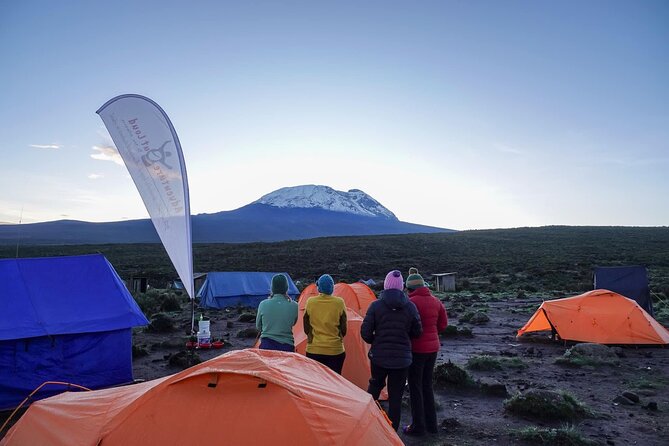
Barafu means ice in Swahili, and the camp marks the end of the Southern Circuit. From here, you have completed the broad loop around the mountain and are ready for the summit attempt. In clear weather, you may see Mawenzi and Kibo, two of Kilimanjaro’s major peaks.
This is not a day for extra sightseeing. You arrive, rest, eat an early dinner, and prepare for the midnight start. Keep your summit clothing, headlamp, water, snacks, and gloves organized before lying down. Sleep may be short or difficult, so reduce unnecessary fuss.
Day 7: Uhuru Peak and Mweka Camp
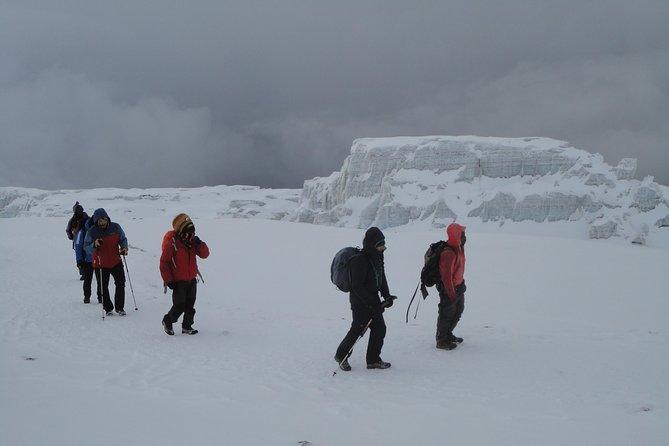
Summit day begins around midnight. You walk for seven to eight hours from Barafu toward Uhuru Peak, covering about 5 kilometers on the ascent. The route is dark, cold, windy, and physically demanding.
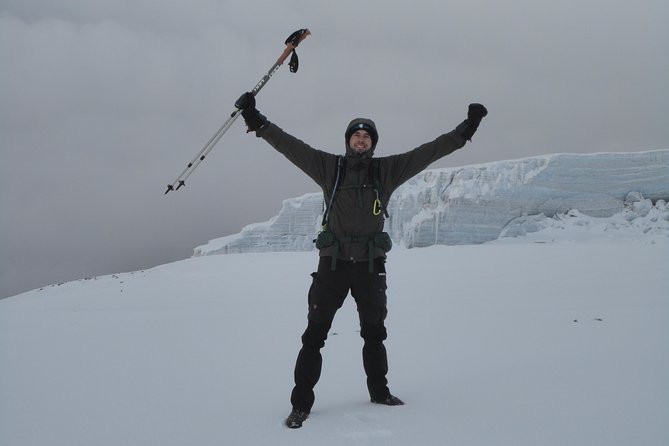
You climb for several hours with short breaks before reaching Stella Point at about 5,730 meters, or 18,900 feet, around sunrise. From Stella Point, the final stretch to Uhuru Peak takes about another hour. At 5,895 meters, Uhuru is the highest point in Africa.
You get time for photographs, but keep the stop short. At this altitude, cold and fatigue can build quickly. The experience is less about lingering and more about reaching the summit safely, taking in the moment, and starting down.
The descent continues 12 kilometers to Mweka Camp, with another four to six hours of walking. That means roughly 14 hours for the full summit day. You move from Arctic conditions near the top back toward rainforest by camp. This is the hardest day by a wide margin, and your fitness, pacing, hydration, and response to altitude all matter.
Day 8: Mweka Camp to Moshi
After breakfast and a camp celebration, you descend about 10 kilometers through rainforest to Mweka Gate. The walk takes around three to four hours.
At the gate, you sign out with the national park authority and collect summit certificates. A vehicle waits at Mweka Gate to take you back to your hotel in Moshi.
The schedule also allows for airport transfer the following day, depending on your flight time. I would avoid booking an international flight too soon after the descent. The tour includes one hotel night after the mountain, which gives you a useful buffer.
What the $3,088 price covers
At $3,088 per person, this is a serious purchase, but the inclusions make the cost easier to understand. You are paying for far more than a walking guide.
Included services cover:
- Airport pickup and drop-off
- One hotel night before and one after the trek
- Park, camping, and rescue fees
- Government VAT listed at 18 percent
- Sleeping tent and dining tent
- Mattress, table, chairs, and lanterns
- Three meals a day on the mountain
- Professional guides, cooks, and porters
- Mountain-gate transfers
- Portable flush toilet with a toilet tent
- Emergency oxygen tank
- Breakfast, lunch, and dinner during the mountain portion
The support setup matters on a long climb. You are not carrying the tent, dining gear, cooking equipment, or all camp supplies yourself. You still need to carry your personal day items, and you remain responsible for your own pace and condition.
Tips for guides, cooks, and porters are not included. Neither are flights, visas, insurance, camera costs, personal documents, hotel drinks, or meals in Moshi. Add those costs before deciding that the listed price is your full budget.
Food, tents, toilets, and daily comfort
Three meals a day are included while you are on the mountain. Lunch, dinner, and breakfast are listed for the seven mountain nights and days covered by the trek. Meals are served in a dining tent with tables, chairs, and lanterns.
A sleeping mattress is provided, but a sleeping bag is not. You can rent one in Moshi for the listed price of $40. The foam mattress is described as 1.5 inches thick, so you should not expect hotel-level comfort.
The portable flush toilet and toilet tent are valuable additions. Mountain camps are basic, and having a private toilet setup can make the daily routine more comfortable. Do not confuse this with full plumbing or indoor facilities. You are still camping at altitude.
Guides, porters, and the private format
This is a private activity, so only your own group participates. That gives your party a more personal schedule than a large shared departure, though the walking pace still has to respect the mountain and the needs of the group.
The crew includes guides, cooks, and porters, with fair wages listed as part of the operating plan. The support team carries and manages much of the camp infrastructure, while the guide handles the route and mountain routine.
One important practical point: tipping is not included. Set aside money for the mountain crew before you arrive. The exact amount is not supplied here, so ask the operator for current tipping guidance rather than guessing.
The two available accounts of the experience praise the booking process, airport and hotel support, and the overall success of the climb. One party included two sisters who reached the summit after booking a Lemosho trip connected with Bushkomba and KiliTwende. Another described the eight-day climb with KiliTwende as incredible and strongly recommended the company. Those comments point to good organization, but the small number of ratings means you should still ask current questions about crew size, gear condition, and departure dates.
Fitness, altitude, and who should choose it
The operator asks for moderate physical fitness. That description should not make you underestimate the climb. You walk for several hours on most days, sleep at high camps, climb the Barranco Wall, and face a summit day lasting about 14 hours.
I would choose this route if you want a slower approach, varied scenery, and a better acclimatization pattern than a short route can provide. It suits people who are comfortable with basic camping and who can handle long uphill and downhill days.
I would think twice if you dislike cold nights, shared camp routines, rough ground, or early starts. The route is not technical climbing, but the altitude can affect anyone. No itinerary can guarantee a summit, and you should have appropriate travel insurance and personal medical preparation.
Booking, cancellation, and practical timing
Confirmation is provided when you book, and free cancellation is available up to 24 hours before the experience start time for a full refund. Changes or cancellations inside that 24-hour window are not accepted for a refund, using local time as the cutoff.
The listed duration is approximately nine days, even though the mountain route is described as an eight-day trek. That makes sense when you count the arrival and hotel night before the climb, the mountain days, the night after descent, and possible airport transfer the next day.
I would plan extra time around the trek. Flights are not included, and your final airport transfer depends on your departure schedule. A little spare time is useful after a strenuous descent.
Should you book the KiliTwende Lemosho trek?
I would choose this trek if you want a full Kilimanjaro experience with a long western approach, several acclimatization stages, organized camp support, and a different descent route. The Lava Tower to Barranco profile is a strong feature, and the private format adds flexibility.
The price is fair only if you use the included services and understand the extra costs. Add gear rental, tips, insurance, visas, flights, and Moshi meals to your calculation.
Book it if you are ready for a serious physical challenge and value a slower, scenic route. Skip it if you want a short hike, guaranteed summit conditions, or a low-cost mountain holiday. Kilimanjaro rewards preparation more than bravado, and this itinerary gives you a solid structure for that preparation.
FAQ
How long is the Mount Kilimanjaro Lemosho trek?
The mountain trek is described as an eight-day route, while the overall experience lasts approximately nine days when airport transfers and hotel nights are included.
Where does the trek begin?
The trek begins at Londorossi Gate, located at about 2,360 meters. You drive there from Moshi after breakfast, complete national park registration, and then begin walking through the rainforest.
Is airport pickup included?
Yes. Pickup from Kilimanjaro International Airport before the trek and drop-off after the trek are included.
Are hotel nights included?
Yes. One hotel night before the trek and one hotel night after the trek are included at Parkview Inn Lodge in Moshi, with bed and breakfast.
What equipment is provided?
The package includes tents, a dining tent, a sleeping mattress, tables, chairs, lanterns, and a portable flush toilet with a toilet tent. Personal gear is not included.
Can I rent a sleeping bag?
Yes. Sleeping bags are available to rent in Moshi. The listed price is $40, while duffle bags, hiking boots, and walking sticks are also available at separate listed prices.
Is food included on the mountain?
Yes. Three meals a day are included while you are on the mountain. Meals and drinks at the hotel in Moshi are not included.
Does the tour include tips and flights?
No. Tips for guides, cooks, and porters are not included. International and domestic flights, visas, insurance, personal documents, and camera costs are also excluded.
More Treks in Moshi
- Best Kilimanjaro hiking day trip tour with Kilinge Adventures
★ 4.5 · 54 reviews - #1. Best Kilimanjaro Day hike Tour-Machame Route-ISMANI
★ 4.2 · 47 reviews - Best Kilimanjaro Adventure 7 days Machame route Trekking
★ 5.0 · 42 reviews - Kilimanjaro 7 Day Private Trekking Experience
★ 5.0 · 40 reviews
Just added in Moshi
- Zanzibar: Stone Town tour and Nakupenda beach with Lunch★ 5.0 · 1 review
- day trip lake manyara★ 5.0 · 2 reviews
- Mt Kilimanjaro 6 days Marangu route hike★ 5.0 · 3 reviews
- machame route★ 5.0 · 16 reviews
- Wildlife Extravaganza: Manyara, Tarangire & Ngorongoro in 3 Days★ 5.0 · 3 reviews
- Private Cycle to Kilimanjaro Bike Park Safari★ 5.0 · 6 reviews
- West Kilimanjaro cycling Adventures★ 4.5 · 8 reviews
- 3 Days Private E-Bike Tour in West Kilimanjaro★ 5.0 · 3 reviews
Lemosho Route Climbs, compared.


8-Day Small-group Lemosho Kilimanjaro Summit Trekking
Read our review →



Climbing Kilimanjaro through 8 days Lemosho Route
Read our review →Browse the lists this tour appears in