
Reviewed · KILIMANJARO CLIMBS
Mountain Kilimanjaro Climbing 8 Days Northern Circuit Route
Reach Africa’s highest point the long way. The 8-day Northern Circuit Route gives you a quieter approach to Kilimanjaro, starting at Londorossi Gate and circling the mountain’s northern slopes before the summit push. I like the extra time on the mountain and the changing scenery, from rainforest to high alpine desert. I also like the small maximum group size of 15, which should make camp routines and guide support easier to manage. The main drawback is simple: this is a demanding high-altitude trek, and the eight-day version skips the extra acclimatization night used on the nine-day route.
I also like that pickup is offered in Moshi, the main base for Kilimanjaro climbs, and that park admission is included at each stage of the route. The climb is priced at $2,756.93 per person, which is a serious outlay, but the long route, park access, guide and porter operation, meals described along the trail, and return transfer give the price practical weight. The strongest praise attached to Exceed Expectations Tours and Safari focuses on clear service, good communication, strong accommodations before and after the climb, and the quality of the guiding.
In This Review
- Key points at a glance
- Why this northern route is worth considering
- Day 1: Londorossi Gate to Mti Mkubwa Camp
- Day 2: Rainforest fades into Shira country
- Day 3: Across the Shira Plateau to Moir Camp
- Day 4: Little Lent Hill and Buffalo Camp
- Day 5: Buffalo Ridge to Rongai Third Cave
- Day 6: Across the Saddle to School Hut
- Day 7: The 15-hour summit push
- Day 8: Millennium Camp to Mweka Gate
- What the $2,756.93 price means
- Who should choose this climb?
- Practical details before you book
- Should you book the Northern Circuit?
- FAQ
- Where does the Northern Circuit climb begin?
- How long does the climb last?
- What is the highest point reached?
- Does the route include an extra acclimatization day?
- How long is the summit day?
- What certificate do you receive?
- Is pickup available?
- What level of fitness is required?
- What is the cancellation policy?
Key points at a glance
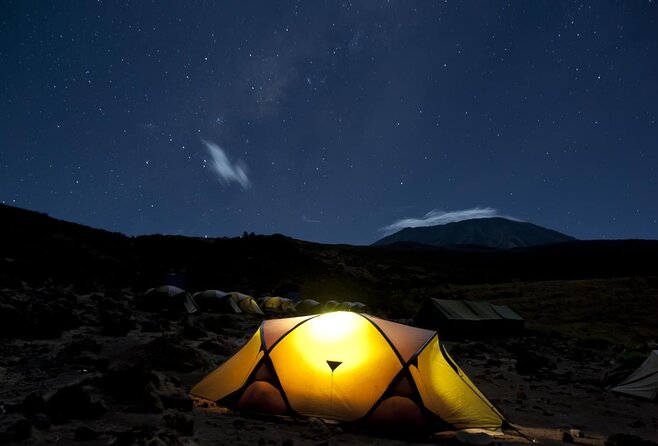
- The Northern Circuit takes the quiet northern side of Kilimanjaro, rather than following the busier southern route after the Shira Plateau.
- The eight-day schedule is the shorter version, continuing from Shira Camp 2 to Moir Camp instead of spending an additional night acclimatizing.
- The summit day lasts about 15 hours, with a midnight start from School Hut and a climb to Uhuru Peak at 5,895 meters.
- The route crosses several climate zones, including rainforest, moorland, high alpine desert, and the cold upper slopes of Kibo.
- A group limit of 15 people offers a more manageable setting than a very large commercial expedition.
- The final certificate depends on your high-point: Gilman’s Point earns a green certificate, while Uhuru Peak earns a gold certificate.
Why this northern route is worth considering
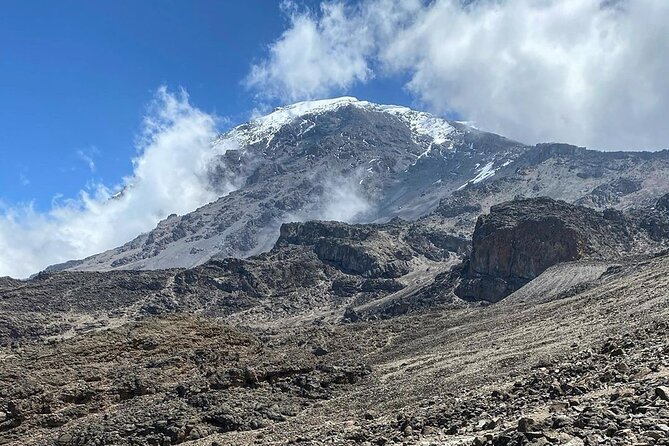
Kilimanjaro is not a technical climbing mountain on this route, but it is still a serious physical test. You walk for many hours, sleep at high camps, and finish with a steep night climb when your body would rather be in bed. The Northern Circuit rewards patience more than speed.
What makes this route special is its shape. It begins on the western side, shares the first section with the Lemosho route, crosses the Shira Plateau, then turns north near Lava Tower. From there, you circle the quieter side of Kibo before joining the final approach from the east.
That longer arc gives you more gradual altitude gain and a wider range of views. You also avoid spending most of the climb on the same busy southern path. The tradeoff is that you need eight full days, a solid fitness base, and the ability to cope with a very long summit day.
The eight-day version is important to understand. A nine-day Northern Circuit climb normally spends an extra night at Shira Camp 2 for acclimatization. This plan crosses Shira Camp 2 for lunch and continues to Moir Camp. That saves a day and may suit someone with limited vacation time, but the extra night on the nine-day schedule can make the altitude adjustment gentler.
More Kilimanjaro climbs:
- Kilimanjaro climb by Lemosho Route (7-day)
★ 5.0 · 651 reviews - Kilimanjaro climb, Machame Route (7-day)
★ 5.0 · 262 reviews - Kilimanjaro Climbing Lemosho Route 8 Days.
★ 5.0 · 186 reviews
Day 1: Londorossi Gate to Mti Mkubwa Camp
Your climb begins with a drive to Londorossi Gate at about 2,100 meters. From Moshi, the drive takes roughly two hours, and it takes considerably longer if you are coming from Arusha.
At the gate, you register with Kilimanjaro National Park authorities. You then continue by vehicle to the trailhead, where most operators serve lunch before the walk begins. The first hiking day is short, about four hours, which is welcome after the road journey.
The trail enters rainforest and climbs to Mti Mkubwa Camp at 2,820 meters. This is a gentle introduction, but do not treat it as a free pass. Your legs are beginning a week of work, and a slow, even pace now is better than showing off for the first few hours.
Large animals such as elephant and buffalo sometimes come out of the rainforest onto the path. Seeing one is a matter of luck, not a promised part of the climb. Keep your attention on the guide and the trail, especially in this early forest section.
Day 2: Rainforest fades into Shira country
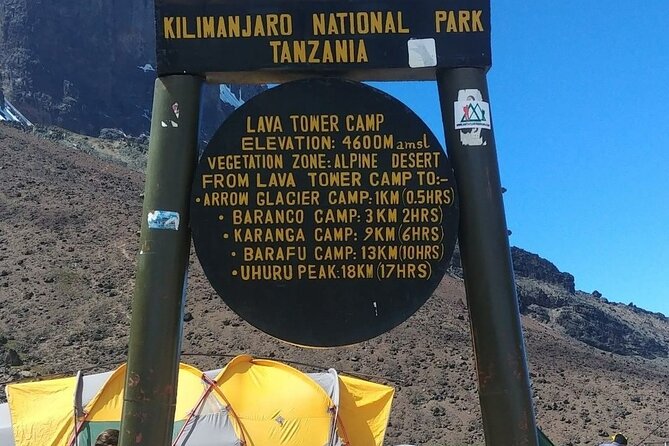
The second day starts with about an hour in the last stretch of rainforest. The trees then give way to low alpine moorland, with more open ground and wider views as you climb toward the Shira Plateau.
The walk to Shira Camp 1, at 3,610 meters, takes about six hours. The grade is described as relatively short and gradual, but the altitude is now real. You may find the distance manageable while still noticing the thinner air.
This is a good day to settle into the habits that will carry you upward: walk slowly, drink regularly, eat even when your appetite drops, and tell your guide if you feel unwell. A moderate fitness level is required, but endurance and altitude awareness matter just as much as strong legs.
Shira Camp 1 marks a clear change in the character of the climb. The forest is behind you, and the open volcanic terrain gives you a better sense of the mountain’s scale.
Day 3: Across the Shira Plateau to Moir Camp
Day three is one of the longest walking days, at about eight hours. You cross the Shira Plateau from Shira Camp 1 to Shira Camp 2, where lunch is usually taken.
Many nine-day trekkers spend the night at Shira Camp 2. This eight-day plan does not. After lunch, you continue east through the Garden of the Senecios and into the high alpine desert zone before turning onto the Northern Circuit trail toward Moir Camp.
Moir Camp sits at about 4,200 meters. The gain in elevation is substantial, so this day explains both the appeal and the challenge of the eight-day schedule. You cover a lot of ground and reach high camp sooner, but you have less time to adjust before the northern section and summit preparation.
The Garden of the Senecios provides a distinctive plant setting before the route becomes barer and more exposed. Expect the day to feel long, particularly because the final approach to Moir Camp follows several hours of walking at altitude.
A few more options to weigh up in Moshi
- Safari Serengeti And Ngorongoro
★ 5.0 · 288 reviews - Climbing Kilimanjaro – Machame Route
★ 5.0 · 170 reviews - Climbing Kilimanjaro through 7 days Machame Route
★ 5.0 · 151 reviews - Kilimanjaro climb, Lemosho Route (8-day)
★ 5.0 · 148 reviews
Day 4: Little Lent Hill and Buffalo Camp
You start day four with a moderately steep climb out of Moir Valley. There is an optional detour to the top of Little Lent Hill at 4,375 meters before you return to the main trail.
That short side climb can add a memorable high point to the day, but it is not essential. If you are tired, feeling the altitude, or saving energy for the summit, staying on the main route is the sensible choice.
From there, the path rises and falls around the northern slopes of Kibo. You continue to Buffalo Camp at 4,020 meters, usually arriving shortly after midday. The day covers about seven hours, followed by lunch and time to rest.
The northern side gives you broad views toward the plains and the Kenya and Tanzania border. These are among the route’s strongest visual rewards. You are not simply walking uphill all day. The trail curves around the mountain and lets you see how dramatically Kilimanjaro rises above the surrounding country.
Day 5: Buffalo Ridge to Rongai Third Cave
The route begins with a climb over Buffalo Ridge, followed by a descent into Porfu Camp, where lunch is usually served. It then continues east around Kibo’s northern slopes to Rongai Third Cave at 3,800 meters.
The walk takes about seven hours, but it is described as shorter than the previous day. That matters because your body has already spent several nights adjusting to altitude. By this point, you may feel more comfortable with the daily rhythm, though you should not confuse familiarity with safety.
Arrival is expected around mid-afternoon, leaving time to rest. Use it well. The next day takes you to School Hut, and the following day includes the summit attempt. Keep your evening calm, organize your clothing, and protect your energy.
The northern route is especially appealing here because it feels less like a procession along one popular corridor. You follow a remote-feeling arc beneath Kibo, with open views and fewer distractions than the heavily used southern approach.
Day 6: Across the Saddle to School Hut
Day six is shorter on paper, about five hours, but it prepares you for the hardest part. You climb steadily over the Saddle, the broad high area between Kibo and Mawenzi Peak.
From the Saddle, you continue southwest to School Hut at 4,800 meters. The camp is high enough that rest may not come easily. You are served an early dinner and are expected to sleep before waking around 11:30 p.m. for the summit attempt.
This is the point where organization becomes useful. Before bed, set out warm clothing, insulated water bottles, snacks, a headlamp, and your camera. You do not want to search through a duffel in the dark while everyone else is preparing to leave.
The early start is not glamorous. You eat, layer up, and begin walking while most of the mountain is silent. Still, this schedule gives you the best chance of reaching the crater rim around dawn and Uhuru Peak near sunrise.
Day 7: The 15-hour summit push
Summit day begins around 11:30 p.m. with hot tea and biscuits. You then climb Kibo’s slopes in darkness, first reaching Hans Meyer Cave for a short break.
The path steepens as you approach Gilman’s Point at 5,681 meters. The climb from School Hut to Gilman’s Point takes roughly five to six hours. This is where pacing and mental focus matter most. The high altitude can make each step feel strangely expensive.
At Gilman’s Point, you can pause for the approaching dawn and look across toward Mawenzi Peak. Reaching this point earns a green certificate, but the main summit, Uhuru Peak, still lies about two hours farther along the crater rim.
The rim walk is less steep than the climb to Gilman’s Point, but you are already tired and the air is extremely thin. You continue west toward Uhuru Peak at 5,895 meters, aiming to arrive at or shortly after sunrise.
The summit stay is necessarily brief. Cold, altitude, and the long descent all argue against lingering. Still, reaching Africa’s highest point is the defining moment of the climb, and the sunrise views across the crater and toward Mawenzi can make the difficult night worthwhile.
The descent continues to Millennium Camp at 3,950 meters. The full summit day is listed at about 15 hours, so you should regard this as an endurance event, not just a final morning walk. The route asks you to climb high, descend a long way, and keep moving after very little sleep.
Day 8: Millennium Camp to Mweka Gate
The final hiking day is shorter, about four hours. You walk through dense montane rainforest from Millennium Camp to Mweka Gate at 1,640 meters.
At the gate, you sign out with park authorities. You also receive your official certificate: green for Gilman’s Point and gold for Uhuru Peak. The distinction gives you a clear record of how high you reached, although the safer choice is always to follow your guide’s advice if you are struggling.
It is customary to tip your guide and porters before the drive back to your hotel in Moshi. The return to town marks a sharp change from high camps and early starts. You have moved through several climate zones in a week, and the rainforest finish provides a fitting final stretch.
What the $2,756.93 price means
At $2,756.93 per person, this is not a budget day trip. It is a full mountain expedition lasting eight days, with park access shown as included for each hiking stage, pickup offered, and a maximum group size of 15.
The price also needs to be judged against the route itself. The Northern Circuit is the longest Kilimanjaro route, and it requires more nights, more staff time, more camp logistics, and more food and transport planning than a short route. You are paying for a slower approach and a quieter northern circuit, not just a ticket to the summit.
The published information does not provide a complete itemized list of every inclusion, so I would confirm exactly what is covered before paying. Ask about airport transfers, hotel nights, meals before and after the climb, gear rental, park fees, porter support, and tipping expectations. Those details can change the final value considerably.
The group cap of 15 is useful. It is large enough to keep the price below a private expedition while small enough to avoid the feel of a huge crowd. The company has also received strong praise for communication, service, guide quality, and accommodations. One repeat customer used the same company for both a safari and a Kilimanjaro climb, which suggests the operation can handle more than one part of a northern Tanzania trip.
Who should choose this climb?
I would recommend this route to you if you want a longer, quieter Kilimanjaro experience and can spare eight days on the mountain. It suits someone who values changing scenery and gradual progression more than the shortest possible route.
It is also a good fit if you prefer a small organized group rather than arranging every park permit, camp movement, and transfer yourself. Pickup in Moshi adds useful convenience, especially after a long arrival or before an early mountain departure.
I would hesitate if you have limited hiking experience, dislike long days, or want the gentlest possible altitude schedule. The eight-day plan skips the extra acclimatization night at Shira Camp 2, and the summit day lasts about 15 hours. The nine-day version may be worth considering if your schedule and budget allow it.
The tour requires moderate physical fitness. That does not mean you need to be an elite athlete, but you should be prepared for repeated days of walking, steep climbs, cold high camps, and very little sleep before the summit.
Practical details before you book
The listed start time is 12:00 a.m., so confirm how that relates to your pickup and hotel arrangements. The experience offers mobile tickets and pickup, which should simplify the first morning, but the exact pickup details are not provided.
The maximum group size is 15. Ask whether the actual group is expected to be smaller, and ask how guides and porters are assigned. The guide is central to the experience, especially when deciding pace, rest stops, and whether to continue toward Gilman’s Point or Uhuru Peak.
The two published customer accounts give special praise to service and communication. One also praises the accommodations as top notch, and another combined the climb with a two-day safari. If you want to add a safari before or after Kilimanjaro, Exceed Expectations Tours and Safari may be able to arrange both, though the safari is not part of this climb price.
Cancellation is flexible until 24 hours before the start time, when a full refund is available. Cancellations or changes made less than 24 hours before the experience are not accepted for a refund.
Should you book the Northern Circuit?
Book it if you want the longest route, quieter northern slopes, and a fuller week of mountain scenery. The route gives you a carefully varied ascent, a small group limit, park admission at the hiking stages, and a summit plan that reaches Uhuru Peak around sunrise.
Think carefully if saving one day is the main reason you prefer this version. Skipping the extra Shira Camp 2 night makes the schedule more demanding, and the summit day is a major physical undertaking. Before booking, confirm the full list of inclusions and ask about the guide team, porter arrangements, equipment, accommodation, and meals.
For a fit and determined climber who values service, communication, and a less crowded route, this is a strong Kilimanjaro option. Just respect the mountain. It rewards the steady walker, not the person trying to win the first day.
FAQ
Where does the Northern Circuit climb begin?
The climb begins at Londorossi Gate on the western side of Mount Kilimanjaro, at about 2,100 meters. The drive from Moshi takes approximately two hours.
How long does the climb last?
The experience lasts approximately eight days. The Northern Circuit normally takes at least eight or nine days, and this version uses the shorter eight-day schedule.
What is the highest point reached?
The main summit is Uhuru Peak at 5,895 meters. Gilman’s Point is at 5,681 meters and is an important checkpoint on the summit morning.
Does the route include an extra acclimatization day?
No. The eight-day plan crosses Shira Camp 2 for lunch and continues to Moir Camp. The additional night at Shira Camp 2 is generally used on the nine-day version.
How long is the summit day?
The summit day is approximately 15 hours. You wake around 11:30 p.m., climb to the crater rim and Uhuru Peak, then descend to Millennium Camp.
What certificate do you receive?
You receive a green certificate if you reach Gilman’s Point and a gold certificate if you reach Uhuru Peak.
Is pickup available?
Yes. Pickup is offered, and the experience provides a mobile ticket. The supplied details do not specify the exact pickup location or schedule.
What level of fitness is required?
A moderate physical fitness level is required. You should also be ready for long walking days, high altitude, a midnight summit start, and a summit day lasting about 15 hours.
What is the cancellation policy?
You can cancel at least 24 hours before the experience start time for a full refund. Cancellations and changes made less than 24 hours before the start time are not accepted for a refund.
Just added in Moshi
- Zanzibar: Stone Town tour and Nakupenda beach with Lunch★ 5.0 · 1 review
- day trip lake manyara★ 5.0 · 2 reviews
- Mt Kilimanjaro 6 days Marangu route hike★ 5.0 · 3 reviews
- machame route★ 5.0 · 16 reviews
- Private Cycle to Kilimanjaro Bike Park Safari★ 5.0 · 6 reviews
- West Kilimanjaro cycling Adventures★ 4.5 · 8 reviews
- Wildlife Extravaganza: Manyara, Tarangire & Ngorongoro in 3 Days★ 5.0 · 3 reviews
- 3 Days Private E-Bike Tour in West Kilimanjaro★ 5.0 · 3 reviews
Kilimanjaro Climbs, compared.






Chagga Villages in Mount Kilimanjaro Cycling Day Trip
Read our review →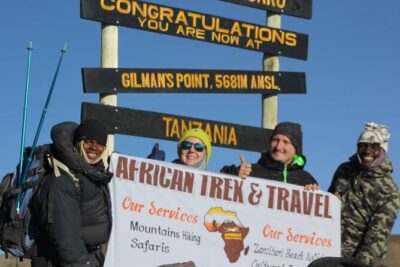
Browse the lists this tour appears in