
Reviewed · LEMOSHO ROUTE CLIMBS
7 Days Private Climb via Lemosho Route
The long way up rewards patience. This private seven-day climb follows Kilimanjaro’s scenic Lemosho Route, beginning in remote forest and crossing moorland, semi-desert, and alpine desert before the final push to Uhuru Peak. I like the gradual ascent and the quiet start through the western side of the mountain. I also like that the price includes park fees, guides, tents, meals, and emergency bottled oxygen.
The main consideration is the demanding schedule, especially the summit night and the 16-kilometer second day. The tour requires strong physical fitness, and the published details contain a few figures worth confirming before you pay, including the Day 5 elevation line and the missing summit-day distance.
In This Review
- Key points at a glance
- Why the Lemosho Route is a smart Kilimanjaro choice
- Day 1: Londorossi Gate to Mti Mkubwa Camp
- Day 2: A long climb across Shira Ridge
- Day 3: High walking and the descent to Barranco
- Day 4: Barranco to Karanga Valley
- Day 5: Barafu Camp and preparation for the summit
- Day 6: The midnight climb to Uhuru Peak
- Day 7: Mweka Gate and the return to Arusha
- What the $2,318 price covers
- Who will get the most from this climb?
- Booking details and small points to confirm
- Should you book the 7-day Lemosho climb?
- FAQ
- Where does the climb begin?
- How long is the experience?
- Is this a private activity?
- What level of fitness is required?
- What time does the tour start?
- Is pickup available?
- Are meals included?
- Are park fees included?
- What is not included in the price?
Key points at a glance
- Remote Lemosho start: You reach Londorossi Park Gate, then continue by 4WD to Lemosho Glades before walking through montane forest.
- Private climb: Only your group takes part, with professional guides assigned to the trip.
- Useful acclimatization design: The route climbs high to around 13,000 feet on Day 3, then drops to Barranco Camp before moving higher.
- Serious summit day: You start between midnight and 2 a.m., reach Stella Point, continue to Uhuru Peak, then descend to Mweka Camp.
- Meals and camping included: Six breakfasts, six dinners, seven lunches, park fees, and four-season three-person tents are covered.
- Strong value with extra costs: At $2,318 per person, the package covers major mountain expenses, but tips, a visa, and travel insurance are separate.
Why the Lemosho Route is a smart Kilimanjaro choice
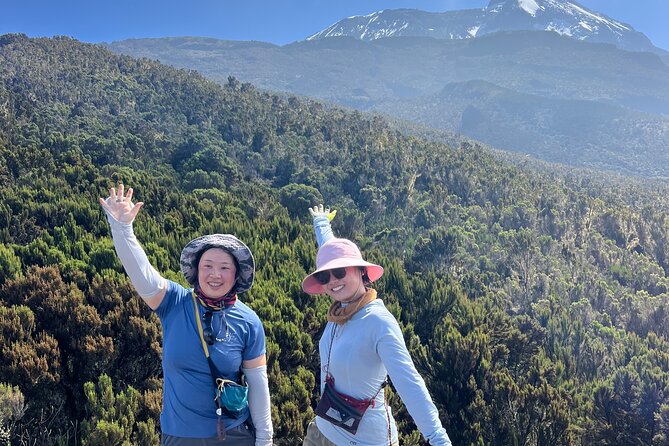
Lemosho is a good fit if you want scenery and a slower approach rather than the shortest possible route. The climb begins at about 6,000 feet and rises through several distinct habitat zones. That changing terrain gives each day a clear character, instead of making the mountain feel like one long uphill walk.
The route also uses a useful acclimatization pattern. On Day 3, you climb toward about 13,000 feet before descending to Barranco Camp at roughly the same height where you began. That kind of high point followed by a lower sleeping elevation helps make the day valuable for altitude adjustment.
This is still a hard climb. You spend much of the week walking, then face a long summit night with an ascent to 19,340 feet and a descent to Mweka Camp at about 10,150 feet. The seven-day format is more gradual than a very short Kilimanjaro itinerary, but it is not a gentle holiday.
Because the activity is private, your group does not have to share the climb with a larger mixed party. That can make the pace and daily routine easier to manage, although the exact guide-to-climber ratio is not provided. Ask about that before booking if personal support is important to you.
More Lemosho Route climbs:
- Kilimanjaro climb by Lemosho Route (7-day)
★ 5.0 · 651 reviews - Kilimanjaro Climbing Lemosho Route 8 Days.
★ 5.0 · 186 reviews - Kilimanjaro climb, Lemosho Route (8-day)
★ 5.0 · 148 reviews
Day 1: Londorossi Gate to Mti Mkubwa Camp
The day begins with an early breakfast and a briefing, followed by the drive to Londorossi Park Gate. From there, a 4WD vehicle uses a forest track to reach Lemosho Glades. This transport section matters because the route does not begin with a simple roadside walk.
The first hike leads through montane forest to Mti Mkubwa campsite. You gain about 2,700 feet, walking approximately six kilometers in two to three hours. The listed hiking time is moderate, which gives you a useful first day to settle into the rhythm of mountain travel.
I like this opening because it feels removed from the busier parts of the mountain. The forest setting also gives you a gentle introduction before the trail reaches the more exposed moorland above. The day is short enough to leave room for camp routines, but you still need to take it seriously. Your body is beginning to work at altitude from the start.
The tour lists about four hours for this stop, including the activity period, and admission to the national park is included.
Day 2: A long climb across Shira Ridge
Day 2 is the first major test. After breakfast, the trail steepens as you leave the forest and enter the giant heather moorland zone. You cross several streams, continue over Shira Ridge, pass Shira 1 Camp, and finish at Shira 2 Camp on open moorland meadows beside a stream.
The figures here are substantial: from about 8,700 feet to 12,600 feet, with a distance of 16 kilometers and seven to eight hours of hiking. This is a long day, and you should expect the change in altitude to matter even if you feel strong at the start.
The reward is the change in setting. The dense forest gives way to broad, open ground, and the route begins to feel like a high-mountain climb rather than a woodland trek. Shira 2 Camp becomes an important overnight point because you have gained a large amount of height while still following a gradual route.
Take the slow pace seriously. The tour is designed to help with acclimatization, not to reward speed. You may find the second day tiring because of its length, so a private group can be useful here if the guide is able to keep the pace comfortable for everyone.
Day 3: High walking and the descent to Barranco
From the Shira Plateau, you continue east along a ridge toward the central part of Kilimanjaro. The route passes the junction toward Kibo, then continues beyond the Tower junction, including the direction of Arrow Glacier, before descending to Barranco Camp.
This day covers about eight kilometers in five to six hours. The listed elevation moves from 12,600 feet to 13,000 feet, but the important point is not simply the final number. You climb high during the day, then finish around a similar sleeping elevation to your starting point.
That makes Day 3 one of the most useful parts of the route. You get time at height without a large increase in where you sleep. For a climb where altitude is a major concern, this is a sensible use of the extra days provided by Lemosho.
The habitat changes again to semi-desert. Expect less forest and more open, spare mountain terrain. The section near the Tower and Arrow Glacier junctions gives the day a stronger sense of progress, even though the route then drops to Barranco.
The tour lists six hours for this stop, with park admission included. Your guide’s handling of pace and rest becomes increasingly important here. The package says professional guides are included, but it does not name them or give their certifications, so ask for those details if they will affect your choice.
A few more options to weigh up in Moshi
- Safari Serengeti And Ngorongoro
★ 5.0 · 288 reviews - Kilimanjaro climb, Machame Route (7-day)
★ 5.0 · 262 reviews - Climbing Kilimanjaro – Machame Route
★ 5.0 · 170 reviews - Climbing Kilimanjaro through 7 days Machame Route
★ 5.0 · 151 reviews
Day 4: Barranco to Karanga Valley
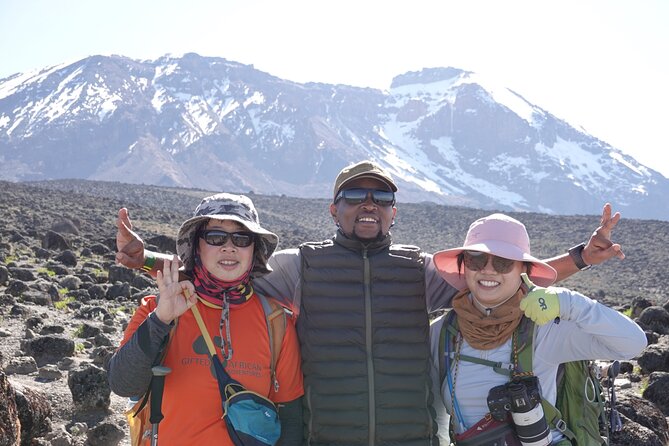
After breakfast, you leave Barranco Camp for Karanga Valley. The route reaches the junction connecting with the Mweka Trail, which later becomes part of your descent. The published figures give an elevation of 13,250 feet, a distance of five kilometers, and a hiking time of three to four hours.
This is a shorter day than Day 2 or the summit day, and that is welcome. You are already high, so the value lies in moving forward without adding a huge distance. The alpine desert habitat is stark and exposed, with little of the forest character from the opening days.
The day is also practical. Reaching the Mweka junction gives you a clear connection to the route used after the summit. The schedule allows time to rest before the final move to Barafu Camp, although the itinerary does not spell out the exact overnight arrangements beyond the camping setup.
One detail needs checking. The listing gives the elevation as 13,250 feet, but does not clearly state whether that refers to the camp, a trail point, or the day’s high point. That is not necessarily a problem on the ground, but I would ask the operator to confirm the camp elevation and daily plan.
Day 5: Barafu Camp and preparation for the summit
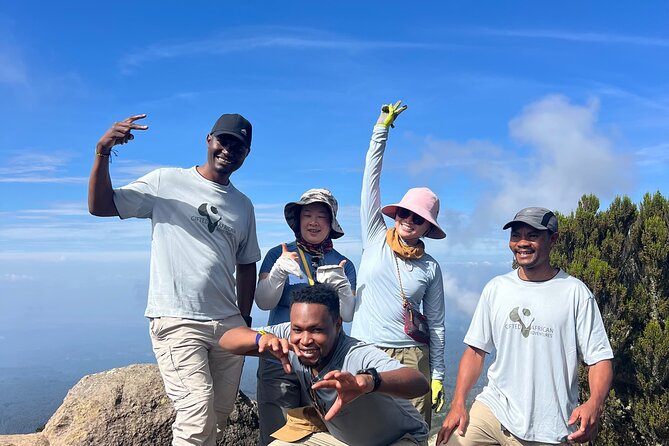
You continue to Barafu Camp, listed at about 15,350 feet. The route covers four kilometers in three to four hours, and you complete the South Circuit, which provides views of the summit from several directions.
The short distance does not mean an easy day. At this height, even a few kilometers can feel slow. Barafu is the launch point for the summit attempt, so the most important part of the afternoon is rest, dinner, and preparation for the midnight-to-2 a.m. start.
The elevation line in the supplied schedule reads 3,250 feet to 15,350 feet. Since the route comes from Karanga at roughly 13,250 feet, the first figure appears inconsistent with the surrounding days. Ask Gifted African Adventures to confirm the correct starting elevation and the expected camp height before booking.
The tour includes a four-season, three-person mountain tent. That tells you the package is set up for high-altitude camping, but the listing does not explain how many people will share each tent or whether your private group receives a separate tent arrangement. Ask directly if that affects your comfort.
Day 6: The midnight climb to Uhuru Peak
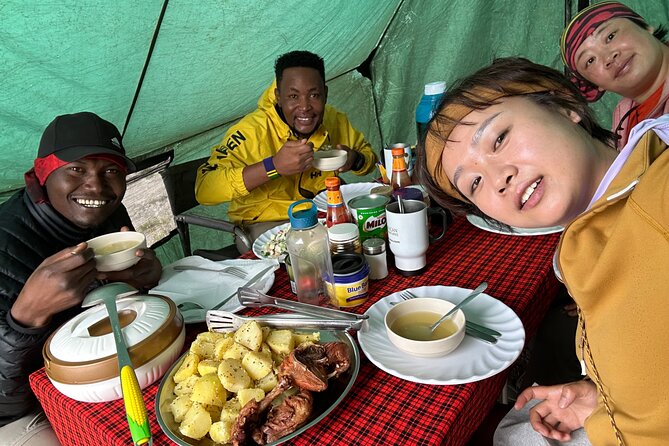
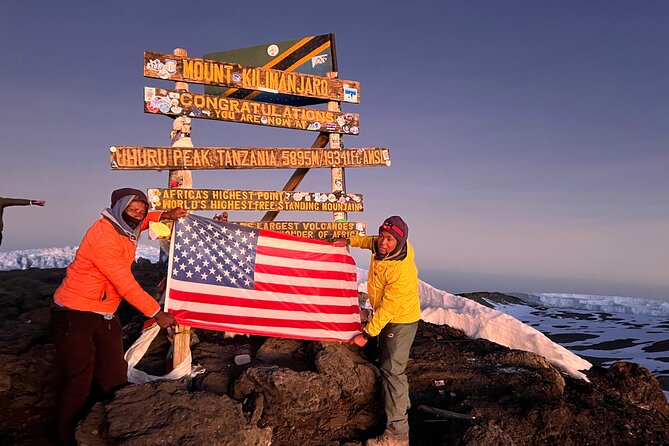
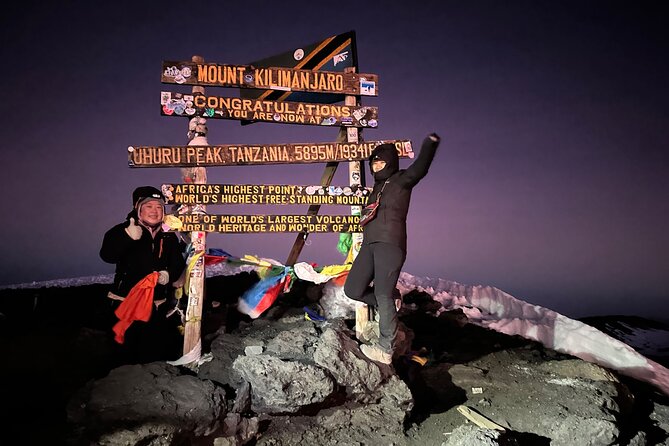
This is the hardest and longest day. You leave Barafu between midnight and 2 a.m., ascending through heavy scree toward Stella Point on the crater rim. The route passes between the Rebmann and Ratzel glaciers, then continues from Stella Point for about another hour to Uhuru Peak.
The listed summit elevation is 19,340 feet, the highest point on Mount Kilimanjaro and the highest point in Africa. Snow may appear on the final section from Stella Point, although conditions can vary. The summit schedule is physically demanding because you climb in darkness, reach the top, and then continue down the mountain.
After Uhuru Peak, you descend to Barafu for lunch and continue to Mweka Camp at about 10,150 feet. The itinerary gives an eight-hour activity period, but the full summit day can feel longer because it combines the pre-dawn ascent with a major descent. The distance is cut off in the supplied details, so you should request the full distance and an expected total duration.
Bottled oxygen is included for emergency rescue only. It is not presented as a routine aid for climbing, and you should not treat it as a substitute for fitness, careful pacing, or proper altitude planning. The operator should also explain its emergency procedures during the briefing.
Reaching Mweka Camp is a major relief. You have completed the summit attempt and returned to a much lower elevation, but your legs will have worked hard. This is where the private format can be valuable, since your group can focus on a sensible descent rather than matching a larger party’s timing.
Day 7: Mweka Gate and the return to Arusha
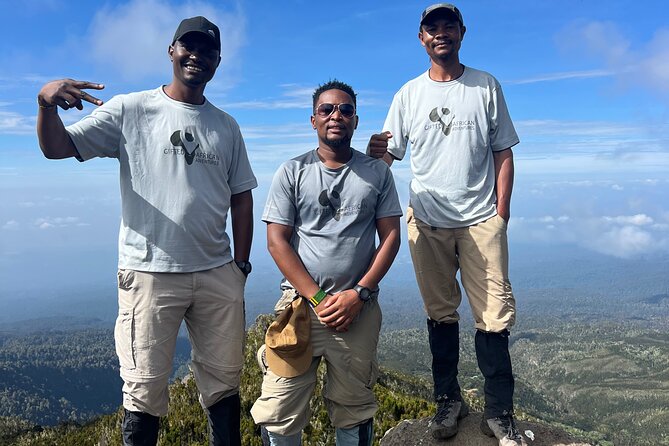
After breakfast, you descend through forest to Mweka Park Gate. The distance is about ten kilometers, with three to four hours of hiking, and the elevation drops from approximately 10,150 feet to 5,500 feet.
The lower trail can be wet and muddy. That is a useful warning because the final day is not simply a victory walk on a dry, easy path. You still need to watch your footing, especially after the summit day has left you tired.
At Mweka Gate, you receive your summit certificates. The Gifted Adventures vehicle then takes you back to your hotel in Arusha. The wording says Arusha rather than Moshi for the return, so confirm your exact drop-off point if your accommodation is elsewhere.
The seven-day plan ends on the mountain after breakfast and the descent. There is no separate hotel night listed as part of the package, so make sure your post-climb accommodation is arranged.
What the $2,318 price covers
At $2,318 per person, this is not a budget walk, but the inclusions cover many of the largest costs of a Kilimanjaro climb. You receive professional guides, park fees, mountain tents, and meals throughout the seven-day schedule.
Included meals are:
- Six breakfasts
- Seven lunches
- Six dinners
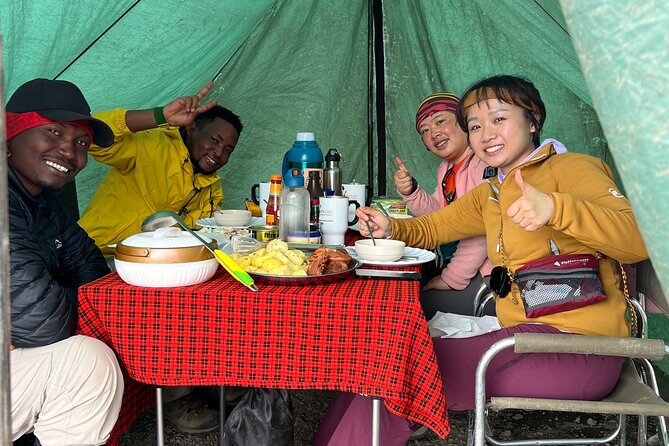
The meal count fits the seven-day mountain schedule, though the package does not describe menus, drinks, snacks, or dietary arrangements. If you have food restrictions, ask for a clear plan before departure.
Park fees are important because they can make up a large part of a Kilimanjaro package. Their inclusion makes the price easier to compare with cheaper offers that may leave major charges out. Four-season, three-person tents and emergency bottled oxygen are also part of the package.
You still need to budget for crew tips, a Tanzanian visa, and travel insurance. Tips are not a minor detail on a guided mountain climb, so ask the company for its recommended amount and how it is shared among the crew. Travel insurance should specifically cover the activities and elevations involved, but the supplied information does not state any insurance requirements or coverage limits.
Pickup is offered, and the meeting time is 5:30 a.m. Confirmation is provided at booking. Since the first mountain day begins with early breakfast and a drive, confirm the pickup location, especially if you are staying in Moshi rather than Arusha.
Who will get the most from this climb?
This trip suits you if you want a private Kilimanjaro experience with a scenic route and a slower seven-day approach. It is especially appealing if you value remote forest, moorland, and high alpine terrain more than a quick ascent.
You should also be comfortable with camping, early mornings, long walking days, and a difficult summit night. The tour specifically calls for strong physical fitness. That is a real requirement, not a polite suggestion.
The private format may suit couples, families with strong fitness, or a group of friends who want to climb together. Since only your group participates, you can ask how the guide manages pace, rest breaks, and individual needs. The group size itself is not provided, so get that information before paying.
Two written comments about the company praise the team’s professionalism and the organization before, during, and after the climb. One also describes arranging an Arusha National Park visit after arrival in Tanzania through the same company. That extra arrangement is not included in this climb, but it suggests you can ask Gifted African Adventures about adding a separate park visit.
Booking details and small points to confirm
Free cancellation is available if you cancel at least 24 hours before the local start time. Cancellations inside that window are not refunded, and late changes are not accepted.
Before booking, I would confirm four practical points: the correct Day 5 elevation figures, the full distance and duration for Day 6, the sleeping arrangement in the three-person tents, and the pickup location. I would also ask who the guides are, how tips are handled, and what emergency support is available beyond the bottled oxygen listed for rescue use.
The written comments praise the company as professional and organized, but there are only two ratings shown, and the rating display is marked N/A despite the summary showing five stars. Treat that as limited feedback rather than a large body of independent evidence.
Should you book the 7-day Lemosho climb?
I would choose this tour if you want the scenic Lemosho approach, a private group, and a package that includes park fees, tents, guides, and daily meals. The route’s gradual design and high-day-then-lower-sleeping pattern are strong reasons to prefer it over a shorter schedule.
I would pause if you want a relaxed holiday, dislike camping, or are not prepared for a midnight summit attempt followed by a long descent. I would also get the itinerary corrections in writing before making payment. If Gifted African Adventures answers those questions clearly, the $2,318 price offers a sensible package for a serious seven-day climb.
FAQ
Where does the climb begin?
The climb begins after an early breakfast and briefing, with a drive to Londorossi Park Gate. A 4WD vehicle then continues along a forest track to Lemosho Glades.
How long is the experience?
The scheduled duration is seven days.
Is this a private activity?
Yes. Only your group participates in the climb.
What level of fitness is required?
The tour states that climbers should have a strong physical fitness level.
What time does the tour start?
The listed start time is 5:30 a.m.
Is pickup available?
Yes. Pickup is offered, but you should confirm the exact pickup location when booking.
Are meals included?
Yes. The package includes six breakfasts, seven lunches, and six dinners.
Are park fees included?
Yes. Park fees and admission for the mountain stops are included.
What is not included in the price?
Crew tips, a Tanzanian visa, and travel insurance are not included.
Just added in Moshi
- Zanzibar: Stone Town tour and Nakupenda beach with Lunch★ 5.0 · 1 review
- day trip lake manyara★ 5.0 · 2 reviews
- Mt Kilimanjaro 6 days Marangu route hike★ 5.0 · 3 reviews
- machame route★ 5.0 · 16 reviews
- Private Cycle to Kilimanjaro Bike Park Safari★ 5.0 · 6 reviews
- West Kilimanjaro cycling Adventures★ 4.5 · 8 reviews
- Wildlife Extravaganza: Manyara, Tarangire & Ngorongoro in 3 Days★ 5.0 · 3 reviews
- 3 Days Private E-Bike Tour in West Kilimanjaro★ 5.0 · 3 reviews
Lemosho Route Climbs, compared.


8-Day Small-group Lemosho Kilimanjaro Summit Trekking
Read our review →



Climbing Kilimanjaro through 8 days Lemosho Route
Read our review →Browse the lists this tour appears in