
Reviewed · LEMOSHO ROUTE CLIMBS
8-Day Kilimanjaro Adventure-Lemosho Route
Kilimanjaro rewards patience more than speed. This 8-day Lemosho Route gives you a scenic, carefully paced path toward Uhuru Peak, with rainforest, the Shira Plateau, Lava Tower, glaciers, and a sunrise attempt near the summit. I like the route’s broad mix of scenery and its extra acclimatization time, especially the slower third day across Shira. I also like that the trip is private, with transport, meals, fees, and climbing equipment included.
The main consideration is the summit day. You will wake around 11 p.m. for a long night ascent, then continue down after reaching Uhuru Peak. High altitude, freezing temperatures, scree, wind, and a total hiking day of about 11 hours make this a serious physical challenge, not a casual holiday walk.
In This Review
- What makes this climb worth considering
- Why Lemosho is a strong route choice
- Day 1: Londorossi Gate to Big Tree Camp
- Day 2: Shira Ridge and the first big views
- Day 3: A useful acclimatization day at Shira 2
- Day 4: Lava Tower, then down to Barranco
- Day 5: Barranco Wall and Karanga Valley
- Day 6: Barafu Camp and preparation for summit night
- Day 7: Stella Point, Uhuru Peak, and the hardest hours
- Day 8: Mweka Gate and the return to Moshi
- What the $2,138.08 price includes
- Support from KLM Safaris
- Practical strengths and limits
- Who should book this Kilimanjaro climb?
- FAQ
- Where does the Kilimanjaro climb begin?
- How long is the experience?
- Is this a private tour?
- What time does the tour start?
- Is food included?
- Is climbing equipment included?
- Are flights and visas included?
- What happens if I cancel?
- Should you book it?
What makes this climb worth considering
- Londorossi Gate begins the climb in rainforest, with a chance to see black-and-white colobus monkeys and hear exotic birds.
- The Lemosho route crosses the Shira Plateau, one of the most scenic sections, with possible views toward Kibo, Mount Meru, Longido, and the Great Rift Valley.
- Day 4 uses the climb-high, sleep-lower approach, taking you to Lava Tower at 4,600 meters before descending to Barranco Camp.
- The private format keeps the group small, so the experience is limited to your own party rather than a large shared group.
- Summit morning targets sunrise at Stella Point, followed by the final hour to Uhuru Peak.
- The listed price of $2,138.08 includes major trip costs, including meals, transport, taxes, fees, and climbing equipment, though tips, insurance, visas, personal items, and international flights are extra.
Why Lemosho is a strong route choice
Lemosho is appealing because it does not rush you straight toward the upper mountain. The first days move through several climate zones, beginning in thick forest and ending among cold, bare rock and snow. That gradual change gives you time to adjust while keeping the walk interesting.
The route is also praised for its scenery. From the Shira Plateau, you may see Kibo, Kilimanjaro’s main summit cone, along with views toward Mount Meru and Longido. On clear days, the wider views can reach toward the Great Rift Valley. Wildlife is possible in the lower forest, although the itinerary only specifically notes the chance to see black-and-white colobus monkeys.
You should understand the tradeoff. Scenic routes still require hard walking, and this one gains serious altitude by Day 4. The schedule includes long hours, cold camps, exposed ridges, and a demanding summit attempt. The extra days help, but they do not remove the effects of altitude.
More Lemosho Route climbs:
- Kilimanjaro climb by Lemosho Route (7-day)
★ 5.0 · 651 reviews - Kilimanjaro Climbing Lemosho Route 8 Days.
★ 5.0 · 186 reviews - Kilimanjaro climb, Lemosho Route (8-day)
★ 5.0 · 148 reviews
Day 1: Londorossi Gate to Big Tree Camp
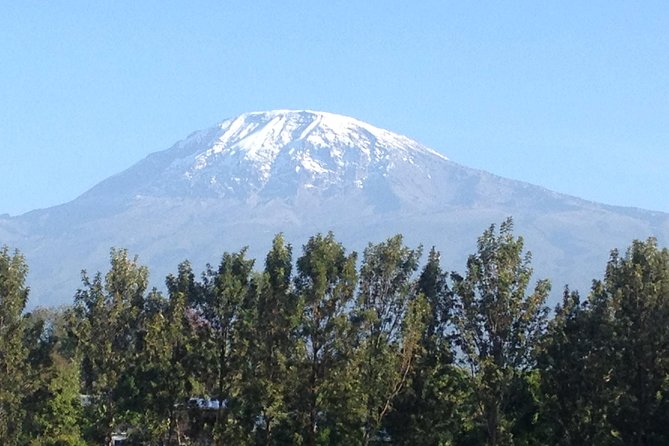
The first day begins with a drive from Moshi to Londorossi Park Gate at about 2,385 meters. Registration takes place at the gate office before you begin hiking through the Lemosho Glades.
The walking is gradual at first, with a slight descent before the trail enters the montane rainforest. This is one of the more pleasant starts to a Kilimanjaro climb. You are not immediately staring at a barren upper slope. Instead, the forest brings birdsong, thick vegetation, and the possibility of black-and-white colobus monkeys moving through the trees.
The day lasts about four hours and ends at Mti Mkubwa, or Big Tree, Camp. This camp sits in the upper part of the forest zone. I like this opening because it eases you into the climb, though wet conditions can make forest trails slippery or muddy.
Day 2: Shira Ridge and the first big views
Day 2 starts early with a steep climb out of the montane forest. The vegetation changes quickly as you enter the moorland zone, where Giant Heather and Erica replace the taller forest growth.
This is a more demanding day, lasting about six hours. You cross Shira Ridge at roughly 3,500 meters, and a clear sky may reveal Kibo, your eventual goal. From the ridge, the trail descends onto the Shira Plateau before reaching Shira 1 Camp beside a stream.
This day gives you an important first lesson in mountain pacing. You are gaining altitude, but the route is not a race. Keep your steps short, drink regularly, and follow the guides’ slow rhythm. The views make the effort worthwhile, but the ridge can feel exposed and tiring after the steep forest climb.
Day 3: A useful acclimatization day at Shira 2
Only about three hours of hiking are planned on Day 3. You cross more of the Shira Plateau and reach Shira 2 Camp, then use the remaining time for short acclimatization walks around and above camp.
This is one of the smartest parts of the schedule. A short walking day lets you spend time at altitude without adding another major push. You can take in the plateau, stretch your legs, and let your body adjust before the route climbs higher.
Shira 2 is more exposed than the previous camp. Wind may be stronger, and temperatures can fall below freezing, especially during winter. Bring warm layers where you can reach them easily. Do not bury your cold-weather clothing at the bottom of your bag just because the afternoon feels mild.
A few more options to weigh up in Moshi
- Safari Serengeti And Ngorongoro
★ 5.0 · 288 reviews - Kilimanjaro climb, Machame Route (7-day)
★ 5.0 · 262 reviews - Climbing Kilimanjaro – Machame Route
★ 5.0 · 170 reviews - Climbing Kilimanjaro through 7 days Machame Route
★ 5.0 · 151 reviews
Day 4: Lava Tower, then down to Barranco
Day 4 is the route’s major acclimatization test. You climb slowly from Shira 2 through rocky terrain to Lava Tower at 4,600 meters. The trail becomes steeper and more difficult as you approach the tower.
At this point, you may feel weak or short of breath. That is why the guides emphasize pole pole, Swahili for slowly. Moving too fast can make altitude symptoms worse. You then descend about 650 meters to the Great Barranco Valley, a classic example of gaining high and sleeping lower.
The descent takes about two hours before you reach Barranco Camp. The camp sits beneath the Breach Wall, which surrounds it on three sides. Hanging glaciers and the Kibo massif provide the setting for a demanding but memorable evening.
This seven-hour day is hard, but its design is valuable. You spend time high at Lava Tower, then recover at a lower camp. I would consider this a key reason to choose the eight-day schedule instead of trying to squeeze the climb into fewer days.
Day 5: Barranco Wall and Karanga Valley
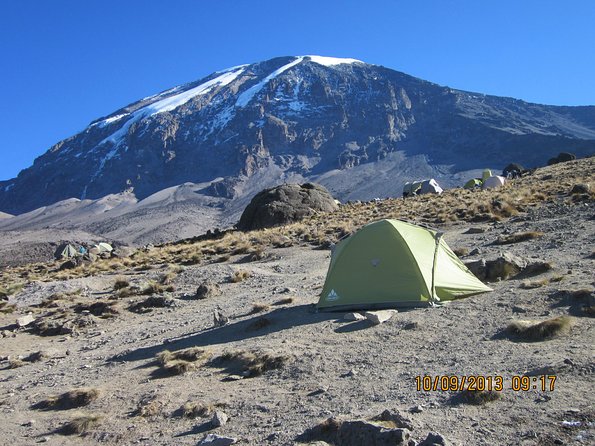
Day 5 begins with a steady climb up the eastern side of the Great Barranco Wall. This is not a simple flat walk, and you should expect hands-on movement in places as the trail works upward.
The route passes below the Heim Glacier before entering the alpine desert of Karanga Valley. At about 4,100 meters, Karanga Camp provides another high stop before the final approach to Barafu.
Weather determines how much of the Heim Glacier and Mount Kilimanjaro you can see. If clouds move in, the views may be limited. Still, the day has a clear purpose: you keep gaining altitude in manageable stages rather than making one huge leap.
The hike lasts about five hours. Compared with Day 4, it may feel shorter, but the altitude keeps it from being easy.
Day 6: Barafu Camp and preparation for summit night
From Karanga, you climb through the dry, barren alpine desert to Barafu Camp at about 4,600 meters. The route takes roughly five hours.
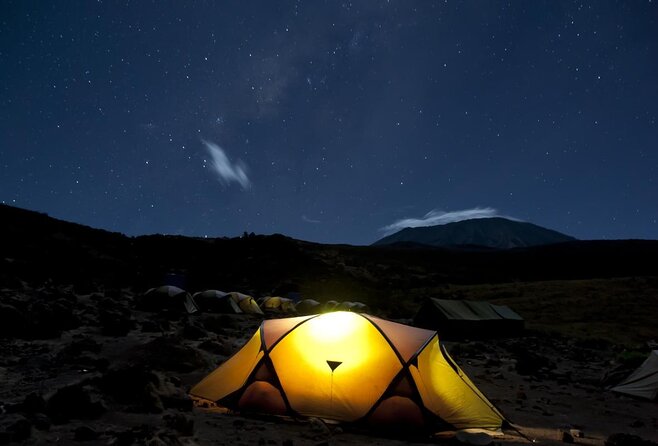
Barafu sits on a narrow ridge with little protection from the wind. The camp offers views of Kibo and Mawenzi, but it is an exposed place to spend the night. Temperatures will drop as the day fades, so this is when your clothing and sleeping setup matter most.
You should use the daylight hours to learn the camp layout. The route specifically advises getting familiar with the area before dark, which is practical advice. Later, you will be moving around while tired and in low light.
The schedule calls for an 11 p.m. wake-up. Eat what you can, prepare a warm drink and snack, and organize your layers before resting. You may not sleep much. That is normal for a summit night, but the early start gives you a chance to reach Stella Point around sunrise.
Day 7: Stella Point, Uhuru Peak, and the hardest hours
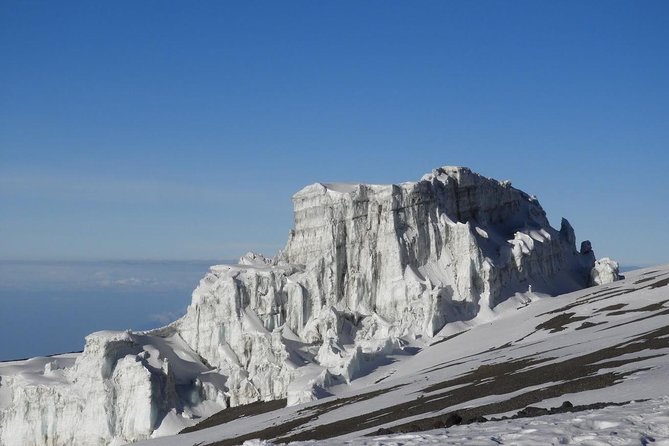
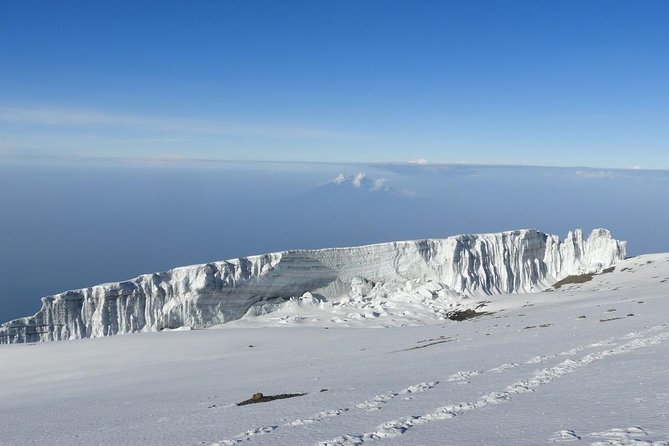
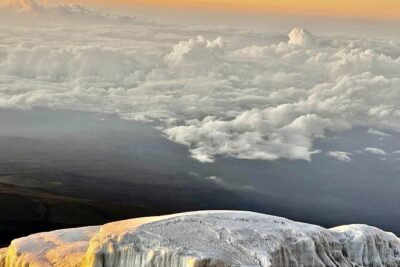
Summit day begins in darkness. You start up the northwest scree slowly, passing between the Rebmann and Ratzel glaciers. The rocky ground is difficult, and each step can feel harder as the air gets thinner.
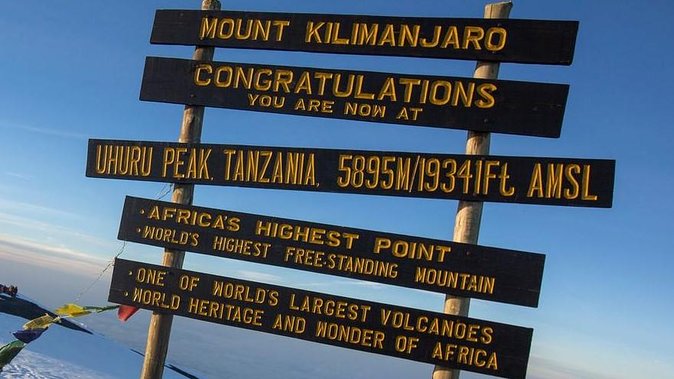
The target is Stella Point at 5,756 meters. If the weather cooperates, you can arrive in time for sunrise. The final section to Uhuru Peak takes about another hour along a gradual, snow-covered trail, reaching 5,895 meters.
Summit temperatures may fall to about minus 23 degrees Celsius in the morning. Overnight temperatures can be just below freezing. That range explains why you need serious cold-weather clothing, even if Moshi felt warm when you left.
The entire hiking day lasts around 11 hours. You then descend, which can be rough on tired legs and knees. The timing of sunrise and the final arrival at Uhuru can vary with weather, pace, and how the group is feeling. One especially useful detail from the trip’s feedback is that a climber reached Stella Point on time and arrived at Uhuru after sunrise. That is still a successful summit, and it may be the safer choice if the group needs to slow down.
Do not judge the climb only by the photograph at the top. The real achievement is managing the cold, altitude, darkness, fatigue, and descent while following the guides’ instructions.
Day 8: Mweka Gate and the return to Moshi
The final day descends through the forest toward Mweka Gate. After the cold upper mountain, the lower altitude should feel welcome, and the return to trees marks a clear change in the trip.
The trail can be muddy, so take care with your footing. The descent to Mweka Gate covers about four kilometers and takes roughly three to four hours. From the gate, you continue into Mweka village for lunch, with the village walk normally taking about another hour and possibly feeling muddy underfoot.
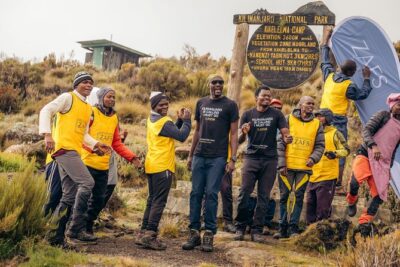
After lunch, private transport takes you to a hotel for the certificate presentation and summit celebration. This finish gives the climb a proper closing moment instead of ending abruptly at the park gate.
What the $2,138.08 price includes
At $2,138.08 per person, the price has real value if you need a packaged climb rather than arranging each part yourself. It includes all fees and taxes, private transport, meals listed in the schedule, and Kilimanjaro climbing equipment.
The food allowance is substantial on paper: eight dinners, seven breakfasts, and eight lunches. The itinerary also lists meals throughout the mountain days, so you are not expected to arrange your own food while trekking.
You still need to budget for international flights, travel insurance, visa fees, souvenirs, personal items, and tips for guides and porters. Tips are not a minor detail on a guided mountain climb, so include them in your total planning cost.
The private format adds value for people who want their own group and a more personal pace. The experience is not shared with unrelated participants. That can be especially useful if one person in your party needs to move more slowly or if you want more direct communication with the guides.
Support from KLM Safaris
The strongest service details point to careful planning and good communication. Gileard helped arrange a previous Tanzania trip from the United Kingdom, replied quickly to questions, and made sure the requested activities were included. That is useful evidence for anyone who wants help organizing a larger Tanzania holiday around the climb.
The same company also handled airport arrival, hotel arrangements, briefing, and equipment rental in a professional way for another climber. On the mountain, that climber was supported by two experienced guides. The guide names for this Kilimanjaro departure are not provided, so you should ask for the guiding team’s names and qualifications before booking.
Elly is identified as an excellent driver-guide for the safari portion of a broader Tanzania trip. He is not specifically named as the Kilimanjaro guide, but his role shows that KLM Safaris can combine trekking with safari and cultural arrangements if you want a longer holiday.
Practical strengths and limits
I like that confirmation is provided at booking and that pickup is offered. The meeting time is 8:30 a.m., although you should confirm the exact pickup location and whether that start time applies to your Moshi hotel.
The trip requires a strong level of physical fitness. That wording should be taken seriously. You need to be ready for repeated uphill walking, high altitude, cold nights, rocky ground, mud, and a summit day that begins at 11 p.m.
The route is private, but the supplied details do not specify the exact number of porters, the size of the guiding team for your booking, equipment brands, hotel names, or camp facilities. Ask those questions before paying. You should also confirm what the phrase climbing equipment includes, since the exact items are not listed.
Free cancellation is available if you cancel at least 24 hours before the start time. Changes or cancellations made within 24 hours are not accepted for a refund, and the cut-off follows local time.
Who should book this Kilimanjaro climb?
This trip suits you if you want Kilimanjaro’s more scenic route, prefer a private group, and value a slower eight-day schedule with several acclimatization stages. It is also a good fit if you want KLM Safaris to handle transport, meals, fees, and equipment rather than piecing together the climb yourself.
You should think twice if you dislike cold weather, very early starts, exposed camps, or long descents. The itinerary is carefully arranged, but no itinerary can make 5,895 meters easy.
FAQ
Where does the Kilimanjaro climb begin?
The climb begins with a drive from Moshi to Londorossi Park Gate, located at about 2,385 meters.
How long is the experience?
The itinerary lasts eight days, with hiking times ranging from about three hours on the shorter acclimatization day to around 11 hours on summit day.
Is this a private tour?
Yes. Only your own group participates in the private tour or activity.
What time does the tour start?
The listed start time is 8:30 a.m. Pickup is offered, but you should confirm the exact pickup point with KLM Safaris.
Is food included?
Yes. The package includes meals listed in the itinerary, including eight dinners, seven breakfasts, and eight lunches.
Is climbing equipment included?
Yes. Kilimanjaro climbing equipment is included, although the specific items are not detailed.
Are flights and visas included?
No. International flights, visa fees, travel insurance, souvenirs, and other personal items are not included.
What happens if I cancel?
You can receive a full refund if you cancel at least 24 hours before the experience begins. Cancellations or changes made less than 24 hours before the start time are not accepted for a refund.
Should you book it?
I would choose this climb if your priority is a scenic, private route with a strong acclimatization schedule and a sunrise attempt at Stella Point. The route gives you rainforest, Shira Plateau views, glaciers, Barranco Wall, exposed high camps, and a clear sense of progress toward Uhuru Peak.
Before booking, ask KLM Safaris to confirm the exact equipment list, guide team, porter arrangements, hotel details, and total expected tip budget. If those answers suit you and you are prepared for the summit night, the eight-day Lemosho Route offers a solid balance of scenery, support, and value.
Just added in Moshi
- Zanzibar: Stone Town tour and Nakupenda beach with Lunch★ 5.0 · 1 review
- day trip lake manyara★ 5.0 · 2 reviews
- Mt Kilimanjaro 6 days Marangu route hike★ 5.0 · 3 reviews
- machame route★ 5.0 · 16 reviews
- Private Cycle to Kilimanjaro Bike Park Safari★ 5.0 · 6 reviews
- West Kilimanjaro cycling Adventures★ 4.5 · 8 reviews
- Wildlife Extravaganza: Manyara, Tarangire & Ngorongoro in 3 Days★ 5.0 · 3 reviews
- 3 Days Private E-Bike Tour in West Kilimanjaro★ 5.0 · 3 reviews
Lemosho Route Climbs, compared.

8-Day Small-group Lemosho Kilimanjaro Summit Trekking
Read our review →


Climbing Kilimanjaro through 8 days Lemosho Route
Read our review →Browse the lists this tour appears in