
Reviewed · LEMOSHO ROUTE CLIMBS
8 Day Kilimanjaro Lemosho Climb
Kilimanjaro saves its hardest work for the end. This eight-day Lemosho climb gives you a scenic, gradual route to Uhuru Peak, with quiet western trails, the Shira Plateau, Barranco Wall, and a carefully planned acclimatization day at Lava Tower. I especially like the remote forest start and the strong route profile, which lets you gain height slowly before summit night. I also like that the price includes park fees, a trained mountain crew, camping equipment, meals, boiled water, health checks, and emergency oxygen. The main catch is simple: this is still a demanding high-altitude climb, not a long walk with a nice view.
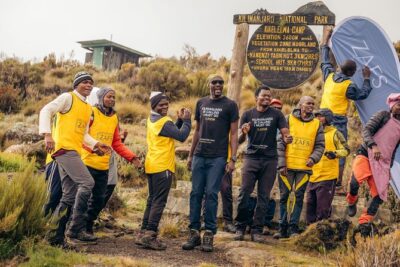
You start at 9:00 a.m. from Shah Tours in Moshi and finish back there on day eight. The route is non-technical, but you must be ready for loose volcanic rock, cold nights, wet forest trails, long walking days, and an 18-hour summit day. The company receives a 4.9 rating from 15 posted ratings, with 100 percent recommending it. The most praised parts are the guides, careful support, food, and friendly crew. Guides named in the feedback include Mathayo Sanka, Calvin Shayo, Hamza, Isaac, David, and John.
In This Review
- Key Points At A Glance
- Why Lemosho Is A Smart Eight-Day Route
- Day 1: Moshi To The Lemosho Rainforest
- Day 2: Leaving The Trees For Shira Ridge
- Day 3: Across The Shira Plateau
- Day 4: Lava Tower And The Descent To Barranco
- Day 5: Scrambling Up Barranco Wall
- Day 6: Short Walk To High Camp
- Day 7: Stella Point, Uhuru Peak, And The Long Descent
- Day 8: Rainforest Descent And Return To Moshi
- What The $3,125 Price Really Covers
- Food, Tents, And The Human Side Of The Climb
- Who Should Book This Climb?
- Should You Book The 8-Day Lemosho Route?
- FAQ
- Where does the Kilimanjaro climb start?
- How long is the Lemosho climb?
- Is technical climbing experience required?
- How high is Uhuru Peak?
- How high is Lava Tower?
- Are meals included?
- Is drinking water included?
- Is accommodation in Moshi included?
- What safety support is included?
Key Points At A Glance
- A quieter western approach: Lemosho begins far from the busiest southern trailheads, giving you a more peaceful start through forest and moorland.
- Eight days helps with altitude: The route crosses the Shira Plateau, climbs to 4,630 meters at Lava Tower, then descends before moving higher.
- Barranco Wall adds a little adventure: You scramble with hands and feet, but no technical climbing gear or previous climbing experience is required.
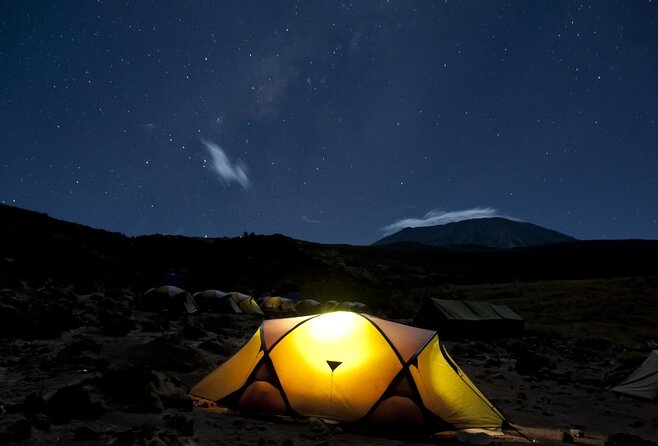
- A full-service mountain camp: Porters, a cook, waiter, tent crew, dining tent, tables, chairs, mattress, meals, and boiled water are included.
- Health support is built in: Guides perform health checks twice daily using a medical oximeter, with first aid and emergency oxygen carried for the group.
- The price is substantial but broad: At $3,125 per person, many unavoidable Kilimanjaro costs are bundled together, though equipment, tips, insurance, visas, and lodging are extra.
Why Lemosho Is A Smart Eight-Day Route
Kilimanjaro is a high mountain, but you reach the summit without ropes, crampons, or a technical climbing course. The challenge is altitude, endurance, weather, and the summit night schedule. That makes your route choice important.
Lemosho is appealing because it starts on the western side of the mountain and gives you time to move through several climate zones. You begin in thick rainforest, pass into heather and moorland, cross the Shira Plateau, enter alpine desert, and finish in the arctic zone near Uhuru Peak.
The eight-day format is particularly useful. You spend more time adjusting to altitude than you would on a shorter itinerary, and day four deliberately takes you high to Lava Tower before bringing you down to Barranco Camp. That climb high, sleep lower pattern is a central part of the route’s value.
This is a private activity, so only your group participates. That can make the pace and support feel more personal, though the supplied details do not specify a maximum group size. Group discounts are offered, so larger private parties should ask for the current rate before booking.
More Lemosho Route climbs:
- Kilimanjaro climb by Lemosho Route (7-day)
★ 5.0 · 651 reviews - Kilimanjaro Climbing Lemosho Route 8 Days.
★ 5.0 · 186 reviews - Kilimanjaro climb, Lemosho Route (8-day)
★ 5.0 · 148 reviews
Day 1: Moshi To The Lemosho Rainforest
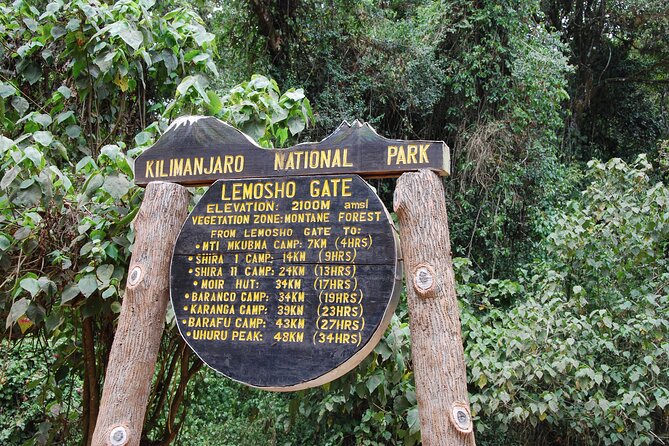
Your vehicle leaves Moshi at about 9:00 a.m. for Lemosho Gate. After registration, a 4×4 continues along the rough track to the trailhead. That remote access is one reason this route feels less crowded at the beginning.
The first trek takes about four hours through Kilimanjaro’s rainforest zone. Expect thick vegetation, varied plant life, and the possibility of afternoon rain. The path may become slippery, so shoes with good grip are more important here than a heroic-looking pair of boots.
You finish at the first camp after a relatively short walking day. The early start and limited distance help you settle into the rhythm of walking, eating, resting, and sleeping in a tent. Water is not included on the first day, so you need to clarify how much you should carry before leaving Moshi. Boiled drinking water is provided from the first camp onward.
Day 2: Leaving The Trees For Shira Ridge
The forest does not last long on day two. You climb on a steeper path as the vegetation thins and the heather and moorland zone takes over. This change is striking because the mountain opens up quickly once the trees fall behind.
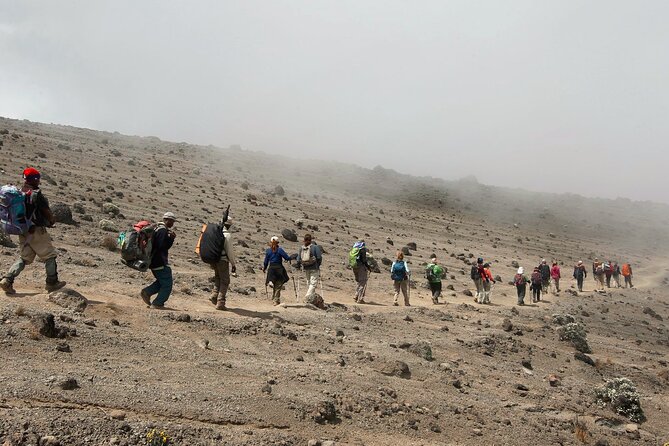
The day covers about five hours and follows Shira Ridge. You get views toward Shira Peak, one of Kilimanjaro’s three volcanic cones. Its eroded, jagged form gives this part of the trek a more dramatic character than the rounded forest trails below.
This is a good day to settle into the guides’ preferred pace. Kilimanjaro rewards patience. If you feel strong, it can be tempting to walk quickly here, but conserving energy matters more than arriving early.
Day 3: Across The Shira Plateau
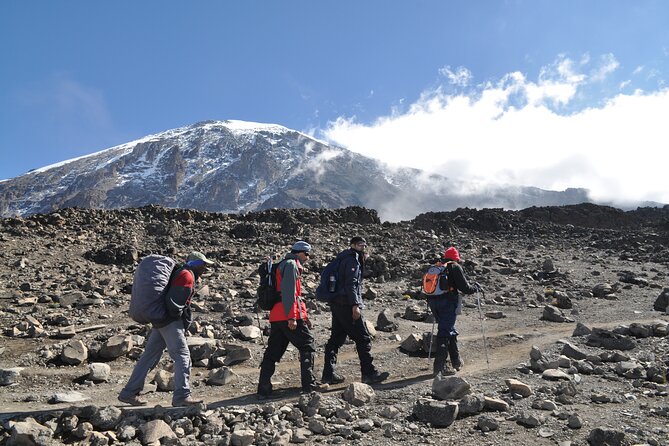
Day three is another five-hour walk across the Shira Plateau. The route continues through heather and moorland, with a gradual approach toward Shira Two Camp.
An optional hike to Shira Cathedral reaches about 3,880 meters. This extra outing gives you another chance to walk high without making the main day excessively long. Since it is optional, you can decide based on your energy and how your body is responding.
The views toward Kibo are the main reward. Kibo is the highest of Kilimanjaro’s volcanic cones and your final destination. Seeing it from the west gives the climb a strong sense of direction. You are not simply walking uphill. You are circling a huge volcanic mountain and watching the summit cone grow closer.
The plateau can feel exposed compared with the forest. Weather may change quickly, and the open ground offers less shelter. Keep your rain layer and warm clothing easy to reach rather than buried at the bottom of your bag.
A few more options to weigh up in Moshi
- Safari Serengeti And Ngorongoro
★ 5.0 · 288 reviews - Kilimanjaro climb, Machame Route (7-day)
★ 5.0 · 262 reviews - Climbing Kilimanjaro – Machame Route
★ 5.0 · 170 reviews - Climbing Kilimanjaro through 7 days Machame Route
★ 5.0 · 151 reviews
Day 4: Lava Tower And The Descent To Barranco
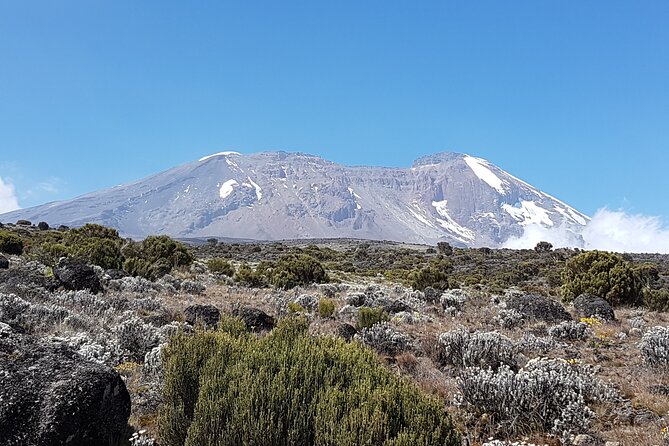
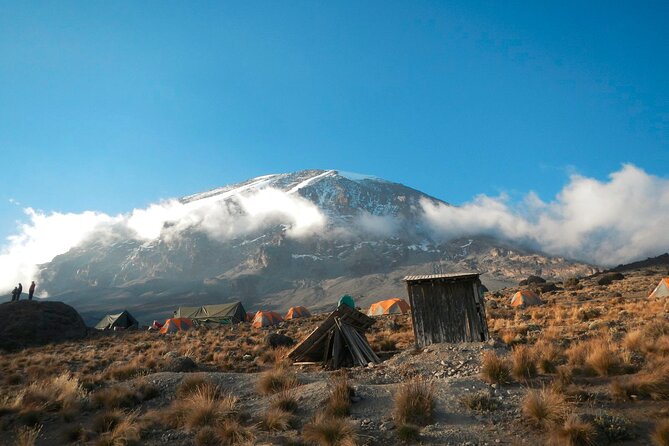
Day four is the route’s key acclimatization day. You climb steadily toward Kibo, crossing alpine desert and reaching Lava Tower at 4,630 meters, or 15,190 feet. The walking time is about eight hours, making this one of the more demanding days before the summit.
Lava Tower is useful for two reasons. It gives you a real test of how your body handles altitude, and it follows the climb high, descend lower pattern that helps prepare you for later stages. You do not sleep at the highest point of the day. Instead, you descend counterclockwise around Kibo toward Barranco Valley.
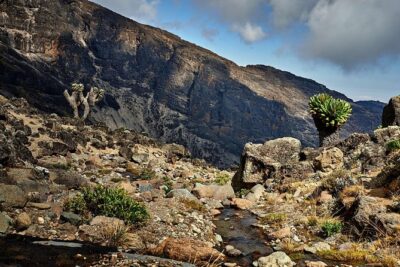
The descent brings a welcome change in scenery. Large Kilimanjaro senecios, unusual flowering plants found on the mountain, appear around the valley. You finish close to the elevation where you began, despite having climbed much higher earlier.
Do not judge your summit chances only by how you feel at Lava Tower. Some people have a difficult hour at altitude and improve after descending. Others feel fine at first and struggle later. The included twice-daily health checks, first aid kit, and emergency oxygen offer useful safeguards, but they do not remove the need to report symptoms honestly.
Day 5: Scrambling Up Barranco Wall
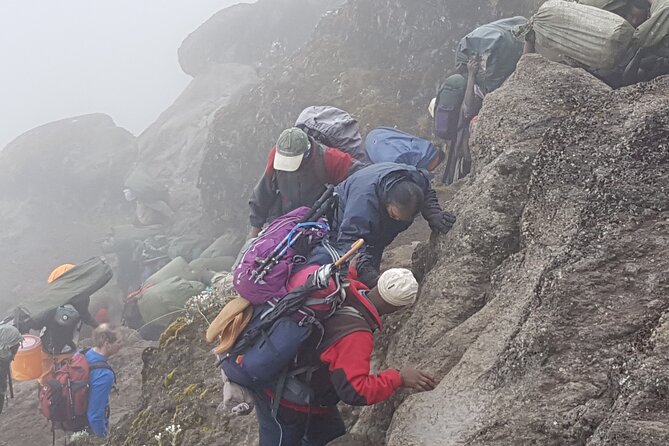
Barranco Wall is the most playful section of the route. You leave camp and climb a non-technical scramble using your hands and feet. No special equipment or previous climbing experience is required, but you should expect close attention to foot placement and a slower pace in places.
The reward is a view back toward camp and the Heim Glacier on Kibo. This is the moment when the route feels most like mountain climbing, even though it remains within the ability of fit beginners who follow the guides carefully.
After the wall, the trail winds through alpine desert toward Karanga Valley. You descend into the valley, then climb again to camp. The walking time is about five hours.
Karanga is the last water point on the route. That detail matters. From here onward, the support team must manage water carefully, and you should not assume you can refill whenever you wish. Ask your guide about your daily supply and keep your bottles or soft containers ready.
Day 6: Short Walk To High Camp
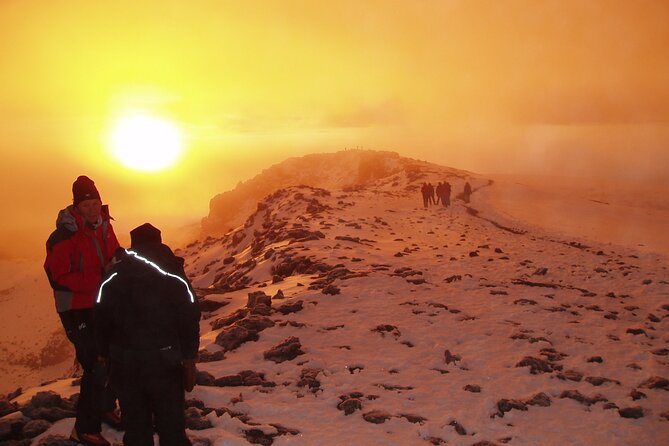
Day six is intentionally short, about four hours. The trail climbs gradually through an empty alpine desert toward Kibo Camp. The path is not extremely steep, but the slow pace remains important because you are now spending more time at altitude.
Mawenzi Peak may appear to the east, adding another memorable view of Kilimanjaro’s volcanic structure. The short distance gives you time to rest at camp and prepare for the summit attempt, which begins around midnight.
This afternoon is not wasted time. Eat, drink what you can, organize your clothing, and rest. Your sleeping bag, headlamp, warm layers, gloves, snacks, and water should be ready before dinner. A midnight start can make small packing mistakes surprisingly annoying.
Day 7: Stella Point, Uhuru Peak, And The Long Descent
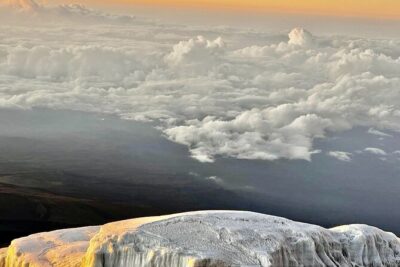
Summit day is the toughest part of the climb. You begin around 12:00 a.m. and walk into the cold darkness of the arctic zone. The trail rises over loose volcanic scree, and the slow zigzag toward Stella Point at 5,685 meters, or 18,650 feet, can feel endless.
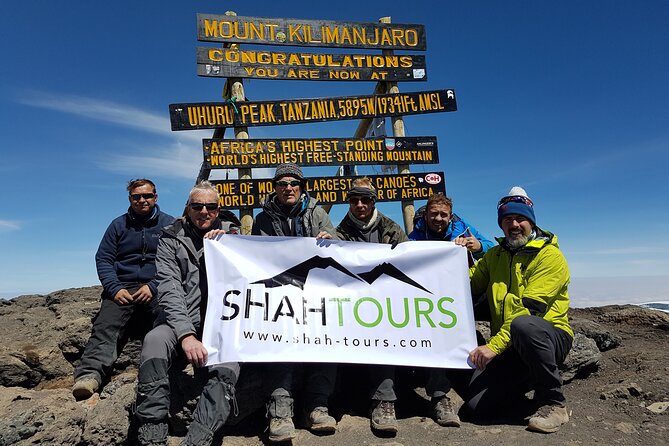
You then follow the crater rim for the final difficult section to Uhuru Peak at 5,895 meters, or 19,341 feet. This is the highest point in Africa. The extreme altitude means you normally spend only a short time at the summit before beginning the descent.
After returning to base camp, you have breakfast or brunch and pack your gear. The day continues downward through alpine desert. The full schedule can reach about 18 hours, so this is not a normal hiking day with a relaxed finish.
The most useful guide qualities here are calm judgment, patience, and close attention to each climber. Several names receive especially strong praise in the supplied feedback, including Mathayo Sanka and Calvin Shayo, along with Hamza, Isaac, David, and John. The company’s listed twice-daily checks are a good sign, but summit success should never come before safety.
Day 8: Rainforest Descent And Return To Moshi
The final day is a four-hour descent through the southern rainforest to Mweka Gate. After the open, dry upper mountain, the return to thicker vegetation feels like a rapid change of world.
A vehicle waits at Mweka Gate to take you back to Moshi. The crew generally leaves from the gate for home, so this is the natural point to thank the people who carried equipment, prepared food, managed camp, and guided you through the climb.
The activity ends back at the Shah Tours meeting point on 6 Sekou Toure Way in Moshi. Accommodation before or after the trek is not included, so plan those nights separately.
What The $3,125 Price Really Covers
At $3,125 per person, this is not a budget walk. It is also more than a simple guide fee. The price includes national park conservation, entry, camping, rescue fees, taxes, and VAT. Those charges form a large part of the unavoidable cost of climbing Kilimanjaro.
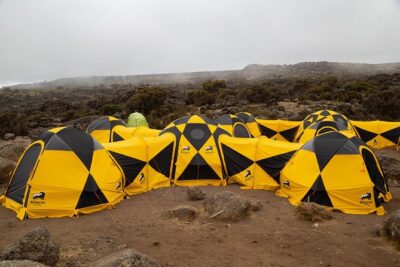
You also receive English-speaking mountain guides, porters carrying up to 15 kilograms of personal luggage per person, a cook and waiter, a tent crew, meals, eating utensils, a dining tent, tables, chairs, a basic foam mattress, and a four-season tent.
The practical support is strong. Boiled drinking water is provided from the first camp, and a hand-washing station plus a small personal wash basin are available at campsites. Shared public toilets are included, but private portable toilets and other comfort upgrades cost extra.
Safety-related inclusions include a first aid kit, one emergency oxygen cylinder per five passengers, and twice-daily health checks using a medical oximeter. This does not replace travel insurance or medical preparation, but it is meaningful support on a high-altitude route.
You still need to budget for tips, personal mountain equipment, sleeping bag, walking poles, duffel bag, insurance, visa, international flights, drinks, and personal purchases. Pre-climb and post-climb accommodation are also separate. Soft plastic water containers are required because metal and hard plastic bottles are not included and are not permitted on the mountain.
Food, Tents, And The Human Side Of The Climb
Food can make or break a multi-day trek. The included cook prepares breakfast, lunch, and dinner for all seven nights on the mountain, with bowls, cups, cutlery, and other eating utensils supplied. Specific menus are not provided, so ask about dietary needs before you arrive.
The strongest praise is directed at the crew. The names vary by departure, but the repeated pattern is clear: guides are described as patient, reassuring, attentive, and encouraging, while the porters and chef are credited with making camp life comfortable.
That people-first element matters. The mountain is physically demanding, but the daily routine is also social. You eat in a dining tent, return to an organized camp, and rely on a large team for water, food, luggage, and shelter. The inclusion of Kilimanjaro Porters Assistance Project monitoring is another positive point because it addresses fair treatment standards for porters.
You should still ask how tipping is handled and what the suggested amount is. Tips are not included, and the crew’s work is a major part of what makes the trip possible.
Who Should Book This Climb?
I would recommend this route to a fit first-time climber who wants scenery, a quieter start, and more time for altitude adjustment. You do not need technical climbing experience, and the Barranco Wall does not require advanced equipment.
It suits people who can commit to long walking days and accept basic camping. You should be comfortable with cold, wet weather, shared campsite toilets, and a very early summit start.
This is not recommended for anyone with lung problems or known altitude-related medical conditions. You should also have a strong physical fitness level and obtain suitable travel insurance. The route is private, but that does not make it easy. Your group still faces the same altitude and weather.
Free cancellation is available if you cancel at least 24 hours before the 9:00 a.m. start time. Changes or cancellations made later are not accepted for a refund, so check your plans and insurance carefully.
Should You Book The 8-Day Lemosho Route?
Book it if you want a scenic western approach, a serious acclimatization plan, and broad support from a full mountain crew. The eight days are worth considering because the route gives you time to cross the Shira Plateau, climb high at Lava Tower, and rest before the summit attempt.
The $3,125 price offers solid value when you count the park fees, rescue charges, food, porters, tents, guides, water, health checks, and transport. It is less attractive if you need a private toilet, upgraded camping, extra porters, or a large amount of rental gear, since those cost more.
My practical advice is to confirm the exact inclusions for your departure, ask about equipment rental and tipping, and prepare seriously for summit night. If you accept the discomfort and respect the altitude, this Lemosho climb offers one of the more scenic and carefully paced ways to reach Uhuru Peak.
FAQ
Where does the Kilimanjaro climb start?
The activity starts at Shah Tours, 6 Sekou Toure Way, Moshi, Tanzania. Pickup is offered, and the listed start time is 9:00 a.m.
How long is the Lemosho climb?
The climb lasts approximately eight days, including the transfer from Moshi to Lemosho Gate and the final return from Mweka Gate.
Is technical climbing experience required?
No. The route is described as non-technical, and the Barranco Wall requires a scramble using hands and feet without special equipment or previous climbing experience.
How high is Uhuru Peak?
Uhuru Peak is 5,895 meters, or 19,341 feet, above sea level.
How high is Lava Tower?
Lava Tower reaches 4,630 meters, or 15,190 feet. The route climbs there on day four for acclimatization before descending toward Barranco Valley.
Are meals included?
Yes. Breakfast, lunch, and dinner are included for all seven nights on the mountain. Eating utensils, cutlery, bowls, and cups are also supplied.
Is drinking water included?
Boiled drinking water is included from the first camp onward. Water on the first day is not included.
Is accommodation in Moshi included?
No. Pre-climb and post-climb accommodation in Moshi are not included. Luggage storage while you are on the trek is included.
What safety support is included?
The climb includes trained guides, a first aid kit, one emergency oxygen cylinder per five passengers, and twice-daily health checks with a high-grade medical oximeter. Insurance and Flying Doctors Emergency Evacuation membership are not included.
Just added in Moshi
- 8 days Lemosho route Climbing Mt. Kilimanjaro★ 5.0 · 13 reviews
- 9 Days 8 Nights Walking Safari★ 5.0 · 11 reviews
- 8 Days Private Safari in Serengeti Tour★ 5.0 · 6 reviews
- 8 Days Lemosho Route★ 5.0 · 7 reviews
- 8 Days Lemosho Route Climbing★ 5.0 · 5 reviews
- 8 Days Guided Private Trekking in Mount Kilimanjaro★ 5.0 · 4 reviews
- 7 Days Kilimanjaro Climbing | Hiking Tour via the Lemosho Route★ 5.0 · 9 reviews
- 8 Days Kilimanjaro Climbing Lemosho Route★ 5.0 · 6 reviews
Lemosho Route Climbs, compared.
8-Day Small-group Lemosho Kilimanjaro Summit Trekking
Read our review →
Climbing Kilimanjaro through 8 days Lemosho Route
Read our review →Browse the lists this tour appears in