
Reviewed · LEMOSHO ROUTE CLIMBS
8 days Lemosho route Climbing Mt. Kilimanjaro
The mountain saves its hardest test for midnight. Kilisa Tours’ 8-day Lemosho route gives you a gradual approach to Mount Kilimanjaro, with forest, moorland, alpine desert, glacier views, and a sunrise summit attempt. At $3,100 per person, the package includes park fees, camping, transport, meals, guides, porters, rescue fees, and two nights in Moshi.
I like the extra acclimatization day around Moir Hut and Lava Tower, and I like that airport transfers, filtered water, oxygen, and a first-aid kit are included. The main drawback is the physical demand: summit day can mean about eight hours to Uhuru Peak followed by seven or eight hours down to Mweka Camp.
I also like the strong local support reported by past clients, including praise for the planning help from Naick and the mountain teams led by guides such as Goodluck and Abraham. Still, you should confirm your exact crew, tipping expectations, equipment details, and hotel name before paying.
In This Review
- Key points to know before choosing Lemosho
- What the $3,100 price really covers
- Day 1: Moshi to Lemosho Gate and the rainforest
- Day 2: Shira Ridge and the first big views
- Day 3: Shira 2, Moir Hut, and useful altitude practice
- Day 4: Lava Tower, Arrow Glacier junction, and Barranco
- Day 5: The Barranco Wall and Karanga Valley
- Day 6: Barafu Camp and the long wait for midnight
- Day 7: Stella Point, Uhuru Peak, and Mweka Camp
- Day 8: Mweka Gate, certificates, and back to Moshi
- Safety, support, and the human side of the climb
- Food, water, tents, and daily comfort
- Who should choose this 8-day route?
- Booking details and cancellation terms
- Should you book Kilisa’s Lemosho climb?
- FAQ
- Where does the climb start and finish?
- How long is the Kilimanjaro climb?
- What is the highest point reached?
- Are meals included?
- Is drinking water provided?
- What is not included in the price?
- What happens if bad weather cancels the climb?
Key points to know before choosing Lemosho
- Lemosho starts in quiet rainforest: The first two days offer a less abrupt introduction to the mountain than routes that begin higher and faster.
- Moir Hut adds useful acclimatization: Day three is long, but walks around Lent Hills help prepare you for altitude.
- Lava Tower is the key altitude lesson: You climb to about 16,000 feet before sleeping lower at Barranco Camp.
- The summit attempt begins around 11:30 p.m.: Expect cold, darkness, scree, and a long descent after sunrise.
- The package covers the costly essentials: Park entry, camping, rescue fees, porters, meals, water, tents, and Moshi accommodation are included.
- The group limit is 15 people: That is small enough for a more personal trip, though the actual group size should be confirmed.
What the $3,100 price really covers
A Kilimanjaro price can look high until you separate the mountain costs from the company fee. Here, $3,100 includes transport from Kilimanjaro International Airport to your Moshi accommodation and back, two nights of accommodation in Moshi, transport to and from the park gate, park entry fees, camping fees, government taxes, and 18 percent VAT.
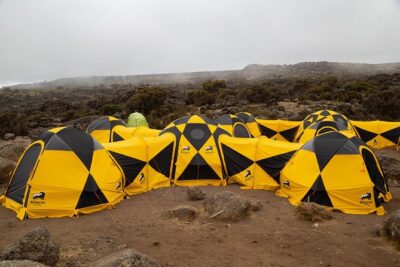
On the mountain, you get a professional guide team, cook, and porters. The package also includes three hot meals each day, treated and filtered drinking water, hot water for washing, sleeping mats, four-season tents, rescue fees, portable oxygen tanks, an oximeter, and an emergency first-aid kit.
That is a useful package for a first Kilimanjaro climb. Park and camping charges alone make up a significant part of the cost, while the porters, cooks, vehicles, and safety gear are easy to underestimate when comparing prices.
The exclusions matter. Flights, travel insurance, and tips are not included. Tipping is not compulsory according to the company response, but it is deeply expected within the mountain-guiding culture. Ask for current tipping guidance before departure so the final cost does not catch you off guard.
More Lemosho Route climbs:
- Kilimanjaro climb by Lemosho Route (7-day)
★ 5.0 · 651 reviews - Kilimanjaro Climbing Lemosho Route 8 Days.
★ 5.0 · 186 reviews - Kilimanjaro climb, Lemosho Route (8-day)
★ 5.0 · 148 reviews
Day 1: Moshi to Lemosho Gate and the rainforest
The day begins with breakfast at your hotel and a guide briefing. Departure is scheduled for 8:30 a.m., followed by a drive from Moshi to Londorossi Park Gate at about 2,100 meters.
At the gate, you complete park entry formalities in the nearby village. Then you continue by vehicle for about another hour to the Lemosho trailhead. This transfer takes time, but it puts you on a quieter western approach to Kilimanjaro.
After lunch at the trailhead, you walk about six kilometers through undisturbed rainforest. The stated hiking time is three to four hours, and the camp habitat is forest. This is a sensible opening day: the route is not yet a brutal altitude test, but you begin building a steady walking rhythm.
Your first camp comes after the trail winds through dense vegetation. Rainforest can mean damp conditions, so keep rain gear handy and protect spare clothing inside waterproof bags. The day includes breakfast, lunch, and dinner.
Day 2: Shira Ridge and the first big views
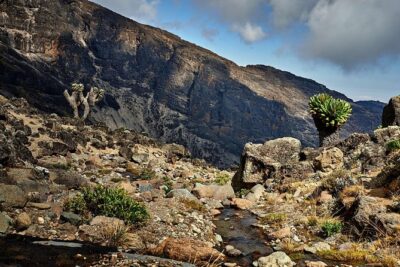
Day two covers about eight kilometers in roughly five and a half hours. You leave the forest and enter moorland, where tall grasses, heather, volcanic rock, and lichen replace the trees.
The route climbs through rolling ground and crosses several streams before reaching Shira Ridge. From there, you drop gently toward Shira 1 Camp. The change in scenery is one of the pleasures of Lemosho. You begin to see the mountain as a broad volcanic massif rather than a distant peak hidden behind trees.
The view of Kibo across the Shira Plateau is a major reward. Kibo is the summit cone containing Uhuru Peak, and seeing it from across this high plateau gives you a clear sense of the distance still ahead.
The day is moderate by Kilimanjaro standards, but you are already sleeping at altitude. Move slowly, drink the provided water regularly, and report headaches, nausea, unusual tiredness, or dizziness to your guide early.
Day 3: Shira 2, Moir Hut, and useful altitude practice
Day three is the longest approach day before the summit sequence. You walk approximately 15 kilometers over five to seven hours through moorland.
The route crosses Shira’s high plateau toward Kibo and continues to Shira 2 Camp, set on moorland meadows beside a stream. You then continue to Moir Hut, a lightly used camp below Lent Hills.
This day gives the itinerary real value. The schedule includes walks around Lent Hills, making it an acclimatization opportunity rather than just a transfer from one camp to another. You gain altitude, spend time at elevation, and then prepare for the more demanding route ahead.
The Shira Plateau is described as one of the highest plateaus on Earth. That is not just a line for the brochure. It means the air may feel thin even when the walking trail appears gentle. The distance is substantial, so this day can feel tiring if you rush the early sections.
A few more options to weigh up in Moshi
- Safari Serengeti And Ngorongoro
★ 5.0 · 288 reviews - Kilimanjaro climb, Machame Route (7-day)
★ 5.0 · 262 reviews - Climbing Kilimanjaro – Machame Route
★ 5.0 · 170 reviews - Climbing Kilimanjaro through 7 days Machame Route
★ 5.0 · 151 reviews
Day 4: Lava Tower, Arrow Glacier junction, and Barranco
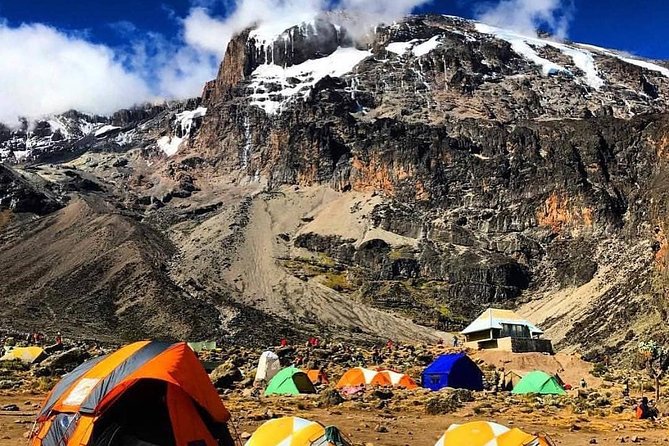
Day four is a carefully designed altitude day. You hike about seven kilometers for roughly seven hours, moving through semi-desert terrain.
From Moir Hut, the trail climbs east along a ridge. You pass a junction leading toward Kibo, then turn southeast toward Lava Tower, also called the Shark’s Tooth. Shortly after the tower, another junction leads toward Arrow Glacier at approximately 16,000 feet.
You do not sleep at that height. Instead, the route descends to Barranco Camp at around 13,000 feet. This is the classic high-climb, low-sleep pattern that helps your body adjust. You finish the day at roughly the same elevation where you began, but the climb to Lava Tower gives you valuable time at a much higher altitude.
The semi-desert setting is stark and exposed compared with the rainforest below. You should expect a demanding day even though the distance is not huge. Altitude, not mileage, is the main issue.
At Barranco, you eat dinner and sleep before the next day’s short but memorable climb.
Day 5: The Barranco Wall and Karanga Valley
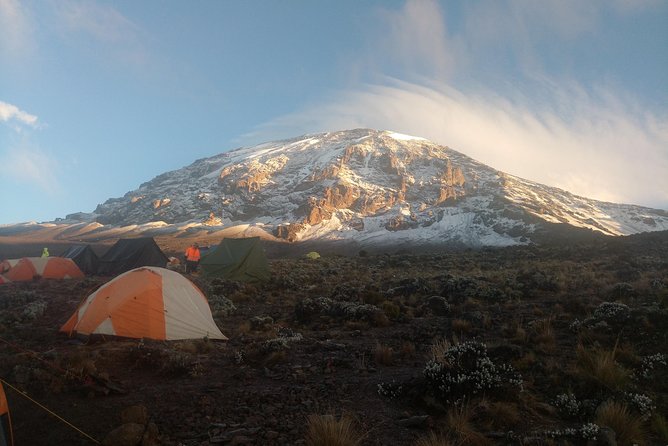
Day five covers only about five kilometers in four to five hours, but it begins with one of the route’s most recognizable obstacles: the Great Barranco Wall.
From below, the wall can look intimidating. The route is described as a Class 2 hike and is usually easier than it first appears, though you still need to use your hands at points and follow your guide’s instructions. This is not a technical rock climb, but it is a steep, uneven mountain section where balance matters.
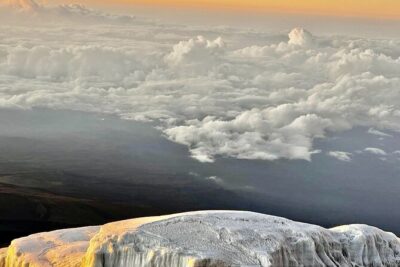
At the top, you get views of the Heim Glacier and a striking position above the clouds. The route then rises and falls through the Karanga Valley before reaching Karanga Camp at about 3,950 meters.
This short day is important because it gives you time to adjust before the final ascent. You also get a chance to wash with hot water at camp, a small comfort that feels significant after several nights outside.
Day 6: Barafu Camp and the long wait for midnight
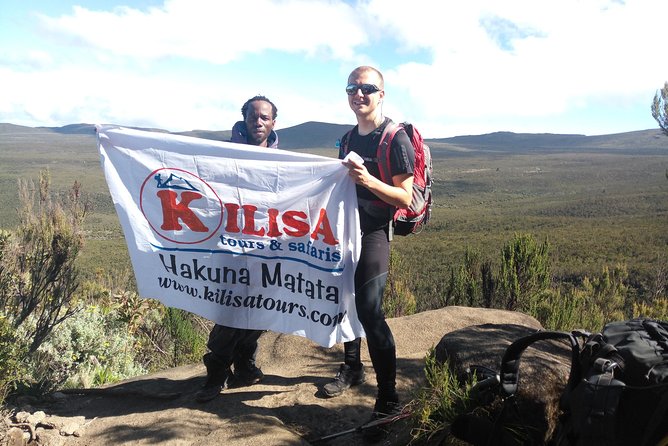
Day six is short on paper, just four kilometers in three to four hours, but it sets up the hardest night. You climb through alpine desert toward Barafu Camp at about 4,550 meters.
The trail intersects with the Mweka Route, which you use for the descent. After about an hour beyond that junction, you reach Barafu Hut. This is the last water stop for the porters, since accessible water is not available at Barafu Camp.
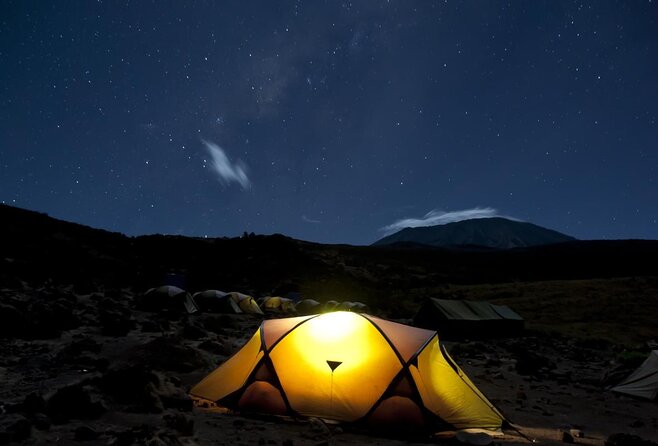
Barafu means ice in Swahili. The camp sits on an exposed, rocky ridge, so wind and rough ground are part of the experience. Arrive with enough daylight to understand where your tent, eating area, and route out of camp are located.
Dinner comes early. Your guide gives a detailed briefing for the summit attempt, and you are expected to sleep by about 7 p.m. That sounds early because it is. You will be woken around 11:30 p.m. for tea and biscuits.
Pack your summit clothing and headlamp before bed. The less you have to organize at midnight, the better.
Day 7: Stella Point, Uhuru Peak, and Mweka Camp
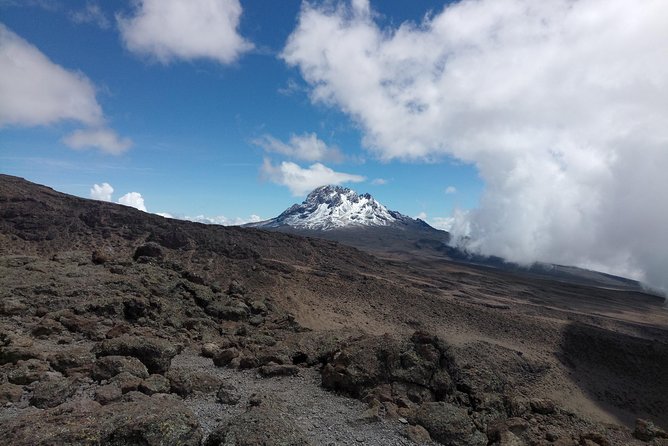
Summit day is the emotional and physical center of the trip. You begin around 11:30 p.m., climb in darkness, and move northwest over stone scree.
The ascent to Stella Point at 5,685 meters takes about six hours. This is often the toughest section mentally. The slope feels relentless, the air is thin, and the night makes it hard to judge how far you have left.
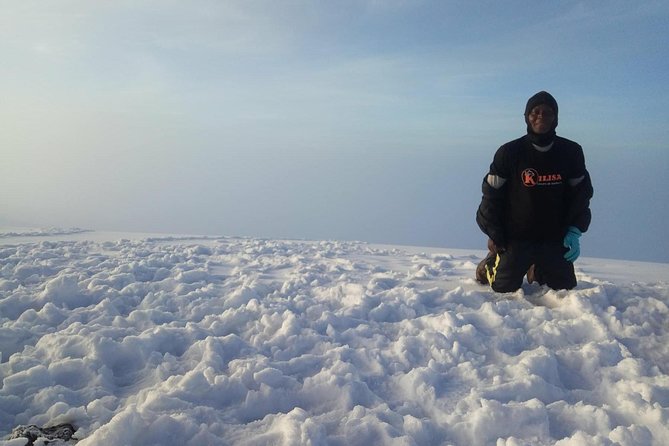
At Stella Point, you reach the crater rim and can watch the sunrise. You then continue for about two hours over a snow-covered trail to Uhuru Peak at 5,895 meters, the highest point in Africa.
The final distance is listed as approximately seven kilometers uphill, followed by about 23 kilometers down. After celebrating at the summit, you descend toward Barafu for a rest and lunch, then continue to Mweka Camp. The full day includes around eight hours to the summit and another seven to eight hours of descent.
That schedule is the biggest caution in the program. Reaching Uhuru Peak is a major achievement, but the descent is not an easy afterthought. Your knees and feet may be tired, and scree can make downhill walking slow. Keep your pace controlled and listen closely to your guide.
The itinerary lists breakfast, lunch, and dinner on this day. It is worth confirming the exact meal timing during your briefing because summit days often require food to be carried and eaten at unusual hours.
Day 8: Mweka Gate, certificates, and back to Moshi
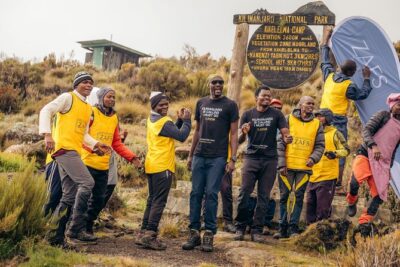
After breakfast, the mountain team holds a celebration with dancing and singing. This is also when you present tips to the guides, assistant guides, cook, and porters.
You then descend through forest for about three hours and 15 kilometers to Mweka Gate. The park requires every climber to sign out before receiving a completion certificate. Reaching Stella Point earns a green certificate, while reaching Uhuru Peak earns a gold certificate.
The route continues from the gate to Mweka village, about one hour and three kilometers away. A hot lunch is served there before the drive back to Moshi, where you can take a long-awaited shower and continue the celebrations.
The final day is practical as well as ceremonial. It gives you a clear handoff from the mountain to town, and the included transport means you do not need to arrange your own way back after a very long week.
Safety, support, and the human side of the climb
Kilisa includes rescue fees, portable oxygen tanks, an oximeter, and an emergency first-aid kit. Those items do not remove the risks of altitude, but they show that the company has built basic mountain safety into the price.
The guide team is especially important. Naick has been praised for clear communication and for helping with changes caused by delayed or canceled flights. Past groups also specifically highlighted guides Goodluck and Abraham, along with friendly cooks and porters. Names and crews can change, so ask who will lead your departure.
The group maximum is 15 people. A smaller group can make briefings and pacing easier, though a full group of 15 will feel different from a private climb for two or three people.
Do not treat the included oxygen as a safety net that lets you ignore symptoms. Altitude illness can become serious. You need strong physical fitness, and you should tell the guide promptly if you feel unwell.
Food, water, tents, and daily comfort
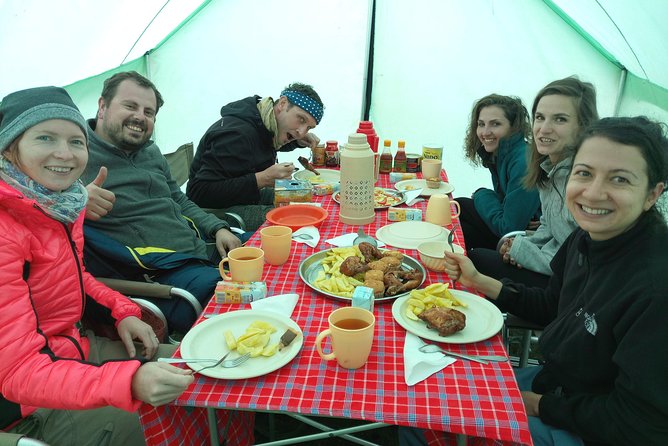
Three hot meals are included each day on the mountain, along with treated and filtered drinking water. That matters because carrying enough safe water for eight days would add weight and planning work.
Hot water for washing is also included. Do not expect hotel comfort, but this service can make a real difference after a muddy forest day or a cold night at altitude.
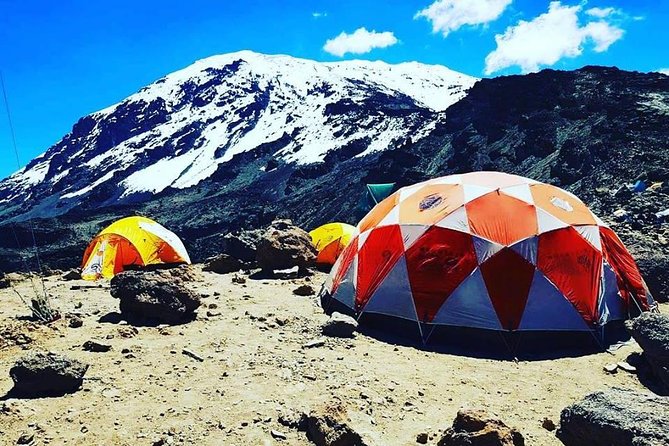
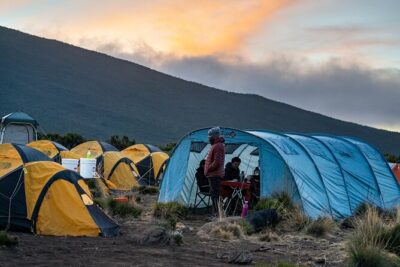
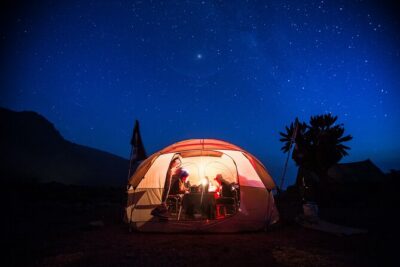
The package provides four-season mountain tents and sleeping mats. The itinerary warns that Barafu Camp is exposed to wind and rocks, so the campsite is not equally comfortable at every stop.
Moshi accommodation is included for two nights, but the specific hotel is not named in the information provided. Confirm where you will stay and whether the nights are before, after, or split around the trek.
Who should choose this 8-day route?
I would point fit hikers toward this route if they want a gradual western approach, varied scenery, and more acclimatization than a shorter itinerary allows. The extra day at Shira and Moir Hut, followed by the Lava Tower ascent and Barranco descent, gives your body more time to adjust.
This is not the right choice if you want a casual holiday with a mountain view. You need strong fitness, tolerance for camping, and willingness to walk slowly for many hours. Summit day is especially demanding.
The route may also suit families or mixed-age groups if everyone is properly prepared, but fitness levels must be discussed honestly. One past group included climbers aged 29 and 64, showing that age alone does not decide success. Fitness, pacing, preparation, and altitude response matter more.
Booking details and cancellation terms
Pickup is offered, and the meeting point is Moshi, Tanzania. The activity starts at about 8:30 a.m. on the first day and ends back at the meeting point after the return from the mountain.
Confirmation is provided at booking. The experience requires good weather, and if poor weather causes cancellation, you are offered another date or a full refund. You can cancel for a full refund up to 24 hours before the start time. Changes or cancellations made inside that window are not accepted or refunded.
The published rating is 5 out of 5 with a 100 percent recommendation from 13 ratings. The strongest praise centers on clear planning, airport pickup, flexible help with travel changes, good food, and supportive mountain staff. Those are meaningful strengths because a Kilimanjaro trip depends as much on organization as on scenery.
Should you book Kilisa’s Lemosho climb?
I would choose this trip if you want a full eight-day route with a strong acclimatization plan and a package that covers the major mountain expenses. The local company setup, airport transfers, rescue fees, hot meals, water, and porter team make the $3,100 price easier to justify.
Before booking, ask for the current equipment list, hotel details, group size, guide assignment, tipping guidance, and the exact plan for meals during summit night. If the answers are clear, this is a well-rounded option for a serious first climb.
Skip it if you are not ready for long days, basic camping, a midnight start, and a very long descent. Kilimanjaro rewards patience, preparation, and a slow pace. This itinerary gives you a fair chance, but the mountain still gets the final word.
FAQ
Where does the climb start and finish?
The trip starts in Moshi, Tanzania, with airport pickup available from Kilimanjaro International Airport. It finishes back at the Moshi meeting point after the descent and return drive.
How long is the Kilimanjaro climb?
The experience lasts approximately eight days. The route begins at Lemosho and finishes with the descent through Mweka.
What is the highest point reached?
The summit is Uhuru Peak at 5,895 meters. Climbers who reach Stella Point at 5,685 meters receive green certificates, while those who reach Uhuru Peak receive gold certificates.
Are meals included?
Yes. Breakfast, lunch, and dinner are included on the mountain. The package provides seven dinners, eight breakfasts, and seven lunches.
Is drinking water provided?
Yes. Treated and filtered drinking water is provided throughout the trek.
What is not included in the price?
Flights, travel insurance, and tips for guides, porters, and the cook are not included.
What happens if bad weather cancels the climb?
If poor weather causes the experience to be canceled, you can choose a different date or receive a full refund. You can also cancel at least 24 hours before the start time for a full refund.
Just added in Moshi
- 9 Days 8 Nights Walking Safari★ 5.0 · 11 reviews
- 8 Days Private Safari in Serengeti Tour★ 5.0 · 6 reviews
- 8 Days Guided Private Trekking in Mount Kilimanjaro★ 5.0 · 4 reviews
- 8 Days Lemosho Route★ 5.0 · 7 reviews
- 8 Days Lemosho Route Climbing★ 5.0 · 5 reviews
- 7 Days Kilimanjaro Climbing | Hiking Tour via the Lemosho Route★ 5.0 · 9 reviews
- 8 Days Kilimanjaro Climbing Lemosho Route★ 5.0 · 6 reviews
- 8 Days Climbing Of Mount Kilimanjaro Machame Route In Tanzania★ 5.0 · 1 review
Lemosho Route Climbs, compared.
8-Day Small-group Lemosho Kilimanjaro Summit Trekking
Read our review →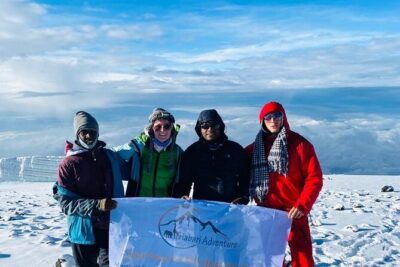
Climbing Kilimanjaro through 8 days Lemosho Route
Read our review →Browse the lists this tour appears in