
Reviewed · LEMOSHO ROUTE CLIMBS
A Definitive Guide For the 7-day Kilimanjaro’s Lemosho Route 2025
Kilimanjaro rewards patience more than speed. This seven-day climb follows the scenic Lemosho Route, giving you a longer approach, varied mountain habitats, and an extra day to adjust to altitude. I like the gradual route profile and the fact that camping equipment, meals, guides, and Moshi transfers are included. I also like the strong focus on crew support, with past climbers praising guides such as Edwin and Moodie, along with the cooks and porters.
The main caution is price clarity. The advertised cost is $1,250 per person, but Kilimanjaro park fees are not included and can be paid separately or through the operator. You must also arrange your flights, Moshi hotels, airport transfers, personal gear, and crew tips. Those extras can change the final cost considerably.
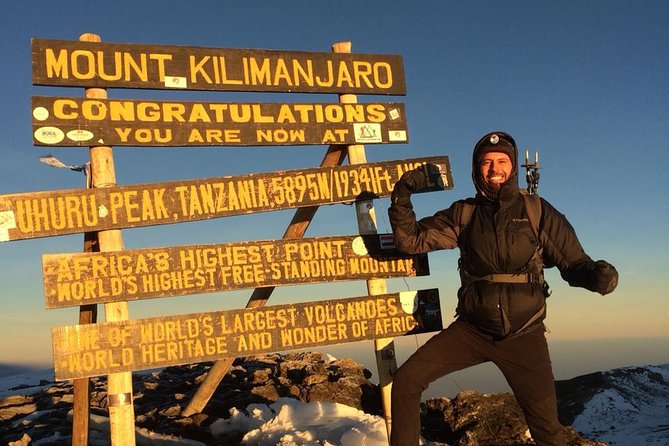
This is not a casual walk in the hills. You need moderate physical fitness, patience with long uphill days, and a sensible attitude toward altitude. The route reaches 19,345 feet at Uhuru Peak, and summit day combines a cold, demanding ascent with a long descent.
In This Review
- Key points to know before booking
- Why the Lemosho Route is worth seven days
- Day 1: Londorossi Gate to Forest Camp
- Day 2: Forest Camp to Shira Camp
- Day 3: Shira 1, Shira 2, and Moir Hut
- Day 4: Moir Hut to Lava Tower and Barranco Camp
- Day 5: Barranco to Karanga to Barafu Camp
- Day 6: Barafu Camp to Uhuru Peak and Mweka Hut
- Day 7: Mweka Camp to Moshi
- What the $1,250 price really covers
- Food, camping, and the human side of the climb
- The guides and support team
- Best time to climb and who should book
- Should you book the 7-day Lemosho Route?
- FAQ
- How long is the Kilimanjaro Lemosho Route experience?
- What is the highest point reached?
- Is pickup included?
- Are meals included?
- Is camping equipment provided?
- Are Kilimanjaro park fees included in the price?
- Are hotels in Moshi included?
- What level of fitness do I need?
- What is the cancellation policy?
Key points to know before booking
- Lemosho gives you a longer mountain approach: You begin at Londorossi Gate and cross forest, moorland, semi-desert, alpine desert, and Arctic terrain before the summit.
- Seven days helps with adjustment: The schedule includes an additional acclimatization day compared with shorter Kilimanjaro programs.
- The summit day is the real test: You climb from Barafu Camp to 19,345 feet, then descend all the way to Mweka Hut.
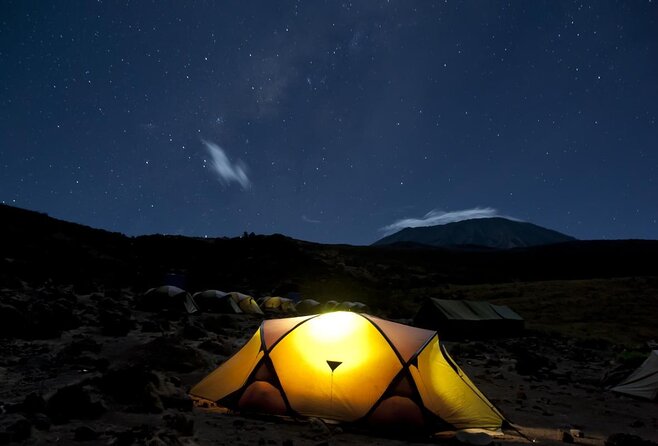
- Meals and basic camping gear are included: Tents, sleeping mattresses, breakfast, lunch, and dinner are part of the package.
- The guide and support team matter: Edwin, Moodie, cooks, porters, and other guides have received particular praise for encouragement and practical help.
- Park fees are separate: Confirm the complete price before paying, since park charges are not built into the advertised $1,250.
Why the Lemosho Route is worth seven days
Kilimanjaro is a single mountain, but the walk changes character almost every day. That is one of the pleasures of Lemosho. You start in rainforest, pass through moorland and high volcanic country, and finish in an Arctic zone near the summit.
The route is also longer than some faster Kilimanjaro options. That matters because the schedule is not simply adding miles for the sake of it. The extra time gives you more opportunity to adjust to thinner air before the summit attempt. The tour description specifically presents the seven-day plan as a way to improve summit chances and reduce the risk of altitude sickness.
That is useful, but it is not a guarantee. Altitude affects people differently, and a longer route does not remove the need to follow your guide’s instructions, walk steadily, and communicate if you feel unwell.
Lemosho is also attractive for its scenery. The route crosses the Shira Plateau from west to east before joining the Machame route farther along. The early section is generally less crowded than the later shared trail, though this is still a popular mountain route and the group may be large. The advertised maximum is 50 people, so ask how many climbers will actually be in your departure group.
More Lemosho Route climbs:
- Kilimanjaro climb by Lemosho Route (7-day)
★ 5.0 · 651 reviews - Kilimanjaro Climbing Lemosho Route 8 Days.
★ 5.0 · 186 reviews - Kilimanjaro climb, Lemosho Route (8-day)
★ 5.0 · 148 reviews
Day 1: Londorossi Gate to Forest Camp
The trip begins with pickup from your Moshi hotel and transport to Londorossi Gate. A briefing is included, and this is the point to make sure you understand the plan, meet your guide, and check that your equipment is ready.
From the gate, you walk about 6 kilometers to Forest Camp. The elevation rises from roughly 7,800 feet to 9,500 feet, with three to four hours of walking through rainforest.
This is a sensible first day. The distance is modest, but the humid forest gives you a gentle introduction to the rhythm of the trek. You will likely notice that the path feels very different from the dry, open country higher up.
Do not treat the short distance as a reason to rush. Use the first day to settle into a slow pace and learn how the guide manages breaks. A good beginning is especially valuable because the next days become longer and higher.
Day 2: Forest Camp to Shira Camp
The second day covers about 8 kilometers in five to six hours. You climb from 9,500 feet to 11,500 feet and leave the rainforest behind for moorland.
This is the first day when the altitude may feel more noticeable. The walking time is still manageable, but the terrain and thinner air begin to change how quickly you move. Your guide’s pacing becomes important here. The feedback about Edwin describes a demanding but steady pace, which is the right idea for a mountain climb, provided it suits the whole group.
Shira Camp marks a major change in scenery. You are no longer walking under dense forest cover. The open moorland offers broader views and a stronger sense that you are climbing a high volcanic mountain.
The practical drawback is that the route is now more exposed. Weather can feel less predictable as you gain height, so keep warm layers and rain protection easy to reach rather than buried in your pack.
Day 3: Shira 1, Shira 2, and Moir Hut
The supplied schedule labels the second day twice, but the following day is the third stage of the trip. It runs from Shira Camp 1 through Shira 2 to Moir Hut.
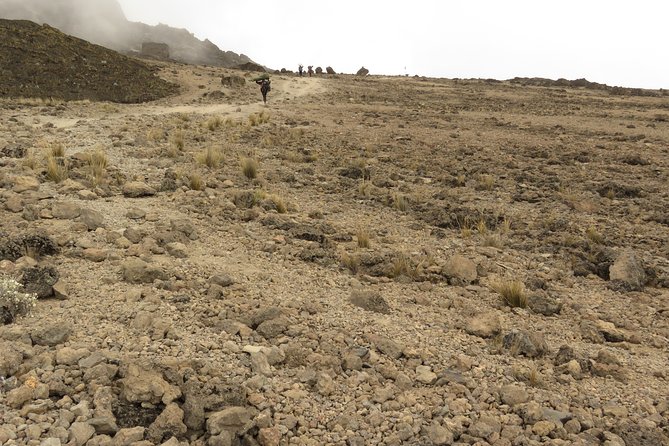
This is a long day: about 14 kilometers and five to seven hours of walking. Elevation rises from approximately 11,500 feet to 13,800 feet, still within moorland terrain.
The route across the Shira Plateau is one of the reasons to choose Lemosho. The walking profile is longer, but it gives you time at altitude before the summit push. You may find this day tiring because the combination of distance and elevation begins to add up.
Moir Hut is not a hotel stop. This is a high mountain camp area, and the included tents and sleeping mattresses are the basic comforts that make the night possible. Camping equipment is included, but personal hiking gear is not, so you need to arrive with suitable clothing, footwear, and other essentials.
A few more options to weigh up in Moshi
- Safari Serengeti And Ngorongoro
★ 5.0 · 288 reviews - Kilimanjaro climb, Machame Route (7-day)
★ 5.0 · 262 reviews - Climbing Kilimanjaro – Machame Route
★ 5.0 · 170 reviews - Climbing Kilimanjaro through 7 days Machame Route
★ 5.0 · 151 reviews
Day 4: Moir Hut to Lava Tower and Barranco Camp
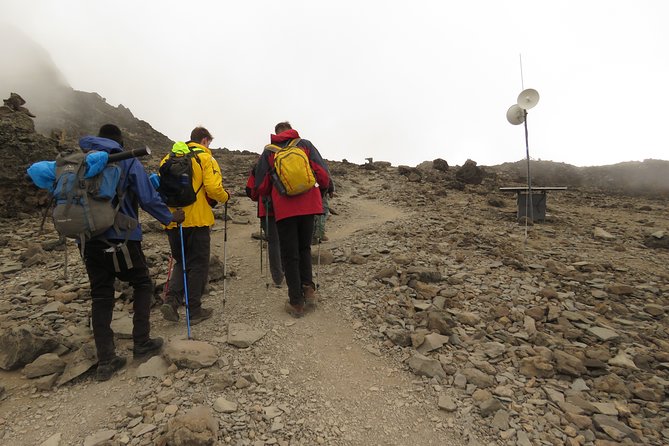
Day four is designed around the classic climb high, sleep lower pattern. You rise from about 13,800 feet to Lava Tower, then descend to Barranco Camp at roughly 13,000 feet.
The distance is only 7 kilometers, with four to six hours of walking, but the elevation makes this day important. The habitat shifts into semi-desert, with far less plant cover and a harsher high-mountain feel.
Lava Tower gives the route a useful altitude check before the final days. You are not yet at the summit, but your body is already being tested in thin air. The later descent to Barranco Camp is not wasted effort. It lets you spend the night lower than the highest point reached during the day.
Barranco is also a psychologically useful stop. By now you have completed forest and moorland walking and are moving through the upper mountain zone. The day is shorter than the stages around it, which gives you a chance to recover before the long climb to Barafu Camp.
Day 5: Barranco to Karanga to Barafu Camp
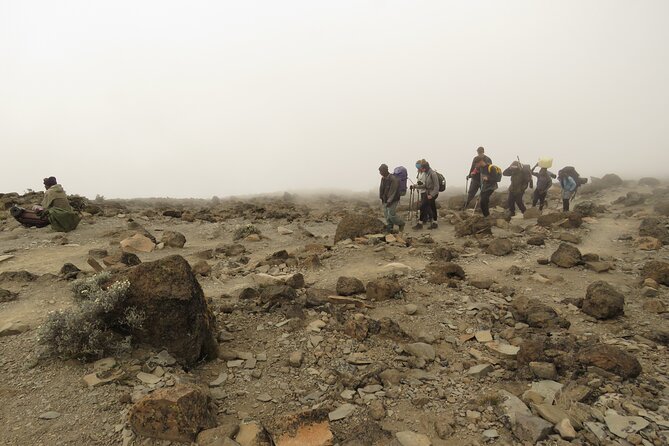
This is a serious day of uphill walking. You cover 9 kilometers in eight to ten hours, moving from Barranco Camp at about 13,000 feet through Karanga Camp to Barafu Camp at approximately 15,000 feet.
The habitat is alpine desert, and the air is thin. The distance does not look huge on paper, but eight to ten hours at this elevation can feel much longer than a similar walk at sea level.
Karanga is an important intermediate point. It breaks up the climb and gives the group a place to manage food, water, and rest before the final push to Barafu. Your guide and support crew become especially valuable here. The strongest praise for this operator centers on the kindness, encouragement, and practical support provided by the guides, porters, and cooks.
Barafu Camp is the staging point for the summit attempt. Expect a functional night rather than a restful one. The schedule places the summit effort on day six, so you need to protect your energy, organize your gear, and listen carefully to the briefing.
Day 6: Barafu Camp to Uhuru Peak and Mweka Hut
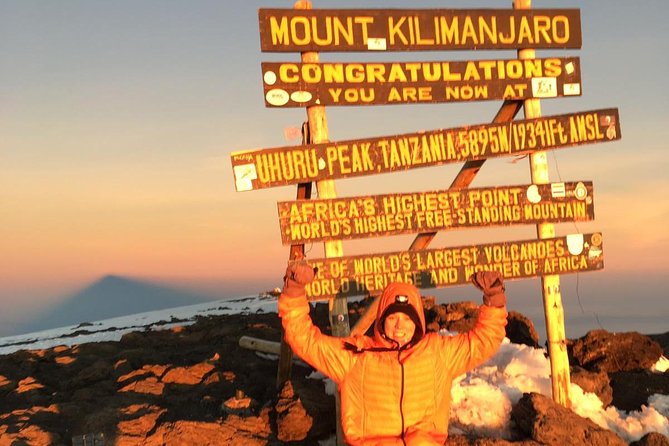
Summit day is the reason you are here, and it is also the hardest part of the itinerary. The published figures show a 5-kilometer ascent from about 15,300 feet to 19,345 feet, followed by a 12-kilometer descent to Mweka Hut.
The ascent is listed at seven to eight hours. The descent takes another four to six hours. That makes this a very long day at high altitude, even before you account for cold, fatigue, and the need to move carefully.
The Arctic habitat near the top signals a sharp change from the lower mountain. The summit is not just a high point on a map. It is the final test of your preparation, pacing, and ability to keep going when each step feels expensive.
This is where the additional acclimatization time can be valuable, but do not confuse it with certainty. Some climbers still become ill or cannot safely continue. Your guide has the responsibility to manage the climb, but you must report symptoms honestly and accept a slower pace or a turnaround if required.
The descent to Mweka Hut is an important part of the day. Reaching the summit is not the end of the effort. You still have a long way down, and tired legs can make descending rough ground difficult. The support team’s encouragement is most useful here, when excitement gives way to exhaustion.
Day 7: Mweka Camp to Moshi
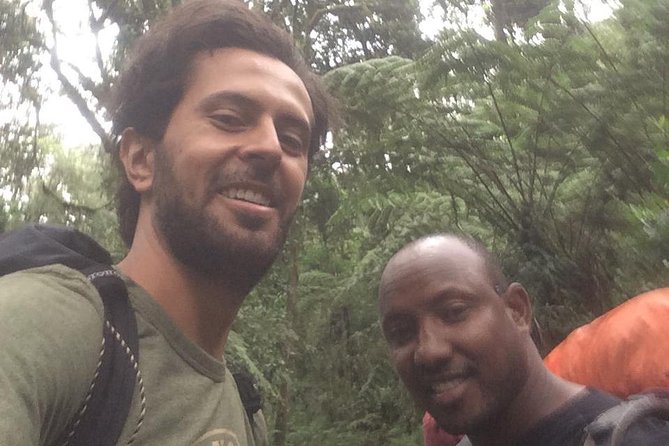
The final walking stage covers about 10 kilometers in three to four hours. You descend from around 10,000 feet to 5,400 feet through rainforest and then return to Moshi.
After the stark upper mountain, the return to trees feels dramatic. The shorter walking time is welcome, but you should not expect to feel fresh. Seven days of hiking, including a summit day, leaves you tired.
The package includes drop-off at your Moshi hotel after the trek. It also includes a trekking certificate, which gives you a tangible memento of reaching the end of the route. Your hotel itself is not included, so you need to book that separately.
What the $1,250 price really covers
At $1,250 per person, the package has useful inclusions. You receive:
- Pickup from your Moshi hotel to Londorossi Gate
- Return transport from Mweka Gate to your Moshi hotel
- A pre-trek briefing
- A professional Kilimanjaro guide
- Tents and sleeping mattresses
- Breakfast, lunch, and dinner during the climb
- A trekking certificate
That is a practical bundle. Food and camping equipment are two major parts of a supported mountain trek, and having Moshi transport included removes some simple but annoying coordination.
Still, the advertised price is not the full trip budget. Kilimanjaro park fees are excluded. You also pay for crew tips, airport transfers, accommodation before and after the trek, flights, and personal hiking equipment.
I would ask for a written total before booking. In particular, confirm the exact park charges, what quality of tent and mattress are supplied, how many people will be in your group, and what happens if the climb cannot continue for safety reasons. The high maximum group size of 50 makes this especially important. A large group may mean a lively camp and more shared logistics, but it can also mean less individual attention.
Food, camping, and the human side of the climb
Meals are included three times a day, and the food has been a major source of praise. One climber specifically enjoyed the cooking during the climb, while another highlighted the kindness of the guides, porters, and cook.
That matters more than it may sound. On a seven-day trek, food is not a minor extra. You need regular meals to keep moving, and a reliable cook can affect your mood and strength as much as the route itself.
The tents and mattresses are included, but do not read that as a full equipment rental package. Personal hiking gear is excluded. You remain responsible for the clothing, boots, and other items you need for rainforest rain, cold high camps, and the summit zone.
The crew also deserves practical respect. Tips are not included, so budget for them separately. The supplied information does not give a fixed amount, and you should ask the operator for current guidance before the trek.
The guides and support team
The clearest praise for this experience concerns the people running it. Edwin was praised for explaining the vegetation and animals around Kilimanjaro, while Moodie was credited with helping make the summit possible. Other feedback describes the team as positive, supportive, and motivating.
That combination is valuable. A guide who can talk about the mountain adds interest during the easier stages, while a guide who manages pace and morale becomes vital on the high sections.
You should still ask who will lead your specific departure. The named guides come from individual experiences, and your assigned team may be different. Ask how guide-to-climber ratios work, how altitude concerns are handled, and who makes the final decision if someone must stop.
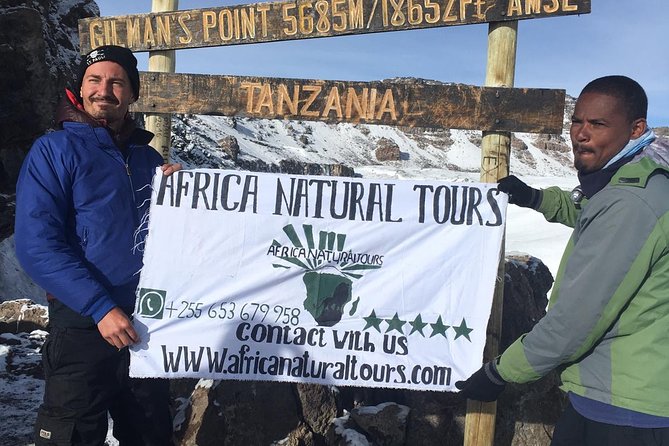
The operator is Africa Natural Tours, with a listed meeting point at its office on Mkwawa Avenue in Tanzania. Pickup from a Moshi hotel is included, so confirm the exact pickup arrangement after booking.
Best time to climb and who should book
The recommended climbing windows are mid-December to March and mid-June to October, when conditions are generally more favorable. The information also describes the best periods as December to mid-March and June to October, with January and February singled out as especially favorable in the operator’s response.
Weather still matters in the recommended seasons. The activity requires good weather, and a cancellation for poor conditions results in another date or a full refund. You can also cancel for a full refund if you do so at least 24 hours before the start time. Changes or cancellations inside that window are not accepted.
I would recommend this route to someone who wants a supported Kilimanjaro climb and values scenery over the shortest possible schedule. It suits you if you can handle long days, camping, and a demanding summit attempt.
It is a poor fit if you want a soft adventure, dislike basic mountain camping, or need a tightly fixed final price with no extra park charges. The maximum group size of 50 is another reason to ask detailed questions before paying.
Should you book the 7-day Lemosho Route?
I would consider booking this tour if the operator confirms the complete cost, group size, equipment details, and crew arrangements in writing. The seven-day route offers a sensible pace, varied scenery, included meals and camping gear, and a support team that has earned repeated praise for encouragement and care.
The key decision is not simply the $1,250 headline price. Add park fees, personal gear, hotels, flights, airport transfers, and tips. If that full budget works for you, Lemosho is a strong choice for a first Kilimanjaro attempt.
Choose it for the extra acclimatization time and long scenic approach. Skip it if you are looking for a quick, low-cost climb or if you are not ready for the demands of a 19,345-foot summit day.
FAQ
How long is the Kilimanjaro Lemosho Route experience?
The trek lasts approximately seven days, including six days of mountain walking and the final descent from Mweka Camp to Moshi.
What is the highest point reached?
The summit section reaches 19,345 feet, or approximately 5,900 meters, at Mount Kilimanjaro.
Is pickup included?
Yes. Pickup from the hotel you booked in Moshi to Londorossi Gate is included. Drop-off from Mweka Gate to your Moshi hotel is also included.
Are meals included?
Yes. Breakfast, lunch, and dinner are included during the trek.
Is camping equipment provided?
Yes. The package includes quality tents and sleeping mattresses. Personal hiking gear is not included.
Are Kilimanjaro park fees included in the price?
No. All Mount Kilimanjaro park fees are excluded. They can be paid directly to the park or through the tour operator.
Are hotels in Moshi included?
No. Accommodation before and after the trek in Moshi is not included.
What level of fitness do I need?
You should have a moderate level of physical fitness. The longest and most demanding stages include the eight to ten-hour walk from Barranco to Barafu and the summit day, with seven to eight hours of ascent followed by four to six hours of descent.
What is the cancellation policy?
You can cancel up to 24 hours before the experience starts for a full refund. Cancellations or changes made less than 24 hours before the start time are not accepted, and poor weather may lead to a different date or a full refund.
Just added in Moshi
- Zanzibar: Stone Town tour and Nakupenda beach with Lunch★ 5.0 · 1 review
- day trip lake manyara★ 5.0 · 2 reviews
- Mt Kilimanjaro 6 days Marangu route hike★ 5.0 · 3 reviews
- machame route★ 5.0 · 16 reviews
- Private Cycle to Kilimanjaro Bike Park Safari★ 5.0 · 6 reviews
- West Kilimanjaro cycling Adventures★ 4.5 · 8 reviews
- Wildlife Extravaganza: Manyara, Tarangire & Ngorongoro in 3 Days★ 5.0 · 3 reviews
- 3 Days Private E-Bike Tour in West Kilimanjaro★ 5.0 · 3 reviews
Lemosho Route Climbs, compared.

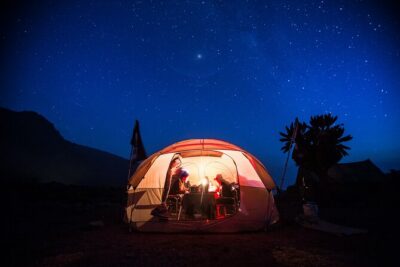
8-Day Small-group Lemosho Kilimanjaro Summit Trekking
Read our review →


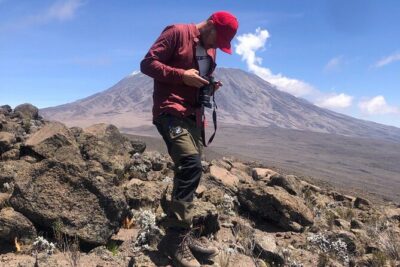
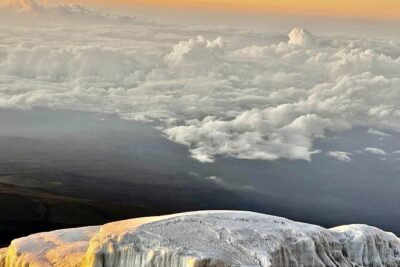
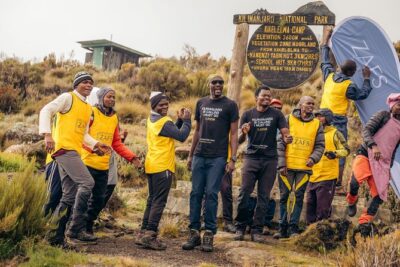
Climbing Kilimanjaro through 8 days Lemosho Route
Read our review →Browse the lists this tour appears in