
Reviewed · LEMOSHO ROUTE CLIMBS
Kilimanjaro Lemosho Route 7 Days
Africa’s highest summit rewards patience. I like this seven-day Kilimanjaro climb for its slow altitude gain, varied scenery, and careful trek high, sleep low plan. I also like the strong support package, including emergency oxygen, a Gamow bag, medical monitoring, private toilets, and a trained wilderness first responder guide. The main drawback is the summit day: up to 12 hours of hiking after a midnight start is a serious physical test.
The $2,500 price is not a bargain trek, but it covers park fees, mountain crew wages, meals, tents, transfers, hotels, medical equipment, and several comforts that matter at altitude. This is a private trip for your group, so you get a more personal experience, but you still need moderate fitness, proper gear, and realistic expectations about cold, steep ground, and altitude.
In This Review
- Key points to know before booking
- Why the Lemosho Route works so well
- Day 1: Londrossi Gate to the first forest camp
- Day 2: Forest, giant heather, and the Shira Plateau
- Day 3: Shark’s Tooth and the alpine desert
- Day 4: Lava Tower and the Great Barranco Valley
- Day 5: The Barranco Wall and Karanga Valley
- Day 6: Midnight departure and Uhuru Peak
- Day 7: Mweka rainforest and the return to town
- What the $2,500 price really covers
- Staff support and the private format
- Who should book this climb?
- Should you book the Lemosho Route?
- FAQ
- Where does the Kilimanjaro Lemosho Route trip start?
- How long does the experience last?
- Is airport pickup included?
- Is this a private tour?
- What level of fitness is required?
- Are meals included?
- What safety equipment is included?
- What happens if bad weather cancels the trip?
Key points to know before booking
- The route uses careful altitude planning: You climb toward Lava Tower, then descend into Barranco Valley before sleeping higher.
- The scenery changes every day: Pine plantations and montane forest give way to moorland, alpine desert, glaciers, and summit snow.
- The Great Barranco Wall is a hands-on scramble: It is non-technical, but you should expect steep rock and exposed-feeling sections.
- Summit night begins around midnight: Reaching Stella Point takes about six hours, followed by roughly two more hours to Uhuru Peak.
- The support package is unusually strong: A Gamow bag, emergency oxygen, pulse oximeter, vital sign checks, and AMREF Flying Doctors coverage are included.
- You finish through Mweka rainforest: The descent is steep and can be slippery, but certificates and a picnic lunch await at the park gate.
Why the Lemosho Route works so well
Kilimanjaro is not a technical mountain in the usual climbing sense, but altitude makes it demanding. The Lemosho plan handles that problem sensibly by taking you upward in stages and adding a high point before dropping you to a lower camp.
That rhythm matters. On Day 3, you reach about 4,175 meters. On Day 4, you climb toward Lava Tower at roughly 4,530 meters, then descend into the Great Barranco Valley. Your body gets a chance to experience higher altitude during the day while you sleep lower at night.
I like this approach because it is practical rather than flashy. The mountain does not care how fit you are at sea level. Walking slowly, drinking purified water, eating properly, and paying attention to symptoms are more useful than racing ahead.
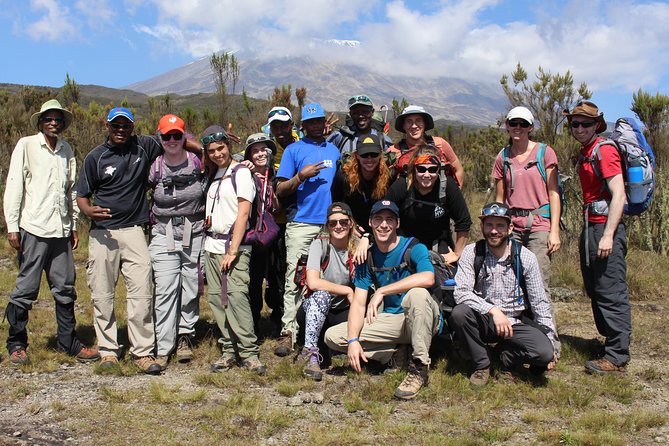
The route also gives you a fine range of Kilimanjaro scenery. You start among plantations and forest, pass giant heather and giant groundsel, cross the Shira Plateau, then enter a stark alpine desert. Near the top, glaciers, volcanic rock, snow, and broad views replace vegetation almost entirely.
More Lemosho Route climbs:
- Kilimanjaro climb by Lemosho Route (7-day)
★ 5.0 · 651 reviews - Kilimanjaro Climbing Lemosho Route 8 Days.
★ 5.0 · 186 reviews - Kilimanjaro climb, Lemosho Route (8-day)
★ 5.0 · 148 reviews
Day 1: Londrossi Gate to the first forest camp
Your morning begins after breakfast with a four-wheel-drive transfer to Londrossi Gate. This is where the administrative work takes place. The climbing team is registered, and every duffle bag is weighed so that no porter carries more than the required 20 kilograms.
That porter system is worth noticing. The package includes porter salaries and promises fair and ethical treatment. You should still bring only what you need and ask the operator how tipping is handled, since staff gratuities are not included.
After registration, the vehicle continues for about 11 kilometers on narrow dirt roads through pine plantations toward the Lemosho Glades. The hike then begins at about 1,981 meters and finishes near 2,780 meters.
The first walking section takes roughly four to five hours over seven kilometers. You are in montane forest, with a gradual introduction to the mountain rather than a brutal first push. Lunch may be taken at the gate, depending on the schedule and weather.
The practical advantage of this day is that it gets you onto the mountain without using up your energy. The possible annoyance is the road transfer, which can be rough and slow. That is part of reaching the route’s western starting area, not a flaw in the walking itself.
Day 2: Forest, giant heather, and the Shira Plateau
Day 2 is longer, with about seven hours of hiking over 12 kilometers. You leave the montane forest and climb into moorland, finishing around 3,511 meters.
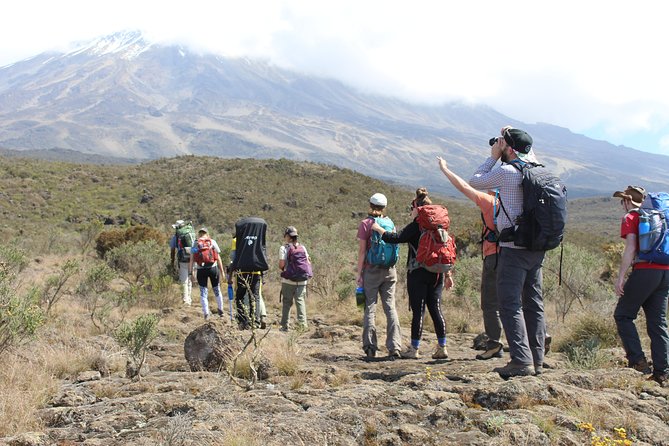
The trail follows narrow tracks that wind over ridges. The scenery changes in a way that makes the effort feel worthwhile. Giant heather and Erica plants appear, followed at higher points by Kilimanjaro’s unusual giant lobelia and giant groundsel.
The correct pace here is pole pole, Swahili for slowly slowly. That is more than a friendly slogan. A steady pace helps you manage the altitude and leaves enough energy for the days ahead.
The Shira Plateau is the reward. It is broad, high, and open, with a very different feel from the forest below. You should expect this day to feel long, even if the walking is not highly technical. The 731-meter gain is significant, and the thinner air may be noticeable.
Day 3: Shark’s Tooth and the alpine desert
On Day 3, you hike north through moorland and into alpine desert. The route covers about nine kilometers and takes five to six hours, with camp at approximately 4,175 meters.
The natural landmark called Shark’s Tooth helps give this section a sense of direction. From there, the route crosses a high, barren zone where only hardy everlastings and small senecios survive. The Lent Group, a collection of large volcanic dykes, rises nearby.
You climb a ridge, enter a valley, and continue upward to camp, normally arriving around lunchtime. That early arrival gives you time to eat and rest, though do not mistake a shorter walking day for an easy one. The altitude is now the main opponent.
This is also a day for watching how you feel. The package includes a pulse oximeter, vital sign monitoring, emergency oxygen, and a portable hyperbaric chamber called a Gamow bag. Those tools are reassuring, but they do not remove the need to report headache, nausea, dizziness, or unusual fatigue to your guide.
A few more options to weigh up in Moshi
- Safari Serengeti And Ngorongoro
★ 5.0 · 288 reviews - Kilimanjaro climb, Machame Route (7-day)
★ 5.0 · 262 reviews - Climbing Kilimanjaro – Machame Route
★ 5.0 · 170 reviews - Climbing Kilimanjaro through 7 days Machame Route
★ 5.0 · 151 reviews
Day 4: Lava Tower and the Great Barranco Valley
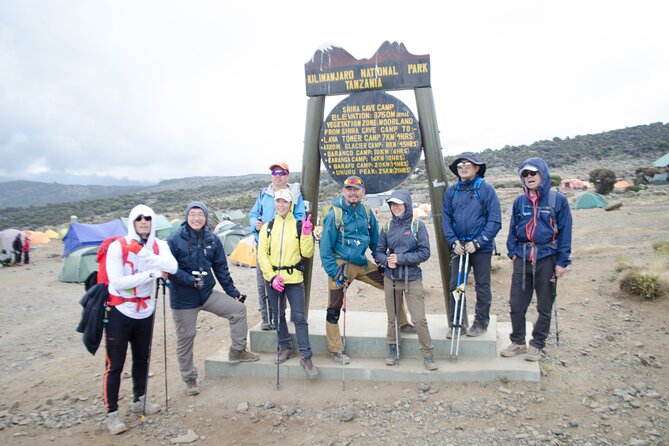
Day 4 is one of the route’s best-designed sections. You begin around 4,175 meters, climb to Lava Tower at approximately 4,530 meters, and later descend more than 600 meters into the Great Barranco Valley.
The walk totals about six kilometers and takes roughly five to six hours. The terrain is rocky scree, and the alpine desert feels severe and exposed compared with the forest of the opening days.
At Lava Tower, you stop for lunch. If you feel well enough, you can attempt a non-technical rock scramble to the top. From there, the views include Karanga Valley, Shira Plateau, and the Western Breach.
The scramble is optional, and that is exactly how it should be. At this altitude, extra height is not automatically a good idea. If you are tired or feeling symptoms, rest at the tower rather than treating the viewpoint as a challenge you must conquer.
The descent into Barranco Valley is steep, but it serves the important purpose of allowing you to sleep lower after reaching a higher point. This is the clearest example of the trek’s altitude strategy.
Day 5: The Barranco Wall and Karanga Valley
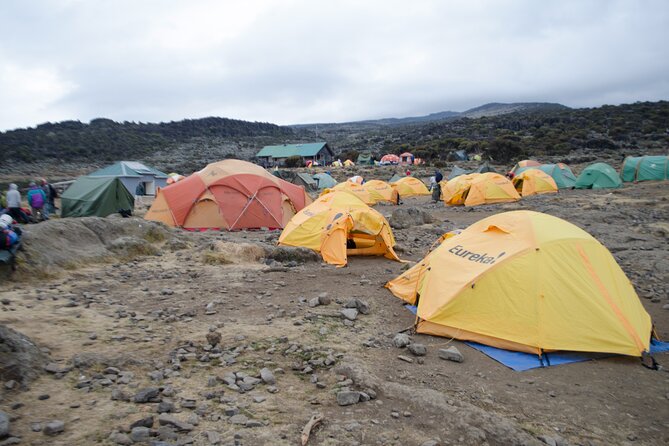
Day 5 brings the most memorable hands-on section before summit night. From Barranco Camp, you climb the Great Barranco Wall, a large rock face that looks more intimidating than it is technically difficult.
The climb is a scramble rather than a technical ascent. You should still expect steep ground, careful foot placement, and some use of your hands. The route rises beneath the Heim Glacier, where cloud conditions will determine how much of the glacier and upper mountain you can see.
After the wall, the trail drops into the alpine desert of Karanga Valley and then climbs again toward camp. The day covers about nine kilometers and takes six to seven hours. The elevation rises from roughly 4,039 meters to 4,600 meters.
This repeated up and down can frustrate you, especially when the summit is clearly near. It is also part of the acclimatization design. The mountain often feels like a series of unnecessary bumps, but those bumps prepare you for the final push better than a direct climb would.
Day 6: Midnight departure and Uhuru Peak
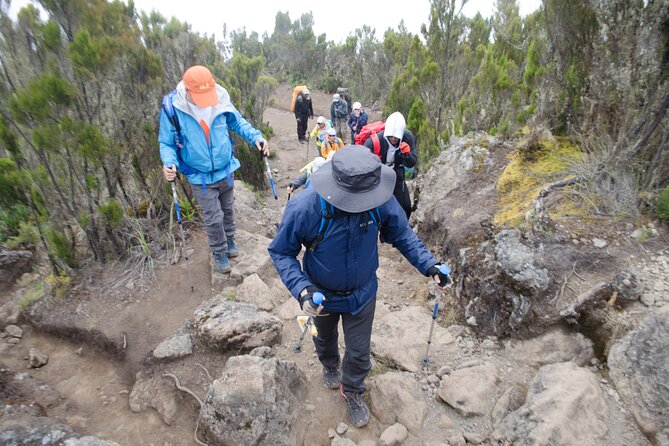
Summit day is the heart of the trip and the part you should study most carefully before paying. You leave around midnight after a warm drink and light snack, then walk slowly through the darkness toward the crater rim.
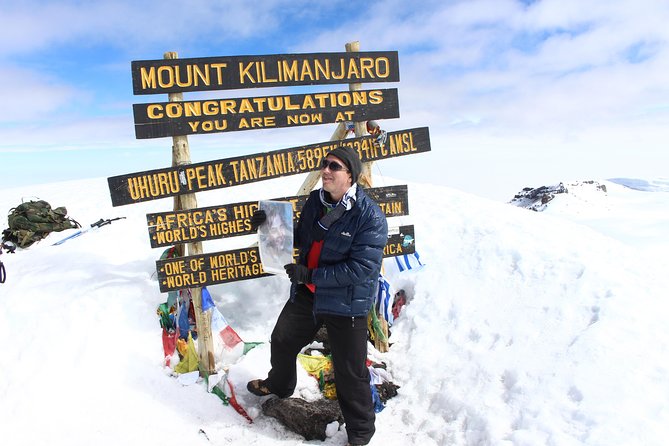
The full day can take about 12 hours. After roughly six hours, you reach Stella Point at 5,685 meters. This is already a major achievement, and it is where you can stop, rest, eat, and look over the clouds.
From Stella Point, the final two-hour ascent to Uhuru Peak is often snow-covered. The distance is not huge, but the altitude, cold, darkness, and fatigue make every step demanding. The route passes the Rebmann and Tarzel glaciers before reaching the summit area at 5,895 meters.
The summit route approaches Uhuru Peak from Barafu or Kossovo Camp and the ridge above the Southeast Valley. You may also see Mawenzi Peak and Kilimanjaro’s volcanic cone from the Barafu side.
A practical point: summit success is not the only measure of a good climb. The package provides a certificate for Uhuru Peak and a different certificate for Stella Point, but your guide’s job is to help you make a safe decision. Conditions, health, and weather matter more than a photograph.
After the summit, you descend to a lower camp. The listed timing and elevations contain some inconsistencies, so confirm the exact camp sequence and descent plan with Jaribu Africa Adventures before departure. The important point is that summit day combines ascent and descent into one very long effort.
Day 7: Mweka rainforest and the return to town
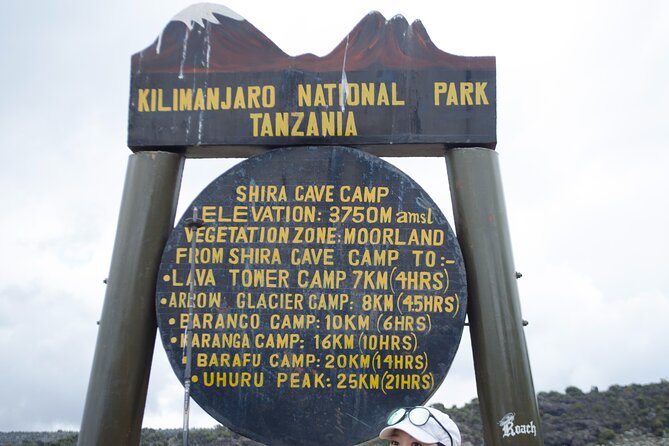
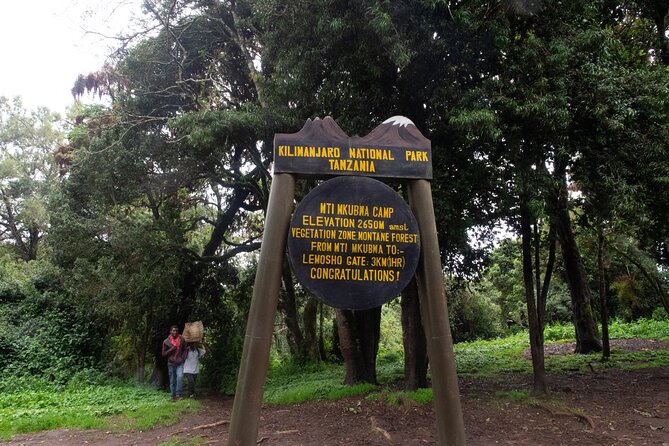
The final day covers about 13.5 kilometers and takes five to six hours. You descend steeply through Mweka rainforest, dropping from high camp to about 1,652 meters.
The trail can be slippery when wet. It follows the crest of a broad ridge between two river valleys before reaching a road for the final 40-minute walk to Mweka Park Gate.
This is not a gentle stroll after summit night. Your knees and feet will feel the descent, and trekking poles can be particularly useful if you bring them. Still, the return to forest is welcome. Trees, moisture, and warmer air signal that the hardest part is behind you.
At the gate, successful climbers receive summit certificates from the Kilimanjaro National Park Authority. A picnic lunch is provided, followed by transfer by private bus or jeep to your hotel in Arusha.
What the $2,500 price really covers
At $2,500 per person, this is a mid to upper-range package rather than a stripped-down climb. The value comes from the number of costs bundled into the price.
You receive seven breakfasts, seven lunches, and seven dinners, along with purified mountain water and large portions of fresh, nutritious food. Camping includes three-person expedition tents used by two clients, mattresses, a mess tent, a shower and wash tent, a private portable flush toilet, hot washing water, and hot towels at camp.
Those comforts matter after a long day. A private toilet is not glamorous in the usual sense, but on a multi-day mountain trek it can make camp life much easier. A chair with back support, a proper dining setup, and warm water also help you recover.
The price includes park entrance, camping, hut, rescue fees, government taxes, and 18 percent VAT on park entrance fees. It also covers airport transfers, return transfers between your Arusha hotel and the park gate, guide, cook, and porter salaries, two nights of bed-and-breakfast hotel accommodation at either Ameg Lodge or Salinero Hotels, and a two-way radio.
Medical protection is another major part of the value. The package includes a medical kit, emergency oxygen, a Gamow bag, pulse oximeter, vital sign checks, and medical evacuation coverage through AMREF Flying Doctors. Extra medical or evacuation fees are excluded, so read that part of the booking terms carefully.
Wine and champagne at the summit are included. That may sound like a small flourish, but it gives the summit moment a celebratory edge after the long night.
You still need to budget for international flights, visas, personal trekking equipment, communication charges, laundry, souvenirs, immunizations, excess baggage, room service, and staff gratuities. Meals caused by illness or an itinerary change are also your responsibility.
Staff support and the private format
This is a private activity, meaning only your group participates. That can be useful when one person needs a slower pace or an extra rest stop. It may also mean a higher cost per person than a large shared departure, although group discounts are offered.
The strongest praise connected to Jaribu Africa Adventures focuses on smooth organization from airport pickup through hotels and the trek. One account specifically highlights Jacob’s commitment and energy, while another describes Joseph and his team handling a longer custom trip with care.
The names suggest a personal management team, but your exact mountain guide is not identified in the available details. Ask who will lead your climb, how many support staff will join, and how the porter workload is managed.
Staff gratuities are not included. Ask for a suggested tipping structure before you leave, so you can plan fairly and avoid guessing at the gate.
Who should book this climb?
I would consider this route a good fit if you want a private Kilimanjaro experience with a careful acclimatization plan and strong camp support. It suits someone who can handle repeated uphill and downhill walking, a steep scramble, cold high-altitude conditions, and a midnight summit start.
You do not need technical climbing experience for the Barranco Wall, but you do need moderate fitness. The summit day is the key test, not the first forest walk. Training should focus on long walks, sustained uphill effort, downhill strength, and carrying only a light daypack.
I would hesitate to recommend it if you want a relaxed holiday with a little mountain walking added. The 12-hour summit day is hard, and the route’s comfort features cannot change the effects of altitude.
Free cancellation is available up to 24 hours before the start time. A poor-weather cancellation offers either another date or a full refund, while late cancellations and late changes are not refunded.
Should you book the Lemosho Route?
Book it if you value a private group, careful altitude planning, serious safety equipment, and comfortable camp routines. The route gives you forest, moorland, high desert, glaciers, the Barranco Wall, and a strong summit approach without rushing the early days.
The $2,500 fee makes the most sense when you use the included services: park fees, food, transfers, hotel nights, mountain staff, medical support, and improved camp facilities. Just confirm the exact camp schedule, guide names, tipping expectations, and any medical coverage limits before booking.
For a fit and prepared climber, this is a well-supported way to meet Kilimanjaro at a sensible pace. For someone hoping to rely on determination alone, it will be a much tougher bargain.
FAQ
Where does the Kilimanjaro Lemosho Route trip start?
The trip is based in Moshi, Tanzania. After breakfast, you are transferred by four-wheel-drive vehicle to Londrossi Gate, where registration and porter bag weighing take place.
How long does the experience last?
The climb lasts approximately seven days. The itinerary includes six mountain days, with the final day descending through Mweka rainforest and returning to a hotel in Arusha.
Is airport pickup included?
Yes. Airport transfers are included, along with return transfer from your Arusha hotel to the park gate.
Is this a private tour?
Yes. Only your group participates in this activity. Group discounts are also offered.
What level of fitness is required?
You should have a moderate physical fitness level. The route includes long walking days, steep rocky sections, a non-technical scramble over the Great Barranco Wall, and a summit day lasting about 12 hours.
Are meals included?
Yes. Seven breakfasts, seven lunches, and seven dinners are included. Purified water is provided on the mountain, along with fresh and nutritious food.
What safety equipment is included?
The package includes a medical kit, emergency oxygen, a Gamow bag, a pulse oximeter, comprehensive vital sign monitoring, a two-way radio, and a wilderness first responder trained guide or equivalent assistant guide.
What happens if bad weather cancels the trip?
If poor weather causes cancellation, you are offered a different date or a full refund. For a full refund after a normal cancellation, you must cancel at least 24 hours before the experience starts.
Just added in Moshi
- Zanzibar: Stone Town tour and Nakupenda beach with Lunch★ 5.0 · 1 review
- day trip lake manyara★ 5.0 · 2 reviews
- Mt Kilimanjaro 6 days Marangu route hike★ 5.0 · 3 reviews
- machame route★ 5.0 · 16 reviews
- Private Cycle to Kilimanjaro Bike Park Safari★ 5.0 · 6 reviews
- West Kilimanjaro cycling Adventures★ 4.5 · 8 reviews
- Wildlife Extravaganza: Manyara, Tarangire & Ngorongoro in 3 Days★ 5.0 · 3 reviews
- 3 Days Private E-Bike Tour in West Kilimanjaro★ 5.0 · 3 reviews
Lemosho Route Climbs, compared.

8-Day Small-group Lemosho Kilimanjaro Summit Trekking
Read our review →


Climbing Kilimanjaro through 8 days Lemosho Route
Read our review →Browse the lists this tour appears in