
Reviewed · LEMOSHO ROUTE CLIMBS
Kilimanjaro Lemosho Route 7 Days
The quiet trail leads to Africa’s highest point. This private seven-day Kilimanjaro climb begins on the less crowded western side of the mountain, giving you quieter walking during the first two days before joining the main summit route. I like the steady camp progression through Mti Mkubwa, Shira, Barranco, Karanga, and Barafu, and I like that the package includes mountain transport, hotel nights, meals, tents, safety equipment, and park fees.
The strongest features are the careful safety setup, including VHF radios, emergency oxygen, a Gamow Bag, and pulse oximeters, plus the practical comforts of warm washing water, purified drinking water, LED lights, and a private toilet. The main drawback is the schedule: seven days is workable, but summit day is long and demanding, with an ascent to Uhuru Peak followed by a descent to Mweka Camp.
In This Review
- Key points at a glance
- Why the Lemosho Route is a smart seven-day choice
- Day 1: Londorossi Gate to Mti Mkubwa Camp
- Day 2: Mti Mkubwa, Shira Camp 1, and Shira Camp 2
- Day 3: Shira Camp 2 to Barranco Camp
- Day 4: Barranco to Karanga Valley
- Day 5: Karanga Valley to Barafu Camp
- Day 6: Barafu to Uhuru Peak and Mweka Camp
- Day 7: Mweka Camp to the gate and hotel
- Food, tents, and the comforts that matter
- Safety, porters, and the human side of the climb
- Is $2,669.88 good value?
- Who should book this Kilimanjaro climb?
- Should you book the Lemosho Route in seven days?
- FAQ
- How long is the Kilimanjaro Lemosho Route experience?
- Is this a private tour?
- What is the highest point reached?
- Are meals included?
- Is drinking water provided?
- What safety equipment is included?
- Are tips and visas included?
Key points at a glance
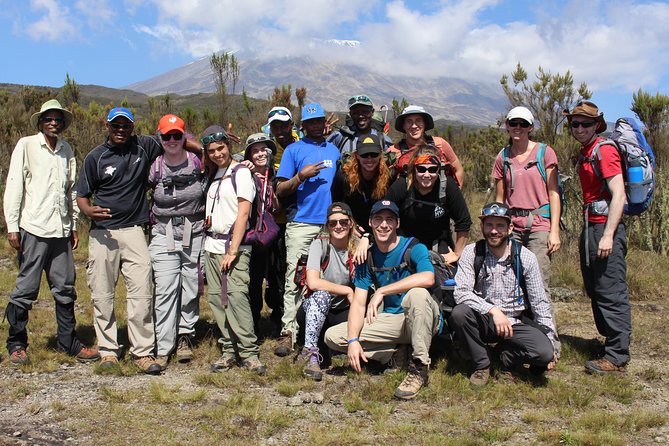
- A quieter western approach: The Lemosho Route gives you a calmer start before reaching the busier sections near Barranco and Barafu.
- A serious safety package: Guides carry VHF radios, emergency oxygen, a Gamow Bag, and pulse oximeters, while rescue fees are included.
- A long summit day: You climb from Barafu to Uhuru Peak, rest briefly, then continue down to Mweka Camp.
- Comforts above the forest: Waterproof tents, sleeping mats, solar LED lights, dining chairs, warm water, and a portable toilet are provided.
- Meals receive special attention: The cook prepares substantial food, with vegetarian, vegan, allergy-sensitive, Halal, and Kosher options mentioned.
- Private trekking at $2,669.88: Only your group participates, with pickup, transfers, hotel nights, and government fees included.
Why the Lemosho Route is a smart seven-day choice
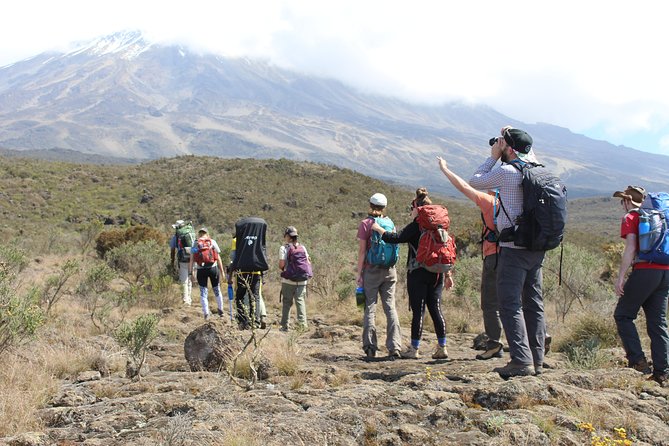
Kilimanjaro is not a technical climbing trip in the usual sense. You do not need ropes or rock-climbing skills for this route, but you do need stamina, patience, and the ability to spend a week walking and sleeping at high altitude.
Lemosho is appealing because it begins away from the busiest entry points. The first two days take you through the western side of Kilimanjaro, where the walking should feel quieter and more open. That peaceful start has real value. You are not only saving energy from crowding and congestion, you are also getting a gentler introduction to the mountain.
The route then joins the southern circuit and follows a useful acclimatization pattern. You climb toward Barranco, spend a night around 3,950 meters, descend slightly into Karanga Valley, and then rise again to Barafu. This climb-high, sleep-lower rhythm is one of the most sensible parts of the plan.
Still, seven days leaves little spare time. If altitude affects you badly, there is not much room for a slow adjustment or an extra mountain night. I would choose this itinerary only if you already have a reasonable fitness base and accept that the summit attempt may be physically severe.
More Lemosho Route climbs:
- Kilimanjaro climb by Lemosho Route (7-day)
★ 5.0 · 651 reviews - Kilimanjaro Climbing Lemosho Route 8 Days.
★ 5.0 · 186 reviews - Kilimanjaro climb, Lemosho Route (8-day)
★ 5.0 · 148 reviews
Day 1: Londorossi Gate to Mti Mkubwa Camp
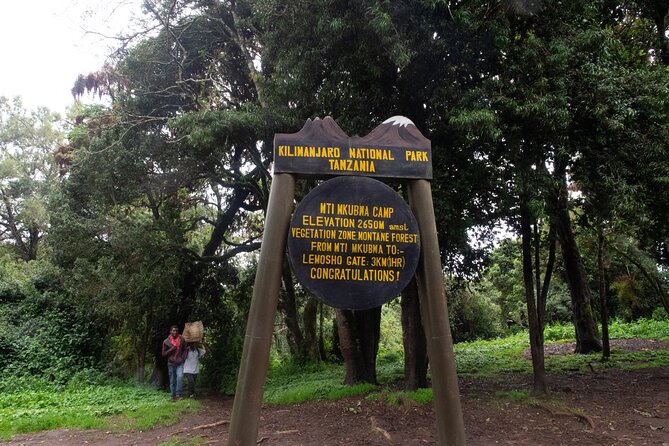
Your first mountain day begins with a drive to Londorossi Park Gate at 2,385 meters, or 7,825 feet. After entry formalities and the start of the hike, you walk about 8 kilometers to Mti Mkubwa Camp at 2,700 meters.
The listed hiking time is three to four hours. That is a manageable opening, and it gives you time to settle into the pace, meet the mountain crew, and learn how your body feels at altitude.
Mti Mkubwa means Big Tree Camp, and the name fits the lower forest zone. The route begins in a greener setting before gradually changing as you gain height. Do not treat this day as a simple warm-up. Use it to practice short steps, regular water breaks, and keeping your day-pack light.
Your night is in a waterproof tent. Sleeping mats, lighting, dining furniture, meals, and warm washing water are part of the package. Those details may sound modest before departure, but after a few hours on your feet, a warm wash and a proper meal become highly valuable.
Day 2: Mti Mkubwa, Shira Camp 1, and Shira Camp 2
Day two has two stages. You walk from Mti Mkubwa to Shira Camp 1 at 3,500 meters, then continue to Shira Camp 2 at 3,840 meters.
The first section is listed at five to six hours over roughly 6 kilometers. The second takes another three to four hours over about 8 kilometers. The total makes this a full day, even though the distances are not huge by ordinary hiking standards.
The important change is altitude. You gain more than 1,000 meters from Mti Mkubwa to Shira Camp 2, and you will likely notice thinner air, colder conditions, and a slower pace. I would keep this day deliberately unhurried. Your guide’s job is not to make you race to camp. It is to help you arrive with enough energy for the days ahead.
Shira is one of the most rewarding early sections because the forest begins to give way to broad high-altitude surroundings. The mountain feels larger here, and the views begin to open. The first two days are also the part of the trip most likely to feel removed from the crowds, which is a major reason to select Lemosho.
Day 3: Shira Camp 2 to Barranco Camp
From Shira Camp 2, you walk about 8 kilometers to Barranco Camp at 3,950 meters. The scheduled hiking time is six to seven hours.
This is a key acclimatization day. You climb higher, spend time at altitude, and settle into the southern route. Barranco is not just a place to sleep. It prepares you for the famous Barranco Wall and for the repeated changes in elevation that make Kilimanjaro more than a simple uphill walk.
The day can feel demanding because the air is thinner and the route is longer than the previous day’s final section. You should expect the guide to set a slow pace. That can feel almost comically slow at first, but it is exactly the kind of patience that helps conserve energy.
The campsite sits beneath dramatic mountain scenery. You will want to take photographs, but protect your energy and warmth. Eat well, drink regularly, and prepare your clothing for a colder evening.
A few more options to weigh up in Moshi
- Safari Serengeti And Ngorongoro
★ 5.0 · 288 reviews - Kilimanjaro climb, Machame Route (7-day)
★ 5.0 · 262 reviews - Climbing Kilimanjaro – Machame Route
★ 5.0 · 170 reviews - Climbing Kilimanjaro through 7 days Machame Route
★ 5.0 · 151 reviews
Day 4: Barranco to Karanga Valley
Day four covers only about 5 kilometers, with four to five hours of hiking, but it is not an easy stroll. The route leads from Barranco Camp at 3,950 meters to Karanga Valley Camp at 3,995 meters.
The small difference in sleeping altitude hides the real work of the day. You must climb and descend along the route, including the well-known Barranco Wall section. The wall can look intimidating from camp, but the itinerary treats it as a hiking challenge rather than a technical climbing pitch.
This is one of the best days for attentive guiding. You need steady footing, a calm pace, and practical help with route choices. The company has used guides named Joseph, Ibi, Eli, Paul, Side, and Martin on different climbs, and direct feedback has repeatedly praised the guiding teams for patience, care, and summit preparation. Your exact guide will depend on the departure, so confirm that before you travel.
Karanga is a useful staging camp. It shortens the next day’s walk to Barafu, leaving you with a better chance of reaching the high camp without wasting energy. The night is likely to feel cold and spare. This is mountain camping, not a hotel room with a view.
Day 5: Karanga Valley to Barafu Camp
The walk to Barafu Camp covers about 4 kilometers and takes four to five hours. Barafu sits at 4,550 meters, or 14,928 feet, and it is the launch point for the summit attempt.
The short distance can be misleading. At this altitude, every step takes more effort, and you may feel tired even while walking slowly. Once you reach camp, the main task is not sightseeing. It is eating, drinking, organizing clothing and equipment, and resting.
You should expect an early night, though sleeping at 4,550 meters can be difficult. Keep your essential summit clothing close, arrange your headlamp and water, and do not bury gloves or extra layers inside your main bag.
The included porter support during the summit attempt is especially helpful here. You still need to carry personal essentials, but you are not expected to haul your entire load to Uhuru Peak. The staff also carry communication and emergency equipment, adding reassurance at the point where the climb becomes most serious.
Day 6: Barafu to Uhuru Peak and Mweka Camp
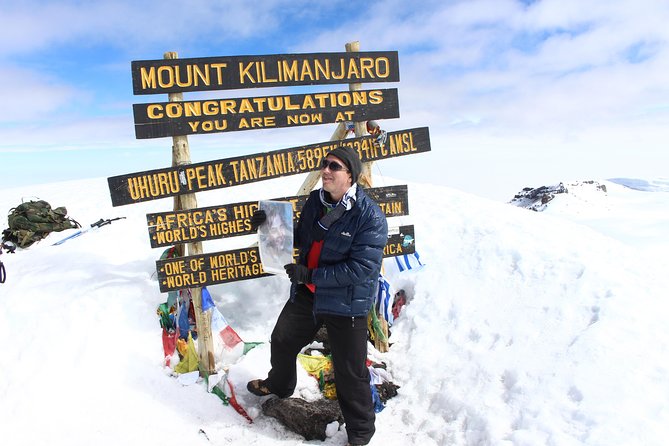
This is the hardest day by far. The listed summit section takes seven to eight hours, covering about 5 kilometers from Barafu to Uhuru Peak at 5,895 meters, or 19,341 feet.
The route is slow and physically draining. The goal is not speed. You move in small steps, listen to your guide, and pay close attention to headache, nausea, dizziness, unusual fatigue, or other signs that altitude is affecting you.
Reaching Uhuru Peak is the high point of the entire trip, both literally and emotionally. You get the satisfaction of standing on Africa’s highest mountain, but the day is only partly finished. After a short rest at Barafu, you continue down to Mweka Camp at 3,060 meters.
That descent is long, with another four to five hours listed over about 12 kilometers. Many people focus so heavily on reaching the summit that they underestimate the walk afterward. Your knees, feet, and concentration still have work to do. This is where good guides and a controlled pace matter most.
The emergency equipment included here is a real benefit. VHF radios allow communication, oxygen is available for emergencies, and a Gamow Bag is carried as a hyperbaric chamber. A pulse oximeter can help the crew monitor oxygen levels. These tools do not remove the risks of high altitude, but they show that the operator has planned for problems rather than treating the summit as a simple sightseeing stop.
Day 7: Mweka Camp to the gate and hotel
The final descent leads to Mweka Gate. The schedule gives four to five hours of hiking and a distance of about 4 kilometers, with the gate elevation listed as 4,600 meters. That elevation figure appears inconsistent with the rest of the route, so I would ask the operator to confirm the exact descent details before departure.
At the gate, transportation takes you back to your previous hotel. The trip includes a certificate and a summit party ceremony, which gives the group a chance to mark the achievement before returning to ordinary life.
The return hotel night is useful. After the summit day and descent, you will appreciate a bed, a shower, and the chance to sort your belongings. The package includes hotel accommodation before and after the trek, with both standard and comfort hotel categories listed. Confirm which category applies to your booking, since the wording describes two nights in each category.
Food, tents, and the comforts that matter
Food can make or break a high-altitude trek. This package includes breakfast, lunch, and dinner each day, with large portions of fresh and nutritious food. Examples given for breakfast include tea, coffee, porridge, sausages, bread, toast, eggs, and fruit.
The cook can accommodate vegetarian and vegan diets, food allergies, Halal, and Kosher requirements. If you need a special diet, tell the company well before arrival and ask for written confirmation. At altitude, relying on snacks alone is a poor plan.
You also receive purified drinking water and warm washing water every day. Waterproof tents, sleeping mats, solar LED lights, toilet tents, and a portable personal toilet are included. Dining uses aluminum tables and large chairs with backs and armrests, an unusually practical touch when your legs are tired.
The equipment package reduces the amount you need to arrange yourself, but it does not replace personal preparation. You still need suitable clothing, footwear, a sleeping bag if one is not specifically included, personal medication, and a day-pack suitable for summit day. Ask for a precise packing list before you fly.
Safety, porters, and the human side of the climb
The company places strong emphasis on safety and staff care. The package includes rescue fees on the mountain, professional English-speaking guides, VHF radios, emergency oxygen, a Gamow Bag, and pulse oximeters.
It also promises fair and ethical treatment of porters. That matters on Kilimanjaro, where the crew carries tents, food, cooking equipment, and group supplies. Several direct accounts praise the teamwork and say the porters appeared well treated. You should still ask how tipping is handled and budget for tips, since gratuities are not included.
The human service has been praised by name in different trips. George has handled arrangements, Benjamin has managed pre- and post-climb logistics, and guides including Joseph, Ibi, Eli, Paul, Side, and Martin have been described as supportive and attentive. These names are not a promise about your exact team, but they give you useful points to raise when discussing your booking.
Is $2,669.88 good value?
The price is $2,669.88 per person. That is not a bargain-basement Kilimanjaro rate, but the package includes a large amount: private guiding, airport and destination transfers, hotel nights, park entrance fees, government taxes, mountain rescue fees, meals, tents, sleeping mats, water, washing water, lighting, dining equipment, safety gear, and porter support.
The private format matters. Your group travels on its own rather than joining a mixed departure, so the pace and communication can be more personal. Group discounts are also offered, which may improve the value for families or friends booking together.
The main point to clarify is the accommodation wording. It lists two nights of classic standard hotel accommodation and two nights of comfort hotel accommodation, while also saying one night before and one after the trek. Ask exactly which two nights are included and which hotel category you will receive.
Tips, a Tanzania visa on arrival, laundry, telephone use, drinks, personal expenses, and optional tours are extra. A safari or cultural excursion after the climb is not included, so allow more money and time if you want to add one.
Cancellation is free up to 24 hours before the local start time for a full refund. Bad weather may lead to a different date or a full refund. Any change within 24 hours is not accepted, so keep your arrival plans firm.
Who should book this Kilimanjaro climb?
I would recommend it to a fit first-time climber who values private guiding, a quieter start, strong equipment support, and a well-organized camp routine. It also suits families and small groups that want to walk together without being placed in a large shared party.
I would be cautious if you want a relaxed holiday with plenty of spare time. The summit day is hard, the route reaches nearly 5,900 meters, and seven days gives you less altitude margin than longer itineraries.
Before booking, ask three direct questions: Which hotel category is confirmed? What personal equipment must I bring? What is the exact guide-to-climber and porter arrangement for my group? Clear answers will tell you as much about the operation as the attractive equipment list.
Should you book the Lemosho Route in seven days?
Yes, if you are prepared for a serious physical challenge and want a private route with a quieter opening, solid safety equipment, substantial food, and useful comforts at camp. The strongest value comes from the amount bundled into the price, not from the low cost alone.
I would choose it over a shorter Kilimanjaro plan because the Lemosho approach gives you several stages before the summit. But if you are worried about altitude or want the best possible acclimatization margin, ask whether a longer version is available. This seven-day climb is a good fit for determined hikers who understand that Uhuru Peak is earned slowly, one careful step at a time.
FAQ
How long is the Kilimanjaro Lemosho Route experience?
The climb lasts approximately seven days, including the approach, summit attempt, descent, transfers, and hotel accommodation before and after the trek.
Is this a private tour?
Yes. Only your group participates, so you do not join a larger shared trekking group.
What is the highest point reached?
The summit is Uhuru Peak, at 5,895 meters, or 19,341 feet.
Are meals included?
Yes. Breakfast, lunch, and dinner are included each day on the mountain. Fresh, nutritious meals are provided, with vegetarian, vegan, allergy-sensitive, Halal, and Kosher options mentioned.
Is drinking water provided?
Yes. Clean, purified drinking water is provided throughout the mountain climb.
What safety equipment is included?
The package includes emergency oxygen, VHF handheld radios, a Gamow Bag, rescue fees, and a pulse oximeter. Guides and mountain staff carry the equipment.
Are tips and visas included?
No. Tips and the Tanzania visa on arrival are not included. Personal expenses, laundry, telephone use, beverages, and optional tours are also extra.
Just added in Moshi
- Zanzibar: Stone Town tour and Nakupenda beach with Lunch★ 5.0 · 1 review
- day trip lake manyara★ 5.0 · 2 reviews
- Mt Kilimanjaro 6 days Marangu route hike★ 5.0 · 3 reviews
- machame route★ 5.0 · 16 reviews
- Private Cycle to Kilimanjaro Bike Park Safari★ 5.0 · 6 reviews
- West Kilimanjaro cycling Adventures★ 4.5 · 8 reviews
- Wildlife Extravaganza: Manyara, Tarangire & Ngorongoro in 3 Days★ 5.0 · 3 reviews
- 3 Days Private E-Bike Tour in West Kilimanjaro★ 5.0 · 3 reviews
Lemosho Route Climbs, compared.


8-Day Small-group Lemosho Kilimanjaro Summit Trekking
Read our review →



Climbing Kilimanjaro through 8 days Lemosho Route
Read our review →Browse the lists this tour appears in