
Reviewed · LEMOSHO ROUTE CLIMBS
Kilimanjaro Lemosho Route 8 Days
The mountain rewards patience. This Kilimanjaro climb gives you a gradual route across forest, moorland, volcanic desert, and glacier country, with careful altitude planning built into the schedule. I especially like the trek high, sleep low pattern and the strong mountain support, including emergency oxygen, vital-sign checks, a Gamow bag, private toilet facilities, and trained wilderness staff. I also like the route’s changing scenery, from giant heather and senecios to the Great Barranco Wall and Mawenzi Peak.
The main caution is simple: this is a serious physical test, not a scenic walk. Summit day lasts about 12 hours, begins around midnight, and reaches 5,895 meters at Uhuru Peak. There is also a small but important timing issue to clarify before booking: the tour is titled an eight-day climb, while the supplied schedule lists seven mountain days and describes the duration as approximately seven days.
In This Review
- Key details to know before booking
- Why the Lemosho Route is worth considering
- Day 1: Londrossi Gate to the Lemosho Glades
- Day 2: Forest and moorland on the way to Shira Camp
- Day 3: Shark’s Tooth and the alpine desert
- Day 4: Lava Tower, then the Barranco Valley
- Day 5: The Great Barranco Wall and Karanga Valley
- Day 6: Stella Point, Uhuru Peak, and the long return
- Day 7: Mweka Forest and the return to Arusha
- What the $3,000 price includes
- Guides, group format, and the human side
- Who should choose this climb?
- Should you book the Lemosho Route?
- FAQ
- How long is the Kilimanjaro Lemosho Route experience?
- What is the price per person?
- Is this a private tour?
- What fitness level is required?
- What happens on summit day?
- Are meals included?
- Is accommodation included?
- What happens if bad weather cancels the experience?
Key details to know before booking
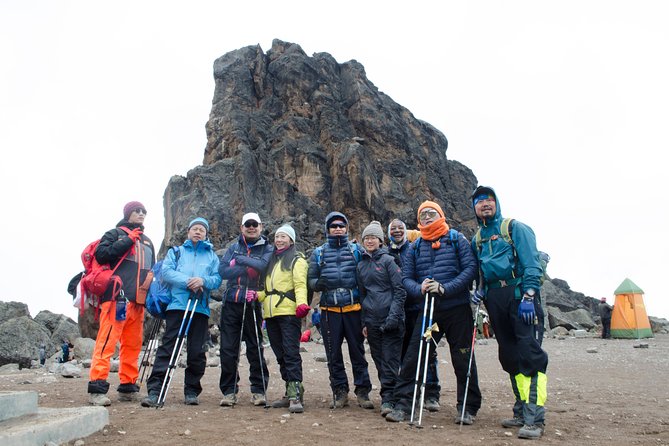
- Trek high, sleep low: The route climbs to Lava Tower at about 4,530 meters, then drops to Barranco Camp, giving your body a useful acclimatization pattern.
- A changing route across Kilimanjaro: You move from montane forest to moorland, the Shira Plateau, alpine desert, volcanic ridges, and the icy summit zone.
- Midnight summit attempt: Day 6 is the hardest section, with about six hours to Stella Point followed by roughly two more hours to Uhuru Peak.
- Strong safety equipment: The package includes emergency oxygen, a Gamow bag, a medical kit, pulse oximeter, vital-sign monitoring, radio communication, and medical evacuation cover through AMREF Flying Doctors.
- Private group format: Only your own group participates, which can make the pace and daily support more personal.
- A fully supported camp: Tents, mattresses, meals, purified water, hot washing water, a shower and wash tent, a private flush toilet, cooks, porters, and guides are included.
Why the Lemosho Route is worth considering
Kilimanjaro has several ways up, and the Lemosho route appeals to people who want a slower approach before the summit push. You begin near the western side of the mountain, at Londrossi Gate and the Lemosho Glades, then cross toward the southern and eastern summit approaches.
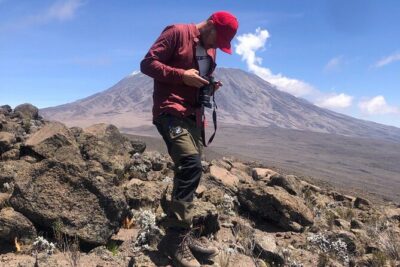
The route is not just about getting to the top. It gives you time to see Kilimanjaro change character. The lower slopes are wooded and green. Higher up, the trees give way to giant heather and open moorland. Above the Shira Plateau, the mountain becomes spare and rocky, with volcanic formations, scree, glaciers, and broad views.
I like the route’s gradual height gain. On Day 1, you sleep at about 2,780 meters after hiking from roughly 1,981 meters. The following days add height in measured steps instead of rushing straight toward the summit. That does not remove altitude risk, but it gives you a better setup than a very short climb.
The phrase pole pole, meaning slowly slowly in Swahili, is central here. You will not win anything by racing uphill. A steady pace helps conserve energy, lets guides watch your condition, and gives your body more time to adjust.
More Lemosho Route climbs:
- Kilimanjaro climb by Lemosho Route (7-day)
★ 5.0 · 651 reviews - Kilimanjaro Climbing Lemosho Route 8 Days.
★ 5.0 · 186 reviews - Kilimanjaro climb, Lemosho Route (8-day)
★ 5.0 · 148 reviews
Day 1: Londrossi Gate to the Lemosho Glades
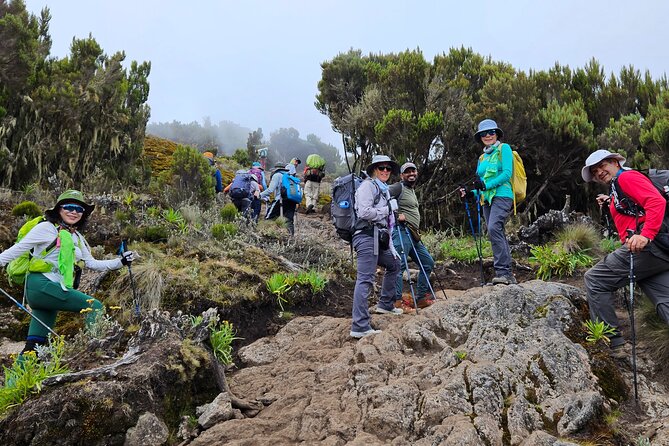
Your first day begins after breakfast with a four-wheel-drive transfer to Londrossi Gate. The mountain crew handles registration and park formalities, while each duffle bag is weighed. Porters are limited to loads of 20 kilograms, an important rule that supports fairer working conditions.
From the gate, the vehicle continues about 11 kilometers along narrow dirt roads through pine plantations toward the Lemosho Glades. Depending on the weather and the program timing, lunch may be served at the gate.
The hike itself takes around four to five hours and covers approximately seven kilometers. You start near 1,981 meters and finish at about 2,780 meters. This is a sensible opening day: enough walking to begin the climb, but not an exhausting start.
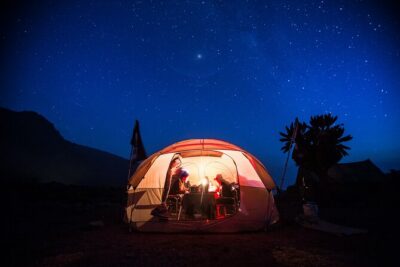
The first camp lies in the forest zone, where the setting feels far removed from the busy streets of Moshi. You will have a three-person expedition tent shared by two clients, a mountaineering mattress, and meals prepared by the camp cooks. Hot washing water is provided in the morning and evening.
Day 2: Forest and moorland on the way to Shira Camp
Day 2 is longer, with about seven hours of hiking over 12 kilometers. The trail follows narrow tracks that weave across ridges as you climb from approximately 2,780 meters to 3,511 meters.
The forest begins to thin, and the plant life changes. Giant heather and erica appear, followed at higher points by giant lobelia and giant groundsel, also known as Senecio kilimanjari. These unusual plants give the route a distinctly Kilimanjaro feel.
The goal is Shira Camp on the Shira Plateau. This open high area is one of the memorable parts of the route because the trees have fallen away and the mountain feels much larger around you. The slower pace matters here. Seven hours on foot is a full day, and the combination of distance and height gain may feel harder than the numbers suggest.
I would treat this as a day for restraint. Eat properly, drink the purified water provided, and tell your guide early if you have a headache, nausea, unusual tiredness, or trouble sleeping. The schedule is designed for acclimatization, but your own response still matters most.
Day 3: Shark’s Tooth and the alpine desert
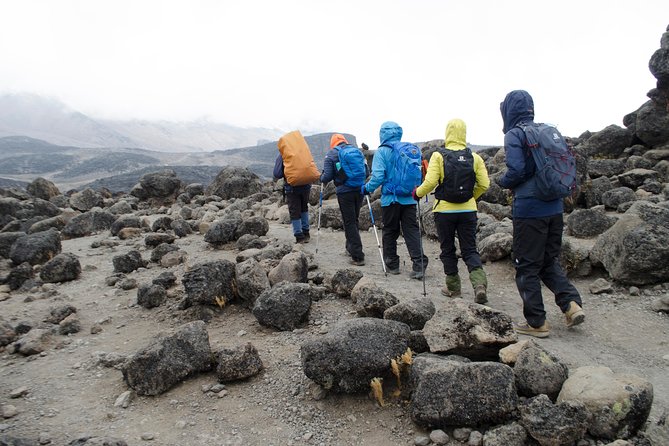
The third day covers about nine kilometers in five to six hours. You leave Shira and walk north through heather before entering the alpine desert zone. The final altitude is approximately 4,175 meters, so the air will feel noticeably thinner.
A natural landmark called Shark’s Tooth provides a point of interest along the way. The route then follows a ridge and enters a valley before climbing toward camp. The terrain is more barren now, with only hardy everlasting plants and small senecios surviving at this height.
The Lent Group, a collection of large volcanic dykes, rises nearby. Above you, a wide bowl formed by glacial activity adds to the sense that you are walking through an old volcanic world rather than simply following a trail.
This is a useful acclimatization day because the hike is not as long as Day 2, but you still sleep high. You arrive in time for lunch, leaving part of the afternoon for rest. Do not spend that extra time trying to prove your fitness. At this altitude, a quiet afternoon can be more valuable than an ambitious extra walk.
A few more options to weigh up in Moshi
- Safari Serengeti And Ngorongoro
★ 5.0 · 288 reviews - Kilimanjaro climb, Machame Route (7-day)
★ 5.0 · 262 reviews - Climbing Kilimanjaro – Machame Route
★ 5.0 · 170 reviews - Climbing Kilimanjaro through 7 days Machame Route
★ 5.0 · 151 reviews
Day 4: Lava Tower, then the Barranco Valley
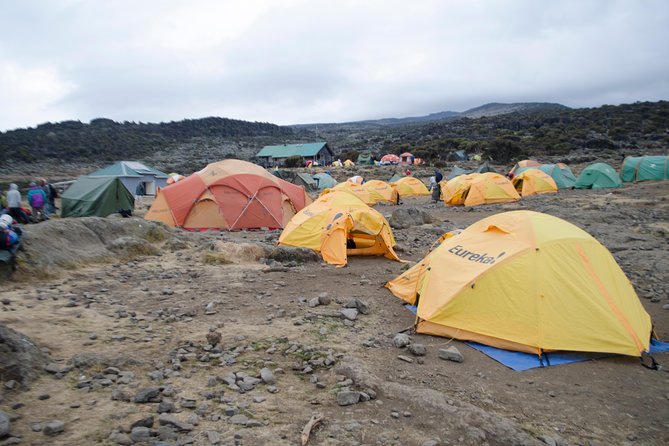
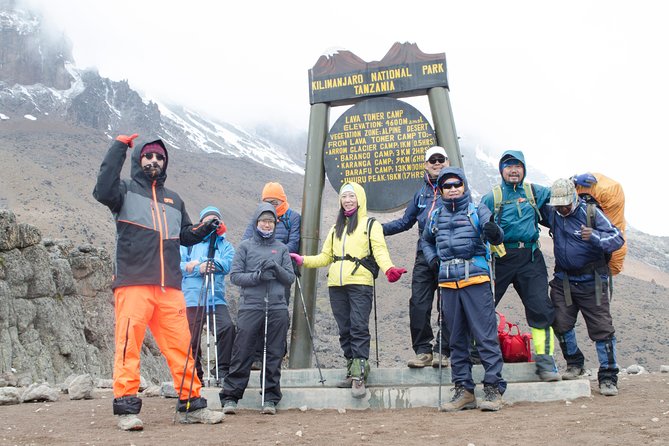
Day 4 is the route’s classic trek high, sleep low day. You climb to Lava Tower at about 4,530 meters, have lunch, and then descend more than 600 meters into the Great Barranco Valley.
The listed hiking time is about five to six hours, with a total distance of roughly six kilometers. The terrain is rocky scree, and the descent can be hard on your knees. Still, this day has some of the best mountain views in the entire program.
You can attempt an optional, non-technical rock scramble to the top of Lava Tower if you feel strong and conditions allow. From there, the views reach toward the Karanga Valley, the Shira Plateau, and the Western Breach. If you are feeling poorly at altitude, skip the scramble. The mountain will not be offended, and you will need that energy later.
The descent to Barranco is steep in places but rewarding. You get a close look at the mountain’s walls and volcanic forms, while the lower camp gives your body a chance to recover after the high point of the day. This is one of the smartest sections of the route, though the sudden climb and descent can still feel demanding.
Day 5: The Great Barranco Wall and Karanga Valley
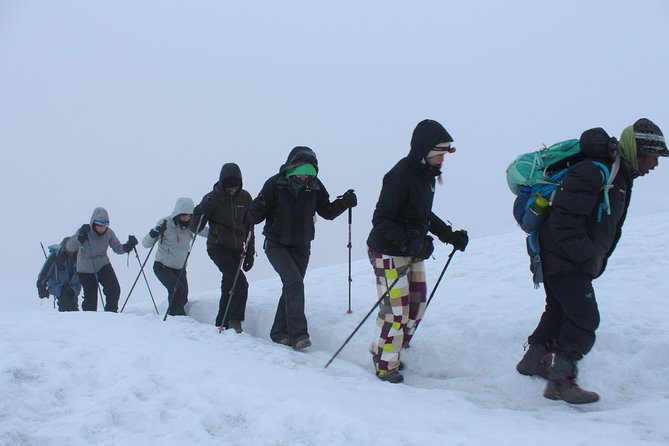
Day 5 begins with the Great Barranco Wall, an imposing rock face above camp. The climb is a steady scramble rather than a technical rock climb. You will use your hands in places, but the route is described as a challenging and exhilarating scramble, not a specialist mountaineering pitch.
The trail rises toward the area below the Heim Glacier. Clear weather may bring striking views of the glacier and the upper slopes of Kilimanjaro. Cloud cover can hide much of this, so keep your expectations flexible.
After the wall, the path drops into the alpine desert of the Karanga Valley, then climbs again toward camp at approximately 4,600 meters. The day takes about six to seven hours and covers around nine kilometers.
This repeated pattern of climbing and descending can be tiring. It also makes the route feel less like a simple staircase to the summit. You gain height gradually, test your legs, and continue adjusting to the altitude. The temperature becomes colder, so keep warm layers accessible rather than buried at the bottom of your duffle.
Day 6: Stella Point, Uhuru Peak, and the long return
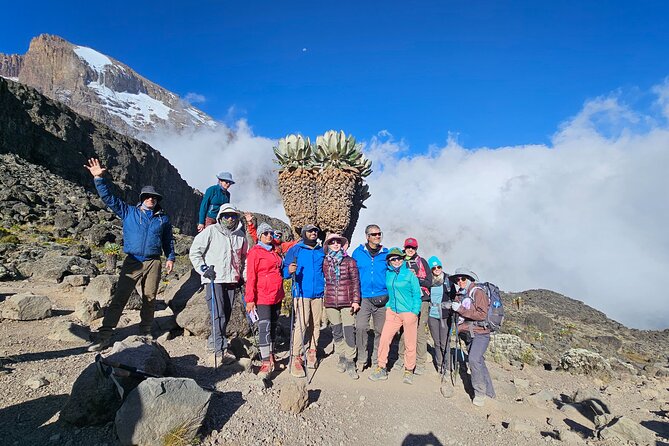
Summit day is the reason to take the preparation seriously. You leave camp around midnight after a warm drink and a light snack. The first six hours are spent hiking slowly toward the crater rim at Stella Point, which sits at approximately 5,685 meters.
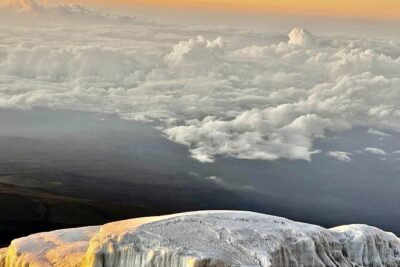
This section is dark, cold, steep, and strenuous. Your guide sets the pace, and the slow rhythm is essential. At Stella Point, you can rest, eat, and look over the clouds. The route usually becomes snow-covered from here, and the final two-hour ascent to Uhuru Peak is often the most difficult part mentally as well as physically.
The summit area includes views of the Rebmann and Tarzel glaciers. You continue along the rim toward Uhuru Peak at 5,895 meters, the highest point in Africa. The program includes wine and champagne for the summit celebration, a small comfort after a very large effort.
The day does not end at the summit. You descend to camp and continue down to a lower point, making the full day approximately 12 hours. This is an enormous amount of walking at high altitude. I would not plan anything important for the following day except recovery.
The package’s safety provisions are especially meaningful here. Guides carry a medical kit and communication equipment, while the expedition also includes emergency oxygen, a Gamow bag, vital-sign monitoring, a pulse oximeter, and access to medical evacuation through AMREF Flying Doctors. These tools cannot guarantee a successful summit, but they show that the operator has planned for real mountain risks.
Day 7: Mweka Forest and the return to Arusha
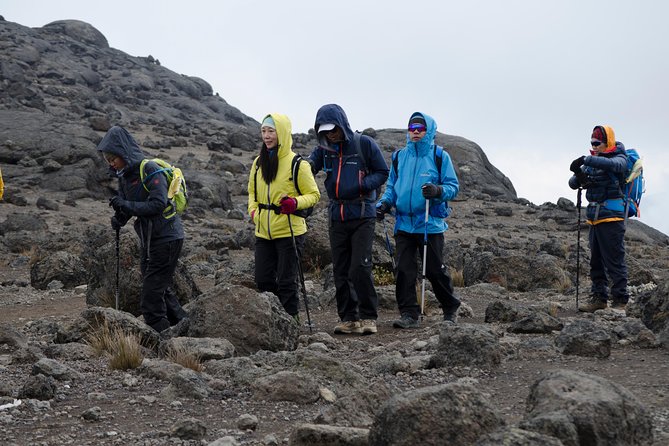
The final hiking day takes you from about 3,819 meters down to approximately 1,652 meters. The descent lasts five to six hours and covers about 13.5 kilometers through montane rain forest.
After the stark upper mountain, the forest feels thick and warm. The trail can be steep and slippery when wet, so trekking poles and careful footwork would be sensible personal equipment, though personal trekking gear is not included in the price.
The route follows the crest of a broad ridge between two river valleys before reaching a road. The final 40 minutes lead to Mweka Park Gate, where a picnic lunch is served. Successful climbers receive summit certificates from the Kilimanjaro National Park Authority, with gold for Uhuru Peak and green for Stella Point.
After the celebrations, a private bus or Jeep takes you to your hotel in Arusha. The package includes two nights of bed-and-breakfast accommodation at either Ameg Lodge or Salinero Hotels, but confirm exactly when those nights are scheduled and which hotel applies to your booking.
What the $3,000 price includes
At $3,000 per person, this is not a budget trek. The value comes from how much of the complicated mountain operation is handled for you.
Park entrance, camping and rescue fees, government taxes, and VAT on park entrance fees are included. So are airport transfers, transfers between your Arusha hotel and the park gate, guides, cooks, porters, tents, mattresses, food, purified water, and camp washing facilities.
The food provision is also stronger than a basic packed-lunch arrangement. You receive breakfast, lunch, and dinner for seven days, with large portions of fresh and nutritious food. A mess tent, tables, chairs with back rests, and hot towels add comfort where comfort is not normally easy to find.
You still need to budget for international airfare, visas, personal trekking equipment, laundry, souvenirs, communication charges, staff gratuities, immunizations, and possible extra medical or evacuation costs. Meals caused by illness or a changed itinerary may also be your responsibility.
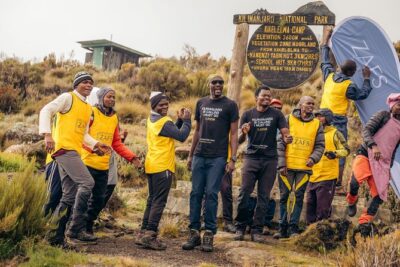
The fair treatment of porters is worth noting. The 20-kilogram load limit, stated porter salaries, and the operator’s commitment to ethical porter treatment are useful signs for anyone who wants to consider the human side of the climb, not just the summit photo.
Guides, group format, and the human side
This is a private tour, so only your group participates. That gives you more control over pace and conversation than a large shared departure, though the experience will still depend on the size and fitness of your own party.
The strongest praise has focused on the guiding team. Manase and Ayumwe were specifically named for helping a group reach the summit, while Stephen and Manase were described as friendly and experienced on the mountain. Joseph and his team were also noted for answering planning questions quickly.
Those details matter. A Kilimanjaro guide is not just someone who points out the route. You need clear pacing, attention to symptoms, help with camp routines, and calm decisions when weather or fatigue changes the plan. The reported success of a 15-person group is encouraging, but it should not be treated as a promise that every climber will summit.
Who should choose this climb?
I would recommend it to someone with a moderate fitness level who is comfortable walking for several hours on consecutive days and preparing for one very long summit day. You do not need technical climbing skills for the Great Barranco Wall, but you should be ready for rocky paths, steep descents, cold conditions, and thin air.
It suits people who value a supported expedition rather than an independent trek. You get food, tents, porters, cooks, medical equipment, transfers, and hotel accommodation, all coordinated by one operator.
I would be more cautious if you dislike camping, struggle with long uphill walks, or want a relaxed holiday with only a little exercise. The summit attempt is physically severe, and the altitude can stop even fit people. You should also ask the operator to confirm the eight-day title versus the seven-day schedule before paying.
Free cancellation is available if you cancel at least 24 hours before the start time. Changes or cancellations inside that window are not refunded, and poor weather may lead to a new date or a full refund.
Should you book the Lemosho Route?
Book this climb if you want a gradual, scenic route with serious safety planning and a high level of camp support. The Shira Plateau, Lava Tower, Barranco Wall, glaciers, and summit ridge give the route plenty of variety, while the acclimatization pattern is a sensible feature.
At $3,000, the package earns its price only if you use the included services and value organized support. Before booking, confirm the exact duration, hotel nights, group size, personal equipment list, gratuity expectations, and medical cost limits.
For a prepared walker who wants a full Kilimanjaro expedition rather than a quick summit gamble, this is a strong option. Go slowly, listen to the guides, and save your best effort for the final night.
FAQ
How long is the Kilimanjaro Lemosho Route experience?
The tour is titled an eight-day experience, but the supplied schedule lists seven days of hiking and describes the duration as approximately seven days. Confirm the exact schedule with Jaribu Africa Adventures before booking.
What is the price per person?
The listed price is $3,000 per person.
Is this a private tour?
Yes. Only your own group participates in this private tour or activity.
What fitness level is required?
The experience states that you should have a moderate physical fitness level. The itinerary includes several days of hiking, steep sections, and a summit day lasting about 12 hours.
What happens on summit day?
You leave camp around midnight, hike for about six hours to Stella Point at approximately 5,685 meters, then continue for roughly two hours to Uhuru Peak at 5,895 meters. The full day lasts about 12 hours.
Are meals included?
Yes. Breakfast, lunch, and dinner are included for seven days.
Is accommodation included?
Yes. Two nights of bed-and-breakfast accommodation are included at either Ameg Lodge or Salinero Hotels. Mountain camping accommodation is also included during the climb.
What happens if bad weather cancels the experience?
If poor weather causes the experience to be canceled, you will be offered a different date or a full refund. Free cancellation for a full refund is also available when you cancel at least 24 hours before the start time.
Just added in Moshi
- Zanzibar: Stone Town tour and Nakupenda beach with Lunch★ 5.0 · 1 review
- day trip lake manyara★ 5.0 · 2 reviews
- Mt Kilimanjaro 6 days Marangu route hike★ 5.0 · 3 reviews
- machame route★ 5.0 · 16 reviews
- Private Cycle to Kilimanjaro Bike Park Safari★ 5.0 · 6 reviews
- West Kilimanjaro cycling Adventures★ 4.5 · 8 reviews
- Wildlife Extravaganza: Manyara, Tarangire & Ngorongoro in 3 Days★ 5.0 · 3 reviews
- 3 Days Private E-Bike Tour in West Kilimanjaro★ 5.0 · 3 reviews
Lemosho Route Climbs, compared.

8-Day Small-group Lemosho Kilimanjaro Summit Trekking
Read our review →


Climbing Kilimanjaro through 8 days Lemosho Route
Read our review →Browse the lists this tour appears in