
Reviewed · LEMOSHO ROUTE CLIMBS
Kilimanjaro Lemosho Route 8 Days
Kilimanjaro rewards patience, not speed. This eight-day Lemosho climb appeals to me because it gives you a scenic approach across the Shira Plateau and a better-paced route to Uhuru Peak. I also like the strong safety setup, including emergency oxygen, a Gamow Bag, radios, and daily oxygen checks. The main consideration is that summit day is very demanding, with up to eight hours climbing to the top followed by another four to six hours down to Mweka Camp.
The route begins on the western side of Kilimanjaro and passes through several high camps before the final push to 5,895 meters. I especially like the chance to see views toward Mount Meru, Longido, the Great Rift Valley, and Kibo crater. The company has earned a 4.9 rating from 14 ratings, with 100 percent recommending it, and names such as Abel, Eli, Justin, Richard, Abdul, and Priscus appear in strong comments about the guiding team.
In This Review
- Key points to know before booking
- Why the Lemosho Route is worth eight days
- Day 1: Londorossi Gate to Mti Mkubwa Camp
- Day 2: Six kilometers to Shira Camp 1
- Day 3: Shira Camp 1 to Shira Camp 2
- Day 4: Shira Camp 2 to Barranco Camp
- Day 5: Barranco to Karanga Valley
- Day 6: Karanga to Barafu Camp
- Day 7: Uhuru Peak and the long descent
- Day 8: Mweka Gate and the return to comfort
- Food, tents, and the people who make camp work
- Is $2,833.34 a fair price?
- Who should choose this climb?
- Should you book the Kilimanjaro Lemosho Route?
- FAQ
- How long is the Kilimanjaro Lemosho Route experience?
- Where does the climb begin?
- What is the highest point reached?
- Is this a private tour?
- Are park fees and government taxes included?
- Are meals included during the climb?
- Is drinking water provided?
- What safety equipment is provided?
- Are hotel nights included?
- What is not included in the price?
Key points to know before booking
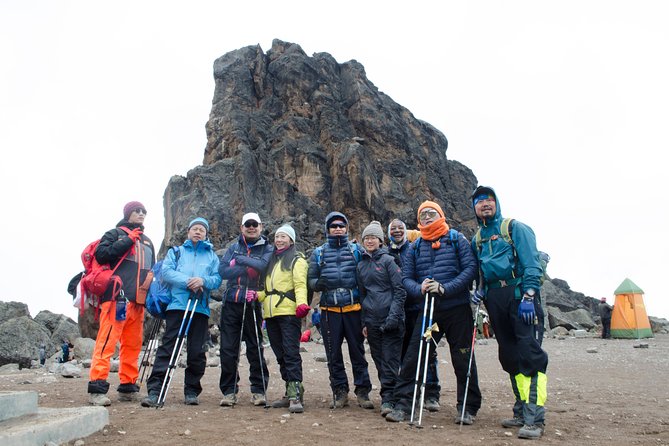
- A scenic western approach: You cross the Shira Plateau and pass through varied mountain scenery before reaching the southern circuit.
- Eight days helps with acclimatization: The plan includes several gradual stages before the summit attempt, rather than rushing upward.
- A serious summit day: Uhuru Peak is followed by a long descent to Mweka Camp, so stamina matters as much as determination.
- Strong mountain safety equipment: Oxygen, a Gamow Bag, radios, a pulse oximeter, rescue fees, and a portable toilet are included.
- Private group format: Your own group takes part in the activity, which can make pacing and daily support more personal.
- Good support from the crew: Food, porters, tents, dining furniture, washing water, and transfers are covered in the package.
Why the Lemosho Route is worth eight days
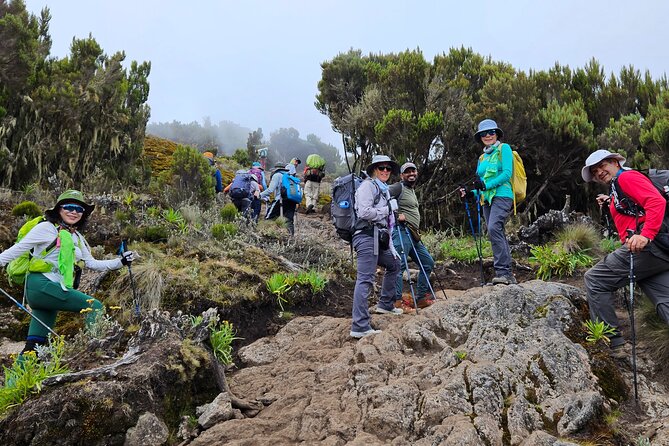
Lemosho is the scenic choice among the routes described here. You begin on the western side of Kilimanjaro, far from the summit crowds, and move through forest and high open ground before joining the southern approach.
The eight-day schedule matters because altitude is the central challenge on Kilimanjaro. You are not simply walking uphill. Your body must adjust to thinner air while you continue sleeping at higher camps. The plan gives you shorter days at Shira Camp 1 and Shira Camp 2, followed by a gradual move toward Barranco, Karanga, and Barafu.
I would choose this length over a rushed climb if your budget and holiday time allow it. The extra day does not make the mountain easy, but it gives you more time to walk slowly, eat, rest, and watch for signs of altitude trouble.
This is still a tough trip. The published figures describe moderate physical fitness as the minimum, but you should prepare for long uphill days, cold nights, uneven ground, and the summit push. You need no technical climbing skills in the information provided, yet good walking fitness is essential.
More Lemosho Route climbs:
- Kilimanjaro climb by Lemosho Route (7-day)
★ 5.0 · 651 reviews - Kilimanjaro Climbing Lemosho Route 8 Days.
★ 5.0 · 186 reviews - Kilimanjaro climb, Lemosho Route (8-day)
★ 5.0 · 148 reviews
Day 1: Londorossi Gate to Mti Mkubwa Camp
Your transfer takes you to Londorossi Park Gate at 2,385 meters, or 7,825 feet. From there, you hike to Mti Mkubwa Camp at 2,700 meters, covering about eight kilometers in three to four hours.
This is a sensible opening day. The distance is not extreme, and the gradual climb lets you settle into the mountain routine. You will begin carrying your personal essentials while porters handle the heavier loads. The first camp also introduces the practical side of the trip: tents, sleeping mats, dining arrangements, washing water, and mountain meals.
The forest section can feel cool and damp, so keep a waterproof layer easy to reach. Do not bury your rain jacket at the bottom of your bag. The company provides waterproof tents, toilet tents, solar LED lights, and a portable personal toilet, which makes camp life more comfortable than a bare-bones trek.
Day 2: Six kilometers to Shira Camp 1
The second day takes you from Mti Mkubwa to Shira Camp 1 at 3,500 meters. The stated walking time is five to six hours, with a listed distance of six kilometers.
This is a shorter distance but a more noticeable gain in altitude. The best approach is a slow one. Your guide may use the familiar pole pole rhythm, meaning slowly, and you should accept it rather than trying to prove your fitness.
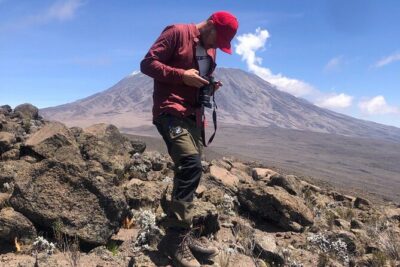
Shira brings a major change in scenery. The forest gives way to high open ground, with broad views toward Mount Meru, Longido, and the Great Rift Valley when conditions are clear. You may also see some wildlife earlier on the route, although sightings are not guaranteed.
The camp itself is high enough for you to notice the air. Eat even if your appetite fades, drink the purified water provided, and report headaches, nausea, dizziness, or unusual tiredness to the guide promptly.
Day 3: Shira Camp 1 to Shira Camp 2
Day three covers about eight kilometers in three to four hours, moving from Shira Camp 1 at 3,500 meters to Shira Camp 2 at 3,840 meters.
This is a useful acclimatization day because the walking time is fairly short while you continue gaining height. The Shira Plateau is one of the most memorable parts of the route. Its open spaces and views give the climb a sense of scale that forest walking cannot provide.
You should use this easier day well. Rest after lunch, refill your bottle, check your sleeping bag and rain gear, and keep your feet in good shape. Small problems are easier to fix here than at Barafu.
The package includes breakfast, lunch, and dinner throughout the mountain portion, with eight servings of each listed. The food is described as fresh, nutritious, and served in large portions. That matters. You need steady calories on a high-altitude trek, and the dining tent gives you a proper place to eat rather than forcing you to balance food on your knees.
A few more options to weigh up in Moshi
- Safari Serengeti And Ngorongoro
★ 5.0 · 288 reviews - Kilimanjaro climb, Machame Route (7-day)
★ 5.0 · 262 reviews - Climbing Kilimanjaro – Machame Route
★ 5.0 · 170 reviews - Climbing Kilimanjaro through 7 days Machame Route
★ 5.0 · 151 reviews
Day 4: Shira Camp 2 to Barranco Camp
The route now becomes longer and more varied. You walk eight kilometers from Shira Camp 2 to Barranco Camp, reaching 3,950 meters after six to seven hours.
This day takes you into the southern circuit and prepares you for the higher camps ahead. Barranco is a dramatic stopping point beneath the Barranco Wall. The next morning will involve scrambling up that feature, so this is a good time to ask your guide about the route and make sure your gloves are accessible.
The listed elevations show a gentle net gain from Shira Camp 2 to Barranco, despite the long walking day. That pattern is useful for acclimatization, as you spend time walking high before sleeping at camp. The route is scenic, but the open terrain can bring sun, wind, and fast weather changes. Use sunscreen, cover your neck, and keep a warm layer handy.
At this stage, the quality of the support crew becomes very important. Past feedback gives repeated credit to guides and porters for encouragement, calm pacing, altitude advice, and practical help. Guides named in connection with this company include Abel, Eli, Justin, Richard, Abdul, and Priscus. Your exact team may differ, so ask who will lead your group before departure.
Day 5: Barranco to Karanga Valley
The fifth day is only five kilometers, but it takes four to five hours as you climb from Barranco Camp to Karanga Valley Camp at 3,995 meters.
The short distance does not mean an easy stroll. The route includes the Barranco Wall, where you may use your hands for balance and move carefully over rocky ground. It is not presented as a technical climb, but anyone uncomfortable with heights or scrambling should know what to expect.
Karanga gives you another relatively short stage before the highest camp. That pacing is one of the best features of this eight-day plan. I would rather arrive at camp with energy left than spend the day racing upward and paying for it later.
Use the afternoon to rest and take stock. The company provides warm water for washing every day, a small luxury that feels useful after dusty walking. Keep your day pack light, since a porter carries it during the summit attempt according to the package details.
Day 6: Karanga to Barafu Camp
You now climb four kilometers to Barafu Camp at 4,550 meters. The walking time is four to five hours.
Barafu is the launch point for the summit attempt, and the mood changes here. The camp is high, cold, and practical. You will need to eat, drink, organize your summit clothing, and rest as much as possible before the early or timed departure for Uhuru Peak.
The exact summit schedule deserves confirmation. The description says the climb is designed for reaching the summit in daylight and at sunrise, but different groups may use different departure times depending on weather, pace, and guide judgment. Ask the operator how they plan to handle your group.
This is also the point where safety systems matter most. Each trek carries VHF radios for communication, and the company lists emergency oxygen, a Gamow Bag, a pulse oximeter, and mountain rescue fees among the inclusions. These tools do not remove the risks of altitude, but they show that the operator has planned for serious problems rather than treating the mountain as a simple hike.
Day 7: Uhuru Peak and the long descent
Summit day is the hardest part of the trip. The stated climb to Uhuru Peak at 5,895 meters takes seven to eight hours over about five kilometers, followed by a short rest at Barafu and a further four to six hours descending 12 kilometers to Mweka Camp at 3,060 meters.
Those numbers tell you more than any advertising language. The summit section is steep, slow, and tiring. The descent is not an easy victory lap, since tired legs and loose ground can make downhill walking demanding.
You will pass around the Kibo crater rim, and the plan also describes reaching the top of the inner Reusch crater. That is an ambitious and unusual detail. Confirm with the guide whether this crater section is included for every group, since timing, conditions, and your physical state may affect what is possible.
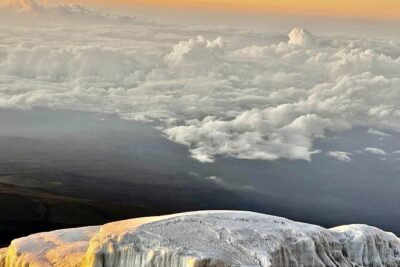
The sunrise goal can be deeply rewarding, but it may also mean cold, darkness, and limited rest before the climb. Pack your warmest layers, gloves, headlamp if required by the operator, water, snacks, and personal medication in the day pack. Do not rely on a porter being beside you for every minute of the summit push.
Reaching Uhuru Peak is a major physical achievement, but your guide should put safety first. If altitude symptoms become serious, turning back is the correct decision. No summit photo is worth risking your health.
Day 8: Mweka Gate and the return to comfort
The final descent is listed as four kilometers and three to four hours, ending at Mweka Gate. The supplied details also give an elevation of 4,600 meters for the gate, which does not fit neatly with the stated descent from Mweka Camp. I would ask the company to confirm the exact distance and elevation before you travel.
After leaving the mountain, you transfer to Park View Inn for a certificate and summit party ceremony. That celebration gives the trip a proper finish, especially after the hard descent. Arrival and departure transfers are included, along with transportation in the destination area.
The accommodation details need clarification before booking. The package mentions two nights of classic standard hotel accommodation and two nights of comfort hotel accommodation, described as one before and after the trek, with bed and breakfast. Since the wording could mean different hotel allocations, ask exactly where you will sleep before the climb and after returning from the mountain.
Food, tents, and the people who make camp work
The price includes full board on the mountain, with breakfast, lunch, and dinner listed for all eight days. Large portions and fresh food are especially useful at altitude, where tiredness can make eating feel like work.
You also receive purified drinking water and warm water for washing. Tents, sleeping mats, solar lighting, toilet tents, aluminum dining tables, and chairs with backs and armrests are included. The chairs may sound minor, but after several hours of walking, a proper seat is welcome.
Porters carry equipment, and the package includes a porter for your day pack during the summit attempt. The company also states that it follows fair and ethical treatment of porters. You should still ask about porter numbers, wages, tipping customs, luggage limits, and the company’s porter welfare practices before you go.
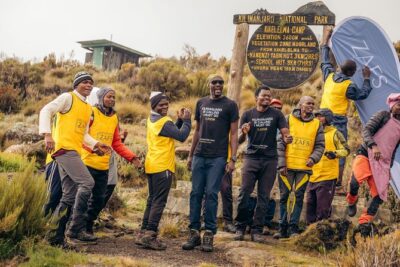
The repeated praise for the crew focuses on kindness, encouragement, organization, and altitude support. That is the right set of qualities to look for. On Kilimanjaro, a calm guide who notices small changes in your condition can matter more than a fast guide who simply pushes ahead.
Is $2,833.34 a fair price?
At $2,833.34 per person, this is not a bargain basement climb. I think the price can be good value if the promised inclusions are delivered, since it covers park fees, government taxes, rescue fees, transfers, hotels, mountain food, porters, tents, safety equipment, and professional guides.
The private format also matters. You are paying for your own group rather than joining a large public departure. That may give you more flexibility with pace and rest, although you should confirm the maximum group size and porter-to-climber ratio.
You will still need money for tips, a Tanzania visa on arrival, laundry, phone use, drinks, and personal purchases. Optional extras, such as a safari after the climb, are not included. Budget for those separately so the final cost does not surprise you.
Who should choose this climb?
I would recommend this route to a fit hiker who values scenery, gradual altitude gain, and strong camp support. It suits people who have eight days for the mountain and prefer a private trip with organized transfers and hotels included.
It may not suit you if you want a short, low-cost adventure or dislike cold camping. The summit day is long, and the combination of thin air, early timing, steep ground, and a lengthy descent should be taken seriously.
The company has received a 4.9 rating from 14 ratings, with all listed recommendations positive. Strong praise centers on the organization, food, guides, porters, safety advice, and end-to-end transport. That is encouraging, but you should still confirm the hotel arrangements, summit timing, team size, and exact Day 8 measurements before paying.
Should you book the Kilimanjaro Lemosho Route?
I would book this eight-day Lemosho climb if you want Kilimanjaro’s more scenic western approach and value a well-equipped support team. The Shira Plateau, crater views, southern circuit, and sunrise summit plan give the route plenty of character.
Book it only after you are comfortable with the physical demands and have clarified the few inconsistent details in the schedule. If you train for long uphill walks, arrive with realistic expectations, and listen closely to your guides, this offers a serious but well-supported path to Africa’s highest summit.
Free cancellation is available if you cancel at least 24 hours before the experience begins. Changes or cancellations made later are not refunded, and poor weather may lead to a new date or a full refund.
FAQ
How long is the Kilimanjaro Lemosho Route experience?
The climb lasts approximately eight days, including the final descent from the mountain and the transfer for the certificate and summit celebration.
Where does the climb begin?
The route begins with a drive to Londorossi Park Gate, at an elevation of 2,385 meters, or 7,825 feet.
What is the highest point reached?
The summit is Uhuru Peak at 5,895 meters, or 19,341 feet.
Is this a private tour?
Yes. Only your group participates in the private activity.
Are park fees and government taxes included?
Yes. Government taxes and park entrance fees are included in the price.
Are meals included during the climb?
Yes. Breakfast, lunch, and dinner are included while you are on the mountain. The package lists eight breakfasts, eight lunches, and eight dinners.
Is drinking water provided?
Yes. Clean, purified drinking water is included.
What safety equipment is provided?
The package includes emergency oxygen tanks, VHF handheld radios, a Gamow Bag, a pulse oximeter, mountain rescue fees, and a portable personal flash toilet.
Are hotel nights included?
Yes. The package includes classic standard and comfort hotel accommodation before and after the trek, with bed and breakfast. Ask the company to confirm the exact hotel allocation, since the provided accommodation wording is not fully clear.
What is not included in the price?
Tips, a Tanzania visa on arrival, personal expenses such as laundry, telephone use, and beverages, and optional tours are not included.
Just added in Moshi
- Zanzibar: Stone Town tour and Nakupenda beach with Lunch★ 5.0 · 1 review
- day trip lake manyara★ 5.0 · 2 reviews
- Mt Kilimanjaro 6 days Marangu route hike★ 5.0 · 3 reviews
- machame route★ 5.0 · 16 reviews
- Wildlife Extravaganza: Manyara, Tarangire & Ngorongoro in 3 Days★ 5.0 · 3 reviews
- Private Cycle to Kilimanjaro Bike Park Safari★ 5.0 · 6 reviews
- West Kilimanjaro cycling Adventures★ 4.5 · 8 reviews
- 3 Days Private E-Bike Tour in West Kilimanjaro★ 5.0 · 3 reviews
Lemosho Route Climbs, compared.

8-Day Small-group Lemosho Kilimanjaro Summit Trekking
Read our review →


Climbing Kilimanjaro through 8 days Lemosho Route
Read our review →Browse the lists this tour appears in