
Reviewed · LEMOSHO ROUTE CLIMBS
The Ultimate 8-day Lemosho route Climbing Kilimanjaro
Kilimanjaro rewards patience, not speed. This 8-day Lemosho climb gives you time to adjust to altitude while crossing forests, moorland, and high volcanic terrain toward Uhuru Point. I like the private format, which lets you and your group set a sensible walking pace, and I like that meals, tents, transport, and a professional mountain guide are included.
The route is scenic and generally better paced than shorter Kilimanjaro programs. Guides including Paul, Martin, Gabrielle, Prudence, Edwin, Noka, and Barakael have received especially warm praise for their care and support. The main catch is the $1,300 price does not include park fees, tips, insurance, personal equipment, or hotel stays, so your final cost will be higher.
In This Review
- Key points to know before you book
- Why the Lemosho Route is a smart eight-day choice
- Day 1: Moshi to Londorossi Gate and the forest trail
- Day 2: From Mti Mkubwa to Shira 1 and the moorland
- Day 3: A gentler crossing to Shira 2
- Day 4: Shira 2 to Lava Tower at 3,840 meters
- Day 5: Barranco Wall and the short move to Karanga
- Day 6: Karanga to Barafu Camp
- Day 7: Uhuru Point and the long descent to Mweka
- Day 8: Mweka Camp to the park gate
- Food, tents, porters, and guide support
- What the $1,300 price really buys
- Who should choose this Kilimanjaro climb?
- Should you book the 8-day Lemosho route?
- FAQ
- Where does the Kilimanjaro climb begin?
- How long does the experience last?
- Is transportation included?
- Is the climb private?
- Are meals included?
- Is camping equipment included?
- Are Kilimanjaro park fees included in the $1,300 price?
- Is hotel accommodation included?
- What happens if I cancel?
Key points to know before you book
- Eight days gives your body more time to adjust: The route includes several gradual days before the hard summit push.
- Lemosho is chosen for its scenery: You cross the Shira Plateau and move through several distinct vegetation zones.
- The package is private: You and your group can walk at your own pace, even though you will meet other climbers on the mountain.
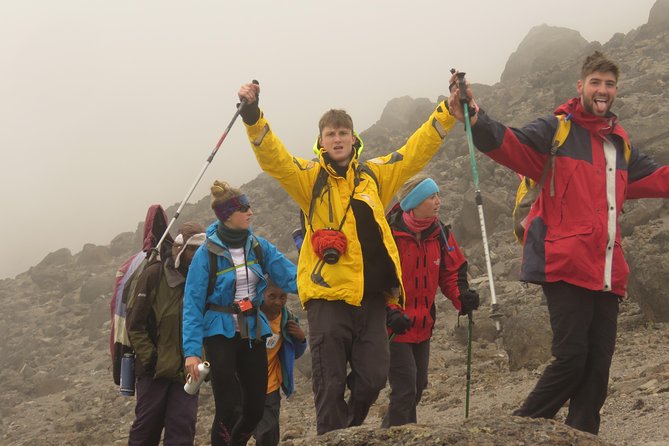
- The crew earns strong praise: Guides such as Paul and Martin are singled out for personal care, while cooks and porters are repeatedly praised.
- The summit day is demanding: You climb to Uhuru Point, return to Barafu Camp, then continue down to Mweka Camp.
- The advertised price is only part of the budget: Park charges and several important trip costs are separate.
Why the Lemosho Route is a smart eight-day choice
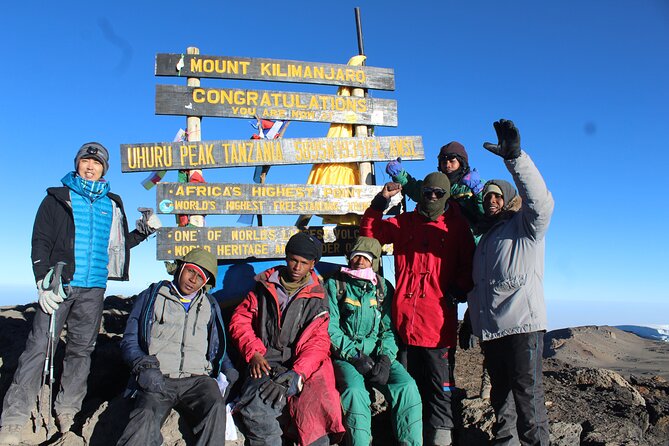
Kilimanjaro is Africa’s highest mountain and the world’s tallest free-standing mountain. You do not need technical climbing skills for this route, but you do need steady fitness, patience, and a willingness to walk slowly for many days.
Lemosho approaches the mountain from the west. It is prized for its changing scenery and for the extra time it gives you to gain height gradually. The route crosses the Shira Plateau before joining the busier trail near Lava Tower, so the first part can feel more open and quiet than routes that begin closer to the main mountain slopes.
I like the length of this program because seven nights on the mountain is a more sensible choice than trying to rush the climb. The itinerary includes nights at Shira, Lava Tower, Barranco, Karanga, Barafu, and Mweka, with summit day placed late in the trip. That schedule gives you several days to settle into the rhythm of walking, eating, resting, and drinking water at altitude.
The private setup matters too. You are not locked into the pace of a large public group, and your guide can respond to how you are feeling. Still, private does not mean solitary. You will share parts of the route and camps with other groups, especially after Lemosho connects with the Machame trail.
More Lemosho Route climbs:
- Kilimanjaro climb by Lemosho Route (7-day)
★ 5.0 · 651 reviews - Kilimanjaro Climbing Lemosho Route 8 Days.
★ 5.0 · 186 reviews - Kilimanjaro climb, Lemosho Route (8-day)
★ 5.0 · 148 reviews
Day 1: Moshi to Londorossi Gate and the forest trail
Your morning begins with breakfast and a briefing at your Moshi hotel. The chief guide then takes you by road to Londorossi Park Gate, a drive of about two and a half hours. The listed gate elevation is approximately 2,250 meters, or 7,380 feet.
This first transfer is useful because it moves you from Moshi into Kilimanjaro National Park without asking you to begin with a long, punishing walk. Park entry procedures take place before you start the trail, and the guide handles the route introduction and mountain briefing.
The schedule provided then refers to Mti Mkubwa Camp at 2,750 meters. The day-by-day description is slightly compressed, since Mti Mkubwa is normally treated as the first overnight area after entering the forest. Confirm the precise walking distance and camp arrangement with Africa Natural Tours before departure.
The early trail takes you through the forest zone. You should expect a gradual start, but do not treat this as a sightseeing stroll. You are already beginning the altitude gain that will shape the rest of the climb.
Day 2: From Mti Mkubwa to Shira 1 and the moorland
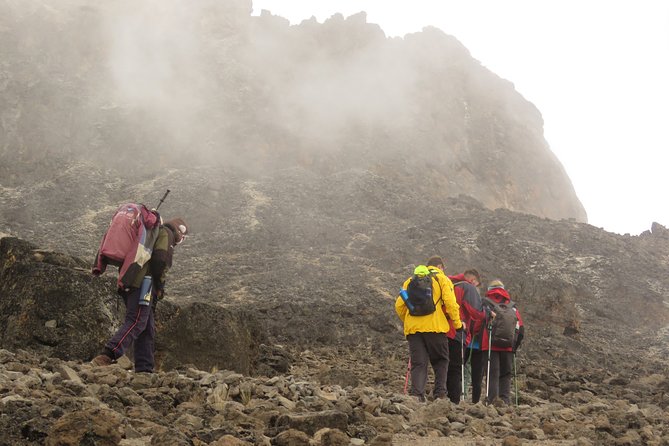
The trail becomes steeper as you leave the forest and enter the moorland zone. You cross toward Shira Ridge at about 3,600 meters, or 11,810 feet, before reaching Shira 1 Camp.
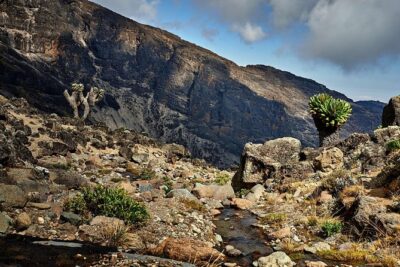
This is an important day because the scenery changes quickly. The dense lower vegetation gives way to open high-country terrain, and the views toward Kilimanjaro become more dramatic. The route also begins to feel less sheltered, so you will want warm layers, sun protection, and rain protection close at hand.
Sleeping at roughly 3,500 meters means you may notice the altitude more clearly. Walk slowly and tell your guide if you develop a headache, nausea, unusual tiredness, or other symptoms. The guide’s job is not simply to point out the path. It is also to monitor how you are coping.
Dinner and the night are at Shira Camp. The package provides breakfast, lunch, and dinner throughout the trek, along with camping equipment and a sleeping mattress. That removes much of the daily packing and meal planning that can make a long mountain trip harder.
Day 3: A gentler crossing to Shira 2
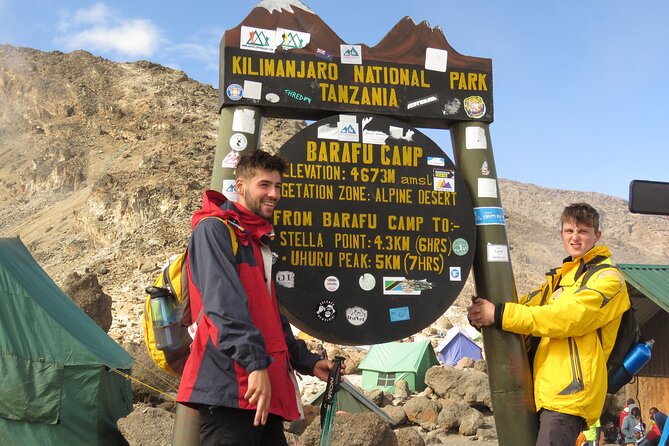
Day 3 is described as a fairly easy walk across the Shira Plateau to Shira 2 Camp. The camp sits beside a stream among moorland meadows at around 3,500 meters, or approximately 11,485 feet.
I consider this one of the most useful days in the itinerary. You continue gaining experience at altitude without facing the steepest part of the mountain. It is a chance to settle into the group’s walking pace, eat properly, and rest before the route turns higher and rougher.
The plateau also gives you a broad sense of Kilimanjaro’s scale. The mountain’s main volcanic mass begins to feel closer, while the open setting makes the walk feel spacious. The drawback is that the exposed terrain can feel cold and windy, and a so-called easy day can still be tiring at this elevation.
Use the day well. Keep your daypack light, drink regularly, and avoid wasting energy on unnecessary rushing. The private format should help here, since you can move at a comfortable pace rather than trying to keep up with strangers.
A few more options to weigh up in Moshi
- Safari Serengeti And Ngorongoro
★ 5.0 · 288 reviews - Kilimanjaro climb, Machame Route (7-day)
★ 5.0 · 262 reviews - Climbing Kilimanjaro – Machame Route
★ 5.0 · 170 reviews - Climbing Kilimanjaro through 7 days Machame Route
★ 5.0 · 151 reviews
Day 4: Shira 2 to Lava Tower at 3,840 meters
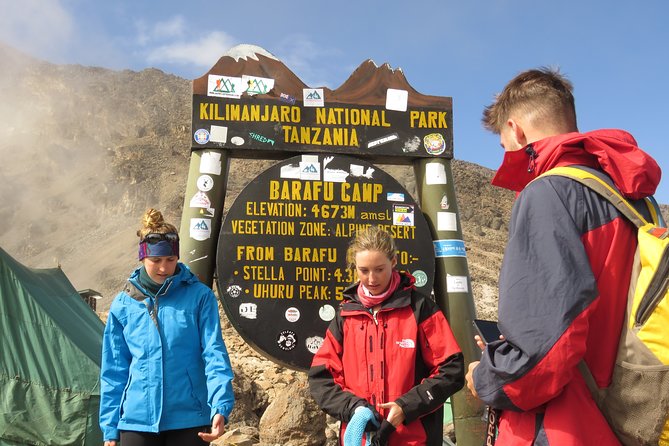
After breakfast, you head east toward the mountain’s main mass. The path steepens above the vegetation as you climb to Lava Tower, listed at about 3,840 meters, or 12,600 feet.
This is a key acclimatization stage. You spend time at a higher elevation before moving down to Barranco Camp, although the supplied schedule does not specify the full descent details for the day. Ask for the exact overnight plan, walking hours, and elevation profile before you go, as these details are important for judging the physical demands.
Lava Tower is also where the route feels more stark and volcanic. The lower plant life fades, and the mountain environment becomes rockier and more severe. You should expect the altitude to affect your energy more here, even if you are physically fit.
The strength of the itinerary is that it does not simply race upward to Barafu. It places you at a high point before the next camp, giving your body more exposure to thin air. Your guide’s judgment matters greatly on this section.
Day 5: Barranco Wall and the short move to Karanga
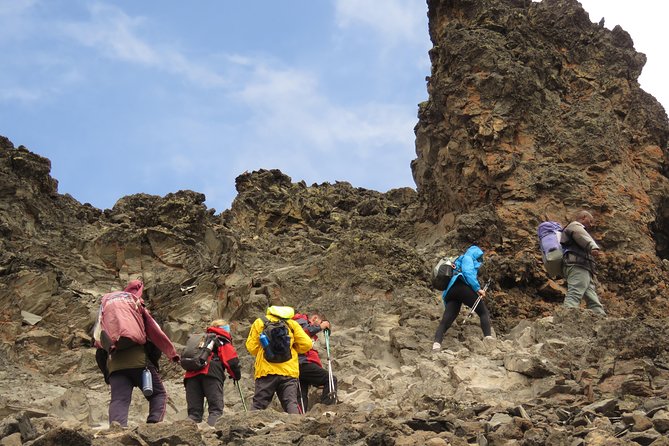
From Barranco Camp, at roughly 3,900 meters, you climb toward the famous Barranco Wall before continuing to Karanga Camp at about 4,200 meters, or 13,780 feet.
The wall looks intimidating from below, but the route is described as easier to climb than it first appears. You should still expect hands-on scrambling in places and a slow, careful pace. This is not a technical rock-climbing pitch, but you need to be comfortable with uneven ground and steep steps.
This is one of the most memorable sections of Lemosho. The wall gives you a physical challenge without being the summit, and the views become more impressive as you gain height. Your guide can help you choose secure steps and keep the group moving safely.
Karanga is a short stage compared with the full summit effort, but that is part of its value. You are positioning yourself for Barafu while preserving strength. Do not judge a day only by distance. At this altitude, even a modest walk can leave you tired.
Day 6: Karanga to Barafu Camp
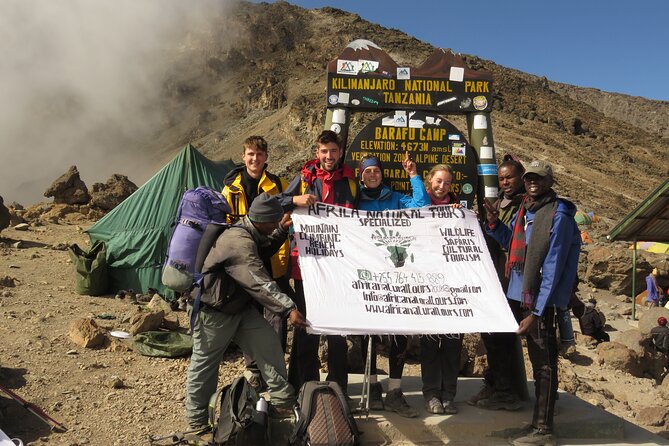
The route continues from Karanga to Barafu Camp, at approximately 4,200 meters. Barafu is the launch point for the summit attempt, so the mood changes here. You are no longer simply progressing from one scenic camp to the next. You are preparing for the hardest night and morning of the trip.
Your guide should explain the summit schedule, clothing, food, water, and equipment arrangements during the briefing. The provided information confirms that a briefing is included, but you should ask for the exact start time and expected summit duration before the climb begins.
Rest is the priority at Barafu. Keep your gear organized so you do not spend precious energy searching through your bag in the dark. Personal hiking gear is not included, so your warm clothing, boots, headlamp, gloves, and other essentials must be arranged separately.
This is also the point where the value of the eight-day format becomes clear. A shorter itinerary may bring you to the same camp with less time to adjust. Here, you have had several days of measured walking before the summit attempt, though no route can guarantee that you will reach the top.
Day 7: Uhuru Point and the long descent to Mweka
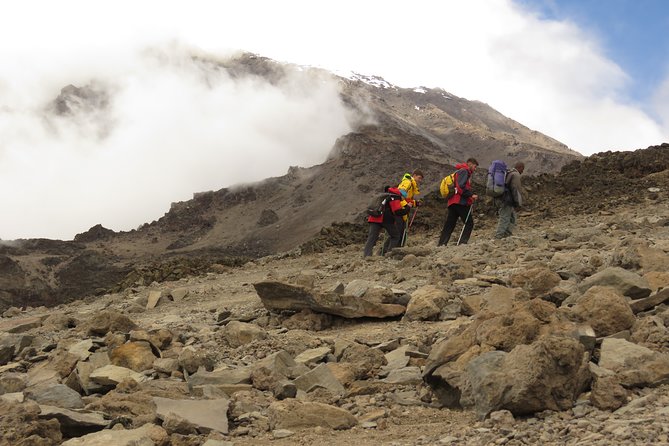
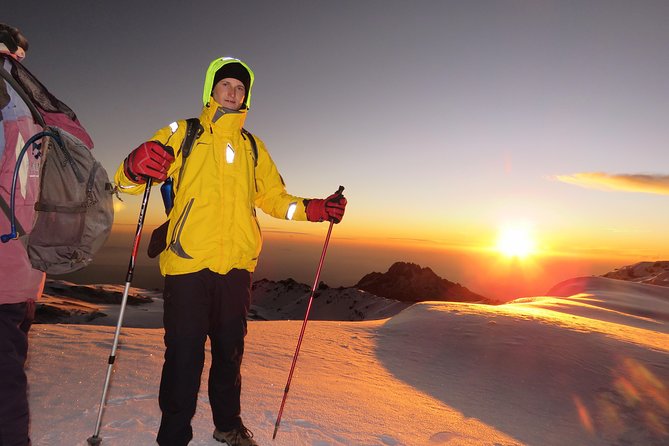
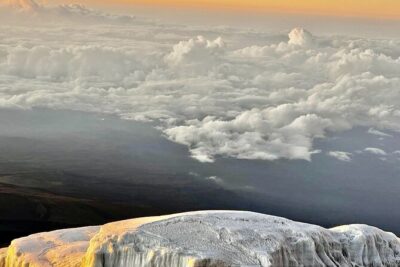
Summit day is the hardest part of the climb. You ascend toward Uhuru Point, the highest point on Kilimanjaro, then descend to Barafu Camp before continuing down to Mweka Camp.
The schedule is demanding because the day combines a summit climb with a major descent. Cold, darkness, altitude, and fatigue can all make the effort harder than the distance suggests. Your guide’s support is particularly important here.
Several guides have been praised for doing more than simply leading from the front. Martin is described as playing a major role in a successful summit, while Paul is praised for checking on the group and helping climbers feel safe and cared for. Those details matter because summit night is when calm decisions and close attention count most.
After reaching the summit, you return to Barafu and then descend toward Mweka. The lower camp should feel like a welcome change, but do not expect the day to be finished once you leave the summit. Save energy for the entire descent.
Day 8: Mweka Camp to the park gate
The final day takes you from Mweka Camp at about 3,100 meters, or 10,170 feet, down to Mweka Gate. This is the end of the mountain portion of the trip.
Descending is easier on your breathing, but it can be tough on knees and tired legs. Trekking poles may be useful if you bring them, though personal hiking gear is your responsibility. At the gate, you complete the final park procedures and receive a trekking certificate as part of the package.
Round-trip transport is included from your Moshi hotel to Londorossi Gate and from Mweka Gate back to your Moshi hotel. That is a practical benefit. You do not need to arrange a vehicle at the end of a long descent, when all you may want is a shower and a bed.
Food, tents, porters, and guide support
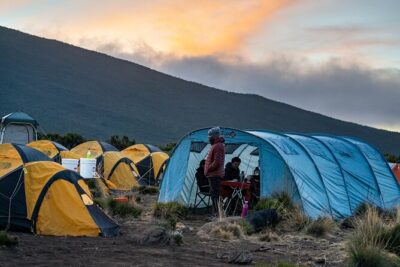
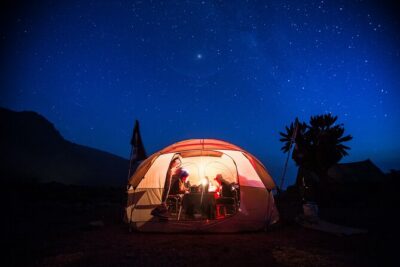
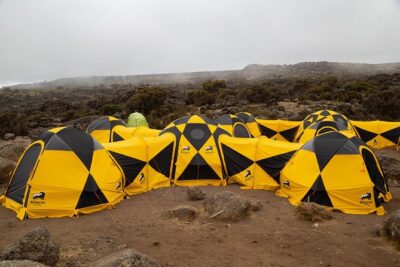
Camping equipment, quality tents, and a sleeping mattress are included. Breakfast, lunch, and dinner are also provided during the trek, with a cook and support crew handling the camp meals.
The crew is one of the strongest parts of this package. Multiple accounts praise the guides, cooks, porters, and waiters for being attentive and well organized. One particularly useful detail is that the cook and food received strong marks, although one person reported becoming ill after drinking boiled water on the second day. That appears to have passed quickly, but it is a reminder to discuss water treatment and stomach sensitivity with your operator before setting out.
Tips for the mountain crew are not included. You should budget for them and ask Africa Natural Tours for its current tipping guidance. The support team carries out demanding work, and clear expectations help prevent awkwardness at the end.
The listing says the activity can accommodate up to 90 people, while the climb itself is described as a private package for you and your group. Ask how that maximum applies to your departure. You should confirm whether your group has a dedicated guide and crew, and whether any camp or transport arrangements are shared.
What the $1,300 price really buys
At $1,300 per person, the package offers useful core services: a professional guide, camping equipment, meals, park transfers, a briefing, and a certificate. For an eight-day mountain climb, that can be attractive, especially if you are comparing it with trips that charge separately for every camp service.
But this is not the complete trip budget. Kilimanjaro National Park fees are excluded and can be paid directly to the park or through the operator. You also pay separately for crew tips, airport transfers, travel and medical insurance, flights, personal hiking gear, and hotel accommodation before and after the trek.
I would ask for a written total before paying. Make sure it shows park fees, the number of guides and support staff, hotel nights, airport transport, water arrangements, and any equipment rental. The advertised price is useful as a starting point, but it should not be mistaken for the final amount you will spend.
The cancellation terms are simple: you can receive a full refund if you cancel at least 24 hours before the local start time. Cancellations or changes inside that window are not accepted for a refund.
Who should choose this Kilimanjaro climb?
I would recommend this trip to you if you want the scenic Lemosho approach and prefer a longer schedule over a rushed ascent. It suits people with moderate physical fitness who can walk for several days, sleep in camps, and accept that high-altitude hiking is physically demanding.
It is also a good match if personal guide support matters to you. The strong praise for Paul, Martin, Gabrielle, Prudence, Edwin, Noka, and Barakael suggests that guide quality is a major part of the company’s appeal, though you should request the name and experience of your assigned guide before departure.
I would hesitate if you want a fully inclusive price with no extra planning. Park charges, insurance, accommodation, flights, tips, and personal equipment can add a large amount. I would also hesitate if you dislike camping or need a guaranteed summit, since no guide can remove the risks of altitude, weather, or exhaustion.
Should you book the 8-day Lemosho route?
I like this climb for its route choice, extra acclimatization time, private pacing, and highly praised support crew. The Shira Plateau, Lava Tower, Barranco Wall, and summit approach provide a varied experience rather than a straight march uphill.
Before booking, get the full cost in writing and clarify the day-one camp, day-four overnight plan, group size, assigned guide, park fees, and water arrangements. If those details are clear and you are prepared for the physical demands, this is a strong option for a first Kilimanjaro attempt. If you want a low-cost, all-inclusive holiday, the headline price may be misleading.
FAQ
Where does the Kilimanjaro climb begin?
The meeting point is Africa Natural Tours Ltd on Mkwawa Avenue in Tanzania. The listed start time is 7:00 am, with pickup offered from the Moshi hotel you booked.
How long does the experience last?
The climb lasts approximately eight days, from the transfer out of Moshi to the return from Mweka Gate.
Is transportation included?
Yes. Pickup from your Moshi hotel to Londorossi Gate is included, as is transport from Mweka Gate back to your Moshi hotel.
Is the climb private?
The package is described as private for you and your group, allowing you to walk at your own pace. The activity information also gives a maximum capacity of 90 people, so you should confirm how that maximum applies to your departure.
Are meals included?
Yes. Breakfast, lunch, and dinner are provided during the mountain trek.
Is camping equipment included?
Yes. The package includes camping equipment, quality tents, and a sleeping mattress.
Are Kilimanjaro park fees included in the $1,300 price?
No. All Mount Kilimanjaro park fees are excluded. They can be paid directly to the park or through the tour operator.
Is hotel accommodation included?
No. Hotel accommodation before and after the trek in Moshi is not included.
What happens if I cancel?
You can cancel at least 24 hours before the local start time for a full refund. Cancellations or changes made less than 24 hours before the start are not accepted for a refund.
Just added in Moshi
- THE BEST 2 DAYS ON TREK – MARANGU ROUTE TOUR ADVENTURES★ 5.0 · 1 review
- Mount Kilimanjaro National Park Day Trip★ 5.0 · 7 reviews
- Mount Kilimanjaro Climbing in Tanzania Full-Day Trip★ 5.0 · 1 review
- Mount Kilimanjaro Day Hike – All-Inclusive, No Hidden Fees★ 4.0 · 7 reviews
- Mount Kilimanjaro Trekking Tour – Climb with Local Guides★ 5.0 · 1 review
- Mount Kilimanjaro: 7 Days Hike Lemosho Route★ 5.0 · 1 review
- Moshi:Chemka Hot Springs, Materuni Waterfalls & Coffee Tour★ 5.0 · 1 review
- Moshi Town: Walking Tour: Theme Urban lifestyle★ 3.1 · 4 reviews
Lemosho Route Climbs, compared.
8-Day Small-group Lemosho Kilimanjaro Summit Trekking
Read our review →
Climbing Kilimanjaro through 8 days Lemosho Route
Read our review →Browse the lists this tour appears in