
Reviewed · RONGAI ROUTE CLIMBS
Kilimanjaro Rongai Route 5 Days Trekking
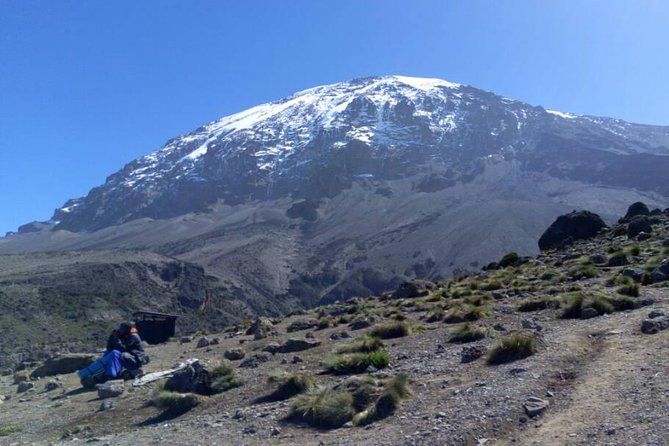
Kilimanjaro rewards patience, and punishes haste. This Rongai Route trek appeals to me for two clear reasons: it begins on the mountain’s quiet northern side, and it gives you close views of Mawenzi volcano and the wide saddle between Mawenzi and Kibo. I also like the practical setup, with a cook, porters, dining tent, mountain tents, and portable flush toilets at camp. The main concern is the limited acclimatization time, which makes fitness and altitude readiness especially important.
You pay $2,200 per person for a seven-day trip, including airport transfers, meals, camping equipment, park costs, and the mountain crew. The five mountain days are demanding, especially summit day, which can last 11 to 15 hours. A smooth hotel arrival and transfer can make the whole experience feel well managed, but this is still a serious high-altitude trek, not a casual nature walk.
In This Review
- Key points about the Rongai Route trek
- Why the northern Rongai approach feels different
- Arrival in Arusha and the first evening
- Day 1 on the mountain: forest and First Cave
- Day 2: the steady climb to Third Cave
- Day 3: across the Saddle to School Hut
- Summit night: Gillman’s Point and Uhuru Peak
- Day 5: descending through Marangu forest
- Camping, meals, and the mountain crew
- Is $2,200 good value?
- Who should choose this trek?
- FAQ
- How long does the full Rongai Route experience last?
- How many days are spent trekking on the mountain?
- Where does the trek begin?
- What is the highest point reached?
- Where do you sleep during the trek?
- Is airport pickup included?
- Are meals included?
- How difficult is the summit day?
- Is this a private tour?
- Should you book the Rongai Route?
Key points about the Rongai Route trek
- Quiet northern approach: Rongai is Kilimanjaro’s only route that begins from the north side and crosses the mountain.
- Mawenzi and Kibo views: The route brings you close to Mawenzi before crossing the stark saddle toward Kibo.
- Five days on the mountain: You spend nights in tents, with a dining tent, cook, porters, and portable flush toilets.
- Very demanding summit day: The climb begins around 1 a.m. and may involve 11 to 15 hours of walking.
- Gillman’s Point and Uhuru Peak: You reach Gillman’s Point at 5,685 meters, with a possible round trip to Uhuru Peak at 5,896 meters.
- Private group format: Only your own group takes part, with pickup and drop-off included.
Why the northern Rongai approach feels different
Most people picture Kilimanjaro as a single trail to the top. It is not. The mountain has several routes, and Rongai offers a quieter way in from the Kenyan side of the massif, beginning near the northern border of Tanzania.
You start at the Marangu Park Gate, then ride for about three hours to the Rongai trailhead at roughly 1,950 meters. That transfer takes time, but it leads you to a less-used approach. For someone who prefers open space and fewer people on the path, this is one of the strongest reasons to choose Rongai.
The route later joins the Marangu Route for the final ascent and descent. You therefore get the quieter northern trail at the beginning, followed by the more established Marangu side near the summit and exit. That change gives the trek variety, though it also means the final stages can feel less secluded.
Rongai is not the route for someone who wants the easiest possible adjustment to altitude. The ascent is steady and the schedule allows little spare time for acclimatization. I would take the fitness warning seriously. You need to be comfortable walking for many hours, carrying your personal day gear, and continuing uphill when the air becomes thin.
More Rongai Route climbs:
- Rongai 7 days
★ 5.0 · 1 review - 7 Day Rongai Kilimanjaro Summit
★ 5.0 · 1 review - Multi-Day Tour RONGAI Route Kilimanjaro Trekking
★ 5.0 · 1 review
Arrival in Arusha and the first evening
Your trip begins with a pickup at Kilimanjaro International Airport if you arrive on an international flight. If you come into Tanzania by an internal flight or a shuttle bus from Nairobi, the transfer can meet you in Arusha instead.
You spend the first night in Arusha, with the mountain trek beginning the next morning. Depending on your arrival time, a mountain guide meets you at the hotel for a briefing. This is useful because it gives you a chance to confirm the plan, ask questions, and prepare your equipment before leaving town.
The arrival day is more than a transfer detail. A calm first evening can help you get organized before the trek starts. One past booking described the hotel choice and transfer as smooth, and praised the team for staying involved from the beginning to the end. That kind of support matters when you are arriving in a new country and preparing for a high-altitude climb.
Your departure transfer back to Kilimanjaro International Airport is also included after the final night in Arusha. If your flight schedule allows, the operator can discuss a short safari or another option, but that would be separate from this trekking plan.
Day 1 on the mountain: forest and First Cave
The mountain portion begins at Marangu Park Gate. From there, transport takes you to the Rongai trailhead, a ride of about three hours. The trail starts at around 1,950 meters, so the first walking day does not throw you straight into extreme altitude.
If timing permits, you may eat a packed lunch at Nelemoru. The path then passes through cypress plantations and montane forest. Keep your eyes open for colobus monkeys, which are listed as a possible sighting along this stretch.
The walking is gradual as you make your way to First Cave Camp at about 2,600 meters. This is a good opening stage because you can settle into the rhythm of the route while watching the vegetation change around you.
By the time you reach camp, the porters and cook may already have set up the tents. You may find popcorn and a hot drink waiting, followed by hot water for washing. These small camp comforts are worth noticing. After a cool day outside, a warm drink and a chance to change out of damp trekking clothes can improve your evening considerably.
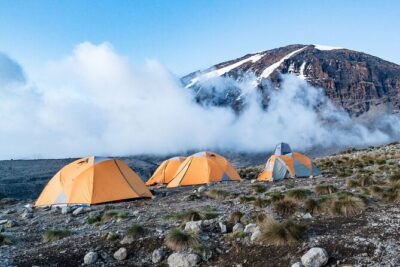
Mountain nights may fall to freezing temperatures, so warm clothing is not optional. You sleep in mountain tents and eat in a mess tent. Portable flush toilets are set up at each camp, which is a more comfortable arrangement than relying only on basic open facilities.
Day 2: the steady climb to Third Cave
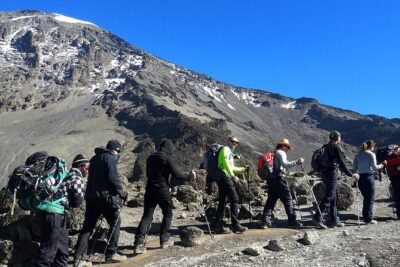
The second walking day brings a steady ascent to Third Cave at approximately 3,450 meters. The route gives you fine views toward Kibo and the eastern icefields along the crater rim.
The schedule describes walking in the morning, lunch, and continued progress toward Third Cave afterward. That steady pace is important because the altitude is rising quickly. You should resist the urge to race ahead simply because the path looks manageable.
This is one of the days when the route’s limited acclimatization becomes clear. You may still feel strong at the start, but the higher camp can change how your body responds. Eat the meals provided, drink regularly, and tell the guide if you feel unwell. The supplied details do not promise a slow acclimatization schedule, so your own discipline matters.
The reward is the setting. Views of Kibo and the icefields give you a growing sense of the scale of the mountain. The scenery changes as you gain height, with less vegetation and more exposed ground.
More treks in Arusha:
- 8-Day Small-group Lemosho Kilimanjaro Summit Trekking
★ 5.0 · 186 reviews - Mountain Kilimanjaro Day Hike
★ 5.0 · 102 reviews - Private Full Day Hiking Experience to Marangu Route
★ 5.0 · 61 reviews - 4 Days Mount Meru Trekking
★ 5.0 · 55 reviews
Day 3: across the Saddle to School Hut
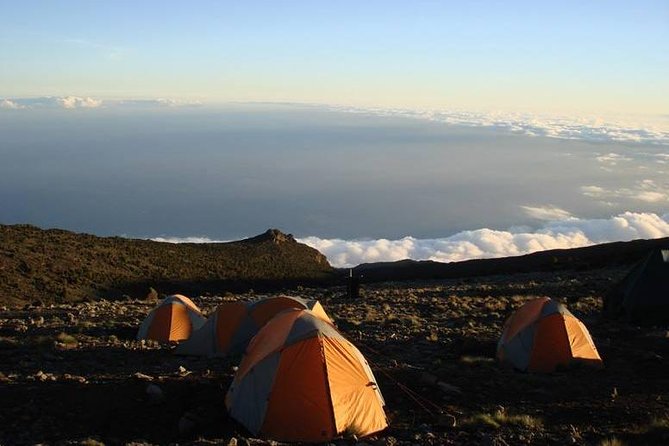
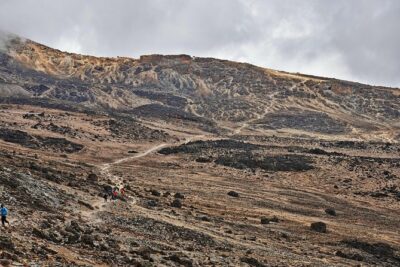
The third mountain day takes you toward the Saddle, the broad lunar-looking area between Mawenzi and Kibo. This is the route’s visual centerpiece.
Mawenzi is Kilimanjaro’s second-highest peak, and Rongai gives you an unusually close view of its rugged volcanic form. The contrast between Mawenzi and Kibo makes this section special. You are no longer walking through forest or ordinary highland vegetation. You are crossing a stark, open zone shaped by volcanic rock and altitude.
You should reach School Hut Camp at about 4,750 meters by midday, after roughly four to five hours of walking. The early arrival is deliberate. The rest of the day is for resting before the summit attempt, followed by a very early night.
School Hut is not a place to plan extra activity. At this elevation, even simple tasks can feel tiring. Eat, drink, organize your headlamp and warm clothing, and rest as much as possible. The summit starts around 1 a.m., so the afternoon and early evening should be treated as preparation time.
This overnight at high altitude is also the clearest reason to assess your readiness honestly. The route has brought you from 1,950 meters to 4,750 meters in a short period. The mountain crew can support you, but no guide can remove the physical demands of that ascent.
Summit night: Gillman’s Point and Uhuru Peak
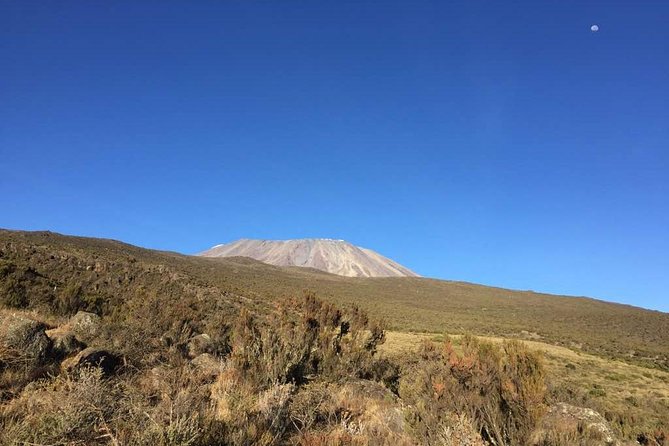
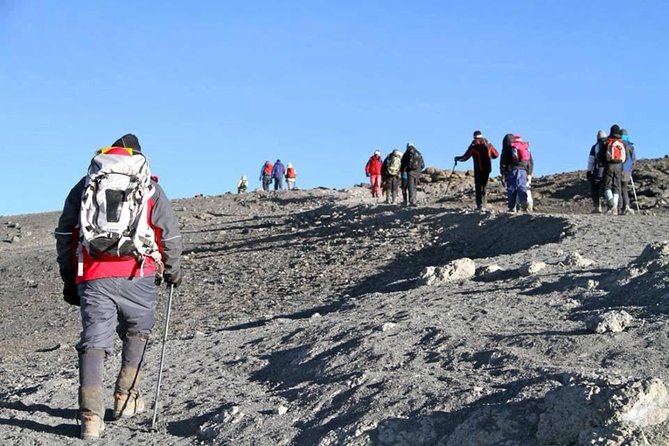
The summit attempt begins around 1 a.m. by torchlight. This is the steepest and hardest section of the trek.
You climb slowly on a switchback trail through loose volcanic scree. The darkness hides much of the slope, but it does not hide the effort. Progress is intentionally slow, and the cold, altitude, steepness, and long day all arrive at once.
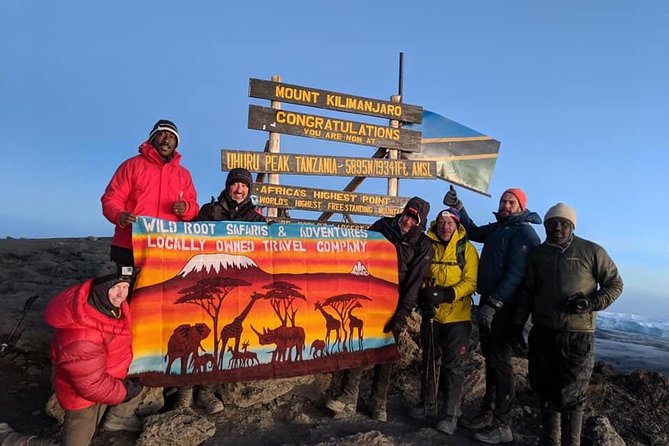
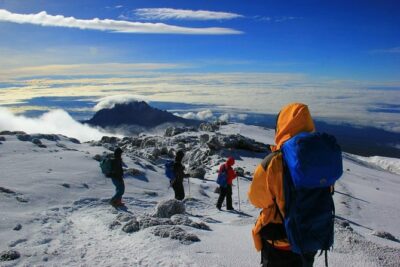
The first major goal is Gillman’s Point at 5,685 meters on the crater rim. A short rest there gives you time to take in sunrise over Mawenzi. That view is one of the trek’s great payoffs, especially after the night climb.
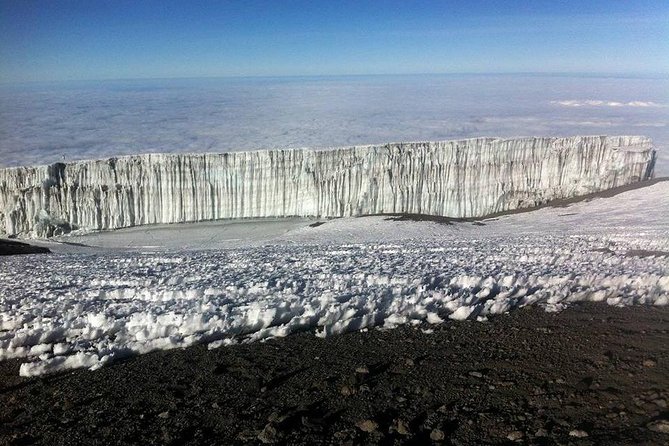
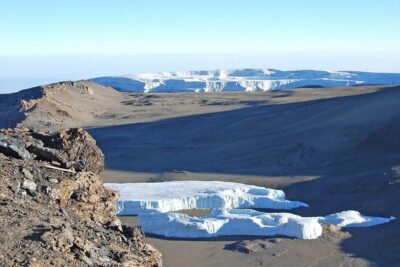
If you still have enough strength, you can continue on a three-hour round trip to Uhuru Peak, the summit at 5,896 meters. The route passes near glaciers and ice cliffs that still occupy much of the summit area. The information provided does not guarantee that every person will continue to Uhuru Peak, so you should treat it as a decision made according to your condition on the day.
After the summit section, you descend to School Hut at about 4,700 meters for refreshment. The descent is described as surprisingly fast, but the day is far from over. You then continue down to Horombo Camp at 3,720 meters.
The total walking time can reach 11 to 15 hours. That figure should guide your decision more than the summit altitude alone. You need stamina for the entire day, not only the uphill section. A person who enjoys long, demanding walks and prepares properly may find this thrilling. Someone seeking a relaxed mountain holiday may find it too severe.
Day 5: descending through Marangu forest
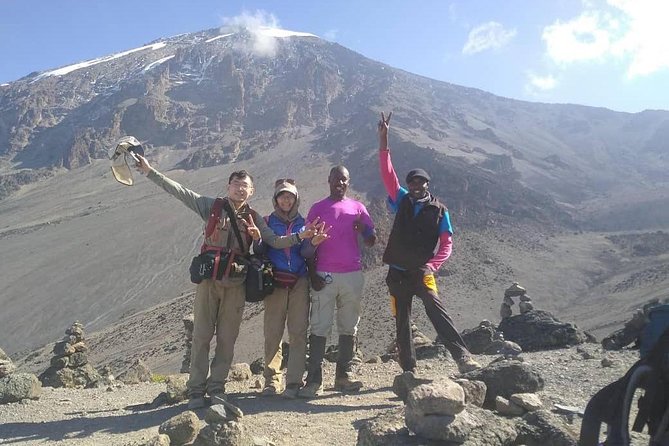
The final mountain day takes you down through moorland to Mandara Hut at about 2,700 meters. This is the first stopping point on the Marangu Route.
From Mandara, you continue through lush forest on a good path to the Marangu National Park Gate. The change from the stark Saddle to green forest happens over a single descent, giving the route a satisfying range of vegetation and scenery.
Walking time is about five to six hours. At the park gate, you transfer to Arusha for an overnight stay at Mvuli Hotel, listed at approximately 1,830 meters.
This overnight in town is useful after the summit day and descent. You can wash properly, sleep in a hotel, and prepare for your flight or any extra plans. The trek does not end the moment you leave the trail. The final night gives your body and mind a proper pause.
Camping, meals, and the mountain crew
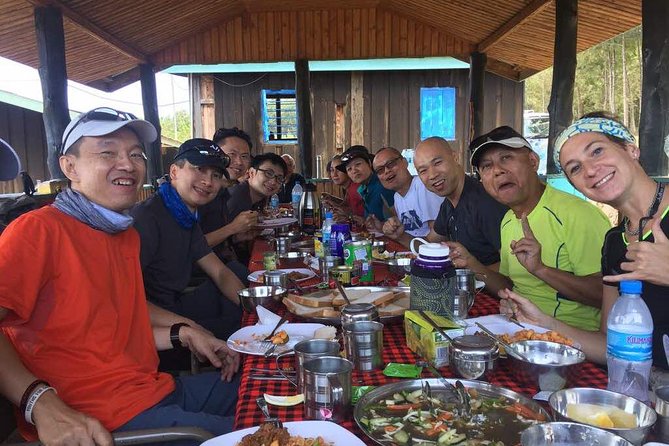
The $2,200 price includes the main costs needed for this trek. Park fees and taxes are included, along with breakfast, lunch, and dinner. Camping equipment listed in the package includes tents, mattresses, chairs, and tables.
You also have a cook, guides, and porters. The cook prepares meals, while the porters move ahead to establish camp. That arrangement means you can arrive at a prepared campsite rather than setting up after a long day.
The dining tent gives the group a place to eat away from the sleeping tents. Hot water for washing is provided at camp, and portable flush toilets are installed in toilet tents. These are practical comforts, not luxury touches, but they can make a major difference during several cold nights outdoors.
Alcoholic drinks are not included. You also pay separately for visas, flights and airport taxes, personal items, and compulsory tips for guides and porters. Those extra costs should be part of your real budget.
The listed meal details include repeated entries for dinner, lunch, and breakfast as optional items. I would confirm the exact meal plan at booking, even though the main inclusion list says meals are covered.
Is $2,200 good value?
At $2,200 per person, this trek is not a budget mountain walk. Still, the price covers a seven-day arrangement with airport transfers, Arusha hotel nights, park fees, camping equipment, meals, guides, a cook, and porters.
The value depends on what you want from Kilimanjaro. If you tried to arrange each part separately, you would need to coordinate transport, permits, camps, food, equipment, and crew support. Here, those pieces are organized into one private trip.
The private format is another point in its favor. Only your own group participates, so the experience is not built around a large shared departure. That can make the pace and daily communication easier, although the mountain’s physical demands remain the same.
I would compare the exact equipment, hotel standard, group size, guide-to-climber ratio, and tipping expectations before paying. Those details are not fully specified here, and they affect the practical value of a Kilimanjaro package.
Who should choose this trek?
I would recommend the Rongai Route to you if quiet trails, changing scenery, and a northern approach appeal more than a simple route to the summit. The close view of Mawenzi and the crossing of the Saddle are strong reasons to choose it.
It also suits someone who values a fully supported camping trip. You have a private group, a mountain crew, meals, camp furniture, tents, and transfers. The arrival and departure arrangements reduce the amount of planning you need to do yourself.
I would hesitate to recommend it if you have limited hiking experience, poor cold-weather preparation, or concerns about fast altitude gain. The provider asks for a moderate fitness level, but the 11 to 15-hour summit day suggests that you should prepare beyond the minimum.
Free cancellation is available up to 24 hours before the experience start time for a full refund. Changes or cancellations inside that period are not accepted for a refund, and poor weather can lead to a different date or a full refund.
FAQ
How long does the full Rongai Route experience last?
The full trip lasts approximately seven days. This includes arrival in Arusha, five days connected with the mountain trek, a final overnight in Arusha, and departure.
How many days are spent trekking on the mountain?
The mountain portion runs from Day 2 through Day 6, giving you five days of trekking and mountain camping before the transfer back to Arusha.
Where does the trek begin?
You meet at Marangu Park Gate and then travel by vehicle for about three hours to the Rongai trailhead, located at roughly 1,950 meters.
What is the highest point reached?
Gillman’s Point is at 5,685 meters. If you have enough strength, you can make the three-hour round trip onward to Uhuru Peak at 5,896 meters.
Where do you sleep during the trek?
You sleep in mountain tents at the camps. A dining mess tent is provided, and toilet tents with portable flush toilets are set up at each camp.
Is airport pickup included?
Yes. Pickup is offered from Kilimanjaro International Airport for international arrivals, or from Arusha for people arriving by internal flight or shuttle bus.
Are meals included?
Breakfast, lunch, and dinner are included in the package information. Alcoholic beverages are not included.
How difficult is the summit day?
The summit day is the hardest part. It begins around 1 a.m. and can involve 11 to 15 hours of walking, including the ascent, possible Uhuru Peak round trip, and descent to Horombo Camp.
Is this a private tour?
Yes. Only your own group participates in this private activity.
Should you book the Rongai Route?
Book it if you want a quieter northern approach, strong views of Mawenzi, and a fully supported crossing of Kilimanjaro. The private format, included transfers, camp equipment, meals, and mountain crew make the $2,200 price reasonable for a well-organized package.
Do not book it simply because the route is less crowded. The short acclimatization schedule and very long summit day make this a serious physical challenge. If you are fit, prepared for cold nights, and willing to pace yourself carefully, Rongai offers a varied and memorable way to reach Kilimanjaro’s high points.
Just added in Arusha
- Safari “Kifaru” – 5 days in the most famous Parks in the world★ 5.0 · 4 reviews
- Saadani Day Trip★ 5.0 · 13 reviews
- 3 Days Tanzania Short and Spicy★ 5.0 · 6 reviews
- 5 Day Tanzania Safari Camping Adventure Private Tour★ 5.0 · 2 reviews
- Day Trip to Ngorongoro Crater from Arusha★ 5.0 · 1 review
- SERENGETI NATIONAL PARK Tour★ 4.5 · 5 reviews
- 3 Days Serengeti Park & Ngorongoro Crater Adventure Safari★ 5.0 · 8 reviews
- 6 Days Tanzania Bush Experience Safari★ 5.0 · 6 reviews
Rongai Route Climbs, compared.
6 Day Private Kilimanjaro Climbing Via Rongai Route
Read our review →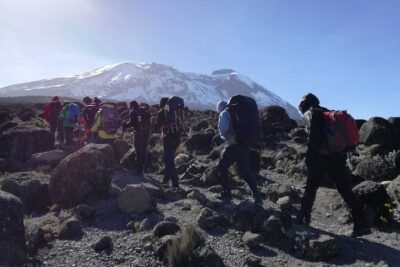
Multi-Day Tour RONGAI Route Kilimanjaro Trekking
Read our review →
Browse the lists this tour appears in