
Reviewed · RONGAI ROUTE CLIMBS
Kilimanjaro climb, Rongai Route (7-day)
Kilimanjaro rewards patience, not speed. This 7-day Rongai Route climb approaches Africa’s highest peak from the quiet northern side, with gradual altitude gains, broad views, and fewer people than the busier southern routes. I like the built-in acclimatization hikes, and I like that the price covers guides, porters, meals, park fees, airport transfers, hotel nights, and medical equipment.
The main drawback is the summit schedule. You spend a long day reaching high camp, then leave around midnight for Uhuru Peak before descending for several more hours. That is a serious physical test, even for fit hikers. The route is friendly to beginners in terms of pacing, but 5,895 meters is never beginner-level altitude.
In This Review
- What makes this Rongai climb worth considering
- The arrival day in Moshi
- Day 2: Nalemuru Gate to Simba Camp
- Day 3: Second Cave and the first acclimatization hike
- Day 4: Kikilewa Camp and a useful rest afternoon
- Day 5: Mawenzi Tarn beneath Kilimanjaro’s second peak
- Day 6: Kibo Camp and the rocky semi-desert
- Day 7: Uhuru Peak and the toughest descent
- Day 8: Marangu Gate and the return to comfort
- What the $3,507 price really covers
- Food, tents, and camp life
- The guides and safety system
- Who should choose the Rongai Route?
- Booking details worth knowing
- Should you book this Kilimanjaro climb?
- FAQ
- How long does the full experience last?
- How much does the climb cost?
- Is airport transportation included?
- Where do I stay before and after the climb?
- What type of accommodation is used on the mountain?
- Are meals included?
- Is drinking equipment or liquid provided?
- Are park fees included?
- Do I need travel insurance?
- Do I need to bring my own hiking equipment?
- How difficult is the climb?
- Are guides and medical supplies included?
- Can I cancel for a full refund?
What makes this Rongai climb worth considering
- The northern approach is quieter: Rongai is known for lighter foot traffic and a more open feel than many other Kilimanjaro routes.
- Acclimatization is built into the plan: Short hikes from Second Cave and Mawenzi Tarn give you extra time above 3,000 meters.
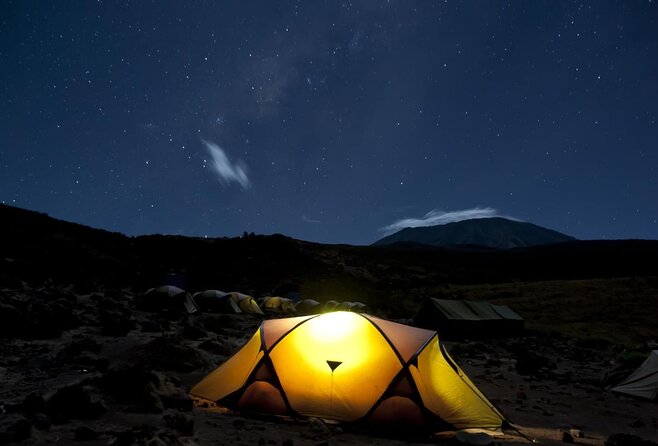
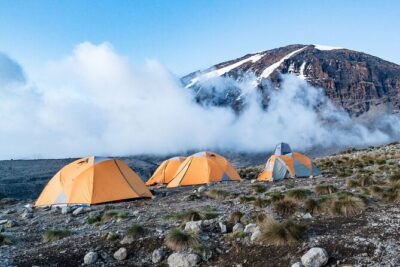
- You sleep in proper walk-in tents: North Face VE-25 tents are shared by two climbers, with separate dining equipment and sleeping pads supplied.
- The support team handles the hard camp work: Guides lead the route, porters carry equipment, cooks prepare three meals daily, and camp staff set up before you arrive.
- Safety gets regular attention: Certified Wilderness First Responder guides, oxygen, oximeters, medical kits, and health checks are included.
- You cross several climate zones: The route moves from coniferous forest to heath, high moorland, rocky semi-desert, and the Arctic conditions around the summit.
The arrival day in Moshi
Your trip begins with pickup at Kilimanjaro International Airport. An Altezza Travel representative meets you there and transfers you to Aishi Machame Hotel in the foothills of Kilimanjaro.
The hotel stay is useful, not just decorative. You have a room, hot water, internet, a swimming pool, and a chance to recover from the flight before the climb. Check-in starts at 2:00 PM, so plan your arrival time with that in mind.
That evening, managers hold a briefing and check that you are ready. This is the moment to ask practical questions about clothing, sleeping bags, water, pacing, and the summit schedule. You also have two hotel nights included, one before and one after the mountain.
Lunch and dinner at the hotel are not included. Airport transfers are included, as is the return transfer after the climb. If your flight leaves late on the final day, check-out is at 11:00 AM, and late check-out costs extra.
More Kilimanjaro climbs:
- Kilimanjaro climb by Lemosho Route (7-day)
★ 5.0 · 651 reviews - Kilimanjaro climb, Machame Route (7-day)
★ 5.0 · 262 reviews - Kilimanjaro Climbing Lemosho Route 8 Days.
★ 5.0 · 186 reviews
Day 2: Nalemuru Gate to Simba Camp
The mountain portion starts at Nalemuru Gate, on Kilimanjaro’s northern side, at about 2,020 meters. Your guides handle park permits and search and rescue registration while the crew prepares the climb.
The first hike goes through coniferous forest to Simba Camp at 2,625 meters. It takes about five hours and is described as moderate. For you, the smartest goal is not speed. Walk slowly, keep your breathing easy, and avoid turning the first day into a fitness contest.
This opening section gives you a gentle introduction to the crew system. By the time you reach camp, tents should already be set up and dinner should be in preparation. You carry only your daypack while porters move the larger camp equipment.
The northern side can feel less developed and less crowded than more popular approaches. That quieter setting is a major reason to choose Rongai. The tradeoff is that the route does not offer the same dramatic western views as some other approaches during the early days.
Day 3: Second Cave and the first acclimatization hike
From Simba Camp, you continue to Second Cave Camp at 3,480 meters. The walk takes around three hours, making this one of the easier days on paper.
The short schedule matters. You arrive early enough for lunch, rest, and time around camp before an acclimatization hike toward Kikilewa Camp. That hike adds about 100 meters of height before you return to sleep lower at Second Cave.
This is the classic climb-high, sleep-lower pattern. It gives your body a little extra exposure to altitude without forcing you to spend the night at the higher point. For a first high-altitude trek, I consider this one of the strongest parts of the plan.
Do not mistake the easy mileage for a free day. At 3,480 meters, some people notice headache, poor sleep, tiredness, or reduced appetite. The guides carry out medical checks, and you should report symptoms early rather than trying to hide them.
Day 4: Kikilewa Camp and a useful rest afternoon
After breakfast, you climb to Kikilewa Camp at 3,630 meters. The day takes about eight hours, although the exact walking time will depend on the group and the conditions.
The reward is the view toward Kibo, Kilimanjaro’s highest volcanic cone. Clear weather gives you a fine look at the peak, though clouds can block it. That uncertainty is part of mountain travel, so keep your expectations flexible.
This is treated as a relief day. After lunch, you have time to sleep and recover before the next stage. In the evening, the guide checks the health of each person and explains what is coming.
That check is valuable. It gives the team a chance to notice problems before you reach the highest camps. It also gives you a realistic point to judge how your body is handling the climb.
More Rongai Route climbs:
- Kilimanjaro climb, Rongai Route (6-day)
★ 5.0 · 15 reviews - Mount Kilimanjaro Rongai Route
★ 5.0 · 10 reviews - 6-Day Rongai Route Trek in Mount Kilimanjaro
★ 5.0 · 8 reviews - Kilimanjaro Rongai Route 5 Days Trekking
★ 5.0 · 1 review
Day 5: Mawenzi Tarn beneath Kilimanjaro’s second peak
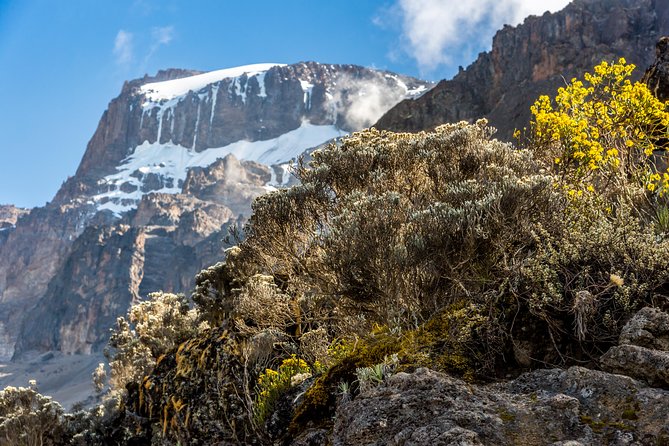
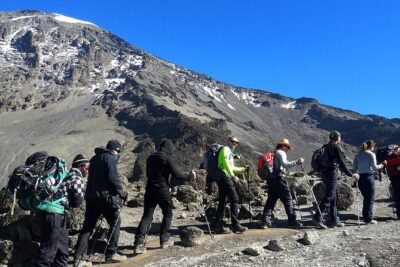
You leave Kikilewa early and walk toward Mawenzi Tarn Camp, at the foot of Mawenzi Volcano. Mawenzi is Kilimanjaro’s second summit, and its broken volcanic rock gives this part of the route a different character from the forest below.
The scheduled walking time is about seven hours. After reaching camp, you have lunch and a two-hour rest, followed by another acclimatization hike toward Mawenzi. The hike gains about 200 meters before you return to Mawenzi Tarn for dinner.
This repeated pattern is one reason the seven-day schedule makes sense. You are not simply racing upward. You gain height in stages, test your response, then return to sleep at camp.
You should still pay attention to the cumulative fatigue. By now, even moderate walks can feel slow. Eat the meals offered, drink regularly, and keep your daypack light. The included menu can accommodate vegetarian, gluten-free, halal, and other dietary needs, but you should state your requirements when booking.
Day 6: Kibo Camp and the rocky semi-desert
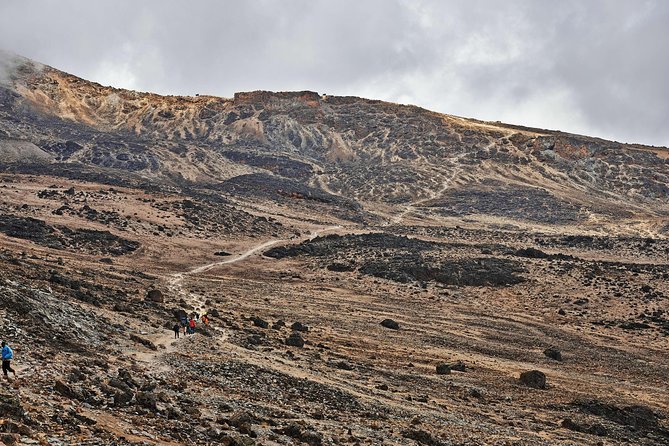
The route changes sharply as you head toward Kibo Summit Camp at about 4,700 meters. Trees and softer ground give way to a rocky semi-desert, with little shelter and a stronger sense that the summit is close.
The scheduled duration is listed at about 14 hours, which reflects the demanding high-camp day and the preparation for the summit push. The walk itself is not presented as technically difficult, but the altitude makes every step more expensive.
The plan refers to Kibo Camp and later to School Hut Camp at 4,715 meters. These names appear to describe the high camp area used before summit night, but you should ask the operator to confirm your exact sleeping camp and departure point before you go.
Once you arrive, rest is the job. Avoid unnecessary activity, drink as much as you comfortably can, and try to sleep. You will likely leave during the night, so this is not a normal evening in camp.
Day 7: Uhuru Peak and the toughest descent
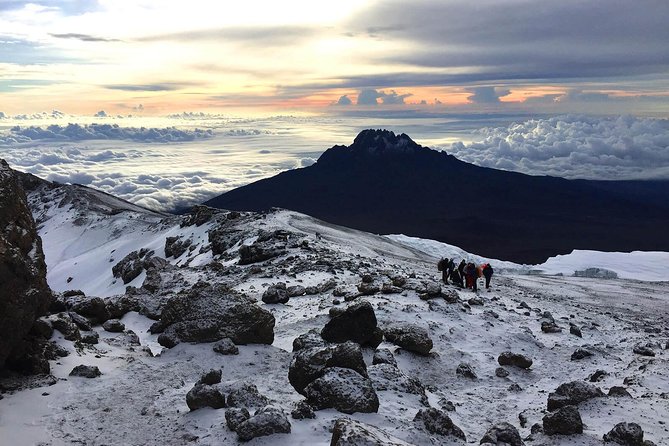
Summit night begins at around 4,715 meters. You leave in darkness and climb toward Uhuru Peak at 5,895 meters.
The gradient is generally moderate, but altitude puts heavy pressure on your cardiovascular system. This is less about powerful legs than about slow movement, controlled breathing, patience, and the guide’s judgment. The plan assigns one guide to every two climbers during this section, allowing close attention to pace and condition.
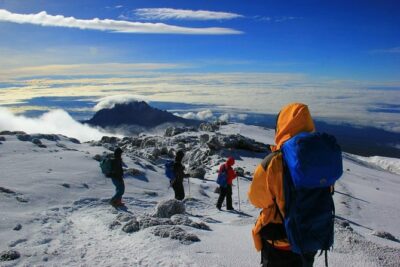
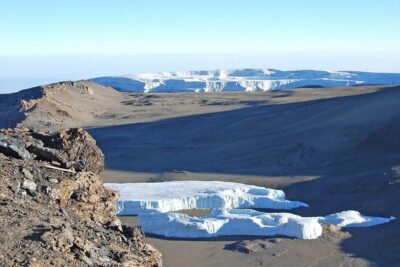
The reward is the summit itself, with views across Kilimanjaro’s high volcanic zone. A walk on the nearest glacier may be possible at the summit, depending on conditions and the group’s condition.
Reaching the top is only half the day. You descend to Horombo Camp at about 3,720 meters, with a two-hour rest stop at Kibo Camp. The full day is listed at about 12 hours, and that figure should be taken seriously.
The descent deserves respect. Loose ground, tired legs, darkness, and reduced concentration can make the way down hazardous. Use trekking poles if you have them, watch each step, and do not rush simply because the summit is behind you.
Day 8: Marangu Gate and the return to comfort
After breakfast at Horombo, you make the final descent to Marangu Gate at about 1,860 meters. The walk takes around five hours.
At the gate, you can say goodbye to the mountain crew and exchange final impressions. Certificates are provided at the company offices before you return to the hotel.
This final day is not just paperwork. It gives you a clean ending after a long physical effort. You return to a bed, hot water, and the familiar comforts of the hotel, which will feel particularly welcome after several nights at altitude.
Tips for the guides, porters, cooks, and other support staff are not included. Budget for them separately and ask for current tipping guidance before departure, since the crew carries a large share of the work behind your climb.
What the $3,507 price really covers
At $3,507 per person, this is not a cheap hike. It is also not simply a guiding fee. The price includes airport pickup and drop-off, ground transport, two hotel nights, park charges, mountain tents, dining equipment, sleeping pads, meals, drinks, guides, porters, cooks, camp staff, medical checks, oxygen, oximeters, and medical kits.
That package removes many costs that can surprise you on an independent mountain trip. Park fees alone are a major part of a Kilimanjaro climb, and a full support crew requires transport, food, wages, camp supplies, and equipment.
The value is strongest if you want a supported climb without arranging every moving part yourself. The included meals are a practical benefit, especially since three energy-rich meals are served daily and special diets can be arranged.
You still need to pay for international transport, a Tanzanian visa, personal hiking clothes, boots, a sleeping bag, travel insurance, and crew tips. Insurance should cover trekking up to 6,000 meters and helicopter evacuation. Personal gear can be hired for an additional charge, but confirm what is available and reserve it early.
Single accommodation in the hotel or a private tent costs extra. Standard arrangements place two people in a hotel room and two climbers in each tent, except on solo climbs.
Food, tents, and camp life
The camping setup is more organized than a basic backpacking trip. North Face VE-25 tents are shared by two climbers, while a separate dining tent comes with tables, chairs, crockery, and cutlery.
Drinks on the mountain include tea, coffee, juices, and soda. That small comfort matters on cold mornings and after long walks. The cooking team is often a major part of the experience, and the supplied comments give special praise to cooks who prepared cakes and extra treats for celebrations.
One particularly warm detail is the birthday cake delivered to a first camp for a climber whose son was celebrating his birthday. That suggests the crew pays attention to personal occasions, although you should request any special arrangement in advance.
You should bring a refillable bottle and hydration system if you have one, but confirm the operator’s current water arrangements. The provided information confirms drinks, not a detailed water schedule.
The guides and safety system
The strongest praise centers on the people. Names that appear in the trip experiences include Jackson, Joseph, Frank, Athumani, Amos, Elia, Solomon, Ivan, Leonard, and Evance. Their roles vary, but the pattern is clear: climbers valued calm guidance, encouragement, organization, food, and close care.
The support system is not just friendly. Certified Wilderness First Responder guides lead the climb, medical check-ups take place, and the crew carries oxygen tanks, oximeters, and medical kits.
That equipment does not remove altitude risk. Oxygen is an emergency aid, not a shortcut to acclimatization. You should be honest about symptoms, follow the guide’s instructions, and understand that reaching the summit is never guaranteed.
The itinerary says the activity is private, meaning only your group participates. That can make pacing and communication easier, particularly for a family or a group of friends. It also means your group should discuss fitness levels before departure.
Who should choose the Rongai Route?
I would look closely at this route if you want a quieter approach, camping rather than huts, and a gradual acclimatization plan. It suits fit beginners who understand that the altitude, not technical climbing, is the main challenge.
It also suits experienced hikers who prefer a less crowded route and want a well-supported trip. Families have used the itinerary, and one account describes guides giving special support to a 12-year-old during the summit attempt. Still, a child or less experienced climber should be assessed carefully, and the supplied requirement is moderate physical fitness.
This is not the right choice if you want a relaxed walking holiday. The summit night and descent are long, cold, and exhausting. It is also a poor fit if you dislike shared tents, early starts, basic mountain camping, or strict attention to health checks.
The route crosses several climate zones, from forest and heath to high Arctic conditions. Pack for changeable weather, and do not assume that warm Moshi conditions tell you anything about the summit.
Booking details worth knowing
The experience lasts about nine days from airport arrival to airport transfer, with seven mountain days and two hotel nights. The normal start time is 9:00 AM, and mobile tickets are offered.
Free cancellation is available if you cancel at least 24 hours before the local start time. Changes or cancellations inside that window are not accepted for a refund.
Before paying, confirm the exact high-camp name, the final group arrangement, available gear for hire, dietary requests, and the current insurance requirements. Also ask about the expected tipping process, since tips are separate and important to the mountain crew.
Should you book this Kilimanjaro climb?
I would choose this trip if you want a carefully supported, quieter Kilimanjaro route with strong acclimatization planning and hotel comfort before and after the mountain. The included safety equipment, park fees, meals, airport transfers, and full crew make the $3,507 cost easier to justify.
I would pause if your fitness is only average, your schedule cannot handle a failed summit attempt, or you are hoping for a gentle scenic trek. Rongai is a sensible route, but Uhuru Peak still demands endurance and altitude tolerance.
For the best chance of enjoying it, arrive prepared, walk slowly from the first day, use the rest periods, and treat the summit descent as seriously as the ascent. If you do that, this looks like a strong choice for a first major high-altitude climb.
FAQ
How long does the full experience last?
The experience lasts approximately nine days, including airport arrival, two hotel nights, seven mountain days, the summit attempt, and the return airport transfer.
How much does the climb cost?
The listed price is $3,507 per person.
Is airport transportation included?
Yes. Pickup and drop-off at Kilimanjaro International Airport are included, along with all ground transportation.
Where do I stay before and after the climb?
You stay at Aishi Machame Hotel, with two nights included. Standard rooms are shared by two people, unless you book single accommodation for an additional charge.
What type of accommodation is used on the mountain?
You sleep in North Face VE-25 walk-in tents. Standard tent arrangements place two climbers in each tent, except on solo climbs.
Are meals included?
Yes. Breakfast, lunch, and dinner are provided during the mountain portion. Vegetarian, gluten-free, halal, and other meal requests can be accommodated.
Is drinking equipment or liquid provided?
Drinks on Kilimanjaro are included, such as tea, coffee, juices, and soda. The supplied information does not specify a full water schedule, so ask for current details before departure.
Are park fees included?
Yes. All fees collected by Kilimanjaro National Park are included in the price.
Do I need travel insurance?
Yes. Insurance covering trekking up to 6,000 meters and helicopter evacuation is highly recommended. The insurance cost is not included.
Do I need to bring my own hiking equipment?
Personal clothing, boots, a sleeping bag, and other hiking gear are not included. Some equipment is available for hire at an additional charge.
How difficult is the climb?
The activity requires moderate physical fitness. The main challenge is high altitude, especially during the overnight climb from high camp to Uhuru Peak and the long descent afterward.
Are guides and medical supplies included?
Yes. Certified Wilderness First Responder guides, professional porters, cooks, camp staff, medical checks, oxygen tanks, oximeters, and medical kits are included.
Can I cancel for a full refund?
You can cancel for a full refund if you cancel at least 24 hours before the experience begins, based on the local cut-off time. Cancellations or changes made later are not refunded.
Just added in Moshi
- THE BEST 2 DAYS ON TREK – MARANGU ROUTE TOUR ADVENTURES★ 5.0 · 1 review
- Mount Kilimanjaro National Park Day Trip★ 5.0 · 7 reviews
- Mount Kilimanjaro Climbing in Tanzania Full-Day Trip★ 5.0 · 1 review
- Mount Kilimanjaro Day Hike – All-Inclusive, No Hidden Fees★ 4.0 · 7 reviews
- Mount Kilimanjaro Trekking Tour – Climb with Local Guides★ 5.0 · 1 review
- Mount Kilimanjaro: 7 Days Hike Lemosho Route★ 5.0 · 1 review
- Moshi:Chemka Hot Springs, Materuni Waterfalls & Coffee Tour★ 5.0 · 1 review
- Moshi Town: Walking Tour: Theme Urban lifestyle★ 3.1 · 4 reviews
Rongai Route Climbs, compared.
6 Day Private Kilimanjaro Climbing Via Rongai Route
Read our review →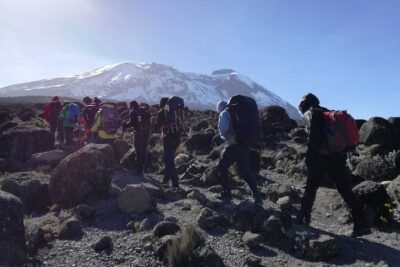
Multi-Day Tour RONGAI Route Kilimanjaro Trekking
Read our review →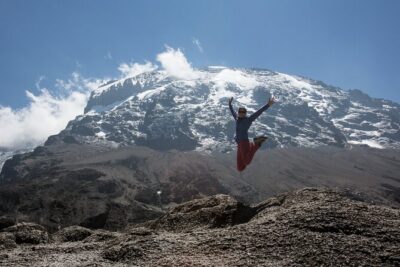
Browse the lists this tour appears in