
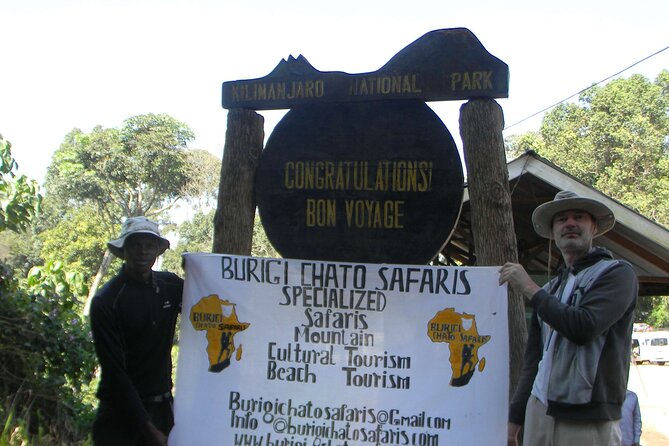
Reviewed · RONGAI ROUTE CLIMBS
6 Days Kilimanjaro climbing | Hiking Tour via the Rongai Route
Africa’s highest peak demands patience, not speed. This six-day Rongai Route climb offers a quieter approach to Kilimanjaro, with changing scenery, private group arrangements, and a carefully timed summit push. I especially like the extra acclimatization time and the striking overnight stop at Mawenzi Tarn, below the sharp Mawenzi peak.
I also like that the price includes park-gate transfers, crew wages, meals, and airport pickup and drop-off. The main caution is the summit day: at about 14 hours, it is a serious physical test, and the package does not include park fees, tips, flights, or hotel nights before and after the climb.
In This Review
- Key points to know before booking
- Why the Rongai Route is worth considering
- Day 1: From Marangu Gate to Cave Camp 1
- Day 2: Heather, moorland, and Kikelelwa Cave
- Day 3: Mawenzi Tarn and the best camp on the route
- Day 4: Across the saddle to Kibo Hut
- Day 5: Uhuru Peak, Stella Point, and the long descent
- Day 6: Horombo to Marangu Gate
- Meals, camp support, and the role of the crew
- Is $930 good value?
- Who should book this Kilimanjaro climb?
- Booking details and cancellation advice
- Should you book the Rongai Route?
- FAQ
- Where does the Kilimanjaro climb start?
- How long does the tour last?
- What altitude does the Rongai trail start at?
- Is the tour private?
- Are meals included?
- Are park fees included?
- Are hotels included before and after the climb?
- What is the cancellation policy?
Key points to know before booking
- Rongai begins on Kilimanjaro’s northern side: You start near Marangu, then transfer to the Rongai trail at about 1,950 meters.
- Mawenzi Tarn is the scenic highlight: The camp sits near a small lake below Mawenzi Peak, with time to walk toward nearby ridges.
- The summit day is long: Expect an early wake-up around 11:00 or 11:30 p.m., followed by the climb to Uhuru Peak and a descent to Horombo.
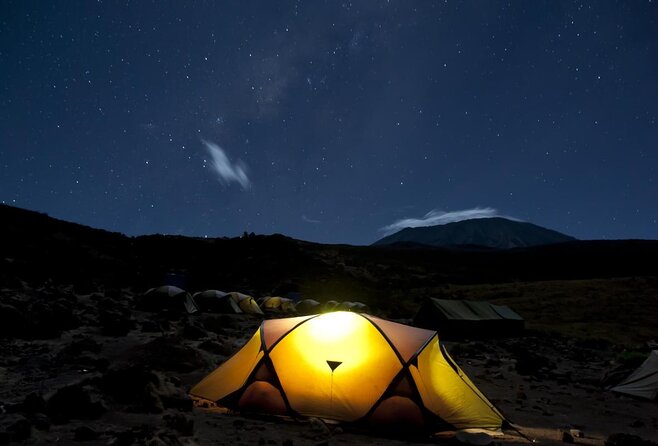
- You sleep in tents: Porters prepare camp, hot water, drinks, snacks, and meals along the route.
- The route joins the Marangu trail near the summit: The final approach to Kibo Hut and Uhuru Peak is shared with hikers coming from that side.
- The package is private: Only your own group participates, although solo hikers may be paired with another solo climber by the company.
Why the Rongai Route is worth considering
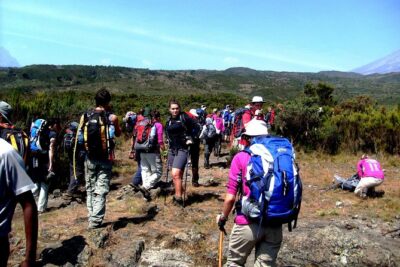
Rongai is a practical choice if you want a quieter side of Kilimanjaro and a route that crosses several distinct ecological zones. The first day begins with cypress plantations and mountain forest. Higher up, the trees give way to heather, moorland, alpine desert, and finally the cold, exposed upper slopes.
That change happens day by day rather than all at once. You have time to notice the shift in plants, temperature, and terrain. The route also approaches from the north and later meets the Marangu trail between Mawenzi and Kibo, giving you a different ascent and descent pattern.
The six-day schedule is helpful because it is not a rush to gain altitude. You reach Cave Camp 1, then Cave Camp 3, then Mawenzi Tarn before spending a night at Kibo Hut. This provides several stages for your body to adjust before summit night.
Still, six days is not an especially long Kilimanjaro itinerary. The final night at high altitude remains demanding, and good acclimatization does not remove the effects of thin air. You should see this as a strenuous mountain expedition, not a standard sightseeing tour with a walk attached.
More Kilimanjaro climbs:
- Kilimanjaro climb by Lemosho Route (7-day)
★ 5.0 · 651 reviews - Kilimanjaro climb, Machame Route (7-day)
★ 5.0 · 262 reviews - Kilimanjaro Climbing Lemosho Route 8 Days.
★ 5.0 · 186 reviews
Day 1: From Marangu Gate to Cave Camp 1
The day begins at 8:30 a.m. at the operator’s meeting point on Mkwawa Street in Moshi. From there, transport takes you toward Marangu Gate, where the formal park procedures take place before continuing to the Rongai trailhead.
The transfer to the Rongai starting point usually takes about three hours. The trail begins around 1,950 meters, and the first section passes through plantation and forest. The route is gentle enough to let you settle into the walking rhythm, but you should not mistake the easy start for a soft trip overall.
The forest is one of the more appealing parts of the opening day. You might spot giant monkeys, and the surroundings feel far removed from Moshi’s streets. If weather and timing allow, a packed lunch can be carried to Nelemoru.
The walk takes about five hours and ends at Cave Camp 1, roughly 2,600 meters above sea level. Porters and cooks generally reach camp ahead of you, so your tent should be ready when you arrive. Hot water is provided for washing, along with hot drinks and often popcorn.
That small camp routine matters. After several hours on your feet, a warm drink and a prepared tent make the evening easier. You can change into dry clothes, eat dinner, and get ready for a cooler night without having to organize camp yourself.
Day 2: Heather, moorland, and Kikelelwa Cave
Day two is longer, at about seven hours. You leave Cave Camp 1 after a light breakfast and continue through moor-style vegetation and heather.
The trail reaches Cave Camp 2 at approximately 3,450 meters, where lunch is served. After a break, you continue to the third campsite, Kikelelwa Cave, at about 3,600 meters. The itinerary gives this six-day version credit for allowing more time to adjust, and that is one of its strongest features.
Kikelelwa Cave is set in a valley below the saddle, with small caves around the camp. The porters prepare the tent, hot washing water, tea or coffee, and snacks. Dinner follows before what may be a very cold night.
The practical point here is to keep your warm clothing inside your sleeping area, not buried in a larger bag. The provided details do not specify the sleeping equipment, so you should confirm what is supplied before departure and ask what personal cold-weather gear you must bring.
This day is a useful test of your pace. You should walk steadily, drink as directed by your guide, and avoid racing ahead early in the day. The aim is not to prove fitness on the lower trail. It is to arrive with energy left for the upper mountain.
Day 3: Mawenzi Tarn and the best camp on the route
Day three is shorter, at about four hours, but the climb becomes steeper. From Kikelelwa Cave, the trail rises toward Mawenzi Tarn Camp at roughly 4,330 meters.
This is the most memorable overnight stop in the schedule. Mawenzi Tarn sits in a hollow below Mawenzi Peak, close to a small lake. The pointed rock formations and open views give the camp a dramatic setting, particularly after the more gradual lower sections.
After lunch, you have several hours to rest and inspect the area. The route description allows for short walks toward nearby ridges and towers, where you can look across toward Kibo. Those extra steps should be treated as optional. If you feel tired, resting at camp is the wiser choice.
The high camp creates a useful acclimatization opportunity, but it also brings colder conditions and thinner air. You may notice that simple tasks require more effort. Move slowly, keep your clothing organized, and follow the guide’s advice.
A sunset at Mawenzi Tarn could be one of the trip’s great rewards, provided weather cooperates. The setting is striking without needing extra entertainment. Dinner and an early night prepare you for the next gain in altitude.
More Rongai Route climbs:
- Kilimanjaro climb, Rongai Route (7-day)
★ 5.0 · 40 reviews - Kilimanjaro climb, Rongai Route (6-day)
★ 5.0 · 15 reviews - Mount Kilimanjaro Rongai Route
★ 5.0 · 10 reviews - 6-Day Rongai Route Trek in Mount Kilimanjaro
★ 5.0 · 8 reviews
Day 4: Across the saddle to Kibo Hut
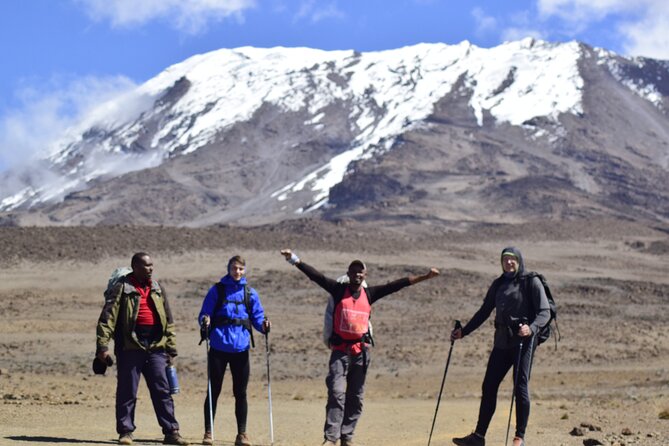
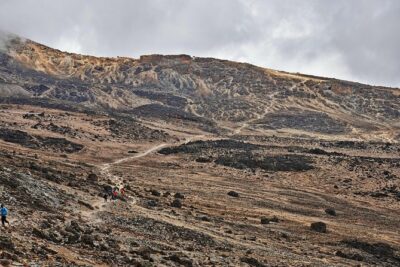
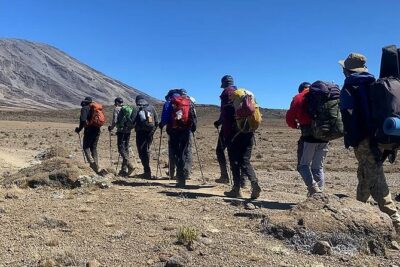
After breakfast, you climb a small ridge and then follow an easier trail along the northern side of the saddle between Mawenzi and Kibo. The vegetation becomes sparse, with alpine desert conditions, little grass, and occasional hardy flowers.
This is a more exposed section, so weather matters. In clear conditions, the open views are a major part of the day. In poor conditions, the same openness can feel bleak and tiring.
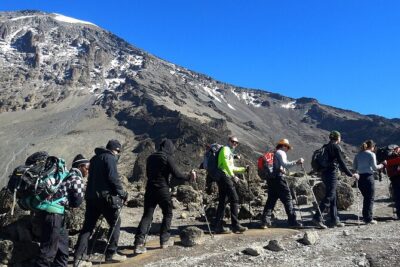
The Rongai trail eventually joins the Marangu route on the saddle. From here, the final route to the summit is shared with hikers approaching from Marangu. The last section to Kibo Hut is steeper, and the camp sits at about 4,700 meters. The itinerary lists the altitude unclearly in one place, but Kibo Hut is generally described here as approximately 4,700 meters.
You arrive around lunchtime, giving you the afternoon to eat, wash, and rest. This is important because the summit attempt begins late at night. The schedule is designed to keep the afternoon quiet rather than fill it with activities.
Kibo Hut is not a place to linger. Use the time to prepare summit clothing, organize your day pack, and sleep if you can. The mountain is already high, and the next effort will be much harder than the morning walk.
Day 5: Uhuru Peak, Stella Point, and the long descent
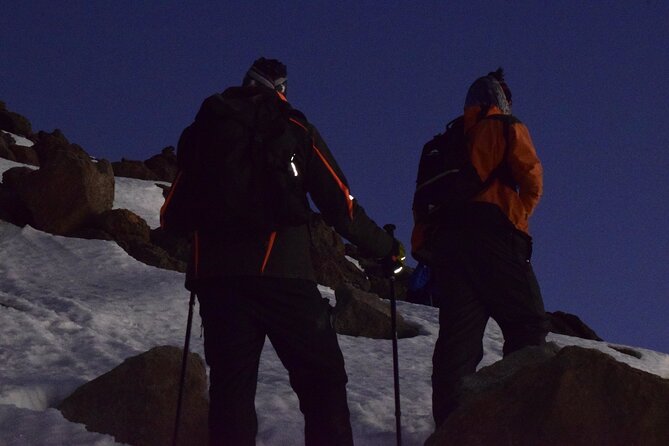
Summit day begins with a wake-up around 11:00 or 11:30 p.m. You eat, dress for the cold, and start walking in darkness.
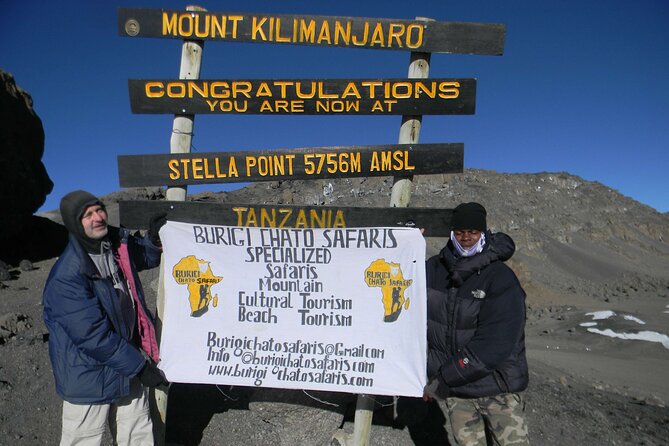
The climb toward the crater rim is slow and demanding. The itinerary refers to reaching Gillman’s Point and then continuing for about an hour and a half toward the top. It also identifies Stella Point at about 5,752 meters, where other routes reach the rim. The precise order and timing can vary with the guide’s chosen route and conditions, so treat these figures as approximate.
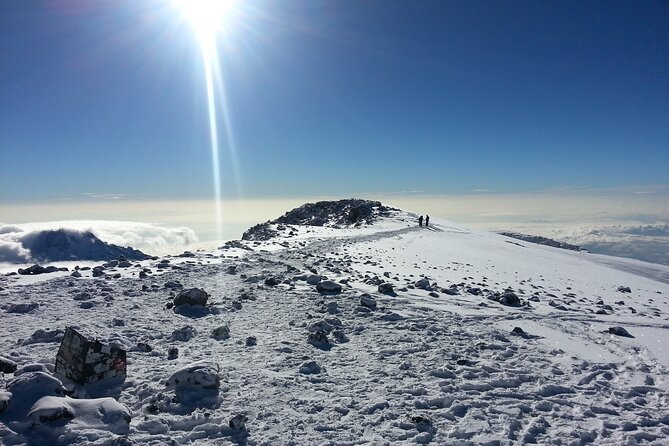
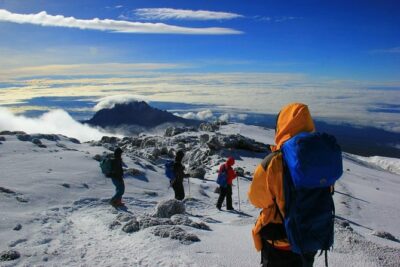
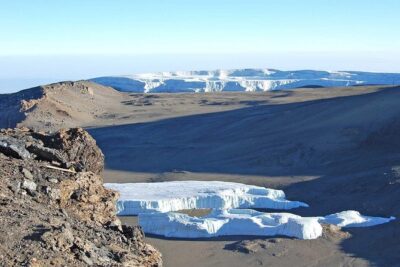
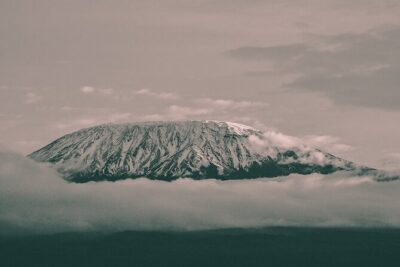
From the rim, you continue over snow-covered sections toward Uhuru Peak, Kilimanjaro’s highest point. At this altitude, even a short distance can feel heavy. The final push is where your guide’s judgment becomes particularly important. One of the strongest themes in the available feedback is the value of a guide who understands your ability and adjusts support to help you reach your goal.
Time at Uhuru Peak is usually brief. Take your photographs, enjoy the achievement, and begin descending before fatigue becomes a bigger problem. The route returns to Kibo Hut, where lunch is served.
After lunch, the descent continues to Horombo Hut at approximately 3,720 meters, taking about three hours from Kibo. The full day is listed at around 14 hours. That number tells you what you need to know: this is the hardest day by a wide margin.
The day combines a night start, extreme altitude, a summit climb, and a long descent. You need enough stamina to keep walking after the summit celebration. Reaching the top is only part of the day’s work.
Day 6: Horombo to Marangu Gate
The final morning begins with breakfast at Horombo Hut. You then descend through the Marangu side of the mountain, passing the Mandara Hut area before continuing to Marangu Gate at about 1,980 meters.
The itinerary gives the last walking segment an obviously incorrect duration of six minutes. In practical terms, this is the descent day from Horombo to the gate, not a six-minute transfer. Ask the operator to confirm the expected walking time and lunch arrangement before you leave Moshi.
At the gate, you sign the register and receive a certificate. Climbers who reach Gillman’s Point receive a green certificate, while those who reach Uhuru Peak receive the larger gold certificate.
There may be songs, dancing, farewells, and introductions to the crew either at Horombo or at the gate. The driver then takes you back to your Moshi hotel, where a long hot shower will likely feel like a major attraction.
The return to the meeting point gives the trip a clear finish, but hotel accommodation after the climb is not included. You need to arrange that separately unless the operator adds it to your booking.
Meals, camp support, and the role of the crew
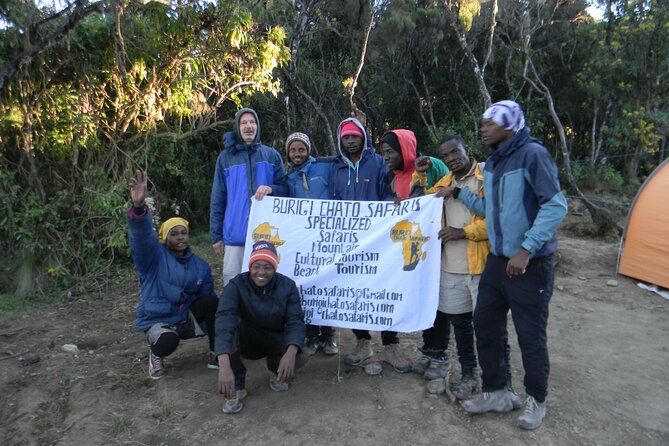
The package includes six lunches, five breakfasts, and six dinners. It also includes crew wages, gate transfers, and airport pickup and drop-off. Porters and cooks prepare camp, hot water, drinks, snacks, and meals along the route.
The food and camp support are not minor details. On a high-altitude climb, you need regular meals and a warm place to recover. The cooking received especially strong praise, and the guide and cook were credited with helping the group summit after a tough ascent.
Tips for the crew are not included. You should budget for them separately and ask the operator for current guidance on appropriate amounts. Park fees are also excluded and may be paid directly to the park or through the tour operator.
Flights, visas, and hotels before and after the climb are separate costs. The advertised price is therefore not the full cost of a Kilimanjaro holiday, but it does cover several major operating items.
Is $930 good value?
At $930 per person, the tour is priced competitively for a six-day climb, especially with crew wages, meals, gate transfers, and airport transport included. The private format is another advantage if you value traveling only with your own group.
However, you should compare the final price only after confirming park fees. Those fees can make a substantial difference to the total. Also ask exactly which airport transfers are included, what the airport pickup covers, and how many people can be in your private group.
The price may suit a budget-conscious climber who wants a basic supported ascent rather than a hotel-based mountain package. It is less suitable if you want extensive accommodation, a longer acclimatization schedule, or every cost bundled into one payment.
The company offers group discounts, which could improve the value for friends or family booking together. Solo hikers may be paired with another solo climber, so ask how that arrangement works if you are booking alone.
Who should book this Kilimanjaro climb?
I would consider this tour if you are comfortable with long walking days, cold nights, tents, and a very demanding summit attempt. You should also be ready for changing weather and the possibility that the mountain will not follow the schedule perfectly.
It suits people who want the scenery to change steadily, prefer a private activity, and value direct support from guides, cooks, and porters. The Mawenzi Tarn overnight is a strong reason to choose this route.
A preparatory Mount Meru hike may be useful. One account describes Meru as a starter for Kilimanjaro and recommends doing it first. That is not a requirement stated for this tour, but it is sensible advice for anyone unsure about sustained mountain walking.
I would hesitate if you have limited hiking experience, dislike cold camping, or expect the summit day to feel like a normal tour day. The 14-hour schedule is real, and the route’s six days do not make the summit effortless.
Booking details and cancellation advice
The activity starts at 8:30 a.m. at Burigi Chato Safaris on Mkwawa Street in Shanty Town, Moshi. It ends back at the same meeting point after the return from Marangu Gate.
Confirmation is provided at booking, and the activity is described as suitable for most participants. Because the summit depends on weather, a cancellation caused by poor conditions should result in a different date or a full refund.
You can cancel for a full refund up to 24 hours before the local start time. Cancellations or changes made within 24 hours are not accepted for a refund. Confirm the park-fee payment method and hotel arrangements before paying, since both can affect your final budget.
Should you book the Rongai Route?
I would book this climb if you want a well-supported six-day route with a private group, strong mountain scenery, and a useful rest period at Mawenzi Tarn. The guide support, camp service, and cooking are important advantages, and the $930 starting price can be good value after you add the required extras.
I would not book it without first checking the park fees, equipment list, group size, and the unclear timing on the final descent. If you can handle the long summit night and accept basic mountain camping, this is a solid route to Kilimanjaro’s roof. If you need more time for acclimatization, compare it with a longer itinerary before committing.
FAQ
Where does the Kilimanjaro climb start?
The meeting point is Burigi Chato Safaris on Mkwawa Street in Shanty Town, Moshi. The scheduled start time is 8:30 a.m., followed by transport toward Marangu Gate and then the Rongai trail.
How long does the tour last?
The climb lasts approximately six days. The walking times listed range from about four to seven hours on regular days, with the summit day listed at about 14 hours.
What altitude does the Rongai trail start at?
The Rongai trail begins at approximately 1,950 meters.
Is the tour private?
Yes. Only your own group participates in this private activity. A solo hiker may be paired with another solo participant by the company.
Are meals included?
Yes. The package includes six lunches, five breakfasts, and six dinners.
Are park fees included?
No. Mount Kilimanjaro park fees are not included. They can be paid directly to the park or through the tour operator.
Are hotels included before and after the climb?
No. Hotel accommodation before and after the Kilimanjaro hike is not included. You can book it yourself or ask the company to arrange it.
What is the cancellation policy?
You can cancel at least 24 hours before the local start time for a full refund. Cancellations and changes made less than 24 hours before the start are not accepted for a refund. If poor weather cancels the activity, you can be offered another date or a full refund.
More Treks in Moshi
- Private Kilimanjaro Hike 7 Day Lemosho Route
★ 5.0 · 60 reviews - Best Kilimanjaro hiking day trip tour with Kilinge Adventures
★ 4.5 · 54 reviews - #1. Best Kilimanjaro Day hike Tour-Machame Route-ISMANI
★ 4.2 · 47 reviews - Best Kilimanjaro Adventure 7 days Machame route Trekking
★ 5.0 · 42 reviews
Just added in Moshi
- Zanzibar: Stone Town tour and Nakupenda beach with Lunch★ 5.0 · 1 review
- day trip lake manyara★ 5.0 · 2 reviews
- Mt Kilimanjaro 6 days Marangu route hike★ 5.0 · 3 reviews
- machame route★ 5.0 · 16 reviews
- Wildlife Extravaganza: Manyara, Tarangire & Ngorongoro in 3 Days★ 5.0 · 3 reviews
- Private Cycle to Kilimanjaro Bike Park Safari★ 5.0 · 6 reviews
- West Kilimanjaro cycling Adventures★ 4.5 · 8 reviews
- 3 Days Private E-Bike Tour in West Kilimanjaro★ 5.0 · 3 reviews
Rongai Route Climbs, compared.
Rongai Route 6 Days 5 Nights/Kilimanjaro climb
Read our review →
6 Days Mount Kilimanjaro Climbing via Rongai Route
Read our review →Browse the lists this tour appears in